
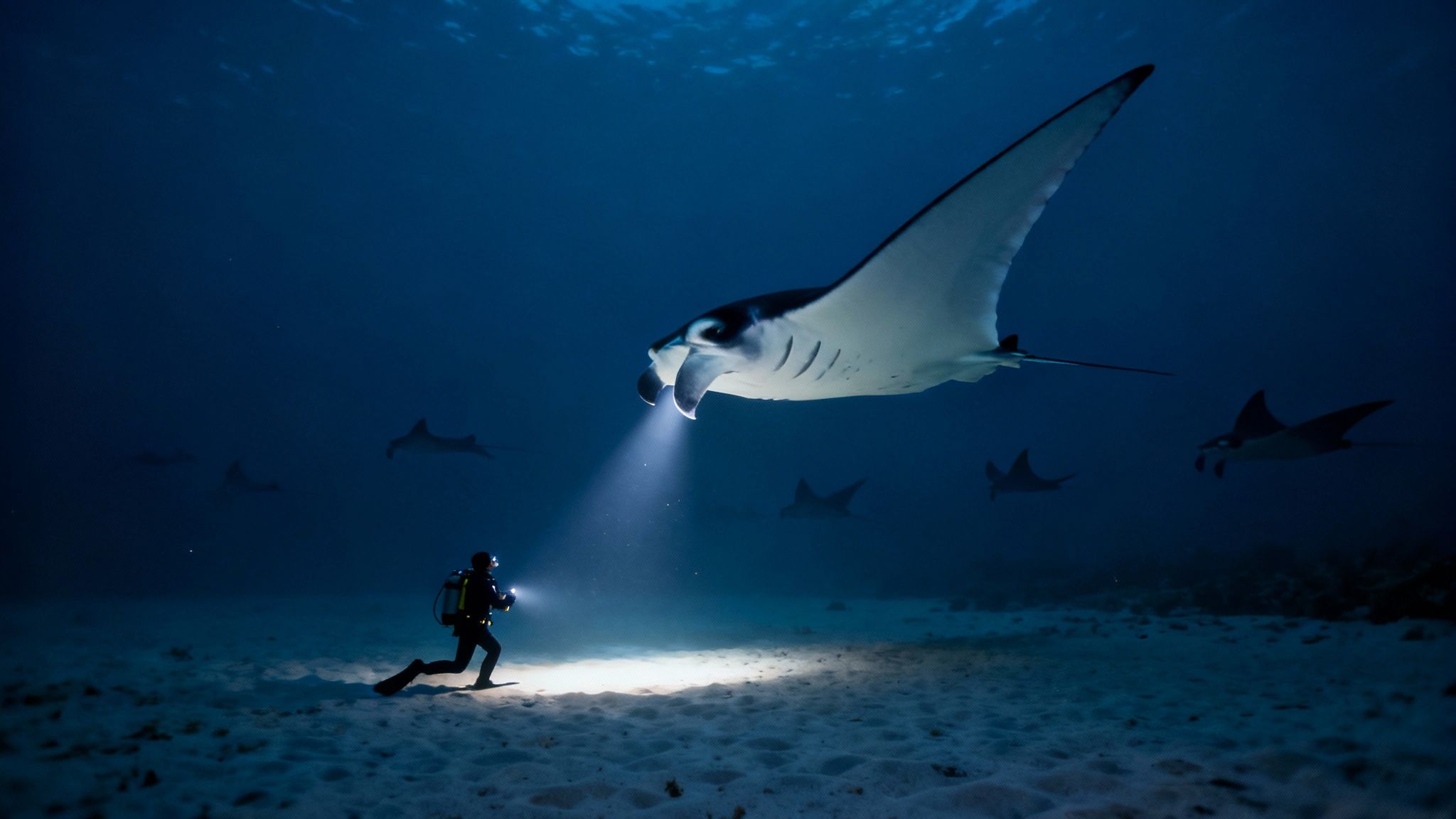
Imagine dropping into the warm, dark Pacific Ocean. As you settle on the sandy bottom, huge, graceful shadows start to swoop and dance through the beams of light piercing the darkness. This is the Kona manta ray night dive, a surreal underwater ballet that's become one of the most famous marine encounters on the planet.
This guide is your complete walkthrough for this incredible experience. We'll cover everything you need to know to prepare for an unforgettable night with Kona's gentle giants.
What Makes the Kona Manta Ray Dive a Global Phenomenon
The Kona Manta Ray Night Dive isn't just another dive; it's an experience that truly sticks with you. What started by pure chance back in the 1990s has now become a must-do adventure, pulling people to the Big Island from all over the world just to see this natural feeding frenzy up close.
The whole thing works because of a simple, brilliant setup. Dive operators place powerful, stationary lights on the ocean floor, aiming them straight up. These bright beams act like a massive bug zapper for the ocean, attracting clouds of microscopic plankton—the favorite food of manta rays.
Before you know it, the mantas arrive for their all-you-can-eat buffet. They glide, swoop, and perform effortless barrel rolls right through the light beams, scooping up mouthfuls of plankton. You get a front-row seat to this silent, mesmerizing dance, often just inches away. It’s an experience that feels both otherworldly and deeply personal.
A World-Class Marine Encounter
The buzz around this dive is no exaggeration. It's easily one of the most popular marine wildlife encounters in the world, bringing in around 80,000 visitors every single year.
What's really incredible is how reliable it is. The success rate for spotting mantas hovers between 80% and 90% all year long. On a typical night, you can expect to see 6 to 10 of these massive creatures, but lucky groups have seen as many as 36 mantas on a single dive. You can get more firsthand details about this famous Kona dive from Kona Honu Divers.
This amazing consistency is all thanks to a local population of over 200 identified manta rays that call these waters home. They know where the food is, and they keep coming back. Going with a respected, top-tier operator like Kona Honu Divers ensures your trip is not only breathtaking but also safe and responsible.
Choosing the Best Manta Dive Site in Kona
When you're planning a manta ray night dive in Kona, the most important decision you'll make is where you go. While the Big Island is famous for its manta encounters, not all dive sites are created equal. The two main spots are Manta Village (near Keauhou Bay) and Garden Eel Cove (closer to the airport). While both can attract mantas, Garden Eel Cove is the superior choice for a consistently incredible experience due to its protected location, better viewing area, and healthier surrounding reefs.
From years of experience, I can tell you one spot consistently delivers a more magical and reliable show. Let's get into why picking the right location is the difference between a good night and an unforgettable one.
Why Garden Eel Cove is the Premier Manta Dive Site
The secret is all about geography. Garden Eel Cove is tucked into a naturally protected bay, shielding it from the big southern ocean swells that often roll into other parts of the Kona coast, especially Manta Village. This protection is a total game-changer for the manta ray night dive in Kona.
Because it's so sheltered, trips to Garden Eel Cove are cancelled far less often due to rough seas. The water is almost always calmer and clearer, which means better visibility and a much more pleasant experience for everyone, whether you're diving or snorkeling. This superior location offers a more comfortable and reliable adventure.
Plus, the reef itself is spectacular and one of the most vibrant and healthy coral ecosystems in the area. The first dive on a two-tank trip is usually a twilight tour of this reef, which is a perfect warm-up for the main event and showcases the beauty of the Big Island's underwater world.
The "Campfire": A Better Way to See the Mantas
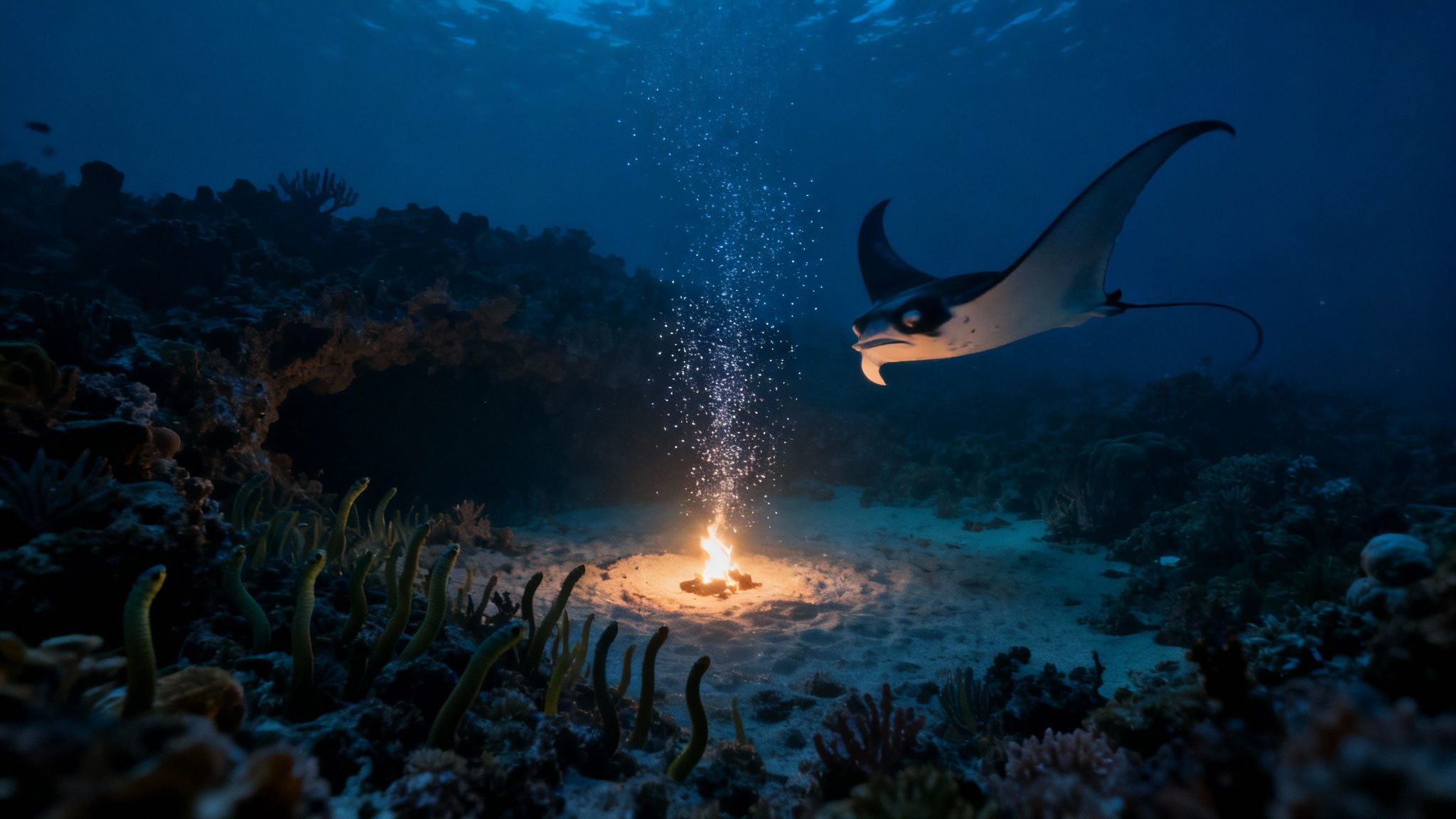
What truly elevates Garden Eel Cove is the organized viewing setup, known as the "campfire." Here, all the tour operators have agreed to place their powerful lights in a single, central spot on the sandy bottom. This creates one massive, concentrated beam of light that draws in a thick cloud of plankton—the mantas' favorite food.
This campfire method is like ringing a dinner bell. It brings the mantas to one specific, brightly-lit stage. For divers, it means you get an incredible, front-row seat as these giants perform their graceful, looping ballet right over your head, sometimes just inches away.
This coordinated approach is far more effective than at other sites where lights can be scattered, resulting in a more diluted experience. At the campfire, everyone gets an amazing, up-close view, making it the best way to experience a manta ray night dive in Kona. To really understand the different options, you can learn more about where to see manta rays in Hawaii in our complete guide.
Manta Ray Dive Site Comparison Kona, Hawaii
So, how do the two main sites stack up against each other? While Manta Village was the original spot and can still have its good nights, its exposed location makes it far less predictable. Here’s a quick breakdown to highlight why Garden Eel Cove is the superior choice.
| Feature | Garden Eel Cove (Superior Choice) | Manta Village |
|---|---|---|
| Location & Protection | Sheltered cove, protected from south swells. Far fewer cancellations. | Exposed point, highly susceptible to ocean swells. More frequent cancellations. |
| Water Conditions | Typically much calmer and clearer water for better visibility. | Can be rough, choppy, and have lower visibility. |
| Viewing Area | A centralized 'campfire' ensures optimal, up-close viewing for all. | Viewing is more spread out and less organized, potentially diminishing the experience. |
| Reef Quality | A vibrant, healthy reef system makes for a beautiful first dive. | The reef is good, but can be less pristine than Garden Eel Cove. |
| Overall Experience | More reliable, comfortable, and consistently amazing manta encounters. | The original site, but with far less predictable conditions and a higher risk. |
Ultimately, choosing a proven site with calm conditions and a better viewing setup gives you the best odds for a mind-blowing experience. By going with an operator who makes Garden Eel Cove their primary destination, you're making sure your adventure is as magical as it can possibly be.
Your Manta Ray Adventure from Sunset to Showtime
The magic of a manta ray night dive in Kona isn't just about what happens underwater—it's a full-evening experience. The whole adventure, from gearing up at the harbor to the final boat ride back, is designed to build up to that incredible underwater show. So, what’s it really like from start to finish?
Your trip begins in the late afternoon when you meet the dive crew. This isn't just a quick hello; it's where you get the full rundown on safety, your gear, and a fascinating introduction to the gentle giants you’re about to meet. They’ll cover the strict rules of passive observation, making sure everyone knows how to be a responsible guest in the mantas' world.
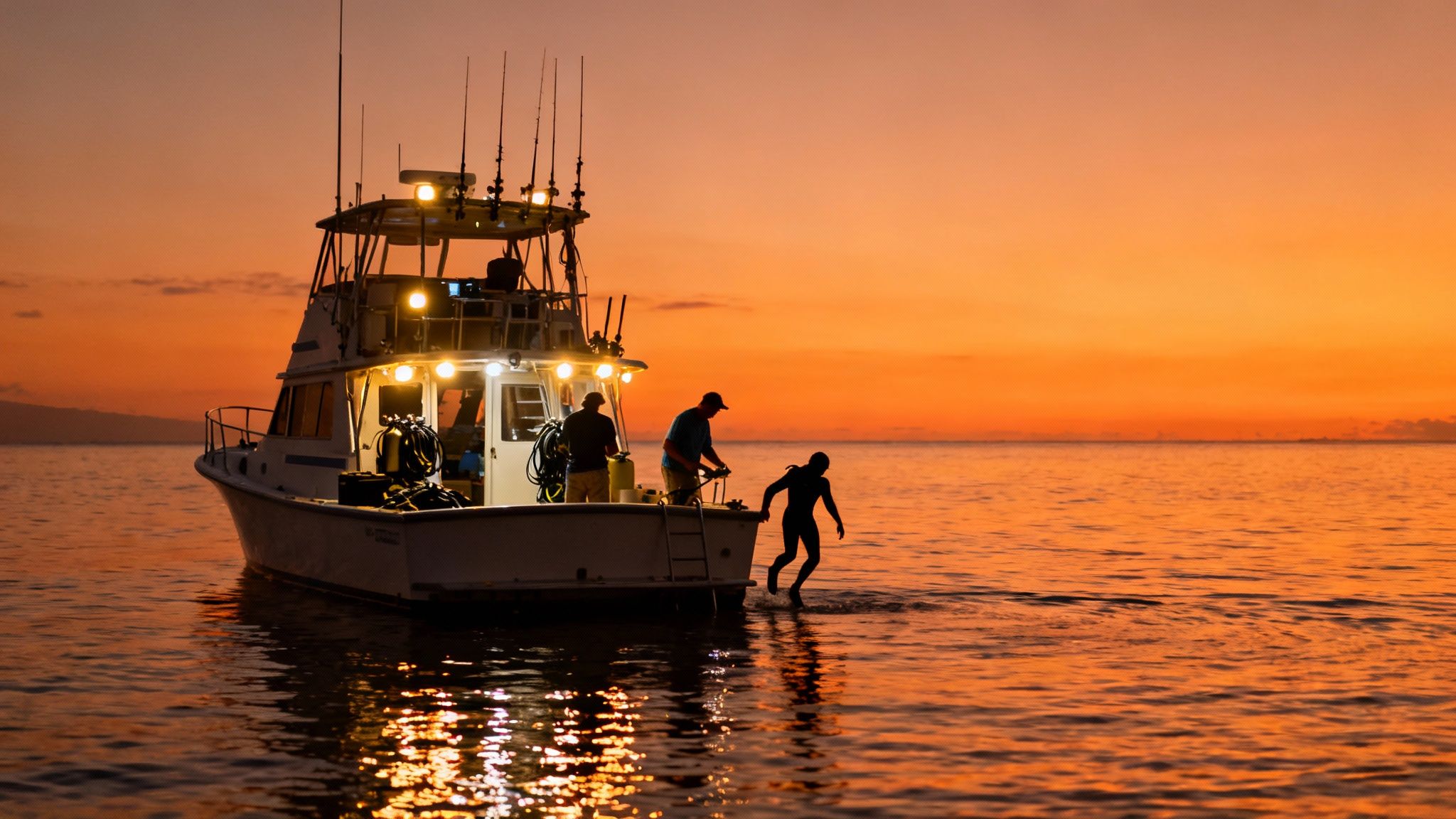
With everyone on board, the boat heads out to the dive site. This cruise is a highlight all on its own. You get stunning views of the Kona coastline as the sun starts to dip, casting that incredible golden glow over everything. There's a certain calm that comes with watching a Hawaiian sunset from the water, and it perfectly sets the stage for the night ahead.
The Twilight Reef Dive
Before the main event, you'll get to do a twilight reef dive. As the last bit of sun disappears, you’ll descend into a world that's changing by the minute. This first dive is your chance to explore the coral gardens as the daytime fish head for bed and the nocturnal critters start their day. It’s a great way to get comfortable in the water and see the reef’s daily changing of the guard.
Watching this shift is a truly unique experience. You might spot parrotfish creating their protective sleeping bubbles or see the first octopuses venturing out to hunt. This dive is the perfect warm-up, letting you get used to the logistics of night diving in a relaxed setting. If you're new to diving after dark, our guide on what to expect when scuba diving at night has some great tips.
Showtime: An Underwater Ballet
After coming up for a surface interval—complete with snacks and a final briefing—it's time for the show. You’ll head back down, this time settling on a sandy spot on the ocean floor. Your guide, along with other operators, sets up an underwater "campfire" of powerful, upward-facing lights. This bright beacon acts like a magnet for clouds of plankton, the mantas' favorite meal.
And then, you wait. The anticipation in the darkness is absolutely electric. Before long, the first giant, shadowy figure glides into the light. One by one, more mantas arrive, performing a silent, looping ballet just inches above your head. They swoop and barrel roll with impossible grace, their huge mouths wide open to filter the plankton. And this isn't a rare fluke. Between 2009 and 2014, researchers recorded an average of six mantas per night, with sightings on 80% or more of all nights!
Snorkelers get an equally amazing view from the surface. They hold onto a custom floatation board with lights pointing down, which brings the mantas right up to them. After about 45 minutes of pure awe, you’ll ascend and head back to the boat. The ride to the harbor is always filled with buzzing, excited chatter as everyone shares their favorite moments, often over a warm cup of hot cocoa.
How to Prepare for a Safe and Responsible Dive
Getting ready for a manta ray night dive in Kona isn't just about grabbing your gear and hopping on a boat. A little prep work goes a long way in making sure you have an incredible, safe, and respectful experience. Your tour operator will handle the big stuff like tanks, weights, and the powerful lights that attract the plankton, but a few personal items can make your adventure much more comfortable.
First things first, don't forget your certification card and logbook! You'll also want to pack the basics: a swimsuit, a towel, and something warm like a hoodie or windbreaker. Even in Hawaii, the boat ride back can feel brisk after an evening dip. Most boats have snacks and drinks, but it's always smart to bring your own reusable water bottle.
Gearing Up for Comfort
Kona's water is wonderfully warm year-round, usually hovering somewhere between the mid-70s and low-80s Fahrenheit. That said, this isn't a typical dive where you're constantly moving and generating heat. You'll be settled on the seafloor for about 45 minutes, and that lack of movement can make you feel a chill.
This is why a good wetsuit is a must. For most people, a 3mm wetsuit is plenty. But if you know you get cold easily, don't be a hero—grab a 5mm suit. Trust me, you'll be glad you did. A warm diver is a happy diver, and a happy diver can fully soak in the magic happening right in front of them.
The Golden Rule of Manta Encounters
Now for the most important part of your preparation: understanding how to interact with these gentle giants. Manta rays are wild animals, and their skin is covered in a delicate, protective mucus layer. Think of this coating as their immune system, warding off nasty bacteria and infections.
The number one rule is passive observation. Simply put: no touching, no chasing, and definitely no trying to ride the manta rays. Any contact from our hands can rub off their protective slime coat, leaving them exposed to disease. Our job is to be respectful guests in their home, ensuring they stay healthy for generations to come.
This hands-off policy is what makes the whole experience sustainable and ethical. If you want to learn more, take a look at our guide on being a responsible and considerate diver.
Night Diving Safety Essentials
Diving after dark is a whole different world, and it comes with its own set of safety rules. Your guide will walk you through everything in the pre-dive briefing, but it helps to have these points in mind beforehand.
- Buoyancy is Key: You absolutely need solid buoyancy control. Since you'll be kneeling or sitting on the sandy bottom, the goal is to stay put without kicking up a sandstorm or floating up into the mantas' feeding path.
- Stay with Your Guide: This is non-negotiable. Stick with your group and always keep your divemaster in sight. They know the site inside and out and are your lifeline for a safe dive.
- Responsible Light Use: Your dive light is essential, but it can also be a nuisance if used improperly. Be mindful not to shine it directly in another diver's face or into the eyes of the marine life. Your guide will show you where to point your beam—usually down toward the sand or up into the water column to attract plankton.
Following these guidelines isn't just about your own safety; it's about making sure the experience is positive and respectful for everyone involved—mantas included.
Don’t Just Stop at the Mantas—Kona Has More World-Class Diving
The manta ray night dive might be the star of the show, but it’s just the opening act for everything Kona has to offer. The Big Island is a year-round diving paradise, shaped by volcanic fire and home to a truly unique underwater world. Your days here can be just as thrilling as your nights, spent navigating dramatic lava tubes, drifting over vibrant reefs, and meeting marine life you won't find anywhere else.
Kona’s geology is the real artist here. Ancient lava flows have sculpted an incredible underwater landscape of arches, caverns, and dramatic swim-throughs. By day, these structures are bursting with color and life, creating the perfect counterpoint to the main event. Seeing it for yourself is when you truly realize a dive trip here is so much more than a single evening.
The Kona Blackwater Dive: A Trip to Inner Space
If you're a diver who truly craves adventure, Kona has something special for you. Picture this: you're miles offshore, suspended in the deep, dark ocean with nothing but the endless black below you. This is the Kona Blackwater Dive, and it’s about as close to exploring another planet as you can get.
You’re there to witness one of nature's most spectacular and bizarre nightly events. Strange, often bioluminescent creatures journey up from the crushing depths to feed near the surface. You'll encounter things that look like they're straight out of a sci-fi movie—larval fish that bear no resemblance to their adult selves, pulsing jellies glowing with their own internal light, and other alien-like critters you’d never see near a reef. For seasoned divers, this is a can't-miss experience.
Ready for a Challenge? Advanced Diving Awaits
For those with the experience and the drive to go deeper, Kona delivers. Advanced dive charters are your ticket to the more remote, challenging, and untouched corners of the island's coastline. These are the pristine sites where you can find sharks resting in lava tubes or get lost in massive, swirling schools of jacks.
These trips demand solid skills, especially good buoyancy control and confidence at depth, but the rewards are incredible. You get to see a side of Kona that most divers miss. It’s the perfect way to round out a full dive vacation and push your own boundaries. Check out some of the advanced dive tours available.
To see everything on offer, from the famous manta dive to these exclusive advanced charters, check out the complete list of Kona diving tours.
Why Your Dive Supports Manta Ray Conservation
When you join a manta ray night dive in Kona, you're doing so much more than checking off a bucket-list item. You're actually stepping into the role of a citizen scientist and playing a part in protecting these incredible animals for generations to come.
This isn't just tourism; it's a symbiotic relationship. Your presence on the dive directly fuels research that would be incredibly difficult—if not impossible—to conduct otherwise. Every observation adds to a bigger story of discovery and stewardship.
By choosing a responsible, eco-conscious operator, you transform an amazing adventure into a powerful act of conservation. It adds a whole new layer of meaning to an already unforgettable night.
The Manta Identification Project
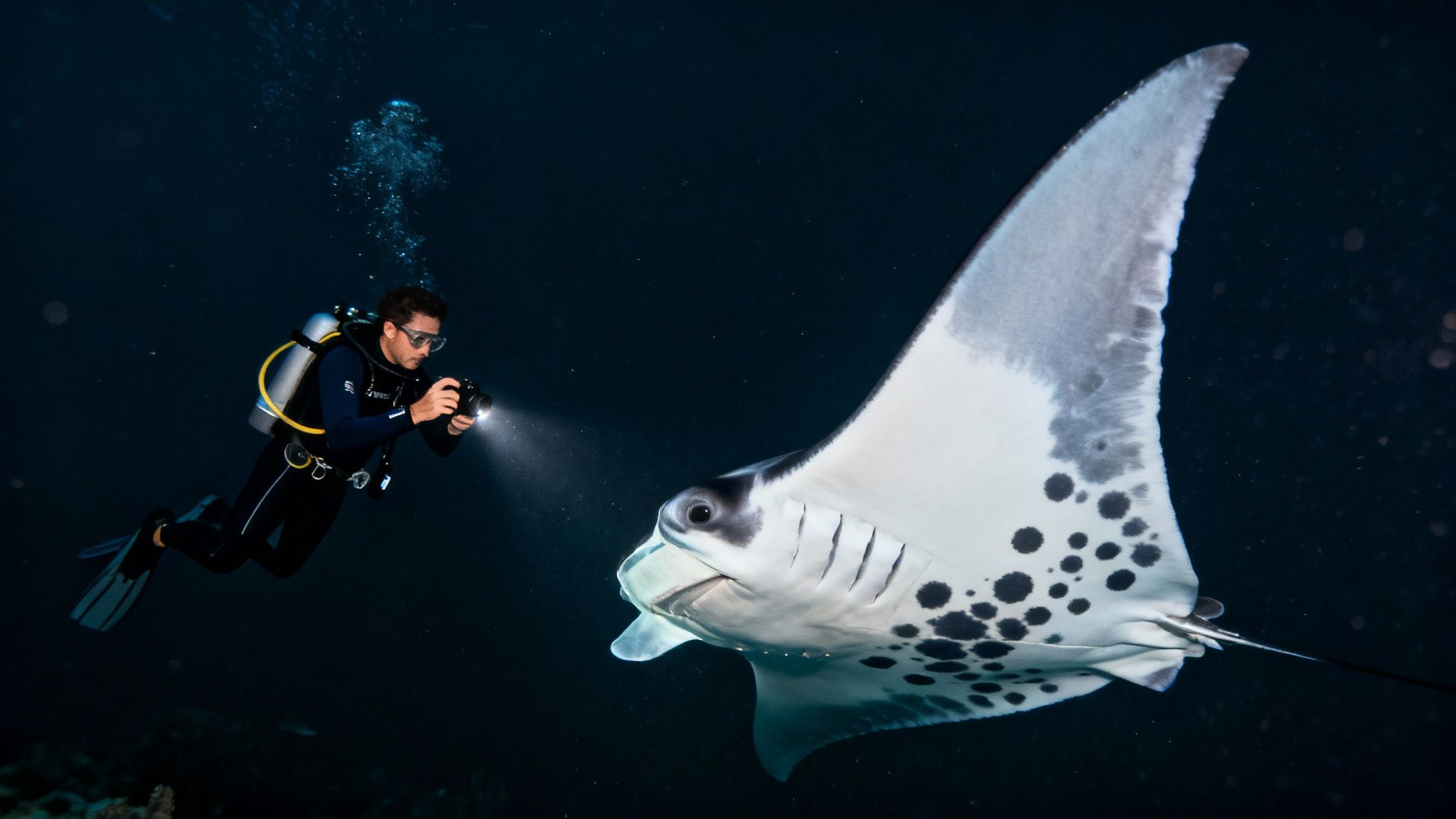
The heart of this conservation effort is a brilliant research initiative known as the Manta Identification Project. It works because, just like a human fingerprint, the black-and-white spot patterns on a manta ray’s belly are totally unique. Seriously, no two are alike.
For years, local researchers and dive guides have been photographing these belly patterns, creating an impressive catalog of Kona's resident manta population. They’ve identified and named over 300 individual mantas, from local legends like "Big Bertha" and "Lefty" to brand-new juveniles just joining the nightly feast.
So while you're mesmerized underwater, your guide is often multitasking. They're not just keeping you safe; they're actively documenting which mantas have shown up for dinner that night, feeding crucial data back into the project.
How Your Dive Becomes Data
The manta ray night dive in Kona has become an absolute powerhouse for marine research. This massive identification effort has now cataloged over 300 individual manta rays and logged more than 10,000 sightings—and those numbers keep growing. This gives scientists an unbelievable amount of information about the population's size, movements, and even their social structures. You can learn more about this groundbreaking work on the Oceanographic Magazine website.
This consistent, night-after-night observation provides a treasure trove of data that helps researchers answer critical questions:
- Population Health: Are the manta numbers stable, or are they changing over time?
- Social Behavior: Do certain mantas hang out together? Is there a pecking order at the dinner table?
- Life Cycles: How often do females get pregnant? Where do they go to give birth?
- Migration Patterns: Do our mantas stick around Kona, or do they travel to other islands?
By simply showing up for your dive, you are supporting the very platform that makes this research possible. Your tour fees help pay for the boats, the crew, and the time it takes for guides to collect this data, turning your dive into a direct investment in protecting these gentle giants.
When you book your tour with a reputable company like Kona Honu Divers, you can be confident your adventure aligns with the highest standards of conservation.
You're not just a spectator here; you're part of the solution. Your dive helps ensure that the incredible underwater ballet you're about to witness will continue to mesmerize divers for many years to come.
Your Manta Ray Night Dive Questions Answered
It’s totally normal to have a few questions buzzing around your head, even after getting the rundown on this incredible adventure. When you're planning a once-in-a-lifetime trip like the manta ray night dive in Kona, you want to feel completely confident before you commit.
To help you get there, I’ve put together answers to the most common questions I get from both divers and snorkelers. Let's clear up those last few details so you can book your spot.
Is the Manta Ray Night Dive Safe for Beginners?
Absolutely. I know the words "night dive" can sound a little intimidating, but this whole experience is built from the ground up with safety in mind. The main site we use, Garden Eel Cove, is a pretty chill spot—it’s sheltered, relatively shallow at 25-40 feet, and the conditions are usually calm.
Plus, you're never on your own. Every group is led by seasoned guides who give a detailed briefing beforehand and stick with you the whole time. Divers aren't even swimming around; you'll get settled in one spot on the sandy bottom, which means no tricky navigation to worry about. If you're a certified open water diver and you’re comfortable in the water, you'll be just fine.
What Is the Best Time of Year to See Manta Rays in Kona?
This is one of the best parts about the Kona experience: you can see the mantas all year long! We have a resident population here, which means they don't pack their bags and migrate. They stick around, giving us a consistent 80-90% success rate for sightings, no matter the season.
The only thing that really changes is the weather. While Kona is beautiful year-round, the summer months often bring exceptionally calm, clear water, which just makes the whole boat ride and dive that much more pleasant.
Can I Go as a Snorkeler Instead of a Diver?
You bet, and trust me, you won't miss out on the magic! The setup for snorkelers is actually pretty ingenious. You'll hang onto a specially designed float board that has powerful lights shining straight down into the ocean.
Think of it like a floating dinner plate. The lights attract the plankton right to the surface, and the mantas come swooping up from below to feed, sometimes just inches from your face. You get a spectacular, top-down view of the whole ballet.
Why Can't We Touch the Manta Rays?
This is the golden rule, and it’s a crucial one. A manta ray's skin is covered in a protective mucus coating—it’s basically their immune system, fighting off bad bacteria and infections.
When you touch a manta, you can wipe off that vital slime layer, leaving them exposed to disease. It also stresses them out and can scare them away from their dinner. To keep these beautiful animals safe and returning night after night, we have a strict "no-touching" policy. We're just there to watch, like respectful guests in their underwater dining room.
Ready to see this incredible underwater show for yourself? Kona Honu Divers runs a top-notch manta ray dive tour out to Garden Eel Cove, where the experience is safe, responsible, and something you'll never forget.