
Key Highlights Of The Kona Manta Ray Night Dive

Here’s a quick-reference table that lays out the essential details you need before jumping in.
| Feature | Details |
|---|---|
| Sightings Success Rate | 85–90% |
| Average Dive Depth | 30–45 ft |
| Typical Duration | 1½–2 hours |
| Best Months To Go | April–November |
Use this overview to set realistic expectations and fine-tune your dive plan.
Up-Close Encounters Under The Lights
Diving at Kona means slipping beneath the surface into a glowing halo of lights that attract plankton—and with it, graceful manta rays. Most nights, divers come away thrilled by the 85–90% chance of seeing these gentle giants weaving softly around the lights.
Key Advantages
- Consistent sighting rates above 85%, so you’re almost guaranteed a manta encounter.
- Shallow depths of 30–45 ft that welcome both beginners and seasoned divers.
- Nighttime plankton glow creates a surreal, almost dreamlike underwater scene.
- An extended season from April–November, giving you plenty of booking flexibility.
Plankton And Feeding Behavior
The Kona coast features a natural bay that funnels nutrient-rich plankton toward strategically placed lights. Mantas circle in a feeding “vortex,” sweeping through clouds of bioluminescent particles like dancers in a spotlight.
Sighting Frequency And Seasonality
Resident mantas patrol these waters nightly from late spring through early winter. On average, each dive yields six to eight manta sightings, with exceptional evenings sometimes topping a dozen.
Safety And Scheduling
Expert guides walk you through pre-dive briefings on light placement and proper positioning on the sea floor. Tours launch from Kailua-Kona harbor after dusk and typically wrap up by midnight, leaving time for a late dinner or an early night’s rest.
Advance reservations are recommended, as groups are capped to maintain clear visibility and comfort.
Book early to secure manta ray dive tour.
Understanding The Manta Ray Night Dive Experience
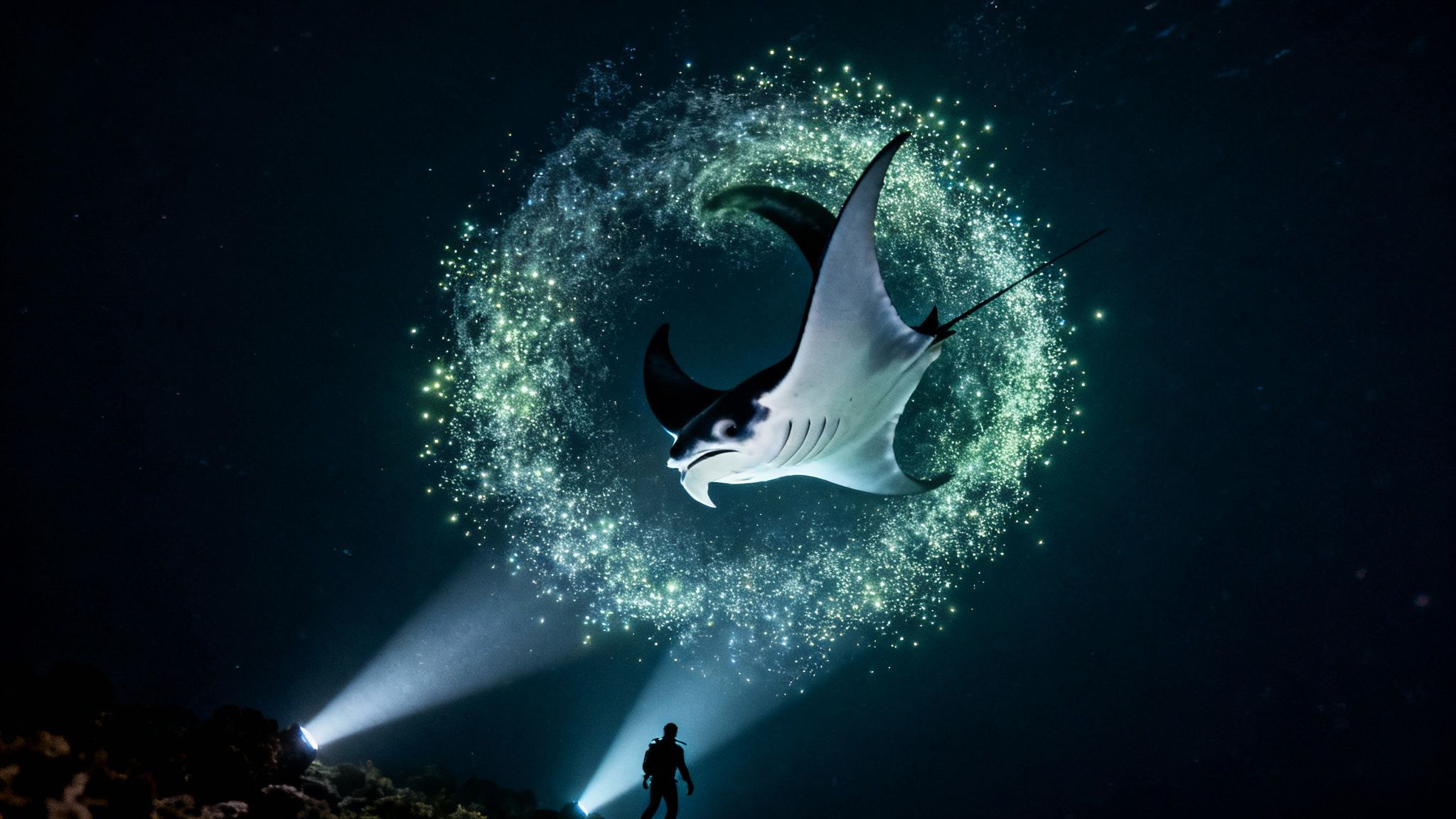
Diving beneath Kona’s starlit sky feels like stepping into another realm. Powerful lamps draw in tiny plankton, creating a luminous pillar that mantas can’t resist. As these gentle giants sweep through the glow, they twist and turn in a hypnotic underwater ballet.
- Key behaviors include graceful spirals, somersaults, and serene glides
- Lights are suspended 15–20 feet above the seabed for peak visibility
- Each excursion boasts an 85–90% sighting success rate
How Lights Create A Feeding Dance
Think of the lamps as nightlights for microscopic sea creatures. Plankton cluster in the beam, turning the water into a swirling buffet. Mantas approach slowly, unfurl their cephalic lobes like wings, and funnel food directly into their gill slits.
“Watching a manta ray spiral through bioluminescent particles feels like witnessing a ballet of the sea.”
On a typical evening, you might see half a dozen mantas rotating through the lighted column. Water clarity and the strength of the current can shift how vividly you perceive each arc and roll.
Observing Graceful Barrel Rolls
When mantas carve barrel rolls in the illuminated water, their gill slits catch the plankton, filtering meals in mid-dance. These ribbons of light against the dark sand make every flip look like a brushstroke on a moving canvas.
The Kona Coast of Hawaii is world-renowned for manta night dives, with a consistent 85% to 90% chance of sightings. Learn more about sighting success rates on Kona Honu Divers.
Booking Your Manta Dive With Kona Honu Divers
Ready to reserve your spot? Head to Kona Honu Divers’ 2-Tank Manta Dive and Snorkel tour page to see schedules, pricing, and available add-ons.
Tours launch from Kailua-Kona harbor at dusk and last about ninety minutes underwater. Group sizes are kept small to give you an unobstructed view of every wingbeat.
Whether this is your first dive or your fiftieth, the Kona manta night dive will leave you breathless. Book early to secure a front-row seat to one of the ocean’s most exclusive performances.
Preparing For Your Night Dive Kona
Getting ready for Kona’s famous manta night dive starts long before you hit the water. It pays to book smart with an operator known for top-notch safety and service. For a full Big Island lineup, check out Kona Honu Divers’ diving tours page.
Building confidence underwater is all about certification. Most outfits will ask for your Open Water SCUBA card, and upgrading to Advanced Open Water gives you more flexibility if you want deeper profiles or even Kona blackwater night dives. Experienced divers can also book a Premium Advanced 2-Tank Trip for deeper and more challenging dives.
Ideal fitness means handling currents and gear with ease. Think of a quick pool session or a practice dive in clear shallows as your warm-up—it’s like stretching before a big race. When you arrive relaxed, you’ll be poised to watch plankton light up the night.
Recommended Training Dives
- Try a shallow daytime reef dive to nail buoyancy.
- Book a night orientation dive in calm, controlled waters.
- Log at least 10 night dives before you dive into Kona’s manta scene.
Each outing builds familiarity with dive lights and gear. Hover-drill practice, for instance, is like learning to hover a drone—it keeps you stable on the sandy bottom.
Pre-Dive Hydration, Rest And Gear
Staying hydrated is key. Aim for 2–3 liters of water daily, especially in the two days leading up to your dive.
Proper rest—shoot for 7–8 hours of sleep—helps you avoid nitrogen narcosis and keeps your reflexes sharp.
- Primary dive light and backup torch
- Surface marker buoy and reel
- Low-volume mask to reduce drag
- 5mm wetsuit (or thicker, depending on the season)
- Fins with adjustable straps for all-night comfort
Don’t forget sealed snacks and a warm change of clothes. That way, you’ll stay energized and cozy as you head back to shore.
“Preparation is the secret to comfort underwater,” notes a Kona Honu Divers instructor.
Pre-Dive Briefing And Boat Logistics
We meet at Kailua-Kona Harbor at least 60 minutes before splash time. Guides walk you through light setup, hand signals, and safety procedures.
This runway of preparation means you can fine-tune your kit, test your lights, and clear up any last-minute questions.
- Assemble tanks and weight belts in shaded loading zones
- Review dive tables or program your dive computer
- Stow personal items in dry bags on deck
- Perform a detailed buddy check
Confidence on your Manta Ray Night Dive Kona comes when every detail is in place.
Before boarding, confirm your dive computer is set to the correct gas mix and altitude settings. Apply reef-safe sunscreen and secure any loose gear. With these last steps checked, you’ll launch confidently into your manta ray night dive kona.
Enjoy an unforgettable underwater performance.
Choosing Garden Eel Cove For Manta Ray Night Dive
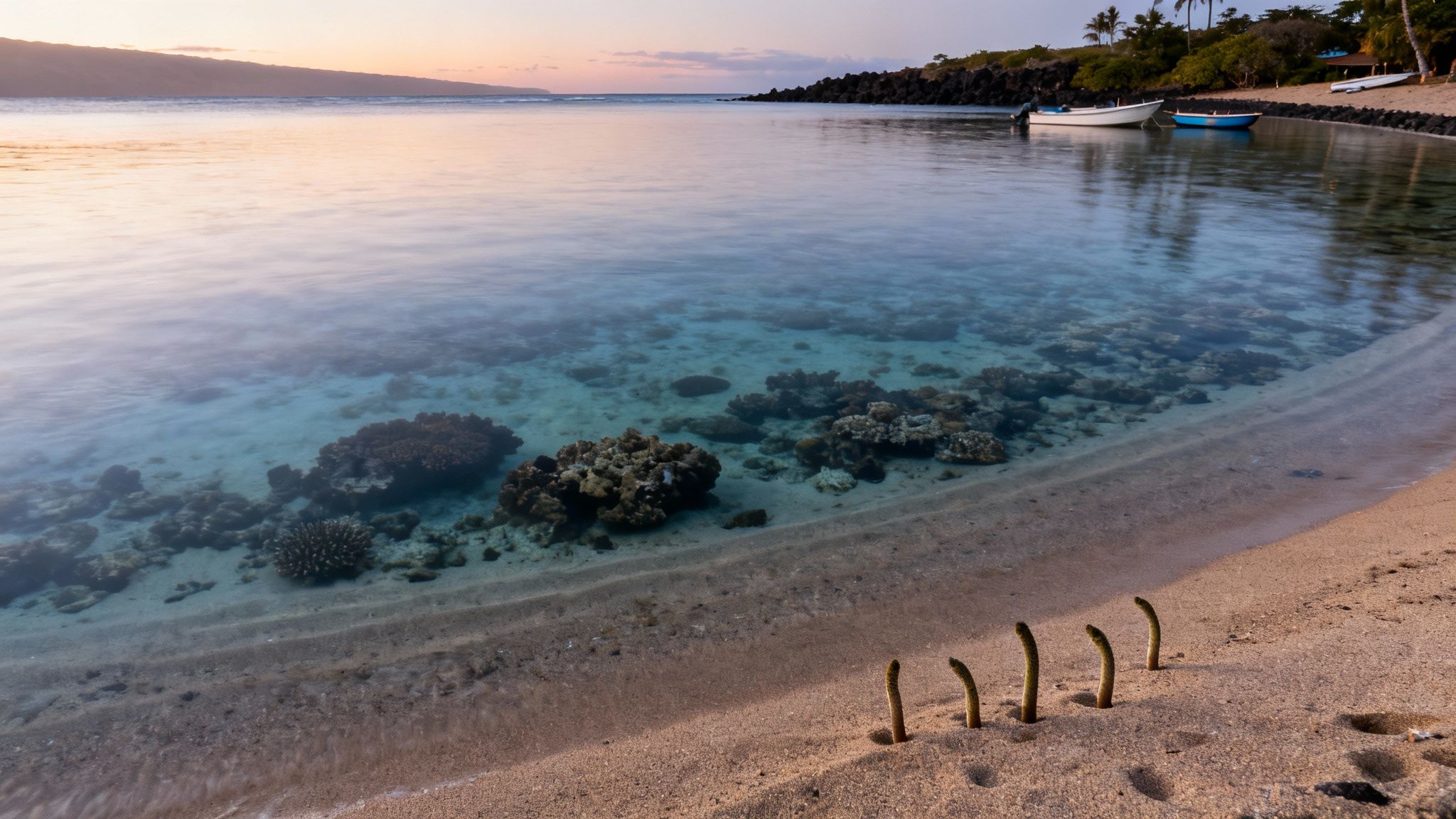
Garden Eel Cove feels like a secret amphitheater under the Hawaiian night sky. Its protected bay softens currents, making it easier for divers to relax on the sandy bottom. Meanwhile, coral ridges funnel plankton into a natural spotlight where mantas perform their graceful feeding dances.
Comparison Of Kona Manta Ray Dive Sites
To pick the perfect Kona manta dive, it helps to see how the leading spots compare. Below is a snapshot of average manta counts, sighting success rates, and typical depths at three popular sites.
| Dive Site | Average Mantas Per Night | Sighting Success Rate | Water Depth |
|---|---|---|---|
| Manta Village | 4 | 96% | 30–45 ft |
| Manta Heaven | 11 | 90% | 30–40 ft |
| Garden Eel Cove | 6 | 95% | 25–35 ft |
This side-by-side view highlights why Garden Eel Cove strikes a balance between high manta encounters and a more intimate setting. Even on quieter nights, you’re almost guaranteed to see a half dozen gentle giants.
Garden Eel Cove Highlights
Diving here feels like having front-row seats at an underwater performance. Key features include:
- Curved Inlet: Concentrates plankton in one spot, so mantas circle right above you.
- Low Diver Count: Fewer people in the water means you get up close without feeling crowded.
- Crystal Visibility: Often reaches 100 ft, giving you crystal-clear views of each wingtip.
- Thriving Reef Gardens: Healthy coral ridges support diverse marine life, enriching your dive around the manta spectacle.
Why Garden Eel Cove Excels
The natural inlet acts like a shield, blocking strong swells and creating calm conditions. Coral ridges just off the sand draw mantas within arm’s reach, turning every dive into a personal encounter. Photographers and first-time night divers especially love this site for its ease and drama.
Ready for a deeper dive into how Garden Eel Cove stacks up against neighboring sites? Read our Garden Eel Cove and Manta Heaven guide
- Meet at Kailua-Kona Harbor and board your Kona Honu Divers vessel.
- Position lights 15–20 ft above the seafloor to attract plankton.
- Settle on the sandy bottom and aim torches upward—then watch the show begin.
Learn more and book with Kona Honu Divers at their 2-Tank Manta Dive and Snorkel tour page.
Secure your spot for the Garden Eel Cove manta dive
Conservation Efforts And Research In Kona Manta Dives
Kona’s manta ray night dives double as a vibrant classroom under the stars. Decades of photo-ID and tracking shape the guidelines that keep these graceful creatures safe. Every guest on the deck becomes part of a citizen-science team.
It’s a bit like assigning fingerprints to each manta. Local dive operators work side by side with marine biologists, matching spot patterns and mapping movement. The result? More informed dive practices and healthier manta populations.
- Photo-ID Dives let scientists catalog individual mantas by their unique spot patterns.
- Citizen Data Logs capture sightings and behavior via simple onboard forms.
- Tagged Mantas reveal long-range voyages, guiding marine protected area boundaries.
Photo Identification And Monitoring
Photo-ID programs invite divers to snap high-resolution shots of manta undersides. Each image is timestamped and geotagged, building an archive now exceeding 1,000 entries. These records fuel student research, community presentations, and outreach events.
“Every unique spot pattern tells a story about manta movement and health.”
Today, this collaboration has cataloged over 300 individual mantas and logged more than 10,000 sightings. Learn more about these manta research findings
Sustainable Tourism And Population Health
Regular surveys monitor reef conditions and tally manta visits at popular feeding sites. That data directly influences:
| Metric | Value |
|---|---|
| Cataloged Manta Rays | 300+ |
| Aggregate Sightings Logged | 10,000+ |
| Years of Continuous Research | 30+ |
After each night dive, divers submit sighting logs that feed into conservation strategies. This community-driven feedback loop helps ensure mantas thrive for generations.
For deeper policy context, check out our open letter to Hawaii State DLNR about manta rules
Book your next research-supporting adventure with Kona Honu Divers’ 2-Tank Manta Dive and Snorkel tour.
Secure your spot below and contribute to ongoing conservation on the Big Island.
Community Participation And Education
Before diving in, you’ll join a short briefing on photo-ID techniques and buoyancy control. Picture yourself hovering like a helicopter—steady and respectful of the animals below. After surfacing, you upload your best shots and observations through the operator’s portal.
- Attend the pre-dive talk to master ID photography.
- Practice perfect hovering to avoid startling mantas.
- Share your images and notes to shape future research.
This collective effort secures Kona’s feeding grounds and keeps the manta legacy alive. Your underwater snapshots truly steer tomorrow’s conservation work.
Expert Tips For A Safe And Enjoyable Night Dive
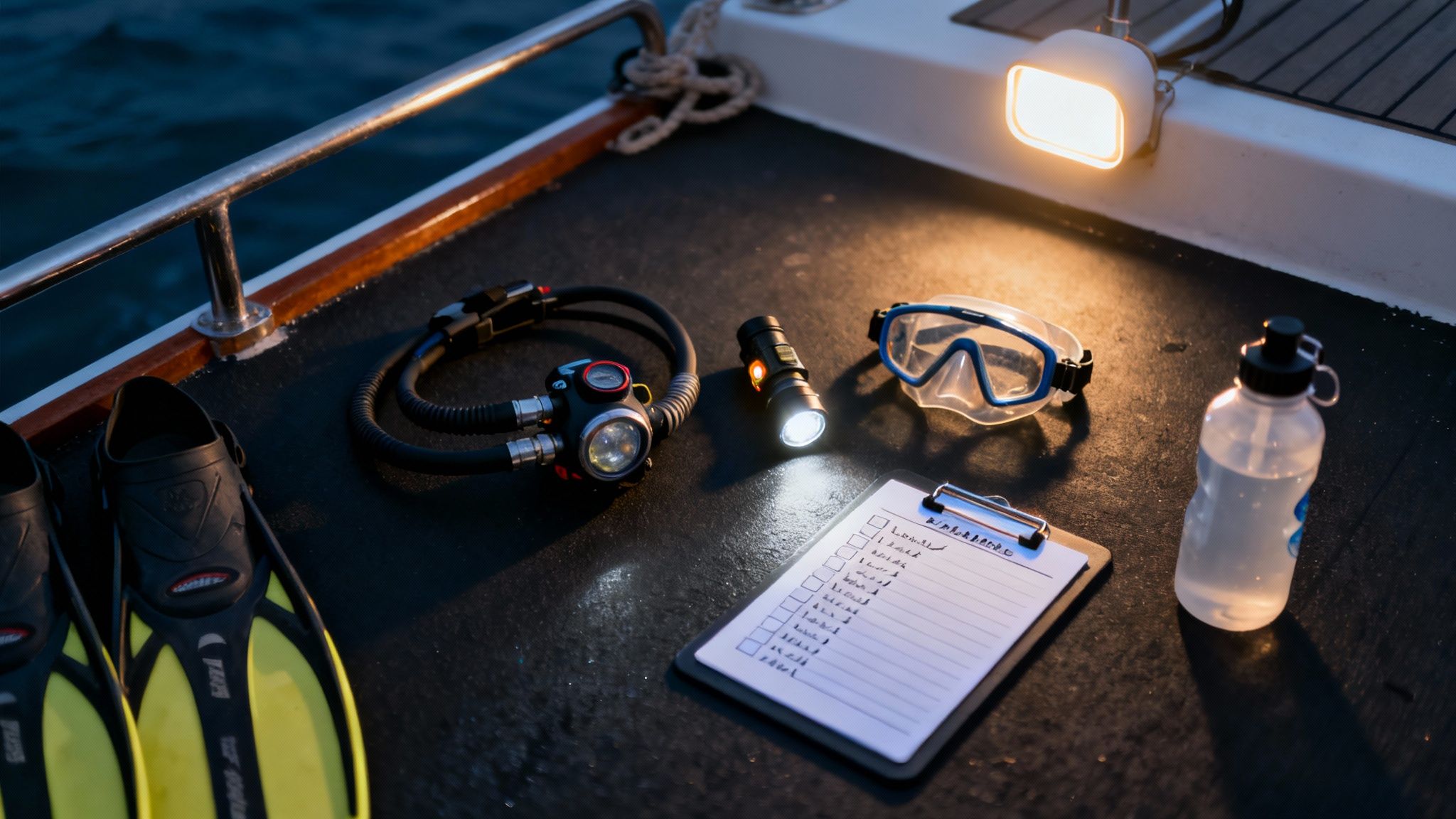
Night dives in Kona offer a world that only wakes after dusk. Pair that with feeding manta rays and you’ve got an adventure like no other.
But to really soak in that magic, a gear check and a plan are essential. With the right setup, you can focus on the mantas instead of your equipment.
Here’s what I never leave behind:
- High-output primary torch (1,200–1,800 lumens)
- Redundant backup light tethered to your BCD
- Dive computer in night mode or with a high-contrast display
- Surface marker buoy for easy tracking at the surface
A low-volume mask, streamlined fins, and a 1,500-lumen primary light strike the perfect balance between brightness and maneuverability.
Light Management Techniques
Flare your beam at about a 30° angle to stir up plankton and draw mantas in. Hold your primary light down and to the side when they approach, then switch to a soft, diffuse mode.
- Position your primary light below the group for that plankton halo.
- Keep a wide beam on standby to catch wing-tip patterns.
- Reserve the narrow beam for swimming between ledges or signaling.
This subtle dance of light helps you capture sharp photos without startling the mantas.
Clear Dive Buddy Communication
In the dark, small signals carry big meaning. We rely on hand gestures and gentle taps to stay in sync.
- Pre-arranged signals for “low air” and “look here”
- Stick within 3 feet so a quick glance tells you everything you need
- Use a gentle tap on the shoulder to grab attention
“Staying in the glow circle makes coordination as easy as day dives,” notes a Kona Honu Divers instructor.
Respectful Wildlife Etiquette
Watch mantas like you would a late-night show—quietly from the wings. Keep your beam off their eyes and aim at the sandy bottom to create that gentle upwelling glow.
Read more about practical night diving techniques in our detailed guide on scuba diving at night.
Preparation And Tracking Bottom Time
Accurate bottom-time tracking keeps decompression stress at bay. Here’s how I stay on top of it:
- Set your dive computer to ping every 10-minute interval
- Jot key times on a small dive slate
- Layer up with a snug wetsuit or drysuit and add a hood for warmth
Currents can shift even on calm nights. Listen to your guide’s advice on weight tweaks—sometimes a slight belt adjustment is all you need for perfect trim.
Following these tips means less distraction and more time watching those graceful mantas. Ready to book? Check out Kona Honu Divers’ 2-Tank Manta Dive and Snorkel.
FAQ About Manta Ray Night Dive Kona
How Do I Book A Manta Ray Night Dive In Kona
Reserving a spot is as easy as visiting Kona Honu Divers’ online booking page or calling their customer service team. We recommend locking in your date early to avoid sold-out tours during the peak-season.
What Certifications Are Required
Most tours require an Open Water SCUBA certification. If you’re aiming for deeper dives, an upgrade to Advanced Open Water is a smart move. Non-certified guests can still join via guided snorkels.
Can Beginners Join A Manta Night Dive
Absolutely. As long as you have basic SCUBA training, you’re good to go. On dive night, instructors offer a quick refresher—from light handling to buoyancy tips—so you feel comfortable before entering the water.
Expectations Under Lights
What Should I Expect Underwater At Night
Picture a glowing column of plankton lit by your dive light, drawing mantas in for dinner. Visibility usually ranges 50–100 ft, meaning the magic happens right where your light shines.
Are There Essential Safety Considerations
Your guide will cover light etiquette, dive-buddy signals, and proper positioning on the sandy bottom. Avoid shining lights into the mantas’ eyes and maintain at least 5 ft of space. A slow, steady breath helps keep interactions calm and respectful.
What If No Manta Rays Show Up
On those rare nights without mantas, most operators offer a free re-book or a discounted second dive. Booking early in your trip gives you room to reschedule without missing other adventures.
- Stay within the guide’s circle above the lights
- Use a red filter or diffuse beam to minimize disturbance
“Maintaining a respectful distance leads to more natural manta behavior,” advises a Kona Honu Divers guide.
Ready for a night dive like no other? Dive with Kona Honu Divers—visit Kona Honu Divers to save your spot today.