
Picture this: you’re floating in the warm, dark Pacific waters off the coast of Hawaii. Suddenly, a massive, graceful shadow glides into the beam of your light, somersaulting in a silent, hypnotic ballet. This is the Kona Manta Ray Night Dive, and it's not just another dive—it's one of the most reliable and magical wildlife encounters on the entire planet.
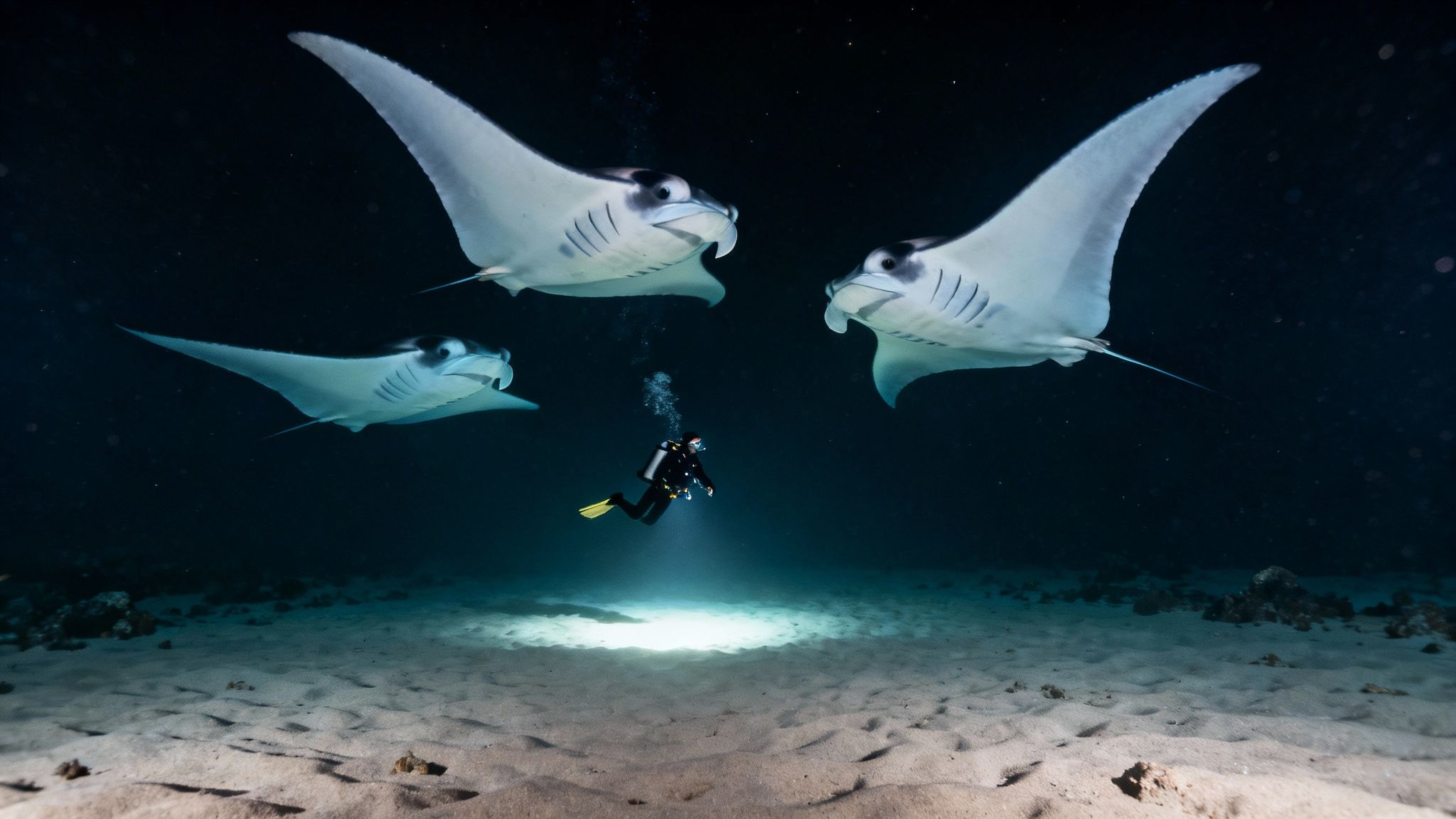
This isn’t just a "maybe you'll see one" kind of trip. This is a bucket-list adventure that draws people from all corners of the globe for an almost-guaranteed spectacle. In this guide, we'll walk you through everything you need to know to make this incredible encounter happen, from the science behind it to choosing the perfect tour.
You'll learn why Kona is the world’s top spot for seeing these gentle giants, what to expect on the boat, and how to watch them safely and respectfully. By the end, you'll be ready to book a manta ray dive tour for what might just be the most awe-inspiring experience of your life.
Why Is Kona the World’s Manta Capital?
The Kona coast of the Big Island isn't just a popular spot; it's a global phenomenon, drawing an estimated 80,000 people every year. The reason is simple: it works. Local operators report an astounding 80% to 90% success rate for manta sightings on their nightly trips. Some of the best outfits even boast an 85-90% success rate, which is practically unheard of for wild animal encounters.
This incredible reliability didn't happen by accident. It all started decades ago when a waterfront hotel left its lights on, illuminating the water. Plankton, tiny marine organisms, were drawn to the light, and soon after, the manta rays came to feast on the plankton. It was a lightbulb moment.
Dive operators realized they could recreate this phenomenon in the ocean. They set up underwater lights—often called the "campfire"—to attract a concentrated buffet of plankton, and the mantas show up for dinner night after night. It’s a brilliant, simple idea that turned the Kona coast into the world's most dependable stage for this underwater show. If you want to learn more, check out the deep dive on the Kona Manta experience.
To get you started, here’s a quick overview of what to expect from this incredible adventure.
Kona Manta Ray Night Dive At a Glance
The table below breaks down the key details you'll need for planning your own manta ray dive in Kona.
| Key Aspect | Details |
|---|---|
| Premier Dive Site | Garden Eel Cove, also known as 'Manta Heaven,' is the superior choice due to its protected location, better viewing area, and healthier reefs. |
| Experience Options | You don't have to be a diver! The experience is open to both certified scuba divers and snorkelers. |
| Sighting Success Rate | The chance of seeing mantas is incredibly high, with most operators reporting 85-96% success year-round. |
| What You'll Witness | Giant manta rays performing breathtaking, graceful acrobatics as they feed on plankton right in front of you. |
| Top-Rated Operator | Kona Honu Divers consistently gets rave reviews for their commitment to safety, small group sizes, and marine conservation. |
With these basics in mind, you're well on your way to planning an unforgettable trip to see these magnificent creatures up close.
## Why Garden Eel Cove Is The Premier Dive Site
When you start looking into a manta ray night dive in Kona, a few locations will pop up. But if you talk to seasoned divers, one name comes up again and again: Garden Eel Cove. We affectionately call it ‘Manta Heaven,’ and for good reason—it’s simply the best place on the planet for this experience.
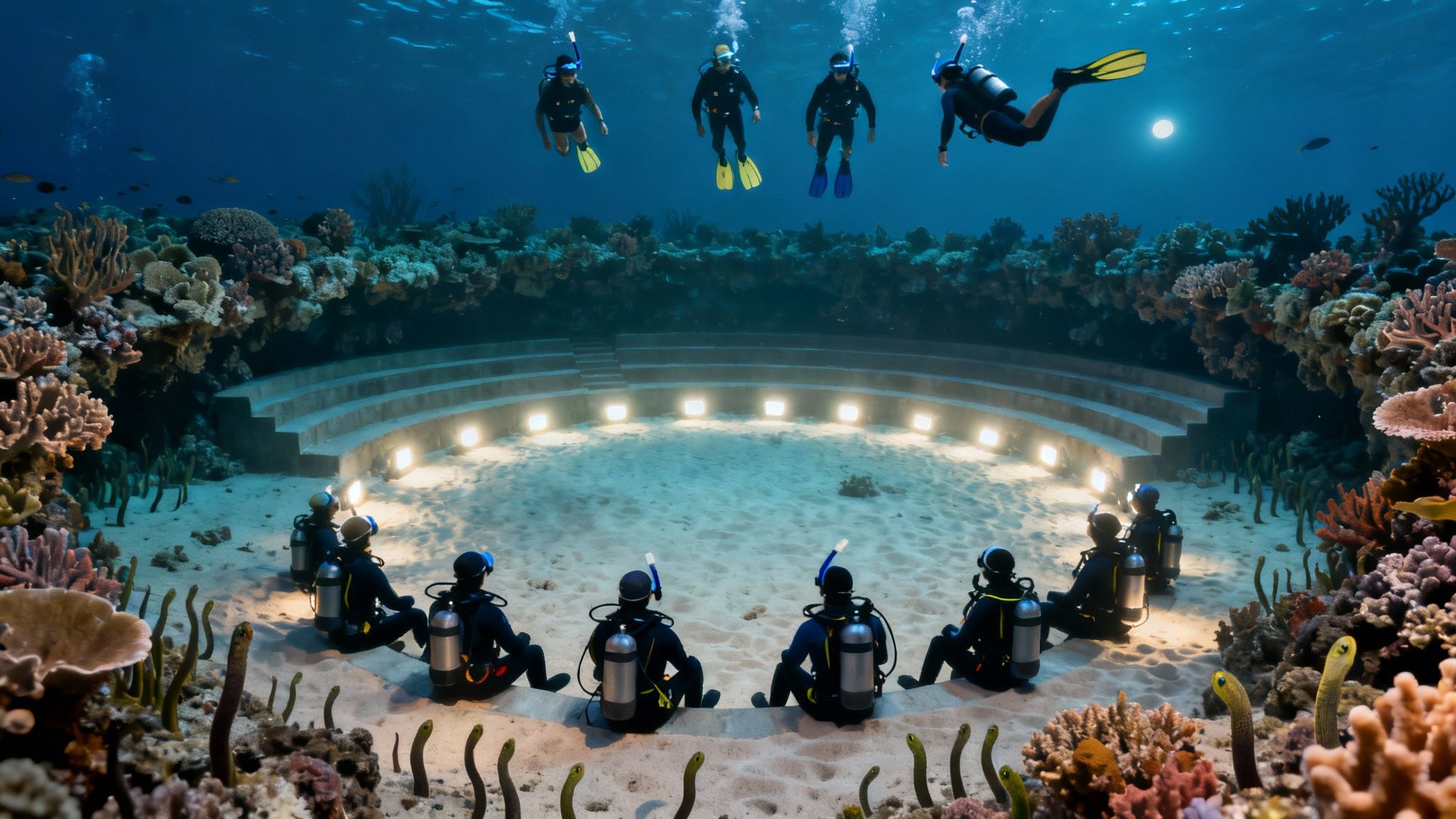
So, what makes it so special? It starts with geography. Garden Eel Cove is tucked into a naturally sheltered bay, which protects it from the big, rolling swells of the open ocean. This means the water is almost always calmer and clearer, making for a much safer and more comfortable dive from the moment you hit the water.
Superior Viewing and Healthier Reefs
The way the dive is set up at Garden Eel Cove is also a huge part of its magic. Divers settle down on a sandy patch on the ocean floor, circling a collection of powerful lights. It feels a lot like sitting around an underwater 'campfire,' creating a perfect amphitheater where everyone gets an amazing, front-row view of the action. This superior viewing area is a key reason it's the top choice.
Meanwhile, snorkelers get their own show from above, holding onto a specially designed light raft that illuminates the water below. This brilliant layout prevents a chaotic free-for-all and ensures everyone, whether diving or snorkeling, sees the mantas barrel-rolling through the light beams. You can get a closer look at the unique setup in our guide to diving at Manta Ray Heaven (Garden Eel Cove).
The organized 'campfire' layout at Garden Eel Cove not only provides better viewing angles for everyone but also protects the surrounding reef by keeping divers contained to a specific sandy area.
Beyond the main event, the ecosystem here is just plain healthier. The coral is more vibrant and the whole area is buzzing with marine life, which isn't always the case at other manta spots. These better reefs make the daylight dive before the sun goes down an incredible experience on its own and helps maintain the rich environment that keeps the mantas returning night after night.
More Mantas More Often
Look, the chances of seeing mantas in Kona are fantastic no matter where you go. But the numbers don't lie.
Local underwater videographers have kept meticulous logs for years. Back in 2013, for example, another popular site called Manta Village had an impressive 96% success rate. But the average sighting was about four rays.
That same year, Manta Heaven (Garden Eel Cove) averaged eleven manta rays per night. That’s a huge difference in the sheer energy and spectacle of the dive.
When it comes down to it, for the most reliable, comfortable, and absolutely breathtaking manta ray night dive Kona has to offer, Garden Eel Cove is the clear winner. It's exactly why top-rated operators like us at Kona Honu Divers make this our primary destination for these world-famous tours.
Choosing The Best Manta Ray Tour Operator
Picking your tour operator is, without a doubt, the most critical decision you'll make for your manta ray night dive in Kona. It’s what separates a good trip from a truly unforgettable one. Forget just looking at the price tag—the real value lies with companies that focus on small groups, iron-clad safety, and a genuine respect for the ocean.
A smaller group is always, always better. It means more personal attention from your guide and, more importantly, an unobstructed, intimate view of the mantas. You're not just another person in the water; you're getting a front-row seat to one of nature’s greatest spectacles.
What Sets the Best Operators Apart
The top-tier operators do more than just drive a boat and flip on some lights. They educate you. A comprehensive pre-dive briefing isn’t just a nice-to-have, it’s the hallmark of a professional crew. They should cover safety, of course, but also manta ray etiquette—the do's and don'ts of interacting with these gentle giants. This ensures a safe, respectful encounter for both you and the rays.
Look for operators who are recognized for sustainable tourism. Companies on the Manta Ray Green List, for example, have proven their commitment to doing things the right way. The condition of their boat and gear also says a lot about their dedication to your safety and comfort.
A truly great operator isn't just a guide; they're a steward of the ocean. Their mission is to create a connection, leaving you with more than just great photos—they leave you with a real appreciation for these magnificent animals.
Why Kona Honu Divers Stands Out
Among the many outfits in Kona, Kona Honu Divers consistently hits all these marks. They are known for their small, manageable group sizes, making sure every guest has an amazing view without feeling crowded. Their guides aren't just dive experts; they're passionate advocates for marine life.
This commitment shines through in thousands of glowing reviews from divers and snorkelers. People consistently praise their professionalism, safety-first mindset, and the genuine care they show for the mantas. When you choose a company like Kona Honu Divers, you're also supporting a business that actively protects the local marine ecosystem.
Making an Informed Decision
When you start digging into your options, read the recent reviews. They offer raw, unfiltered feedback on the crew, the boats, and the overall vibe of the trip. To get a better feel for the local scene, you can check out our detailed breakdown in this guide to the top 10 Kona diving companies ranked.
This research matters because you're visiting a very special, well-studied population. The Kona manta community is not only huge but also meticulously documented, with over 300 individual rays identified from more than 10,000 sightings! Each ray is known by the unique spot pattern on its belly, a natural "fingerprint" that helps biologists track their health—a mission that top-tier operators directly support. You can learn more about this incredible tracking effort on Oceanographic Magazine.
Ready for an adventure you'll be talking about for years? Let's get you booked.
Check Availability
What To Expect On Your Night Dive Tour
So, what does a manta ray night dive tour actually look like from start to finish? Think of it less like a single dive and more like a carefully crafted experience, designed to build excitement and give you the best possible show. The whole thing is a two-act play, starting in the warm Hawaiian afternoon and ending in the inky black of the Pacific night.

From the moment you step on the boat, the crew's job is to get you comfortable and ready. The adventure kicks off with a daytime dive on a beautiful Kona reef, often near the main manta site like Garden Eel Cove. This first plunge is a brilliant way to sort out your gear, dial in your buoyancy, and just enjoy the vibrant marine life in the daylight. You'll see everything from schools of colorful fish to maybe even a green sea turtle cruising by.
Sunset Briefing and The Main Event
Once you’re back on the boat after the first dive, you get to enjoy a relaxing surface interval. This is genuinely one of the most magical parts of the trip. You'll watch the Hawaiian sun melt into the horizon, setting the sky on fire with brilliant colors. It’s the perfect, peaceful break before the main event.
As twilight fades, your dive guide will gather everyone for the manta ray night dive in Kona briefing. This is where you pay close attention. They'll walk you through everything you need to know:
- Safety Procedures: How to get in and out of the water safely in the dark, hand signals, and what to do in an emergency.
- Logistics: The plan for positioning divers and snorkelers so everyone gets a front-row seat without getting in the mantas' way.
- Manta Etiquette: The most important rule of the night—look, but absolutely do not touch. This protects the mantas and ensures the encounter is respectful.
When it's completely dark, the crew puts the "campfire" in place. This is a set of powerful, stationary lights that sit on the ocean floor. These lights are the secret sauce; they act like a giant bug zapper for plankton, drawing in the tiny organisms the mantas love to eat.
It's a simple but brilliant idea: create an all-you-can-eat plankton buffet in one spot. By concentrating the food source, the dive operators guarantee the mantas will show up right where you are, making the encounter incredibly reliable and up-close.
The Underwater Ballet Begins
With the stage set, it’s showtime. Certified divers make their way down to the sandy bottom, arranging themselves in a circle around the lights and looking up. At the same time, snorkelers hang out on the surface, holding onto a specially designed float that also has lights pointing down, giving them a perfect bird's-eye view.
And then, it happens. The giant manta rays materialize out of the darkness like stealth bombers, silent and impossibly graceful. They immediately begin their feeding dance, performing effortless barrel rolls as they swoop through the light beams, gulping down the plankton-rich water. It's not uncommon for them to glide within inches of you, their massive bodies casting shadows as they pass overhead.
This mesmerizing underwater ballet usually lasts for about 45 minutes, but the memory will stick with you for a lifetime. For a closer look at this unforgettable experience, consider booking a 2-tank manta ray dive and snorkel tour.
Check Availability
Essential Tips for a Responsible Manta Encounter
The Kona manta ray night dive is an incredible, once-in-a-lifetime experience. But to keep it that way for generations to come, every single person who enters the water has a responsibility to act as a guardian of the ocean. Your behavior, big or small, has a direct impact on the well-being of Kona's resident manta population.
Following a few simple guidelines is all it takes to help preserve this natural marvel.

If you take away only one rule from this guide, let it be this: never, ever touch a manta ray. It’s the golden rule of this dive. These graceful giants are covered in a special mucus layer, which is their primary defense against nasty bacteria and infections. When you touch them, you strip away that protective coating and leave them vulnerable to disease. Your job is to be a silent, respectful observer. Nothing more.
Best Practices for Divers and Snorkelers
Whether you're down on the seafloor or floating up on the surface, where you are and how you move makes all the difference. The entire idea is to let the mantas be in complete control of the encounter. You just stay put, and their natural feeding instincts will bring them incredibly close.
For scuba divers:
- Once you descend, find your assigned spot on the sandy bottom and stay there.
- Work on your buoyancy. The goal is to be perfectly still, avoiding kicking up sand or drifting into the mantas' flight path.
- Point your dive light straight up toward the surface to help attract the plankton.
For snorkelers:
- Hold onto the light board or float your crew provides. This is your home base.
- Keep your legs and fins horizontal on the surface, out of the water as much as you can. This prevents any accidental kicks if a manta comes close.
- Shine your light straight down, creating that "plankton column" that attracts the mantas from below.
When you remain still and predictable, you essentially become part of the underwater scenery. This makes the mantas feel secure, allowing them to swoop in and feed comfortably. Trust me, this is when the truly spectacular, up-close passes happen.
Another crucial part of being a responsible ocean visitor starts before you even get on the boat. It’s vital to understand why reef-safe sunscreen is crucial for protecting the fragile ecosystem you're about to witness. Standard sunscreens contain chemicals that are incredibly damaging to coral reefs and other marine life. Making a simple switch is a small personal change that has a massive positive impact.
To help everyone have the best and safest experience, we've put together a quick cheat sheet.
Manta Ray Encounter Guidelines
Follow these simple rules for a safe and respectful interaction with Kona's gentle giants.
| Do | Don't |
|---|---|
| Do stay in your designated spot. | Don't chase or pursue the mantas. |
| Do keep your lights pointed in the correct direction (up for divers, down for snorkelers). | Don't touch or try to ride a manta ray. |
| Do remain calm and minimize your movements. | Don't create bubbles in a manta's face. |
| Do listen to and follow all instructions from your dive guide. | Don't block a manta's path. |
These guidelines are more than just a list of rules. They’re a framework for showing respect to these magnificent animals and the environment they call home. By being a mindful guest in their world, you ensure the Kona manta ray night dive remains a safe, ethical, and utterly awe-inspiring adventure for everyone.
Beyond the Mantas: What Else to Dive in Kona
Look, the manta ray night dive in Kona is an absolute must-do. It’s a bucket-list dive for a reason, and you'll never forget it. But believe me when I say it's just the tip of the iceberg for what the Big Island has to offer underwater.
The very same volcanic drama that created the island forged an incredible subaquatic playground. Think massive lava tubes you can swim through, soaring arches, and dramatic drop-offs that plunge into the deep blue. This isn't your average sandy-bottom dive destination; the geology here is truly world-class.
A classic two-tank scuba diving tour in Kona is the perfect introduction. You'll drift over vibrant coral gardens packed with life, including some stunningly colorful Hawaiian fish you literally can't see anywhere else on the planet. Don't be surprised if you spot a few green sea turtles chilling on the reef or a pod of spinner dolphins putting on a show during the boat ride out.
Embrace the Darkness: The Blackwater Dive
If the manta dive gets you hooked on the magic of night diving, then you have to try the Kona Blackwater Dive. This is something else entirely. Forget the reef—this dive takes you miles offshore to drift in the vast, open ocean.
Tethered to the boat for safety, you simply hang in the dark and watch one of the largest migrations on Earth unfold before your eyes. Tiny, bizarre, and often bioluminescent creatures rise from the crushing depths to feed near the surface. It's a surreal experience that feels more like floating through deep space than diving.
The Kona Blackwater Dive is profoundly humbling. It pulls back the curtain on a hidden ecosystem that only comes alive in the dead of night, offering a rare glimpse into a mysterious world few will ever witness.
For the More Experienced: Pushing the Limits
Kona has plenty to offer divers with a few more logbook entries, too. If you're ready to explore deeper sites and more challenging topography, there are specialized advanced dive tours that will get your pulse racing.
These trips head out to more remote spots where the real adventure begins. You’ll navigate complex lava formations and explore reefs that sit a bit deeper. These are the places you're more likely to run into bigger pelagic species cruising the edge of the reef—we're talking various types of sharks, elegant eagle rays, and sometimes even big game fish.
From the silent, graceful dance of the mantas to the alien world of a blackwater dive and the thrill of exploring deep reefs, Kona truly is a top-tier destination. There’s a new adventure waiting for every certified diver here.
Your Manta Dive Questions, Answered
Even the most seasoned divers have questions before jumping into a new adventure. If you're getting ready for the Kona manta ray night dive, it's smart to know what you're getting into. Here are some of the most common things people ask, with answers straight from the experts.
Do I Need to Be Scuba Certified to See the Mantas?
Nope! You absolutely don't need a scuba certification to have an incredible encounter. Tour operators have this down to a science, offering two amazing ways to see the show, depending on your comfort level.
- For snorkelers: You'll hang out on the surface, holding onto a specially designed float board. This board has powerful lights pointing down into the water, which is what draws in the plankton. The mantas come right up to the surface to feed, giving you a stunning bird's-eye view of the action.
- For divers: If you are certified, you'll head down to about 30-40 feet and settle on the sandy bottom. From there, you just look up. The mantas will glide, swoop, and do barrel rolls just a few feet above your head.
Honestly, both experiences are fantastic. It just comes down to whether you prefer looking down from the surface or up from the ocean floor.
When Is the Best Time of Year to Go?
Here's the best part: there’s no bad time to go. The manta dive is a year-round spectacle because Kona has a resident population of reef mantas. They live here, so they show up for dinner almost every single night.
The only thing that really changes is the ocean conditions. Summer months (May through September) usually mean calmer, glassier water. Winter (December through March) can bring bigger swells. But don't let that deter you—the dive operators are pros at picking the most sheltered spots, like Garden Eel Cove, to make sure the trip is safe and comfortable no matter when you book.
What Should I Bring With Me?
Any good tour operator will have all the essential gear waiting for you. For instance, top-rated companies like Kona Honu Divers include everything you need in their tours, right down to the wetsuit.
That said, there are a few personal items you'll be glad you packed:
- A towel and a dry set of clothes for the ride back.
- A warm jacket or hoodie. You’d be surprised how chilly it can feel on the boat after a night swim.
- Seasickness medication, just in case you're sensitive to motion on the water.
- Your underwater camera is welcome, but try not to experience the whole thing through a lens!
Most tours will also have snacks and hot chocolate or tea on board to warm you up after your time in the water.
Is the Manta Ray Night Dive Dangerous?
When you go with a professional, reputable company, this is an incredibly safe experience. Let's get one thing straight: the mantas themselves are gentle giants. They're filter feeders with no teeth, no stingers, and no barbs. They are completely harmless to people.
The real safety factor is simply being in the ocean at night. This is precisely why choosing a great operator is so crucial. Their experienced guides will give you a thorough safety briefing, keep a close eye on ocean conditions, and make sure everyone in the water feels secure from start to finish. Just listen to your guides, follow their lead, and you can simply relax and enjoy one of the most mesmerizing wildlife encounters on the planet.
Ready to see the underwater ballet for yourself?
Check Availability