
Picture this: you're floating in the warm, dark Pacific Ocean just after sunset. Your light cuts through the twilight, and then, a massive, graceful shadow emerges from the deep. This is the manta ray night dive in Kona, and it's an experience that truly has no equal. It's a front-row seat to one of nature's most spectacular underwater ballets, where gentle giants with wingspans reaching 16 feet glide just inches above your head.
Experience Kona’s World-Famous Manta Ray Night Dive
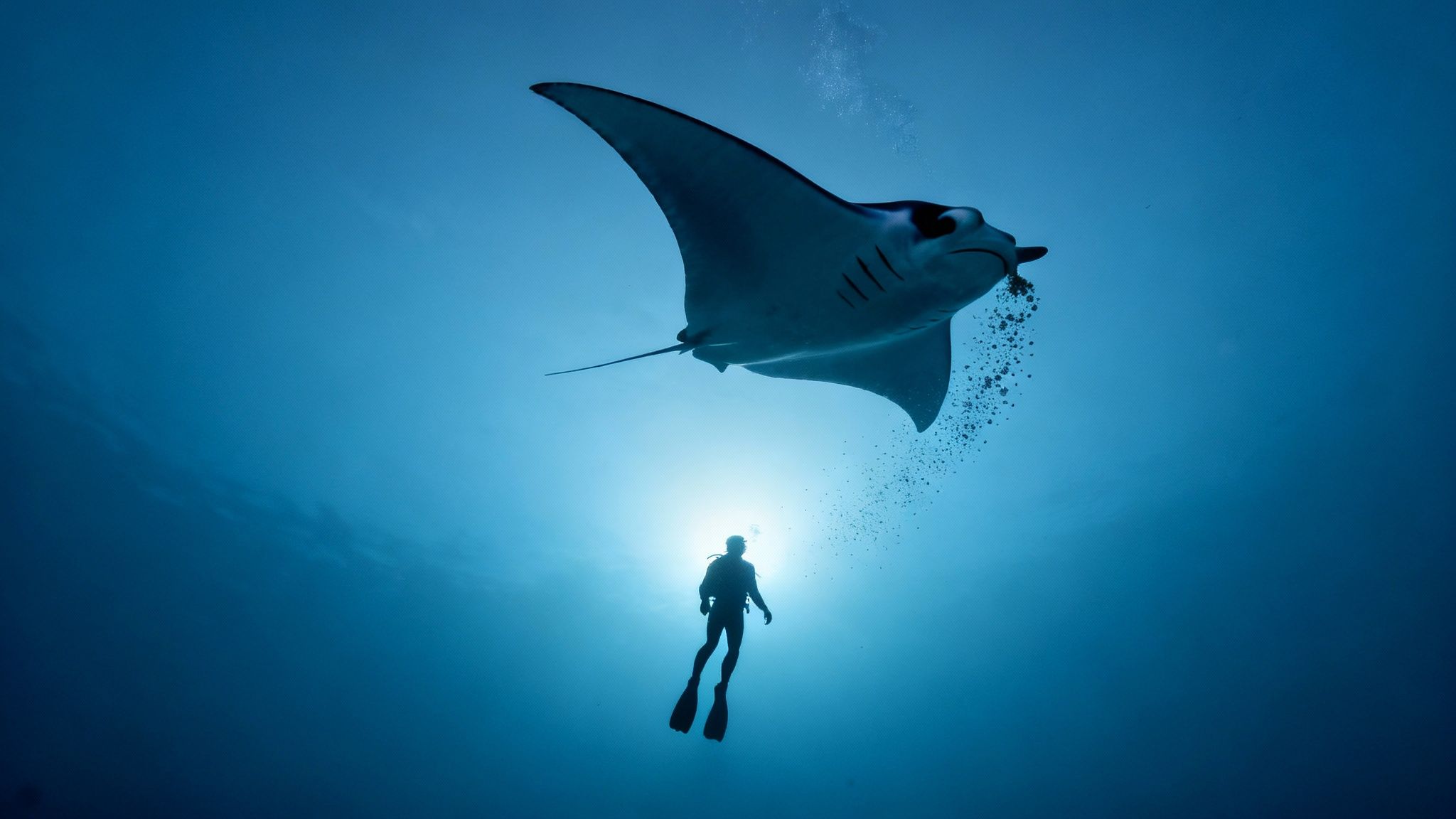
The whole thing feels almost dreamlike. You settle onto the sandy ocean floor, point your flashlight up, and simply wait for the show to begin. Before you know it, these magnificent creatures are drawn to the light, which illuminates dense clouds of plankton—their favorite meal.
They don't just swim by; they perform. You'll watch them somersault and barrel roll in a mesmerizing dance, scooping up plankton with their huge mouths. It’s an incredibly moving and humbling experience to be so close to such powerful, yet serene, animals.
Why Is This Dive So Special?
What sets the Kona dive apart from manta encounters elsewhere in the world is that you're witnessing a massive feeding frenzy, not just a quick stop at a "cleaning station." This makes the whole interaction far more dynamic and breathtaking. The mantas are there to eat, and their acrobatic feeding loops are the main event.
This one-of-a-kind spectacle has put Kona on the map for marine ecotourism.
The Big Island’s manta ray night dive is a huge draw, bringing in an estimated 80,000 people every year to dive or snorkel with these gentle giants. It's a powerful economic driver for the local community and, just as importantly, shines a spotlight on the need for marine conservation.
Most dives kick off around sunset and give you about 45 to 60 minutes of bottom time. You'll be at a comfortable depth of 30 to 40 feet, perfect for observing the action. To get a deeper look into what makes this dive so incredible, you can explore the full details of the Kona manta ray dive.
Choosing the Right Guide for an Epic Adventure
To make sure your dive is safe, respectful to the animals, and genuinely unforgettable, picking the right tour operator is key. A highly-rated company like Kona Honu Divers is a great choice because they're not just focused on giving you a great time; they're deeply committed to marine conservation. Their expert crew ensures every dive is conducted responsibly to protect the mantas and their habitat.
When you go with a team that puts safety first and has a real passion for the ocean, you’re doing more than just booking a tour. You're becoming part of a community that cares about protecting our oceans. Their stellar reputation speaks for itself.
Signing up for a Kona manta ray night dive is more than just ticking something off a bucket list. It’s an adventure that will stick with you long after you've dried off.
Why Garden Eel Cove Is The Premier Manta Dive Site
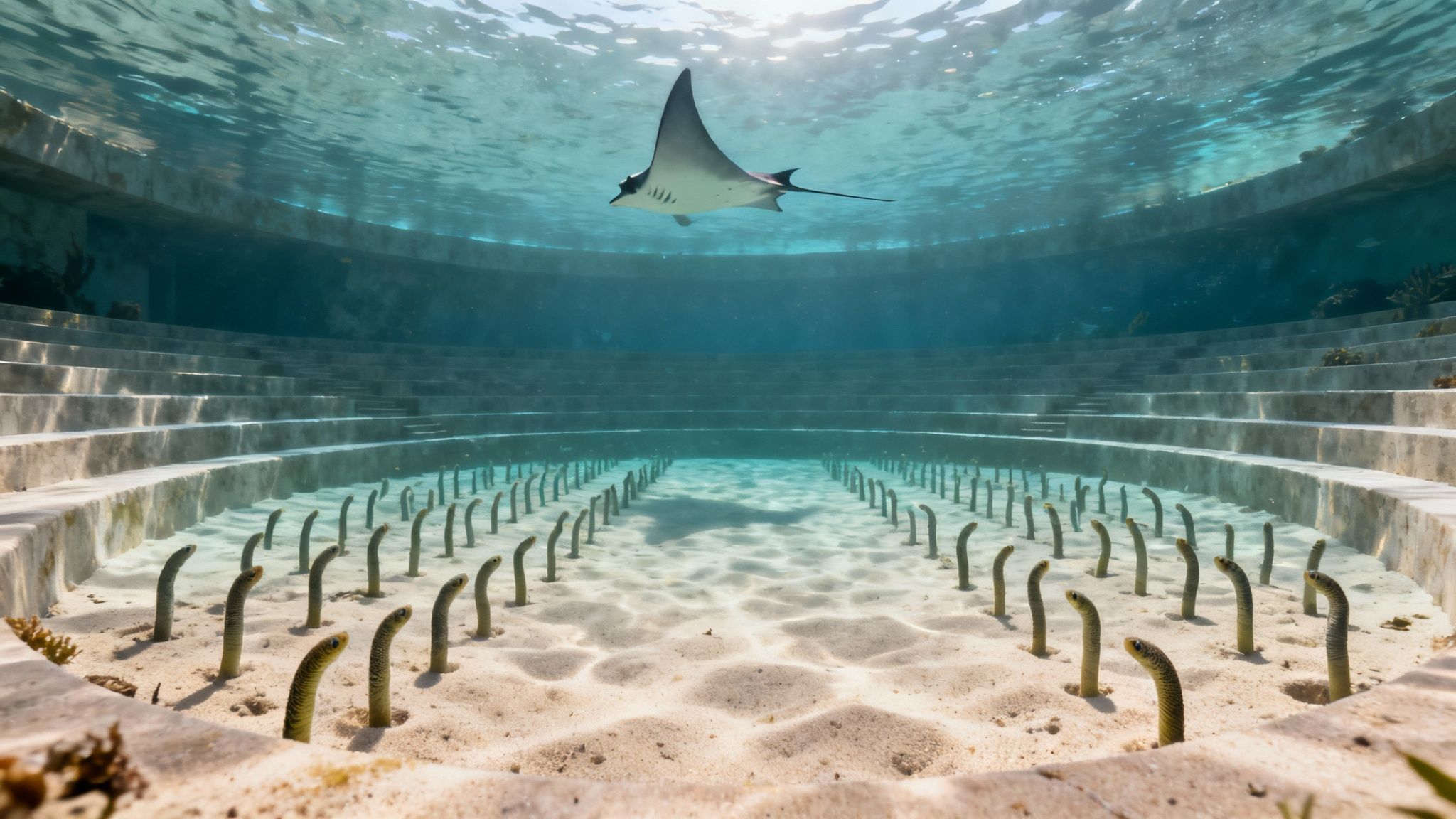
When you start looking into the manta ray night dive in Kona, you'll hear about two main spots. While both offer a chance to see these incredible animals, they are definitely not created equal. For divers who want the absolute best experience, Garden Eel Cove—also known by the very fitting name "Manta Heaven"—is hands down the superior choice.
The secret is in the site's layout. Picture Garden Eel Cove as a natural underwater amphitheater. It’s a wide, sandy basin with a gentle slope, which lets every diver find a comfortable spot on the bottom to settle in and just watch the show. This superior viewing area means everyone gets an unobstructed, front-row seat for the manta ballet overhead.
Manta Village, on the other hand, has a rockier, more uneven bottom. It’s still a decent site, of course, but it just doesn’t have that purpose-built feel that makes Garden Eel Cove so comfortable and organized for a group of divers.
A Sanctuary From The Swells
One of the biggest real-world advantages of Garden Eel Cove is its location. It's a protected location north of Kailua-Kona, tucked away in a spot that gives it natural protection from the big southern swells that can hit the coast, especially in the summer.
This geographic shield means the water at Garden Eel Cove is almost always calmer and clearer. What does that mean for you? A more relaxed, comfortable, and visually spectacular dive. Manta Village, being south of town, is much more exposed to those swells, which can mean rougher boat rides, murkier water, and sometimes, even cancelled trips.
More Than Just Mantas: A World-Class Twilight Dive
A two-tank manta charter isn't just about the grand finale. The first dive of the trip, which happens at twilight while the sun is setting, is a world-class dive all on its own at Garden Eel Cove. The reef there is stunningly healthy and absolutely packed with marine life.
Long before the mantas make their grand entrance, you get to explore a vibrant coral ecosystem. You'll likely see:
- Curious Eels: Morays poking their heads out from rocky hideouts.
- Elusive Octopus: Masters of camouflage hiding right under your nose.
- Schools of Fish: Swirls of colorful reef fish getting ready for the night.
This first dive is the perfect opening act. It builds the anticipation for the mantas while showing off the incredible biodiversity of the Kona coast. The quality of the reefs at Garden Eel Cove often blows other nearby sites out of the water, making the entire trip a richer, more complete underwater adventure.
To put it simply, choosing between the two main manta sites can make a big difference in your experience. Here's a quick breakdown to help you see why Garden Eel Cove is the better choice.
Kona Manta Ray Dive Site Comparison
| Feature | Garden Eel Cove (Manta Heaven) | Manta Village |
|---|---|---|
| Bottom Topography | Wide, sandy, gently sloped basin | Rocky and uneven bottom |
| Diver Experience | Comfortable, amphitheater-style viewing | More challenging to find a spot |
| Wave Protection | Protected from southern swells | Exposed to southern swells |
| Water Conditions | Consistently calmer and clearer | Can be rougher with lower visibility |
| Reef Quality | Exceptional, vibrant, and full of life | Good, but less vibrant reef |
| Manta Sightings | Known for larger groups of mantas | High sighting rate, often with fewer mantas |
| Crowd Levels | Generally fewer boats and people | Can become more crowded |
While both sites offer a good chance to see mantas, Garden Eel Cove consistently delivers a more comfortable, visually stunning, and less crowded experience from start to finish.
The Superior Choice For an Unforgettable Night
At the end of the day, your choice of dive site really shapes the quality of your manta ray night dive. Any time you get to see these gentle giants is special, but Garden Eel Cove brings together all the right elements to turn a good dive into an unforgettable one.
Its sheltered location, perfect viewing area, healthier reef, and potential for seeing 11 or more mantas with fewer people in the water make it the undisputed premier destination. You can read more about what makes this spot manta ray heaven at Garden Eel Cove.
When you see a dive operator that prioritizes this site, you know they're committed to giving their guests the best possible night. It shows they understand the small details that make all the difference in creating a little bit of magic under the waves.
Your Two-Tank Manta Dive Adventure, Step By Step

The buzz for your manta ray night dive in Kona starts the second you step foot in the harbor. There's a tangible excitement in the air as you check in, meet the crew, and find your spot on the boat to set up your gear. The real adventure is already underway, long before you even splash into the water.
Your divemaster will run through a detailed pre-dive briefing, laying out the plan for both dives, covering all the safety procedures, and giving you a heads-up on the marine life you’re likely to see. This is where you get the game plan for the main event—learning how to position yourself and interact with the mantas respectfully. It's a professional, reassuring process that gets everyone on the same page and ready for the magic to come.
The First Act: A Twilight Reef Exploration
As the boat motors out to the dive site, the sun begins its slow dip toward the horizon, painting the Kona sky in unbelievable shades of orange, pink, and purple. Your first dive is a twilight tour of a vibrant reef, and you’ll descend just as day melts into night. It's a truly surreal time to be underwater.
The reef is a flurry of activity. You're catching the "shift change" as the daytime critters head for cover and the nocturnal hunters start to emerge. This dive feels like a treasure hunt, and you never know what you’ll find.
Keep an eye out for:
- Moray eels slinking out from their rocky homes.
- Shy octopuses crawling across the coral, changing colors as they go.
- Schools of sleeping parrotfish tucked into their cocoons for the night.
- Colorful reef fish making their last rounds before dark.
Honestly, this first dive is a spectacular experience all on its own. It’s a powerful reminder of the incredible biodiversity of Kona’s reefs and the perfect warm-up for the main attraction.
Intermission: A Sunset on the Pacific
After surfacing from your twilight dive, you’re greeted by one of the best views on the planet: a Kona sunset from the ocean. This surface interval is your chance to relax, warm up with some snacks and drinks provided by the crew, and swap stories about what you just witnessed. You'll watch the last sliver of sun vanish, leaving behind a sky blanketed in stars.
This quiet moment is a key part of the experience. It’s a chance to just breathe, soak in the sheer beauty of Hawaii, and let the anticipation build for the incredible encounter that's just around the corner.
The Main Event: The Manta Ray Ballet
Once darkness has completely fallen, it's time for the second dive. You'll descend again, but this time to a specific sandy patch on the ocean floor. The crew sets up a powerful light—we call it the "campfire"—that shines up into the water column. You and the other divers form a circle around it, pointing your own lights upward, creating a glowing beacon that draws in plankton.
And then, you wait. The feeling is electric.
Suddenly, a giant, dark silhouette glides into the light from the deep. The first manta has arrived. It's a breathtaking, heart-in-your-throat moment you will never, ever forget.
The real magic is watching these gentle giants perform their silent, underwater acrobatics. They swoop, glide, and do graceful barrel rolls just inches above your head, their massive mouths wide open to filter the plankton that has gathered in the light.
You’re not just a spectator; you're part of the show. The mantas circle and soar through the beams of your dive lights, creating a completely immersive and interactive spectacle. This is the moment that defines the manta ray night dive in Kona and why so many divers call it the best dive of their lives.
The Kona manta ray night dive has an incredible success rate, hovering between 85% and 90%. A six-year study actually documented over 10,000 individual manta sightings, which just goes to show how reliable this wildlife encounter truly is. Dive times typically last between 45 and 60 minutes, giving you plenty of time to be completely mesmerized by the show.
Ready to experience this unforgettable adventure for yourself? You can book your own two-tank manta ray dive adventure and get ready for a night you’ll be talking about for years.
How to Dive Safely and Respectfully with Manta Rays

Diving with manta rays in Kona is a privilege we all share, and it comes with a big responsibility to protect these incredible animals. The most important rule is simple and non-negotiable: passive observation. Imagine you're a guest in their home—here to watch the magic unfold, but not to interfere.
This means you never, ever touch, chase, or get in a manta ray's way. Their skin has a special protective slime coat that acts as a shield against bacteria. Even a light touch can wipe it away, leaving them open to nasty infections.
Being a good guest underwater is what keeps this experience sustainable. When we give them space to feed naturally, we make sure this incredible encounter can be enjoyed for years to come, by both divers and the mantas themselves.
Essential Manta Etiquette
Every professional dive operator will enforce a strict set of rules to keep both you and the mantas safe. Following them isn't just about being polite; it's an active part of marine conservation.
- Look, Don't Touch: This is the golden rule. It can be tempting to reach out as they glide by, but you must resist. Harming their delicate skin isn't worth it.
- Stay on the Bottom: Divers are asked to stay on the sandy sea floor. This creates a wide-open "ballroom" for the mantas to swoop and feed without having to dodge people.
- Don't Chase: Let the mantas come to you. Chasing them causes stress and can scare them away from the site entirely.
- Watch Your Bubbles: As a manta passes over you, try to time your exhale so you don't send a stream of bubbles right into its face. It's not harmful, but it can startle them.
- Control Your Lights: Your dive light should be pointed straight up to attract plankton. Avoid shining it directly into a manta's eyes.
The goal is to become part of the underwater scenery. When you're as unobtrusive as possible, the mantas feel secure, and you get to witness their true, spectacular behavior up close.
Beyond Mantas: Basic Night Diving Safety
While manta etiquette is front and center, don't forget your standard night diving safety skills. Darkness adds a whole new level of awesome to diving, and staying on top of your game ensures everyone has a great time. Your guide will cover this in the briefing, but it’s good to come prepared.
Before you even hit the water, do a thorough gear check with your buddy. Once you're down, solid buoyancy control is key. You don’t want to be the person who accidentally kicks the reef or stirs up a cloud of sand, ruining the view for everyone.
And of course, always keep a close eye on your air gauge and stay in communication with your divemaster and buddy. Night diving is an incredible adventure, and sticking to these fundamentals lets you relax and just soak in the magic. To learn more, check out our complete guide on responsible and considerate diver etiquette. Your guide's job is to manage the entire dive, keeping everyone—divers and mantas—safe for a truly positive and sustainable wildlife encounter.
Getting Ready for Your Kona Manta Dive
A little bit of prep work can make the difference between a good manta dive and an unforgettable one. Knowing what to expect and having the right gear on hand means you can relax and just soak in the incredible experience without any last-minute stress.
First things first, let's talk about what it takes to get in the water. For the scuba version of the tour, you'll need at least your basic Open Water Diver certification. If you're a new diver, don't sweat it. This dive is about as controlled and straightforward as it gets. You’ll be settled on the sandy bottom in relatively shallow water, usually around 30-40 feet, making it a fantastic and low-stress introduction to night diving.
What to Bring on the Boat
Your dive operator, like Kona Honu Divers, has you covered with all the big stuff—scuba gear, tanks, weights, and the powerful lights that attract the plankton. Your job is to bring a few personal items to stay comfortable before and after the dive.
Here’s a quick checklist of things I always recommend packing:
- Swimsuit & Towel: The basics. Wear your suit to the boat under your clothes so you're ready to go.
- A Warm Jacket or Hoodie: This is a big one. Even after a balmy day, you’d be surprised how chilly the boat ride back can feel once you’re wet. A dry, warm layer is non-negotiable.
- Reusable Water Bottle: Hydration is key, especially after a dive. Most boats have a water cooler for refills.
- A Small Dry Bag: Perfect for stashing your phone, keys, and wallet to protect them from any spray on the boat.
A Quick Word on Seasickness
While the Kona coast is generally calm, motion sickness can sneak up on anyone and put a real damper on the evening. It’s always best to be prepared, especially if you know you’re sensitive.
A few tips that actually work:
- Medication: If you use something like Dramamine or Bonine, the trick is to take it at least an hour before the boat even leaves the harbor. Once you feel sick, it’s too late.
- Ginger: Many divers swear by natural remedies. Ginger chews, real ginger ale, or a ginger capsule can work wonders for an unsettled stomach.
- Look to the Horizon: If you start feeling a bit off, get some fresh air on the deck and fix your eyes on the stable horizon line. It really helps your brain reset.
Tips for Underwater Photographers
Photographing the manta dive is an amazing challenge. The darkness, the bright lights, and the massive, fast-moving animals all create a dynamic scene that’s unlike any daytime reef shoot.
To get the shot, you'll want to think wide. A wide-angle lens is essential for capturing the sheer scale of the mantas as they swoop in close. As for settings, open up that aperture as wide as it will go (think f/2.8) to let in as much ambient light as possible. I’d start with a shutter speed between 1/60s and 1/125s to freeze the action without making your shot too dark, and then adjust your ISO accordingly to get the right exposure.
Here's the most important piece of advice: be mindful of your strobes or video lights. It's crucial that you never shine your lights directly into a manta's eyes. Angle them slightly outward to illuminate the manta's massive white belly as it glides over you. This not only protects the animals but also creates a much more dramatic and beautifully lit photo. A little preparation and consideration will help you capture the magic without disturbing the stars of the show.
Kona Night Diving Beyond the Manta Rays
The manta ray night dive gets all the fame, and for good reason—it's an incredible show. But for certified divers looking for what else Kona has to offer after dark, the adventure is just getting started. The real magic begins when you leave the reef behind and head for the deep.
Once you venture out into the open ocean, you're in for one of the most unique dives on the planet: the Kona Blackwater Dive. This is nothing like a typical night dive along a reef. Instead, you'll find yourself tethered to a boat, drifting in the deep blue, with thousands of feet of water beneath you.
Journey into the Deep
Picture this: you're suspended in inky blackness, and suddenly, strange and wonderful creatures begin to rise from the abyss. This is your front-row seat to the largest vertical migration on Earth. Every night, countless tiny, often bioluminescent, organisms travel from the deep ocean toward the surface to feed.
You’ll see things that look like they're straight out of a science fiction movie:
- Pteropods and Ctenophores: Imagine delicate, gelatinous blobs pulsing with all the colors of the rainbow.
- Larval Creatures: You get to see the baby versions of eels, lobsters, and fish when they are still translucent and look completely alien.
- Bioluminescent Wonders: The darkness comes alive with flashes and glows from creatures creating their own light.
This dive is less about seeing a reef and more about floating through a living galaxy. It’s a surreal experience built for adventurous divers wanting something truly different. If you're ready to see what comes up from the deep, you can learn more about the Kona Blackwater Night Dive.
Exploring Kona’s Advanced Underwater Landscapes
If you'd rather keep the seafloor a bit closer, Kona still has plenty to offer experienced divers. The Big Island's volcanic past has left behind a stunning underwater world full of ancient lava tubes, dramatic archways, and steep drop-offs that plunge into the deep blue.
These advanced dives serve up a different kind of thrill. You get to navigate complex structures and see the unique marine life that calls these deeper environments home. It’s a fantastic way to sharpen your skills and see a side of Kona that most visitors miss. If your curiosity about the underwater world goes beyond the manta spectacle, you might want to check out other diving and snorkeling experiences.
Diving in Kona is a multi-layered experience. While the manta ray night dive is an absolute must-do, the blackwater dives and advanced reef explorations reveal just how deep the adventure can go, positioning Kona as a premier destination for divers of all kinds.
For divers ready to push their limits and explore these incredible underwater formations, specialized advanced dive trips are the perfect way to see the wilder side of Kona’s subaquatic world.
Your Manta Ray Night Dive Questions, Answered
Thinking about taking the plunge? We get a lot of questions about this incredible experience. Here are the answers to the ones we hear most often.
Are We Guaranteed to See Manta Rays?
While we're dealing with wild animals in their natural habitat, the Kona manta dive has one of the most reliable sighting rates on the planet—often topping 85-90%. It's not a question of if you'll see mantas, but usually how many.
Of course, nature is unpredictable. On the extremely rare night the mantas decide not to show, reputable companies have your back. Most offer a "manta guarantee," meaning you can come back and try again on another night, free of charge.
What Scuba Certification Do I Need?
You don't need to be a master diver for this adventure. A standard Open Water Diver certification is all that's required to join the dive.
The dive itself is very accessible. We descend to a shallow, sandy bottom around 30-40 feet deep and stay put for the show. This controlled, stationary setup makes it a perfect and low-stress introduction to night diving.
When Is the Best Time of Year to Go?
The great news is that the manta rays are here all year long! There's no specific "manta season," so you can book this incredible dive any month and have a fantastic chance of a memorable encounter.
The only thing that really changes throughout the year is the ocean swell. This is why location matters so much. Operators who use the more sheltered Garden Eel Cove site give you a better chance of a smooth, comfortable dive, no matter the season.
Can My Snorkeler Friends Come on the Same Boat?
Absolutely! This is one of the best parts of the manta experience—it’s for everyone. Companies like Kona Honu Divers run trips that welcome both scuba divers and snorkelers on the same boat.
Snorkelers float up top, holding onto a special light board that draws in the plankton. Meanwhile, the divers are settled on the ocean floor right below. It’s a fantastic way for groups with different comfort levels to share the magic of the mantas together on one of our manta ray dive tours.