
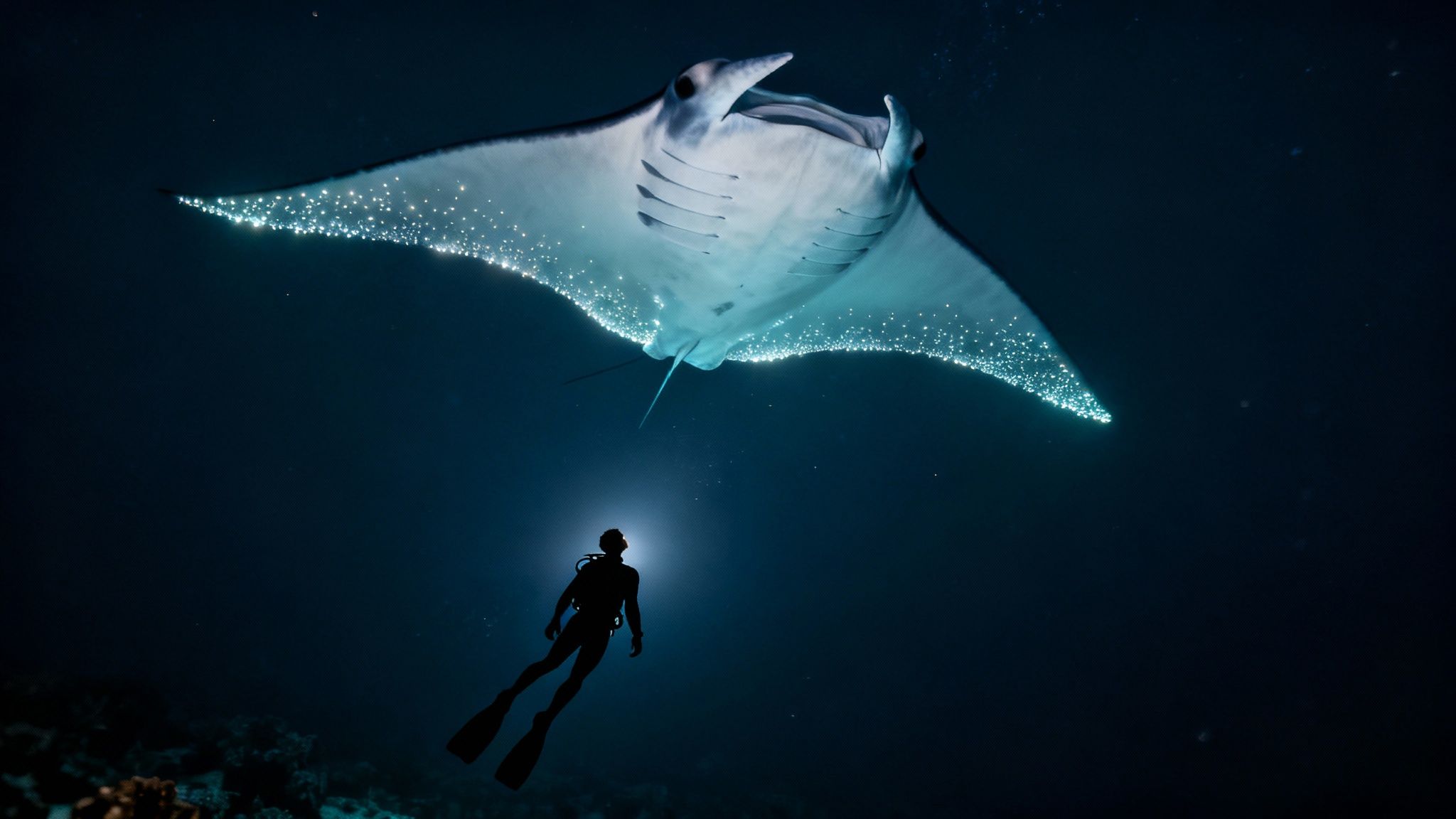
Imagine yourself floating in the warm, dark Pacific. Suddenly, a colossal, graceful creature with a wingspan wider than you are tall glides silently just inches above your head. It’s like watching an underwater ballet, and you have a front-row seat. This is the manta ray night dive in Kona, an absolutely breathtaking experience that has put the Big Island on the map for divers worldwide.
The magic behind it is beautifully simple. Dive operators shine powerful lights into the water, which attracts swarms of plankton—the manta rays' favorite meal. The mantas show up for the free buffet, and we get to witness the incredible spectacle.
Why the Kona Manta Ray Dive Is a Bucket-List Experience
Let's be clear: this isn't just another dive. The Kona manta ray night dive is a fully immersive encounter with some of the ocean's most majestic animals. What makes it so consistently amazing is the unique interaction we get to witness. The dive lights create a concentrated food source, and the mantas put on a show as they swoop and barrel-roll through the feast.
This world-famous dive actually started by accident back in the 1990s. Divers noticed that manta rays were naturally drawn to the lights of a nearby hotel. It didn't take long for a few forward-thinking local dive shops to realize what was happening, and they started running dedicated manta ray dive tours. This brilliant idea completely transformed Kona's dive scene.
A Unique Combination of Factors
Kona is the perfect storm for this kind of encounter. The volcanic geography of the Big Island has created deep, sheltered bays where plankton thrive in the nutrient-rich water. This reliable, year-round food source, paired with reliably calm ocean conditions, has made this coastline a permanent home for a large population of reef manta rays.
The manta rays you see are locals! They don't migrate; they live here and show up for their dinner every night. This means any time of year is a great time for a manta dive.
In this guide, we’ll walk you through everything you need to know to plan this once-in-a-lifetime trip. We'll cover why your choice of dive site is the single most important decision you'll make, and I'll explain exactly why Garden Eel Cove offers a much better, more intimate experience than other locations.
Choosing Your Guide
A great trip depends on a great dive operator. You want a crew that’s not just professional but also genuinely passionate about the animals and their environment. Companies like Kona Honu Divers are known for running trips that are not only mind-blowing but also incredibly safe and respectful of the mantas. Their commitment to sustainable practices ensures this amazing interaction can continue for years to come.
Now, let's dive into the details of planning your own unforgettable adventure.
Choosing Your Dive Site: Garden Eel Cove vs. The Alternatives
When you're planning a manta ray night dive in Kona, the single most important decision you'll make is where you go. It sounds simple, but this choice will define your entire experience. Not all dive sites are created equal, and where you end up directly affects the quality, comfort, and sheer magic of the encounter.

The truth is, not all operators head to the best spot. That’s why you absolutely have to ask where the boat is going before you book. The premier location, the one that consistently delivers the most breathtaking experience, is Garden Eel Cove. We affectionately call it Manta Heaven, and for good reason.
Why Garden Eel Cove Is The Superior Choice
Garden Eel Cove isn't just a catchy name; it's a promise of a better, safer, and more spectacular dive. Tucked away in a naturally protected bay just north of the Kona airport, its geography is its superpower. The bay’s orientation shields it from the big ocean swells that can turn a fun night into a choppy, uncomfortable ride. It also boasts a healthier, more vibrant reef for the pre-manta twilight dive.
What does that mean for you? Consistently calmer waters. This translates to better visibility and a much more pleasant time on the boat and in the water, especially for anyone who gets a little queasy.
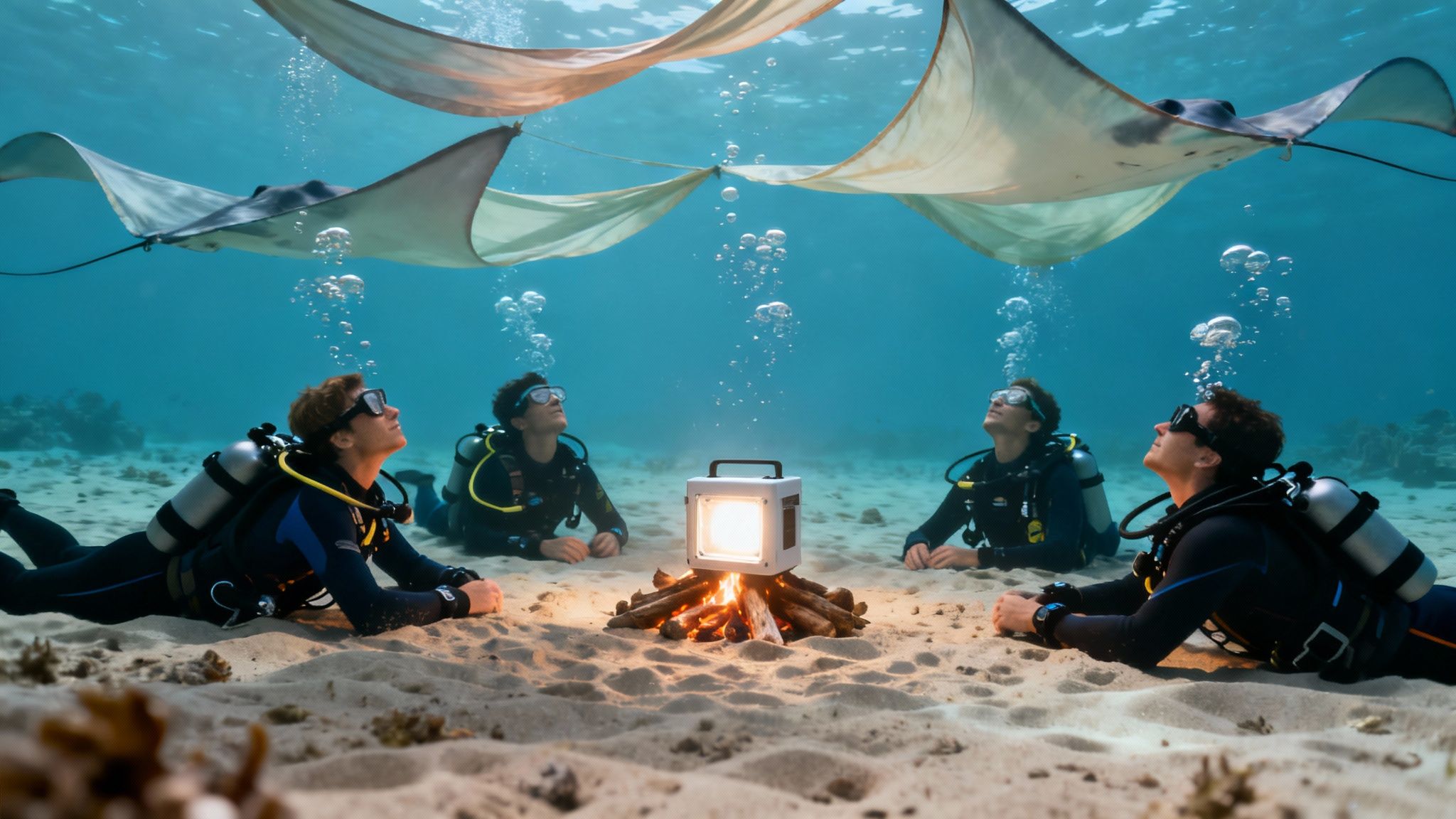
But the real magic happens underwater. Garden Eel Cove has a massive, sandy bottom at a perfect depth of around 35-40 feet. This natural arena is the ideal viewing area for the classic "campfire" setup, where divers kneel in a circle around a central light source, looking up.
This arrangement creates an incredible, unobstructed, front-row seat to the manta ballet. More importantly, it means we're not kneeling on, touching, or damaging any of the delicate coral reef.
It’s a responsible approach that maximizes your viewing time and comfort while actively protecting the fragile marine ecosystem we all love. You can dive deeper into what makes Manta Heaven at Garden Eel Cove the undeniable best choice.
The Drawbacks Of Manta Village
The other primary spot you might hear about is Manta Village, located just off the coast of the old Sheraton hotel in Keauhou Bay. While it was the original location for the manta dive decades ago, it comes with some significant downsides compared to the protected environment of Garden Eel Cove.
For one, Manta Village is much more exposed to the open ocean. It’s prone to surge and rough surface conditions, which can make for a bumpy boat trip and stir up sand and sediment, often ruining the visibility.
The underwater setup is also less than ideal. The viewing area is directly over a rocky reef, forcing divers to wedge themselves between coral heads. It’s uncomfortable, less organized, and poses a real risk of divers accidentally damaging the very reef they came to see.
To help you see the differences clearly, here’s a quick side-by-side comparison.
Kona Manta Ray Night Dive Site Comparison
| Feature | Garden Eel Cove (Manta Heaven) | Manta Village |
|---|---|---|
| Location | North of Kona Airport, in a protected bay | South of Kona, off Keauhou Bay |
| Water Conditions | Calm & protected from ocean swells | Exposed, often choppy with surge |
| Viewing Area | Large sandy bottom (35-40 ft) with excellent views | Rocky, uneven reef with limited space |
| Environmental Impact | Minimal risk to coral | Higher risk of accidental reef damage |
| Reef Quality | Healthy, vibrant reef for first dive | Less impressive reef conditions |
| Best For | Divers & snorkelers seeking comfort, safety, and the best views | Was the original site, but is now inferior |
Ultimately, you’re coming to Kona for a magical, once-in-a-lifetime encounter. By choosing an operator that is committed to diving at Garden Eel Cove, you’re setting yourself up for success with calmer seas, clearer views, and a more environmentally conscious dive. It just makes for a better night all around.
What to Expect on Your Manta Ray Night Dive Tour
The excitement starts the second you step on board. Your manta ray night dive in Kona isn’t just a quick dip in the ocean; it's a whole adventure, thoughtfully planned from start to finish. Most operators, including us, run this as a two-tank trip, which means you get two completely different, yet equally amazing, underwater experiences.
We kick things off with a relaxing reef dive just as the sun begins to set. This first dive is a great way to get your bearings, check your gear, and just enjoy the beautiful Kona coastline as the underwater world shifts from day to night. Think of it as the perfect warm-up act for the main event.
After you surface, you’ll have some time to relax and watch the last bits of sunset paint the sky. Then, as darkness settles in, it's time to gear up for the second dive—the one you've been waiting for.
The Underwater Campfire
The real heart of the diver experience is what we call the "underwater campfire." It’s a pretty incredible setup. You'll descend to a sandy spot on the ocean floor where your guide has set up a powerful, custom-built light box. Your group then gathers in a circle around this light, kneeling on the sand and pointing your own dive lights up toward the surface.
All of these light beams create a massive beacon for plankton, drawing in a thick, swirling column of the tiny organisms that mantas absolutely love to eat. We’re essentially creating a brightly lit, all-you-can-eat buffet right in the middle of the ocean.
You’re not just watching the show; you're part of it. Your light helps attract the food, and your spot on the seafloor gives you a front-row seat as these gentle giants swoop in for their nightly meal.
This unique campfire setup is precisely why a sandy bottom site like Garden Eel Cove is ideal. It allows us to create this organized and comfortable viewing experience without anyone needing to touch or damage the fragile coral reef. To get a better feel for what makes this dive so different, you can learn more about scuba diving at night in Kona.
What Snorkelers Can Expect
The view from the surface is every bit as magical. Snorkelers get their own custom-made, floating light board to hold onto. These boards shine powerful lights down into the water, creating a personal plankton buffet that attracts the mantas right up to the top.
You’ll float comfortably and watch in awe as the rays perform their graceful acrobatics just below you, often getting within inches as they feed. It’s an incredibly immersive and thrilling way to see the action unfold.
This amazing ecotourism experience brings in an estimated 80,000 visitors every year. Its popularity is no surprise, given the easy dive depths of 30 to 40 feet and a generous dive time of 45 to 60 minutes. This gives everyone plenty of time to witness the mantas glide by, sometimes so close you could almost touch them (but we don't!).
From the captain's detailed safety briefing to the divemaster's expert guidance in the water, every part of the trip is designed to be safe, comfortable, and absolutely unforgettable.
How to Select the Best Manta Ray Tour Operator
Picking the right company for your manta ray night dive in Kona is every bit as crucial as picking the dive site itself. The operator you go with will define your entire adventure—from how safe and comfortable you feel to the actual quality of your time with the mantas. With so many boats to choose from, how do you make sure you're booking with the best?
A top-tier operator doesn't cut corners, and their commitment to a few key things really shines through. Safety is, without a doubt, number one. This means a well-kept boat, high-quality rental gear that gets serviced like clockwork, and a professional crew that lives and breathes these waters. You want a team that knows every current and coral head around Kona.
Another huge factor is the size of the group. Think about it: a less crowded, more personal experience is always going to be better. Smaller groups mean your guide can give you more attention and, most importantly, you get an unobstructed, front-row seat to the manta ballet. It’s the difference between a crowded tourist trap and a genuine underwater spectacle.
What Sets the Best Apart
The truly great operators, like us here at Kona Honu Divers, go the extra mile by putting both the diver's experience and the mantas' welfare first. One of the biggest things that sets a company apart is its choice of dive site. We are committed to diving exclusively at Garden Eel Cove, because it simply offers a superior, safer, and more consistent experience.
This choice guarantees calmer conditions and a sandy bottom that’s better for both divers and the local ecosystem. It’s a more responsible way to dive.
We also operate under the strict Manta Ray Green List guidelines. This code of conduct isn't just a suggestion; it’s a promise to interact with the mantas respectfully and sustainably, ensuring they'll be here for many years to come. When an operator is serious about eco-friendly practices, it says a lot about their respect for the ocean. For a deeper look at how operators stack up, check out our guide to the top 10 Kona diving companies ranked.
Choosing an operator is about more than just a boat ride; it’s about entrusting your safety and your once-in-a-lifetime experience to a team that values excellence.
You can see this commitment reflected in a company's reputation. Thousands of five-star reviews tell a story of consistently amazing service and unforgettable dives. When you find that kind of glowing, widespread feedback, you know you can book with real confidence.
Ready to see why the manta ray night dive Kona is world-famous? Join a top-rated, safety-first crew at the best dive site on the island and secure your spot for an adventure you'll never forget.
Kona After Dark: Other World-Class Night Dives
The **manta ray night dive in Kona** is legendary, and for good reason. But once the sun goes down, the ocean reveals more than just graceful giants. For certified divers looking for a completely different kind of nocturnal adventure, Kona offers another dive that’s truly out of this world: the blackwater dive.
This isn't just another dive; it’s a journey into a mysterious and rarely seen universe.
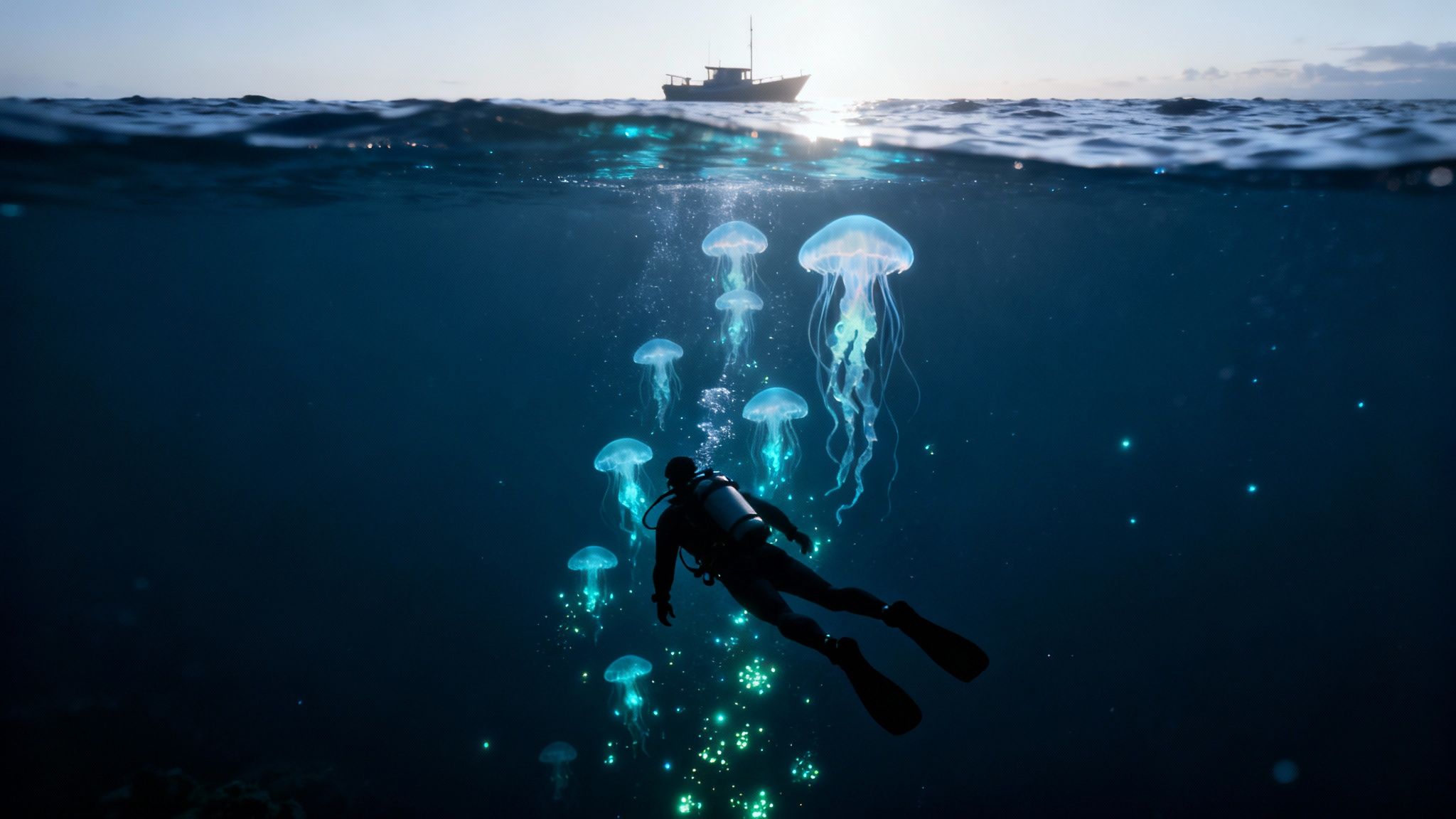
Often called a "safari in the abyss," the blackwater dive is nothing like a typical reef dive. You'll drift in the deep, dark open ocean, tethered to the boat with thousands of feet of water below you. Floating in the blackness, you get a front-row seat to one of the largest migrations on the planet.
The Blackwater Dive Experience
Every single night, a massive vertical migration brings bizarre, alien-like creatures up from the depths to feed near the surface. It’s a parade of bioluminescent life that looks like something straight out of a sci-fi film—glowing jellyfish, translucent squid, and larval fish in their strange, otherworldly juvenile stages.
This dive is a serious test of your buoyancy skills and is definitely considered an advanced dive, best suited for those with plenty of experience under their belt. It’s an absolute must-do for avid underwater photographers and any marine life nerd who wants to see something truly unique. To jump into this incredible adventure, check out Kona's premier Blackwater Dive tour.
The Kona blackwater dive offers a glimpse into a hidden ecosystem, revealing creatures that spend their entire lives in the deep ocean and are only visible to divers for a few hours each night.
Beyond the abyss, Kona also has more advanced dive tour opportunities that explore its rugged underwater landscape. Certified divers can discover dramatic lava tubes, swim through ancient archways, and explore deep reefs buzzing with life you just don't see on shallower sites. These trips are built for experienced divers, offering a chance to see a wilder, more untamed side of Kona’s underwater world.
Your Manta Dive Questions, Answered
Jumping into the ocean at night to see Kona's famous manta rays is the thrill of a lifetime, but it's smart to have a few questions first. Let's walk through some of the most common ones so you can feel completely ready for your big adventure.
Do I Have to Be Scuba Certified?
Nope! That's one of the best parts—this experience is open to just about everyone. If you’re a certified diver, you’ll get to settle in on the sandy bottom and watch the show from below, looking up as the mantas swoop and glide overhead.
If you aren't certified or just prefer to stay at the surface, the snorkel experience is equally amazing. You'll float comfortably while holding onto a specially designed light board, watching the mantas perform their ballet just inches beneath you.
How Safe Is the Manta Ray Night Dive?
It's incredibly safe. Every reputable dive operator puts safety above all else. While mantas are related to stingrays, they're gentle giants. They don't have teeth or stingers, so they pose no threat to humans.
The dive itself happens in a calm, protected bay in relatively shallow water—usually only 30-40 feet deep. Before you even get your fins wet, the professional crew will give you a detailed safety briefing. They're in the water with you the entire time, making sure everything goes smoothly.
What if the Mantas Don't Show Up?
I get it, this is a big worry for many people. The good news? It almost never happens. The Kona manta ray dive is famous for being one of the most reliable wildlife encounters on the planet. The chances of seeing mantas are consistently between 85% and 90%—some nights, it's even higher. You can learn more about the high success rate of the Kona Manta Ray Night Dive and see for yourself.
On the very rare night that the mantas decide to be shy, most top-notch operators offer a "manta guarantee." This usually lets you come back and try again on another night for free. It’s always a good idea to book your manta adventure early in your trip, just in case.
When Is the Best Time of Year to Go?
Any time! The mantas you'll meet are local residents, not tourists. They live here year-round and aren't a migratory species, so they show up for their plankton buffet every single night, no matter the season. That makes the manta ray night dive in Kona a perfect activity whether you're visiting in July or December.
Can I Touch the Manta Rays?
This is a firm no, and it’s for a very important reason. Manta rays have a special mucus coating on their skin that acts like a shield, protecting them from harmful bacteria and infections.
When a person touches them, it can rub off this protective slime and leave them vulnerable to disease. All responsible dive companies enforce a strict "look, don't touch" policy. We're guests in their underwater world, and it's our job to be respectful so this incredible experience can continue for years to come.
Ready to witness the magic for yourself? With Kona Honu Divers, you're choosing a top-rated, safety-focused crew dedicated to an unforgettable and eco-conscious adventure. Book your spot on one of the best diving tours on the Big Island for one of the most incredible dives in the world.