
Imagine slipping into the warm, dark Pacific Ocean just as the last bits of sunlight disappear over the Kona coast. Your dive light cuts through the twilight, illuminating the vibrant reef below. Then, out of the blue, a gentle giant emerges. A majestic creature with a 15-foot wingspan glides effortlessly out of the darkness, performing a silent, hypnotic ballet right before your eyes. This isn't a dream; it's the heart of the manta ray night dive in Kona, and it’s one of the most incredible wildlife encounters on the planet.
Experience the Magic of Konas Manta Ray Night Dive
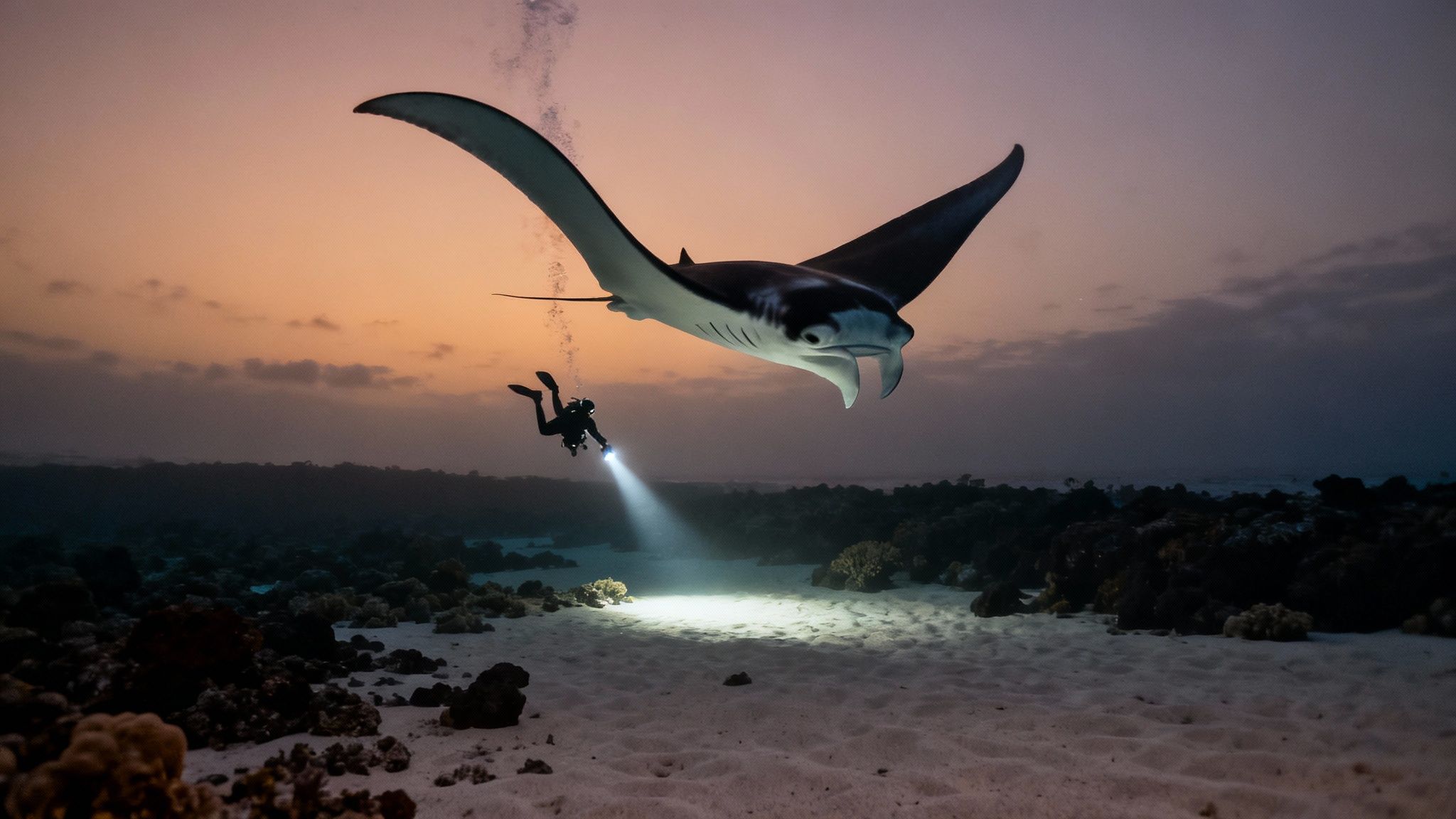
This isn't just another dive. The Kona Manta Ray Night Dive is one of those rare adventures that truly stays with you forever. But what makes it so special? It all comes down to a brilliantly simple setup that creates an unforgettable spectacle.
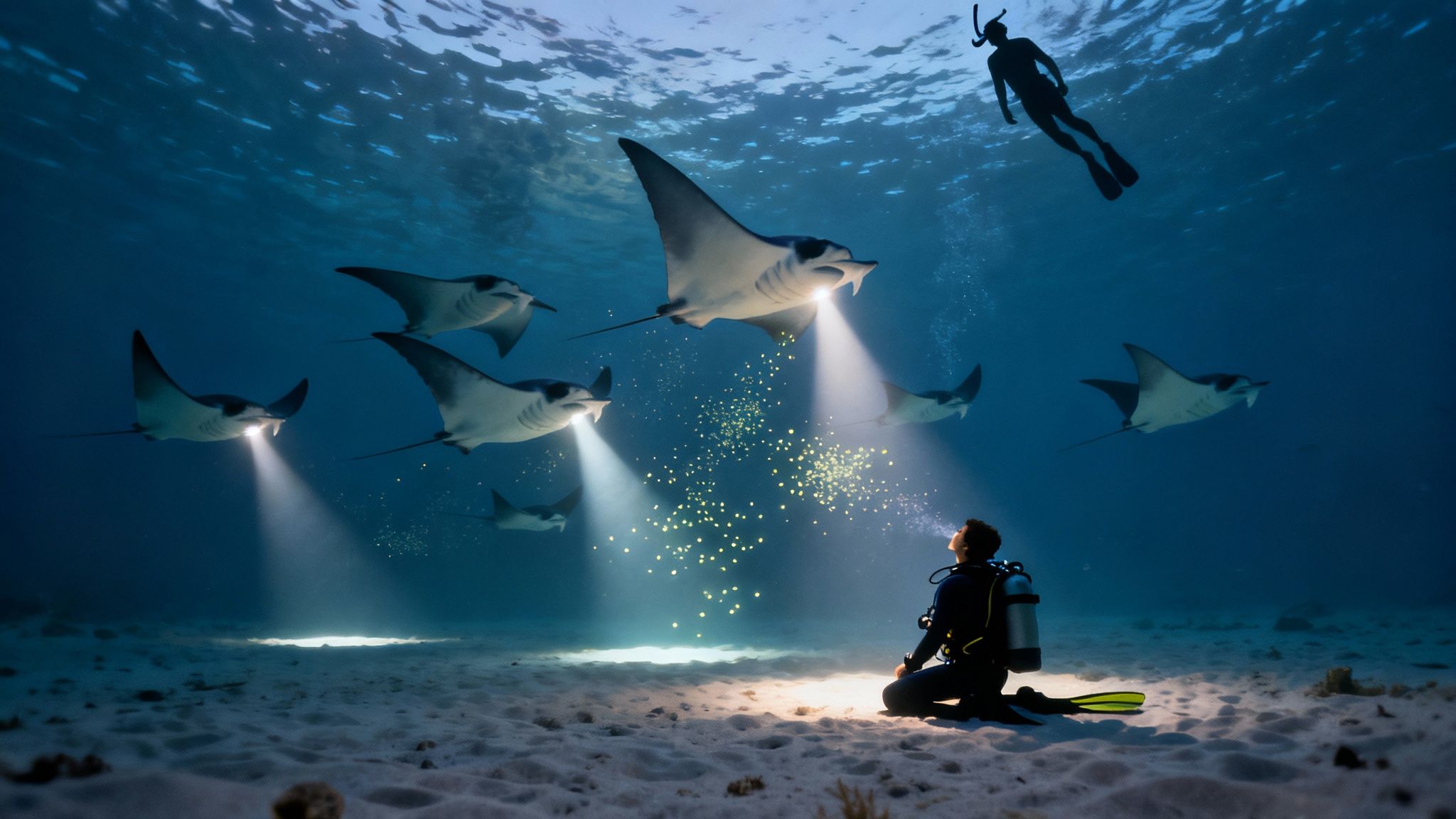
The whole experience is built around what we like to call an "underwater campfire." Dive operators place powerful, eco-friendly lights on the ocean floor. These lights act like magnets for plankton, drawing in massive clouds of the manta rays' favorite meal. Divers and snorkelers then gather around this glowing buffet, giving them front-row seats to watch nature's most graceful feeding frenzy.
Why Kona Is a Global Manta Hotspot
Kona isn't just another great dive destination; it's a global phenomenon. Believe it or not, the manta ray night dives here attract around 80,000 visitors every year, making it one of the most sought-after wildlife experiences in the world.
So, why here? It's all about reliability. Kona boasts a stunning 80-90% success rate for manta ray sightings, and that's year-round. When you pair that consistency with our warm, clear waters, you get a premier destination for marine encounters. You aren't just crossing your fingers hoping to see a manta; you’re anticipating an awe-inspiring performance. You can get a closer look at what makes this encounter so unique in our guide on the Kona Manta Ray Night Dive.
Imagine these gentle giants, some wider than a car, swooping and barrel-rolling just inches from your face. It's a completely immersive and peaceful experience that connects you to the ocean in a way you'll never forget.
It’s this incredibly consistent and up-close interaction that truly sets the Kona experience apart from anywhere else on Earth. Ready to see the magic for yourself?
Why Garden Eel Cove Is the Premier Manta Dive Site
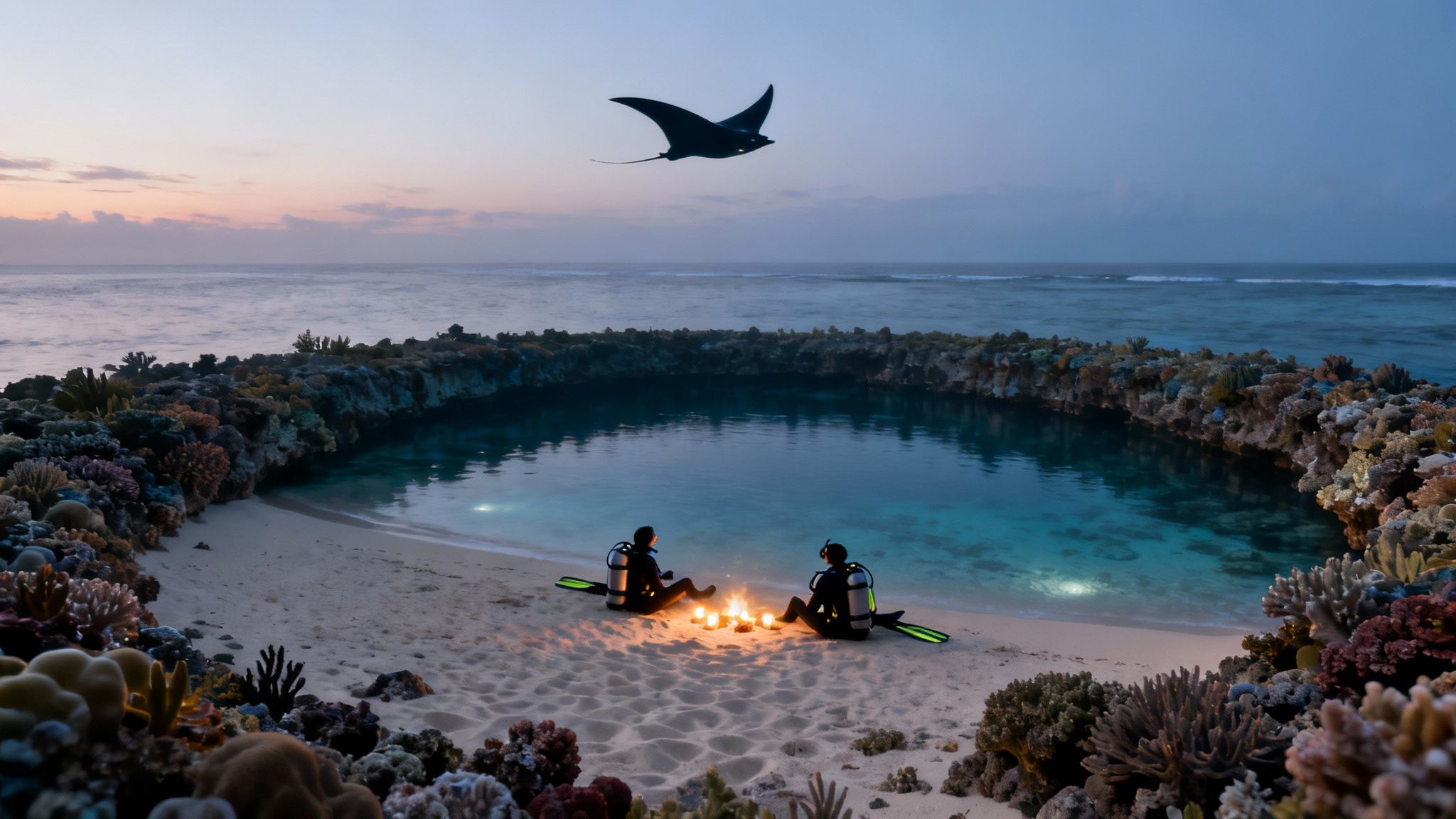
When you're planning a manta ray night dive in Kona, you’ll quickly learn that not all dive sites are created equal. You have two main choices, but one consistently delivers a world-class experience: Garden Eel Cove, also known by its well-earned nickname, "Manta Heaven."
What makes it the superior choice? Geography. Tucked into a bay near the Kona airport, the site is naturally sheltered from the large ocean swells that can roll in from the south. This protection means calmer waters, a more comfortable boat ride, and significantly fewer weather-related cancellations.
The layout on the seafloor offers another huge advantage. Garden Eel Cove features a large, sandy patch that creates a natural amphitheater. This allows divers to comfortably settle on the bottom, creating a perfect viewing area for the manta ray ballet above.
A Better Viewing Experience and Healthier Reefs
The unique "campfire" setup at Garden Eel Cove is brilliant for both mantas and divers. With everyone settled on the sandy bottom, we create an open, unobstructed space above. This allows the mantas to swoop, glide, and perform their incredible barrel rolls without any obstacles, leading to much closer and longer encounters. They will often glide just inches over your head.
Furthermore, the surrounding reef at Garden Eel Cove is noticeably healthier and more vibrant than at other locations. This not only makes for a spectacular dusk dive on a two-tank trip—filled with colorful fish and other marine life—but it also supports a richer ecosystem. We break down exactly why this spot is so magical in our deep dive on Manta Heaven.
While Manta Village has its moments, Garden Eel Cove’s protected location, superior viewing area, and healthier reefs consistently offer a more reliable and breathtaking experience.
Comparing Kona's Manta Ray Dive Sites
| Feature | Garden Eel Cove (Manta Heaven) | Manta Village (Keauhou Bay) |
|---|---|---|
| Location | North of Kona, near the airport | South of Kona, in Keauhou Bay |
| Protection | Superior: Highly protected from ocean swells | More exposed to south swells |
| Conditions | Typically very calm, fewer cancellations | Can get rough, higher cancellation rate |
| Seafloor | Superior: Sandy "amphitheater" for easy viewing | Rocky, uneven bottom |
| Reef Health | Superior: Vibrant, healthy coral and marine life | Less healthy, impacted by runoff |
Choosing a top-tier operator that dives exclusively at Garden Eel Cove is, without a doubt, your best bet for a night you'll never forget.
The combination of calmer seas, a perfect natural viewing area, and a thriving reef ecosystem solidifies Garden Eel Cove's reputation as the best place for this once-in-a-lifetime encounter.
Don't just take our word for it. Research on Kona manta sightings from 2009 to 2014 showed that both of the main sites have an impressive 80-90% success rate. This incredible consistency comes from the "campfire" light setup attracting plankton, which means the mantas show up nearly every night, year-round. For a closer look at the numbers, check out the long-term manta ray sighting data on MantaRayAdvocates.com.
Your Manta Ray Dive Adventure Step by Step
So, you're ready to see the mantas. What does the actual experience feel like? It’s not just about jumping in the water; it’s a carefully planned adventure that builds anticipation from the moment you arrive at the dock until you’re back on the boat, buzzing with excitement.
Let's break down the whole evening.
Your journey starts in the late afternoon with a check-in at the harbor. You'll get to meet the crew, sort out the usual paperwork, and make sure your gear is a perfect fit. The divemaster will then gather everyone for a thorough briefing, covering the night’s plan, all the safety checks, and the most important rule of the encounter: look, but don’t touch.
The First Dive at Dusk
With everyone geared up, the boat heads out. You'll arrive at the dive site just as the sun starts to set, treating you to a classic Hawaiian sunset from the water. It’s the perfect backdrop for what’s to come.
If you’re on a two-tank trip, your first immersion is a dusk dive. Slipping into the water as the day’s last light fades is a truly unique experience. You get to see the reef in transition, as the daytime critters head to bed and the nocturnal hunters begin to stir.
After surfacing, you’ll have a nice break on the boat with some snacks and drinks while the crew gets everything ready for the main event. It’s also a good time to double-check your own gear. Having the right equipment makes a huge difference, and for many divers, knowing about the best dive watches is part of being prepared for any underwater adventure.
The Main Event: The Underwater Campfire
Once complete darkness falls, it's showtime. The crew sets up powerful lights on the ocean floor, creating what we call the "underwater campfire." This bright light is a magnet for plankton, the mantas' favorite food.
As a diver, you'll descend and find a spot on the sandy bottom, arranging yourselves in a semi-circle around the light. Everyone points their dive lights up, creating intersecting beams that cut through the dark water. The effect is stunning, and it creates a super-concentrated buffet that the mantas just can't resist.
Snorkelers get an equally amazing, top-down view. They hang onto a large, custom-made light board that floats on the surface, shining its own powerful beams down into the water and drawing the mantas right up to them.
It’s a feeling that’s hard to put into words. You’re settled on the sea floor, looking up into the darkness, and then… a giant, graceful shadow appears. They glide in from the blackness, swooping and barrel-rolling just inches over your head. It’s a silent, mesmerizing ballet.
You’ll spend about 45 minutes completely captivated by this display. It’s both incredibly peaceful and utterly exhilarating. Once your time is up, you’ll slowly ascend and make your way back to the harbor, filled with the incredible memories of one of the planet's greatest wildlife shows.
Choosing the Best Kona Manta Ray Tour Operator
Let’s be honest: the guide you pick for your manta ray night dive in Kona can make or break the entire experience. It’s just as important as the dive site itself. A truly great operator takes a good dive and makes it phenomenal, ensuring your adventure is safe, respectful to the animals, and something you'll talk about for years.
When you start looking, try to think beyond just the price. The best outfits, like Kona Honu Divers, are built on a foundation of deep experience. Their divemasters aren’t just leading a tour; they’re seasoned pros who often know the local mantas by name. That kind of familiarity is priceless—it means they can read the mantas' behavior, get you in the perfect spot for incredible views, and do it all without disturbing these gentle giants.
What Sets the Best Apart
One of the biggest tells of a quality operation is their commitment to small groups. Fewer divers in the water makes for a much more personal and serene encounter, without the chaos of a crowd. It also means your guide can give you more one-on-one attention, which is a huge confidence booster, especially on a night dive.
Of course, safety is absolutely non-negotiable. Top-tier operators are meticulous about maintaining their equipment and run their boats with a professional, well-drilled crew. From the moment you step on board for the pre-dive briefing until you’re back on the boat with a huge smile on your face, every detail is handled with your safety and comfort in mind. This includes providing high-quality gear, comfortable boats with good amenities, and showing a genuine respect for the ocean.
The right operator doesn’t just show you manta rays. They craft an entire experience rooted in expertise, safety, and a real passion for marine conservation. That’s what makes the adventure both breathtaking and responsible.
When you book with an operator that gets these things right, you're investing in a far better experience. It guarantees your manta ray night dive in Kona is not only incredible but also done in a way that helps protect these amazing animals for future generations. You can learn more about what to look for by reading our detailed guide on the Kona manta ray dive.
Here at Kona Honu Divers, that philosophy is at the heart of everything we do. We focus on small groups, expert guides, and an impeccable safety record to deliver an underwater adventure that’s second to none.
Ready to dive with the best? Explore their manta ray dive tours page and see the difference for yourself.
Meet the Famous Resident Manta Rays of Kona
The manta ray night dive in Kona isn't just about watching wildlife; it’s more like getting an introduction to a community of underwater celebrities. You're not just seeing a manta ray. You’re meeting the manta rays, and each one has its own name, personality, and backstory. It's this personal connection that truly sets the experience apart.
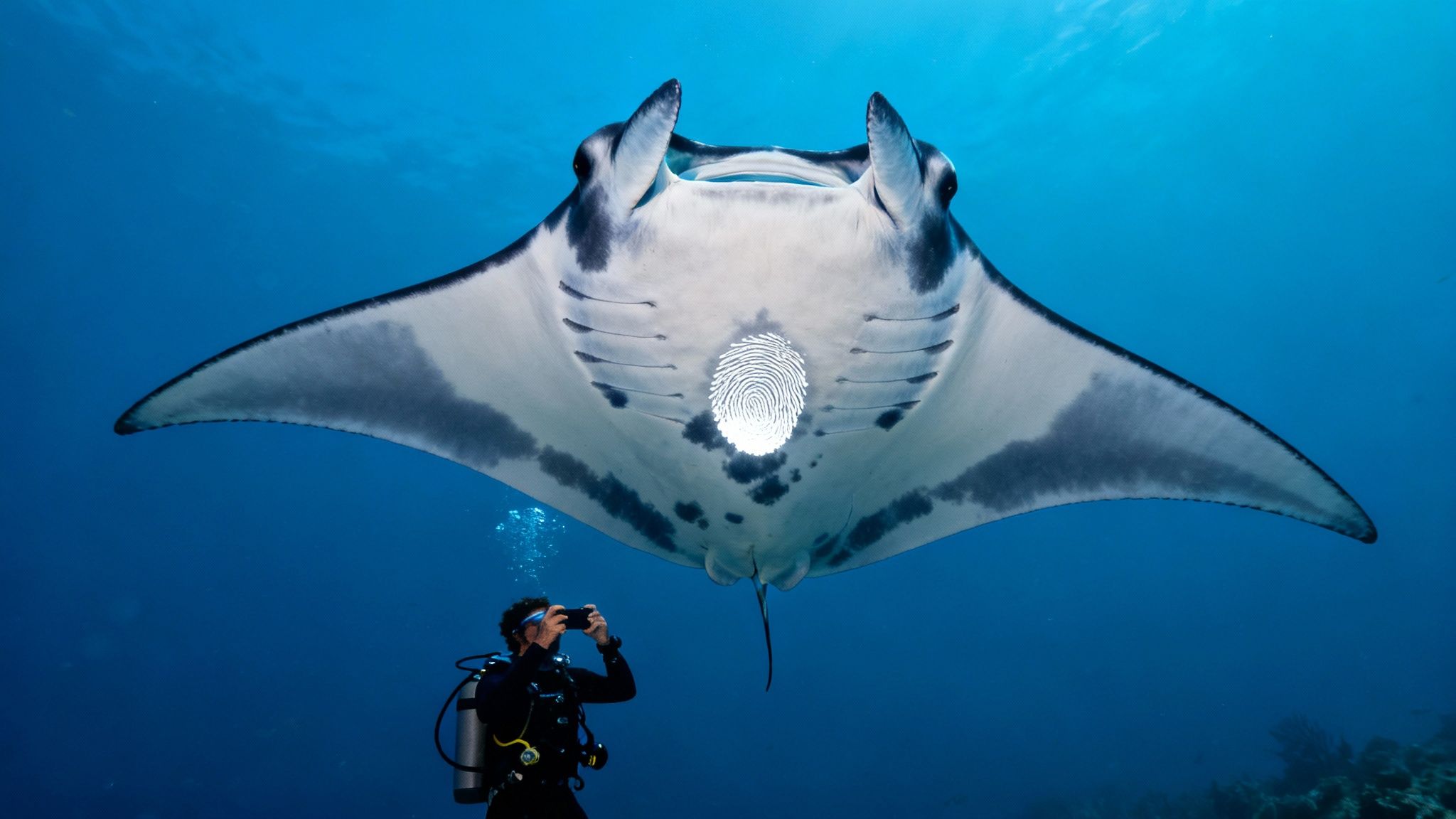
So, how is this possible? It’s a fascinating mix of simple biology and dedicated conservation. Every single manta ray has a unique pattern of spots on its belly, which works exactly like a human fingerprint. Researchers and veteran divemasters use these spot patterns to identify individual mantas, track their habits, and even give them names.
Getting to Know the Locals
This simple identification method has completely changed the dive from a passive observation into a genuine encounter. Over decades, local guides have gotten to know dozens of regulars by sight. On your dive, you might hear your guide get excited about seeing a famous resident like:
- Big Bertha: One of the largest and most recognizable mantas in Kona. She’s famous for her massive size and surprisingly gentle presence.
- Lefty: You can't miss Lefty, who is easily identified by an old injury to one of his cephalic fins. He's one of the most reliable visitors to the feeding sites.
- Koie: Another local legend, Koie is known for putting on a show with her graceful barrel rolls right through the divers' light beams.
When you know their names, the entire experience feels different. You're not just watching anonymous animals feed; you're witnessing the nightly routine of creatures with history and personality. This connection fosters a much deeper appreciation for these gentle giants and the fragile ecosystem they call home.
This focus on individual identification has become a cornerstone of local conservation efforts. It gives researchers an incredible tool for tracking the population's health and behavior, helping to ensure these magical encounters can continue for generations.
These dedicated scientific and conservation efforts have paid off spectacularly. To date, researchers have cataloged over 300 individual manta rays living along the Kona coast, leading to more than 10,000 verified sightings. You can get an even deeper look into how these identification efforts enhance the manta dive experience on UWPhotographyGuide.com. All this detailed knowledge makes every trip out special because your guide can often tell you exactly which local celebrity has decided to show up for dinner.
Answering Your Manta Ray Night Dive Questions
Planning your trip to see Kona's famous manta rays is thrilling, but it's completely normal to have a few questions buzzing around your head. Let's walk through some of the most common ones we hear so you can feel totally prepared for the adventure.
Do I Need to Be a Certified Diver to See the Mantas?
Nope, you don't! While scuba divers get an incredible view from the ocean floor, snorkelers get a front-row seat from the surface that's just as spectacular.
You'll hold onto a custom-made light board that floats, shining bright beams down into the water. This light is like a dinner bell, attracting plankton which, in turn, brings the mantas right up to you. It's an amazing top-down view of the "manta train" and perfect for anyone who isn't a certified diver.
Is the Manta Ray Night Dive Safe?
Absolutely. Your safety is our top priority, and we've got this down to a science. Manta rays are called gentle giants for a good reason—they have no teeth, no stingers, and no barbs. They're filter feeders interested only in the tiny plankton, not you.
As for the dive itself, our professional guides run a tight ship. You'll get a detailed briefing before you even touch the water, so you know exactly what to expect. We operate at Garden Eel Cove, the superior choice due to its sheltered location and consistently calm conditions, which makes for a very controlled and safe environment.
What Should I Bring on the Dive?
Packing is pretty straightforward. Here's a quick checklist of what you'll want to have with you:
- Your dive certification card (for scuba divers).
- A swimsuit to wear under the wetsuit we provide.
- A towel and a warm jacket or hoodie for the boat ride home. It can get a little brisk once you're out of the water.
That’s about it! A great operator like Kona Honu Divers provides all the gear you'll need—wetsuit, mask, fins, everything. It’s also a good idea to bring a reusable water bottle to stay hydrated.
What Happens If We Don't See Any Manta Rays?
This is a great question. The Kona manta ray dive has a phenomenal success rate, usually somewhere between 80-90%. Still, we're dealing with wild animals, and they don't always stick to our schedule.
On the rare night the mantas decide to be shy, reputable companies offer a "manta guarantee." This typically means you can come back and try again on another night for free, based on availability. It's always best to ask about the specific policy when you book, but it's our way of making sure you get the experience you came for.
Ready for one of the most memorable wildlife encounters on the planet? Kona Honu Divers runs world-class, safe, and ethical manta ray dive tours right at the prime location, Garden Eel Cove.