
Picture this: you're weightless in the dark, warm Pacific waters, and colossal, gentle manta rays are gliding silently right over your head. It’s like watching a breathtaking underwater ballet, and it’s not a dream. It's the world-famous manta ray night dive in Kona, Hawaii, an experience that people from all over the globe agree is one of the most incredible marine encounters you can have.
If this is on your bucket list, this guide is your playbook for making it happen.
Your Unforgettable Kona Manta Ray Experience
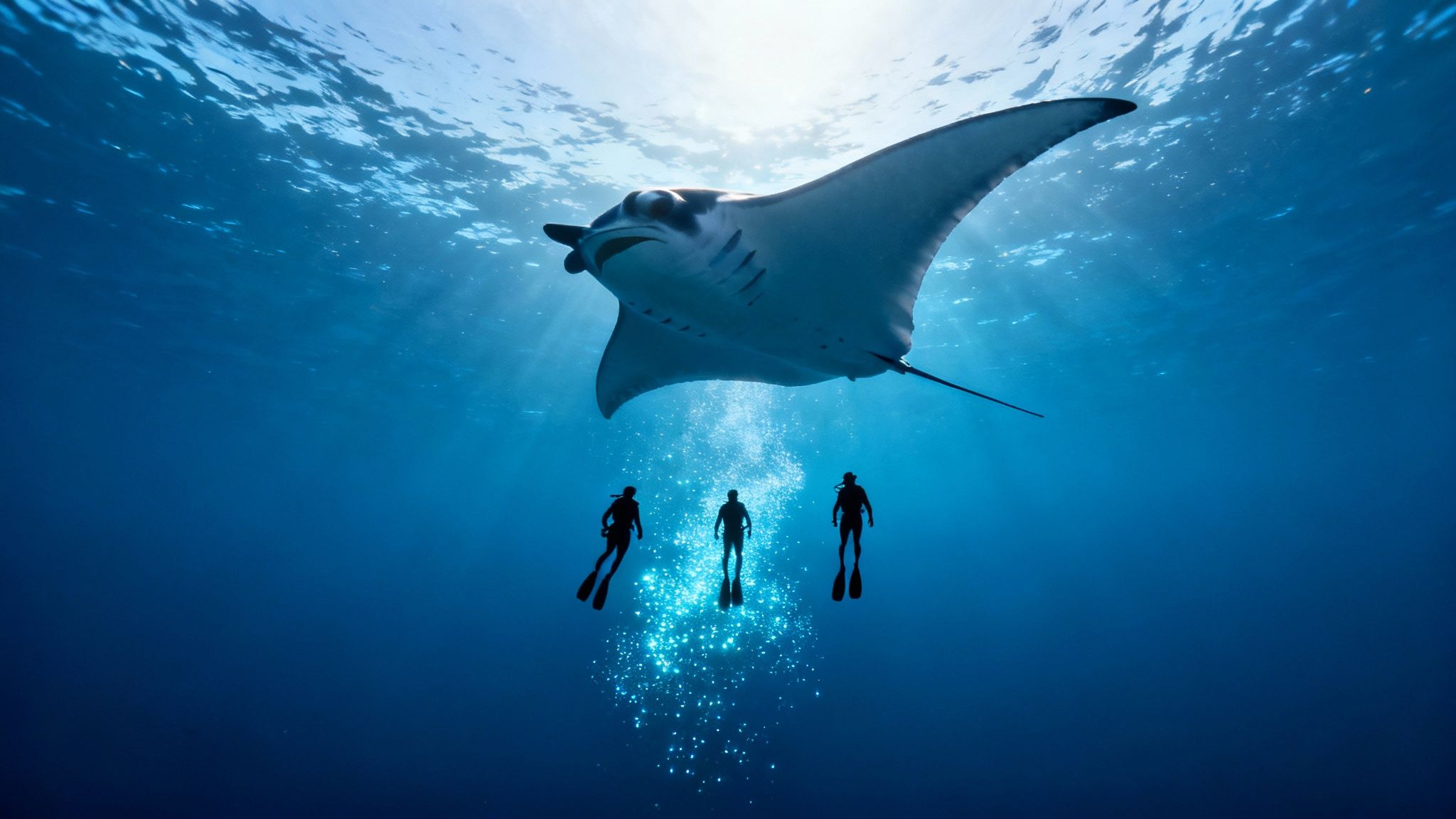
Off the Kona coast of the Big Island, something magical happens every single night. Divers descend and settle on the ocean floor, gathering around powerful, upward-facing lights. These lights act like a giant bug zapper for the ocean, attracting clouds of tiny plankton, the manta rays' favorite meal.
And then, the show begins. Giant resident reef mantas, some with wingspans stretching up to a massive 18 feet, emerge from the darkness. They perform graceful somersaults and barrel rolls through the illuminated water, scooping up plankton just inches from your face. It's a silent, mesmerizing performance that leaves you with a profound connection to these gentle giants.
Why This Dive Almost Never Disappoints
The Kona manta ray night dive has earned its reputation as one of the most reliable wildlife encounters on the planet, drawing in around 80,000 people every year. Why? Because the chances of seeing mantas are incredibly high—we're talking success rates that hover between 80% and 90% all year round.
This isn’t about getting a fleeting glimpse of an animal from afar. You’re fully immersed in their world, a silent observer at their nightly feast. You aren't chasing them; they come to you. This passive approach is the secret to the dive's sustainability and ethical core.
To give you a quick overview, here's a little cheat sheet for planning your dive.
| Aspect | Details | Recommendation |
|---|---|---|
| Best Time to Go | Year-round, but summer months can have calmer seas. | Book for a weekday to potentially avoid larger crowds. |
| Dive Operator | Choose one certified by the Manta Ray Green List program. | Look for operators with smaller group sizes for a better experience. |
| What to Bring | Swimsuit, towel, reef-safe sunscreen, and a warm jacket for after. | A reusable water bottle is always a good idea. |
| Skill Level | Open Water Certified Diver for scuba; no experience needed for snorkel. | Do a "refresher" dive if you haven't been in the water for a while. |
This table gives you the basics, but picking the right operator and dive site can make or break your trip.
For instance, the number of mantas you see can vary. You might see an average of four at one site, but at another, like the popular Garden Eel Cove, it's not uncommon to see as many as eleven. You can read more about Kona's amazing manta ray sightings and what makes them so consistent.
The core of the experience is simple: Be still, watch, and let the mantas control the encounter. This respect for their natural behavior is what makes the Kona dive a world-class model for responsible marine tourism.
We'll get into the nitty-gritty of why choosing a protected spot like Garden Eel Cove is so important. You'll also learn what to look for in a great dive operator, how to prep for the big night, and the simple rules for keeping both you and these magnificent creatures safe. Let's dive in.
Why Garden Eel Cove Is The Premier Dive Site
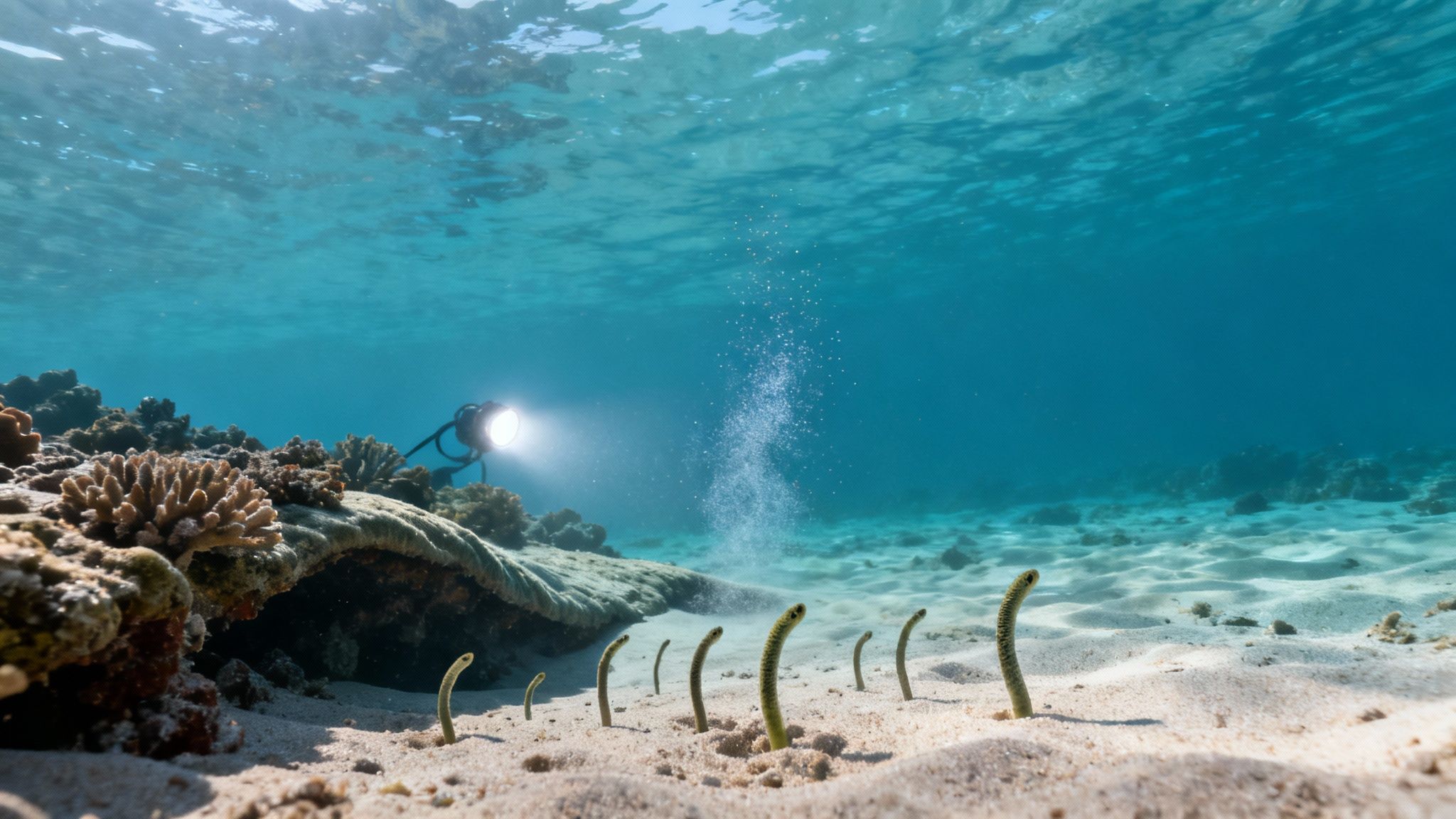
When you start planning your manta ray night dive in Kona, you'll quickly discover there are a couple of different locations operators go to. But here's the insider tip: they are not all created equal. While some boats head to a spot called 'Manta Village,' the undisputed champion for the best experience is Garden Eel Cove. This site is the superior choice for your manta ray dive tour because of its protected location, better viewing area, and healthier reefs.
Choosing the right spot can be the difference between a good dive and a truly mind-blowing, unforgettable experience.
Natural Protection and Ideal Conditions
One of the biggest advantages of Garden Eel Cove is its location. Tucked away in a naturally protected bay, it's shielded from the big open-ocean swells that can sometimes make other sites a bit sporty.
This means the water here is consistently calmer. As a diver, that translates to a much more relaxed and stable time on the bottom. Instead of fighting against surge, you can just settle in and enjoy the show unfolding right above you. This reliability is exactly why so many experienced divers will only book trips that go to Garden Eel Cove.
A Superior Viewing Amphitheater
The layout of the seafloor at Garden Eel Cove seems almost perfectly designed for this encounter. The dive site features a huge, sandy basin that creates a natural amphitheater for divers. We can all get comfortable on the bottom in a semi-circle, which creates the perfect viewing arena.
This setup is brilliant for a few reasons:
- Clear Sightlines: Everyone gets an unobstructed, front-row seat to the action without feeling crowded.
- Environmental Protection: By staying on the sand, we ensure no one accidentally bumps into the delicate coral reefs nearby.
- Enhanced Manta Behavior: The wide-open space gives the mantas all the room they need to perform their incredible, acrobatic feeding ballet.
You can get a better sense of the unique topography and why it works so well in our in-depth look at Manta Heaven.
Unmatched Sighting Reliability
Let’s talk numbers. While both of the main sites have pretty high success rates, Garden Eel Cove has a long-standing reputation for delivering a higher number of mantas per dive. The consistency here is just legendary.
In fact, detailed logs kept from 2009 to 2014 showed consistent sightings on six to seven nights a week, with an overall success rate hanging between 80-90%. That kind of historical data is what makes this a true bucket-list dive you can count on.
For a truly magical encounter, insisting on a tour to Garden Eel Cove is your best bet. The combination of calm conditions, a perfect viewing area, and vibrant reefs makes it the superior choice for your manta ray night dive.
Beyond the main event, the reefs surrounding our "campfire" are absolutely teeming with life. The two-tank trip required to dive here includes a gorgeous twilight dive on these healthy corals, which is a spectacular experience all on its own. When you book your manta ray dive, confirming that the destination is Garden Eel Cove guarantees you're getting the absolute best Kona has to offer.
Check Availability
Finding the Right Dive Operator for Your Adventure
Choosing your dive company for the manta ray night dive in Kona is probably the single most important decision you'll make. It can be the difference between a magical, once-in-a-lifetime experience and a crowded, underwhelming dip in the ocean. It's not just about getting wet; it's about feeling safe, being comfortable, and getting a front-row seat to the main event.
The best outfits always prioritize smaller group sizes. This isn't just a luxury—it means you get a more personal and much less chaotic dive.
What to Look for in a Top-Notch Operator
When you start digging into different companies, look for those who are upfront about their boats, the quality of their gear, and the experience of their guides. You want a crew that is genuinely passionate about the ocean, not just punching a clock. From my experience, these are the non-negotiables for a truly world-class adventure.
A great example of a top-tier operator is Kona Honu Divers. They've built their reputation on an experienced crew, an ironclad commitment to safety, and a real dedication to marine conservation. Their two-tank manta trip is a fantastic value—you get a beautiful reef dive at dusk before the main event, which means more time in Hawaii's incredible waters.
Picking the right company goes beyond just skimming reviews. It’s about finding a team that truly respects the mantas and their home. We’ve actually put together a deep-dive guide on how to choose a Kona dive shop that lays out everything you should consider.
The manta ray population here on the Kona coast is one of the most studied on the planet. Researchers have identified over 450 individual mantas, each with unique belly markings that act like a fingerprint. This allows scientists to track them over decades, providing incredible data for conservation. You can learn more about Kona's amazing manta population and identification project.
Here’s something to remember: Your choice of operator directly impacts the health of the local manta population. When you support companies that follow strict conservation guidelines and contribute to research, you're doing more than just diving—you're helping protect these magnificent animals for years to come.
This commitment is what ensures every dive is both ethical and sustainable.
One last piece of advice: book your tour well in advance. This is one of Kona's most popular activities for a reason, and the best boats fill up fast, especially during peak seasons like summer and holidays.
Preparing for Your Dive: What to Bring and Expect
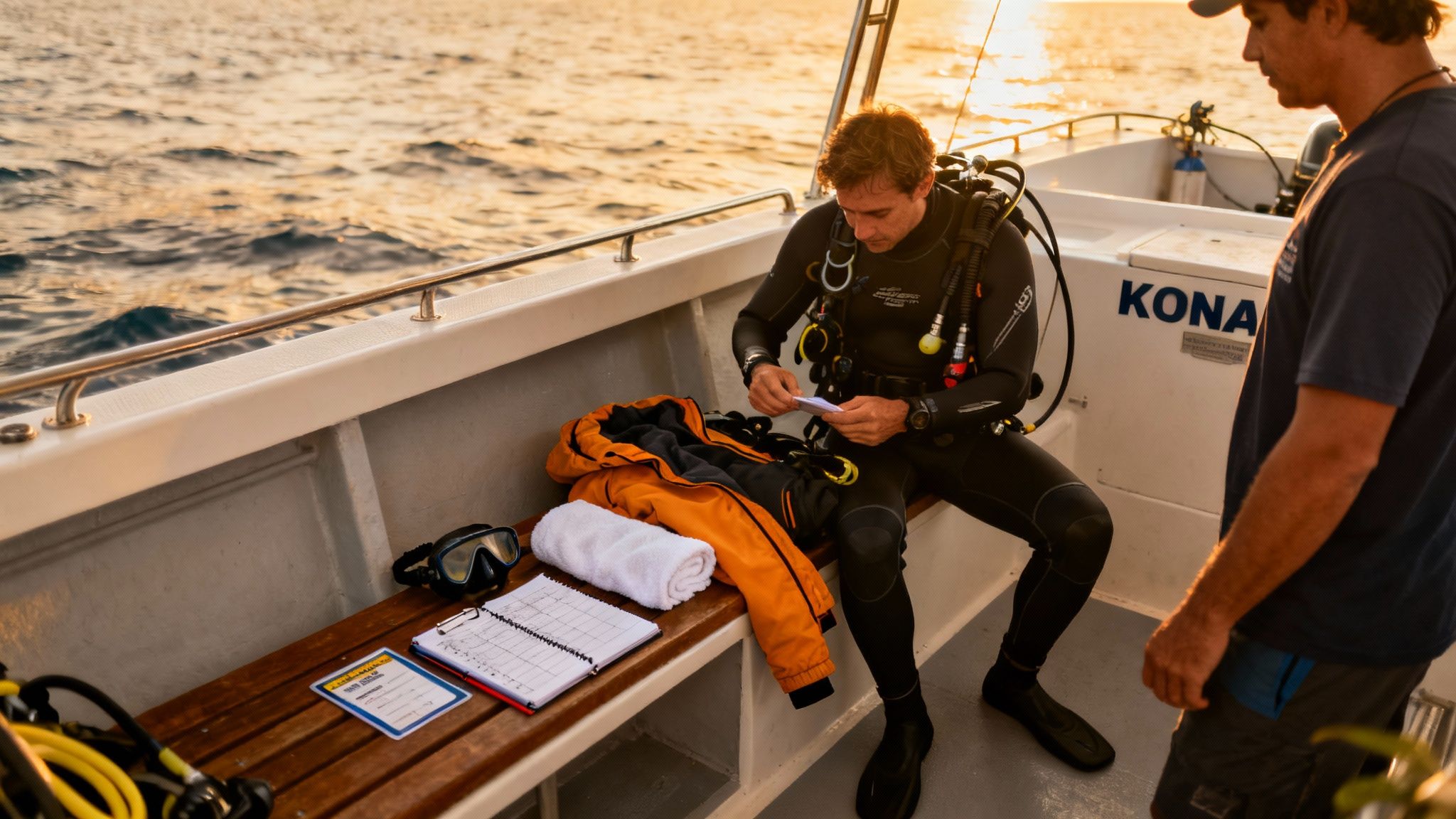
A little bit of prep work can make all the difference between a good dive and an unforgettable one. Knowing what’s coming—from the moment you step on the boat to your final ascent—will help you relax and soak in every second of your manta ray night dive in Kona.
It's a pretty smooth process. Once you check in and get settled on board, the crew will run through a detailed safety briefing. This is your chance to really tune in. The divemaster will walk you through the whole plan, including the famous underwater "campfire." This is where all the divers settle in a circle on the sand, shining their lights up to attract plankton. And where there's plankton, the mantas are sure to follow.
Your Essential Packing Checklist
Packing smart means you can focus on the fun part. While the dive shop handles all the heavy scuba gear, there are a few personal items you’ll want to have on hand for your own comfort.
Here’s a quick checklist of things you definitely don't want to forget:
- Proof of Certification: Your C-card is a must. Bring your logbook, too!
- Towel and a Warm Jacket: The boat ride back can get surprisingly chilly after a night dive. You’ll be glad you have them.
- Reef-Safe Sunscreen: Absolutely essential if your trip includes a sunset dive first. We've got to protect Hawaii’s fragile coral.
- Reusable Water Bottle: Diving is dehydrating, so keep sipping.
And as with any adventurous trip, it's always wise to look into travel insurance for adventure sports that covers scuba diving specifically.
Understanding the Dive Briefing
Listen up, because the pre-dive briefing is probably the most critical part of your prep once you're on the boat. It’s not just about your safety; it's about protecting the magnificent creatures we're there to see.
The divemaster will lay down the ground rules for the encounter. This means holding your position, staying in the designated viewing area, and, most importantly, the strict 'no touching' rule. Touching a manta ray strips off its protective mucous coating, which can leave it exposed to serious infections.
Paying close attention here isn't just about following rules. It’s about learning how to be a responsible guest in the mantas' home, which ultimately lets you relax and just enjoy the incredible show unfolding in front of you.
How to Safely Interact With Kona’s Mantas
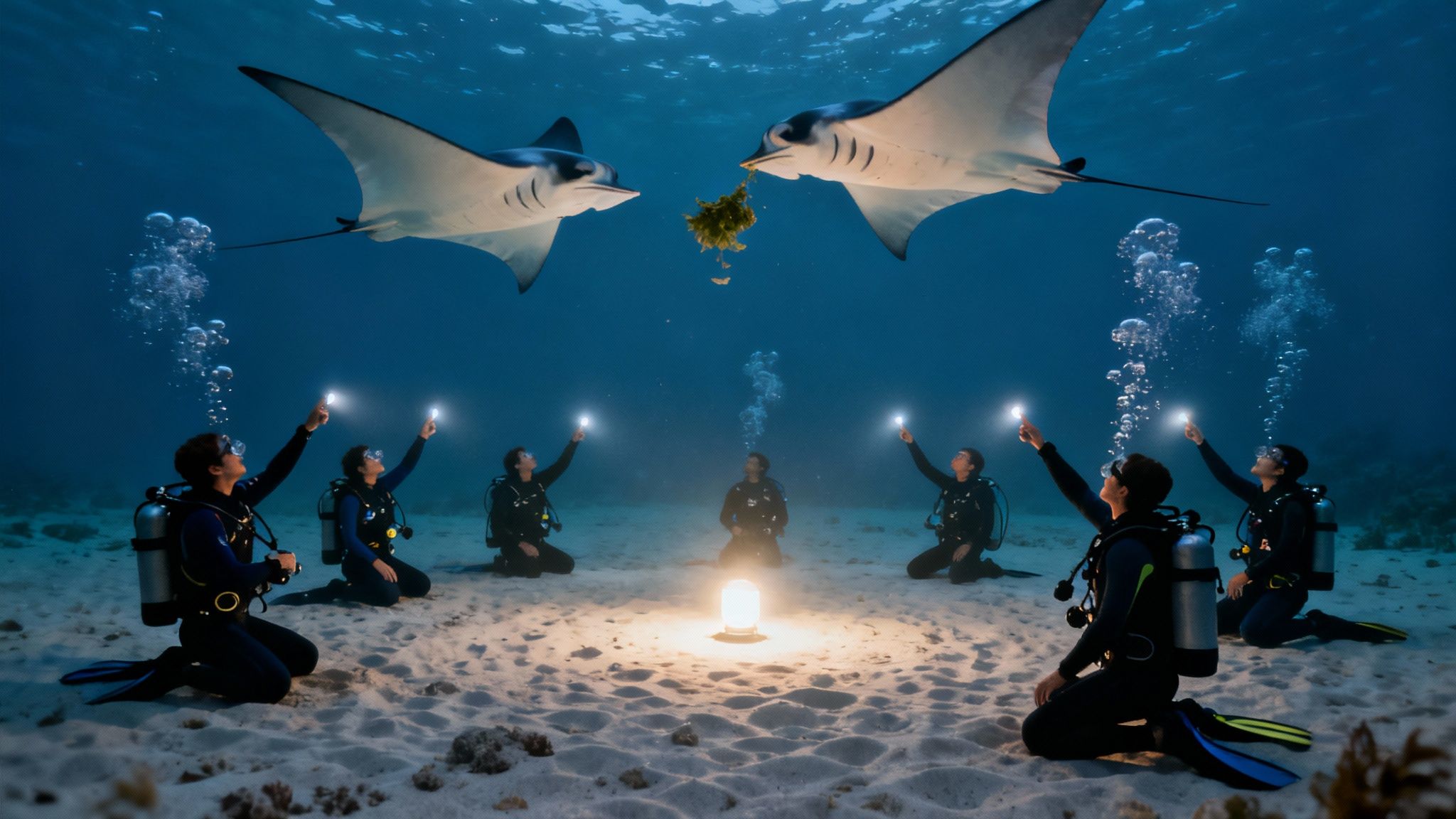
This is it—the moment you've been waiting for. After getting the full briefing and taking a short boat ride out to the site, you'll drop into the warm, dark Pacific. Your guide will lead the way to a specific spot on the sandy ocean floor. There, you and the other divers will get into a semi-circle around a cluster of powerful, upward-facing lights.
We call this setup the "campfire." It's the engine that powers the whole experience. These lights attract a thick cloud of plankton, which is exactly what brings Kona's famous manta rays in for their nightly feast.
The Art of Passive Observation
The single most important part of a successful and ethical encounter is to simply be a passive observer. Find your spot on the sand, get your buoyancy dialed in, and settle in for the show. This whole experience is on their terms; the mantas are in charge.
You’ll see them swoop and glide, sometimes just inches above your head, as they feed on the plankton. It's a breathtaking underwater ballet, and your job is just to watch. It can be tempting, but resisting the urge to swim up or chase after them is what makes for a great dive for everyone—mantas included.
The Golden Rule: Never, ever touch a manta ray. Their skin is covered by a protective mucus coating that acts as a shield against bad bacteria. If you touch them, you can wipe off this coating, leaving them open to serious, even life-threatening, infections.
Manta Ray Dive Etiquette
To keep divers and mantas safe, every manta ray night dive in Kona operates under a strict set of rules. Your divemaster will go over everything, but here are the core principles to remember once you hit the water:
- Stay Low: Keep yourself on or very close to the sandy bottom. This leaves the water column open so the mantas have plenty of space to feed without bumping into divers.
- Lights Up: Always point your dive light straight up at the surface. This helps concentrate the plankton in the "campfire" zone, making it a more inviting buffet for the mantas. Never shine your light in their eyes or at other divers.
- Mind Your Bubbles: This one sounds tricky, but it's simple. Try to time your breathing so your exhaled bubbles don't hit a manta directly in the face as it glides overhead. A slight tilt of your head is usually all it takes.
- Be a Rock: Avoid any sudden movements. The calmer and more still you are, the more comfortable the mantas will be, and the longer they'll likely stick around.
Following these simple guidelines helps ensure this incredible wildlife encounter remains sustainable for years to come. You'll often hear the guides call out the names of specific mantas, identifying them by the unique spot patterns on their bellies—it’s a cool reminder of the respectful, long-term relationship the Kona dive community has with these gentle giants.
Ready for your own encounter? You can book an unforgettable manta ray dive tour and see it for yourself.
Answering Your Questions About the Manta Ray Night Dive
As you get ready for this once-in-a-lifetime experience, you probably have a few questions floating around. I know I did before my first time. Getting these sorted out ahead of time makes the whole experience smoother and way more enjoyable.
Let’s go over some of the most common things people ask before they hit the water. From whether a new diver can handle it to the all-important "what if the mantas don't show up?" question, here are the answers you need.
Is This Dive Safe if I'm a New Diver?
Absolutely. The Kona manta ray night dive is one of the best underwater experiences for divers, even if you just got your Open Water certification. The whole operation is designed to be incredibly controlled and straightforward.
The dive sites are pretty shallow, usually around 30-40 feet, and you won't be swimming around. The plan is to get to a designated spot on the sandy bottom and stay put. This means no complex navigation or finning through unfamiliar territory in the dark. While having a prior night dive helps with comfort, it's definitely not a prerequisite.
What Happens if We Don't See Any Mantas?
Look, these are wild animals, and while the odds are overwhelmingly in your favor (80-90% success rate!), nature doesn't offer guarantees. On the very rare night the mantas decide to dine elsewhere, the best operators have your back.
Top-notch outfits like Kona Honu Divers offer a "manta guarantee." This means if you don't see a single manta, you can come back and try again on another night for free (based on availability, of course). This is a great reason to book your manta dive early in your trip—it gives you a buffer just in case.
Can I Snorkel Instead of Scuba Dive?
Yes, and it's an amazing experience in its own right! Most tour boats are set up for both divers and snorkelers. If you choose to snorkel, you'll typically hold onto a large, custom-built floatation board. These boards have powerful lights that shine down into the water, attracting the plankton that the mantas feed on.
From the surface, you get an incredible bird's-eye view as these gentle giants swoop and glide just feet below you. It's a fantastic option for anyone who isn't a certified diver, including families with kids, or even divers who just want a different perspective.
What Other World-Class Diving Is There in Kona?
Kona is a diver's dream, and the manta dive is just the beginning. If the night dive gets you hooked, there are a couple of other unique adventures that really show off what makes this place so special.
- The Kona Blackwater Dive: This is for the truly adventurous. On a Kona Blackwater Dive, you'll drift tethered in the deep, open ocean at night. You'll witness tiny, alien-like creatures migrating up from the abyss—it’s like diving in outer space.
- Advanced Daytime Dives: For more challenging dives during the day, look into a premium advanced dive tour. These trips will take you to more remote sites with dramatic lava tubes, arches, and pristine coral reefs that most visitors never get to see.
There's an entire underwater world here waiting to be explored, no matter your skill level.
Ready to see the magic for yourself? Kona Honu Divers runs one of the best manta ray night dive experiences at Garden Eel Cove. Check out all their incredible Kona diving tours and book an adventure you'll never forget.