
Picture this: you’re submerged in the warm, dark waters of the Pacific off the Kona coast. Suddenly, a giant, graceful shadow emerges from the gloom, gliding just inches above you. It's a manta ray, its movements a silent, mesmerizing ballet. This isn't something you watch on a screen—this is the Kona manta ray night dive, an experience that pulls in divers and snorkelers from every corner of the globe.
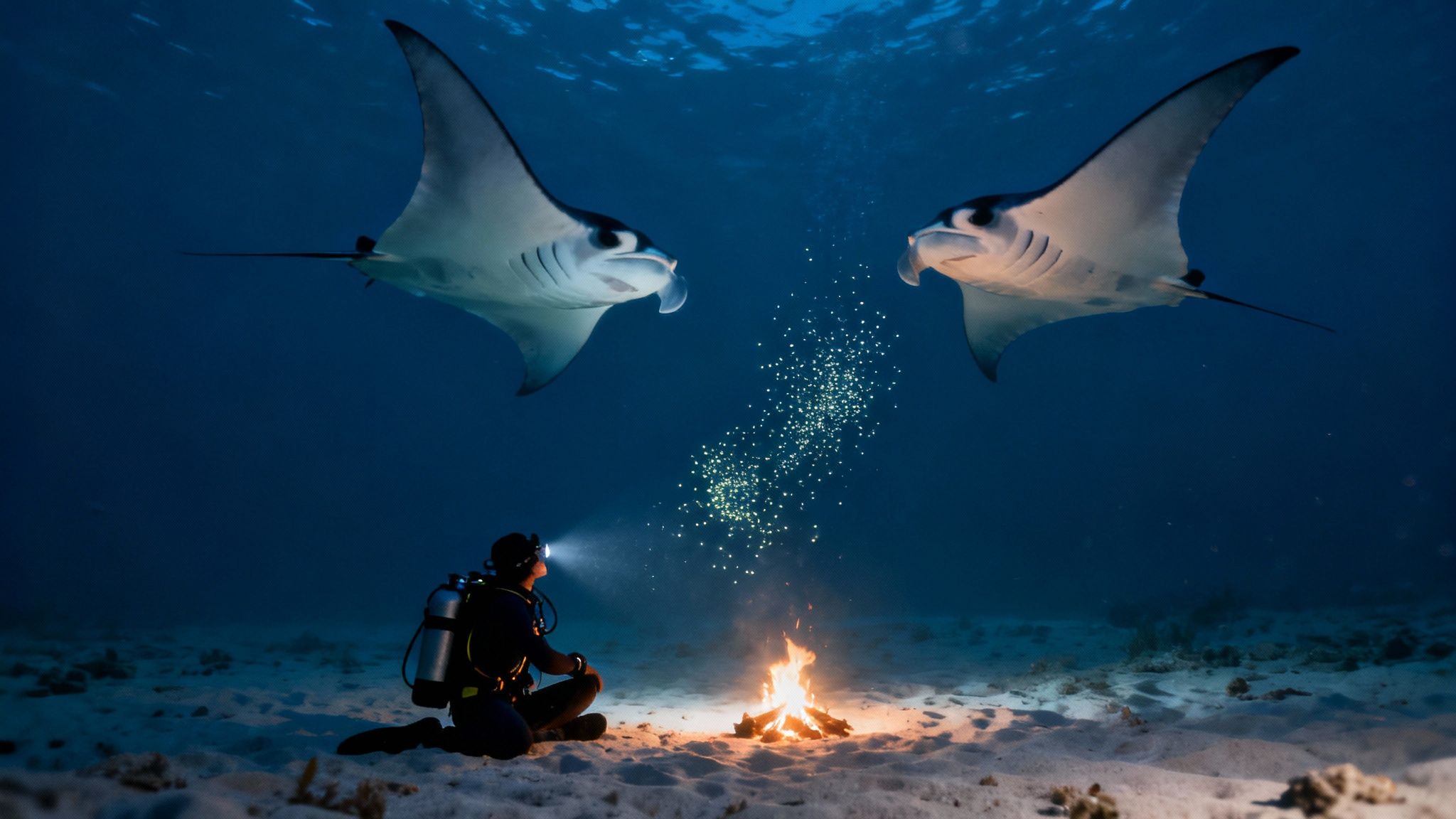
The magic all comes down to what we call the 'manta campfire.' Powerful lights are set up on the ocean floor, illuminating the water column and attracting swarms of plankton. Before you know it, the mantas arrive for an all-you-can-eat buffet, putting on a spectacular feeding display right before your eyes.
What Makes the Kona Manta Ray Night Dive a Must-Do Experience
The manta ray night dive in Kona is more than just another notch in your logbook; it’s a world-famous natural phenomenon. The Big Island's coastline happens to be the perfect hangout spot for these majestic creatures, making it one of the most reliable and awe-inspiring wildlife encounters you can find anywhere on Earth.
This whole adventure actually started by accident. Back in the 1990s, divers began noticing that manta rays were consistently showing up near a hotel where bright lights shone on the water. A few forward-thinking dive operators had a lightbulb moment: what if they could recreate this on purpose? They started bringing their own lights out to the dive sites, creating an underwater "campfire" that attracts plankton, the mantas' favorite meal. It was a simple but brilliant idea that has since turned Kona into the world’s premier destination for seeing manta rays up close.
Why This Encounter is So Reliable
Here's the best part: unlike whale watching or other wildlife tours that are hit-or-miss, Kona's manta rays are here to stay. They’re year-round residents, not migratory visitors, which means your chances of an incredible encounter are sky-high no matter when you book your trip.
This isn't just a small-time operation. The dive's consistency has made it a cornerstone of the Big Island's eco-tourism, drawing around 80,000 visitors every single year. With sighting success rates consistently between 80% and 90%, it's about as close to a guaranteed amazing experience as you can get in the wild. If you're curious, you can learn more about what makes the Kailua-Kona dive so famous.
The dive is also incredibly inclusive, with great options whether you're a seasoned diver or a first-time snorkeler.
- For Divers: You’ll descend to a sandy bottom, typically around 30-40 feet, get comfortable, and look up. The show happens right above you as mantas perform barrel rolls and swoop down to feed in the light beams.
- For Snorkelers: You'll hang out on the surface, holding onto a specially designed floating board with lights pointing down. This attracts the plankton right to you, giving you a fantastic top-down view of the mantas as they feed just a few feet below.
This guide is designed to give you the inside scoop on planning your own manta adventure. We'll walk through everything you need to know, and while we'll touch on the two main dive locations, I'll explain why one of them, Garden Eel Cove, consistently delivers a far better experience.
Why Garden Eel Cove Is The Superior Dive Site
When you start planning a manta ray night dive in Kona, you’ll quickly hear about two main spots. But here’s a pro tip: they are absolutely not the same. Where you choose to dive will make or break your entire experience, and one location consistently delivers a better night out: Garden Eel Cove, which we lovingly call Manta Heaven.
Calm Waters and a Better Ride
First off, let’s talk geography. Garden Eel Cove is tucked into a bay, naturally shielded from the big ocean swells that can turn a boat ride into a roller coaster. This protected location means calmer waters and, usually, much better visibility once you're in. If you're someone who gets a little queasy on the water, or you just want the clearest possible view of the action, this is a huge advantage.
The other popular site, Manta Village, is far more exposed. While it can still be a good dive, it’s much more susceptible to rough conditions. We’ve seen plenty of trips get canceled or become less enjoyable due to choppy seas there. For a more reliable and comfortable trip, Garden Eel Cove is the hands-down winner.
A Natural Underwater Theater
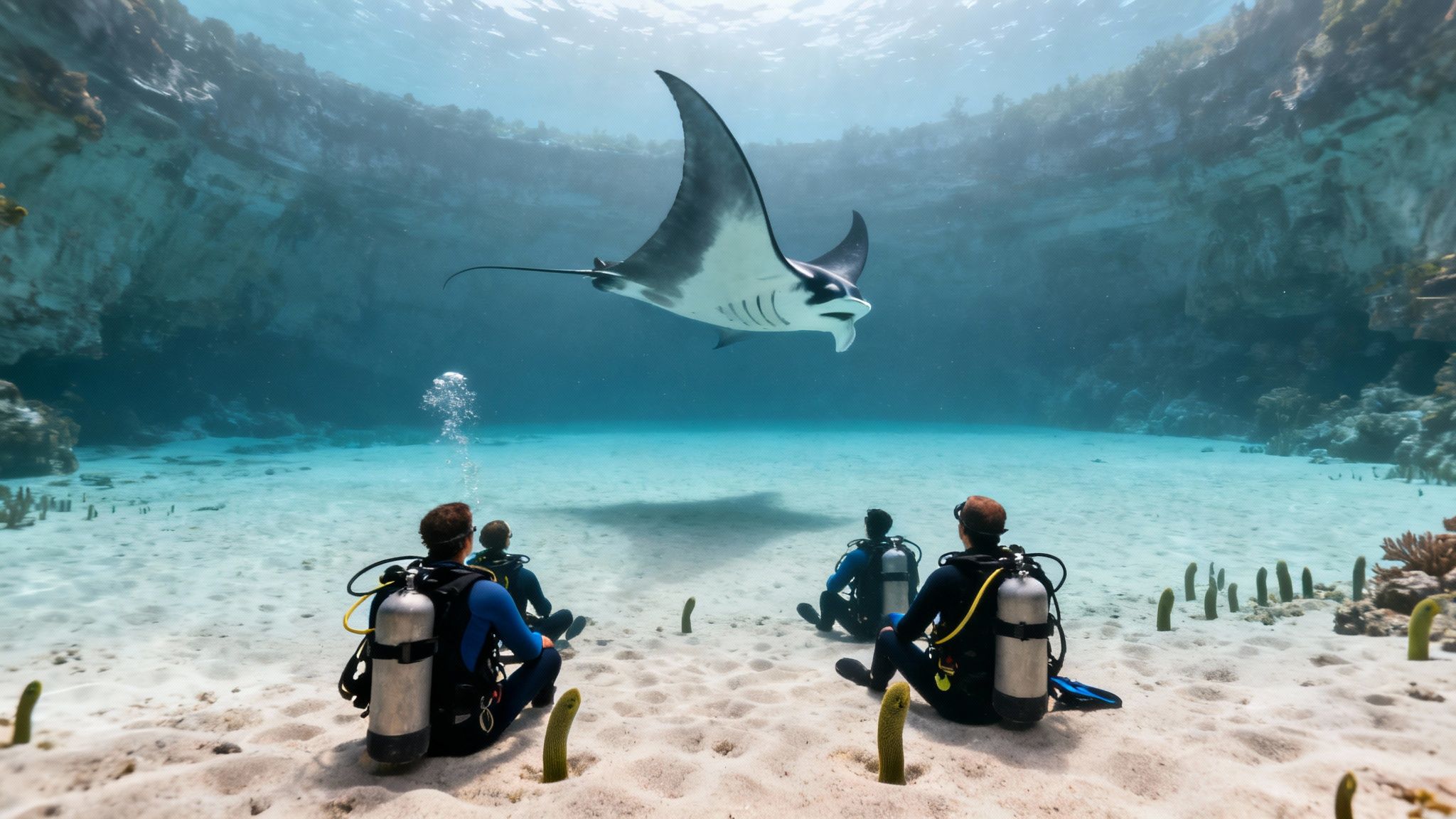
What really makes Garden Eel Cove special is the layout of the seafloor and the vibrant reef surrounding it. The sandy bottom creates a perfect natural "amphitheater" where divers can settle in. You simply get situated on the sand, look up, and let the show happen above you. It's an incredible way to observe without disturbing the mantas or the surrounding reef. This superior viewing area ensures everyone has a front-row seat.
This setup is more than just comfortable; it's the ideal way to watch the show. The mantas perform their beautiful feeding ballet right over your head, giving you an immersive, front-row seat. It’s a breathtaking experience that’s respectful of the animals and their home. You can read more about what makes this spot a world-class manta destination on our blog.
The Numbers Speak for Themselves
At the end of the day, you want to see mantas, right? And lots of them. While both sites give you a chance, Garden Eel Cove consistently draws a bigger crowd.
The data is pretty clear: Manta Village sees an average of about four rays per night. Garden Eel Cove? The average is a whopping 11 rays. We've even been there on nights when 36 individuals have shown up. It’s just unreal.
This higher concentration means the action is more dynamic and lasts longer. The cove's protected waters and abundant plankton simply make it the go-to restaurant for Kona's manta population.
Manta Ray Dive Site Comparison
Choosing between Kona's two main manta dive locations can feel tricky, but this quick comparison should help clarify why we stick to Garden Eel Cove.
| Feature | Garden Eel Cove (Manta Heaven) | Manta Village (Keauhou) |
|---|---|---|
| Average Mantas | 11 (up to 36 recorded) | 4 |
| Water Conditions | Typically calm and protected | More exposed, often rougher |
| Seafloor | Sandy "amphitheater" for easy viewing | Rocky, more difficult to settle |
| Reliability | Very reliable, fewer cancellations | Higher chance of weather cancellations |
| Seasickness Risk | Lower | Higher |
Ultimately, picking an operator that dives exclusively at Garden Eel Cove sets you up for the most spectacular manta ray night dive Kona can offer. You’re simply stacking the odds in your favor for an unforgettable encounter.
What a Manta Ray Night Dive in Kona is Really Like

So, what can you actually expect when you book a manta ray night dive in Kona? Knowing the flow of the trip helps you relax and soak it all in. Most operators have perfected this experience, turning it into a seamless adventure designed for maximum safety, comfort, and pure wonder. Let’s walk through the play-by-play of a typical two-tank manta charter.
Things usually kick off in the late afternoon when you check in at the harbor. Once you're on the boat, the crew runs through a comprehensive briefing—they’ll cover everything from safety gear to where the snacks are. This is the perfect time to get your gear situated, meet your guides, and shake off any pre-dive jitters.
The First Dive: A Daylight Reef Exploration
Your first splash isn't with the mantas. It's a gorgeous daylight dive on one of Kona’s stunning reefs. Think of it as more than just a warm-up; it's an incredible dive on its own and serves a few practical purposes.
It’s the ideal chance for everyone to test their rental equipment, dial in their weighting, and just get a feel for the water. You’ll spend this dive casually exploring, spotting colorful reef fish, maybe a moray eel peeking out from its home, or even a sea turtle cruising by. It ensures everyone is comfortable and confident before the main event after sunset.
As you head back toward the manta site, you'll be treated to a classic Hawaiian sunset from the water. It’s a pretty magical surface interval. The crew usually provides drinks and snacks while they set up the powerful lights needed for the night dive.
What makes Kona so special is its resident manta population. We know so much about them thanks to years of dedicated research. From 2009 to 2014 alone, scientists documented thousands of encounters, identifying over 200 individual rays. That catalog has now swelled to over 300 unique mantas, with a staggering 10,000+ sightings on record. You can dive deeper into the science behind these manta ray statistics.
The Main Event: Dropping in for the Manta Show
Once the sun is down, you’ll get a second, more specific briefing about the night dive itself and the proper etiquette for interacting with the mantas. Then, it's time to descend into the darkness.
Your guide will lead you down to a sandy patch on the ocean floor, often called the "campfire." Divers settle in a semi-circle, pointing their powerful dive lights straight up. This creates a column of light that acts like a massive bug zapper for plankton, the mantas' favorite food.
And that's when the show truly begins.
These gentle giants, some with wingspans over 12 feet, glide silently into the light beams to feed. They swoop and perform graceful barrel rolls, sometimes just inches from your mask. It's absolutely breathtaking.
Snorkelers on the surface have an equally amazing view from above. They typically hold onto a large, floating light raft that also attracts plankton, bringing the mantas right up to the surface to feed. No matter how you experience it, you have a front-row seat to one of nature's greatest performances. After about 45 minutes of being completely mesmerized, it’s time to ascend.
The boat ride back to the harbor is always buzzing with energy as everyone excitedly shares their stories and compares photos. It’s the perfect cap to an unforgettable adventure.
Choosing The Right Manta Ray Dive Operator
Picking the right dive operator for your manta ray night dive in Kona can make or break the experience. It's every bit as important as the dive site itself. A truly great company takes what's already a phenomenal dive and turns it into a seamless, unforgettable adventure you'll be talking about for years.
When you start looking, you'll notice a few things that really separate the best from the rest. You want to see a serious focus on safety, of course, but also look for experienced guides who know the local mantas, a commitment to small group sizes, and a strict adherence to eco-friendly practices. The best operators know we're just visitors in the mantas' world and put their well-being first. We put together a full breakdown on what to look for in our guide on how to choose a Kona dive shop.
What Sets the Best Operators Apart
Top-tier operators are easy to spot once you know what to look for. They’re known for their professionalism, spotless safety records, and a genuine passion for marine conservation. They get that a manta ray night dive is a bucket-list item for many people, and they pull out all the stops to make it perfect.
That means you can expect:
- High-quality, well-maintained gear. No leaky masks or dodgy regulators here.
- Comfortable, spacious boats. You won't feel like you're crammed in a sardine can.
- A crew that’s both knowledgeable and passionate. They love what they do, and it shows.
Here's what some of our guests have to say about their experience diving with us at Kona Honu Divers:
Why a Two-Tank Trip is the Best Choice
Here’s an insider tip: always go for the two-tank manta trip. It's not just about getting more time in the water. That first dive, a beautiful late-afternoon reef dive, is your chance to get everything dialed in.
Think of it as the perfect warm-up. You can get comfortable with your gear, check your weights and buoyancy, and just get a feel for the local conditions without any pressure. By the time you drop in for the main event at night, you're confident and ready to focus 100% on the incredible manta ballet unfolding in front of you. It’s a simple change that makes a huge difference in both safety and pure enjoyment.
When you're ready to book this incredible adventure, you can check our availability below. For those looking to explore more of the pristine underwater world Kona has to offer, we invite you to browse our other amazing diving tours on the Big Island.
Getting Ready For Your Manta Dive
A little bit of planning makes all the difference when you’re getting ready for something as special as a manta ray night dive. When you have the right gear and the right mindset, you can stop worrying about the small stuff and just soak in the incredible experience waiting for you.
The focus should be on your comfort, both in the water and back on the boat. Even in Hawaii, the evenings can get surprisingly cool, especially when you’re wet after a dive. And don't forget to drink plenty of water during the day—it’s a simple trick that helps you feel great and avoid post-dive fatigue.
What to Pack for the Boat
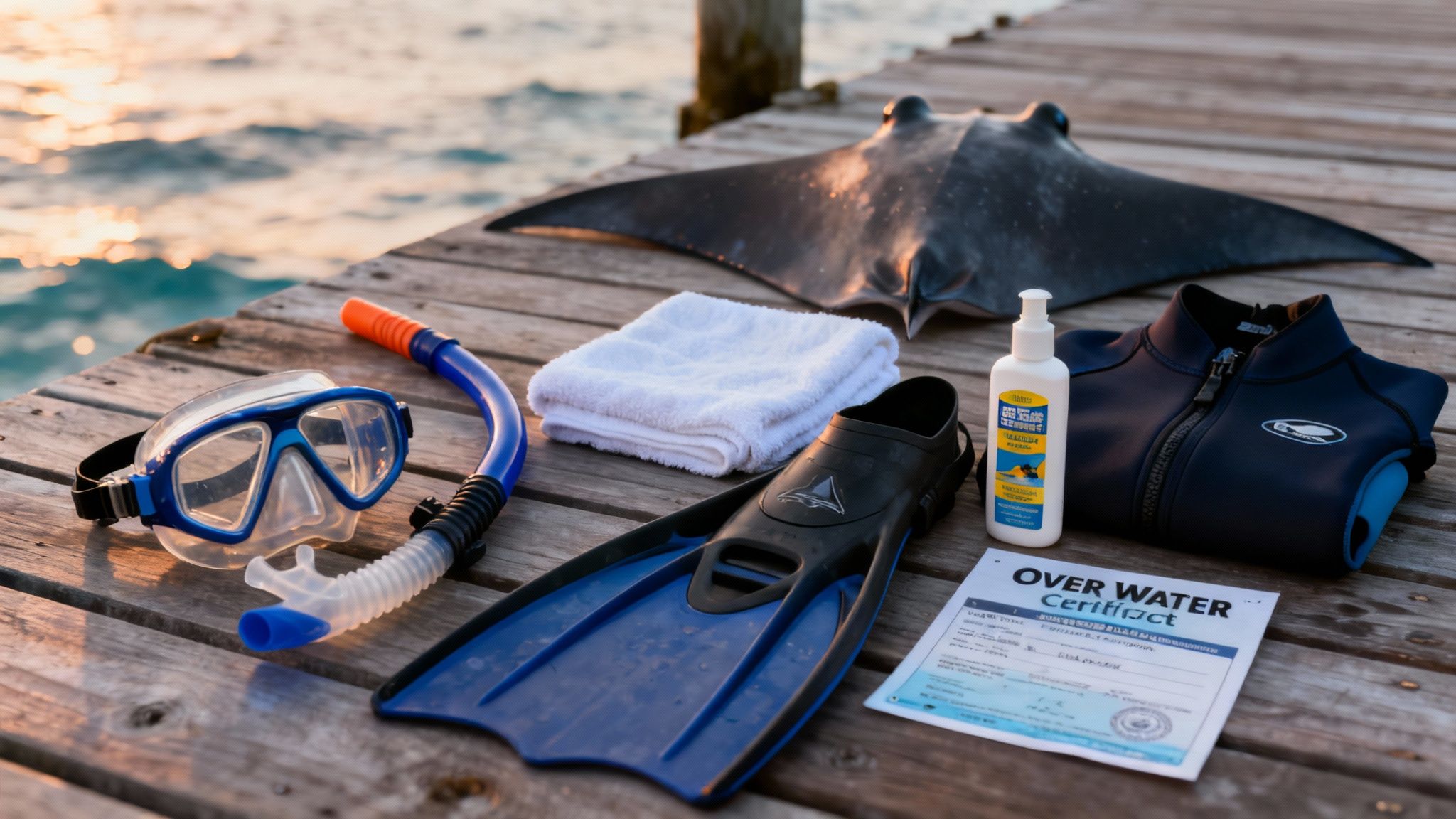
Your dive operator handles all the heavy scuba equipment, but you'll want to bring a small bag with a few personal items to make the trip more comfortable.
- Towel and Dry Clothes: This is a big one. You’ll be so glad you have a dry towel and a warm sweatshirt or jacket for the ride back to the harbor.
- Reef-Safe Sunscreen: If your trip includes an afternoon dive, be sure to apply sunscreen well before you leave. Using a reef-safe formula helps protect Hawaii's fragile coral ecosystems.
- Reusable Water Bottle: Staying hydrated is a core part of dive safety and comfort. Having your own water bottle makes it easy to sip before and after your time in the ocean.
Safety is always the priority on the water. It’s worth understanding what goes into quality life jackets for marine safety to appreciate the gear on board.
For a more exhaustive list, we've put together a full guide on the gear you will need for your Kona diving adventure.
The Golden Rule: Passive Interaction
The single most important preparation is mental. You need to fully embrace the #1 rule of manta ray encounters: passive interaction. Simply put, you are there to watch, not to participate.
Look, but don't touch. This is non-negotiable. Manta rays have a protective mucus layer that’s essentially their immune system. A human touch can wipe it away, leaving them exposed to nasty skin infections.
Listen to your dive guide. They know the site, they know the mantas, and they will put you in the perfect spot to see everything without disturbing the wildlife. Your job is to relax, stay put on the sandy bottom, and be a respectful guest in their world. This approach is what keeps the mantas safe and ensures this amazing natural spectacle will be around for future divers to enjoy.
Your Manta Ray Dive Questions, Answered
Planning a trip to see Kona’s famous manta rays is thrilling, but it’s smart to have a few questions. Getting the details sorted out ahead of time means you can relax and just soak in the experience when the time comes. Let’s tackle some of the most common things people ask.
Is the Manta Ray Night Dive Safe?
Yes, it absolutely is. When you're out with a professional, reputable crew, your safety is their top concern. These operators have the entire process dialed in, creating a controlled and predictable environment.
The guides are experts who know these waters and the mantas like the back of their hand. Every single trip starts with a detailed safety briefing, and strict procedures are followed from the dock to the dive site and back again. It's all designed to make sure you have an incredible—and incredibly safe—time.
What If I’m Not a Certified Scuba Diver?
No certification? No problem at all. The snorkeling version is just as spectacular and puts you right in the middle of the action.
You'll be at the surface, holding onto a specially designed float board. These boards have powerful lights that shine down into the water, attracting the plankton. Where the plankton go, the mantas follow! They glide and barrel roll just inches below you, giving you a perfect bird's-eye view of the entire ballet. This makes the encounter accessible to almost anyone who is comfortable in the water.
One of the best things about the manta ray night dive in Kona is that it's a year-round activity. Sighting success rates are consistently high no matter the season. You can plan your trip for January or July and still have an amazing chance of seeing the show.
Are There Other Unique Night Dives In Kona?
For certified divers craving a truly different kind of adventure, the Kona Blackwater Dive is something you have to experience to believe. Forget the reef—this dive takes you out over the deep, open ocean at night, tethered to the boat as you drift in the dark.
It’s like floating through outer space. Bizarre and beautiful creatures, many of them bioluminescent, migrate up from the abyss to feed. It’s a glimpse into a world that few ever get to see. This dive is definitely for more experienced divers, given the advanced conditions. If you're up for one of the most unique dives on the planet, you can learn more about the Blackwater Dive to see if it’s a good fit for you.
Ready to see the magic for yourself? At Kona Honu Divers, we're dedicated to providing a safe, respectful, and completely unforgettable manta ray experience. Book your Manta Ray Dive Tour today!