
Picture this: you're floating in the warm, dark waters of the Pacific just after sunset. Suddenly, a majestic creature with a wingspan stretching over 12 feet glides silently, gracefully, just inches above your head. It sounds like something out of a nature documentary, but this is the real deal—the world-famous manta ray night dive in Kona. It’s an underwater ballet that has rightfully earned its reputation as the best place on the planet for this exact encounter.
Your Ultimate Guide to the Kona Manta Ray Night Dive
If this adventure is on your bucket list, you've come to the right place. This guide will cover everything you need to know, from why Kona is the global epicenter for manta encounters to how a top-notch operator like Kona Honu Divers ensures your experience is safe, respectful, and absolutely breathtaking. Their crew lives and breathes marine conservation, and it shows in every aspect of their premium adventures.
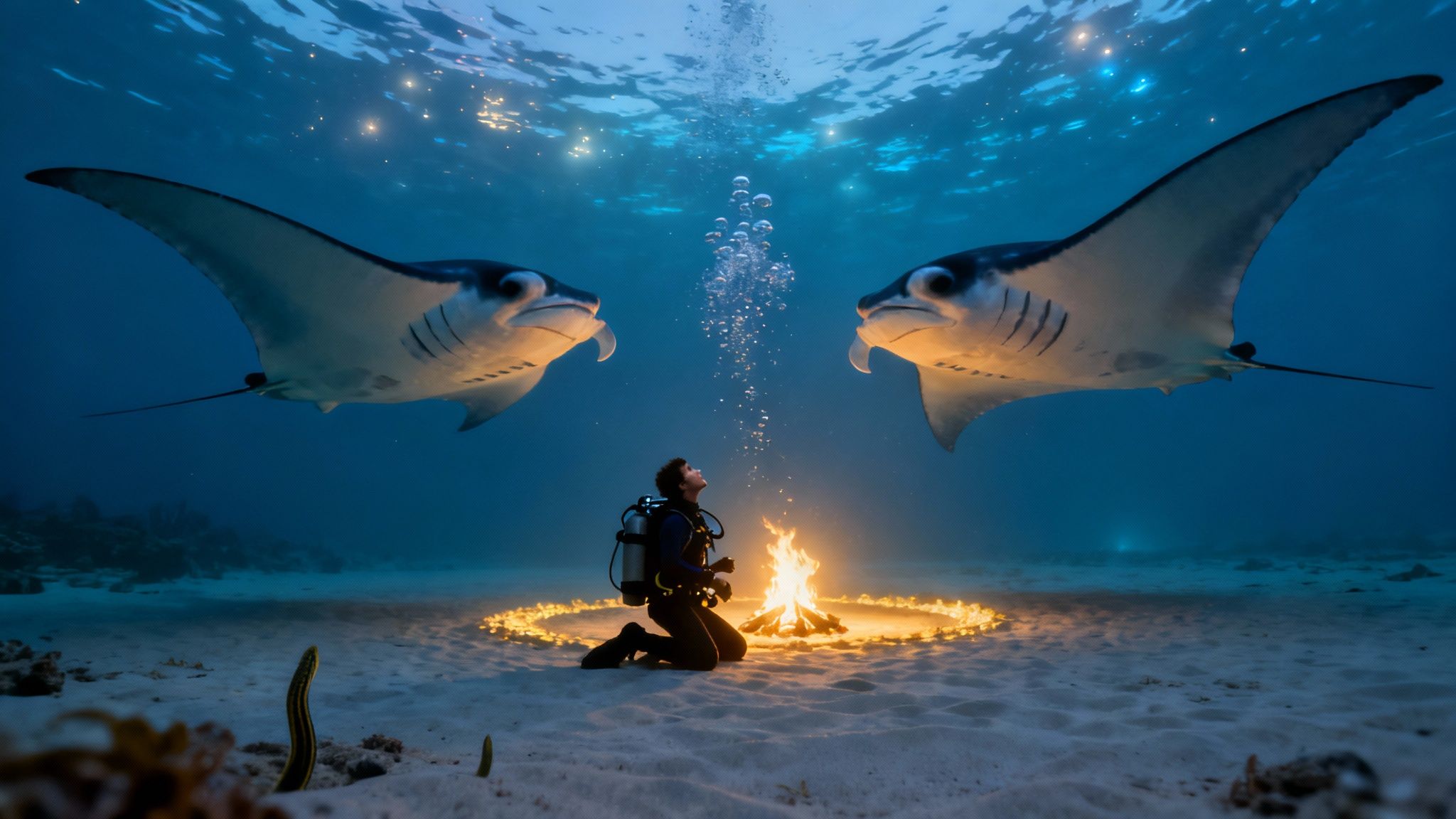
Why Is Kona The Spot for Manta Encounters?
It's no accident that Hawaii's Kona coast is considered the world's premier location for manta ray night dives. The consistency here is just staggering, with a sighting success rate that hovers between 85% and 95%. You’re almost guaranteed to see them.
This incredible reliability comes down to a perfect storm of conditions: a unique underwater landscape, a steady supply of plankton (manta food!), and stable ocean currents that create the ideal feeding ground. It all comes together to support a massive local manta population.
The Kona region is home to a resident population of more than 450 identified manta rays that cruise these waters year-round. This incredible natural wonder draws about 80,000 visitors annually, making it a cornerstone of local tourism and a vital hub for marine research.
The dive itself is surprisingly accessible. You'll typically be at a comfortable depth of 30 to 40 feet, which allows for longer bottom times—usually between 45 and 60 minutes—to just relax and watch the show. As the dive lights hit the water, they attract swarms of plankton, and the mantas swoop in for dinner, creating a mesmerizing spectacle you won't find anywhere else. You can get a full rundown of what to expect on the Kona Manta Ray Night Dive experience.
Of course, who you dive with matters immensely. Choosing the right operator is key, and companies like Kona Honu Divers have built a stellar reputation for their professionalism and deep commitment to manta ray conservation.
Why Garden Eel Cove Is The Best Manta Dive Site
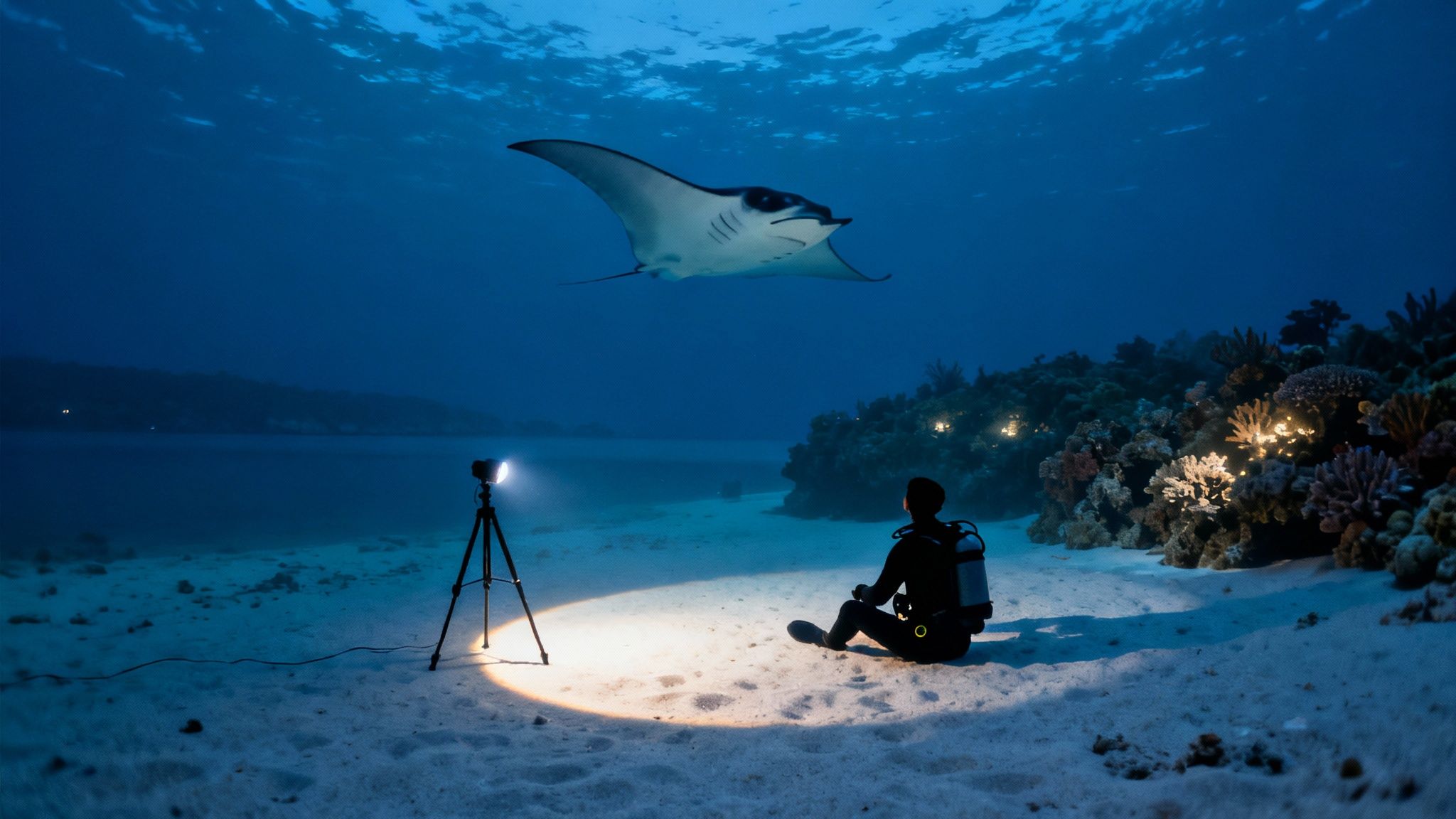
When you're planning a manta ray night dive in Kona, the dive site you visit makes all the difference. While other sites exist, the superior choice is undoubtedly Garden Eel Cove. Its protected location, better viewing area, and healthier reefs create a consistently magical and comfortable experience.
The secret is its geography. Tucked into a natural bay, Garden Eel Cove is shielded from open ocean swells, resulting in calmer, more predictable waters. For anyone diving at night, this calmness translates into a safer, more enjoyable, and less stressful experience from the moment you hit the water.
The Underwater Campfire Experience
What truly elevates Garden Eel Cove is how the dive is staged. Operators set up a powerful light box—the "campfire"—on a flat, sandy patch on the ocean floor. Divers gather in a circle around it, kneeling or sitting comfortably.
This setup is brilliant for a few key reasons:
- A Front-Row Seat: It creates a natural amphitheater. The mantas swoop and glide directly overhead, drawn to the plankton swarming in the light. Everyone gets an incredible, unobstructed view.
- Relax and Enjoy: Since you’re settled on the sand, you don’t have to worry about fighting to stay buoyant or holding onto a rock. You can just relax, breathe, and soak in the spectacle.
- Protecting the Reef: This approach keeps everyone off the delicate coral reef that fringes the sandy viewing area, ensuring we don’t cause any accidental damage to the vibrant marine habitat.
A Vibrant Reef and a More Intimate Show
Beyond the main event, the reefs surrounding Garden Eel Cove are stunning—visibly healthier and more vibrant than those at other, more exposed locations. This is a huge bonus for the first dive of the two-tank trip. Before sunset, you can explore a thriving underwater world teeming with colorful fish and unique marine life.
The atmosphere at Garden Eel Cove also tends to be more relaxed and intimate. The other main site can sometimes feel overcrowded and chaotic. At Garden Eel Cove, you get all the thrill of seeing these magnificent creatures without feeling lost in a sea of other divers, making for a truly premium and unforgettable manta ray dive tour.
For a deeper dive into how the sites stack up, check out our comparison of Manta Heaven vs Garden Eel Cove.
Kona Manta Ray Dive Site Comparison
To make it simple, here’s a quick breakdown of why Garden Eel Cove stands out as the superior choice for the manta ray night dive.
| Feature | Garden Eel Cove (Makako Bay) | Manta Village |
|---|---|---|
| Location | Protected bay, near the airport | Exposed coastline, near the old airport |
| Water Conditions | Generally calmer and more predictable | Can be choppy and subject to surge |
| Viewing Setup | Superior sandy bottom "campfire" style | Divers hold onto rocks or a line |
| Reef Health | Excellent, very vibrant reef nearby | Good, but can show more signs of wear |
| Overall Experience | More comfortable, intimate, and reliable | Can be crowded and less predictable |
Ultimately, choosing an operator like Kona Honu Divers means you’re choosing a team that prioritizes the superior experience at Garden Eel Cove. We go there because we know it consistently delivers the most magical and memorable manta encounter possible.
What Happens On a Manta Ray Dive Tour
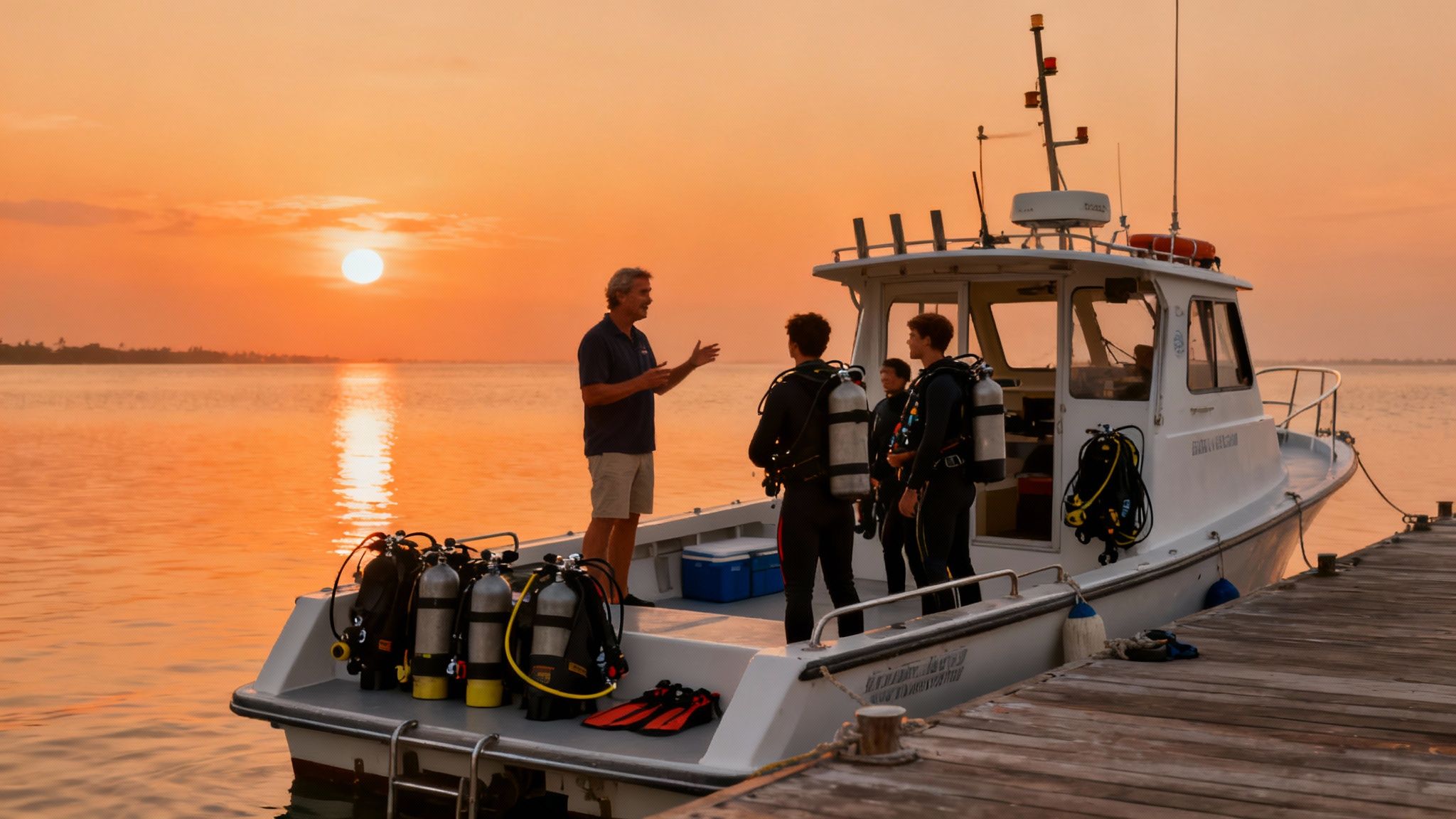
So, you're getting ready for one of the most unbelievable experiences of your life—the manta ray night dive in Kona. Knowing how the evening unfolds can help turn any pre-dive jitters into pure excitement. When you go with a seasoned operator like Kona Honu Divers, the entire trip is a finely-tuned adventure built around your safety, comfort, and, of course, getting you incredible views of these gentle giants.
Your adventure starts with a warm welcome and check-in at the harbor. The crew gets you squared away, helps you get fitted for gear, and runs through a detailed briefing for the trip. It's the perfect time to ask any last-minute questions before you motor out for what is actually a two-tank dive.
The First Dive: A Twilight Reef Exploration
As the boat makes its way to the world-famous Garden Eel Cove, you'll gear up for the first dive of the evening. This isn't just a quick checkout dive; it's a full-on twilight exploration of a beautiful reef. You'll hit the water just as the sun starts to dip below the horizon, getting to see the ocean during a truly magical time of day.
It's a time of transition. You’ll see the daytime critters like butterflyfish and parrotfish tucking into the reef for the night, just as the nocturnal creatures—eels, octopuses, and crabs—start to emerge. Diving in the "golden hour" as the light fades is an amazing experience all by itself. Plus, it’s a great way to dial in your buoyancy and get comfortable in the water before the main event.
Surface Interval and the Main Event
Once you're back on the boat, the crew will have snacks and drinks waiting for you. This surface interval is timed perfectly to catch a spectacular Kona sunset over the Pacific. Seriously, have your camera ready.
As darkness completely falls, the excitement builds. You’ll get a second, more specific briefing focused entirely on the manta encounter. The crew will go over:
- Manta Etiquette: How to act around the mantas to keep them (and you) safe and comfortable. Remember, we're guests in their home.
- Positioning: Where to settle in around the underwater "campfire" of lights to get the best view without disturbing the action.
- Safety Reminders: A quick review of night diving signals and procedures.
Then, it's time for the moment you've been waiting for. You'll descend again and find your spot on the sandy bottom. The crew places a powerful light box—we call it the "campfire"—which attracts a massive cloud of plankton.
All you have to do is relax and shine your light up. Before you know it, the first manta ray will glide into the light beam, performing an otherworldly ballet as it feeds. For the next 45 minutes or so, you'll be treated to a spectacle that feels like it’s straight out of a nature documentary. After soaking in every moment, you’ll ascend and head back to the harbor with a memory you’ll never, ever forget.
Ready to see it for yourself?
How to Prepare for Your Manta Ray Dive
A little prep work goes a long way in making sure your manta ray dive is one for the books. Getting ready is pretty simple, but paying attention to a few details beforehand ensures you're comfortable, safe, and can just relax and enjoy the show.
First things first, let's talk about what you need to get in the water. If you’re planning to scuba dive, you’ll need at least an Open Water Diver certification. The dive itself isn’t particularly deep, but you need to be confident with your skills, especially since it’s at night. Not a certified diver? No worries! Friends and family can still come along as snorkelers and get a fantastic view of the action from the surface.
Your Essential Packing Checklist
Your dive operator will handle all the big-ticket items like tanks and regulators, but there are a few personal things you’ll want to bring to make the trip more comfortable. Remember, you'll be getting out of the ocean at night, and that boat ride back can feel a little brisk.
- Towel: You’ll definitely want this waiting for you when you get out of the water.
- Warm Jacket or Sweatshirt: Even in Hawaii, the air can feel chilly after a night dive. Trust me, you'll be happy you brought one.
- Reusable Water Bottle: Diving is dehydrating, so it's always smart to have water on hand.
- Swimsuit: The easiest thing is to just wear it under your clothes to the harbor so you're ready to go.
Most outfits will have the rest covered, including lights and even some snacks. For a deeper dive into what to expect gear-wise, check out our guide on the gear you will need for your Kona diving adventure.
Skills for Success Underwater
If there's one skill to brush up on before this dive, it's buoyancy control. You’ll be positioned near the sandy bottom, and being able to hold your spot without drifting up or down is crucial.
Great buoyancy does a couple of things. It protects the fragile coral reef nearby and keeps you from kicking up a sandstorm that ruins the visibility for everyone. Even more importantly, staying calm and still creates a peaceful atmosphere that makes the mantas feel comfortable enough to glide right over you.
A quick tip for underwater photographers: The water is thick with plankton, which lights up like crazy in your photos (this is called backscatter). To get cleaner shots, move your strobes as far from your lens as you can and point them slightly outward. A red focus light is also a great idea, as it's far less distracting to marine life than a bright white beam.
With just a bit of planning, you'll be all set to relax and fully appreciate one of the most mesmerizing underwater experiences you can have.
Understanding the Science and Conservation
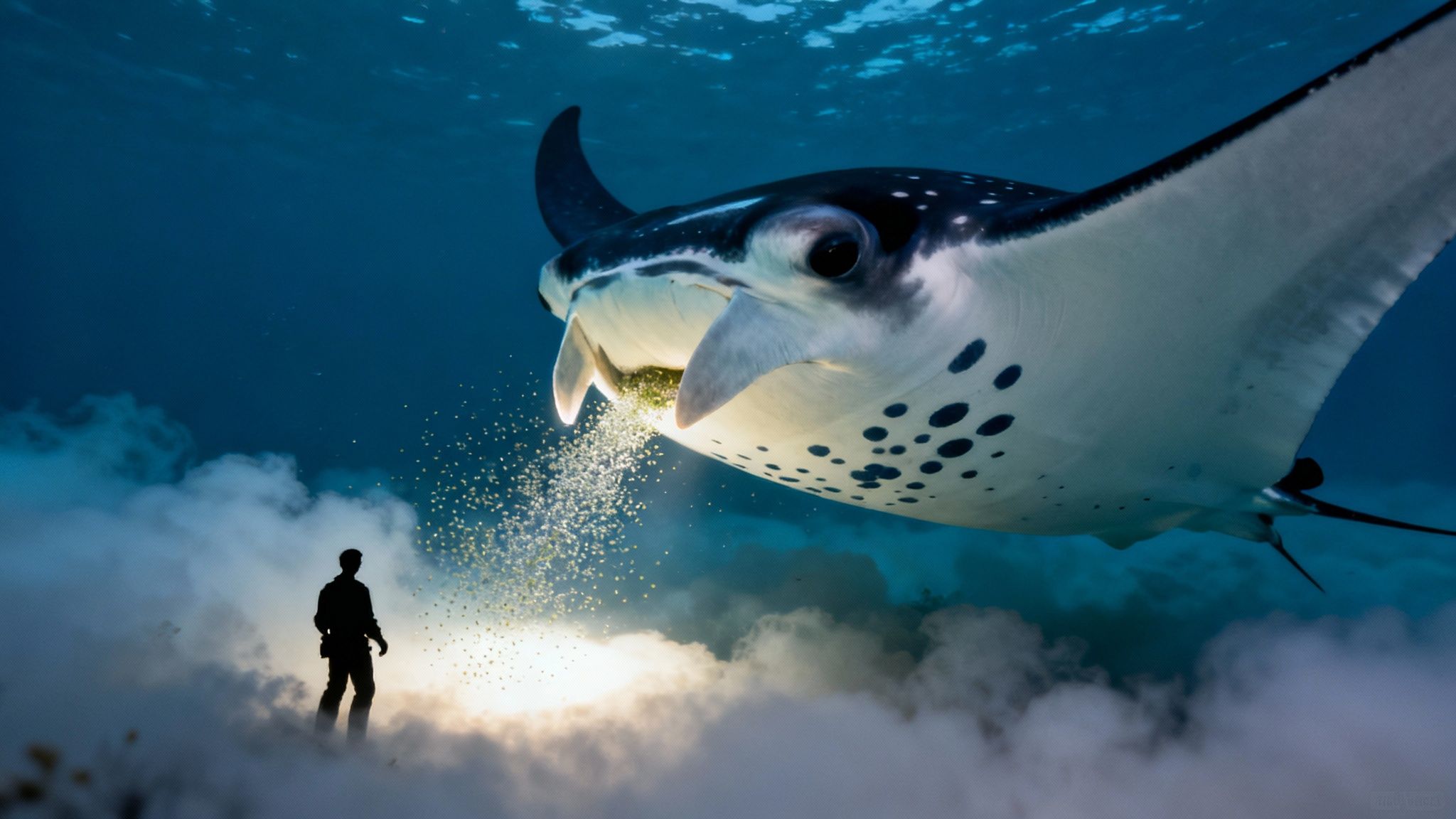
The manta ray night dive in Kona isn't just an incredible spectacle; it's a fascinating look into a thriving ecosystem. The whole thing works because of a beautifully simple chain reaction. At night, powerful underwater lights act like a giant bug zapper for the ocean, drawing in clouds of tiny plankton. For the mantas, this is like ringing a dinner bell for a massive, all-you-can-eat buffet.
This nightly gathering has turned Kona into a world-class living laboratory. It gives researchers an unparalleled chance to study these amazing animals up close. It turns out every manta ray has a completely unique pattern of spots on its belly, almost like a human fingerprint. By photographing these spots, scientists have identified hundreds of individual rays, creating a detailed catalog that helps them track the local population's health and behavior over many years.
The Role of Responsible Tourism
Getting this close to wildlife comes with a huge responsibility. The future of this amazing encounter depends entirely on tour operators and guests acting as stewards of the environment. Reputable companies are all-in on this, following strict guidelines to make sure the mantas are always safe and comfortable.
The rules are really about creating a passive, respectful experience for everyone involved:
- No Touching: This is the golden rule. Touching a manta can rub off its protective slime coat, leaving it vulnerable to infections. Keep your hands to yourself.
- Stay Put: Divers stay on the sandy bottom, and snorkelers stay at the surface. This lets the mantas swim freely and control the entire interaction on their own terms.
- Respect the Reef: The surrounding coral is a fragile and vital part of the ecosystem. Be mindful not to kick or damage it.
When everyone follows these simple rules, the mantas feel safe and keep coming back. And they really do keep coming back! Long-term studies between 2009 and 2014 found that sighting success rates are consistently between 80% and 90%. Researchers have identified over 200 resident mantas, and superior sites like Garden Eel Cove see an average of 11 mantas per night. It's a testament to how well this carefully managed tourism works.
How You Can Help
Your role as a guardian of the ocean doesn't end when the boat docks. We all have a part to play in protecting this incredible marine environment.
Simple choices can have a big impact. A great place to start is to reduce plastic waste, both on your vacation and back at home. It's also important to understand the local regulations that keep these animals safe, which you can learn more about in this open letter: https://konahonudivers.com/open-letter-to-hawaii-state-dlnr-regarding-manta-rules/.
By choosing tour operators who prioritize the well-being of the mantas and by being a mindful visitor, you help ensure this breathtaking experience will be around for generations to come.
Explore More Incredible Kona Dive Sites
The manta ray night dive is an absolute showstopper, but trust me, it’s just the opening act for what the Big Island has to offer. Think of it as your gateway dive—the incredible experience that sparks your curiosity to see what else is hiding beneath the waves in Kona.
Don't just pack up your gear after the mantas. Stick around and let Kona Honu Divers show you the rest of Hawaii's underwater world. Each dive site here tells a different story.
Daytime Reef and Advanced Dives
Kona's daytime diving is nothing short of spectacular. We're talking dramatic lava tubes you can swim through, ancient underwater arches, and sprawling coral gardens bursting with fish you won't find anywhere else on the planet. These spots are fantastic for divers of all levels, and you can see our most popular trips on our main Kona Diving Tours page.
Got a few more dives in your logbook? If you're ready for a bigger challenge, check out our advanced dive trip. These charters head out to the deeper, more remote sites. Here, you might face some stronger currents, but the payoff can be huge—think encounters with bigger pelagic species that patrol the deep blue.
The Famous Kona Blackwater Dive
If you're looking for an adventure that's truly out of this world, you have to try the Kona Blackwater Dive. It's hard to even describe. You drift in the open ocean at night, tethered to the boat, and watch as bizarre, bioluminescent creatures rise from the abyss. It’s a surreal journey that attracts thrill-seeking divers from all over the world for a reason.
While the Kona manta dive is in a class of its own, some divers are always looking for the next unique underwater thrill. For those interested in different kinds of big animal encounters, you might even look into things like diving with sharks in the UK.
Ready to see what else Kona has waiting for you?
Your Top Questions Answered
We know you've got questions about diving with manta rays at night in Kona—it’s a big adventure! Here are the answers to the questions we hear most often from fellow divers and snorkelers.
What Kind of Dive Certification Do I Need?
For the scuba dive portion, you'll need at least your Open Water Diver certification. The dive itself isn't terribly deep, usually between 30-40 feet, but good buoyancy control is everything. Being comfortable in the water at night lets you relax and just soak in the incredible experience.
And don't worry, you don't have to be a diver to see the show! If you have family or friends who aren't certified, they can join as snorkelers and still get an amazing view of the action from the surface.
How Safe Is the Manta Ray Night Dive?
It's incredibly safe. We put safety above all else, for both our guests and the mantas. When you go out with a professional, experienced crew like ours at Kona Honu Divers, you're in great hands.
Every trip starts with a detailed pre-dive briefing. We walk you through all the procedures and stick to strict protocols we’ve perfected over thousands of dives. Our job is to handle the logistics so you can focus on the magic.
What Happens If We Don’t See Any Mantas?
This is probably the most common worry, and thankfully, it’s one you can mostly put to rest. The Kona coast has one of the most reliable manta ray populations on the planet, with a sighting rate that hovers between 85% and 95%. The odds are definitely on your side.
Of course, these are wild animals, so nothing is ever 100% guaranteed. On the very rare night the mantas decide to be elsewhere, you still get to experience a beautiful twilight dive followed by a night dive on one of Hawaii’s lively coral reefs.
Can I Touch the Manta Rays?
Absolutely not. We have a strict "no-touching" policy. Manta rays have a delicate, slimy coating that protects them from infection, and touching them can strip it away, leaving them vulnerable.
The best way to enjoy the encounter is to find your spot on the seafloor, stay still, and let them do their thing. When you let them come to you, you'll be amazed at how close these gentle giants will glide right over your head.
Ready to see this underwater ballet for yourself? Kona Honu Divers offers the premier manta ray dive tour at Garden Eel Cove, ensuring your encounter is both unforgettable and respectful.