
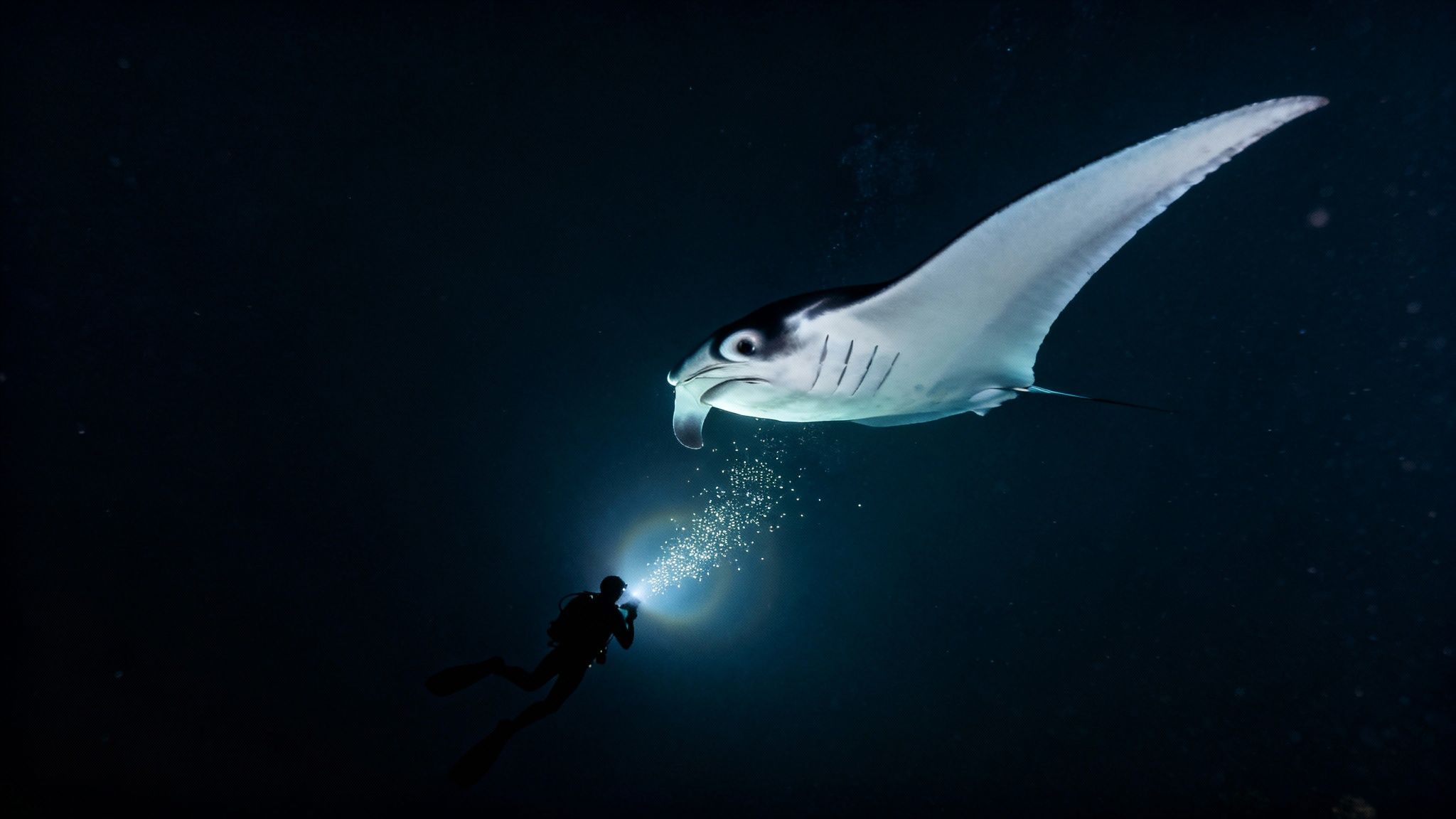
Picture this: you slip into the dark, calm waters off the Kona coast. Suddenly, giant, ghost-like figures glide into view, performing an underwater ballet just inches from your face. This is the world-famous Kona manta ray night dive—an absolute bucket-list experience for divers and snorkelers who want to meet the ocean's most graceful giants.
It’s a mesmerizing, up-close encounter that you’ll never forget.
What Makes The Kona Manta Ray Dive So Special
The magic of this dive isn't just about seeing massive creatures; it’s about becoming part of a unique, natural phenomenon. The whole experience hinges on a brilliantly simple idea: powerful lights are set up on the ocean floor, illuminating the water. These lights attract swarms of microscopic plankton, which just so happens to be the manta rays' favorite meal.
Drawn in by this all-you-can-eat buffet, the mantas arrive to feast. They swoop, glide, and somersault through the beams of light, filtering the plankton from the water with their huge, gaping mouths. For those of us watching, it’s like having front-row seats to a breathtaking underwater performance that happens almost every single night. It’s this reliability that puts the Kona dive in a class of its own.
A World-Class Wildlife Encounter
What really cements Kona's reputation as the best place on Earth for this adventure is how consistently the mantas show up. The Big Island is home to a resident population of these gentle giants, which means sightings are incredibly reliable.
This isn't just a quick glimpse of an animal in the wild. It’s a truly immersive experience where you can feel a real connection to the ocean and its inhabitants.
- Shallow Depths: The dive sites are typically in just 30-40 feet of water, making it accessible even for divers who just got their certification.
- Extended Bottom Time: You'll usually get to spend 45 to 60 minutes on the bottom, giving you plenty of time to watch the show unfold.
- Impressive Size: The average wingspan of a Kona manta is over 12 feet—a truly awe-inspiring sight up close.
Thanks to a resident population estimated at over 450 individuals, Kona operators have an incredible 85–90% success rate with manta sightings. This makes it one of the most dependable wildlife encounters you can find anywhere in the world. You can learn more about the specifics of the Kona manta ray night dive and what makes it such a top-tier experience.
This dive is more than just an activity; it's a deeply moving interaction with the wild. You're not just an observer; you become part of the underwater landscape, witnessing a natural phenomenon that feels both ancient and immediate.
To give you a quick overview, here's a rundown of what to expect from the experience.
Quick Guide to Your Kona Manta Ray Night Dive
| Aspect | Details |
|---|---|
| Location | Kailua-Kona, Big Island, Hawaii |
| Best Time to Go | Year-round, with consistently high sighting rates. |
| Typical Depth | 30–40 feet (9–12 meters) |
| Water Temperature | 75–80°F (24–27°C) |
| Manta Size | Average wingspan of 12+ feet (3.6+ meters) |
| Sighting Success Rate | 85–90% |
| Activity Type | Scuba Diving and Snorkeling |
| Certification Level | Open Water Diver (for scuba) or comfortable swimmer (for snorkel) |
This table should help you plan, but remember that every night is a little different, which is all part of the magic.
Why Garden Eel Cove Is The Premier Manta Dive Location
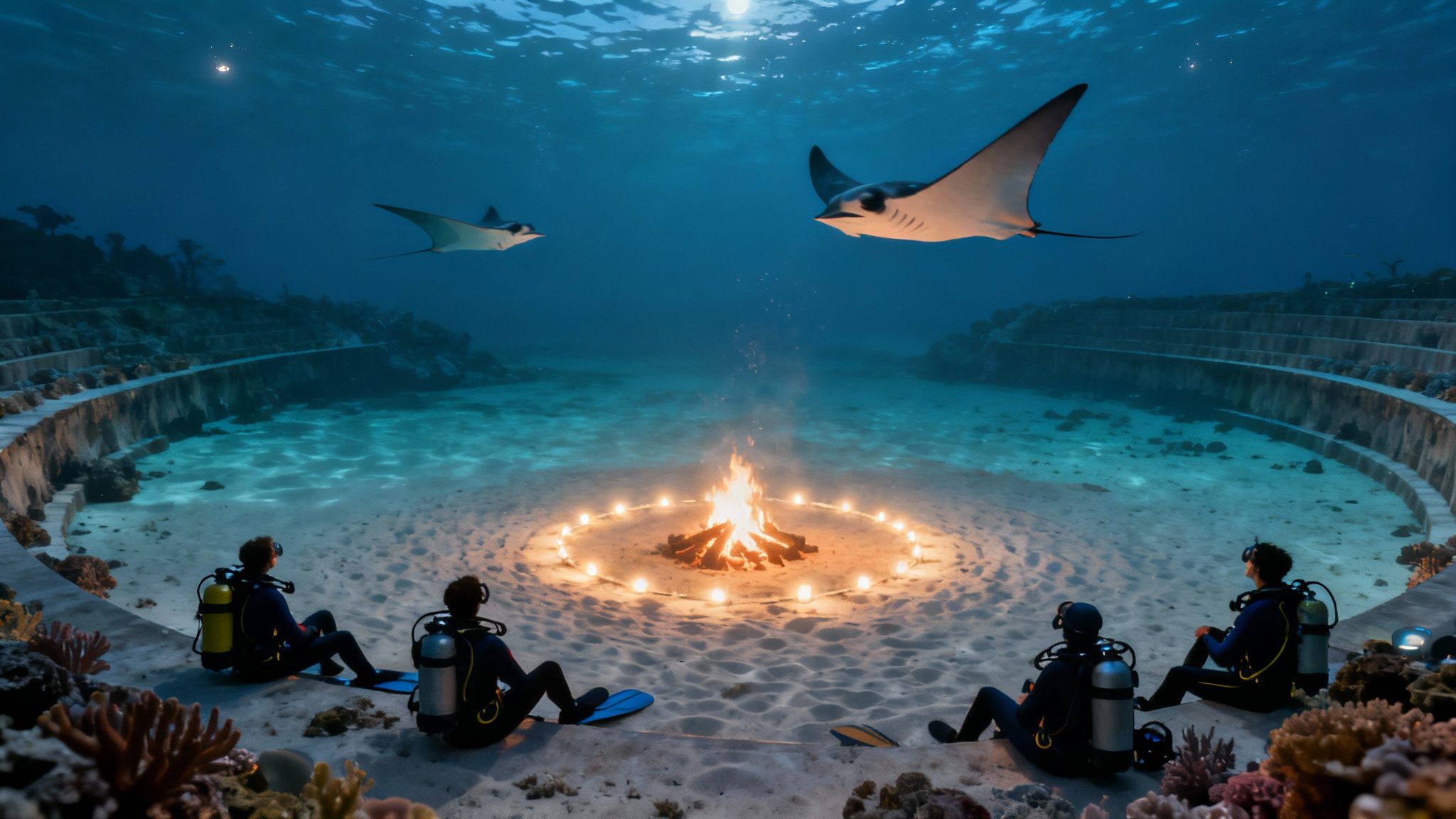
When people talk about the world-famous manta ray night dive in Kona, they’re often talking about one spot in particular, even if they don't realize it. While there are a couple of locations, one consistently delivers the most mind-blowing show: Garden Eel Cove. This is, without a doubt, the superior choice for your manta ray dive tour. We affectionately call it "Manta Heaven," and it's a name the site has truly earned.
So, what makes this place so special? It all starts with geography. The cove is tucked into a naturally protected bay, sheltering it from the big ocean swells that can stir up other, more exposed dive sites. This means the water here is almost always calmer and clearer.
For divers, that’s a huge plus. It makes for a safer and way more comfortable experience. Instead of fighting a current, you can settle in on the sandy bottom and focus all your attention on the incredible ballet happening just above you.
The Underwater Amphitheater
The setup at Garden Eel Cove is what really takes the experience to another level. Think of it like sitting around an underwater "campfire." Dive operators have carefully placed a ring of powerful, upward-facing lights on a sandy patch. Divers gather around this circle, creating a perfect underwater amphitheater.
This light setup is pure genius. The bright beams attract a thick cloud of plankton—the mantas' favorite food. The gentle giants then swoop in for an all-you-can-eat buffet, performing their mesmerizing barrel rolls right over your head.
This organized approach has some serious benefits:
- Unparalleled Views: You get a front-row seat. The mantas glide through the light beams just a few feet away, giving you an unbelievably close and unobstructed view.
- Minimal Environmental Impact: Everyone stays in a designated sandy area, which is crucial for protecting the delicate coral reefs that surround the "stage."
- Enhanced Safety: Because everyone is stationary in calm water, dive guides can easily keep an eye on the whole group.
This combination of factors is exactly why so many experienced operators prefer Garden Eel Cove. To get a deeper look into the cove, check out this great resource on Garden Eel Cove, Manta Ray Heaven in Kona Hawaii.
A Healthier Reef and More Reliable Sightings
Beyond the calm water and perfect viewing setup, Garden Eel Cove is simply a healthier, more vibrant ecosystem. By day, it's a fantastic dive site bustling with all kinds of marine life—including the thousands of tiny garden eels that poke out of the sand and give the cove its name.
A healthy reef means a more consistent food source for the mantas. While other sites have good success rates, Garden Eel Cove is known for attracting a larger number of mantas more frequently. It’s not unusual to have a dozen or more graceful giants swirling overhead at once. It’s a spectacle that’s hard to put into words.
The established etiquette and prime geographical features of Garden Eel Cove work together to create a more reliable and magical manta encounter. It’s a location where nature and responsible tourism have found a perfect balance.
Its protected location, unique viewing area, and thriving reef ecosystem make this the undisputed champ for anyone wanting the absolute best manta ray night dive Kona can offer. We've put together even more details on why we love this site in our guide to Manta Heaven at Garden Eel Cove.
Choosing The Best Manta Ray Dive Operator
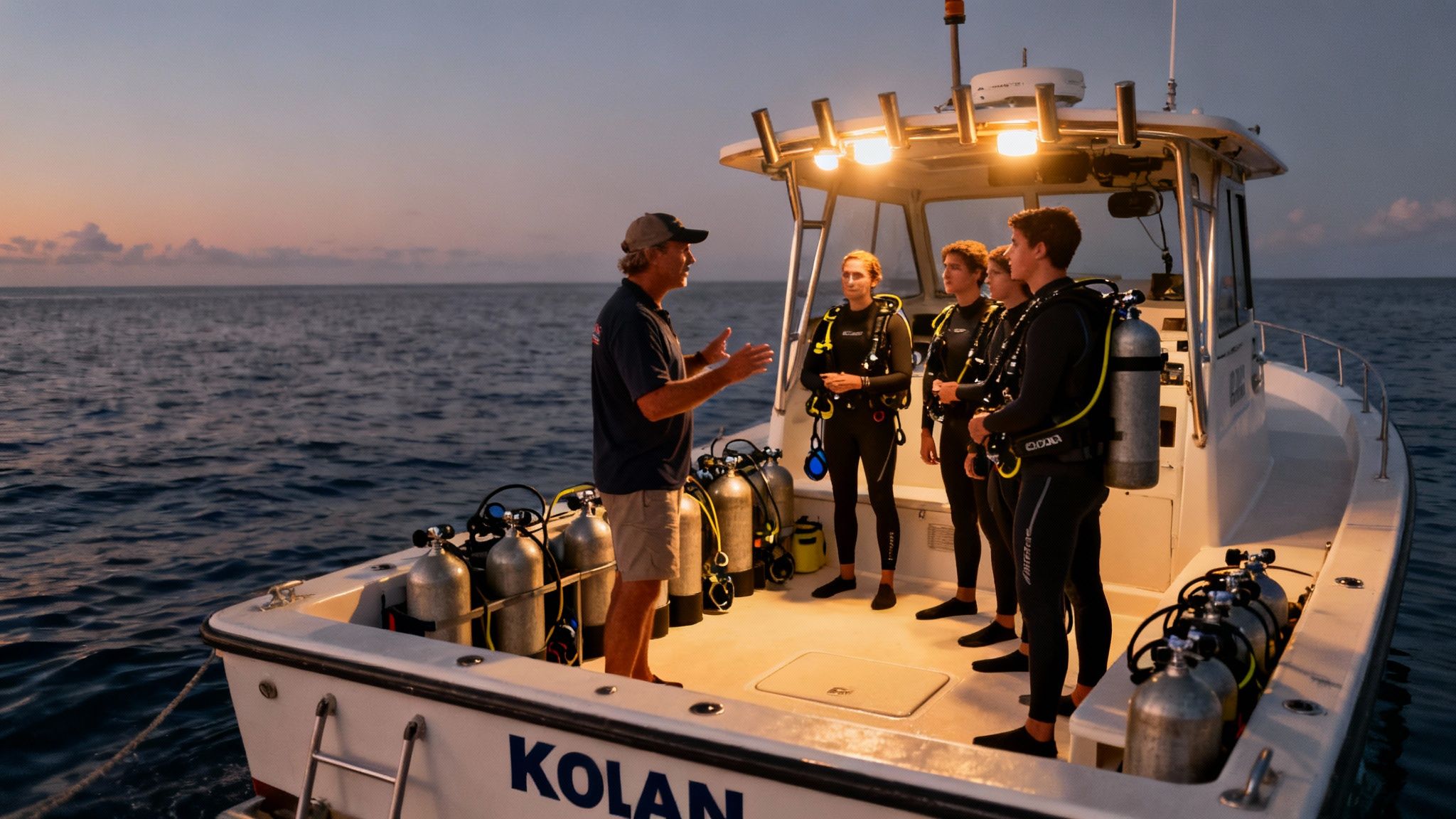
The operator you choose can literally make or break this incredible experience. A great company transforms an amazing dive into a memory you’ll cherish for a lifetime. On the flip side, a poor one can lead to real disappointment and even safety concerns.
When you're looking for the right operator for your manta ray night dive in Kona, it really boils down to three things: safety, ethical practices, and an absolute commitment to giving you a world-class adventure.
Think of it like hiring a guide for a trek up a mountain. You want someone who knows the trail like the back of their hand, respects the wildlife, and always puts your well-being first. The best operators in Kona are "Manta Ray Green Approved," which means they adhere to strict guidelines to protect the mantas and their habitat. This isn't just a sticker—it's a commitment to things like maintaining a safe distance and using proper lighting etiquette so we don't disturb these gentle giants.
Kona Honu Divers is a perfect example of an operator that gets it right. They’re well-known for their stellar safety record and conservation-first approach, and it shows in the quality of their diving tours.
Prioritizing Safety and Experience
When you’re about to drop into the ocean after dark, nothing is more important than feeling safe and confident in your crew. This is where experienced guides become non-negotiable. They know how to read the ocean, manage a group in low visibility, and give a clear, thorough briefing so everyone knows exactly what to do.
Another huge factor is the group size. Smaller groups mean more personal attention from your guide, which is critical for making sure everyone is comfortable and following the safety plan. It’s this attention to detail that really separates the top-tier operators from the rest.
For a deeper dive on what to look for in a company, check out our guide on how to choose a Kona dive shop. It’s packed with insights to help you make a smart choice for any dive trip.
Go For the Two-Tank Trip—You Won’t Regret It
If you want to get the absolute most out of your evening, I can't recommend the two-tank manta dive enough. It’s a popular option for a reason. Your first dive happens at twilight, which is a truly magical time on the reef when the whole ecosystem is "changing shifts."
You get to see all the daytime fish heading for cover while the nocturnal creatures, like octopuses and moray eels, start to come out and explore. It's a beautiful, dynamic dive that perfectly sets the mood for the main event. After you surface, you'll have a break to watch the sunset before heading back down for the manta show. You get more time in the water and see the reef in two completely different lights.
How Your Operator Choice Directly Impacts Manta Sightings
The success of a manta ray night dive isn’t just about luck; a huge part of it comes down to the crew’s expertise. The best operators know these sites inside and out. They understand the currents and know exactly where to set up to attract the most plankton, which in turn brings in the mantas.
The data backs this up. Research on Kona's manta population shows that the top operators at the best sites see sighting success rates between 90-95%. At Manta Heaven (Garden Eel Cove), for instance, the average number of rays seen per night is often significantly higher than at other spots, sometimes averaging 11 individuals.
With over 300 different mantas identified from more than 10,000 sightings, the consistency here is just incredible. Some nights, divers have even counted as many as 36 mantas at once! Choosing an experienced operator who knows the best sites dramatically increases your odds of witnessing a truly mind-blowing spectacle.
When you book with a reputable company, you can relax and simply soak in one of the planet's greatest wildlife encounters, knowing you’re in good hands.
How to Prepare for Your Manta Ray Adventure
A little preparation goes a long way in making your Kona manta ray night dive a truly unforgettable experience. When you've got your ducks in a row, you can simply relax and soak in the magic unfolding below, instead of sweating the small stuff.
First things first: what kind of certification do you need? If you’re scuba diving, a basic Open Water Diver certification is all it takes. The dive itself is quite shallow, making it an incredible and accessible night dive even for newer divers. And for the snorkelers out there? No certification is needed—just bring your sense of wonder!
What to Bring and What to Expect
Don’t worry about hauling a ton of gear with you. Your tour operator takes care of the essentials—tanks, weights, and the powerful lights that attract the plankton. They’ll also have rental gear like BCDs and regulators available if you need them.
You’ll just need to pack a small bag with a few personal items for comfort:
- A Towel: You’ll definitely want this to dry off once you’re back on the boat.
- Dry Clothes: It can get surprisingly chilly on the ride back to shore, even after a balmy Hawaiian day. A warm sweatshirt or jacket is a game-changer.
- Reef-Safe Sunscreen: For the afternoon trips, you’ll want to be protected from the sun before it sets.
- Reusable Water Bottle: Staying hydrated is always smart, both before and after your dive.
That’s pretty much it! We handle the rest. If you're curious about the specifics of the equipment we use, check out our complete guide on the gear you will need for your Kona diving adventure.
The Golden Rule of Manta Ray Interaction
Beyond what you pack, the single most important thing to prepare for is how to act around the mantas. It all boils down to one simple, non-negotiable rule: passive observation. Think of yourself as a visitor in their world, there to witness their natural behavior without getting in the way.
This means you never, ever touch, chase, or block a manta’s path. They will get incredibly close—sometimes just inches from your mask—and it’s a breathtaking moment. But you have to resist the instinct to reach out.
Manta rays are covered in a delicate mucus layer that protects them from harmful bacteria. When humans touch them, we can rub off this protective coating, leaving them vulnerable to nasty skin infections.
By holding your position and maintaining good buoyancy, you show the mantas you aren't a threat. It’s this trust that allows for those up-close, magical fly-bys. Following this guideline isn't just about having a great dive; it's about protecting this incredible natural encounter so the mantas can continue their nightly ballet for years to come.
What You Will See Beyond The Manta Rays
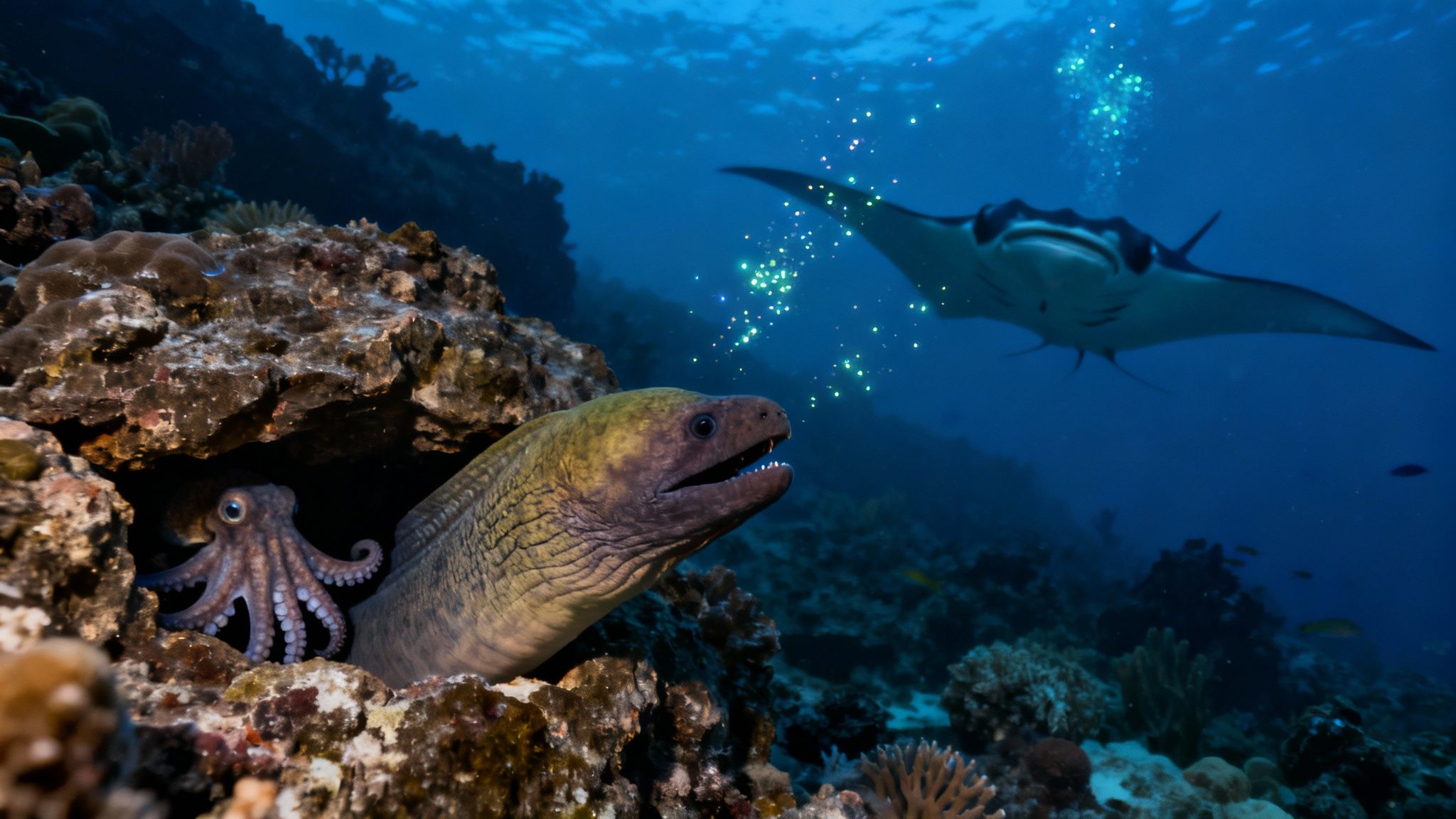
Look, the mantas are the headliners, no question about it. They're why most of us are here. But the manta ray night dive in Kona is so much more than just one amazing animal. When that sun goes down, the entire reef transforms. It’s like the day shift clocks out and the night shift takes over, and believe me, you want a front-row seat for this.
A lot of the best charters offer a two-tank trip, which is what I always recommend. The first dive happens at twilight, and it’s pure magic. You get to witness the "changing of the guard" firsthand as the colorful daytime fish duck into their coral hideouts and a completely new cast of characters emerges.
You'll see massive moray eels slithering out from their lairs, actively hunting for their next meal. Keep your eyes peeled for a shy octopus, and you might just catch one tiptoeing across the reef, its skin flashing different colors and textures. It’s the perfect, mellow lead-in to the main event.
The Twilight Reef Comes Alive
This transition from day to night isn't like flipping a switch; it's a slow, fascinating dance. You'll see behaviors you just don't get in the middle of the day.
- Parrotfish: You might spot a parrotfish building its slimy, transparent sleeping bag—a mucus cocoon—to hide its scent from predators while it sleeps.
- Crustaceans: Lobsters, crabs, and all kinds of colorful shrimp crawl out of their hiding spots to start foraging under the cover of dusk.
- Bioluminescence: Wave your hand through the water and watch it sparkle! You're agitating tiny plankton that light up, creating your own personal light show.
This first dive is a genuinely rich experience that really sets the stage and reminds you just how diverse Kona's underwater world is.
For the Truly Adventurous Diver
While the manta dive is bucket-list-worthy, Kona’s reputation as a diving mecca is built on more than just one experience. For divers who are certified and ready for a real challenge, the Big Island has some of the most unique night dives you'll find anywhere.
At the top of that list is the Kona blackwater dive. This is nothing like a reef dive. You're taken miles offshore, tethered to a boat, and suspended in the deep, inky blackness over thousands of feet of water. As you drift, a whole universe of bizarre, beautiful, and often translucent creatures rises from the abyss to feed. We're talking about alien-like larval fish, tiny squids, and countless bioluminescent critters.
If deep, open water isn't your thing, there are also incredible advanced diving adventures that take you to more remote sites. You can explore lava tubes, deep canyons, and dramatic underwater cliffs that most divers never get to see.
Now, let's take a quick look at how these different night diving adventures stack up.
Kona's Night Diving Experiences
| Dive Type | Primary Sighting | Experience Level | Best For |
|---|---|---|---|
| Manta Ray Night Dive | Giant Manta Rays feeding on plankton | Open Water Certified | Everyone! It's an iconic, unforgettable experience. |
| Twilight Reef Dive | Eels, octopus, crustaceans, reef sharks | Open Water Certified | Divers who want to see the reef's natural transition from day to night. |
| Blackwater Dive | Bioluminescent organisms, larval creatures, pelagic wonders | Advanced Open Water, comfortable in the dark | Adventurous divers seeking a truly unique, otherworldly experience. |
Each dive offers something completely different, showcasing the incredible range of marine life here.
From the gentle giants of the manta ray night dive to the microscopic wonders of the blackwater realm, Kona offers an underwater adventure for every interest and skill level.
This amazing variety is what cements Kona’s spot as one of the world's best diving destinations. It's the kind of place you can come back to year after year and still find a new adventure waiting just below the surface.
Your Kona Manta Ray Dive Questions, Answered
Alright, let's tackle some of the common questions that pop up when you're planning this trip of a lifetime. Getting these details sorted will help you feel completely ready for an incredible night with Kona's manta rays.
Is the Manta Ray Night Dive Really Safe?
It absolutely is, and for a good reason: safety is the single most important thing for any professional dive operator here in Kona. Every tour kicks off with a detailed safety briefing from experienced, certified divemasters who know these waters inside and out. You're never just left on your own.
The main dive sites, particularly the world-famous spot at Garden Eel Cove, are tucked into naturally protected bays. This means you can almost always count on calm conditions with little to no current. On top of that, the dive itself is quite shallow—usually around 30-40 feet—and you stay put in a brightly lit spot the whole time. Just listen to your guide, and you'll be participating in one of the safest and most mind-blowing night dives you can find anywhere on the planet.
What If I’m Not Scuba Certified? Can I Still Go?
Yes! You don't have to be a certified diver to see the show. The entire encounter is designed so that everyone can join in, and the snorkeling option is just as amazing.
As a snorkeler, you'll float on the surface holding onto a specially made light board. These boards have powerful lights that beam down into the water, creating a giant dinner table of plankton. The mantas swim right up to feed, often doing barrel rolls just inches below you. Trust me, the view from the top is every bit as jaw-dropping as the one from below.
When Is The Best Time of Year To See The Mantas?
This is one of the best parts about planning your trip: there really is no "off-season" for the manta ray night dive in Kona. The mantas here are a resident population, meaning they call these waters home all year long and don't migrate away.
Operators consistently see mantas on over 90% of their trips, no matter the month. Sure, the weather might be a bit calmer and the water a few degrees warmer in the summer, but you can have an epic, multi-manta encounter any night of the year. The best time to go is simply whenever you can get here!
Will I Be Cold During The Dive?
Kona's ocean water is wonderfully warm, usually staying between 75-80°F (24-27°C). That said, after about 45 minutes of not moving much underwater at night, even tropical water can start to feel a little chilly.
To make sure you're totally comfortable, top-notch shops like Kona Honu Divers will set you up with a good, thick wetsuit—typically 5mm. For most people, this is plenty to stay warm and happy for the whole dive. If you're someone who gets cold easily, just give the crew a heads-up. They can often grab an extra layer, like a hooded vest, to make sure you're perfectly cozy.
Can I Touch The Manta Rays?
No. This is the golden rule, and it's non-negotiable. You must never touch the manta rays.
These beautiful creatures are covered in a delicate, slimy mucus layer that is essentially their immune system, protecting them from bad bacteria and infections. When you touch a manta, you can wipe off that protective coating, leaving them vulnerable to sickness. All the best operators enforce a strict "passive observation" rule. Just relax, keep your hands to yourself, and let them come to you. This ensures the mantas stay safe and feel comfortable, preserving this magical interaction for years to come.
Why Do Manta Dive Tours Have Such Different Prices?
You'll definitely see a range of prices out there, and it usually comes down to the quality of the experience you're booking. A higher price tag often means you're getting a more premium, comfortable, and intimate tour.
Here are a few things that influence the cost:
- Smaller Groups: Premium operators take fewer people out, which means more space for you and a less crowded experience underwater.
- Boat Quality: You get what you pay for. Better boats are bigger, more stable, and have perks like hot showers to warm you up after the dive.
- Experienced Crew: You're paying for the deep local knowledge of seasoned captains and divemasters who know exactly how to make the dive safe and find the best manta action.
- What's Included: Some tours roll snacks, drinks, and high-quality gear rentals into the price.
While it can be tempting to just pick the cheapest option, spending a little extra often translates into a much safer, more enjoyable, and truly unforgettable adventure.
Ready to witness the underwater ballet for yourself? At Kona Honu Divers, we are committed to providing the safest and most spectacular manta ray night dive experience on the Big Island. Our expert crew, top-of-the-line boats, and dedication to conservation ensure your adventure will be a memory you cherish for a lifetime. Book your spot on our acclaimed manta ray dive tour and prepare for an encounter with the gentle giants of Kona.