
Picture this: you're sinking into the warm, dark waters of the Pacific Ocean. Suddenly, a giant, shadowy figure glides effortlessly overhead. It's a manta ray, its white belly glowing in the beam of an underwater light. This isn't just another dive—it's an underwater ballet, and it's why the Kona manta ray night dive is consistently rated one of the best dives on the planet.
Embarking on Kona’s Unforgettable Manta Ray Night Dive
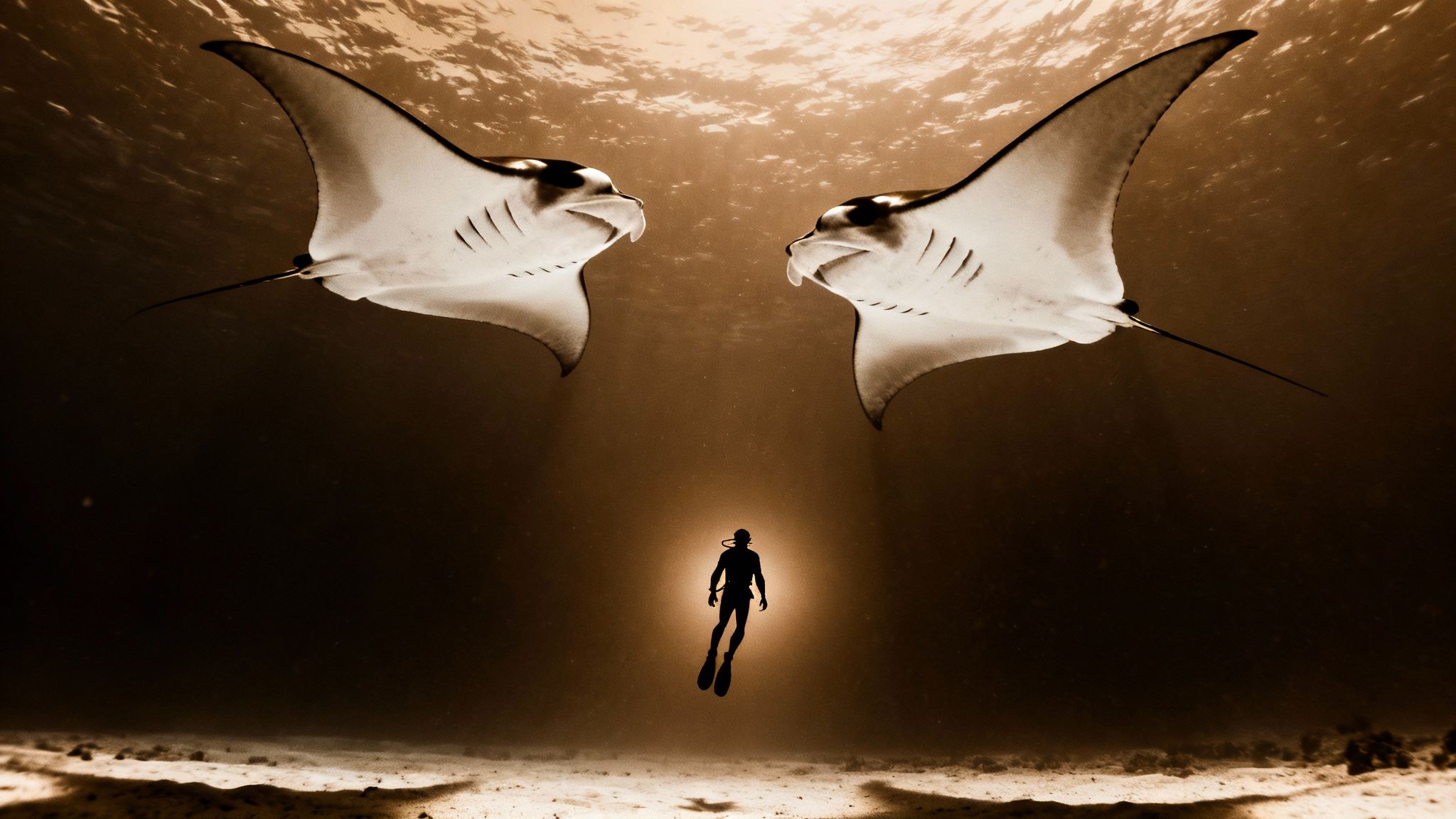
Think of this guide as your personal roadmap to one of the most magical encounters you can have in the ocean. We'll get into why Kona’s resident manta population makes for such reliable sightings and what truly sets this experience apart. Most importantly, we'll walk through how to pick the right tour operator to ensure your adventure is both ethical and absolutely awe-inspiring.
The whole experience hinges on a brilliant and simple concept. Dive operators set up powerful lights on the ocean floor, which attract huge clouds of plankton—the manta rays' favorite meal. The mantas show up for the all-you-can-eat buffet, performing graceful barrel rolls and swooping just inches above your head.
Why Is This Dive So Popular?
The draw of this adventure is massive, bringing in around 80,000 visitors every year. A huge part of that appeal is the ridiculously high success rate. On any given night, the chance of seeing mantas is between 80% and 90%. That kind of reliability turns a bucket-list dream into a near-guaranteed reality. You can find more details on Kona's incredible manta ray night dive success rates if you're curious.
This guide will cover everything you need to turn that curiosity into a real, well-planned trip. Let's dive in and see how you can meet these magnificent creatures.
- Reliable Sightings: Kona is home to a large, non-migratory population of manta rays, which means they stick around all year.
- A Truly Unique Experience: You get a front-row seat to a natural feeding frenzy as these gentle giants dance in the light beams.
- Ethical Tourism: The best operators follow strict, established guidelines to keep the mantas and their environment safe.
Once you know what to expect, you can book with confidence, knowing you're about to experience one of the world's most incredible marine encounters. When you're ready to take the plunge, you can book your manta ray dive tour here and see it for yourself.
Why Garden Eel Cove Is Kona’s Premier Manta Dive Site
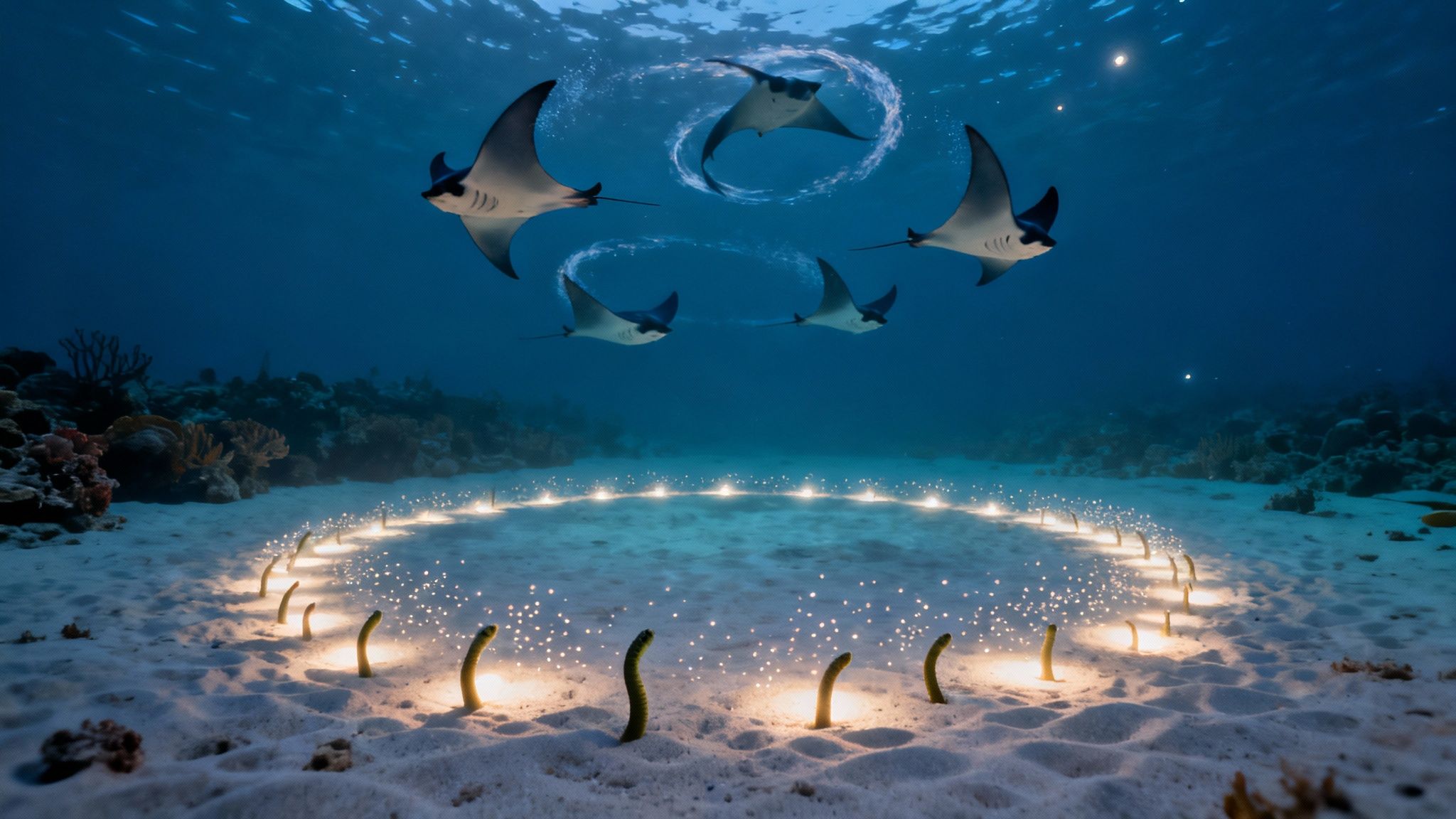
While you have a couple of options for a manta ray night dive in Kona, they definitely aren't all the same. Garden Eel Cove, affectionately known as "Manta Heaven," consistently earns its reputation as the superior choice. It simply delivers a more reliable and jaw-dropping underwater show thanks to its protected location, better viewing area, and healthier reefs.
Think of it like a natural amphitheater built just for manta rays. Located just north of the Kona airport, the cove's geography often shields it from the open ocean, which means calmer waters and a more pleasant trip for everyone. This protection is a big reason why experienced dive shops head here night after night.
The real show begins on the sandy bottom. This is where dive guides set up powerful lights, creating a "campfire" effect that acts as a massive beacon for plankton. This dense concentration of food is a magnet for mantas, pulling them in from all around for a truly spectacular feeding frenzy.
A Tale of Two Sites
Kona’s other famous spot is Manta Village, down by Keauhou Bay. It’s a great dive, but Garden Eel Cove’s unique underwater layout, superior viewing area, and healthier reefs foster a more vibrant, dynamic environment. The setup at Garden Eel Cove allows you to settle into one spot on the sand and just watch as these gentle giants perform their acrobatic barrel rolls right over your head.
The biggest draw for Garden Eel Cove is its ability to attract larger groups of manta rays. The reliable light setup, thriving ecosystem, and protected location make it the undisputed champion for a mind-blowing encounter.
The numbers really tell the story. On average, 'Manta Heaven' draws in about 11 manta rays per dive, while Manta Village typically sees around four. While Garden Eel Cove's sighting success rate is slightly lower at about 90%, the chance to be surrounded by a huge group of mantas makes it an incredibly compelling choice.
Why Topography and Reefs Matter
The physical environment at Garden Eel Cove is the secret to its success. It’s even named for the colonies of garden eels poking out of the sand—a clear sign of a healthy, stable ecosystem.
- Protected Bay: The cove is naturally shaped to block bigger ocean swells, keeping the site comfortable and more consistently accessible.
- Sandy Bottom: The flat, sandy seafloor creates a perfect "stage" for the lights, providing an ideal viewing area without damaging delicate corals.
- Healthy Reefs: The vibrant reefs bordering the cove support a rich marine food web, which means more plankton for the mantas.
All these elements work together to create the perfect recipe for a world-class manta ray dive. The reliability and sheer scale of the experience are what make it a bucket-list destination. To get a closer look, you can learn more about diving at Manta Heaven, or Garden Eel Cove in our detailed site guide. It’s an adventure that truly captures the magic of Kona's underwater world.
Choosing the Right Operator for Your Manta Dive
Let’s be honest: who you dive with can make or break your manta ray night dive in Kona. This isn’t just about getting from the harbor to the dive site. Your operator shapes the entire adventure, from the vibe on the boat to the safety of the dive itself. A great crew can turn an incredible experience into a lifelong memory.
So, what separates the best from the rest? It all starts with a serious commitment to safety. We're talking meticulously maintained boats, top-notch rental gear that you can trust, and a crew that knows Kona’s waters like the back of their hand. A really good sign is a detailed, engaging pre-dive briefing. They won't just cover the safety basics; they’ll get you genuinely excited by teaching you about the mantas and how to interact with them respectfully.
What to Look For in a Manta Dive Company
As you start your search, look for companies that are serious about marine conservation. The best ones follow established guidelines, like those from the Manta Ray Green List, because they know protecting these amazing animals is the most important part of their job. They also tend to keep their groups small, which means you get a better, more personal view of the action without feeling like you're in a crowd.
Kona Honu Divers is one of those operators that really gets it right. They blend a deep respect for marine life with a laser focus on diver safety to make sure your trip is nothing short of spectacular.
Of course, you should always do your own homework. Checking online reviews is a must. This guide on mastering TripAdvisor reviews can help you read between the lines and figure out what past divers really thought. Hearing directly from others gives you a real feel for a company's professionalism. For a deeper dive into this, our article on how to choose a Kona dive shop has all the local-specific tips you’ll need.
By choosing a guide that prioritizes small groups, expert staff, and manta conservation, you are investing in a higher quality and more ethical experience. Your selection directly supports the long-term health of Kona's resident manta ray population.
When you find the right operator, you can just relax and soak it all in. They’ve got the details covered, so you can focus on the magic. From the boat ride out as the sun sets to that breathtaking moment a giant manta ray glides just over your head, a passionate and professional crew truly makes all the difference.
A Step-by-Step Walkthrough of Your Manta Dive Adventure
Knowing what’s coming on your manta ray night dive in Kona can make all the difference, helping you shake off any nerves and just soak it all in. So, let’s break down the entire trip, from the moment you step on the boat to the quiet ride back to shore under the stars.
Most operators run this as a two-tank trip, which means you'll head out in the late afternoon. The first dive is a beautiful, relaxed tour of a Kona reef in broad daylight. Think of it as the perfect warm-up—a chance to get your weighting right, get comfortable with your gear, and see some of the local reef life before the sun goes down.
When you surface, you’re usually treated to a world-class Kona sunset. This surface interval is your time to grab a snack, rehydrate, and just watch the sky explode with color. As twilight settles in, the real excitement starts to build. Your divemaster will gather everyone for a thorough briefing on what to expect, how to interact with the mantas safely, and the game plan for the main event.
What the Manta Dive is Actually Like
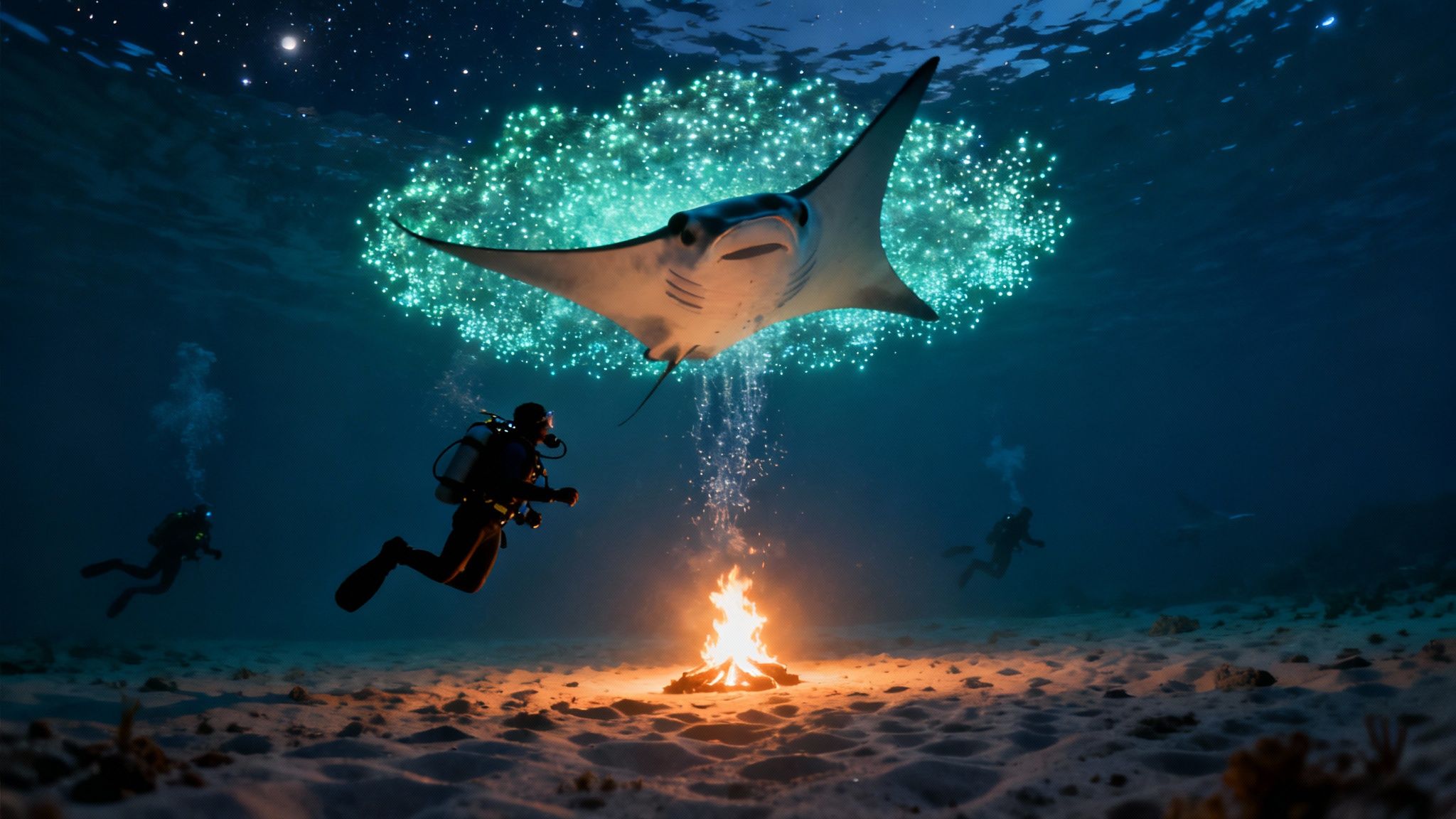
For the second dive, you’ll descend into a dark, calm ocean. Your guide will lead the group to a specific spot on the sandy bottom where a central light box, often called the "campfire," is placed. This is your cue to find a spot, get settled, and just be an observer. Your only job is to stay put on the bottom and point your dive light straight up, which helps draw in the plankton.
And then, it happens. The first graceful shadow emerges from the darkness, gliding effortlessly into the beams of light to feed. Before you know it, others might join the ballet, performing silent, beautiful barrel rolls just inches above your head. You're a guest at their dinner table, which brings us to the most important rule: never touch a manta ray. They have a protective mucus coating on their skin, and our touch can easily damage it.
The dive itself usually lasts about 45 minutes. The water temperature is typically a comfortable 75-80°F (24-27°C). While nothing in nature is ever a 100% guarantee, this is one of the most reliable big animal encounters on the planet. Researchers have identified over 300 individual mantas in the area and logged more than 10,000+ sightings, which tells you just how special this Kona population is. You can dig into more of these amazing manta ray statistics to see for yourself.
After the show of a lifetime, you'll slowly ascend back to the boat. The ride back to the harbor is usually filled with excited chatter, warm drinks, and the shared glow of having witnessed something truly magical.
Typical Manta Ray Night Dive Schedule
To give you a clearer picture, here’s what a standard two-tank manta trip itinerary often looks like. Of course, exact times can vary depending on the operator and the time of year.
| Time | Activity |
|---|---|
| 3:00 – 4:00 PM | Check-in at the harbor, meet the crew, and set up your gear. |
| 4:00 – 4:30 PM | Boat departs. Captain and divemaster briefings on the way to the site. |
| 4:30 – 5:30 PM | First Dive: A daytime reef dive to get comfortable and see local marine life. |
| 5:30 – 6:30 PM | Surface interval. Enjoy snacks, drinks, and a spectacular Kona sunset. |
| 6:30 – 7:00 PM | Manta ray briefing. The crew explains the plan and safety protocols. |
| 7:00 – 7:45 PM | Second Dive: The main event! Descend for the manta ray night dive. |
| 7:45 – 8:30 PM | Ascend, get back on the boat, and enjoy hot cocoa or soup. |
| 8:30 – 9:00 PM | Return to the harbor, share stories, and log your dive. |
This timeline helps set expectations so you can simply relax and enjoy every moment of this incredible Kona experience.
Getting Ready for Your Kona Manta Dive
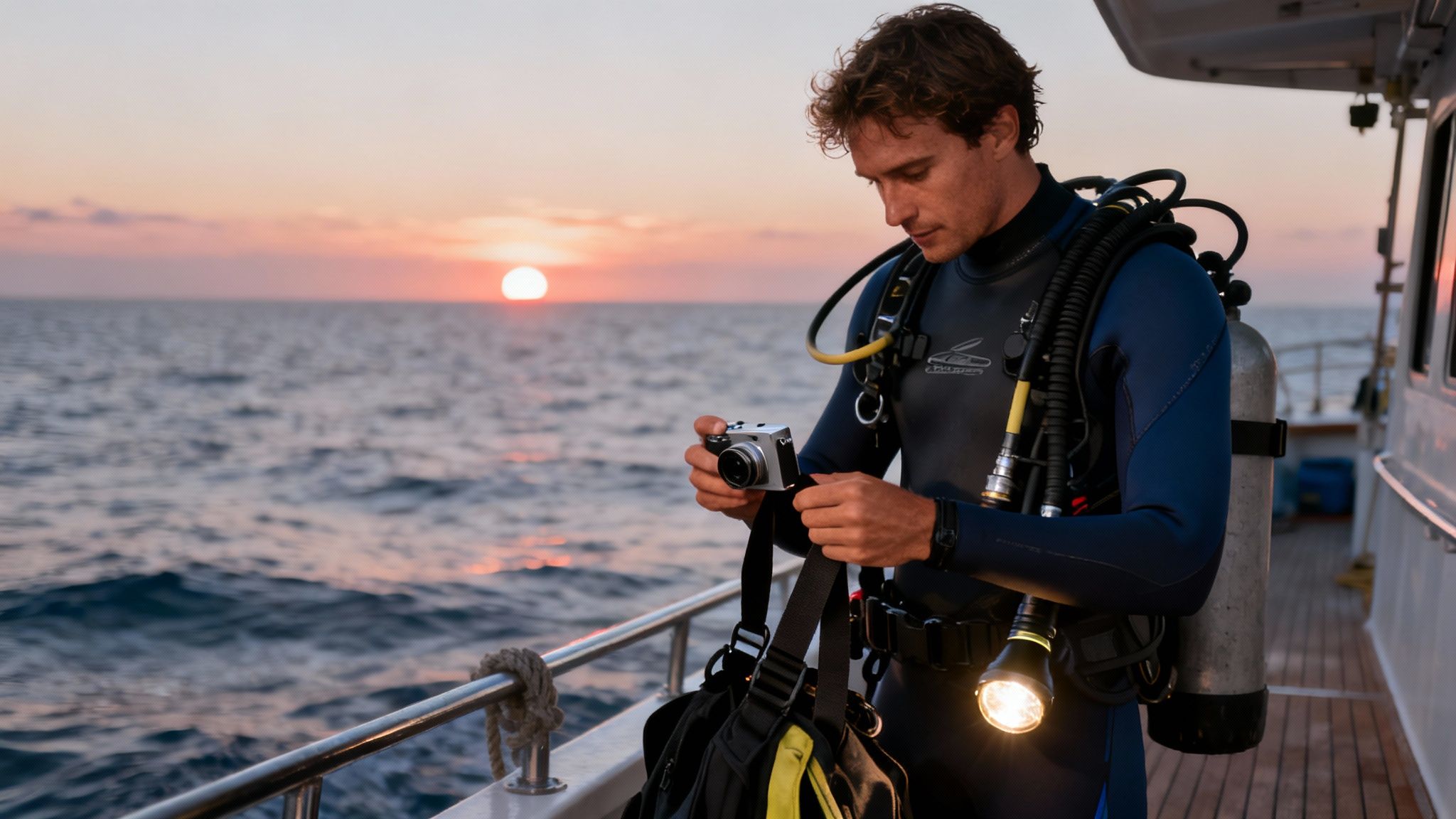
The difference between a good manta ray night dive in Kona and an absolutely mind-blowing one often comes down to a little preparation. Getting a few details right beforehand means you can relax and soak in the spectacle without worrying about being cold or fiddling with your gear. Trust me, you'll want your full attention on the mantas.
One thing that catches many divers by surprise is the water temperature. Even in warm Kona waters, you’ll be sitting still on the ocean floor for about 45 minutes. When you aren't moving, you get cold much faster than you’d think. I always recommend at least a 5mm wetsuit, and honestly, a 7mm is even better. You’ll be glad you have it.
Safety and Dive Etiquette
Night diving has its own set of rules, and on this dive, they’re especially important for keeping everyone safe and protecting the mantas. First and foremost, you need solid buoyancy control. You’ll be in a tight group, close to the sandy bottom, and the last thing you want is to kick up a sandstorm that ruins the view for everyone else.
Proper dive light etiquette is also a must. On the boat, keep your light pointed down so you don’t blind your fellow divers and ruin their night vision. Once you're underwater, your guide will tell you where to point your beam—usually straight up towards the surface. This creates a cone of light that attracts the plankton, which in turn brings in the mantas.
Remember, the goal is to be a passive observer. By staying still and maintaining your position, you become part of the scenery. This allows the mantas to get comfortable and perform their beautiful, acrobatic feeding dance just inches away from you.
Tips for Underwater Photography
You don't need a high-end camera rig to get amazing shots of the mantas. In fact, for this dive, less is more. The one thing you absolutely should not use is your camera's built-in flash. It will just light up all the tiny particles in the water right in front of your lens, and your photos will look like they were taken in a snowstorm—we call that backscatter.
Instead, think of the dive site's central light—the "campfire"—as your giant underwater studio light. This powerful light source illuminates the mantas from below, creating stunning, dramatic silhouettes. Find a good spot where the campfire is lighting up the action for you, and focus on capturing the graceful shapes of the mantas as they glide through the light. A little prep goes a long way, ensuring you can just relax and watch the incredible ballet unfold.
Exploring More of Kona’s World-Class Diving
The manta ray night dive is an absolute showstopper, but it’s just the opening act for the underwater adventures waiting for you in Kona. Once you’ve seen that incredible manta ballet, you’ll be hooked. Trust me, you'll be wondering what other secrets the Big Island’s waters are hiding.
For divers who want something completely different—something almost alien—the Kona Blackwater Dive is a must. People call it a "spacewalk" in the ocean, and that's not far off. You're drifting in the black of night, suspended over thousands of feet of inky-blue water. What you see is the nightly vertical migration, where all these strange, wonderful, and often bioluminescent critters rise from the deep. It’s a surreal look at creatures you’ll never find on a reef.
Daytime Thrills and Advanced Adventures
Once the sun is up, Kona’s dive sites are just as spectacular. If you're a certified diver ready to level up, there are plenty of advanced dives that will push your skills and show you a wilder side of the island. These trips usually head to more remote spots with some seriously dramatic underwater landscapes.
What can you expect?
- Lava Tubes and Arches: Imagine swimming through ancient volcanic formations. You’ll be navigating through lava tubes and under massive arches carved out by nature—it's like exploring a submerged cathedral.
- Deep Reefs and Drop-Offs: The coastline here drops off into the abyss. On these dives, you'll follow steep walls plunging into the deep blue, which is where you get a much better shot at spotting larger pelagic species passing by.
- Shark and Dolphin Encounters: Getting away from the busier sites often means bigger animal encounters. Your chances of coming across sharks, pods of dolphins, and other amazing marine megafauna go way up.
These dives are what make Kona such a well-rounded, top-tier destination. There’s so much more to see beyond the famous manta dive. For a broader look at what the coast has to offer, this guide to the Top 12 Snorkeling Tours in Kona Hawaii has some great starting points.
So whether you’re ready for the thrill of a Blackwater Dive, want the challenge of an advanced trip, or just want to see all the diving tours available, Kona truly has an unforgettable adventure waiting for you, day or night.
Your Manta Ray Dive Questions, Answered
We’ve gone over a lot, but you probably still have a few questions buzzing around before you're ready to jump in the water. Let's tackle some of the most common ones we get from both divers and snorkelers.
Do I Need to Be Scuba Certified to See the Mantas?
Nope, not at all! While getting to watch the show from the "front row" on the ocean floor is a huge perk of being a scuba diver, you don't have to be certified to have an incredible experience.
Most companies, including us here at Kona Honu Divers, run a fantastic snorkel trip alongside the dive. You'll float comfortably at the surface, holding onto a specially designed light board. These bright lights are a magnet for plankton, which in turn draws the manta rays right up to you. Trust me, the view from the top is just as awe-inspiring.
Is It a Sure Thing That I'll See Mantas?
Manta rays are wild creatures with their own schedules, so nobody can offer a 100% guarantee. That said, the track record for this dive is phenomenal, with a success rate that consistently hovers between 80% and 90%.
Many of the best operators have what's called a "manta guarantee." The deal is simple: if the mantas don't show up for your tour, you can come back and try again on another night for free (as long as there's space, of course).
Here's a pro tip: Always try to book your manta dive for one of the first nights of your vacation. That way, in the slim chance you need to reschedule, you have plenty of backup nights to make it happen.
How Deep Is the Dive Site?
You might be surprised to learn that the whole experience happens in pretty shallow water. It’s one of the things that makes this such a great, accessible night dive.
Divers usually find a spot on the sandy bottom at about 30 to 45 feet (9 to 14 meters). This shallow depth means you get plenty of bottom time to just relax and watch the spectacle unfold. For a more detailed look at the dive profile, check out our guide on how deep the Kona manta ray dive is.
Are Manta Rays Dangerous?
Not even a little bit. There's a reason we call them gentle giants! These magnificent creatures are filter feeders—they don't have teeth, stingers, or barbs. They are completely harmless to people.
The most important rule on this dive is to be a passive observer. That means never, ever touch a manta ray. Their skin is covered in a protective mucus layer, and touching them can strip it away, leaving them open to nasty infections. Just kick back, float, and let them do their thing. It's the best way to ensure a safe and respectful encounter for both you and the mantas.
Ready to see this underwater ballet for yourself?
At Kona Honu Divers, our whole mission is to give you a safe, ethical, and completely unforgettable adventure. Book your 2-tank Manta Dive or Snorkel tour and get ready to experience the magic of Kona's gentle giants.