
Picture this: you’re descending into the warm, dark Pacific as the last bits of daylight fade. Below you, a circle of powerful lights illuminates the ocean floor, creating a brilliant stage in the deep blue. This is the world-famous manta ray night dive in Kona—an experience that’s less like a dive and more like front-row seats to a breathtaking underwater ballet.
If you're an ocean lover heading to the Big Island, this is one adventure you absolutely cannot miss.
Kona’s Unforgettable Underwater Ballet
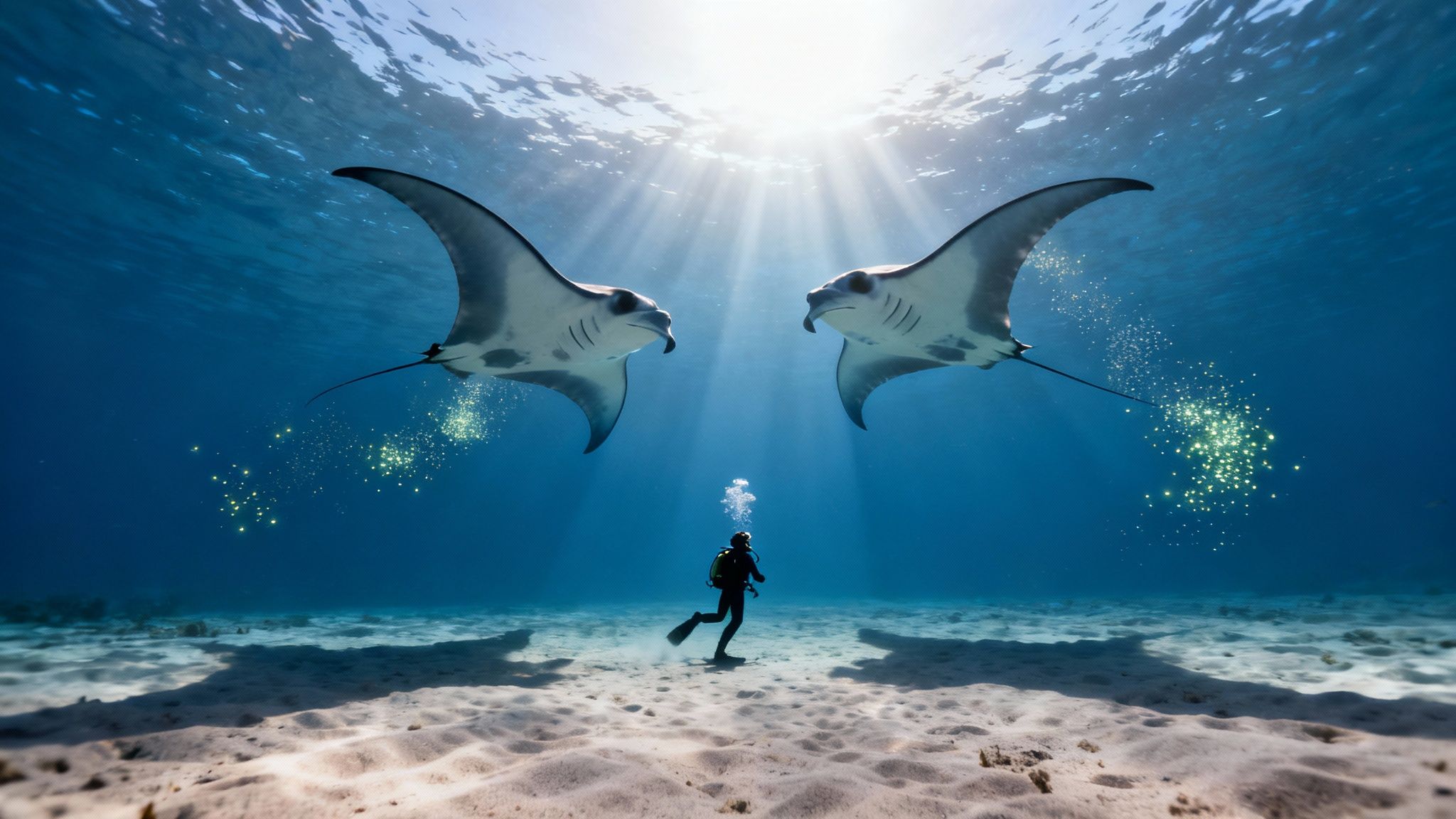
This guide will cover everything you need to know to plan this incredible trip. The idea behind the dive is both simple and genius: dive operators set up powerful lights on the ocean floor, which act like a massive bug zapper in reverse. The light attracts huge clouds of plankton, the manta rays' favorite meal.
Soon enough, these gentle giants glide in from the darkness to feast on the all-you-can-eat buffet. It's an absolutely jaw-dropping spectacle and has rightfully earned its reputation as one of the best night dives on Earth.
What Makes This Dive So Special?
The Kona manta ray night dive isn't just about watching animals from a distance; it's a truly immersive experience. For a short, magical time, you become part of their world. So many wildlife encounters are fleeting glimpses from afar, but here, you are right in the middle of the action.
The whole operation is brilliantly set up for both divers and snorkelers, so everyone gets a great, safe view. Divers get to kneel on the sandy bottom, looking up, while snorkelers hang onto a custom-built light board at the surface, looking down.
This unique setup gives you unparalleled, up-close views as the mantas swoop, glide, and barrel-roll just inches from your face, gracefully filtering plankton from the water. It’s a completely interactive yet respectful encounter that you just won't find anywhere else.
One of the best parts is how reliable the sightings are. This dive experience in Kailua-Kona attracts around 80,000 visitors every year, making it a massive draw. And for good reason—operators report an 80-90% success rate for manta ray sightings. As you can read about on the Kona Honu Divers blog, that consistency is a huge part of what makes it so popular.
Why Location Matters
Now, Kona actually has two primary spots where these dives happen, and they offer very different experiences. The key to an amazing trip is choosing the right one. Garden Eel Cove is the superior choice for the dive tour because of its protected location, a better viewing area, and healthier reefs.
Choosing the right location and the best operator can be the difference between a good dive and a truly life-changing one. If you’re ready to check this off your bucket list, you can see the top-rated manta ray dive tour here:
Why Garden Eel Cove Is The Premier Manta Dive Site
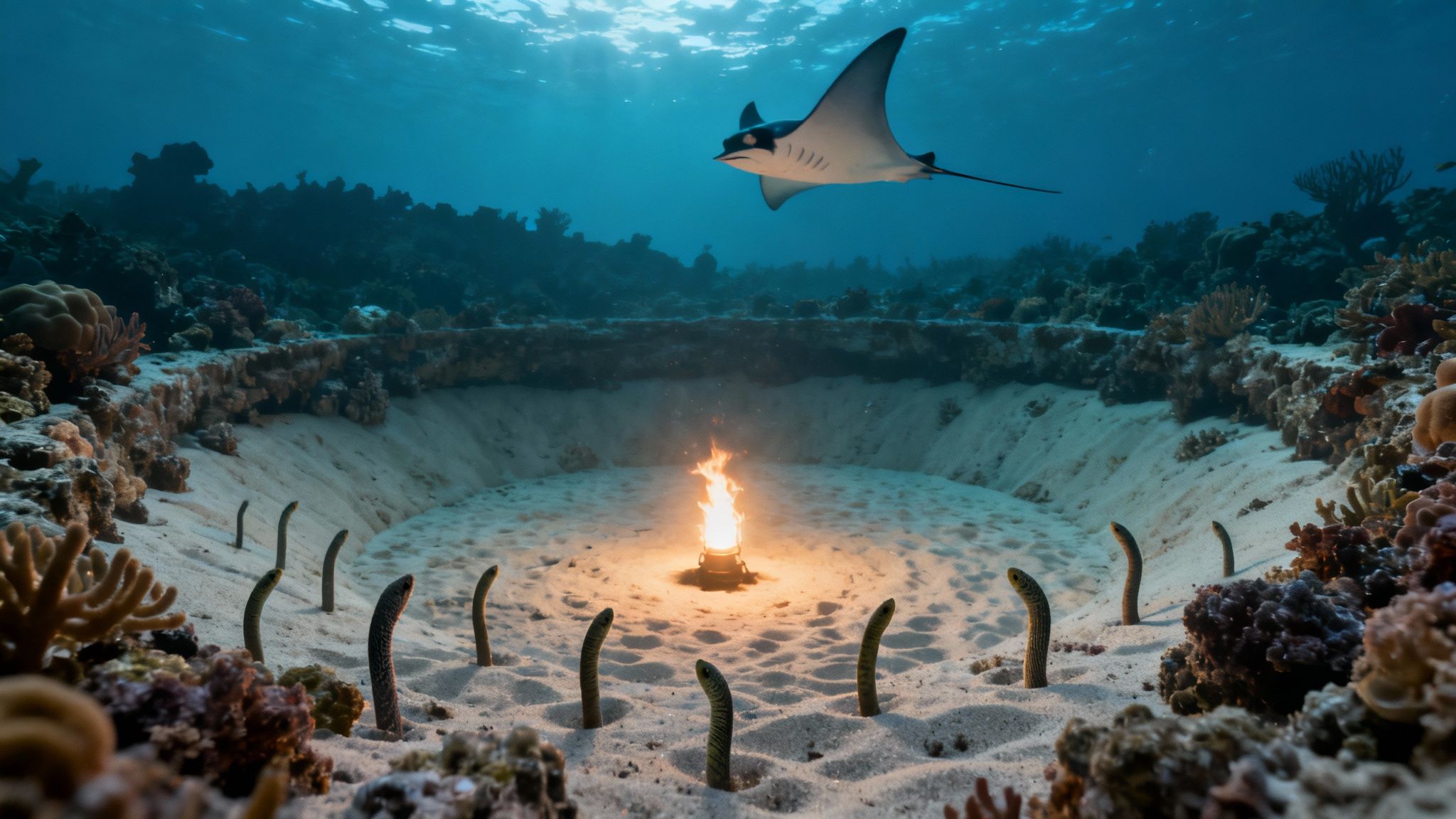
When you start looking into a manta ray night dive in Kona, you'll see two names pop up again and again: Manta Village in the south and Garden Eel Cove in the north. While you can see mantas at both, they are far from equal. Garden Eel Cove, affectionately known as 'Manta Heaven,' is the superior choice, consistently delivering a better, more reliable, and more breathtaking experience.
Choosing the right dive site is probably the single most important decision for your trip. It's what separates a good night from an unforgettable one. Operators who head north to Garden Eel Cove, like Kona Honu Divers, do it for a reason—they know it offers the most magical and dependable encounter.
Let’s break down exactly why the experience between the two sites can be so different.
The Geographic Advantage of Manta Heaven
The biggest reason Garden Eel Cove shines is its location. Tucked away near the Kona International Airport, it’s naturally sheltered from the big ocean swells that often roll in from the south and west.
This protection translates to calmer, clearer water more often than not. For divers, that means a much more pleasant time in the water without getting tossed around by surge, and visibility is typically fantastic. Manta Village, on the other hand, is more exposed and is much more likely to have rough conditions or even get canceled when the swell is up.
The layout of the seafloor at Manta Heaven is also a huge plus. The dive site is a large, sandy patch with a gentle slope around it, which forms a perfect natural amphitheater for viewing the show.
A Superior Viewing Area
That "amphitheater" layout is what makes the experience at Garden Eel Cove so special. Dive operators set up a central light source, which we call ‘the campfire,’ right in the middle of the sand. Divers then settle in a circle around it, giving everyone a front-row seat.
This isn't just about getting comfortable; it's about creating the perfect stage for the mantas. They have a huge, open space to swoop in and perform their graceful barrel rolls right over your head. You get an incredibly close and personal view from the best seat in the house.
At Manta Village, the underwater terrain can make the setup feel a bit more jumbled and crowded, which can sometimes take away from that feeling of being completely immersed in the action.
Better Reefs and a Better First Dive
One of the highlights of booking a charter with Kona Honu Divers is that it's a two-tank trip. The first dive is a gorgeous twilight tour of the reef just as the sun is going down, and the reef at Garden Eel Cove is noticeably healthier and more vibrant than its southern counterpart.
On your first tank at Manta Heaven, you'll drift over thriving coral gardens, navigate cool lava rock arches, and see a ton of marine life. It's an incredible dive in its own right and the perfect warmup for the main event. The whole trip feels like getting two world-class dives in one. Learn more about what makes Manta Heaven a top-tier dive site in our detailed guide.
Choosing a tour to Garden Eel Cove isn't just about seeing mantas; it's about experiencing the entire marine ecosystem at its best, from the vibrant reef life at sunset to the majestic underwater ballet after dark.
Meeting Kona’s Gentle Giants Face To Face
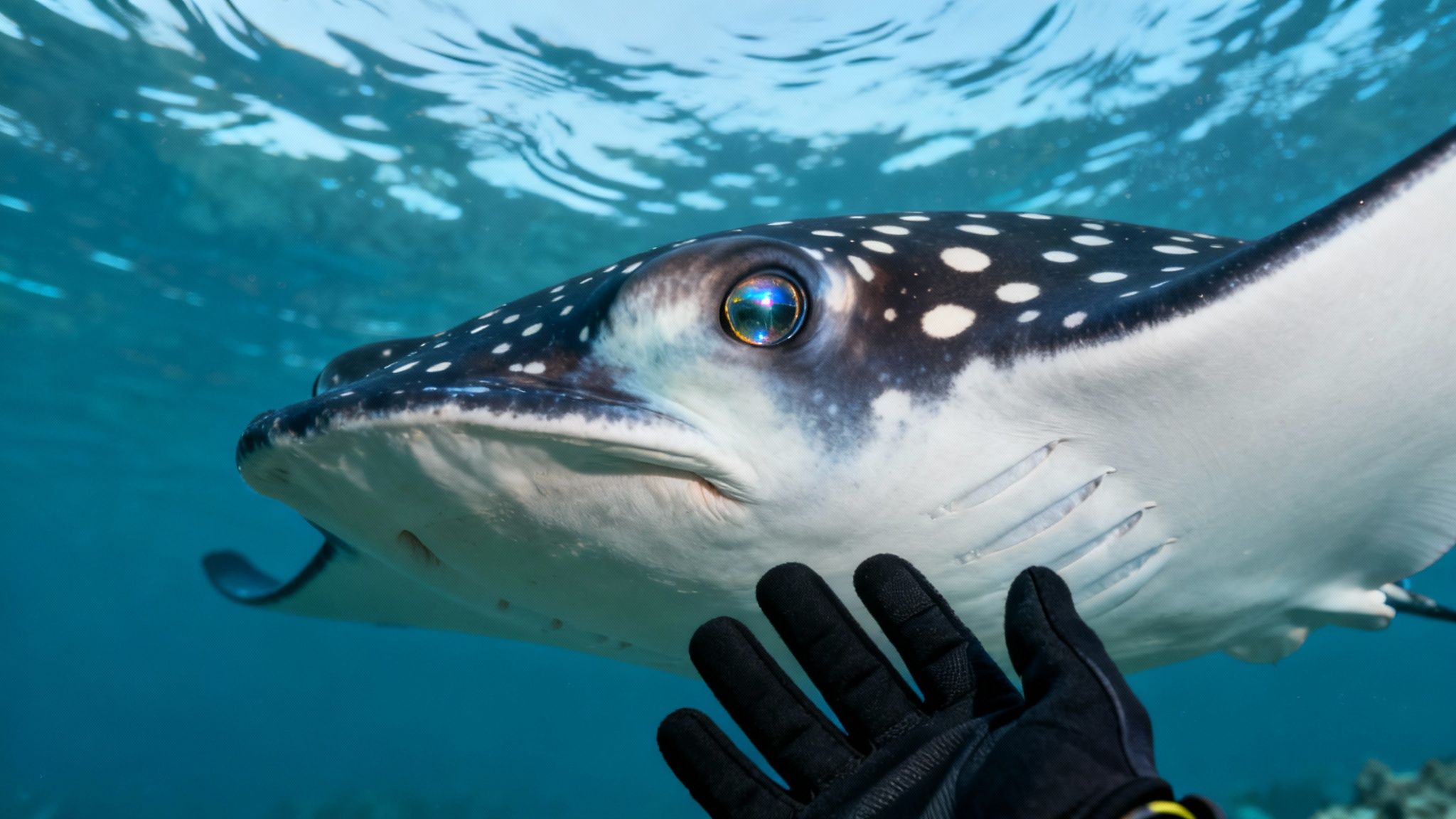
The amazing reliability of the manta ray night dive in Kona is no lucky accident. It all comes down to the fact that you're meeting a resident population of reef mantas (Mobula alfredi). These aren't just strangers passing through; they are Kona's neighbors, a tight-knit community of over 200 identified individuals who live here year-round.
Knowing this completely changes the dive. It’s not just a wildlife sighting anymore. It's an up-close and personal encounter with intelligent animals you can actually recognize, and that connection makes the whole experience unforgettable.
Getting to Know the Kona Manta Rays
The manta rays you'll meet are the definition of gentle giants. With massive wingspans averaging 12 to 14 feet, their size can be a bit breathtaking at first, but they are completely harmless to humans. As filter feeders, they don’t have teeth, stingers, or barbs, living entirely on a diet of microscopic plankton.
Their temperament is genuinely curious and calm. They seem to intuitively understand the "rules" of the dive, gliding inches from your face with incredible grace but never touching.
It's easy to mix them up with stingrays, but they are worlds apart. Think of manta rays as the peaceful, plankton-eating cousins of the ray family—much more like a baleen whale than a predatory shark.
This gentle nature is what makes the experience so safe and intimate. You're simply a guest at their underwater buffet, and they are the hosts putting on the show.
How We Tell Them Apart
One of the coolest things about the Kona mantas is that we know them by name. Each manta ray has a completely unique pattern of black spots on its white belly, which works just like a human fingerprint.
The local guides, researchers, and divemasters are absolute pros at telling them apart. Over the years, they’ve named many of the regulars, creating a cast of characters you might meet on your dive:
- Big Bertha: One of the largest and most well-known matriarchs of the group.
- Lefty: Instantly recognizable by a cephalic fin that was sadly injured by fishing line.
- Kailey: Another famous female who is a frequent and reliable visitor.
This adds a whole new layer to the experience. You're not just seeing a manta ray; you might be seeing Koie, an individual who was first identified decades ago.
This incredible recognition is only possible thanks to years of scientific monitoring. Long-term cataloging has made the Kona Coast one of the most well-studied manta ray habitats on the planet. Since 2009, researchers have built a database of over 300 individual mantas and recorded more than 10,000 sightings. You can dig into some of the amazing manta ray statistics and the research driving them.
This ongoing work is vital for their protection and helps us understand their life cycles and social behaviors, cementing Kona's status as a critical sanctuary for these magnificent creatures.
How To Choose The Best Manta Ray Dive Tour
Let's be honest, picking the right tour operator for your manta ray night dive is probably the biggest decision you'll make for this trip. It's the difference between a truly mind-blowing experience and just… a boat ride. The quality of your guide, the boat's safety standards, and the company's respect for the animals will shape your entire memory of the night.
Think of it this way: you’re not just booking a ticket. You’re putting your trust in a crew for a once-in-a-lifetime adventure. This is where a top-tier operator like Kona Honu Divers really shines. They’ve built their reputation on solid safety protocols, a deeply knowledgeable crew, and a genuine commitment to protecting the marine life they introduce you to.
What To Look For In An Operator
When you're comparing tour companies, look past the price tag. The best experiences are built on a foundation of quality and care. Here’s what really matters:
- Safety First: This is non-negotiable. Look for a company with a stellar safety record, well-maintained gear, and professional, certified guides who give you a crystal-clear briefing before you hit the water.
- Ethical Practices: A responsible operator will be a proud follower of the Manta Ray Green List standards. This means no touching the mantas, no chasing them, and always keeping a respectful distance.
- Comfort and Quality: A comfortable, well-equipped boat makes all the difference, especially after a night dive. Little things like a spacious deck, a warm shower, and some post-dive snacks can turn a good trip into a great one.
- An Expert Crew: A passionate and experienced crew can elevate the entire adventure. When your guides know the individual mantas by name and can share their stories, it adds a personal touch that is absolutely unforgettable.
Kona Honu Divers hits all these marks. Their 2-tank Manta Ray Dive tour is a perfect example of how they deliver a premium experience. You get a beautiful reef dive at sunset, which is a fantastic dive in its own right, before the main event with the mantas at Garden Eel Cove. This approach not only gives you more time in the water but also shows you the vibrant ecosystem that the mantas call home. If you want to see a wider range of options, this resource offers a great look at Top 12 Snorkeling Tours in Kona, including Manta Ray encounters.
Why Kona Honu Divers Is a Premier Choice
Don't just take our word for it—the experiences of past divers speak volumes. Spend a little time reading reviews, and you'll quickly see a pattern of praise for Kona Honu Divers' professionalism and passion.
Their commitment to an incredible guest experience is obvious in every detail. They offer high-quality rental gear, complimentary nitrox for certified divers, and keep their group sizes small to ensure everyone gets personal attention.
When you choose a reputable operator like Kona Honu Divers, your money does more than just buy a ticket. It supports sustainable tourism and helps protect Kona’s precious manta ray population for generations to come. It’s an investment in both an amazing adventure and the health of the ocean.
Ready to book an adventure that lives up to the hype? For a broader look at the best options available, you can explore our guide on the top 5 manta ray night dive tours to see how different companies compare.
What To Expect On Your Underwater Adventure
The buzz of anticipation for your manta ray night dive in Kona kicks in the second you set foot in the harbor. The air is warm, the sun is dipping low, and the energy is palpable. After a quick and easy check-in, you’ll hop on board and meet the professional crew who will be your guides for this unforgettable night.
The trip starts with a thorough boat briefing. The crew walks you through everything—safety protocols, gear checks, and the plan for the two upcoming dives. This is the perfect time to ask any last-minute questions as the boat cruises along the stunning Kona coast, giving you a front-row seat to a classic Hawaiian sunset.
The First Dive: A Twilight Reef Exploration
Your underwater journey begins with a twilight dive on a vibrant coral reef. As dusk settles in, you'll descend into a world in transition. You get to see the day shift in real-time as colorful reef fish find their nightly hideouts and the nocturnal critters start to emerge.
Think of this first dive as the perfect warm-up. It's a chance to get reacquainted with your gear, dial in your buoyancy, and just enjoy the incredible biodiversity of Kona's waters before the main event.
The Main Event: The Manta Ray Ballet
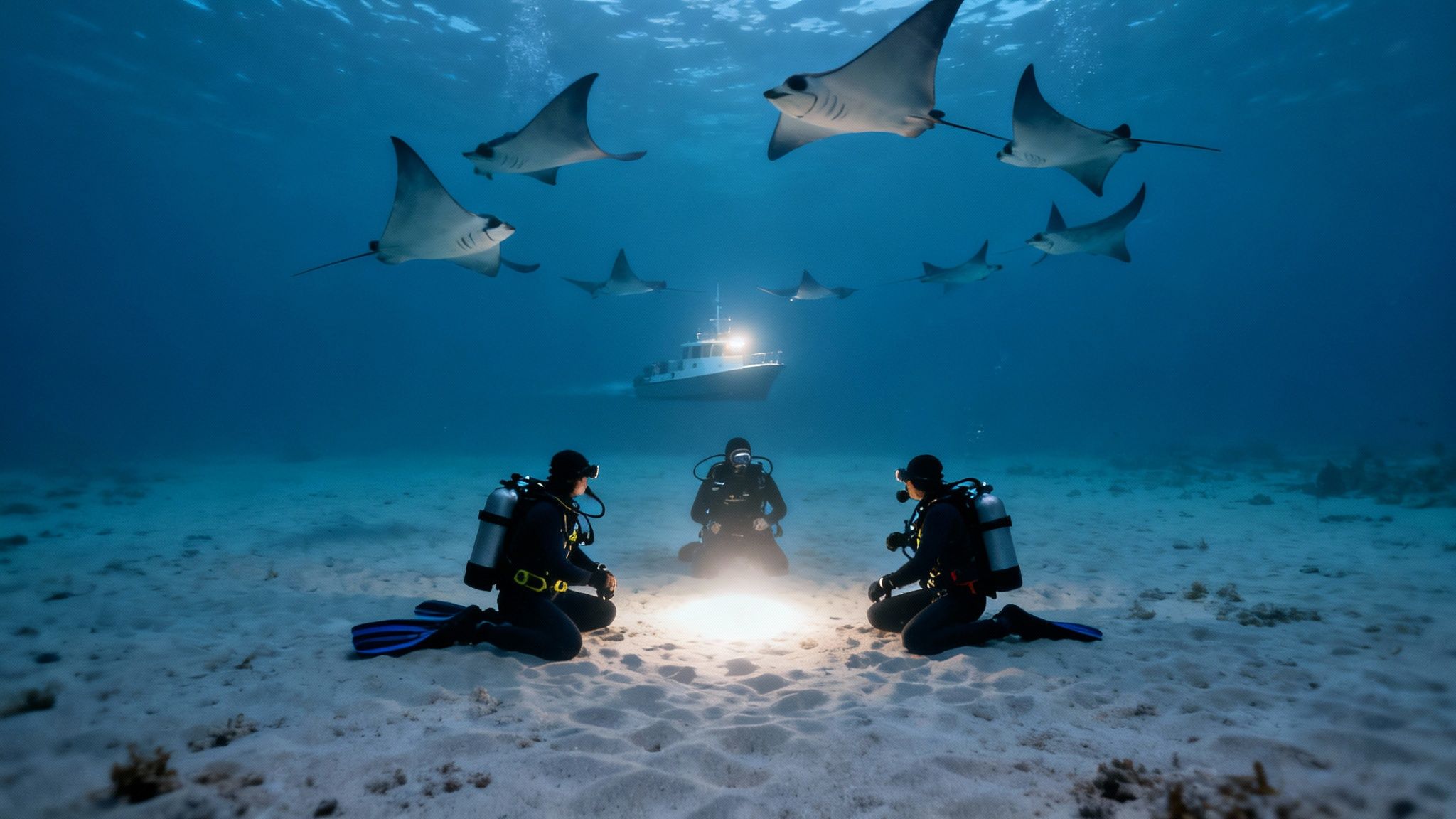
After a surface interval complete with snacks and drinks, it’s time for what you came for. Descending into the dark ocean is a surreal experience. Your guide will lead the group to a specific spot on the sandy bottom, where you'll settle in with the other divers, looking up into the dark water.
Then, the lights come on.
Powerful beams cut through the darkness, creating a brightly lit stage that instantly attracts swirling clouds of plankton. It doesn't take long. Out of the deep blue, the first graceful shadow emerges. A massive manta ray glides effortlessly into the light, its huge mouth agape to filter its microscopic meal.
Soon, more join the spectacle. They swoop, soar, and perform breathtaking barrel rolls just inches above your head. The only sound you’ll hear is the rhythm of your own breathing as you watch this silent, majestic ballet unfold. To get an even deeper sense of this moment, check out our post on what it's like to go on the manta ray dive in Kona.
The consistency of this encounter is what makes Kona so special. Back in 2013, data from Manta Heaven showed an average of 11 manta rays per night, a huge leap from the four per night seen at the Manta Village site. This really drives home how much the dive site matters.
The Snorkeler's Perspective
Not a certified diver? You're not going to miss out. The experience for snorkelers is just as mind-blowing.
Snorkelers float comfortably on the surface, holding onto a custom-made light board. This board shines powerful beams down into the water, creating the same plankton-attracting effect. The mantas come right up to the surface to feed, giving you an incredible bird's-eye view of the entire ballet from above.
So, which one is right for you? Both options are fantastic, but they offer slightly different experiences. Here's a quick comparison to help you decide.
Diver vs. Snorkeler Manta Experience Comparison
| Aspect | Scuba Diver Experience | Snorkeler Experience |
|---|---|---|
| Viewpoint | Bottom-up view from the ocean floor, looking up at the mantas. | Top-down view from the surface, looking down as mantas ascend. |
| Proximity | Mantas often glide directly over your head, sometimes inches away. | Mantas swim right up to the surface light board, offering close views. |
| Requirements | Open Water Scuba Diver certification is required. | No certification needed; suitable for all swimming abilities. |
| Mobility | Stationary on the ocean floor for the duration of the dive. | Holding onto a floating light board at the surface. |
Ultimately, whether you're looking up from the sea floor or down from the surface, you're guaranteed a spectacular show.
Beyond the Mantas: Other Kona Night and Advanced Dives
The manta ray night dive is deservedly the star of the show in Kona, but it's by no means the only act. Once you've witnessed that incredible underwater ballet, you'll realize the Big Island's waters hold a whole world of other adventures, especially after the sun goes down or for divers with a few more logbook entries under their belt.
If the manta dive whets your appetite for unique nighttime experiences, you're in luck. Kona is home to one of the most surreal and unforgettable dives you'll ever do: the blackwater dive.
The Legendary Kona Blackwater Dive
Picture this: you're drifting miles from shore, suspended in pure, inky blackness. Tethered to the boat above, you descend into a realm where strange, glowing creatures rise from the depths. This isn't science fiction; it's the Kona Blackwater Dive, and it’s as close as you'll get to a spacewalk right here on Earth.
This is nothing like a reef dive. You're witnessing the planet's largest daily migration, as bizarre larval fish, otherworldly jellies, and translucent squids—creatures that live their entire lives in the deep ocean—ascend toward the surface. It's a macro photographer's paradise and an adventure that completely redefines what a night dive can be. If you're ready to see this alien world for yourself, you can check out the details of a Blackwater Dive tour.
Advanced Daytime Diving Adventures
For seasoned divers looking for a daytime challenge, Kona's dramatic volcanic coastline more than delivers. The underwater landscape here was forged by lava, creating a spectacular playground of deep reefs, winding lava tubes, and sheer walls that drop off into the deep blue.
Advanced charters are all about getting away from the crowds and exploring these more remote and challenging sites.
- Explore Lava Tubes: There's nothing quite like navigating through ancient underwater caverns and archways carved by volcanic fire.
- Discover Deep Reefs: Head down to deeper sites where the marine life changes. You might be rewarded with sightings of schooling sharks or majestic eagle rays gliding by.
- Visit Remote Coastlines: These trips take you to pristine, rarely-dived spots that showcase the raw, untouched beauty of the Big Island's underwater ecosystem.
These charters are specifically for certified divers who are comfortable with deeper profiles and potentially more dynamic conditions. Kona Honu Divers runs a fantastic premium advanced dive tour designed for exactly this kind of exploration.
Whether you're chasing deep-sea oddities at night or exploring dramatic volcanic formations by day, there are some truly exceptional scuba diving adventures in Hawaii waiting for you in Kona.
Your Top Questions, Answered
Planning your manta ray night dive in Kona is a huge part of the fun, but I know you probably have a few questions swirling around. Let's get them cleared up so you can feel completely ready for this incredible experience.
Do I Have to Be a Certified Diver to See the Mantas?
Not at all! This adventure is for everyone. While certified divers get to settle on the ocean floor and watch the show from below, snorkelers get an equally stunning view from the surface.
Snorkel tours use a big, custom-made light board that floats on the water. You just hold on as it illuminates the water below, attracting plankton and bringing the mantas right up to you for an amazing, up-close encounter.
Is the Manta Ray Night Dive Safe?
Absolutely. Every professional operator in Kona puts safety first, and ours is no exception. It's important to remember that manta rays are truly gentle giants. They're filter feeders, so they don't have teeth, stingers, or barbs to worry about.
The main safety guidelines are simple and will be covered in your briefing: listen to your guide, stay with your group, and never, ever touch the manta rays or any other marine life. It's all about respect for these magnificent animals and their home.
When Is the Best Time of Year to Go?
This is the best part—any time is a great time! Kona is home to a large, resident population of manta rays, which means we don't really have an "off-season." We see them all year round.
The success rate for sightings stays consistently high, hovering over 80-90% no matter when you visit. If you're looking for the flattest, calmest ocean conditions, the summer months are often perfect, but you truly can't go wrong any time of year.
What Should I Bring With Me on the Tour?
We've got you covered on all the essential dive and snorkel gear. You just need to pack a small bag with your personal items.
- A towel and a set of warm, dry clothes to change into after you get out of the water. It can get chilly on the boat ride back!
- Reef-safe sunscreen to apply before the sun goes down.
- Your underwater camera—you won't want to miss capturing this.
- Any personal medications you might need.
We provide snacks and drinks on board, but it's always a good idea to double-check when you book. If you're curious about all the options, you can browse the different Kona diving tours we offer.
Ready to see this underwater ballet for yourself? Kona Honu Divers runs a world-class manta ray night dive, and our experienced guides are passionate about your safety and the well-being of the mantas. It's an experience you'll never forget.