
Picture this: you're floating in the warm, dark Pacific Ocean off the coast of Kona. Suddenly, giant, graceful shadows emerge from the deep, gliding and barrel-rolling just inches from your face. This is the manta ray night dive in Kona, an underwater ballet that’s consistently ranked as one of the most incredible wildlife encounters on the planet.
Experience Kona’s Unforgettable Underwater Ballet
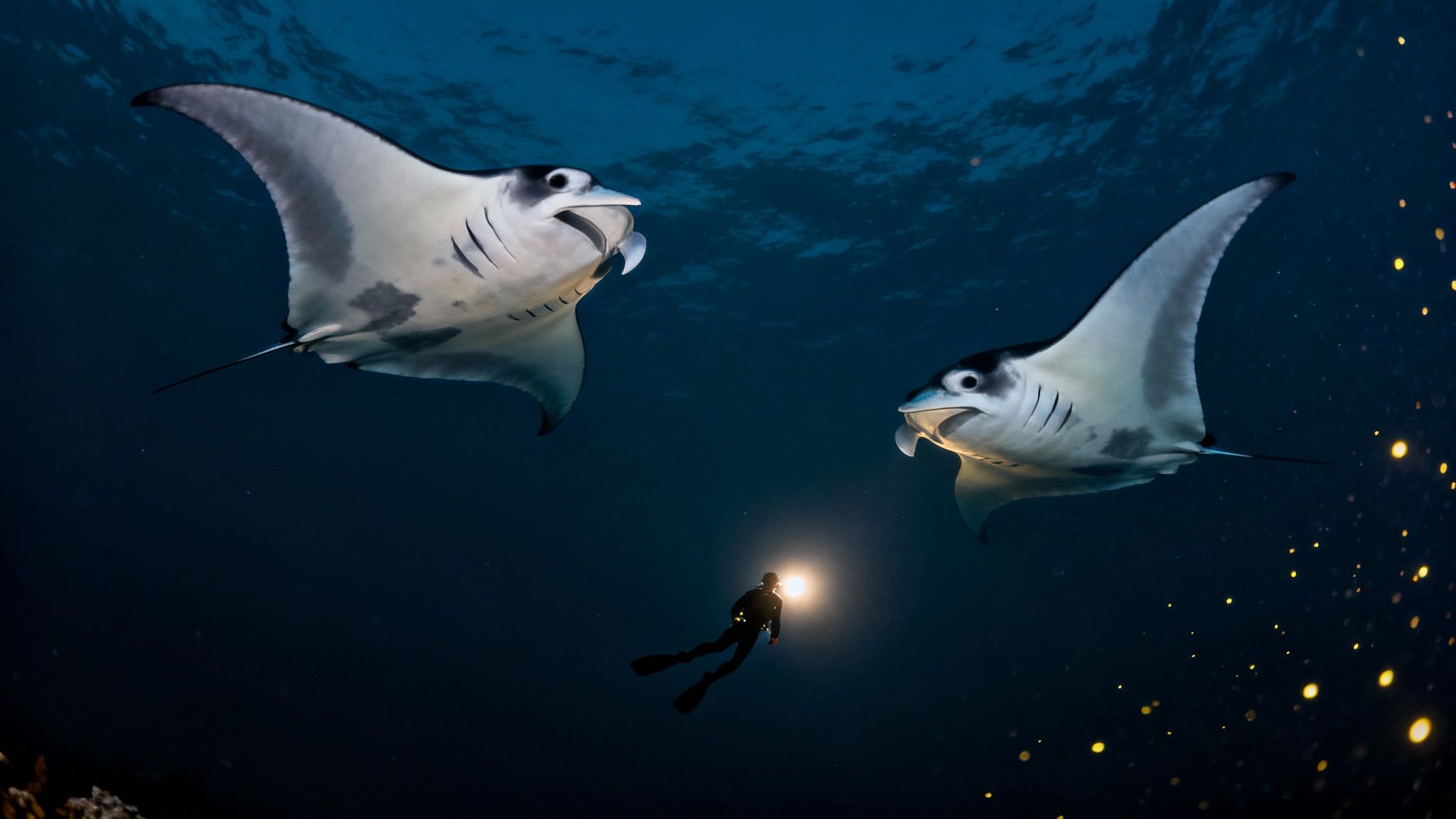
This mesmerizing spectacle isn't just a lucky break; it's a unique natural phenomenon that reliably draws these gentle giants to the Kona coast. The whole experience is built on a simple yet brilliant idea: powerful lights are shone into the water, attracting swarms of plankton—the manta rays' favorite meal. What happens next is a silent, graceful feast that unfolds right before your eyes.
For most people, this is way more than just a dive. It’s a profound moment of connection with these incredible animals. The sheer size and elegance of the mantas, some with wingspans stretching over 12 feet, leave you with a sense of awe that’s hard to put into words. You're just a quiet observer in their world, witnessing a feeding ritual that has captivated divers and marine biologists for decades.
Why Is This Dive a Global Phenomenon?
The manta ray night dive in Kona has built its legendary reputation on one thing: consistency. You can find mantas in other parts of the world, but the reliability and up-close nature of the sightings here are simply unmatched. It's become such a must-do adventure that it brings in around 80,000 visitors every single year.
With a sighting success rate that hovers between 80% and 90%, it's one of the most dependable manta ray experiences you can find anywhere on Earth. This high success rate turns what could be a hopeful wish into a tangible, awe-inspiring reality. The unique setup allows you to get incredibly close to the action in a way that's both safe for you and respectful to the mantas.
The feeling of a massive, graceful creature gliding effortlessly overhead is truly humbling. It’s an underwater spectacle that stays with you long after you’ve returned to shore, reminding you of the ocean's hidden wonders.
Of course, choosing a top-rated, experienced operator is crucial to making this adventure both magical and safe. Companies like Kona Honu Divers have perfected the logistics, ensuring every participant gets a front-row seat to the show while always putting the well-being of the mantas first. When you book a manta ray dive tour with them, you’re not just signing up for a dive; you’re stepping into an unforgettable story.
Choosing the Best Manta Ray Dive Site in Kona
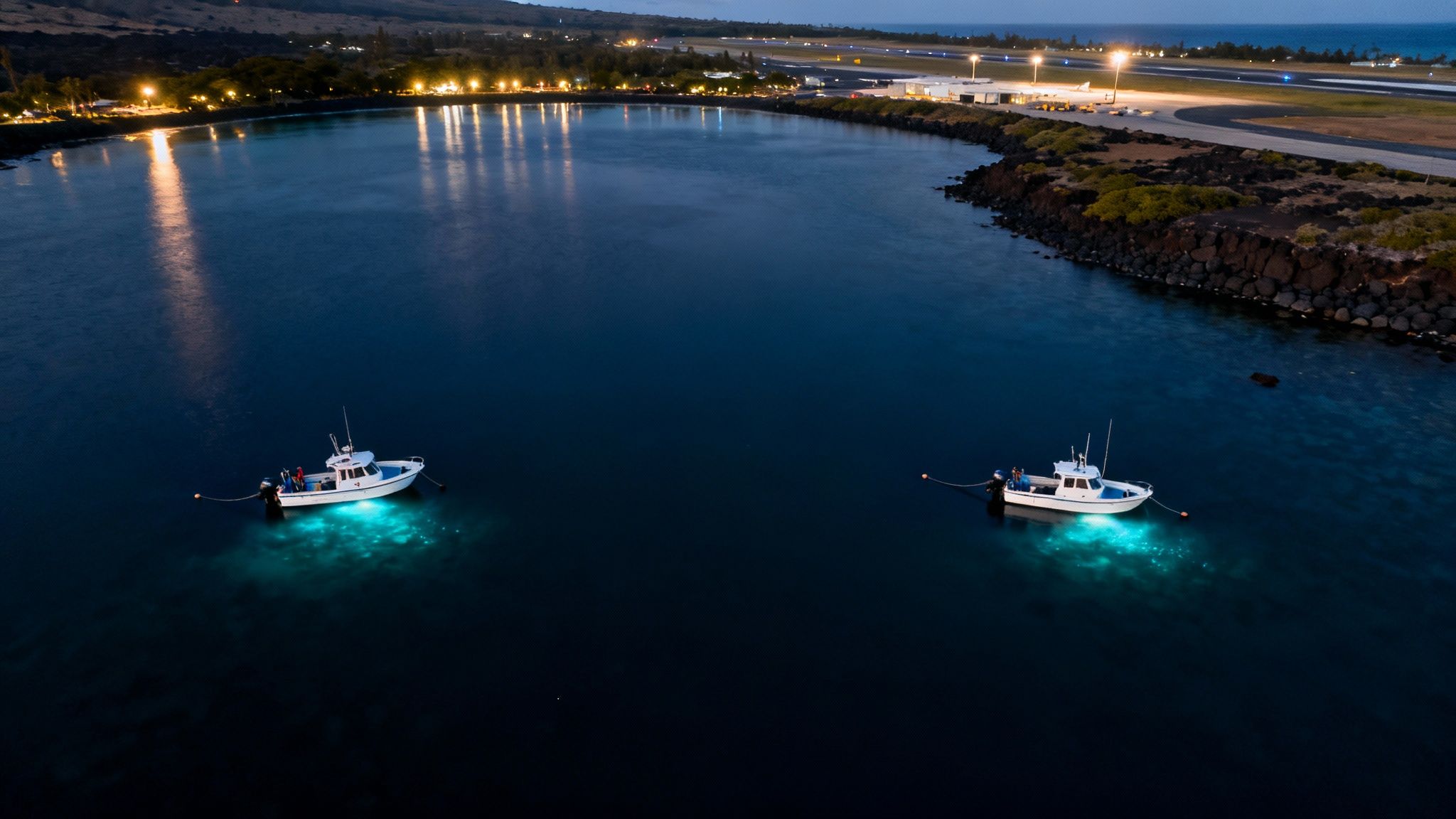
When you picture the legendary manta ray night dive in Kona, what you might not realize is that not all dive sites are created equal. Where you get in the water can completely shape your experience. Luckily, the Big Island gives us three incredible viewing areas, and each one has its own distinct vibe, crowd level, and personality.
Figuring out the differences between these spots is the key to matching the night to your expectations. Are you after the absolute best chance of a sighting, even if it means a bigger crowd? Or do you prefer the idea of a quieter, more intimate encounter? Let's dive into Kona's world-famous manta hotspots.
Manta Village: The Original Classic
Just south of Kailua-Kona in Keauhou Bay, you'll find Manta Village, the site that started it all. It got its name decades ago when lights from a nearby hotel first attracted a buffet of plankton, which in turn drew in the mantas. It's the OG, and it’s famous for a reason.
This spot is known for its almost unbelievable reliability. The bottom is shallow and sandy, sitting at about 30-40 feet, which makes it perfect for both scuba divers on the seafloor and snorkelers floating on the surface. Because of its stellar reputation, Manta Village is almost always the busiest location, creating a buzzing, electric atmosphere. If your number one goal is a practically guaranteed sighting, this is the classic choice.
Manta Heaven: The Plankton Paradise
Head a bit further north, closer to the Kona International Airport, and you'll find a site a lot of us call Manta Heaven (officially Garden Eel Cove). While Manta Village may be the original, Manta Heaven has become a serious contender, often attracting an even greater number of mantas at once.
The underwater landscape here channels currents in a way that delivers a constant stream of plankton—basically a five-star restaurant for mantas. While Manta Village can host 50 to 100 snorkelers on a busy night, Manta Heaven offers a slightly less crowded alternative with a still-impressive 90% sighting success rate. In fact, one study noted an average of 11 mantas per night here, compared to four at Manta Village.
The choice really comes down to a balance between crowd size and manta numbers. Manta Heaven often puts on a bigger show, while Manta Village offers a slightly more consistent track record. Both are fantastic options, just with a different flavor.
Kohala Coast: The Quieter Alternative
If you're staying up on the northern Kohala Coast, there’s a third option near the Kawaihae Harbor. This spot is the road less traveled, and that’s its biggest advantage: far fewer people. If the thought of being one of the only boats on the water appeals to you, this might be your perfect fit.
The trade-off, of course, is predictability. Manta sightings here are less frequent and a bit more hit-or-miss than at the two main hubs. But when they do show up? The experience can feel incredibly personal and exclusive. For a closer look at how seasons affect the odds, check out our guide on the best time to see manta rays in Kona.
To make the decision a little easier, we’ve put together a quick comparison of the three main locations.
Kona Manta Ray Dive Site Comparison
Choosing where to see the mantas is a big part of planning your trip. This table breaks down the key differences between the main viewing areas along the Kona coast to help you find the perfect match for your dive or snorkel adventure.
| Dive Site | Typical Crowd Level | Sighting Reliability | Best For |
|---|---|---|---|
| Manta Village (Keauhou Bay) | High (can be crowded) | Very High (most consistent) | First-timers or anyone wanting the highest probability of a sighting. |
| Manta Heaven (Garden Eel Cove) | Moderate to High | High (very reliable) | Divers and snorkelers hoping to see a larger number of mantas at once. |
| Kohala Coast Sites | Low to Moderate | Moderate (less frequent) | Those staying north who prefer a quieter, more intimate small-group feel. |
Ultimately, whether you choose the high-energy spectacle of Manta Village, the grand ballet of Manta Heaven, or the quiet intimacy of the Kohala Coast, you’re in for an unforgettable night with some of the ocean’s most magnificent creatures.
How to Prepare for Your Night Dive Adventure
A little bit of prep work can be the difference between a good dive and an absolutely unforgettable one. When you know what to expect and what to bring, you can relax and just soak in the main event—the incredible manta ray night dive in Kona. This guide will cover all the practical stuff, from what to pack to the skills you’ll need, so you arrive feeling totally confident and ready for an amazing night.
The great thing about booking with a top-notch operator like Kona Honu Divers is that they handle all the heavy lifting. They’ll have the scuba and snorkel gear, the powerful lights for attracting plankton, and even snacks and drinks waiting for you. All you really need to worry about are the personal items that will keep you comfortable.
Your Personal Checklist for Comfort
Even in paradise, the ocean at night can get a bit brisk, especially on the boat ride back to shore. Packing a few essentials will make all the difference.
- A Warm Jacket or Sweatshirt: Trust me on this one, it’s a must. The wind on the boat after a dive can feel pretty chilly, and you’ll be so glad you have something warm and dry to pull on.
- A Towel: It's simple, but so easy to forget. You'll definitely want it to dry off as soon as you climb back on board.
- Dry Clothes: Tossing a dry t-shirt and shorts into your bag will make the ride back to the harbor infinitely more comfortable.
- Reusable Water Bottle: It’s always smart to stay hydrated, especially before and after a dive.
Think of it like getting ready for a sunset hike that’ll finish after dark. You start out warm, but you always pack layers for when the temperature drops. Same idea here.
Skill Levels for Divers and Snorkelers
One of the best parts about the manta ray night dive in Kona is that it's open to almost everyone. You don't have to be a seasoned pro, but it's good to know what’s involved.
For certified divers, this is a fairly straightforward and stationary dive. You’ll head down to a sandy bottom, usually around 30-40 feet, find a good spot, and just watch the show unfold above you. As long as you’re an open-water certified diver and feel comfortable in the water after dark, you’re all set.
Snorkelers get an equally breathtaking view right from the surface. You'll hang onto a specially designed floatation board that has lights pointing down into the water, which is what draws the mantas in. No previous snorkeling experience is necessary, though being comfortable in the ocean is key. The crew provides all the gear and a solid briefing to get you started. To get a feel for what it's like, you can learn more about the unique aspects of scuba diving at night.
Conquering Motion Sickness
The boat ride out to the dive site is pretty short, but if you know you’re prone to getting seasick, it’s smart to plan ahead. Taking a non-drowsy motion sickness medication an hour or so before you depart is usually the most effective bet. If you prefer natural remedies, ginger chews can also work wonders. And for those hoping to capture the magic on camera, it really helps to master essential lighting techniques for stunning underwater shots; plus, focusing on your settings can be a great distraction. Taking care of these small details beforehand ensures your night is nothing short of incredible.
Inside the Experience: The Underwater Campfire
So, what’s it really like to be in the water for the Kona manta ray night dive? The whole thing starts before you even get your feet wet. On the boat ride out, your divemasters give a thorough briefing, covering the dive plan, safety checks, and the most important rule of the night: passive observation. This immediately sets a tone of respect and builds the anticipation.
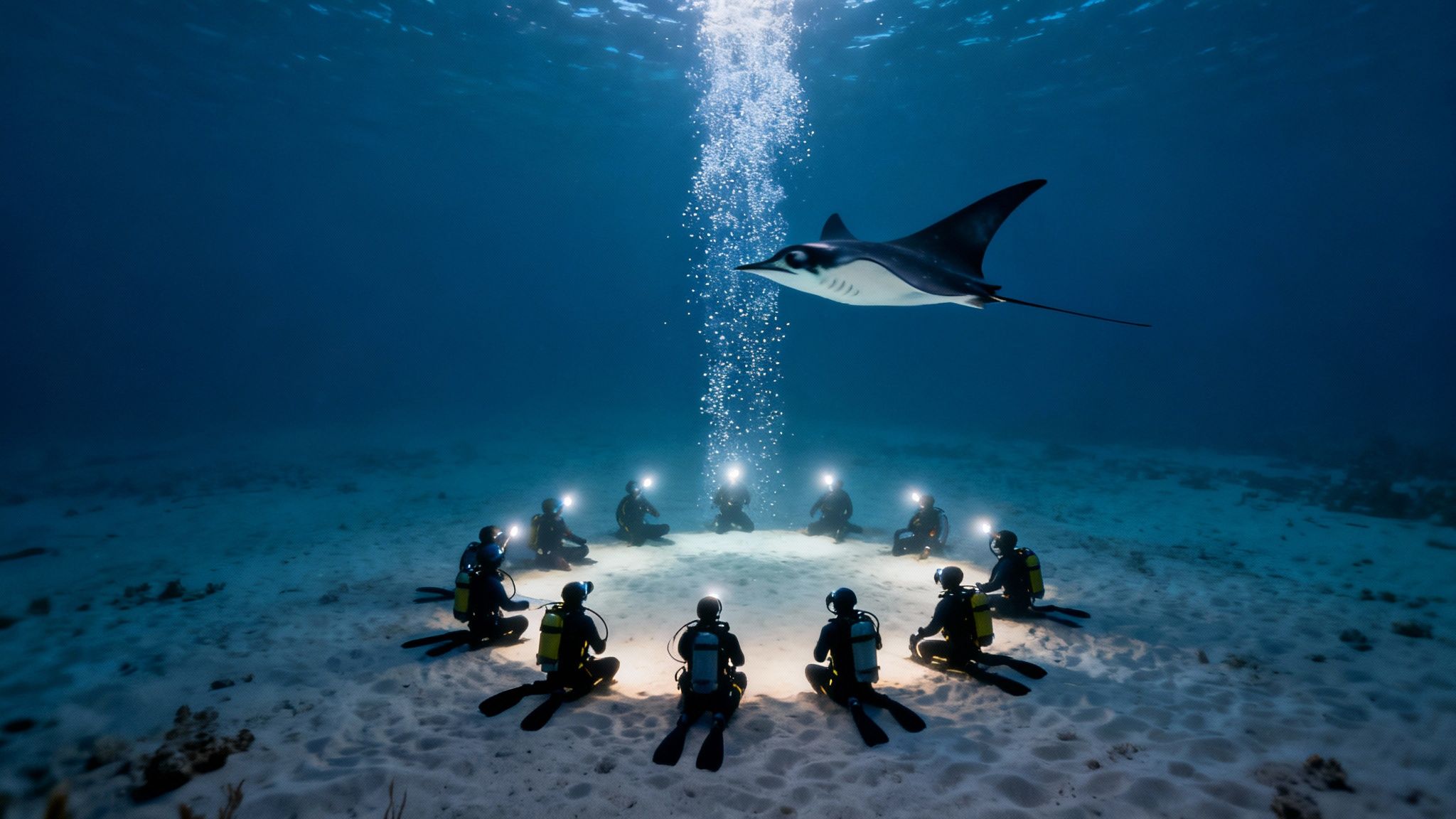
As you arrive at the site with dusk painting the sky, the real magic begins to unfold. The experience is often called the "underwater campfire," and for good reason. Instead of logs and flames, this campfire is made of pure, brilliant light. Divers descend to a sandy bottom, usually around 30-40 feet deep, and settle into a circle.
Everyone then aims their powerful dive lights straight up, creating a massive column of light that cuts through the dark water. This glowing beacon is the ultimate dinner bell. It attracts an unbelievable concentration of plankton—the microscopic critters that manta rays absolutely love. You become part of the attraction, a key piece of the puzzle that sets the stage for the main event.
The Grand Entrance
Once you’re settled on the sand, there’s a moment of quiet awe. The only sounds are the steady rhythm of your own breathing and the gentle crackle of the reef around you. But the wait is never long.
At first, you might see a flicker in the distance, just a shadow on the edge of the light. Then, out of the blackness, the first magnificent shape materializes, gliding effortlessly into the illuminated buffet. It’s a moment that will take your breath away.
A gentle giant with a wingspan of 10 to 12 feet—sometimes even larger—swoops right overhead, its cavernous mouth wide open to filter plankton from the water. Before you know it, another one joins, and then another. They perform a silent, improvised ballet, doing graceful barrel rolls and somersaults just inches above your head. It’s an incredibly intimate and humbling encounter that feels completely otherworldly.
Your only job is to stay put and hold your spot on the ocean floor. Think of yourself as a front-row spectator at an exclusive underwater theater. The mantas are the stars of the show, and they choreograph the entire performance on their own terms.
The Golden Rule of Manta Interaction
This entire incredible experience hinges on one non-negotiable principle: passive observation. You must never, ever touch, chase, or try to ride a manta ray. Their skin is coated with a delicate mucus layer that acts as their immune system, and a simple touch from a human hand can strip it away, leaving them vulnerable to serious infections.
Following this rule ensures the encounter is sustainable, ethical, and respectful to these amazing animals. By sticking to this simple guideline, you’re helping to protect this natural wonder for years to come. To get a better handle on proper underwater conduct, it’s worth reading up on the principles of responsible and considerate diver etiquette.
This dive isn't just about watching marine life; it’s about becoming a temporary, quiet part of their world. You just need to hold your ground, manage your buoyancy, and let the ocean’s most elegant giants put on a show you'll never forget. The memory of a huge manta gliding directly over you, so close you can see the unique spot pattern on its belly, is a moment that will stay with you forever.
Dive with a Purpose: Manta Conservation Efforts
The manta ray night dive in Kona is more than just an unforgettable bucket-list experience; it's a living, breathing example of conservation in action. When you book a spot on that boat, you're doing more than just sightseeing. You’re becoming a vital part of a sustainable ecosystem that directly supports both the local community and the protection of these amazing creatures.
That's why choosing a responsible, eco-conscious operator is the most important decision you'll make. The best companies aren't just there to show you the mantas—they're there to protect them. They follow strict, non-invasive guidelines to ensure every encounter is passive and respectful, minimizing any stress on the animals and preserving the natural feeding behaviors that make this dive so magical.
Getting to Know Kona's Resident Mantas
What makes the Kona dive so special is that you're meeting a local, resident population of manta rays. These aren't just migratory animals passing through; they live here all year. This has created a truly unique opportunity for scientists to study them up close, and your dive helps fund that crucial research.
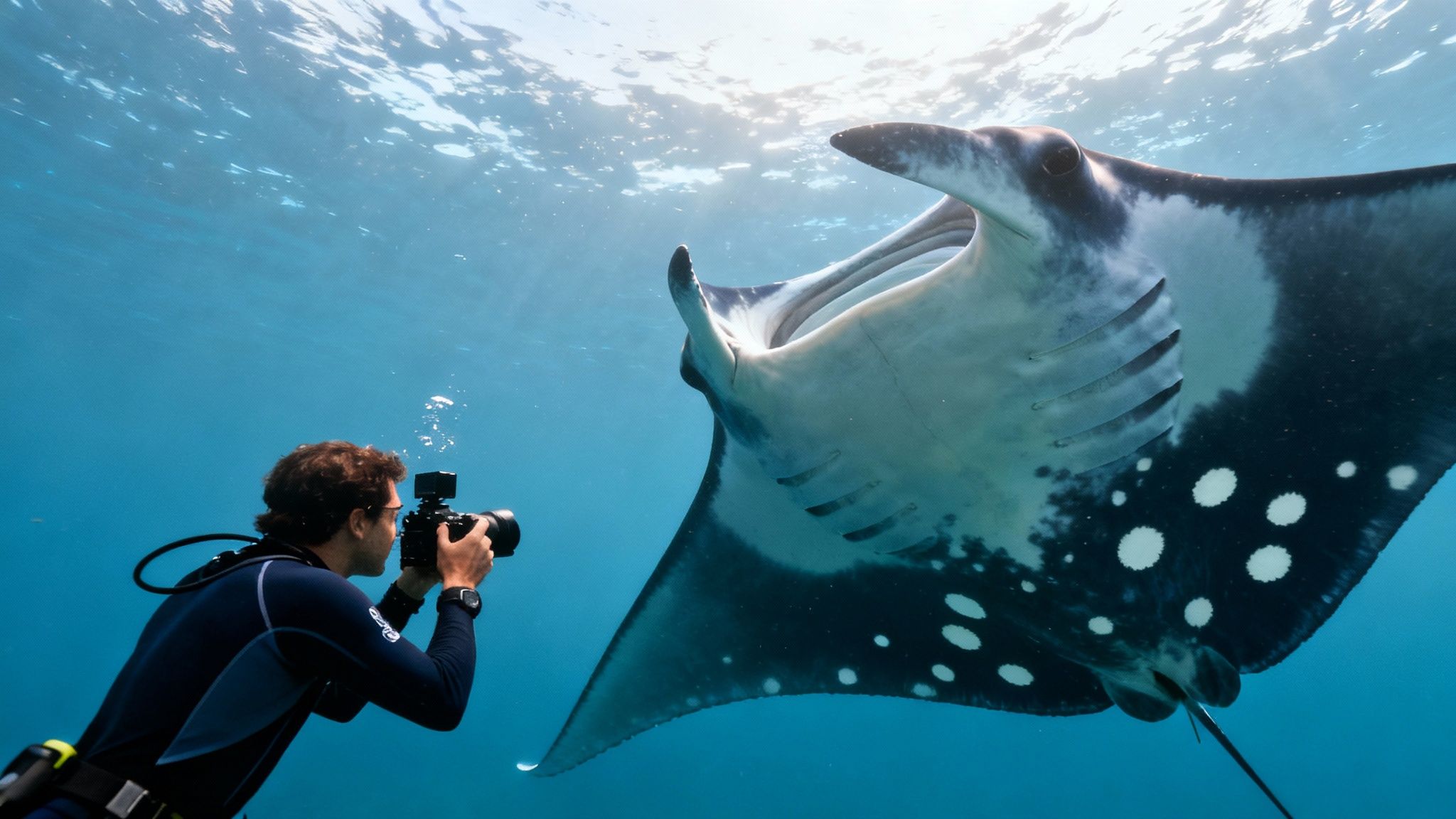
Believe it or not, every manta ray has a unique pattern of spots on its belly, just like a human fingerprint. For years, local researchers and dive guides have been photographing these patterns, cataloging individuals, and even giving them names. It adds a whole new dimension to the dive. You're not just seeing a manta—you might be meeting a local celebrity like "Lefty" or "Big Bertha."
In fact, a major effort between 2009 and 2014 by scientists and videographers documented the belly patterns of Kona's mantas, successfully identifying nearly 200 distinct individuals in the area. This kind of detailed tracking gives us priceless information on their health, travel patterns, and how they respond to changes in their environment.
When you dive with an operator that contributes to this research, your money does more than just buy a ticket. It becomes a direct investment in conservation, funding studies that ensure this natural wonder will be around for generations to come.
Your Role in Protecting the Mantas
As a diver or snorkeler, you have an active and important role to play. Pay close attention during the pre-dive briefing, where your guide will lay out the essential "do's and don'ts" for interacting with these gentle giants.
The number one rule is simple: never touch a manta ray. Their skin is coated with a protective mucus layer that acts as a shield against infection. Even a light touch from a human hand can strip this layer away, leaving them vulnerable.
Here are a few other key guidelines to follow:
- Hold your position. Whether you're on the seafloor as a diver or floating on the surface as a snorkeler, stay in your designated spot and let the mantas come to you.
- Mind your light. Avoid shining your dive light directly into a manta's eyes or mouth.
- Let them lead the dance. Never chase, block, or attempt to ride a manta ray.
If this experience sparks a deeper interest in protecting marine life, looking into animal care courses can be a great way to turn that passion into action. By following these simple rules, we can all help ensure the manta ray night dive in Kona remains a sustainable and magical encounter for everyone involved—especially the mantas.
Advanced Night Diving Beyond the Manta Rays
Don't get me wrong, the manta ray night dive in Kona is an experience of a lifetime. It’s an absolute must-do. But for certified divers with a real taste for adventure, it's just scratching the surface of what the Big Island offers after the sun goes down.
Once you’ve witnessed that incredible underwater ballet, you might start itching for a different kind of thrill. If you're ready for more, Kona delivers with some of the most unique and challenging night dives you’ll find anywhere on Earth. It's time to move beyond the stationary "campfire" of the manta site and into the deep, dark waters just offshore.
The Legendary Kona Blackwater Dive
Picture this: you're drifting in the open ocean, suspended in absolute blackness thousands of feet above the sea floor. It feels less like swimming and more like floating through outer space. This is the world-famous Kona Blackwater Dive.
Unlike the manta dive where you stay put, this is a drift dive where you're tethered to the boat as it follows the current. Your torch beam cuts through the darkness, illuminating a universe of bizarre and beautiful creatures that migrate up from the abyss every single night to feed. You’ll come face-to-face with alien-like larval fish, shimmering ctenophores, and squid that look like they're from another planet. It’s unpredictable, mysterious, and completely captivating.
The Kona Blackwater Dive is a true test of buoyancy and situational awareness. It offers a rare glimpse into a part of the ocean’s ecosystem that few people will ever see, completely redefining what a night dive can be.
For those who are up for this incredible challenge, Kona Honu Divers runs a guided Kona Blackwater Dive tour. They provide all the specialized gear and expert guidance needed to make this a safe and mind-blowing adventure.
Exploring Lava Tubes and Untouched Reefs
Beyond the blackwater experience, Kona’s volcanic origins have created a stunning underwater landscape that completely transforms after dark. We’re talking dramatic lava tubes, massive arches, and pristine coral gardens that take on a whole new life at night.
By day, these sites are buzzing with activity. But when night falls, a whole new cast of characters emerges. You might find sleeping turtles tucked into crevices, spot moray eels out on the hunt, or see the vibrant colors of coral pop in a way they just don't in the daylight. These advanced boat dives take you to more remote and challenging sites that most visitors never get to see.
Kona truly is a world-class destination for divers of every skill level. The manta rays might be what brings you here, but it's the sheer diversity of thrilling advanced dives that will have you coming back again and again. To see what else lies beneath the waves, check out the advanced dive tour page for more incredible diving opportunities.
Frequently Asked Questions
It's totally normal to have a few questions buzzing around your head before you commit to an adventure like the manta ray night dive. Even with all the amazing pictures and stories, you want to know what you're really getting into.
Let's clear up some of the most common questions we get from guests. We want you to feel completely confident and excited, with no lingering "what ifs."
Is the Manta Ray Night Dive Safe?
This is usually the first question people ask, and the answer is a resounding yes. When you go with a reputable, certified operator, safety isn't just a suggestion—it's everything. Every trip kicks off with a thorough safety briefing from professional divemasters. These are the folks who will be in the water with you, managing the group and making sure every procedure is followed to the letter.
And what about the mantas? They're often called "gentle giants," and it’s the perfect description. Unlike their stingray cousins, manta rays have no stinger, barb, or teeth. They are filter feeders and pose absolutely no threat to humans. The dive sites themselves are chosen because they are consistently calm and protected, making it a secure and comfortable environment for everyone. Snorkelers are also given top-notch safety gear, including flotation devices, and are watched over by the crew the entire time.
Do I Need to Be a Certified Diver to See the Mantas?
Nope! And that's one of the best things about this experience—it's open to just about everyone. While certified divers get to watch the show from the "front row seats" on the ocean floor, snorkelers have an equally breathtaking view from the surface.
Snorkelers hang onto a custom-made float board that has powerful lights shining down into the water. This light attracts the plankton, which in turn brings the mantas right up to feed. It’s common for them to do barrel rolls just inches below you! You get a spectacular, up-close perspective that is every bit as magical as what the divers see. Most good tours, like ours, welcome both divers and snorkelers on the same boat, so your whole group can share the night together regardless of certification.
What Is the Best Time of Year for This Dive?
You're in luck—the manta ray night dive in Kona is incredible all year long! We have a large, resident population of manta rays that hang out on the Kona coast, and Hawaii’s weather is pretty fantastic year-round. This means you have an excellent chance of a spectacular encounter no matter which month you visit.
There really isn't a specific "manta season" to aim for. The sighting success rate stays consistently high throughout the year, making it one of the most reliable and unforgettable things you can book for your Big Island vacation.
What if I Get Seasick?
That's a fair concern for any ocean trip, but don't let it stop you. The boat ride to the dive sites is usually pretty quick, typically lasting only 20 to 30 minutes.
If you know you’re prone to motion sickness, your best bet is to take a non-drowsy preventative medication about an hour before we depart. Some people also have great luck with natural remedies like ginger chews or acupressure wristbands. Just let our crew know when you board! They've seen it all and can give you tips, like finding the most stable spot on the boat, to help you feel your best.
Ready to see the underwater ballet for yourself? At Kona Honu Divers, our whole mission is to provide the safest, most spectacular, and most memorable manta ray dive tours in Hawaii. Book your spot today and get ready for a night you’ll be talking about for years to come.