
Picture this: you're floating weightlessly in the warm, inky black waters off the Kona coast. Below you, a circle of lights cuts through the darkness, illuminating the ocean floor. Then, out of the deep blue, a shadow emerges. It’s a massive, graceful creature with a wingspan that can reach an incredible 16 feet, gliding silently into the light to perform a breathtaking underwater ballet.
This isn’t a dream. This is the world-famous manta ray night dive in Kona, Hawaii—an encounter that will stay with you forever.
Experience Kona’s Unforgettable Underwater Ballet
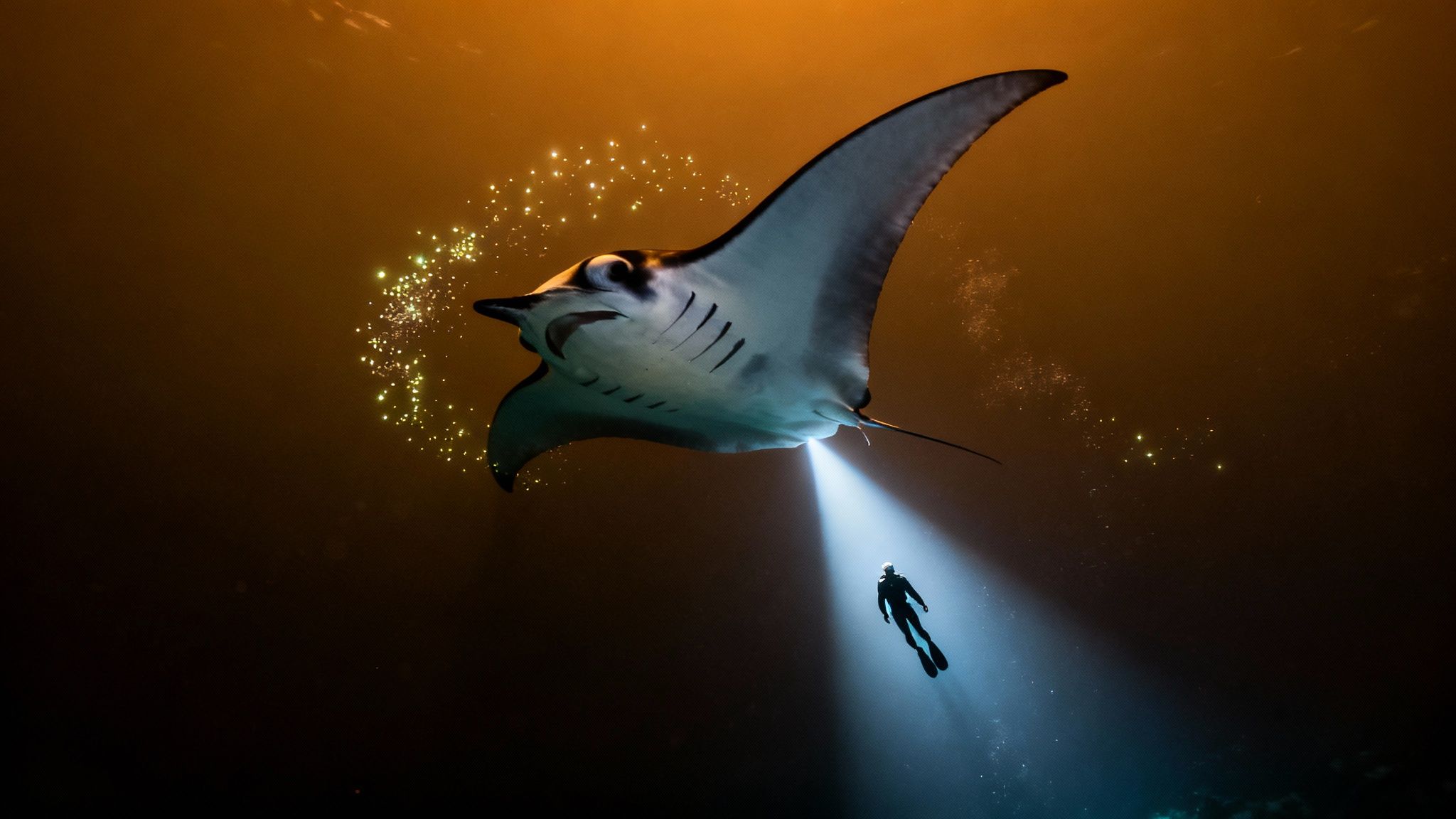
So, how does this magical experience happen? The secret is brilliantly simple. Dive operators have created what I like to call an "underwater campfire." They submerge powerful lights that point up toward the surface, creating a beacon in the dark water. This light attracts swarms of tiny plankton, which are the manta rays' favorite meal.
Lured by the all-you-can-eat buffet, Kona's resident manta rays glide in from the darkness to feast. They swoop, somersault, and barrel-roll right over your head, sometimes just inches away, filtering the plankton from the water. It’s a raw, beautiful, and almost spiritual moment that connects you directly with these gentle giants.
For a quick overview of what makes this dive so special, here are the key highlights.
Kona Manta Ray Night Dive At a Glance
| Feature | Details |
|---|---|
| Location | Sheltered bays off the Kona Coast, Big Island, Hawaii. |
| Manta Size | Wingspans can reach up to 16 feet. |
| Experience | Floating or diving around a central light source that attracts plankton. |
| Sighting Success Rate | Consistently high, with most operators reporting 80% to 90% success. |
| Best Time to Go | Year-round, thanks to a resident manta population. |
| Annual Visitors | Attracts around 80,000 people each year. |
This table just scratches the surface of an experience that is truly one-of-a-kind.
Why Kona Is The Premier Destination
You might be wondering why Kona, specifically, is the global capital for this dive. It comes down to the island's unique geology. The volcanic coastline creates naturally sheltered bays where plankton thrive, providing a consistent food source that keeps the manta population close to shore all year.
This reliability is why the manta ray night dive Kona is considered one of the most successful wildlife encounters on the planet. Operators have fine-tuned this natural phenomenon into a sustainable and awe-inspiring adventure, and you can find more insights from detailed local guides who run these trips daily.
The combination of a large, non-migratory manta population and the "campfire" technique creates a spectacle that is almost guaranteed. When you sign up for a manta ray dive tour, you’re not just hoping to see something amazing—you're getting a front-row seat to one of nature's most majestic performances.
How to Choose Your Manta Ray Adventure
So, you’re ready to see the famous Kona mantas. Fantastic. The good news is, you don’t have to be a veteran scuba diver to get in on the action. Whether you have hundreds of dives under your belt or you’ve never even put on a snorkel mask, there's a perfect way for you to experience this incredible underwater ballet. It’s all about picking the adventure that fits you best.
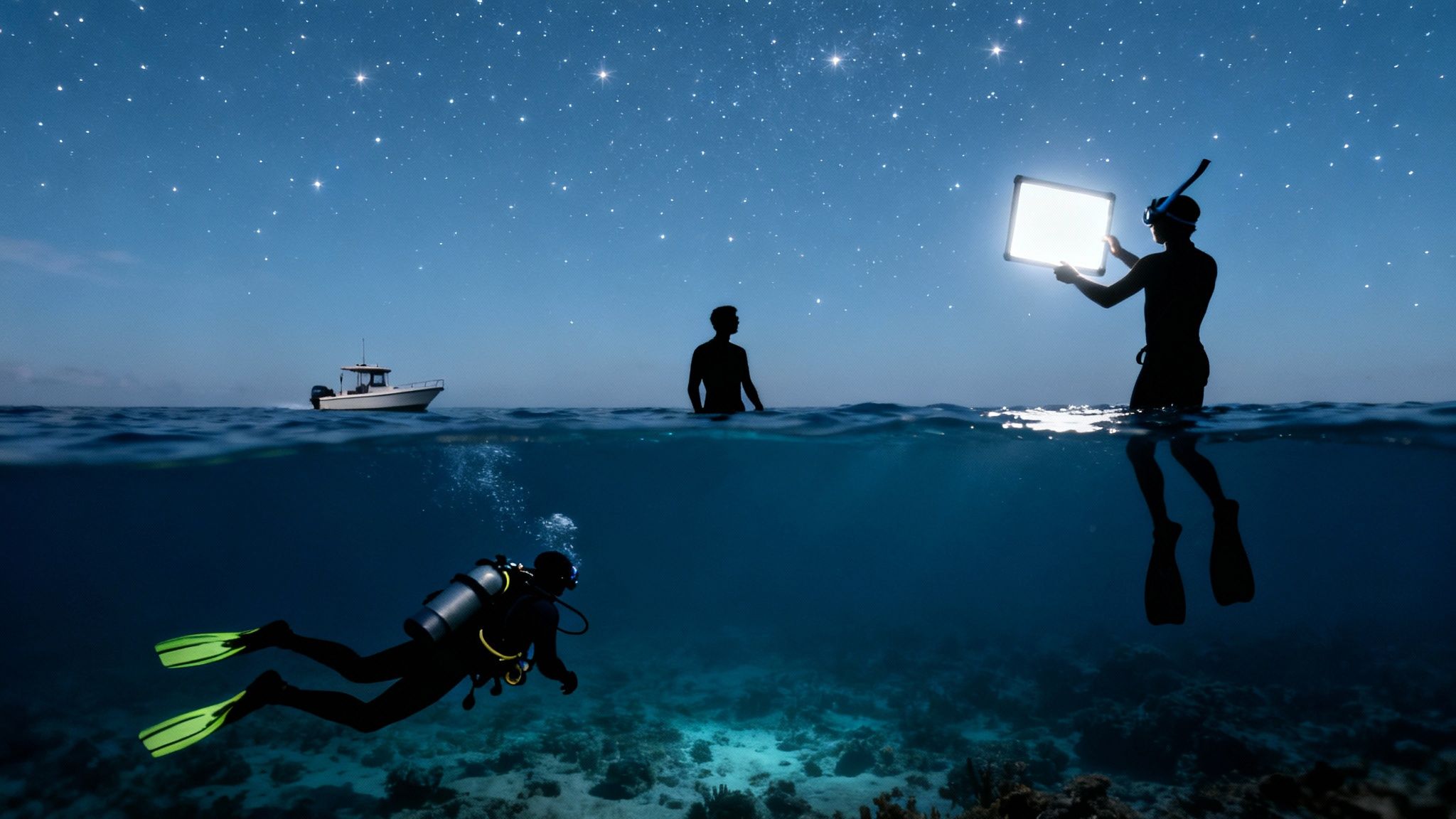
For certified divers, this is an experience you'll talk about for years. You'll descend to the sandy ocean floor, settling in at around 30 to 40 feet. From there, you get a unique perspective looking up as the gentle giants glide, swoop, and barrel roll right over your head. It’s a truly hypnotic, almost dreamlike encounter. Many other scuba diving tours on the Big Island offer incredible experiences, but the manta dive is truly unique.
If you're a snorkeler, you get an equally amazing bird's-eye view of the whole spectacle. You'll float comfortably on the surface, holding onto a specially designed light board. These boards illuminate the water below, attracting the plankton and turning the ocean into a giant buffet for the mantas. You get a front-row seat from above as they arrive for dinner.
And hey, if getting in the dark ocean isn't your thing, that's okay too! Most tours offer ride-along spots. You can soak in a beautiful Kona sunset from the boat and share in the excitement without ever getting wet.
Finding the Right Guide for Your Dive
Picking between diving and snorkeling is just the first step. The next, and arguably most important, decision is choosing the right tour operator. A great crew can take a good night and make it absolutely unforgettable. The best ones are obsessed with safety, comfort, and most importantly, protecting the manta rays.
When you're shopping around, here are a few things that signal a quality operation:
- Small Group Sizes: You want to see mantas, not the back of someone’s head. Smaller groups mean a more intimate experience, better views, and a much more relaxed vibe in the water.
- Eco-Conscious Practices: Look for operators who are Manta Ray Green Listed or follow similar strict guidelines. This means a firm no-touching policy and a crew that educates everyone on how to interact responsibly.
- Experienced Crew: A knowledgeable guide does more than just keep you safe. They bring the experience to life, sharing fascinating details about manta behavior, their individual names, and the local marine ecosystem.
Your choice of operator really does shape your entire adventure. To get a better handle on what to look for, take a look at our complete guide on how to choose a Kona dive shop.
This isn't a shot-in-the-dark activity. The manta ray night dive in Kona has become a gold standard for sustainable wildlife tourism, and for good reason. For years, local operators have reported an average sighting success rate between 85% and 90%. That incredible consistency is a direct result of the professionalism and deep respect the local dive community has for these animals. You can get more great insights on this world-class attraction at Love Big Island.
Ready to see the magic for yourself? Booking a manta ray dive tour with a trusted operator is your ticket to a safe and mind-blowing adventure.
A Step-By-Step Guide to Your Tour
Knowing what to expect on your manta ray night dive in Kona can take the experience from great to truly unforgettable. While every tour operator adds their own special touch, the general rhythm of the evening is a well-oiled machine, fine-tuned for safety, comfort, and pure wonder. Let’s walk through what your magical night will look like.
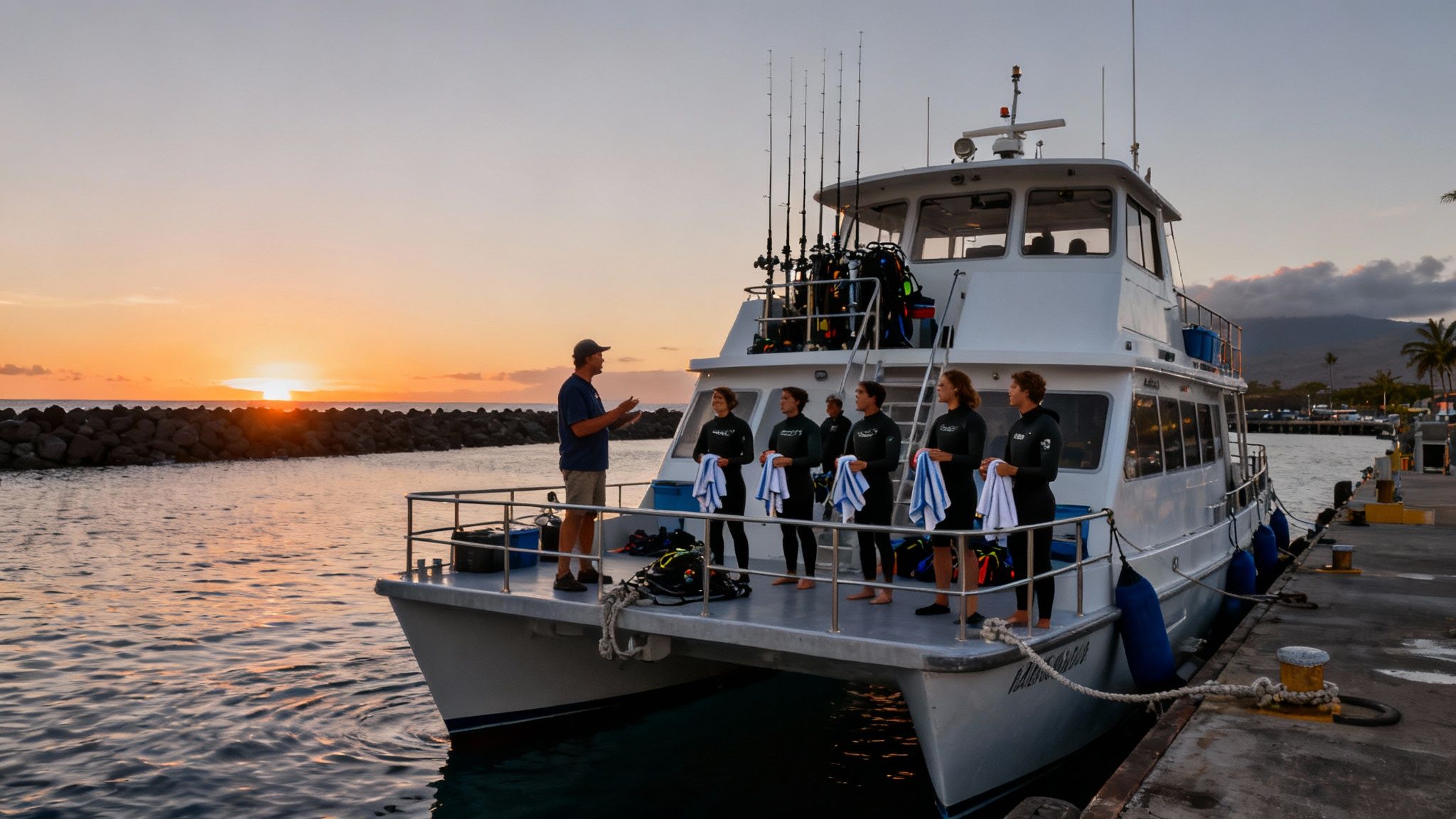
It all starts at the harbor. You'll find your boat, meet the crew who will be your guides for the evening, and get the logistics out of the way. This is when you'll check in, sign waivers, and get fitted for your gear—wetsuit, mask, fins, the works.
With everyone on board, the crew kicks things off with a crucial safety briefing. Pay close attention here. They'll go over everything from basic boat safety to the dos and don'ts of interacting with the mantas. It's all about keeping you and these incredible animals safe.
The Journey to the Dive Site
Once the briefing is done, it's time to head out. The boat ride to the dive site is an adventure in its own right. You'll cruise out onto the open water, often just in time to catch a jaw-dropping Kona sunset. The sky explodes in color, setting the perfect mood for the main event.
As daylight disappears, you can feel the excitement building on the boat. The crew will help you get into your gear, whether you're a diver suiting up or a snorkeler getting ready. They’ll run through a final check to make sure everything is secure before you hit the water.
The Main Event Underwater
This is the moment. You'll slide into the dark, surprisingly warm Pacific as the crew switches on the powerful underwater lights. Whether you're settling onto the sandy bottom as a diver or holding onto a light board as a snorkeler, a sense of calm washes over you, with the only sound being the gentle rhythm of the ocean.
Then, the magic happens. The first manta ray appears, gliding gracefully out of the darkness and into the light. These gentle giants perform a silent, beautiful ballet, swooping and barrel-rolling as they feed on the plankton drawn to the lights. It’s a moment that words simply can’t capture.
Just remember the golden rule: no touching. Manta rays have a delicate mucous coating that protects them, and human touch can damage it, leaving them open to infection. Being a respectful observer is the best thing you can do to help protect Kona's famous manta population for years to come.
You’ll typically spend about 30 to 45 minutes in the water, which gives you plenty of time to soak in the spectacle. When your time is up, you’ll head back to the boat, buzzing with excitement. The crew is right there to give you a hand getting out of the water.
Most operators have hot cocoa and snacks waiting for you on the ride back to shore. It’s the perfect end to the night, swapping stories with fellow adventurers as you cruise back to the harbor under the stars.
Getting to Know Kona’s Famous Manta Rays
The incredible creatures you'll meet on your manta ray night dive in Kona aren't just random visitors passing through. They're part of a well-known, year-round resident population, and getting to know them makes this experience unlike any other in the world. Each manta is an individual, and the local dive community has spent years getting acquainted.
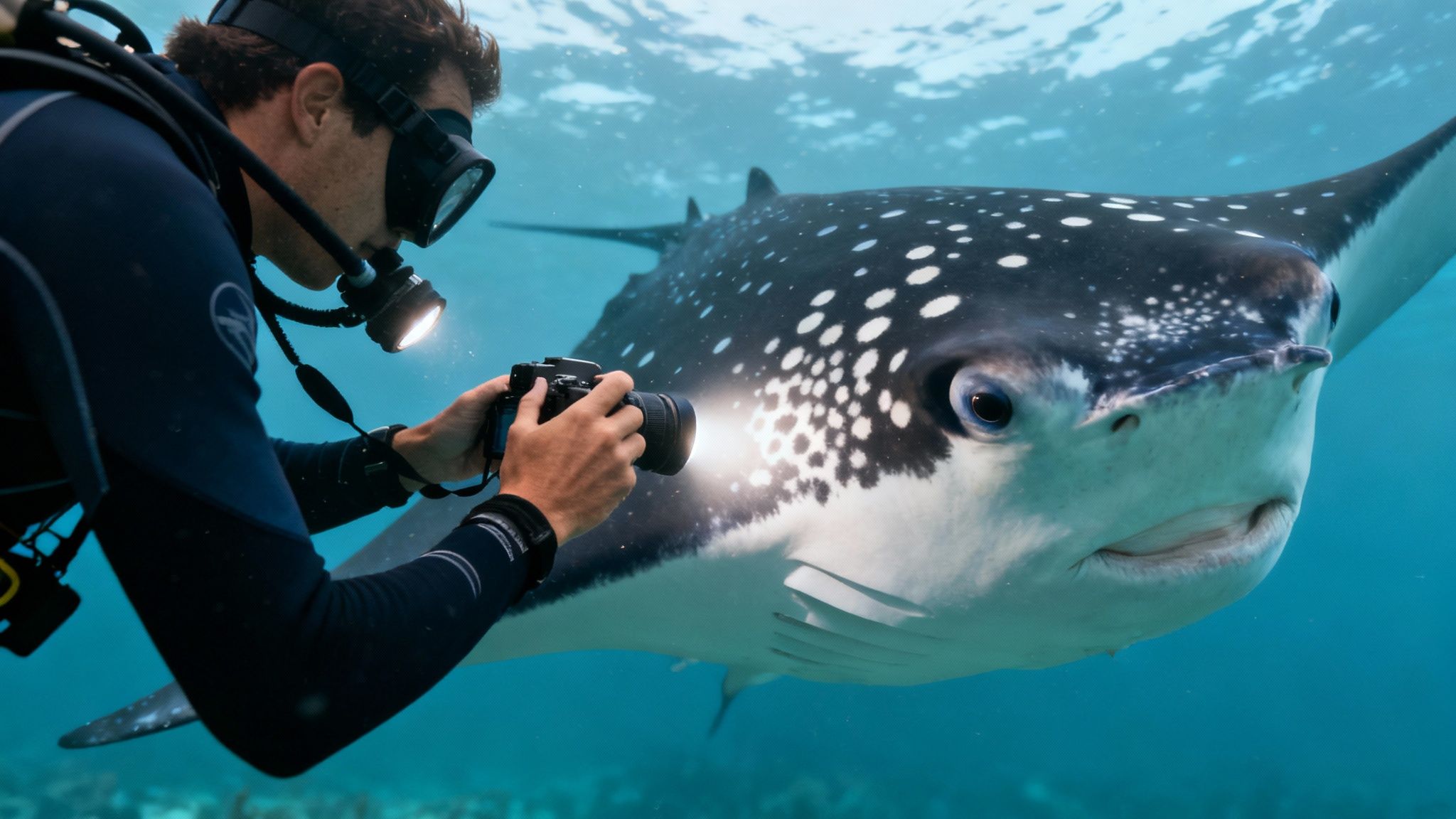
So, how do you tell one from another? It’s all about the belly spots. Just like a human fingerprint, the unique pattern of black spots on a manta ray's white underside is completely distinct. This is the key that local divemasters and researchers use to identify, name, and track each individual ray, building a remarkable database of their lives and behaviors.
When you dip below the surface, you’re not just seeing wildlife—you might be meeting a local celebrity.
Meet the Local Manta Ray Celebrities
After decades of encounters, the dive community has become incredibly familiar with the regulars. You'll hear your guides get genuinely excited as they point out specific mantas arriving at the "campfire," often sharing little details about their personalities and histories. Some of the most famous residents you might encounter include:
- Big Bertha: One of the original and largest mantas in the area, she's a true matriarch known for her impressive size and gentle, calming presence.
- Lefty: A beloved regular who is easy to spot. One of his cephalic fins (the scoop-like fins near his mouth) was partially amputated, most likely from an old fishing line entanglement.
- Kailey Ray: Another crowd favorite, often seen making graceful, sweeping passes through the dive lights.
Putting a name to a face—or a belly, in this case—adds a whole new dimension to the dive. It’s a powerful reminder that you're a guest in their world, observing a tight-knit community of intelligent, individual beings.
This incredible familiarity is the result of years of dedicated work. Dive operators and researchers have teamed up to catalog a resident population of nearly 200 individual manta rays. It’s this non-migratory community that makes Kona's sightings so reliable all year. You can learn more about the science behind identifying these amazing animals from the UW Photography Guide.
Knowing this backstory really drives home the importance of choosing a tour operator that respects the marine environment. The best companies are deeply committed to conservation, helping to protect these animals so residents like Big Bertha and Lefty can continue to wow divers for years to come. Your manta ray dive tour isn't just an excursion; it’s a chance to connect with and support Kona's most treasured inhabitants.
How to Prepare for Your Manta Ray Adventure
A little bit of prep work makes all the difference when you're getting ready for the manta ray night dive in Kona. Showing up with the right gear means you can relax and focus on what you came for—the incredible underwater light show.
First things first, let's talk about comfort. The easiest thing to do is wear your swimsuit under your clothes when you head to the harbor. It just makes changing a breeze. And don't forget, that boat ride back can get surprisingly chilly once the sun is down, so a dry towel and a warm layer like a hoodie or a light jacket will feel amazing.
For all you certified divers out there, the single most important thing to pack is your certification card. It’s the one thing we absolutely can't do without. If you forget it, you won't be able to dive, so do a quick wallet check before you leave home.
What to Bring and What We've Got Covered
You handle the personal stuff, and your tour operator will take care of all the essential in-water gear. Reputable shops provide top-notch, well-maintained equipment for your safety. You can get the full rundown on what’s typically included on our trips in our guide to Kona diving gear.
One of the most critical pieces of gear we provide is a wetsuit. Even though the Hawaiian water is warm, you can get cold during a night dive as your body loses heat. A good-fitting wetsuit is key to staying comfortable so you can fully enjoy the entire experience without shivering.
If you're someone who gets a little queasy on the water, it’s a great idea to plan ahead. Taking something for motion sickness before you get on the boat can be a real trip-saver, ensuring you feel great from start to finish.
Manta Ray Night Dive Packing Checklist
To make it even easier, here's a quick checklist to make sure you have everything you need for the trip.
| Item | Scuba Divers | Snorkelers |
|---|---|---|
| Swimsuit | ✔️ Yes | ✔️ Yes |
| Towel | ✔️ Yes | ✔️ Yes |
| Warm Clothes for After | ✔️ Yes | ✔️ Yes |
| Certification Card | ✔️ Essential | ❌ No |
| Seasickness Remedy | Recommended | Recommended |
| Reusable Water Bottle | Recommended | Recommended |
By packing these few key items, you’ll show up at the boat feeling confident and ready to witness one of the most unforgettable wildlife encounters on the planet.
Your Kona Manta Ray Questions Answered
Planning an adventure this big always brings up a few questions. We get it. To help you book your **manta ray night dive in Kona** feeling completely confident, we’ve put together answers to the things we’re asked most often.
Is the Manta Ray Night Dive Safe?
Absolutely. Safety isn't just a buzzword for reputable operators; it's the foundation of the entire experience. Professional crews will give you a thorough safety briefing before you even touch the water. They use meticulously maintained gear and follow strict protocols to make sure every single person has a secure and unforgettable time.
And what about the mantas? They're called gentle giants for a reason. These magnificent creatures are filter feeders with no teeth, stingers, or barbs, making them completely harmless to humans. The only real safety focus is on standard water procedures, which the expert crews handle flawlessly.
When Is the Best Time of Year to See Manta Rays in Kona?
This is one of the best parts about diving in Kona—it’s a fantastic, year-round show! The Big Island is home to a massive, resident population of manta rays. They don't migrate, which means you have an excellent shot at an incredible encounter any month you decide to visit.
You can learn more about what to expect during different seasons by checking out our guide on when to dive with manta rays in Kona.
Tour boats head out almost every single night, and the success rate for sightings stays incredibly high all year long. It’s one of the most reliable wildlife encounters on the planet.
Key Takeaway: Any time is a great time to see the mantas. Thanks to the resident population and nightly tours, you can plan your trip for whenever works best for you. This consistency is exactly what makes Kona a world-class destination for this dive.
What Happens If We Don’t See Any Manta Rays?
It's a fair question. While sightings are incredibly reliable—we're talking a success rate that’s often over 90%—these are still wild animals. There's never a 100% guarantee in nature.
The best operators know this and stand behind their tours with a "manta guarantee." On the rare night the mantas don't show up, a top-tier company like Kona Honu Divers will usually invite you back for another trip, free of charge (depending on availability). It’s their way of showing confidence in the experience and giving you another shot at the magic.
Do I Need to Be a Strong Swimmer for the Snorkel Option?
Not at all! You don’t need to be Michael Phelps to enjoy the snorkel experience. Everyone gets a buoyant wetsuit to help them float, and you'll be holding onto a large, stable light board that sits right on the surface.
This setup is perfect because it lets you float comfortably without any effort, giving you a front-row seat to the ballet below. As long as you’re comfortable being in the water and can put your face in with a mask and snorkel, you’re all set. The crew is always right there to help out and make sure everyone feels safe and secure.
Ready to see this unforgettable underwater performance for yourself? At Kona Honu Divers, our expert crew is dedicated to providing a safe, respectful, and absolutely breathtaking adventure. Book your manta ray dive tour with us today and make some memories that will last a lifetime.