
Picture this: you're floating in the dark, warm waters off the coast of Hawaii. Suddenly, a shadow emerges from the deep. A massive, graceful creature with a wingspan wider than a car glides silently towards you, barrel-rolling through the water just inches away. This isn't a scene from a documentary—it's the world-famous manta ray night dive in Kona, and it's an experience that stays with you forever.
If you're a diver, this underwater ballet is probably already on your bucket list. It's consistently ranked as one of the most incredible dives on the planet. This guide will walk you through everything you need to know to make it happen.
Experience the World-Famous Kona Manta Ray Night Dive
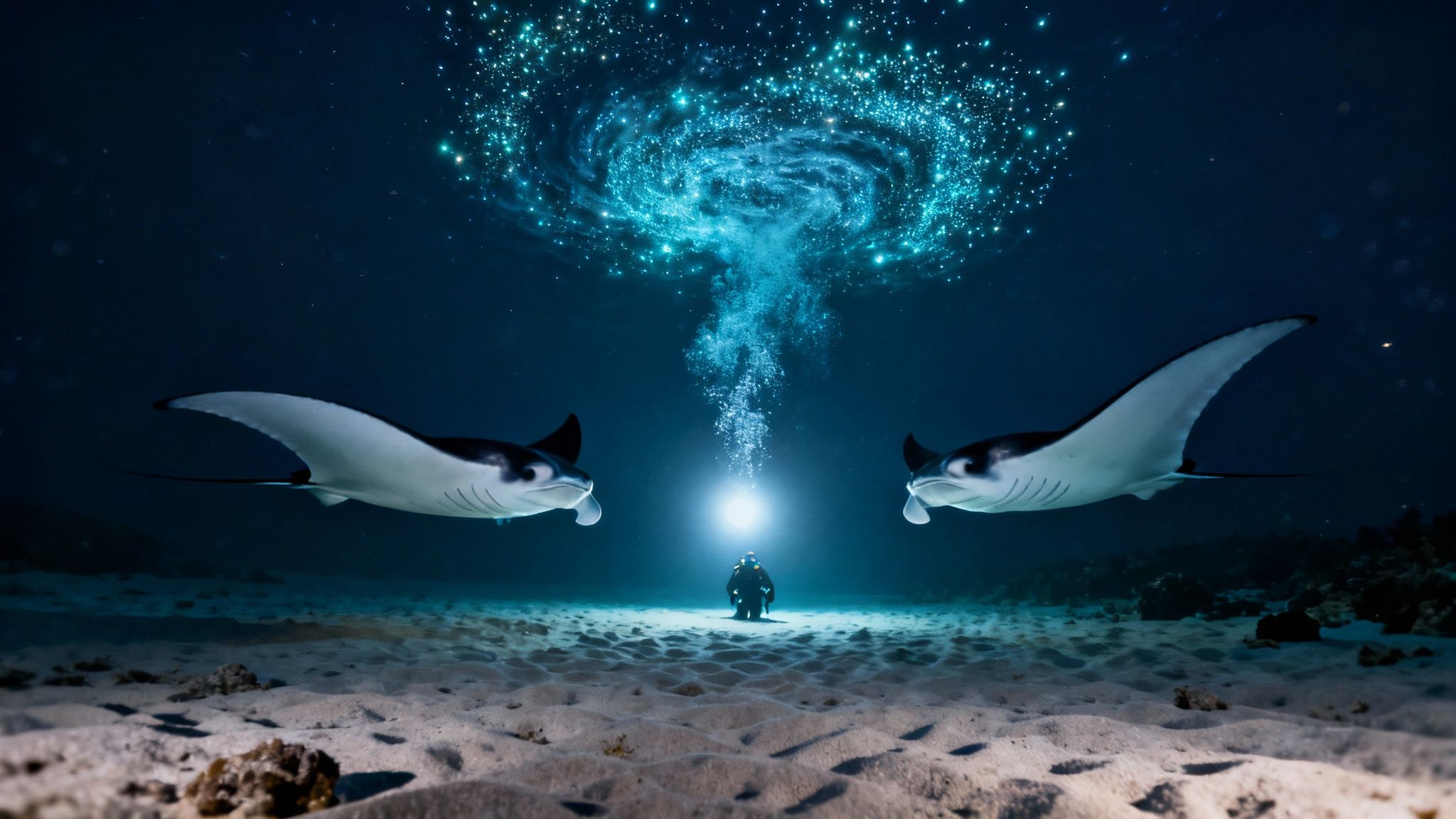
The Kona coast on the Big Island isn't just a good spot for seeing manta rays; it's the most reliable and spectacular place on Earth for it. While other destinations offer seasonal or hit-or-miss sightings, Kona is home to a massive, year-round population of reef mantas that show up like clockwork every single night to feed.
So, what’s the secret behind this incredible nightly gathering? It's a brilliantly simple setup. After a short, scenic boat ride to one of the established dive sites, the crew lowers a set of powerful lights into the water, creating a massive column of light in the darkness.
The Underwater Light Show
These lights act like a giant bug zapper for the ocean's tiniest inhabitants—plankton. Drawn to the beams, clouds of these microscopic organisms create a glowing, all-you-can-eat buffet. It doesn't take long for the main event to arrive. One by one, the mantas emerge from the darkness to feast on the plankton soup.
You get a front-row seat as they perform stunning acrobatics, executing graceful barrel rolls and swooping turns to filter the plankton-rich water. It's a completely natural feeding behavior, and you're right in the middle of it.
The experience is often called an "underwater ballet" for a reason. As a diver or snorkeler, your job is to stay still and simply watch. The mantas put on a show that feels both otherworldly and incredibly intimate.
This isn't some rare, lucky encounter. The Kona dive operators have this down to a science, boasting a sighting success rate of around 85-90%, with some outfits reporting even higher numbers. You’ll be watching mantas with an average wingspan of over 12 feet in water that's only 30 to 40 feet deep, making it accessible for most certified divers.
For a quick summary, here's what to expect from this incredible underwater adventure.
Kona Manta Ray Night Dive At a Glance
| Feature | Details |
|---|---|
| Location | Kona Coast, Big Island, Hawaii |
| Manta Wingspan | Averages over 12 feet |
| Dive Depth | 30 to 40 feet (shallow) |
| Sighting Success | 85-90% on average |
| Best Time to Go | Year-round |
| Activity | Scuba diving or snorkeling |
This table gives you the basics, but nothing can truly prepare you for the awe of seeing these gentle giants up close.
Being so close to these magnificent animals is a powerful reminder of how precious our oceans are. Consider supporting ocean conservation efforts to help protect these fragile ecosystems for generations to come. This unforgettable adventure connects you directly with the ocean's magic and underscores why it’s so vital to preserve it.
What Happens On a Manta Ray Night Dive Tour
So, what’s it really like to be on Kona’s world-famous manta ray night dive? Knowing what to expect from start to finish isn't just about logistics; it’s about building the anticipation for what is one of the most incredible wildlife encounters on the planet. The whole thing is a well-oiled machine, designed to be safe, comfortable, and absolutely mind-blowing.
Your adventure kicks off in the late afternoon at the harbor. Once you check in with the crew, you’ll hop aboard a dive boat and cruise out along the stunning Kona coast. Honestly, this part of the trip is a treat in itself, often feeling more like a sunset sail than just a ride to a dive site.
As the sun dips below the horizon, painting the sky in brilliant colors, your boat will anchor at one of the prime manta feeding grounds. This is when your guides will gather everyone for a thorough pre-dive briefing.
Your Role as a Passive Observer
Pay close attention here. The crew will walk you through everything you need to know for a smooth, safe dive. They’ll cover the nuts and bolts of getting in and out of the water after dark and go over your gear. But the most critical part is explaining the rules of engagement with the mantas.
The entire philosophy boils down to one simple principle: be a passive observer.
This is non-negotiable, and here’s what it means in practice:
- No Touching: Manta rays are covered in a protective mucus coating. Touching them strips this layer away, which can leave them open to nasty infections. It’s their skin, not a petting zoo.
- Stay Put: Whether you're a diver on the sandy bottom or a snorkeler holding onto a float board, you’ll be asked to remain in your designated spot.
- Let Them Come to You: Chasing after the mantas is a huge no-no. The real magic happens when you stay still and let them perform their mesmerizing feeding ballet all around you.
This respectful, hands-off approach is precisely what makes the Kona experience so sustainable and special.
The "Campfire" Method Explained
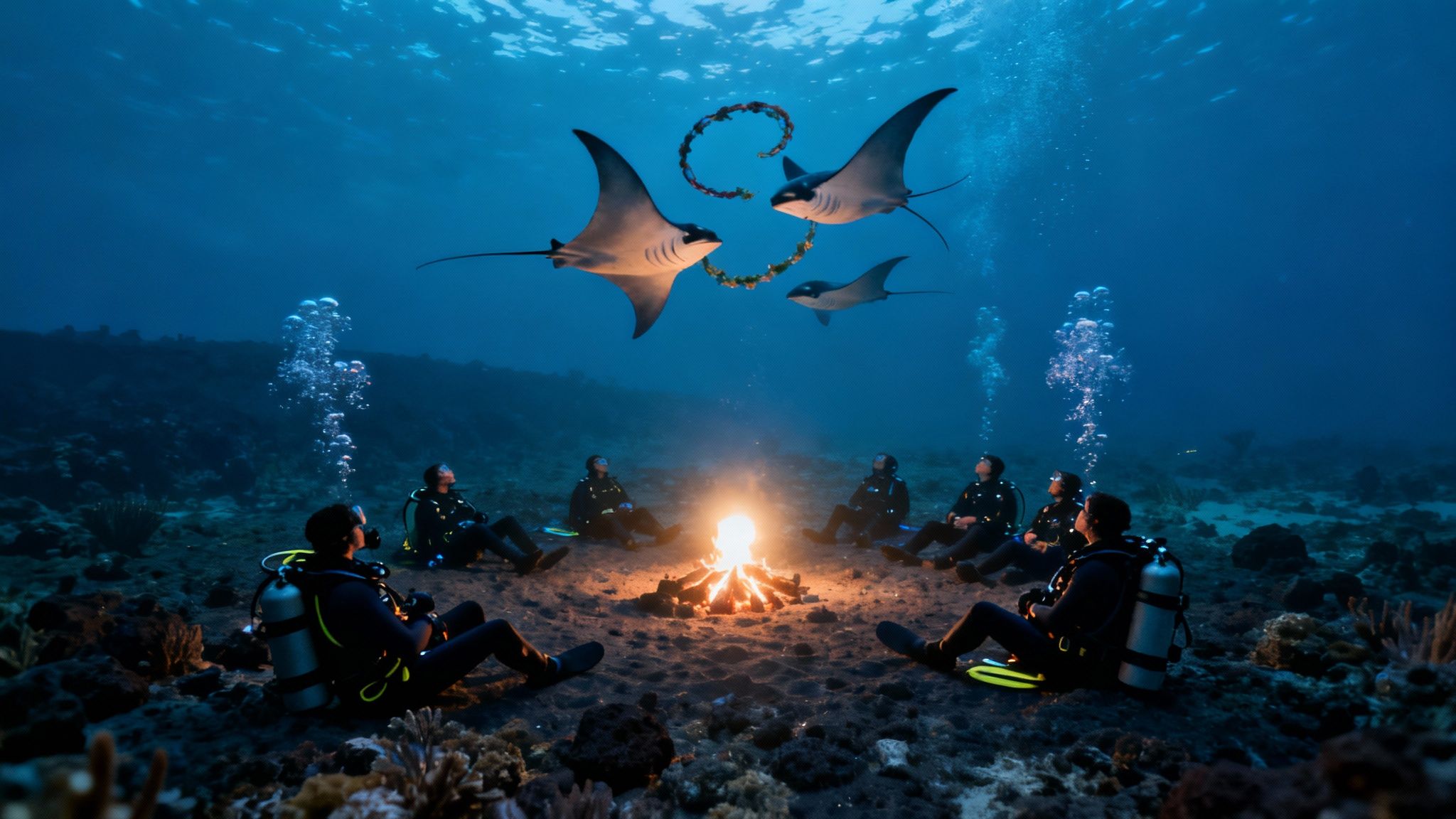
Once everyone’s briefed and ready, it's time to slip into the dark, surprisingly warm water. As a diver, you’ll descend to a sandy patch on the ocean floor, usually around 30-40 feet deep. Your group will then settle into a circle around a powerful light placed in the center—a setup affectionately known as the underwater "campfire."
This central light acts like a massive bug zapper for plankton, drawing in clouds of the tiny organisms that manta rays feast on. Your job is simple: get comfortable on the bottom, point your own dive light straight up to add to the attraction, and wait for the show to start.
It's a surreal feeling. You're kneeling on the ocean floor in the dark, staring up into this bright column of water. Then, the first giant shadow glides into the light, swooping gracefully to feed. Before you know it, more join in, creating a silent, unforgettable spectacle right above you.
As a diver, you get the best seat in the house—a unique, upward-facing view of the mantas as they barrel-roll and glide just inches over your head. After about 45 minutes of pure awe, your guide will give the signal, and you'll ascend back to the boat for a hot chocolate and the cruise back to the harbor.
Ready to claim your front-row seat for this natural wonder? You can check out a top-rated manta ray dive tour and book an adventure you'll be talking about for years.
How to Choose the Best Manta Ray Tour Operator
Picking the right tour operator is easily the most important decision you'll make for your manta ray night dive in Kona. It’s the difference between a good trip and an unforgettable one. The quality of your guide, the condition of the boat, and the company's respect for the ocean all come together to define your entire experience.
A great operator doesn't just ferry you to a spot and drop you in the water. They create a safe, respectful, and genuinely awe-inspiring encounter with these gentle giants.
What to Look for in a Tour Company
When you start looking at different companies, don't let price be your only guide. The best operators invest heavily in the well-being of the local manta population and, in turn, provide a much better adventure. Here’s what really matters:
- Safety First: This is non-negotiable. Look for companies that give thorough safety briefings, run modern and well-maintained boats, and staff their trips with experienced, certified divemasters and captains.
- Eco-Conscious Practices: The best outfits are passionate about manta ray conservation. They strictly follow "Manta Etiquette" guidelines, which means enforcing a no-touching policy and teaching guests how to be passive, respectful observers.
- An Experienced Crew: A crew that knows the dive sites inside and out is invaluable. They understand manta behavior and can share fascinating stories and facts that bring the whole experience to life.
- Glowing Reviews: Spend some time reading recent reviews. Consistent praise for safety, professionalism, and the overall vibe is a huge green flag that you’re looking at a top-tier company.
Why Kona Honu Divers Stands Out
A perfect example of an operator that ticks all these boxes is Kona Honu Divers. They're well-known for their incredibly experienced crew and their deep-seated commitment to manta ray conservation.
Their team even gets involved in research and identification efforts. That means a portion of your tour fee goes directly toward supporting the health of the local manta population. Choosing a responsible operator like them helps ensure this incredible dive will be around for generations to come. For more great advice, check out our full guide on how to choose a Kona dive shop.
But you don't have to take our word for it—see what past guests have said about their own experiences.
The dive industry here in Kona has truly become a world-class model for sustainable ecotourism. Manta ray night dives have created a beautiful balance between a natural spectacle and a local economy, drawing around 80,000 visitors every year.
This incredible interest has fostered a highly professional community where the best operators maintain an average manta sighting success rate of 85-90%. You can dive deeper into how this all started by reading about the history of the manta ray night snorkel.
Ready to book your spot for this incredible adventure?
The Best Time of Year for Manta Ray Sightings
One of the first things people ask when they hear about this dive is, “So, when’s the best time to go?” The answer is one of the best things about diving in Kona: **anytime you can**. This isn’t one of those wildlife encounters you have to plan your whole year around.
The magic is that Kona has a large, resident population of reef mantas. They aren't just passing through; they live here. The calm, protected waters along the coast create the perfect conditions for a nightly plankton buffet, and the mantas reliably show up for dinner.
Seasonal Considerations
Now, while you can see mantas any month of the year, the conditions do change slightly with the seasons. This has more to do with your comfort in the water than whether the mantas will be there.
- Water Temperature: In the summer (June to November), the water is a balmy 80°F (27°C). Come winter (December to May), it cools down into the mid-70s, so you’ll definitely be glad you have that wetsuit.
- Surface Conditions: Winter can sometimes bring bigger swells, but the Kona coast is pretty sheltered. Summer usually means calmer, glassier seas, making for a super smooth boat ride.
The key takeaway is this: the mantas don't care about the season, and your chances of an incredible encounter are sky-high no matter when you visit.
And we're not just guessing. Years of data back this up. Local researchers have tracked sightings for a long time, and the success rate consistently stays between 80% and 90%. Think about that—it's incredibly reliable. On some nights, divers have counted over 20 different mantas, and one legendary night saw a mind-blowing 36 individuals!
If you really want to get into the nitty-gritty, you can dig into the detailed statistics from local manta ray research and see the numbers for yourself.
Ultimately, the best time to do the manta ray night dive is whenever you can make it to the Big Island. For a more detailed breakdown of what each month is like, check out our guide on when to dive with manta rays in Kona.
Essential Tips for Divers and Snorkelers
Whether you’re a seasoned diver or have never even put on a snorkel mask, the Kona manta ray night dive is for you. The experience is set up a bit differently depending on whether you're diving or snorkeling, but both give you a front-row seat to one of the most incredible shows on Earth.
Knowing what to expect will help you make the most of your time in the water with these gentle giants.
The Diver's Role: Creating the "Campfire"
For certified scuba divers, your job is to become part of the underwater scenery. After gearing up, you'll descend to a sandy bottom, usually somewhere between 30-40 feet, and settle in. This is where having solid buoyancy control really pays off. The idea is to stay perfectly still so you don't kick up sand or drift into the mantas' flight path.
Divers are the foundation of the experience, creating what we call a "campfire" of light that draws in the plankton. Here’s how you can be the best possible audience member:
- Stay Put: Find a spot on the sand and make it your home for the dive. A predictable, stationary group of divers makes the mantas feel safe.
- Lights to the Sky: Aim your dive light straight up. All those beams pointing to the surface create a massive column of light that acts like a dinner bell for plankton.
- Watch Your Bubbles: This one takes a little practice, but try to time your breathing so you're not exhaling directly into a manta's face as it glides overhead.
The Snorkeler's View: A Bird's-Eye Perspective
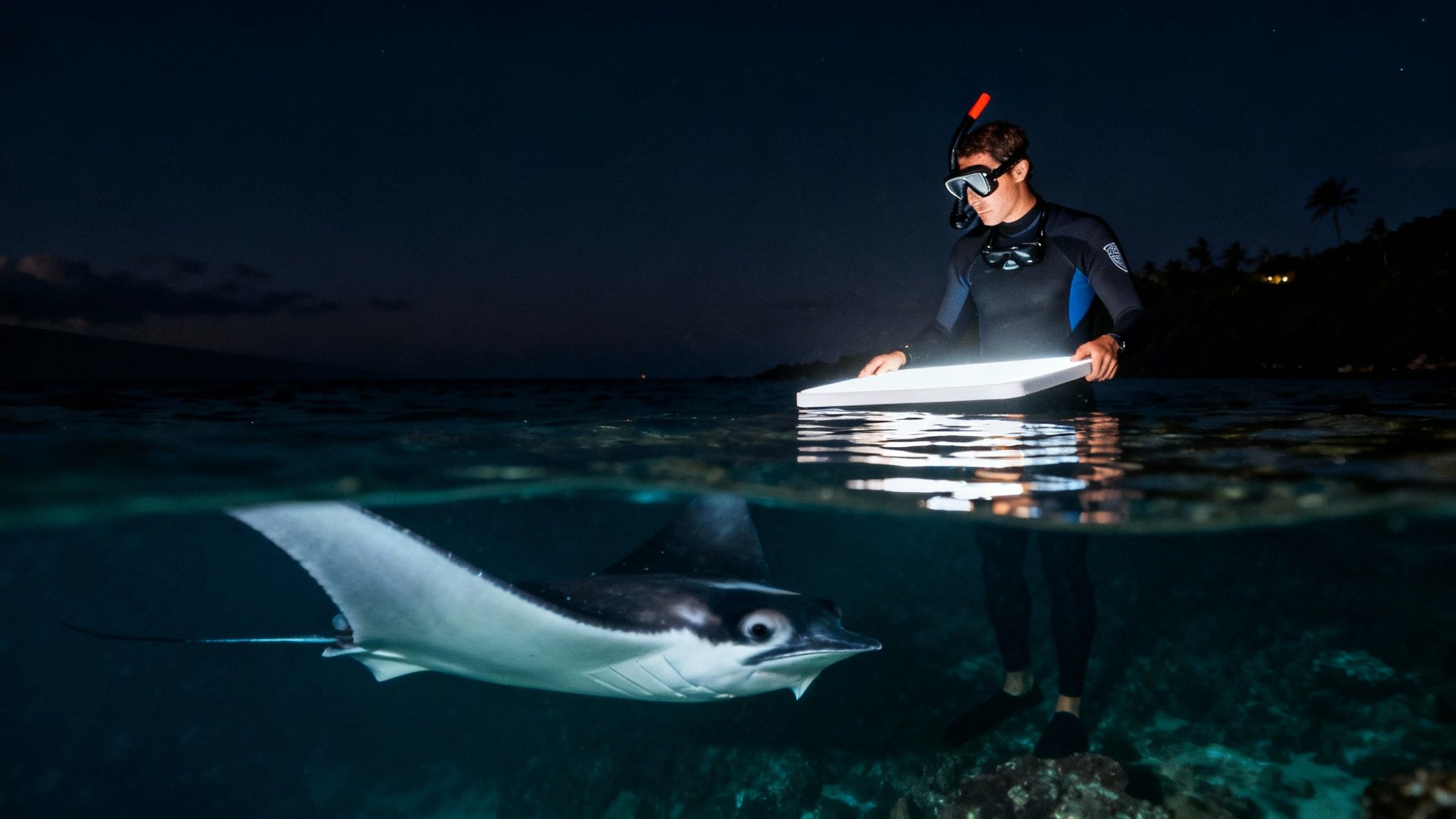
If you're snorkeling, you get an equally stunning, though totally different, view from the surface. You won’t be diving down at all. Instead, your group will hold onto a large, custom-made light board that floats on the water.
These boards are outfitted with powerful lights that shine straight down into the depths, attracting the plankton and bringing the mantas right up to you. It's an incredible way to see the action, giving you a perfect bird's-eye view of the underwater ballet just feet below. It's a fantastic and accessible option for all ages.
No matter how you join the fun, the number one rule is always "Manta Etiquette." This is a strict, hands-off policy. You are there to watch, not to interact. Touching a manta ray can harm its protective slime coat, making it vulnerable to dangerous infections.
To keep both the mantas and the humans safe, everyone needs to follow a few key principles. This table breaks down the main differences for each activity.
Manta Ray Encounter Tips for Divers vs Snorkelers
| Guideline | Scuba Diver | Snorkeler |
|---|---|---|
| Positioning | Remain stationary on the sandy ocean floor, creating a circle around a central light. | Hold onto the floating light board at the surface; do not swim around freely. |
| Lighting | Point your dive light directly up towards the surface to attract plankton. | Your light board will shine down, illuminating the water column below you. |
| Interaction | NEVER touch a manta. Observe passively and let them approach you. | NEVER touch a manta. Keep hands and feet out of their direct path. |
| Movement | Keep movements slow and minimal. Maintain excellent buoyancy control. | Stay calm and avoid splashing or kicking, which can startle the mantas. |
Following these guidelines isn't just about having a good time; it's about protecting Kona's resident manta population so this magical experience can continue for years to come. If you're new to after-dark adventures, you can learn more about the unique world of scuba diving at night.
Exploring Other World-Class Dives in Kona
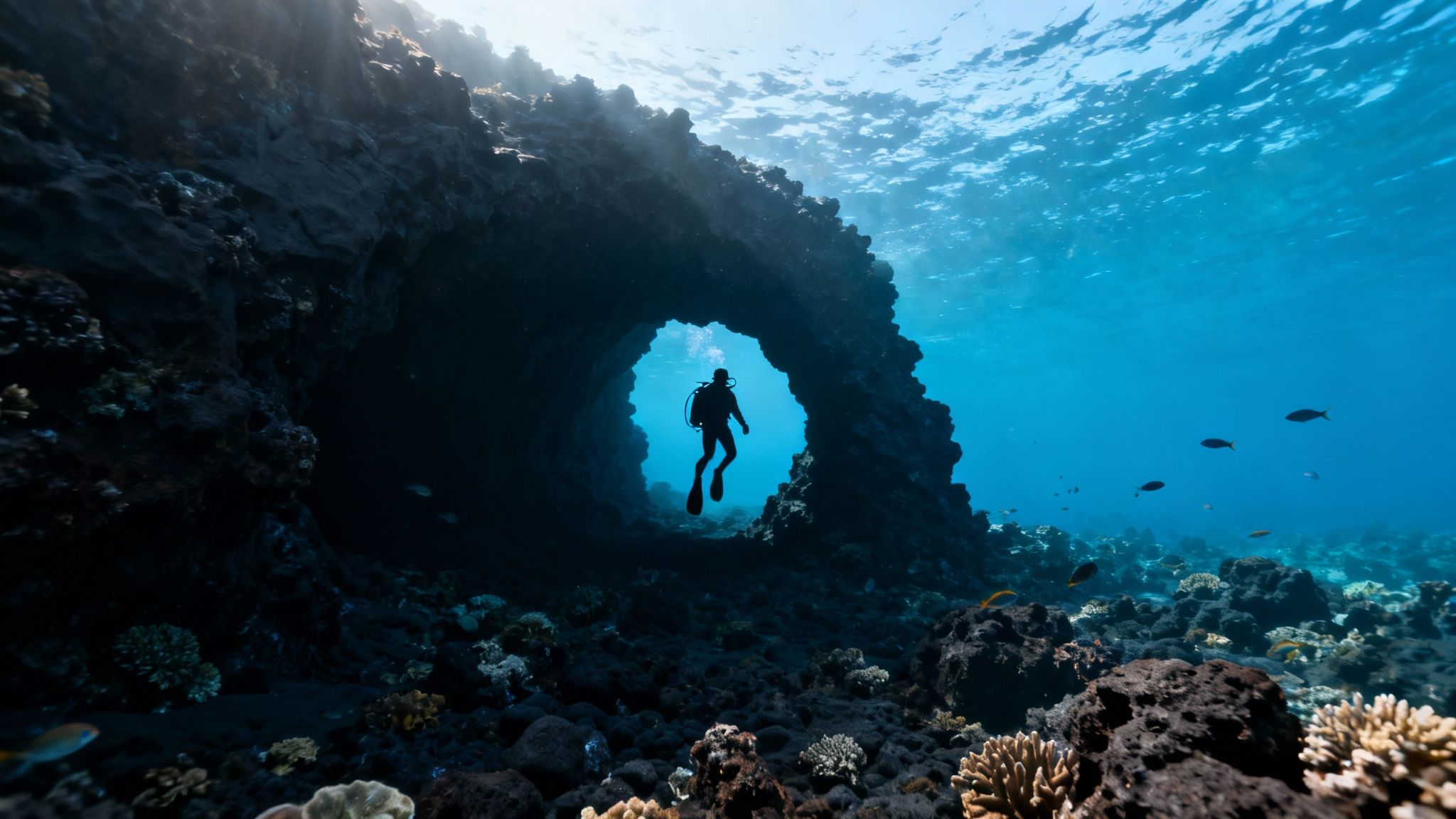
As unforgettable as the manta ray night dive in Kona is, it’s really just scratching the surface of what the Big Island offers. This place is a diver's paradise, largely thanks to its volcanic past. The island's fiery origins have sculpted a stunning underwater world full of lava tubes, dramatic archways, and sprawling coral gardens.
To truly appreciate the full scope of Kona's marine life, you have to get in the water during the day. There are countless amazing Kona diving tours that explore this incredible coastline. Picture yourself drifting over ancient lava flows, navigating through huge underwater caverns, and coming face-to-face with a kaleidoscope of tropical fish, sea turtles, and maybe even a reef shark cruising by.
Adventures Beyond the Mantas
If you're hooked on the thrill of after-dark diving, Kona has some other unique experiences that take night exploration to a whole new level.
The famous Kona Blackwater Dive is something else entirely. Imagine floating miles offshore, tethered to a boat in the pitch-black open ocean. You're not exploring a reef; you're waiting for strange, bioluminescent creatures to rise from the abyss. It’s a humbling, surreal experience that feels more like a spacewalk than a scuba dive.
For seasoned divers looking for a bigger challenge, an advanced dive tour can unlock more remote and technically demanding sites that most visitors never get to see.
Kona's underwater world is a vast and varied landscape. Moving beyond the famous manta sites reveals a deeper appreciation for the island's unique geology and the rich biodiversity it supports.
And if your travels take you even further, the vibrant waters of French Polynesia offer another world-class destination with breathtaking reefs and unforgettable marine life. Whether you stick to Hawaii or venture across the Pacific, the adventure never has to end.
Your Manta Ray Dive Questions, Answered
Heading out for a **manta ray night dive in Kona** is an experience you’ll never forget, but it’s completely normal to have some questions pop up before you get in the water. I get asked these all the time, so I’ve put together some straightforward answers to help you feel totally prepared for the big night.
Are Kona Manta Ray Dives Safe?
You bet. The number one priority for any good dive operator is your safety. Every single trip is managed by professional, certified divemasters and captains who run a tight ship from the moment you leave the dock to the moment you return.
As for the mantas themselves, they're called "gentle giants" for a reason. These magnificent creatures are filter feeders—they don't have teeth, stingers, or barbs. The whole dive is a carefully controlled, well-lit affair designed to be as safe as it is breathtaking.
Do I Need to Be Scuba Certified?
Nope! And that’s what makes this adventure so special—pretty much everyone can join in. While certified divers get a fantastic view from the ocean floor, snorkelers have an equally amazing experience.
You'll hold onto a specially designed float board that has powerful lights pointing down. This gives you a front-row seat to the manta ballet from the surface, no certification required.
What Happens If We Don’t See Any Mantas?
This is a fair question since we're dealing with wild animals. While no one can ever give a 100% guarantee, the success rate here in Kona is incredibly high, typically hovering between 85-95%.
On the rare off-chance the mantas are a no-show, the best tour companies have a "manta guarantee." This usually means you can come back and try again on another night for free. Just be sure to check the specific policy with the operator when you book.
What Should I Bring on the Tour?
Good news: you don't need to pack much. Here’s a quick list to make sure you're comfortable:
- A towel and a warm, dry change of clothes for after you get out of the water.
- A reusable water bottle is always a good idea.
- Your underwater camera, if you have one.
- Any personal snorkel or dive gear you love and feel comfortable with.
The tour operator will have all the essential equipment ready for you, but there's nothing wrong with bringing your own mask or fins if you prefer them.
Ready to witness the underwater ballet for yourself? Kona Honu Divers offers a world-class manta ray dive tour that you'll remember for a lifetime.