
Picture this: you're floating in the warm, inky-black Pacific Ocean, and suddenly, a gentle giant with a massive wingspan glides just inches above you, its shadow dancing in the beams of dive lights. This isn't a sci-fi movie scene—it’s the world-famous manta ray night dive in Kona, an unforgettable experience that pulls in divers from every corner of the globe. It's so reliable, it's become the signature dive of the Big Island.
Why Kona Is the Manta Ray Capital of the World
The Kona coast isn't just a good place to see manta rays; it's hands-down the best spot on the planet. This reputation didn't happen by accident. It's a unique mix of marine biology, predictable manta behavior, and a dive community that truly respects these animals. The secret ingredient? Plankton.
It all started decades ago when hotels on the coast began shining bright lights on the water for their guests. These lights attracted swarms of plankton, and the local manta rays quickly figured out it was an easy, all-you-can-eat buffet. This nightly feeding became so consistent that dive operators realized they could create the same effect offshore, setting the stage for the incredible underwater show we have today.
The Science Behind the Spectacle
So, what makes the Kona experience so dependable? It's all about the resident population of reef mantas (Mobula alfredi) that call this place home year-round. Unlike migratory species you might find elsewhere, these mantas stick around, which means you have a great shot at seeing them any night of the year.
- A Reliable Buffet: The volcanic underwater landscape creates sheltered bays where nutrient-rich water helps plankton flourish.
- Smart Creatures of Habit: Manta rays are incredibly intelligent. They’ve learned to associate light with food and return to the same spots night after night.
- Calm and Clear Waters: Kona's leeward coast is shielded from big ocean swells, which means conditions are usually calm and the visibility is great for a night dive.
This has led to the creation of legendary dive sites like 'Manta Village' and 'Manta Heaven'—they're essentially established underwater dining rooms for mantas. It's this mind-blowing reliability that sets the Kona manta dive apart from encounters in other parts of the world, which often come down to seasonal migrations and a whole lot of luck.
The Kona coast is globally recognized for its incredible manta ray night dive, boasting one of the highest sighting success rates in the world. On any given night, divers have an 85-90% chance of an encounter, with some of these majestic creatures sporting wingspans of over 12 feet.
A Community Built on Conservation
The success of the manta ray night dive in Kona has inspired a deep-rooted commitment to conservation. There's a whole community of dive operators, researchers, and conservation groups working together to protect the local manta population, which includes more than 450 identified individuals.
This collective effort ensures that the nightly ballet isn't just a tourist draw but a sustainable interaction that supports the long-term health of these gentle giants. If you're ready to see this incredible show for yourself, you can start exploring available manta ray dive tours to find the perfect trip.
How to Choose the Best Time for Your Dive
Timing is everything. Getting your timing right can be the difference between a great manta ray night dive and a truly mind-blowing, once-in-a-lifetime experience. While you can technically see mantas in Kona all year, some months and conditions just make for a better show. It all comes down to what you're looking for—calm, easy seas or a more private encounter.
The Peak Season Sweet Spot
Most people will tell you that the summer months, from about June to August, are the absolute best time to go. They’re not wrong. This is when the Kona coast really lays out the welcome mat, with glassy, calm ocean conditions. The wind and swell usually die down, which means a much smoother boat ride out to the site.
If you're a new diver or get seasick easily, this is your window. The predictability and comfort are hard to beat, and the underwater visibility is often fantastic. The only catch? Everyone else knows this, too. Expect more boats and more people in the water.
Weighing the Seasons
If sharing the ocean with a crowd isn't your thing, don't write off the other seasons. The shoulder months and even the winter (November to February) can offer a completely different, more intimate vibe. Sure, the ocean can be a bit more "sporty" with a little more swell, but the trade-off is often worth it. Fewer boats mean you get a more personal, front-row seat to the manta ballet.
The number of mantas you see is directly tied to how much plankton—their favorite food—is in the water. This is where things get interesting. Environmental factors, especially the season and the moon phase, play a huge role. For a deeper dive into how the time of year affects manta sightings, you can check out this great resource on when to dive with manta rays in Kona.
The New Moon Secret
Here’s a little inside baseball for you: the real magic happens during the new moon. Seasoned divers and local guides know that the darkest nights are often the most spectacular. Think about it—with no bright moon overhead, our underwater lights become the most brilliant beacon for plankton for miles around.
This creates a super-concentrated plankton buffet that the mantas just can't resist. More food means more mantas, and they tend to stick around longer.
Pro Tip: Try to book your dive within the week of a new moon. The darker the night sky, the more intense the feeding frenzy. It can seriously amplify your chances of an epic encounter.
In the end, it’s a balancing act. Do you want the calm, predictable waters of summer or the quiet, potent magic of a winter new moon? Either way, you're in for an unforgettable adventure.
What to Expect on Your Manta Ray Adventure
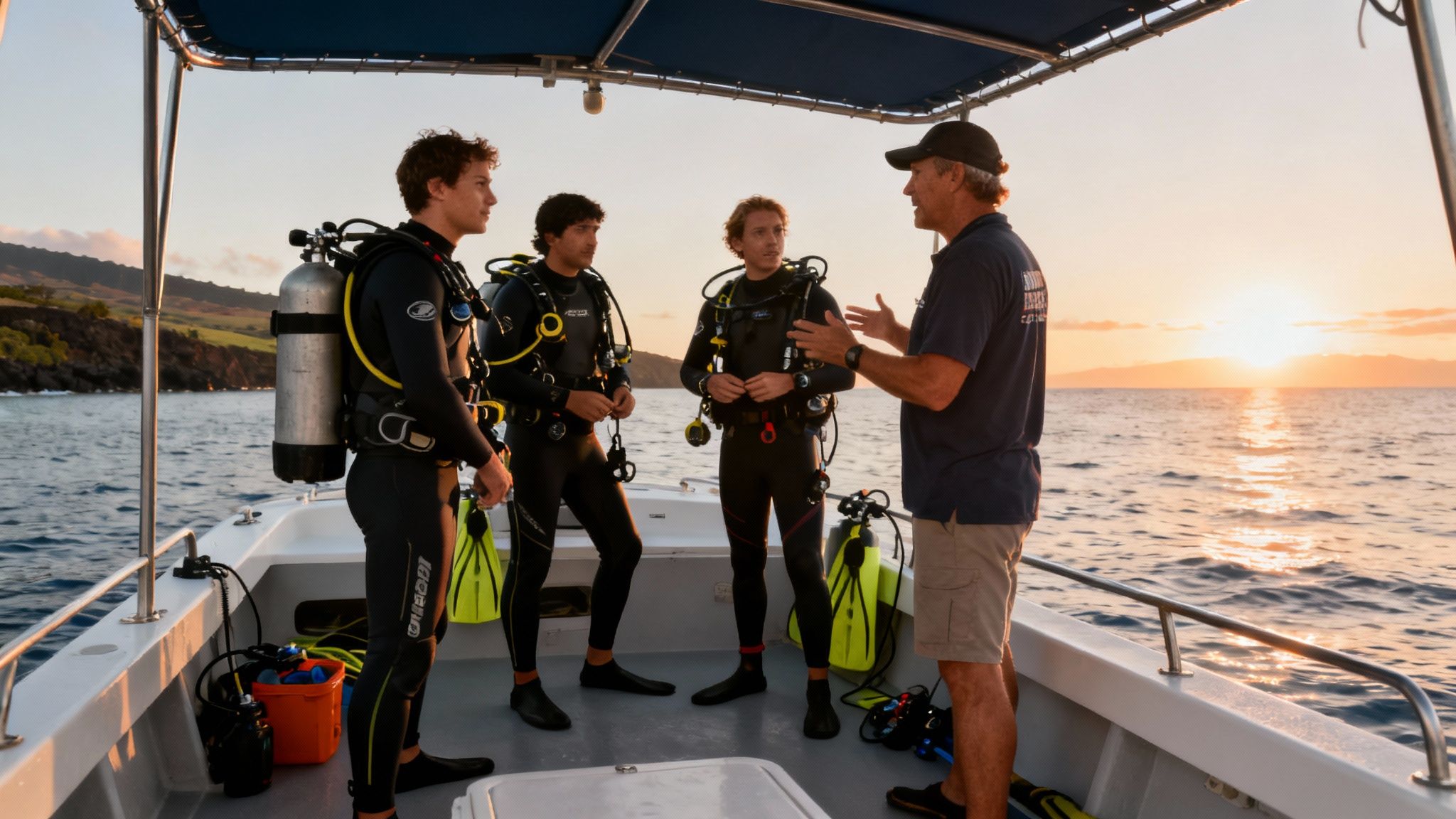
The buzz for your manta ray night dive in Kona starts building long before you even see the ocean. It really kicks off in the late afternoon at a local dive shop, like Kona Honu Divers, where you can feel the energy in the air. This is where you'll get checked in, sized up for your gear, and meet the crew and other divers you'll be sharing this wild experience with.
Don't tune out during the pre-dive briefing; it’s genuinely the most critical part of the whole trip. Your guide will lay out the entire evening, covering everything from boat safety to the very specific rules for interacting with the mantas. They'll drill home the golden rule: observe only, never touch. It's not just a suggestion—touching a manta can strip off its protective slime coat, leaving it wide open to nasty infections.
The Journey to the Dive Site
Once everyone is briefed and geared up, it's time to head out on the boat. The ride itself is a highlight, often timed perfectly with a classic Kona sunset that just explodes with color across the sky. It's the perfect, peaceful transition to get your head in the game for the main event.
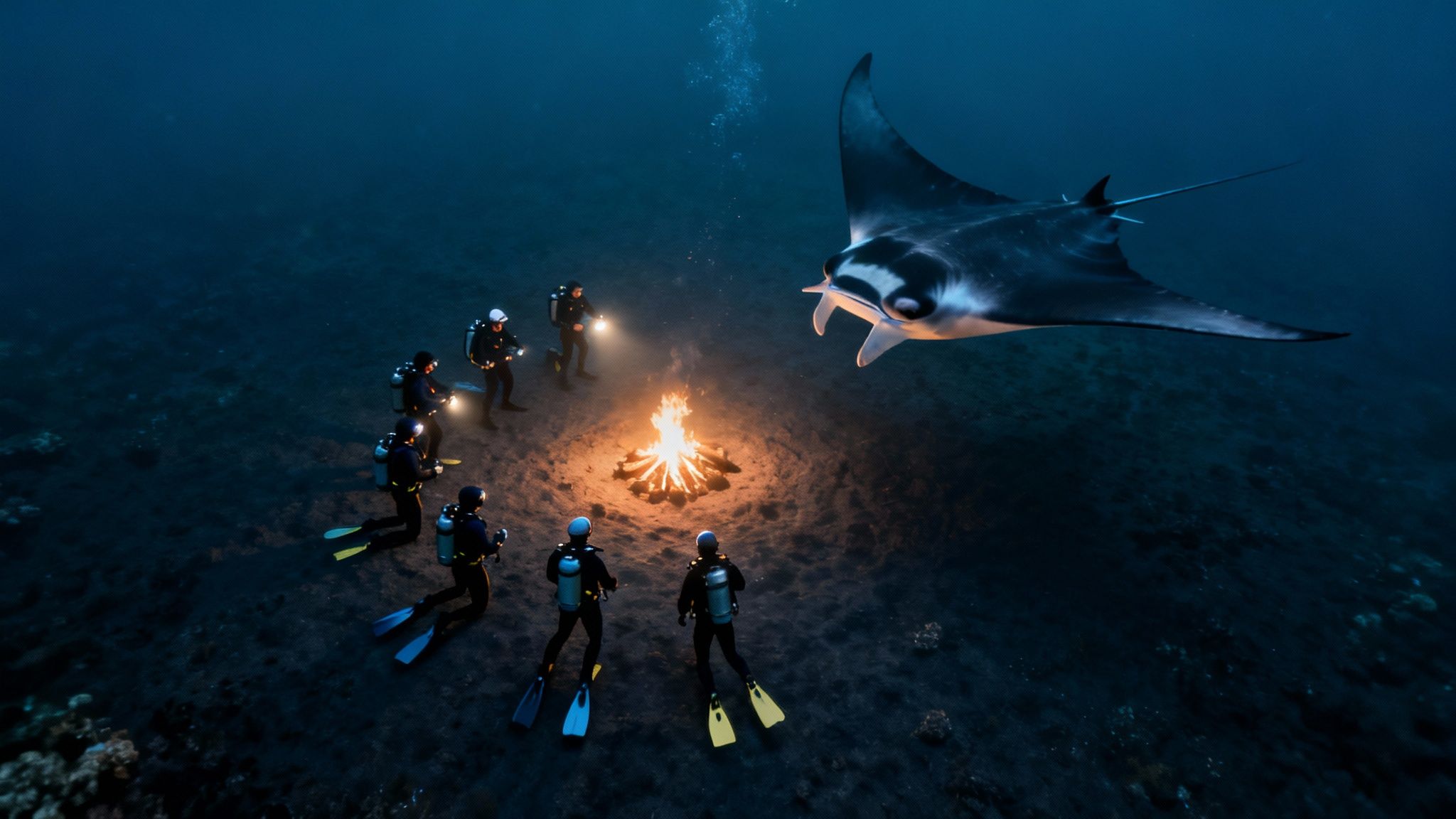
When you arrive at the site, the crew gets to work setting up what they call the "campfire"—a massive light source that shines straight down into the water. This light is basically a dinner bell for plankton, and it doesn't take long for them to gather in a shimmering cloud, setting the stage for the mantas.
Your guide will give you one last gear check before you splash in. Pay close attention to their instructions for entering the water and descending together. Keeping the group organized from the start makes the whole dive smoother and safer for everyone.
The Underwater Ballet Begins
Slipping into the dark, warm water is an experience all its own. The world goes silent except for the steady rhythm of your own breathing. You’ll make your way down to the sandy bottom, usually around 30 to 40 feet deep, and find a spot in the semi-circle of divers arranged around the light. Then, all you have to do is settle in, get comfortable, and look up.
The anticipation is almost tangible.
And then, it happens. A huge, graceful shadow materializes out of the darkness, gliding right into the light beam. The first manta has arrived. It swoops and barrel-rolls in a silent, mesmerizing ballet, sometimes just inches from your mask. Before you know it, others might join in, turning the scene into a breathtaking feeding frenzy. You're so close you can count the unique spot patterns on their undersides.
Choosing a top-rated, conservation-minded operator is the single best way to ensure your dive is both incredible and responsible. You can check availability and book your Kona manta ray adventure with a trusted company that puts the mantas' well-being first.
How to Select the Right Dive Operator in Kona
Picking the right company for your manta ray night dive in Kona is hands-down the most critical decision you'll make. This isn't just about booking a boat trip; it’s about choosing a partner for an incredible underwater experience. The right operator can elevate your dive from good to unforgettable, all while ensuring your adventure is safe, respectful, and helps protect these amazing animals.
So, what should you look for? Start with group size. A boat with fewer divers almost always means a better, more intimate encounter with the mantas. You'll have more space at the underwater "campfire" and get more one-on-one time with your guide.
Speaking of guides, an experienced and passionate one is absolutely essential. They’re your window into the mantas' world, pointing out subtle behaviors, keeping everyone safe, and sharing fascinating facts you won’t find in a guidebook.
Look for a Commitment to Conservation
This is a big one. The best operators aren’t just running tours; they’re stewards of the ocean. You can spot the great ones by their dedication to sustainable, ethical practices. A huge green flag is adherence to the Manta Ray Green List guidelines, which are all about minimizing our impact on the rays.
An operator who truly cares about conservation will:
- Give a detailed briefing on proper etiquette. This means no touching the mantas and staying in your designated spot.
- Use smart lighting techniques to attract plankton without blinding or stressing the animals.
- Actively support research by contributing to local monitoring efforts and citizen science projects.
Years of dedicated research from groups like Manta Ray Advocates Hawaii have been vital. Between 2009 and 2014 alone, they identified nearly 200 individual mantas and recorded nights with as many as 36 mantas at a single site! This data is what allows us to enjoy these encounters responsibly.
Prioritizing Safety and Experience
A top-tier operator brings it all together: a stellar safety record, a crew that lives and breathes marine conservation, and a genuine passion for making every trip amazing. It’s a combination that's reflected in glowing guest reviews and a reputation for excellence.
And don't forget, this mind-blowing adventure isn’t exclusive to certified divers! Most great operators offer snorkeling options, giving everyone a chance to see the show from the surface.
For a deeper dive into what separates the best from the rest, our guide on how to choose a Kona dive shop has all the details you'll need. Choosing well ensures your money supports the ongoing protection of Kona’s world-famous manta rays.
Tips for a Safe and Responsible Encounter
When you slip into the water for a manta ray night dive in Kona, you’re stepping into their world—their dining room, to be exact. The whole key to an unforgettable and ethical encounter is to be a quiet, respectful guest. Your job is simply to watch the magic unfold, allowing the mantas to feed completely undisturbed.
Following a few simple, yet critical, guidelines protects these gentle giants. It also happens to make the experience infinitely better for you and everyone else in the water.
The absolute, number-one, most important rule? Never, ever touch a manta ray. It’s so crucial it bears repeating. Their skin has a delicate slime coat, which is their first line of defense against nasty bacteria and infections. Even a light touch can damage this protective layer, making them vulnerable to disease. Your guide will drill this into you, and for good reason—it's the golden rule.
By becoming a passive observer, you allow the mantas to behave naturally. This not only protects the animals but also provides a more authentic and awe-inspiring experience as they glide and barrel-roll just inches away, completely at ease in your presence.
Mastering Your Position in the Water
Where you are and how you hold your body in the water makes all the difference. For divers, the goal is to get settled on the sandy bottom and stay put. Get your buoyancy dialed in so you can rest comfortably without stirring up sand or floating around. Think of yourself as part of the underwater landscape.
Snorkelers have a slightly different, but just as important, task. You’ll be at the surface, holding onto a custom float rig with lights shining down into the water. The trick is to keep your fins from dangling down. Hold the float, stretch your body out horizontally, and just relax. This prevents any accidental kicks as a manta swoops up from below.
- Divers: Stay low on the seafloor. Point your light straight up to help create the "campfire" effect that draws in the plankton.
- Snorkelers: Stick to the surface, hold onto the light float, and keep your body flat.
- Everyone: No sudden movements. Try to keep your breathing calm and steady to minimize bubbles, which can startle the animals.
Photography and Lighting Etiquette
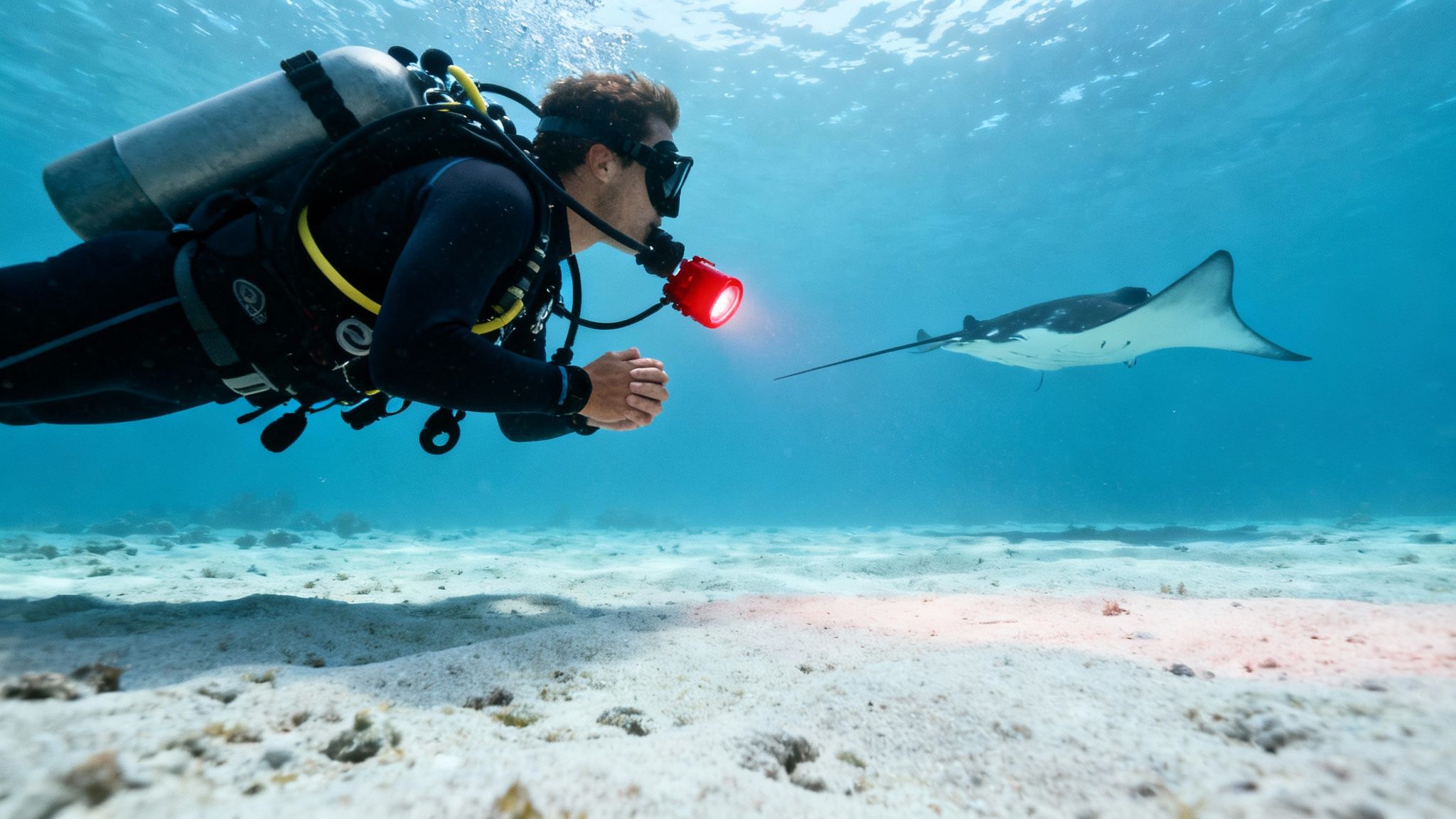
Of course you want photos—who wouldn't? But getting great shots has to be done responsibly. Flashing bright, white strobes in a manta's face is a big no-no. Many seasoned underwater photographers switch to a red light, which doesn't seem to bother marine life nearly as much at night.
You’ll also want to play with your camera settings. In the dark, a wider aperture and a slightly higher ISO will help you capture clear images without resorting to a harsh flash. Honestly, the best pictures come from being patient and letting the mantas come to you. You can learn more about being a thoughtful guest in their environment by checking out this guide on https://konahonudivers.com/responsible-considerate-diver-etiquette/.
On a final note about safety, responsible diving also means being aware of what happens if things go wrong. Understanding treatments like hyperbaric oxygen therapy, which is vital for decompression sickness, is part of being a prepared diver. It's worth learning about the importance of safety surrounding hyperbaric chambers.
Got a Few More Questions? We’ve Got Answers.
It's totally normal to have a few last-minute questions before you commit to an adventure like this. So, let's clear up some of the most common things people ask before booking their manta ray night dive in Kona. This way, you can move forward feeling completely confident.
What Kind of Dive Certification Do I Need?
If you plan on getting in the water with a tank on your back, you'll need at least an Open Water Diver certification (or an equivalent from your training agency). This is the standard for most dive operators here, as it ensures you have the basic skills down to be safe and comfortable while you're settled on the ocean floor.
But what if you're not a certified diver? No problem at all! You don't need any certification to join the trip as a snorkeler. The view from the surface is just as incredible, giving you a bird's-eye perspective of the entire manta ballet. It's a fantastic way for everyone to experience the magic.
What if the Manta Rays Don't Show Up?
This is a fair question. While Kona is famous for its incredibly reliable manta sightings—we're talking a success rate often over 90%—it's important to remember these are wild animals. They don't work for us!
On the very rare night the mantas decide to be elsewhere, any reputable tour operator will have a solid "manta guarantee." The standard policy is to let you come back on another night for free, or at least for a steep discount. You'll want to double-check this policy when you're booking.
Here's a pro tip: schedule your manta dive for one of your first nights in Kona. That way, if you happen to be in that unlucky 10%, you have plenty of other nights in your vacation to try again without scrambling.
Are Manta Rays Dangerous?
Let me put your mind at ease: the answer is a firm no. Manta rays are incredibly gentle giants.
Even though they're related to stingrays, they have no stinger, no barb, and not even any teeth to speak of. They are filter feeders, gracefully gliding through the water to scoop up tiny plankton. They simply have no way, or reason, to harm a human. They're just as curious about us as we are about them, making for a beautifully peaceful and safe encounter.
The biggest difference between diving and snorkeling on this tour is your vantage point. Divers settle on the ocean floor and look up at the action, while snorkelers float at the surface, holding onto a lighted raft and looking down.
Ready to see this underwater light show for yourself? The last step is booking a spot with a trusted, top-rated operator.
At Kona Honu Divers, we're passionate about creating a manta ray experience that's not only unforgettable but also safe and respectful of these amazing creatures. Our expert crew handles all the details so you can just soak in the magic. Find out more and book your manta ray dive tour with us today.