
Picture this: you're floating in the warm, dark waters of the Pacific just after sunset. Suddenly, a giant, shadowy figure glides into the beam of your light, performing a silent, weightless ballet just inches away. This is the manta ray night dive in Kona, a truly world-class spectacle that puts you face-to-face with one of the ocean's most majestic creatures. It's not just a dive; it's an experience you'll be talking about for the rest of your life.
Why Kona is the Manta Ray Capital of the World
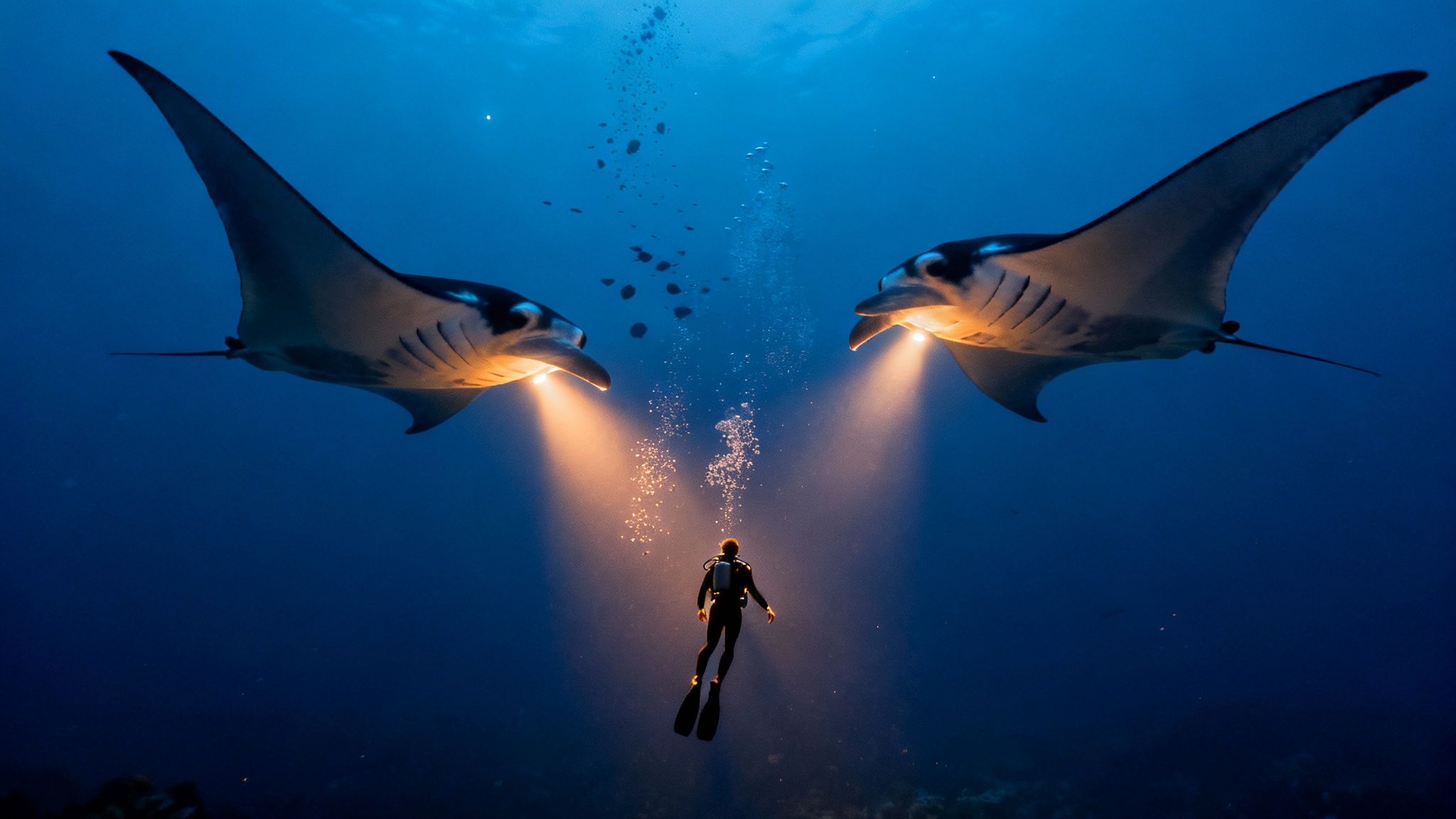
The Kona coast isn't just another pretty spot on the Big Island; it's hands-down the most reliable place on the planet to see manta rays up close. This isn't just good luck—it's the result of a brilliant, decades-old discovery. The whole operation revolves around a simple concept we like to call the "manta campfire."
Here’s how it works: after sunset, dive operators submerge powerful lights into the water. These lights act like a magnet for plankton, the manta rays' favorite meal. Before you know it, a massive, all-you-can-eat buffet forms, and the gentle giants glide in from the darkness to feast. This creates a predictable and absolutely mesmerizing show for everyone in the water.
A Reliable and Unforgettable Encounter
Unlike so many other wildlife tours that depend on seasonal migrations or just plain luck, the Kona manta dive is astonishingly consistent. The local manta population doesn't migrate; they live here year-round, making them reliable dinner guests. This consistency has turned the manta ray dive into a cornerstone of Hawaiian eco-tourism, drawing an estimated 80,000 visitors every year.
And the numbers back it up. After years of running these trips, local operators and researchers have documented sighting success rates that hover between 80% and 90%. In the world of marine wildlife encounters, that's practically a guarantee. You can find more details on how Kona earned its premier manta dive reputation and the history behind this incredible adventure.
What Makes This Dive So Special?
This isn't just about spotting an animal from a distance. It's a full-on, immersive performance where you have a front-row seat. Divers settle on the sandy ocean floor, pointing their lights up, while snorkelers hang onto custom-built floatation boards on the surface, with lights pointing down.
The mantas, attracted to the plankton in the light beams, swoop and barrel-roll in the space between. They glide effortlessly, often coming so close you could almost touch them (but don't!).
The first time you see one of these massive, graceful creatures emerge from the dark, it’s a moment that truly takes your breath away. It’s a mix of awe, wonder, and pure magic that you just can’t get from a video.
This guide will break down everything you need to know to get ready for this once-in-a-lifetime experience. If you're ready to jump in, operators like Kona Honu Divers offer world-class manta ray dive and snorkel tours to make it happen.
What to Expect on Your Manta Ray Tour
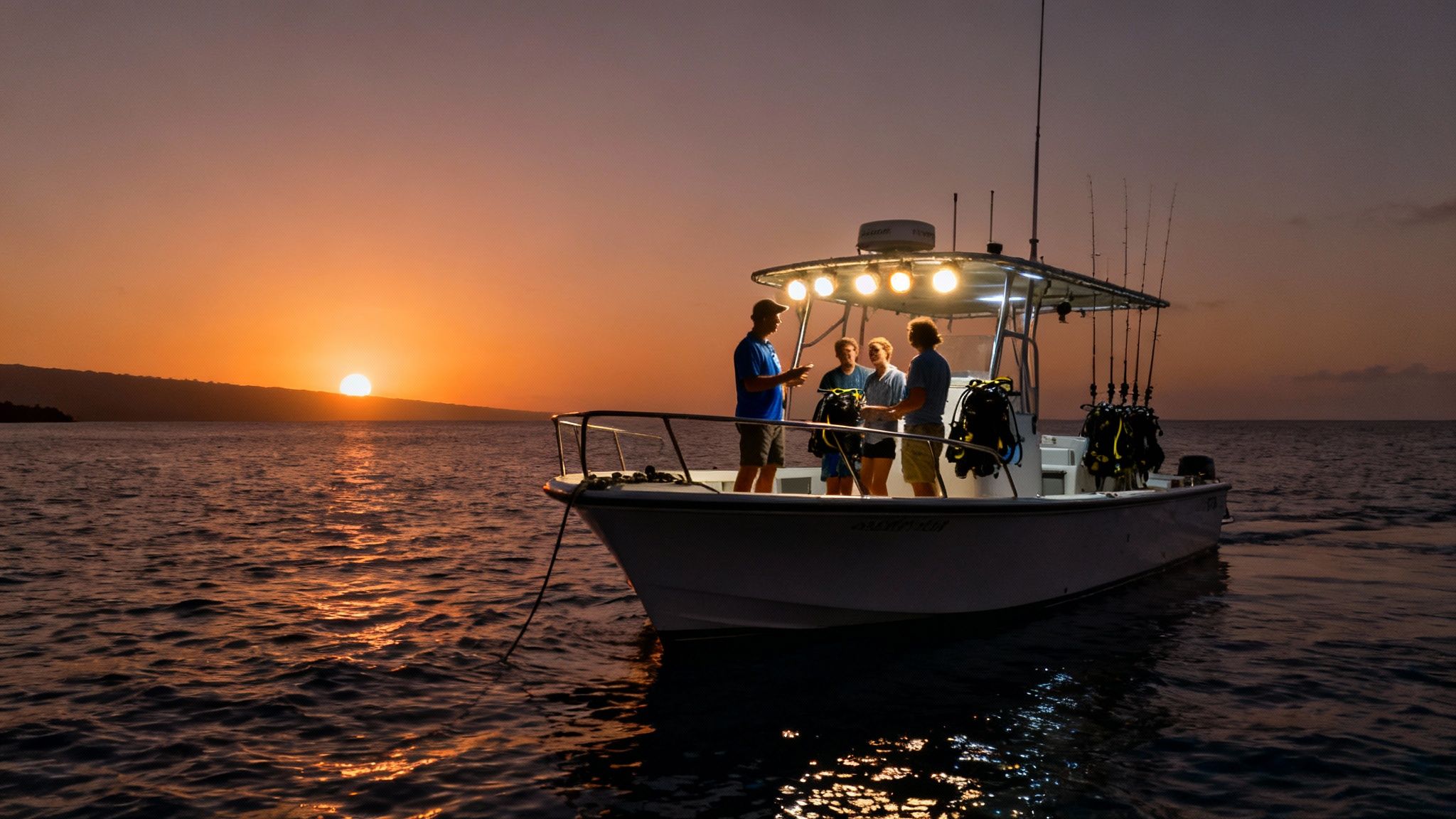
The Kona manta ray night dive is an incredible, well-oiled machine. Knowing the schedule beforehand helps you relax and soak it all in, from the moment you step on the boat to the final ride back under the stars.
Most operators run this as a two-tank trip, which is the best way to do it. You get a beautiful reef dive at sunset and then the main event with the mantas. It’s a fantastic way to maximize your time in the water.
So, what does the evening actually look like? Here’s a play-by-play of a typical manta ray night dive adventure.
Typical Manta Ray Night Dive Itinerary
| Phase | Approximate Timing | What to Expect |
|---|---|---|
| Check-in & Departure | 3:00 PM – 4:00 PM | Arrive at the shop or harbor, handle paperwork, and get fitted for gear. The crew will give a thorough safety and environmental briefing once you're on board. |
| Twilight Reef Dive | 5:00 PM – 6:00 PM | The first dive of the trip. You'll explore a vibrant coral reef as the sun sets, watching the shift from day to night marine life. |
| Surface Interval | 6:00 PM – 7:00 PM | Back on the boat for snacks and drinks. This is your chance to watch the last of the sunset and get ready for the main event. |
| The Manta Dive | 7:00 PM – 8:00 PM | Divers head down to the "campfire." Snorkelers hold onto a float on the surface. The lights turn on, the plankton swarm, and the mantas arrive. |
| Return to Harbor | 8:00 PM – 9:00 PM | After about 45 minutes with the mantas, you'll board the boat for a peaceful ride back to the harbor, buzzing from the experience. |
Let's break that down a bit more.
Getting Started: The First Dive
Your adventure usually kicks off in the mid-afternoon. You'll check in, meet your crew, and get your gear sorted. Once on the boat, pay close attention to the briefing—it covers everything you need to know for a safe, respectful encounter. The number one rule? Never, ever touch the manta rays.
The boat ride out is a treat in itself, with gorgeous views of the Kona coast. Your first stop is a twilight reef dive. This is a fantastic warm-up, letting you see the reef as it transitions from day to night. If you’re curious about what makes diving after dark so unique, you can learn more about scuba diving at night.
After surfacing, you’ll have a break on the boat to off-gas and grab a snack while the crew preps for the big show.
The Main Event: The Manta "Campfire"
When it’s completely dark, it’s time.
Divers descend to a sandy bottom, usually around 30-40 feet, and arrange themselves in a semicircle. In the center, the crew places powerful lights that shine straight up. This is what we call the "manta campfire." Meanwhile, snorkelers hang onto a custom float on the surface, which also has lights pointing down.
These bright lights act like a giant magnet for plankton, creating a thick, soupy buffet. Before you know it, giant manta rays glide in from the darkness to feast, performing stunning barrel rolls and somersaults right in the beams of light—often just inches from your face.
It's a true underwater ballet, and both divers and snorkelers get a front-row seat. After an unforgettable 45 minutes or so, it's time to head up and make your way back to shore, filled with memories that will last a lifetime.
How to Choose the Best Manta Ray Operator
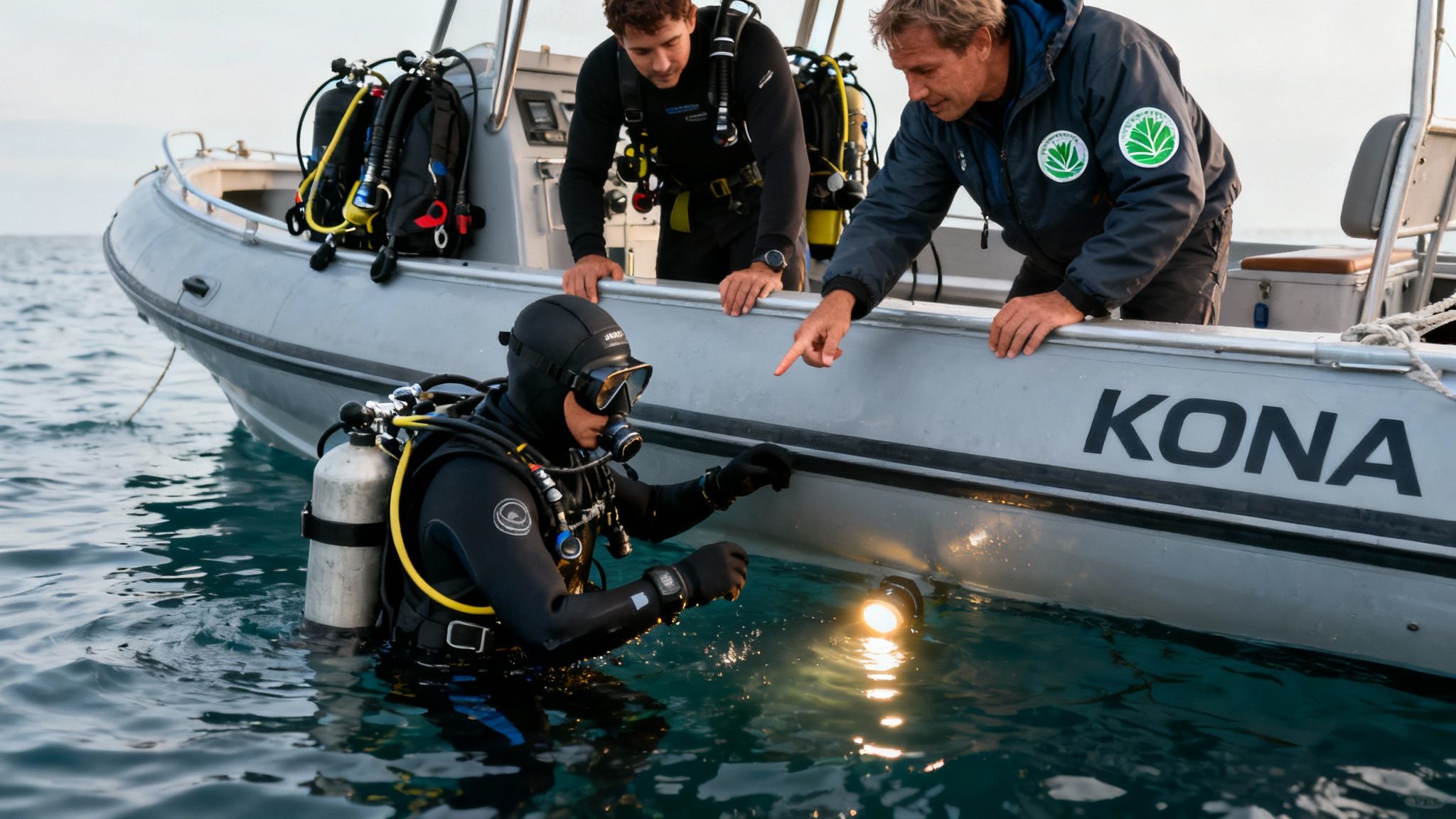
Picking the right operator for your manta ray night dive is probably the single most important decision you'll make for this trip. It can be the difference between a so-so experience and a truly unforgettable, safe, and respectful adventure. With a bunch of companies to choose from, knowing what to look for is crucial.
A great operator isn't just focused on getting you in the water. They're obsessed with safety, your comfort, and, most importantly, the well-being of the manta rays. The best companies are deeply committed to sustainable tourism—many were previously recognized on the Manta Ray Green List—which shows they care about protecting these gentle giants for years to come.
Key Factors to Consider
So, what should you be looking for when you're comparing shops? A few things make a huge difference: the experience of the crew, the size and condition of the boat, and the number of guests per guide. That last one is a biggie. A low guest-to-guide ratio means you'll get the personal attention you need to feel safe and make the most of the dive.
Before you pull out your credit card, don't be shy about asking some direct questions:
- What’s your in-water guest-to-guide ratio?
- Are your guides certified divemasters or instructors?
- Can you walk me through the safety equipment you have on the boat?
- What happens if we don't see any mantas?
Any solid, professional operation will have no problem answering these questions. It shows they've got their act together. For a deeper dive, check out our complete guide on how to choose a Kona dive shop.
Why Reputation and Reviews Matter
In a place like Kona, reputation is everything. Operators like Kona Honu Divers have spent years building their business on top-notch service, strict safety protocols, and a genuine love for marine conservation. The proof is in the pudding—or in this case, the customer reviews. They give you the real story of what to expect.
At the end of the day, the best operators offer more than just a boat ride. They're storytellers and ocean stewards, genuinely excited to share the magic of the manta ray night dive in Kona with you. Their passion and professionalism are a big reason the success rates here are so incredibly high.
Research from 2009 to 2014 at Kona's main dive sites showed that manta rays were spotted on 85–90% of nights. Those numbers are why Kona is hands-down the best place in the world for this encounter. You can read the full research about these manta ray sightings to see the data for yourself.
When you choose a well-respected operator, you’re not just booking a tour; you're ensuring your adventure will be safe, respectful, and absolutely spectacular.
How to Prepare for a Safe and Respectful Dive
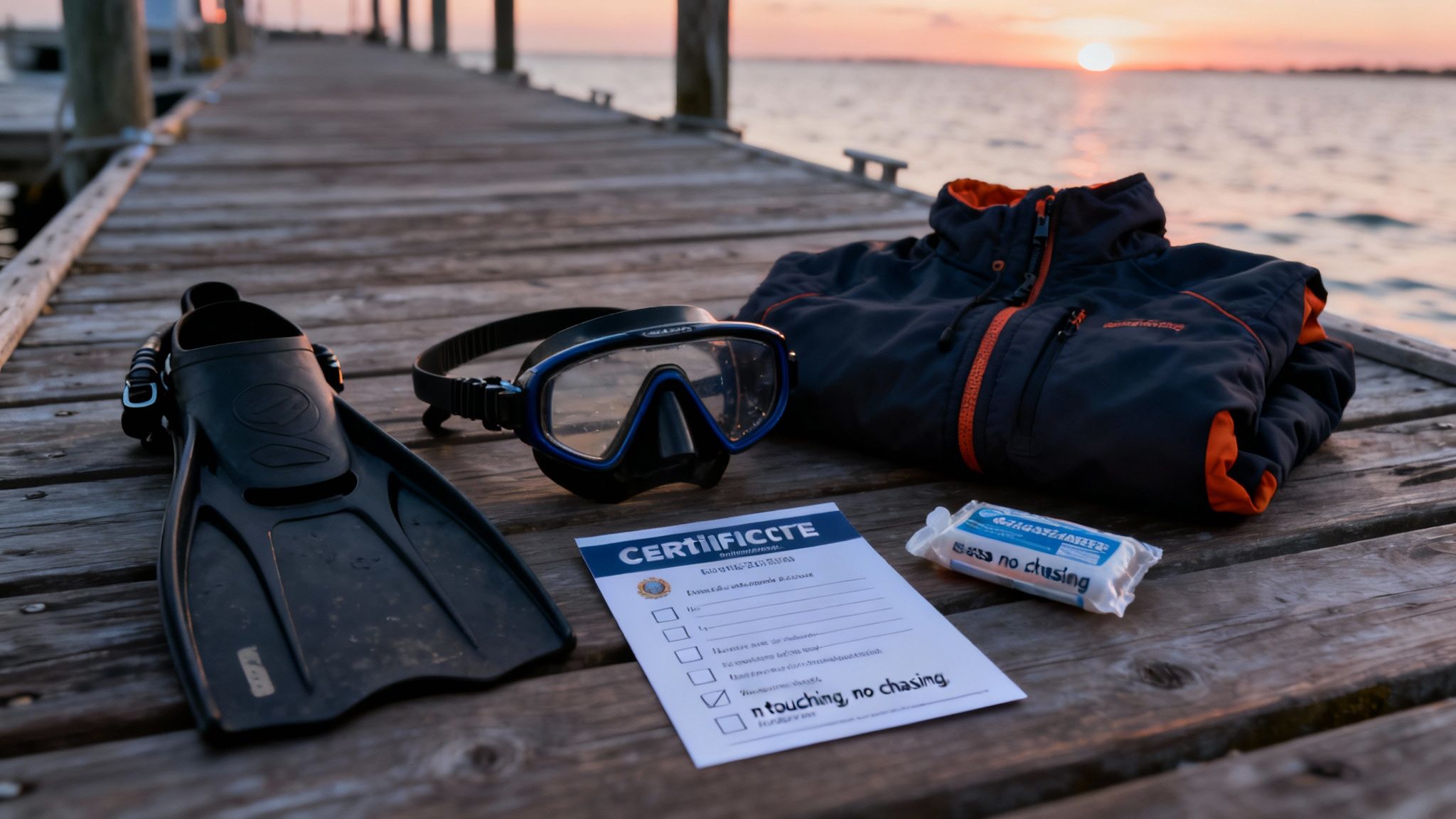
The secret to a truly magical manta ray night dive in Kona isn't just showing up; it’s being prepared. When you feel confident with your gear and know what to expect, you can stop worrying and just soak in the incredible underwater ballet happening all around you. This part of the guide is all about getting you ready—from the gear you'll need to the safety protocols and manta-friendly etiquette that make this dive so special.
Knowing what to pack makes everything easier. Any good operator, like us here at Kona Honu Divers, will handle the heavy stuff: tanks, weights, and the powerful lights that attract the plankton. But there are a few personal items you’ll definitely want to bring to stay comfortable and meet the dive requirements.
Your Personal Gear Checklist
- Certification Card: No surprises here—this is a must-have for any certified diver. No card, no dive.
- Logbook: Trust me, you'll want to log this one. It's a dive you'll be talking about for years.
- A Warm Jacket or Hoodie: Even in Hawaii, the boat ride back can get surprisingly chilly after a night dive.
- Towel: Simple, essential, and easy to forget. You'll be glad you have it.
- Seasickness Medication: If you even think you might get seasick, take your preferred remedy well before the boat leaves the dock.
- Reusable Water Bottle: Staying hydrated is key to a good dive, so bring some water along.
Most shops provide wetsuits, but if you have your own that fits you perfectly, by all means, bring it. For a more exhaustive list of what to pack, check out our complete guide on the gear you will need for your Kona diving adventure.
Manta Etiquette: The Rules of Engagement
The most critical part of your preparation is learning how to interact with these gentle giants—which really means learning how not to interact. The local guidelines were created to protect the mantas and ensure this amazing experience remains sustainable for generations. It all boils down to one simple concept: passive observation.
Think of yourself as a guest in their underwater dining room. Your job is to be a quiet, respectful observer, allowing the mantas to feed naturally without any interference from you.
Touching a manta ray is a huge no-no. It can strip away their protective mucous coating, leaving them vulnerable to nasty skin infections.
The rules are straightforward but incredibly important:
- No Touching: This is the golden rule. Never, ever touch, chase, or try to "pet" a manta ray.
- Find Your Spot: Divers should stay on or very near the sandy bottom. Snorkelers need to remain on the surface. This keeps the water column clear for the mantas to swoop and glide.
- Watch Your Bubbles: As a diver, try to time your breathing so you don't exhale a stream of bubbles right into a manta's face as it passes overhead.
- Let Them Come to You: Don't swim after the mantas. Just stay still. Their natural curiosity will often bring them incredibly close.
Safety First: Mastering Your Dive Skills
Beyond manta etiquette, your standard dive safety skills are essential. The Kona manta ray night dive is relatively shallow—usually around 30-40 feet—and the conditions are typically calm, but being comfortable in the dark is key. Your guide will give you a detailed briefing, but having a solid handle on a few core skills will make the whole experience much more enjoyable.
Excellent buoyancy control is your best friend on this dive. It helps you stay put on the bottom without kicking up sand or accidentally floating up into the mantas' flight path. Remember to stick with your guide and your buddy, keep a close eye on your air gauge, and just relax.
Follow these simple rules for safety and etiquette, and you’re all set for a night that is respectful, awe-inspiring, and completely unforgettable.
Don’t Stop at the Mantas: More Kona Dives to Explore
The manta ray night dive is an absolute showstopper, no doubt about it. But believe me, it's just scratching the surface of what the Big Island’s underwater world has in store. The very same volcanic activity that shaped the perfect manta feeding grounds has also created some of the most jaw-dropping and unique dive sites you'll find anywhere.
Once you've seen the "manta ballet," you'll have an itch to discover what other secrets Kona's waters are hiding. From otherworldly night dives to ancient underwater caves, there's an adventure waiting for every kind of diver.
The Famous Kona Blackwater Dive
If you want a dive that feels like a trip to another planet, you have to try the Kona Blackwater Dive. Forget the reef. This is something else entirely. You’ll be dropped into the open ocean, miles from shore, in the pitch-black of night. Tethered to the boat, you'll hang suspended over thousands of feet of water, watching one of the planet's largest migrations unfold right before your eyes.
Bizarre, beautiful, and often transparent creatures from the deep ocean rise to the surface to feed, and you get a front-row seat. You'll see things you've never imagined: see-through squid, larval fish that look like tiny aliens, and bioluminescent jellies that pulse with light. It’s a psychedelic, mind-bending experience that seasoned divers often describe as the single best dive of their lives. For a truly unforgettable thrill, the Kona Blackwater Dive is a must-do.
Advanced Dives and Lava Tubes
Got a few more dives under your belt? Kona’s volcanic coastline offers a playground for experienced divers. The island's fiery past has left behind a stunning underwater landscape of massive arches, deep caverns, and ancient lava tubes just waiting to be explored.
Getting through these formations requires sharp buoyancy skills and a cool head, but the payoff is immense. Inside, you'll discover unique ecosystems and marine life that you just won't see on the open reef. These more experienced diving opportunities often lead to deeper, more remote sites where you have a better chance of spotting sharks, eagle rays, and huge schools of jacks.
Kona Honu Divers runs Premium Advanced Dive Trips designed specifically for divers looking to push their limits and see something new. To see everything from mantas to lava tubes, take a look at all the Kona diving tours they offer.
Ready to Book Your Manta Ray Adventure?
We've walked through everything that makes Kona's manta ray night dive one of the most talked-about underwater experiences in the world. You know all about the "manta campfire" effect that makes sightings so reliable, and you’re prepped on how to choose a great operator for a safe, respectful trip.
This isn't just another item to tick off your vacation checklist. It's a rare chance to witness something truly wild and connect with the ocean in a way that’s hard to put into words.
The only thing left is to see that silent, graceful ballet for yourself.
Don’t put it off! This is easily one of Hawaii's most popular tours, and spots fill up fast. The image of these gentle giants swooping through the darkness is one that will stick with you for a lifetime.
“This dive is a life-changing experience. You feel so small and yet so connected to the ocean's magic. It’s a moment of pure awe you will never forget.”
Grab your front-row seat for this incredible underwater show. Kona Honu Divers is a top-rated, highly respected operator committed to running a safe, ethical, and absolutely breathtaking manta ray dive tour.
Your Manta Ray Night Dive Questions, Answered
Thinking about a bucket-list trip like the manta ray night dive in Kona? You've probably got a few questions. It's totally normal. Getting the details sorted out ahead of time is the best way to feel relaxed and ready for an incredible night.
Let's dive into some of the most common questions we hear.
Do I Have to Be Scuba Certified to See the Mantas?
Nope! You absolutely don't need a scuba certification. Snorkeling is an equally incredible way to witness the show, and some people even prefer it.
As a snorkeler, you'll float on the surface while holding onto a specially designed light board. This board shines powerful lights down into the water, attracting the plankton that manta rays feed on. The mantas swim right up to the surface to feast, giving you a breathtaking, eye-level view of the action. It's a perfect solution for families or groups with a mix of divers and non-divers, so nobody has to miss out.
What's the Best Time of Year to Go?
Here’s the fantastic part: you can do this dive any time of year. Unlike a lot of marine wildlife encounters that hinge on migratory seasons, Kona's manta rays live here year-round. They show up to the same feeding spots night after night, like clockwork.
This means there really isn't a "manta season." Sightings are incredibly reliable no matter when you visit, with most operators boasting a success rate of over 80%. Just pick the dates that work for you and get ready for the experience of a lifetime.
Is the Manta Ray Night Dive Safe?
Yes, it's very safe, as long as you choose a professional, reputable company. Manta rays are called "gentle giants" for good reason. They're filter feeders with no teeth, stingers, or barbs, making them completely harmless to humans.
The real safety focus is on standard water safety, just like any other dive trip. The crew will give you a thorough briefing, provide well-maintained gear, and have expert guides right there in the water with you. Just listen to their instructions and follow the rules, and you'll be in great hands.
How Cold Is the Water at Night?
Kona's waters are pretty warm, but you'll likely feel a bit chilly after being in the ocean once the sun goes down. Tour operators know this and will set you up with a thick wetsuit, usually a 3mm or 5mm, to keep you nice and warm.
A pro tip from us: bring a towel and a warm hoodie or jacket for the boat ride back. Having something dry and cozy to put on makes the trip back to the harbor much more pleasant, letting you just sit back and relive the incredible sights you just saw.
Ready to see the underwater ballet for yourself? Kona Honu Divers runs a top-notch, safe, and truly unforgettable manta ray dive and snorkel tour that’s bound to be the highlight of your Hawaii trip.