
Picture this: you're floating weightlessly in the warm, dark Pacific. The only thing you can see is the cloud of tiny plankton swirling in the beams of light below you. Suddenly, a massive shadow emerges from the deep blue, a creature with a wingspan wider than you are tall. It glides effortlessly, a gentle giant performing an underwater ballet just for you.
This is the Kona manta ray night dive, and it’s one of the most reliable and truly magical wildlife encounters you can have anywhere on Earth.
Experience the Underwater Ballet of Kona
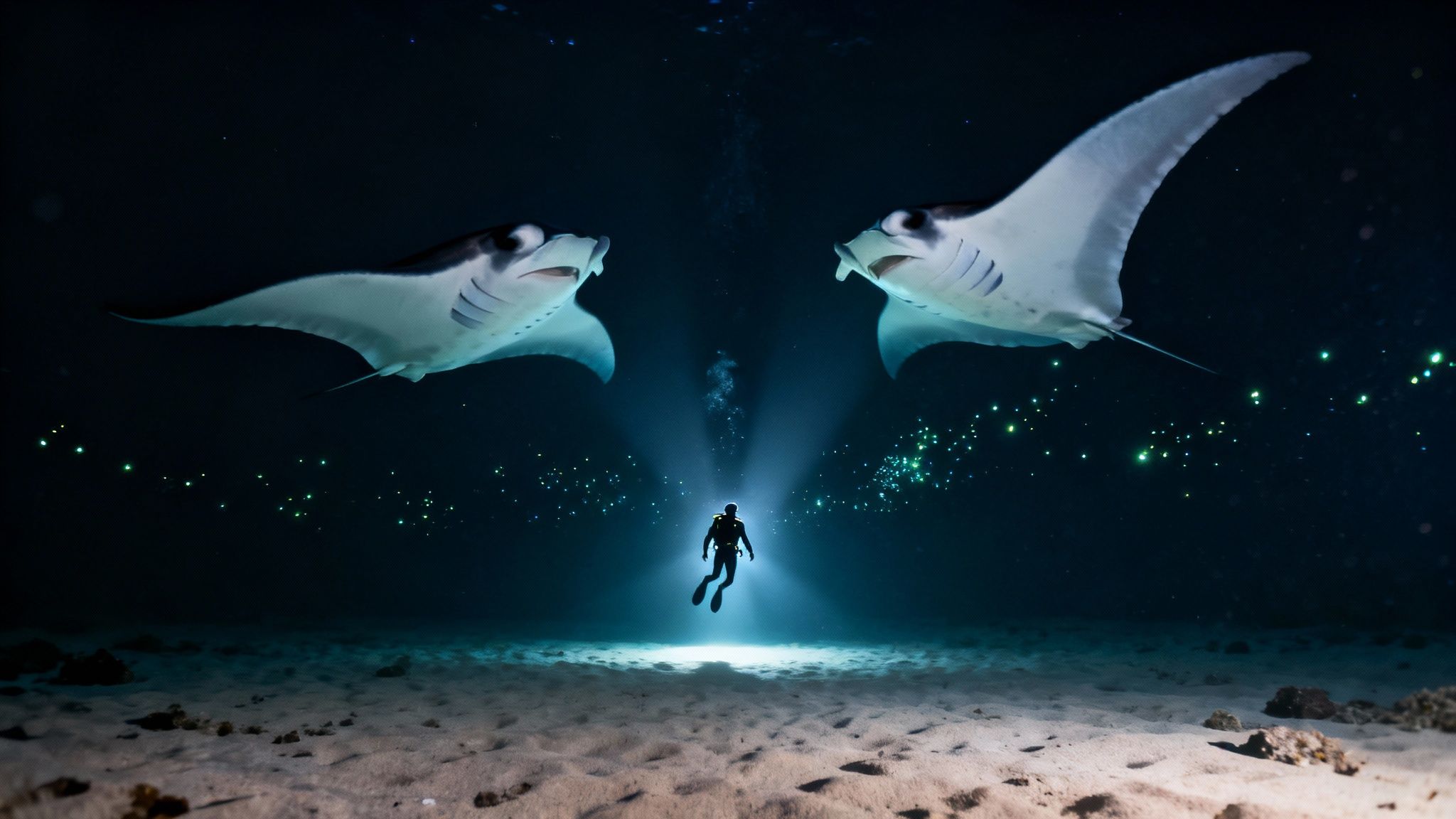
The experience is both serene and absolutely electrifying. You're simply an observer as these giants perform mesmerizing acrobatics. Drawn in by the plankton that swarm the lights, the manta rays swoop and barrel-roll, their cavernous mouths wide open to filter-feed, sometimes passing just inches from your face. It’s a moment that will stick with you forever.
Why Kona is the Perfect Stage
So, why Kona? What makes this one spot on the planet so special for this nightly spectacle?
It comes down to a perfect mix of geography and biology. The volcanic coastline has created naturally sheltered bays where plankton can thrive, creating a reliable, all-you-can-eat buffet for the local manta population. This isn't a migratory stop; Kona is home to a resident community of rays, and they show up to feed year-round.
This reliability is what turns the dive from a hopeful gamble into a near-certainty. In fact, the manta ray night dive experience off Kailua-Kona, Hawaii, is one of the most consistent wildlife encounters in the world, bringing in over 80,000 visitors every year. Local dive operators and researchers consistently report a success rate of 80% to 90% for seeing mantas on any given trip—a number that's almost unheard of for wild encounters with such a large marine animal. Discover more insights about this world-class manta encounter.
It all boils down to this perfect storm of factors:
- A Resident Population: You're not just hoping to spot a passing ray; you're meeting the locals in their natural dining spot.
- Ideal Conditions: The waters are typically calm and clear, which means fantastic visibility and comfortable conditions for everyone, whether you're diving or snorkeling.
- Responsible Tourism: The community has been doing this for decades, leading to well-established, ethical practices that always put the mantas' well-being first.
This unique combination of natural wonder and responsible human interaction is what creates such a profoundly moving experience. It’s an intimate chance to witness nature’s raw beauty up close, leaving you with a deep, lasting appreciation for these gentle giants of the ocean.
How to Choose the Best Manta Ray Tour in Kona
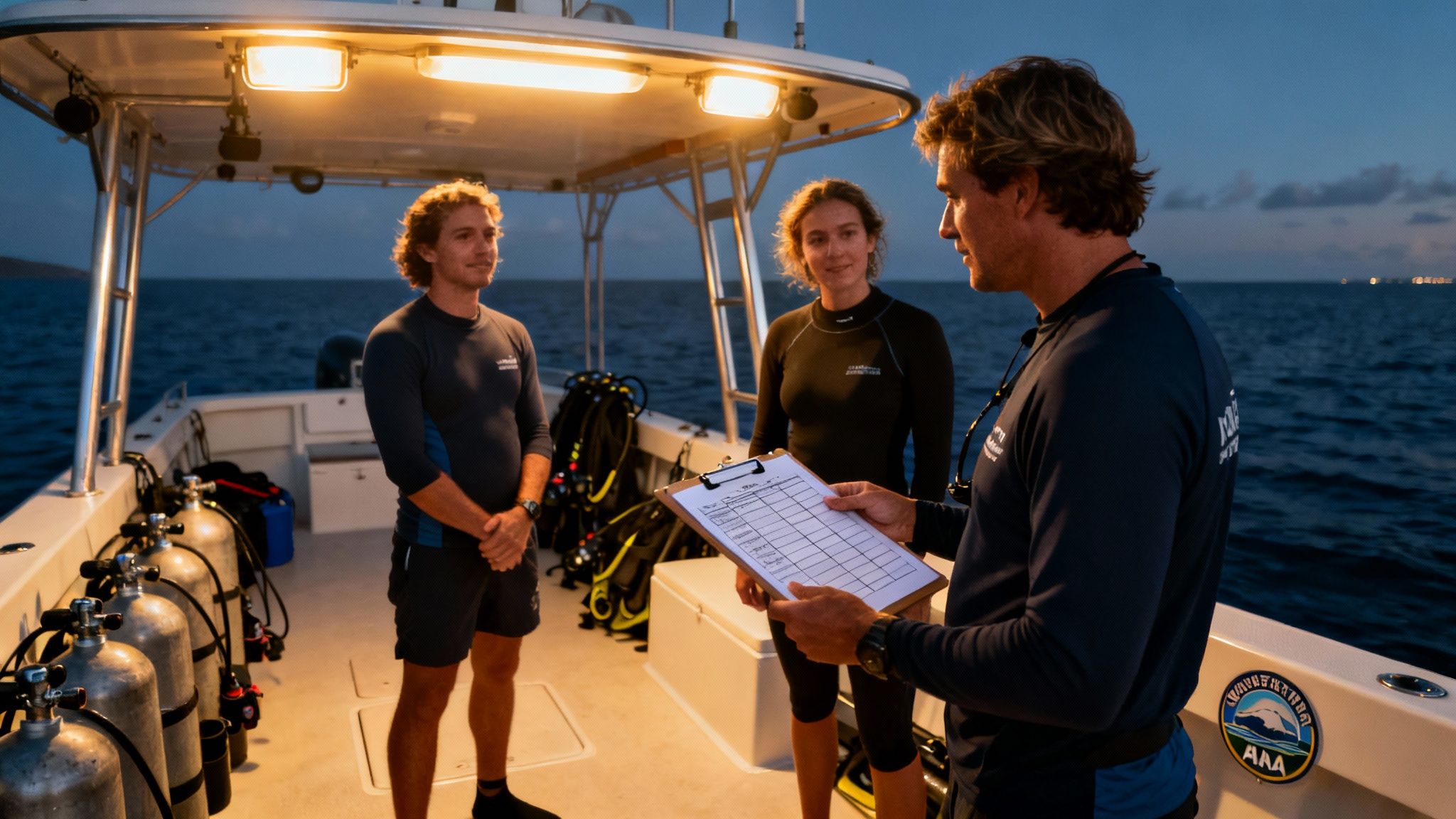
Choosing the right tour operator is probably the single biggest decision you'll make for your manta adventure. There are a lot of boats out there, and your choice impacts everything—from your safety and comfort to how the mantas themselves are treated. A great operator does more than just drive a boat; they educate you, protect the animals, and make sure your manta ray night dive in Kona is an experience you’ll never forget.
The best companies always put the mantas first. Period. You should look for operators who are Manta Ray Green Listed or who are very vocal about their commitment to conservation. These are the businesses that follow strict guidelines to make sure our presence doesn't disrupt the rays' natural feeding behavior.
What to Look For Beyond the Price Tag
When you start comparing options, it's easy to get focused on the price, but there are far more important things to consider for a high-quality, safe experience.
- Safety Record & Crew Experience: This is non-negotiable. Look into the company's history and the background of its crew. Experienced dive guides are essential for safety, and they also bring the whole trip to life with their knowledge of the mantas and the local underwater world.
- Group Size: I always prefer smaller groups. It just makes for a better, more personal encounter with the mantas. You get more attention from your guide and a much clearer, less crowded view of the action.
- Boat Comfort & Amenities: Don't overlook the boat itself. A hot shower waiting for you after the dive can feel like pure luxury. Is there enough room to gear up without bumping into everyone? These little details make a huge difference in your overall comfort, especially on a cool night.
For example, a company like Kona Honu Divers is consistently praised for its focus on marine education and creating a respectful atmosphere for both its guests and the wildlife.
Questions to Ask Before You Book
Don't be afraid to ask some direct questions before you hand over your credit card. This is the best way to make sure the operator is a good fit for you.
A reputable company will be totally transparent and happy to answer your questions. How they respond is often a great tell-tale sign of their professionalism and how they'll treat you on the boat.
Here are a few questions I always suggest asking:
- "What happens if we don't see any mantas?" Sightings are incredibly reliable, but they are wild animals. The best operators have a "manta guarantee," meaning you can come back another night for free.
- "Are you a Manta Ray Green Listed operator?" This is a quick way to see if they're committed to the highest ethical standards for manta interactions.
- "What is your guide-to-guest ratio?" A lower number is always better. It means more personalized attention and better in-water supervision.
- "What's your cancellation policy?" Life is unpredictable. It’s always smart to know your options in case your plans have to change.
In case you were wondering just how special this dive is, local researchers have identified nearly 200 individual manta rays along the Kona Coast, each with unique spot patterns on its belly. The dedicated monitoring at sites like Manta Village has created a catalog of over 300 individual rays from more than 10,000 sightings. That’s a testament to how well-managed these tours are.
Making a smart choice is pretty simple once you know what to look for. For a head-to-head comparison, take a look at our guide on the top 10 Kona diving companies ranked. By putting safety, ethics, and comfort first, you can book your manta ray dive tour with total confidence.
Preparing for Your Manta Ray Encounter
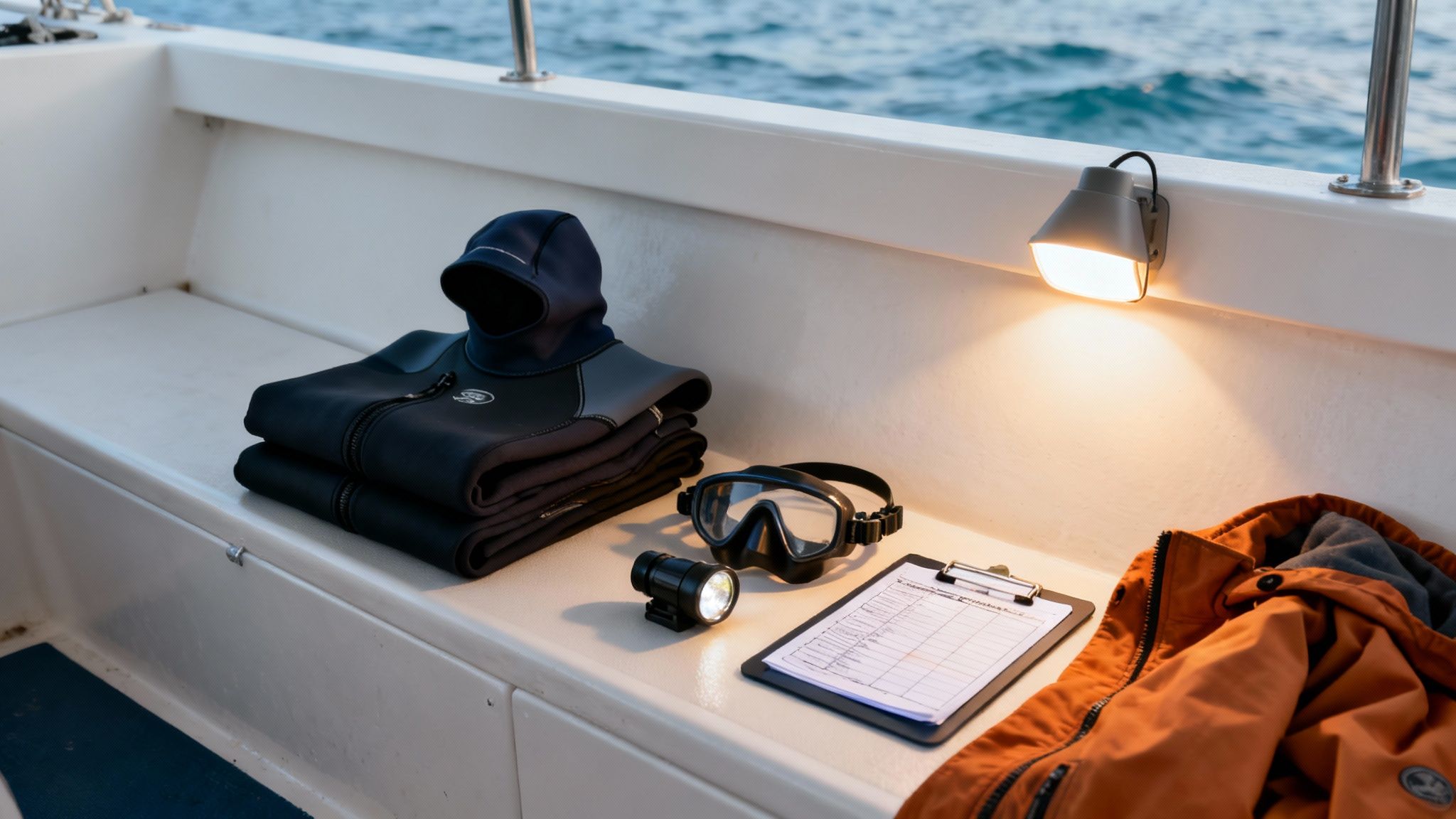
A little prep work can make the difference between a good dive and an unforgettable one. Taking care of the details before you even step on the boat for your manta ray night dive in Kona means you can just relax and soak it all in when the magic starts.
First up, the paperwork. If you're scuba diving, make sure your certification is current and accessible. Most dive shops can look you up online, but having your physical card or a digital copy on your phone saves time and hassle at check-in. This is a must for divers, but of course, no certification is required if you're joining as a snorkeler.
What to Pack for the Boat
It's all about comfort, especially after the dive. Even on a balmy Hawaiian night, zipping back to the harbor in a boat can get surprisingly cold once you're out of the water. Tossing a few key items in a dry bag is a pro move.
- A Warm Jacket or Hoodie: Don't skip this. You will be so glad you have a dry, warm layer for the ride home.
- Towel: While most boats have them, bringing your own is never a bad idea.
- Reusable Water Bottle: Diving is dehydrating. Keep a bottle handy and help keep Hawaii beautiful.
- Dry Clothes: A fresh t-shirt can feel like pure luxury on the trip back.
For a more exhaustive list, we've put together a full guide on the gear you will need for your Kona diving adventure.
Rules for a Respectful Encounter
The most critical preparation is all mental. You're stepping into the mantas' dining room, and the number one rule is passive observation. Following a few simple guidelines protects these gentle giants and ensures they feel safe enough to continue feeding naturally, right in front of you.
The whole encounter is built around what we call the "campfire." Divers settle in a semi-circle on the sandy bottom, aiming their lights straight up. This beam of light attracts a dense cloud of plankton, creating a feeding station that draws the mantas in. They swoop and barrel-roll through the light, and you get a front-row seat.
The core principle is simple: let the mantas control the interaction. By holding your position and remaining calm, you allow them to approach comfortably, often resulting in incredibly close and breathtaking passes.
Your dive guide will give you a thorough briefing on all of this, but it boils down to being a respectful guest.
Manta Ray Dive Etiquette Checklist
To make it easy, here's a quick reference guide for a safe and respectful manta ray dive. Following these simple rules ensures a better experience for you, your fellow divers, and most importantly, the mantas themselves.
| Do | Don't |
|---|---|
| Stay in your designated spot on the ocean floor or at the surface. | Chase or swim after the manta rays. |
| Keep your lights pointed up (divers) or down (snorkelers) to attract plankton. | Touch a manta ray under any circumstances. This removes their protective mucus layer. |
| Remain calm and still, allowing the mantas to come to you. | Exhale bubbles directly into a manta's face as it passes overhead. |
By following this etiquette, you're doing your part to protect the mantas. You're also guaranteeing a better show for everyone, ensuring this incredible underwater ballet can be enjoyed for generations to come.
Should You Dive or Snorkel with the Mantas?
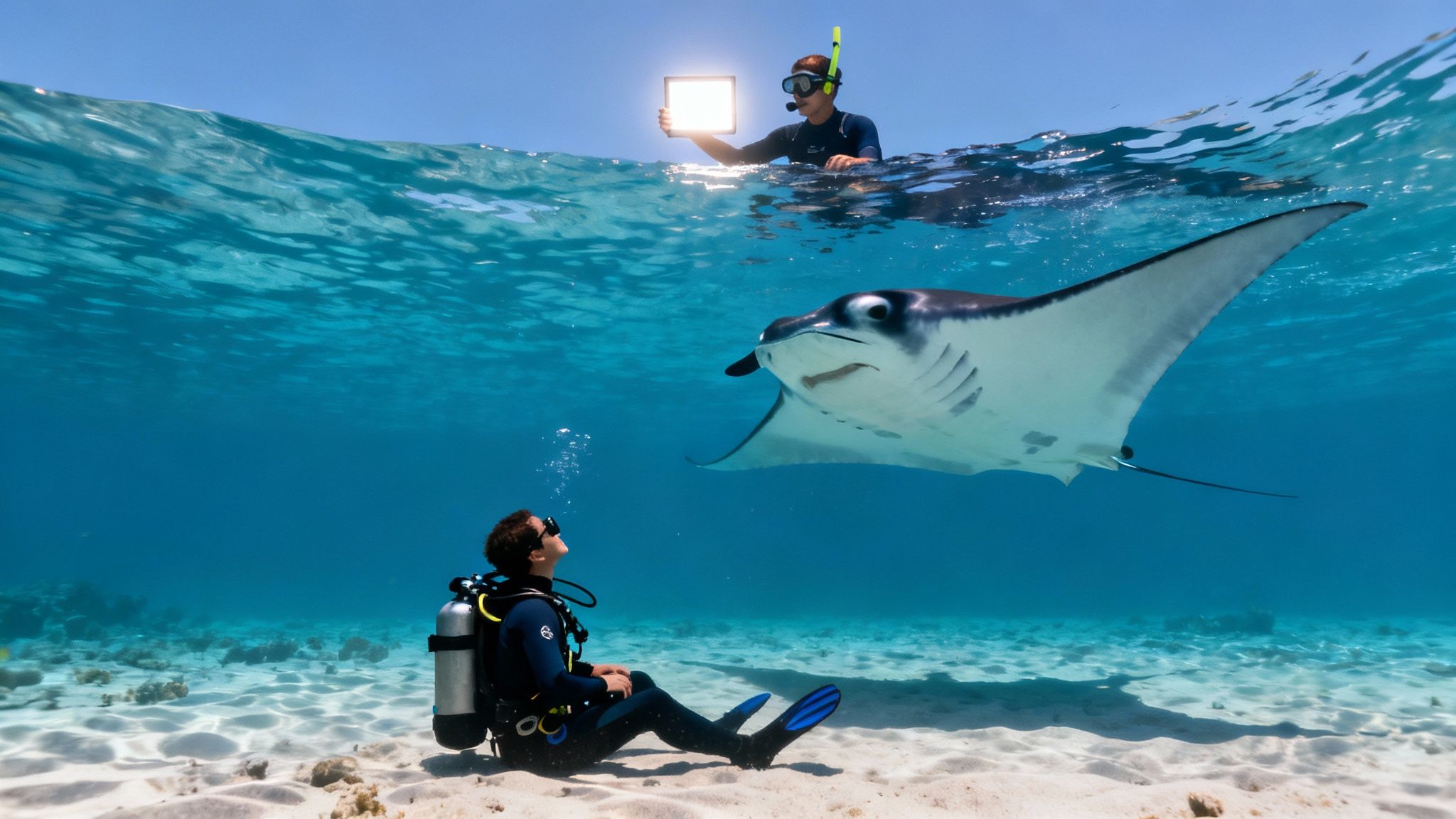
One of the best parts about the world-famous Kona manta experience is its accessibility. You absolutely don't need a scuba certification to see the show. Both diving and snorkeling get you a front-row seat to the underwater ballet, but they offer completely different perspectives.
Deciding between the two really comes down to your comfort in the water and what kind of view you're after.
The Diver's Up-Close Encounter
If you’re a certified diver, this is an experience you won’t forget. You’ll descend about 30 to 40 feet to the sandy bottom, find a spot with your group, and point your dive light straight up. You become part of the "campfire" that draws in the plankton.
From down there, the view is just breathtaking. You're looking up as these massive, graceful creatures glide, swoop, and perform barrel rolls just inches above your head. It's a truly humbling feeling to be perfectly still on the ocean floor while the gentle giants put on their nightly performance.
The Snorkeler's Bird's-Eye View
Not a diver? No problem. Snorkeling offers an incredible, top-down perspective of the entire scene. You'll float comfortably on the surface, holding onto a specially designed light board that illuminates the water below. This light is the magnet for the plankton, creating a glowing stage for the mantas.
You get to see the whole picture unfold—multiple rays weaving through the beams of light, the divers settled on the seafloor below, and the dramatic contrast of the bright feeding zone against the dark ocean. It’s an ideal choice for families, those new to the ocean, or anyone who simply prefers to stay on the surface.
If you're still weighing the options, we've put together a full breakdown on whether it's better to snorkel or dive with manta rays.
So, Which Adventure Is for You?
Let’s quickly compare the two experiences to help you plan your perfect manta ray night dive in Kona.
- Perspective: Divers get an immersive, bottom-up view from right inside the action. Snorkelers get a panoramic, "bird's-eye" view of the whole feeding frenzy.
- Proximity: Divers often get incredibly close passes. But don't count the snorkelers out—mantas frequently come right up to the surface to feed, giving you an amazing view, too.
- Comfort & Effort: Snorkeling is generally less physically demanding since you stay at the surface. Diving involves being fully submerged for the duration of the encounter.
- Certification & Cost: Snorkeling is typically more budget-friendly and requires no special training. Diving costs a bit more and requires you to be certified.
Honestly, there’s no wrong answer here. Whether you’re gazing up from the ocean floor or looking down from the waves, you’re guaranteed a spectacular and unforgettable night with Kona's majestic manta rays.
Don’t Stop at the Mantas: More Epic Dives in Kona
The manta ray night dive is unforgettable, but trust me, it’s just the tip of the iceberg when it comes to Kona’s underwater scene. Once you’ve seen that incredible ballet, you’ll be hooked. The good news is, the Big Island’s volcanic coast is packed with other unique dives that are just as mind-blowing.
This entire coastline was shaped by volcanoes, and you can see it everywhere you look underwater. We're talking ancient lava tubes you can swim through, now completely covered in coral. There are massive arches and cool caverns that are home to all sorts of amazing creatures. By day, these reefs are buzzing with green sea turtles, moray eels, and tons of tropical fish you won't find anywhere else on the planet.
Ready for Something Completely Different? Try a Blackwater Dive
If you're feeling adventurous and want a truly unique thrill, you have to try the legendary Kona blackwater dive. This is nothing like a reef dive. We head miles offshore, drop a tethered line into thousands of feet of water, and you just… float.
In the pitch-black, you'll see one of the largest migrations on Earth as tiny, bizarre creatures rise from the deep.
We call it an "underwater spacewalk" for a reason. You're suspended in the void, watching weird bioluminescent critters, alien-like jellyfish, and larval-stage fish drift by. It’s a humbling, almost surreal experience that shows you a part of the ocean very few people ever get to see.
Level Up with Advanced Dives
Got a few dives logged in your book? For more experienced divers, Kona has some seriously rewarding challenges. We can take you to deeper, more remote sites that often have stronger currents but are absolutely pristine because so few divers get there.
These advanced dive sites are where you'll find some of the most dramatic lava formations and maybe even run into bigger pelagic species cruising by.
From the world-famous manta ray night dive in Kona to the alien world of a blackwater dive and the raw beauty of the advanced sites, there’s always another adventure waiting here. The island's volcanic past has created a true diver's playground, with something for literally everyone.
Ready to see what else the Big Island has hiding beneath the waves? Check out all the Kona diving tours and let's get you in the water.
Your Manta Ray Night Dive Questions, Answered
Planning an adventure like the manta ray night dive in Kona is exciting, but it's natural to have a few questions. Getting clear answers ahead of time means you can ditch the stress and focus on the incredible experience waiting for you. Here are some of the most common things people ask us, whether they’re divers or snorkelers.
What Happens if We Don't See Any Manta Rays?
This is probably the number one question we get, and it's a totally fair one. The great news is that the success rate here in Kona is incredibly high—we're talking over 90% on most nights. Still, these are wild animals, so a sighting can never be a 100% guarantee.
Any reputable tour operator knows this. That's why most of us offer a "manta guarantee." If you happen to be on one of those very rare trips where the mantas don't show, we'll get you back out on the boat another night for free. Always double-check this policy when you book; it's a good sign that the company is confident in the experience they provide.
Is There a "Manta Ray Season" in Kona?
Nope, and that's one of the best parts! The manta rays you'll meet are full-time residents, not seasonal tourists. They live and feed right here off the Kona coast year-round.
This means you can plan your manta ray night dive in Kona for January, July, or October—it doesn't matter. Their nightly feeding frenzy is driven by plankton, not a calendar. It's a truly reliable, year-round spectacle.
How Safe Is It to Be in the Water with Manta Rays?
It's completely safe. There’s a reason everyone calls them "gentle giants." They are massive, yes, but they are also totally harmless to people.
Unlike their stingray relatives, manta rays have no stinger or barb on their tails. They're filter feeders, so their diet consists of tiny plankton. They simply don't have the ability or interest to harm humans. Plus, our professional guides are in the water with you to make sure everything is controlled and secure.
What if I’m Not a Certified Scuba Diver?
No certification? No problem! You don't need to be a scuba diver to witness this incredible show. Snorkeling tours offer an equally mind-blowing view from the surface.
You'll float comfortably while holding onto a custom light board. These boards shine down into the water, attracting the plankton, which in turn attracts the mantas. You get a perfect bird's-eye view of the underwater ballet. This makes the trip perfect for families and anyone who isn't a diver. After all, a great trip is about more than just the main event; finding ways to provide all the necessary information easily is key. It's amazing how digital guidebooks boost guest satisfaction by putting all the answers and tips right at your fingertips.
Why Can't I Touch the Manta Rays?
This is the single most important rule: look, but don't touch. Manta rays have a special mucous coating on their skin that protects them from infections and harmful bacteria.
When a person touches them, that protective slime layer gets rubbed off, leaving the manta vulnerable to disease. By keeping your hands to yourself, you're playing a direct role in protecting these magnificent creatures so they can thrive for years to come.
Ready to see this underwater magic for yourself? Here at Kona Honu Divers, we're all about creating a safe, respectful, and truly unforgettable manta encounter. Our experienced crew and top-rated tours are designed to give you the best seat in the house.
To get more details and book your spot, head over to our manta ray dive tours page.