
Imagine floating in the warm, dark Pacific while giant, gentle shadows swoop and glide just inches from your face. This is the world-famous manta ray night dive in Kona, an ethereal underwater ballet that feels like something out of a dream. It's a surreal performance choreographed by nature itself.
An Unforgettable Underwater Ballet in Kona
Picture this: you slip into the calm, twilight waters just off the Kona coast. As darkness settles, your guide flips on a set of powerful underwater lights. These beams cut through the inky black, creating what we call the "campfire"—a bright patch on the ocean floor that immediately attracts clouds of microscopic plankton.
And that's the dinner bell.
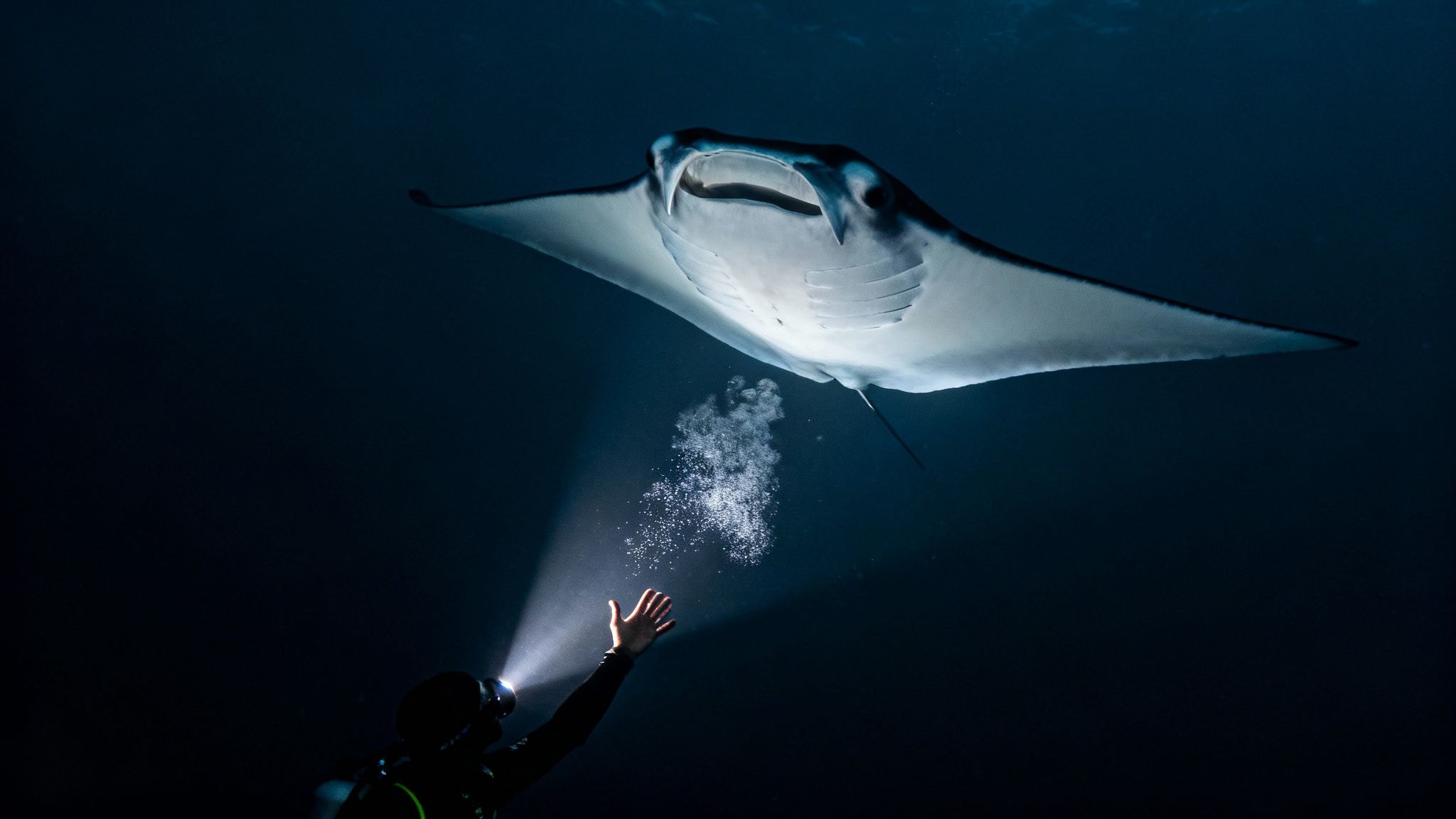
From the deep blue, the first manta ray appears. It's a majestic silhouette, some with wingspans stretching over 12 feet. It glides effortlessly into the light, its huge mouth open to filter-feed on the plankton buffet.
Soon, another joins, then another. Before you know it, you're surrounded by these gentle giants performing barrel rolls and graceful loops right over your head. It's a breathtaking, humbling experience.
Why Kona is a World-Renowned Destination
This isn't just a lucky encounter; it's a nightly spectacle that has put Kona on the map for marine adventurers everywhere. The Kona coast is one of the most reliable places on the planet for manta ray sightings, boasting a remarkable 85–90% success rate. That means on almost any given night, your chances of seeing the show are incredibly high.
This amazing consistency turns the dive from a hopeful search into a guaranteed front-row seat for one of nature's most mesmerizing feeding frenzies. It’s a truly unique adventure, blending the thrill of a night dive with the serene beauty of these magnificent animals.
For anyone ready to witness this firsthand, experienced operators like Kona Honu Divers specialize in making the encounter safe, respectful, and absolutely unforgettable. Their guides know exactly where to go and how to position everyone to get the best view of the performance.
To get a better feel for the whole experience, you can learn more about what it's like to go on the manta ray dive in Kona, Hawaii.
Why Kona Is a Global Manta Ray Hotspot
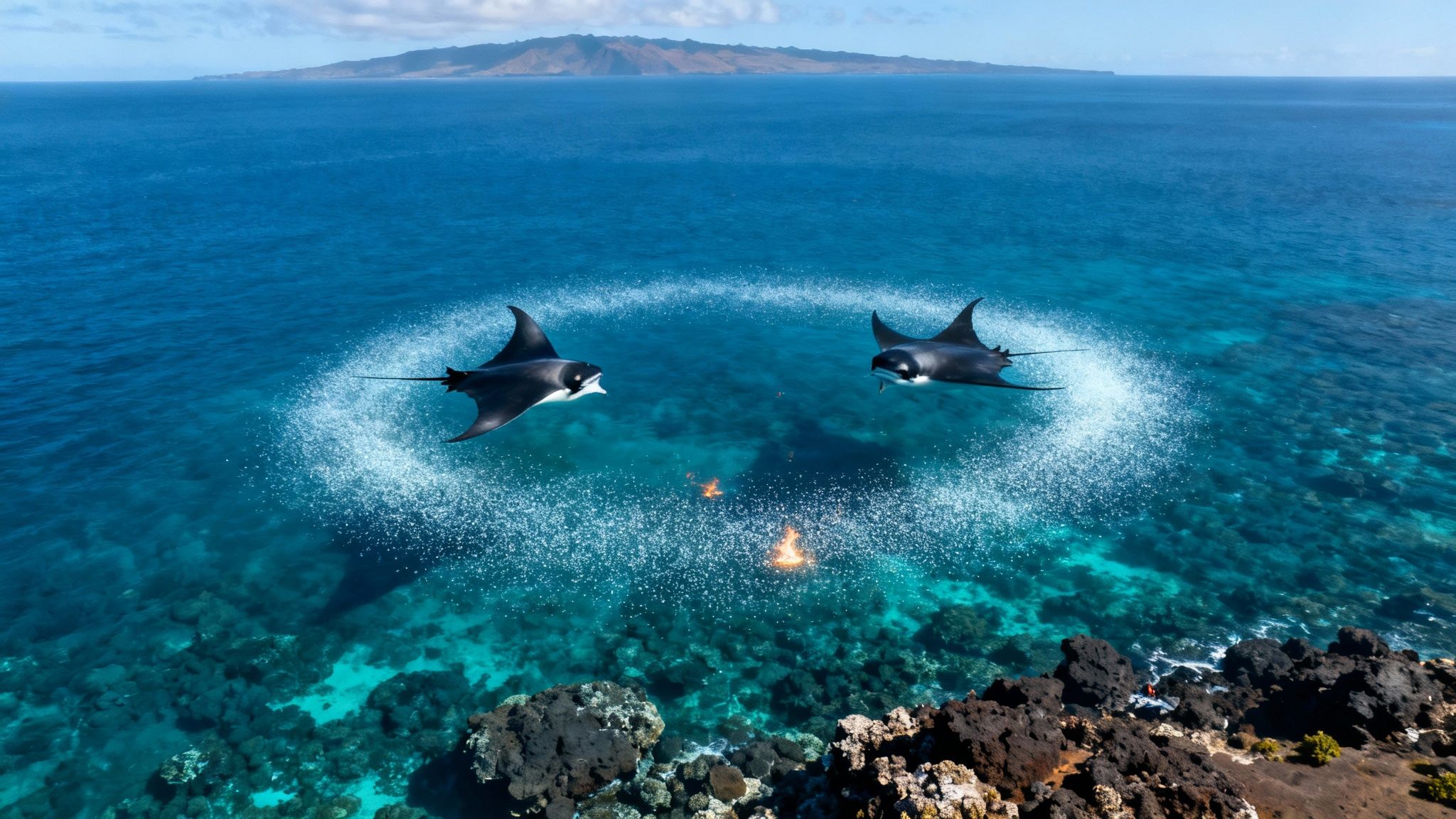
So, what makes the Kona coastline the world’s premier stage for manta rays? It's a perfect storm of geography and biology. The deep offshore channels and clear, warm waters funnel plankton-rich currents directly into the shallow coastal bays.
This natural phenomenon creates a nightly, all-you-can-eat buffet for the local manta population. That’s why the sightings here aren’t just possible—they’re practically guaranteed.
"Kona’s manta dives feel like a campfire underwater."
This is a common saying among divers here, and it’s spot-on. Just like a campfire draws people in from the dark, our lights attract the ocean's smallest life, which in turn brings in the majestic mantas. It's this beautiful, predictable cycle that drives the incredible 85–90% sighting success rate.
How We Create an Underwater "Campfire"
Think of plankton as tiny, glittering embers floating in the night sea. When we head out for a dive, we bring powerful lights with us. Once we turn them on, the magic begins.
The bright beams cut through the darkness, attracting swarms of plankton. To a manta ray, this dense cloud of food is an irresistible dinner invitation. They simply glide in and begin to feast.
- Light Intensity: Dive operators use powerful lights, often 1000+ lumens, to create a glowing column of water that’s visible from a distance.
- Plankton Density: The volcanic slopes surrounding Kona are rich in nutrients, which fuels massive plankton blooms—perfect for hungry mantas.
- Natural Feeding Behavior: The mantas perform a graceful ballet, gliding in looping formations to filter the plankton from the water.
This setup makes the manta ray night dive in Kona a perfectly engineered, yet completely natural, encounter. We’re not feeding them; we’re just gathering their food in one convenient spot.
Comparing the Top Dive Sites
Kona has two main "manta arenas," and each offers a slightly different experience.
Manta Village, located in Keauhou Bay, is known for its calmer waters and shallower depths, making it a fantastic option for beginners or those who prefer a more relaxed environment. On the other hand, Manta Heaven at Garden Eel Cove often has stronger currents, which tend to draw in larger plankton clouds and, consequently, bigger groups of mantas.
| Dive Site | Success Rate | Key Features |
|---|---|---|
| Manta Village | 96% | Shallow, calm, and incredibly beginner-friendly. |
| Manta Heaven | 90% | Can have stronger currents and attracts large groups of mantas. |
Both sites are phenomenal, and your choice often just comes down to the conditions of the day and your personal comfort level.
A Thriving Resident Population
The mantas you'll meet in Kona aren't just passing through. They're locals. Researchers have identified and named over 450 unique individuals, each recognized by the distinct spot patterns on their bellies.
This stable, year-round population is the backbone of a thriving ecotourism model that directly funds critical conservation work. The research has been ongoing for years, with distinct phases:
- 2009–2014: Nightly observations began, creating a systematic catalog.
- 2015–2020: Citizen science took off, with divers contributing video footage to help identify mantas.
- 2021–Present: The focus has shifted to health assessments and tracking migration patterns.
This research provides invaluable data that helps shape local policies to protect the mantas and their habitat, ensuring this incredible experience is around for generations to come.
At Kona Honu Divers, education is a huge part of what we do. On our boat decks, we teach divers how to identify mantas in real-time, turning a fun dive into a meaningful contribution to science.
Good for Mantas, Good for the Community
The manta ray night dive in Kona is a perfect example of how tourism can be a force for good. It's a win-win. Local dive shops, hotels, and restaurants all benefit from the divers who travel here from around the world.
At the same time, this thriving industry provides the funding needed for vital research and community education.
- Community Grants: A portion of tour fees goes directly to local reef restoration projects.
- Educational Outreach: We help provide resources to local schools for marine biology programs.
- Research Funding: Your dive helps fund tagging and tracking studies to monitor the population's health.
This integrated model ensures that every single dive contributes to both the local economy and the global understanding of these amazing animals. To learn more about the experience, check out our guide to manta ray dive tours.
Be sure to book your spot early with Kona Honu Divers to secure your place for the manta ray night dive in Kona
Choosing Your Adventure: Scuba Diving vs. Snorkeling
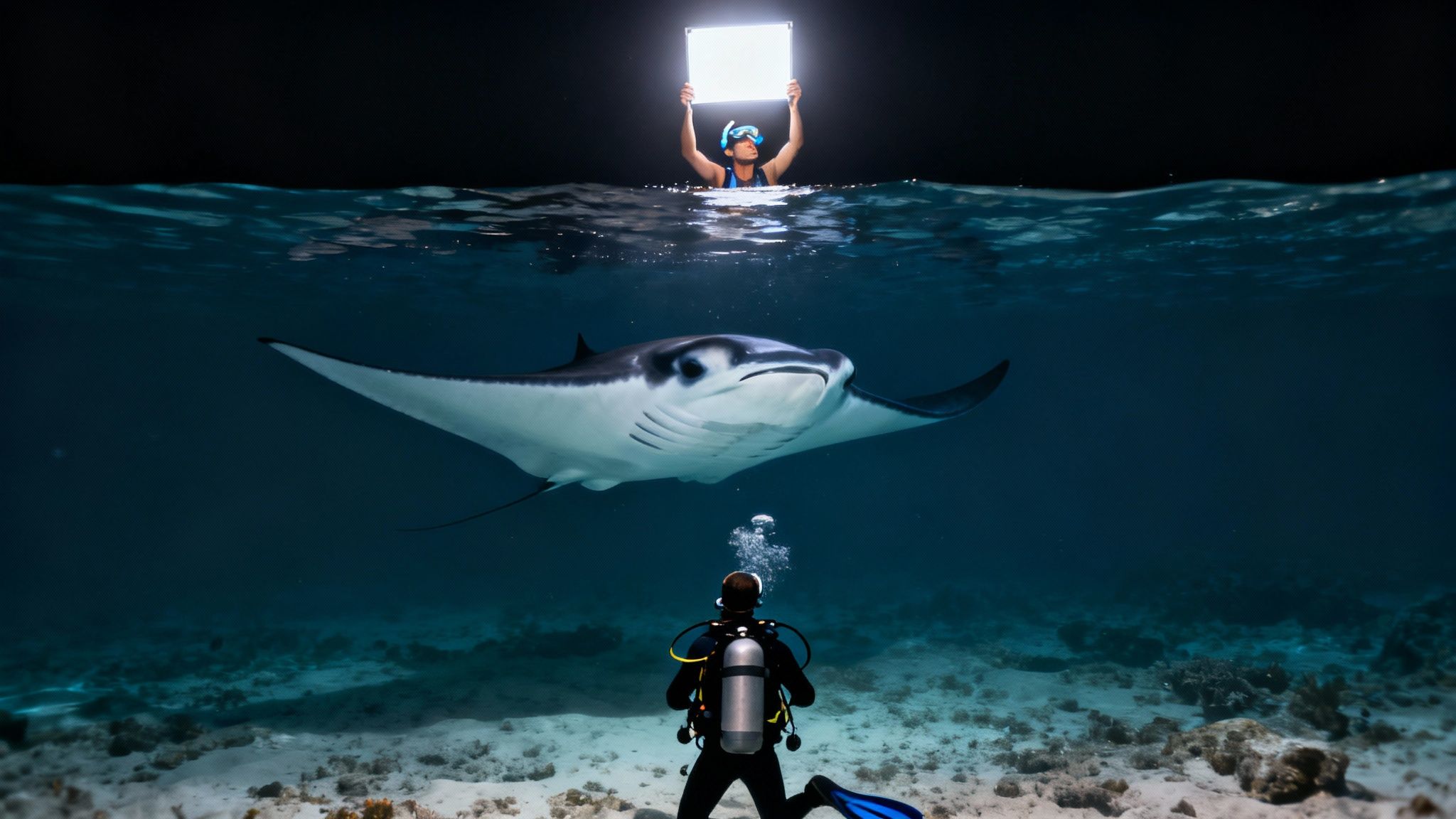
So, how do you want to see the show? Will you be watching from the "front-row seats" on the ocean floor, or from the "skybox" floating at the surface? Both scuba diving and snorkeling offer incredible, yet distinct, views of the manta ray ballet.
Ultimately, there’s no wrong answer. The best choice really comes down to your personal comfort in the water, your certification level, and the kind of experience you’re hoping for.
The Scuba Diving Experience: An Immersive Underwater Encounter
If you’re a certified diver, this is your chance for a truly humbling encounter. After a quick descent, you’ll settle into a designated spot on the sandy bottom, usually around 30-40 feet deep. From there, you and the other divers point your lights up, creating a massive column of light that acts like a dinner bell for plankton.
And then, the magic begins.
You’ll be looking straight up as these gentle giants, with wingspans that can stretch over 12 feet, perform graceful barrel rolls right above your head. They often swoop down so close you could almost touch them (but don't!). It’s an otherworldly feeling to be completely immersed in their environment, watching the show from the inside out.
The sheer scale of a manta ray gliding just inches above you is something you can't truly appreciate until you're there. It's a profound, silent connection with one of the ocean's most majestic animals.
To join the dive, you'll need to be at least an Open Water Diver. While the dive itself isn't particularly demanding, having some night diving experience under your belt is always a plus. For divers seeking a greater challenge, there are advanced dive tours available that explore deeper sites along the Kona coast.
The Snorkeling Experience: A Spectacular Bird's-Eye View
Not a diver? No problem. The snorkeling experience is just as mesmerizing. Instead of heading to the bottom, you'll hang out at the surface, holding onto a custom-built floating light board. These boards shine powerful beams straight down, drawing the plankton—and the mantas—right up to you.
You get a fantastic top-down view of the entire feeding frenzy. You'll watch as the mantas swoop and glide just feet below, mouths wide open as they filter their dinner from the water. It’s an effortless and incredibly accessible way to witness the same incredible behavior.
This option is perfect for:
- Families with kids or teens.
- Groups where some are divers and others aren't.
- Anyone who wants to see the mantas without the commitment of scuba certification.
Manta Ray Dive vs Snorkel Experience Comparison
Still weighing your options? Sometimes a direct comparison is the best way to decide which adventure is the right fit for you.
Here’s a simple table to help you visualize the key differences.
| Feature | Scuba Diving | Snorkeling |
|---|---|---|
| Skill Level | Open Water Diver certification required. | No certification needed; basic swimming skills. |
| Proximity | Incredibly close; mantas glide directly overhead. | Very close; mantas feed just below the surface. |
| Perspective | Looking up from the ocean floor. | Looking down from the surface. |
| Cost | Typically higher due to equipment and certification. | More affordable and accessible for everyone. |
| Experience | Fully immersive, sitting inside their world. | A fantastic, surface-level view of the action. |
One of the best parts is that premier operators run integrated trips, meaning divers and snorkelers can be on the same boat. This makes it a fantastic activity for groups and families with mixed skill levels. Everyone gets to share the excitement of the boat ride and the post-dive stories.
For an even deeper look into this topic, check out our guide on whether it's better to snorkel or dive with manta rays.
Getting Ready for Your Manta Ray Night Dive
A little bit of prep work can be the difference between a good dive and an absolutely unforgettable one. When you know what to expect and what to bring for your manta ray night dive in Kona, you can let go of the logistics and just soak in the incredible underwater ballet.
Think of this as your practical game plan for one of the best adventures you'll ever have.
The good news? Your tour operator handles most of the heavy lifting. A professional outfit will have all the essential gear dialed in and ready for you.
You can expect them to provide:
- Scuba Gear: For certified divers, this means tanks, regulators, BCDs, and weights are all taken care of.
- Snorkel Equipment: If you're staying on the surface, they'll have masks, fins, and snorkels ready to go.
- The Manta "Magnet": This is the most important part! They provide the powerful underwater lights for divers or the custom light boards for snorkelers that attract the plankton and, in turn, the mantas.
Most boats also have the little things that make a big difference after a dive, like snacks, hot cocoa, and fresh water to help you warm up and rehydrate.
What to Toss in Your Dive Bag
While the crew has the technical gear covered, a few personal items will make your experience much more comfortable. Trust me, that boat ride back to the harbor can feel pretty chilly after you’ve been in the ocean at night.
Here’s a quick list of what you should bring along:
- A Towel: This is non-negotiable. You’ll want to dry off the second you get back on the boat.
- Warm, Dry Clothes: A hoodie, a light jacket, maybe some sweatpants. You will be so glad you have them.
- Reef-Safe Sunscreen: If you're on a boat that leaves before sunset, make sure to apply some. It protects you and our delicate coral.
- Personal Medications: If you're prone to seasickness, it’s a good idea to take a non-drowsy preventative before you leave the dock, as advised by a doctor.
Pay close attention during the pre-dive briefing. This is the single most important part of your preparation. Your guides will walk you through the "rules of engagement," which are designed to keep both you and these magnificent animals safe.
Easing Those Pre-Dive Jitters
Feeling a little nervous? That’s completely normal, especially if you’ve never done a night dive or snorkel before. Floating in the open ocean after dark is a different world, but it’s also incredibly peaceful—and very safe when you're with an experienced crew.
If you’re feeling a bit of anxiety, try these simple tips:
- Talk to Your Guide: Seriously, let your divemaster or snorkel guide know how you're feeling. They've seen it all and are fantastic at offering reassurance and a little extra support.
- Just Breathe: Before you even get in the water, take a few slow, deep breaths. It’s a simple trick that works wonders for calming your nerves.
- Stick to the "Campfire": Stay close to your guide and the main lighted area. All those lights create a bright, secure circle underwater, almost like a campfire, which makes the dark beyond feel much less intimidating.
Once you’re prepared and your concerns are addressed, all that’s left is to relax and let the magic happen. When you're ready to make it a reality, booking your spot is easy.
Meet the Gentle Giants of Kona
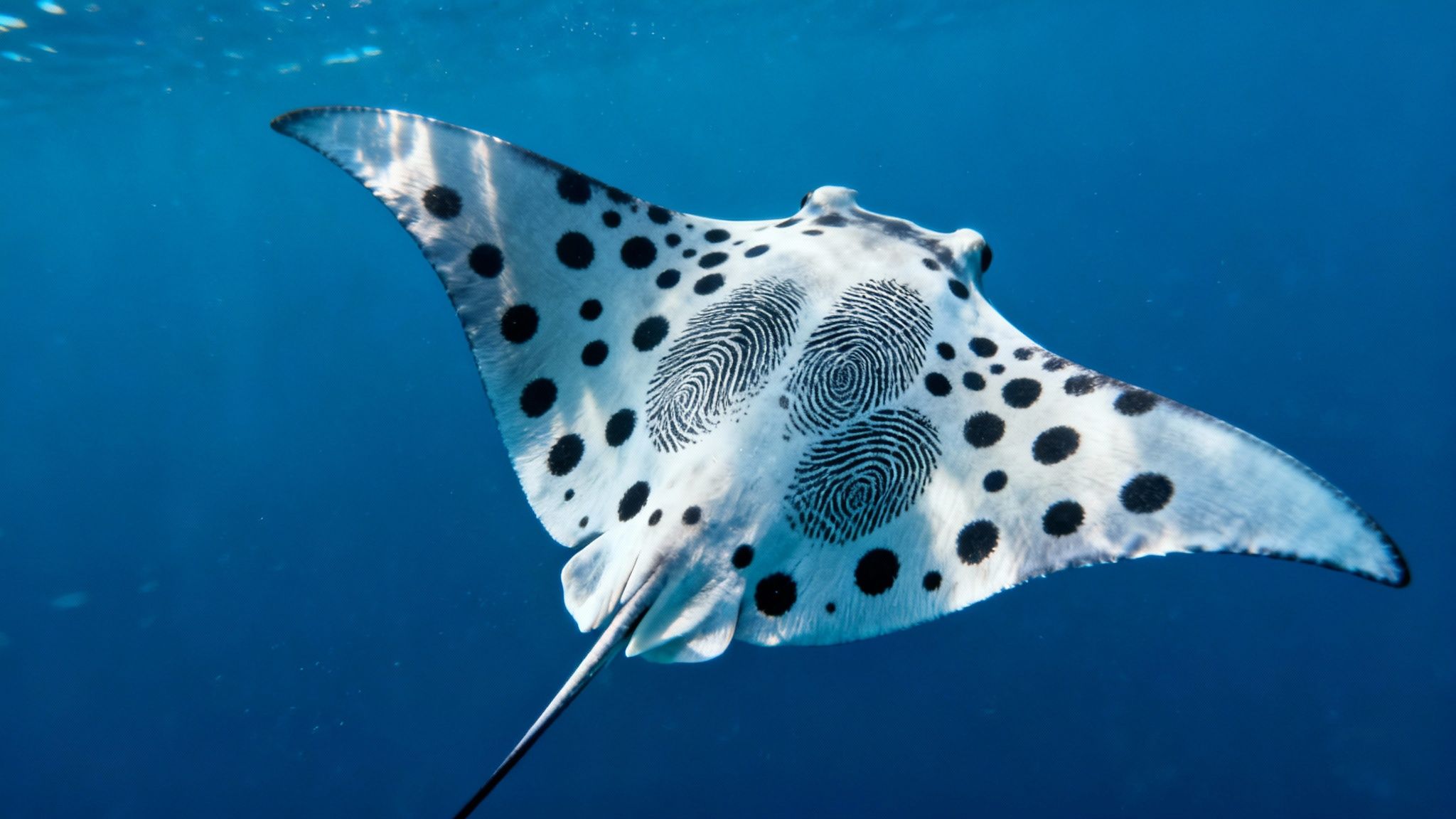
Those incredible creatures you see gliding through the lights on a manta ray night dive in Kona aren't just passing shadows. They are a community of individuals, each with a name, a backstory, and what the local guides will tell you are very distinct personalities. Knowing this transforms an amazing dive into a personal encounter you'll never forget.
So how do we tell them apart? The secret is on their bellies. Every single manta ray has a unique pattern of dark spots on its underside, which works just like a human fingerprint. For years, researchers and divemasters have used these natural markings to identify and track individuals, creating a living, breathing catalog of Kona's resident population. This lets us follow their lives for years, sometimes even decades.
A Community of Underwater Celebrities
When you head out for a manta dive here, you’re not just going to see a manta ray; you’re going to meet local celebrities. Some have become legendary for their sheer size, their quirky behaviors, or their incredible stories of survival. You might get to see ‘Big Bertha,’ famous for her massive wingspan, or the tough and easily recognizable ‘Lefty,’ who got his name from an old cephalic fin injury.
Hearing their stories from your guide adds a whole new layer to the underwater ballet unfolding before you. You stop being a simple observer and start feeling like a witness to the ongoing lives of these magnificent animals. It's this personal connection that makes the Kona experience so special and deepens our respect for them.
The golden rule for every manta ray encounter is simple: look, but don't touch. Their skin is coated in a delicate mucous layer that protects them from infection. A human touch, even a gentle one, can strip this layer off and leave them vulnerable. By keeping your hands to yourself, you're helping to keep them safe.
More Than Just Graceful Gliders
Manta rays are also incredibly smart. In fact, they have the largest brain-to-body mass ratio of any fish, a trait often linked to higher intelligence. They show complex social behaviors, genuine curiosity, and even problem-solving skills—something you’ll see for yourself as they expertly navigate the "campfire" of dive lights to feed.
This intelligence is one of the many reasons their conservation is so critical. Globally, manta rays are threatened by fishing and the loss of their habitats. The sustainable ecotourism model in Kona, built around this very dive, provides vital protection and funds the research needed to help them survive.
Citizen science is a huge part of this. Organizations like Manta Ray Advocates Hawaii have been tracking individual rays along the Kona coast for years, often with the help of divers and videographers. Between 2009 and 2014, a massive effort was made to collect data almost every single night, recording which rays showed up and their condition. This incredible project cataloged hundreds of encounters, helping researchers map the population's movements and health. You can dive deeper into the data and check out some fascinating manta ray statistics they've compiled.
By choosing a well-run manta ray night dive in Kona, you’re doing more than just having an adventure—you're directly contributing to the science that keeps this population healthy. It’s the perfect mix of thrill and conservation, and a chance to be part of something much bigger than just one dive. Ready to meet them?
Booking Your Manta Dive with the Right Crew
You’ve done the prep, you know what to expect—now for the most important part: picking the right people to take you. Your choice of a dive operator is the single biggest factor that will shape your manta ray experience. It's the difference between a good dive and a truly unforgettable one.
Going with a seasoned, top-rated company like Kona Honu Divers isn't just about getting on a boat. It’s about diving with a crew that lives and breathes this ocean. They’re not just tour guides; they are passionate marine professionals who know these waters, understand manta behavior, and prioritize your safety above all else. That's what sets the great operators apart.
What a Premier Tour Actually Feels Like
When you book with a top-tier operator, you're signing up for more than just one dive. The adventure often kicks off with a beautiful late-afternoon reef dive. You'll get in the water as the sun starts to dip, watching the whole ecosystem shift from day to night. It’s the perfect warm-up for the main event.
Once darkness sets in, the real magic begins. Your boat will move to the manta site, and the crew’s expertise really comes into play. They’ll set up the underwater "campfire" of lights and give you a detailed briefing on safety and—just as importantly—proper manta etiquette. Their job is to handle all the logistics so you can just float and be completely mesmerized.
It's hard to overstate the impact of this dive on Kona. An estimated 80,000 people do it every year, making it a cornerstone of the local economy and a powerful driver for marine conservation. This unique blend of tourism and preservation is what makes the experience so special. You can learn more about manta rays' importance in Hawaiʻi to see the bigger picture.
Don't just take our word for it—see what other divers have to say about their own experiences.
Book Early—This Isn't a Last-Minute Trip
The Kona manta ray dive is world-famous for a reason, and boats fill up fast, especially during peak seasons. If you want to guarantee your spot, booking well in advance is a must. Don't wait until you're on the island to try and find a spot.
If you're looking for a complete guide to choosing the best operators, we've already done the homework. Check out our detailed breakdown of the top 10 Kona diving companies ranked.
Answering Your Top Manta Ray Questions
It’s only natural to have a few questions before you decide to jump into the dark ocean with giant, winged creatures. Let's tackle some of the most common ones I hear so you can feel totally confident before you go.
Is the Manta Ray Night Dive Safe?
Absolutely. Every reputable operator puts safety above all else. The dive sites are surprisingly shallow, usually around 30-40 feet, and are tucked into calm, protected bays.
Your guides will be certified professionals who run through a thorough safety briefing, and the boats are fully equipped for any situation. And about the mantas themselves? Even though they look like stingrays, they don't have a stinger or barb. They are completely harmless and pose zero threat to people.
What Happens if We Don't See Any Manta Rays?
Look, these are wild animals, and nature doesn't offer a 100% guarantee. That said, the success rate in Kona is incredibly high—often over 90%!
In the very rare case that the mantas decide not to show up, most companies have your back. It’s pretty standard practice to offer a free trip on another night so you get a second chance. Just be sure to double-check the specific "manta guarantee" policy when you book.
Is There a Manta Ray "Season"?
Nope! This is one of the best parts about the Kona experience. We have a resident population of manta rays that hang out along the coast all year.
They don't migrate, which means any night of the year is a great night for a manta dive. Their dinner bell is the light attracting plankton, not the calendar.
The golden rule of this dive: never, ever touch a manta ray. They're covered in a protective mucous layer that acts like a shield against infection. Touching them can strip this away, making them vulnerable to harmful bacteria. Admire them with your eyes, not your hands.
What's the Real Difference Between Diving and Snorkeling?
It all comes down to your perspective on the action.
- Scuba Divers: You get to settle on the sandy ocean floor and look up. This gives you a front-row seat to the mantas doing their incredible underwater ballet right above you.
- Snorkelers: You'll be floating on the surface, holding onto a specially designed light board. You'll look down as the mantas swoop and glide just inches beneath you.
Both experiences are breathtaking. Operators like Kona Honu Divers often host both divers and snorkelers on the same boat, which makes it a fantastic choice for groups with different comfort levels or certifications.
Ready to see this underwater light show for yourself? Kona Honu Divers runs expert-led manta ray dive tours that are safe, eco-conscious, and truly unforgettable. All of the scuba diving tours in Kona, Hawaii offer a chance to experience the incredible marine life the Big Island has to offer.