
Picture this: you’re floating in the warm, dark waters of the Pacific off the Kona coast. Suddenly, a colossal, gentle giant with a wingspan of up to 16 feet glides silently from the depths, soaring just inches above you. This isn't a scene from a movie—it's the world-famous manta ray night dive in Kona, an experience often called an "underwater ballet" and easily one of the most incredible adventures you can have on the Big Island.
What Makes the Kona Manta Ray Night Dive Unforgettable
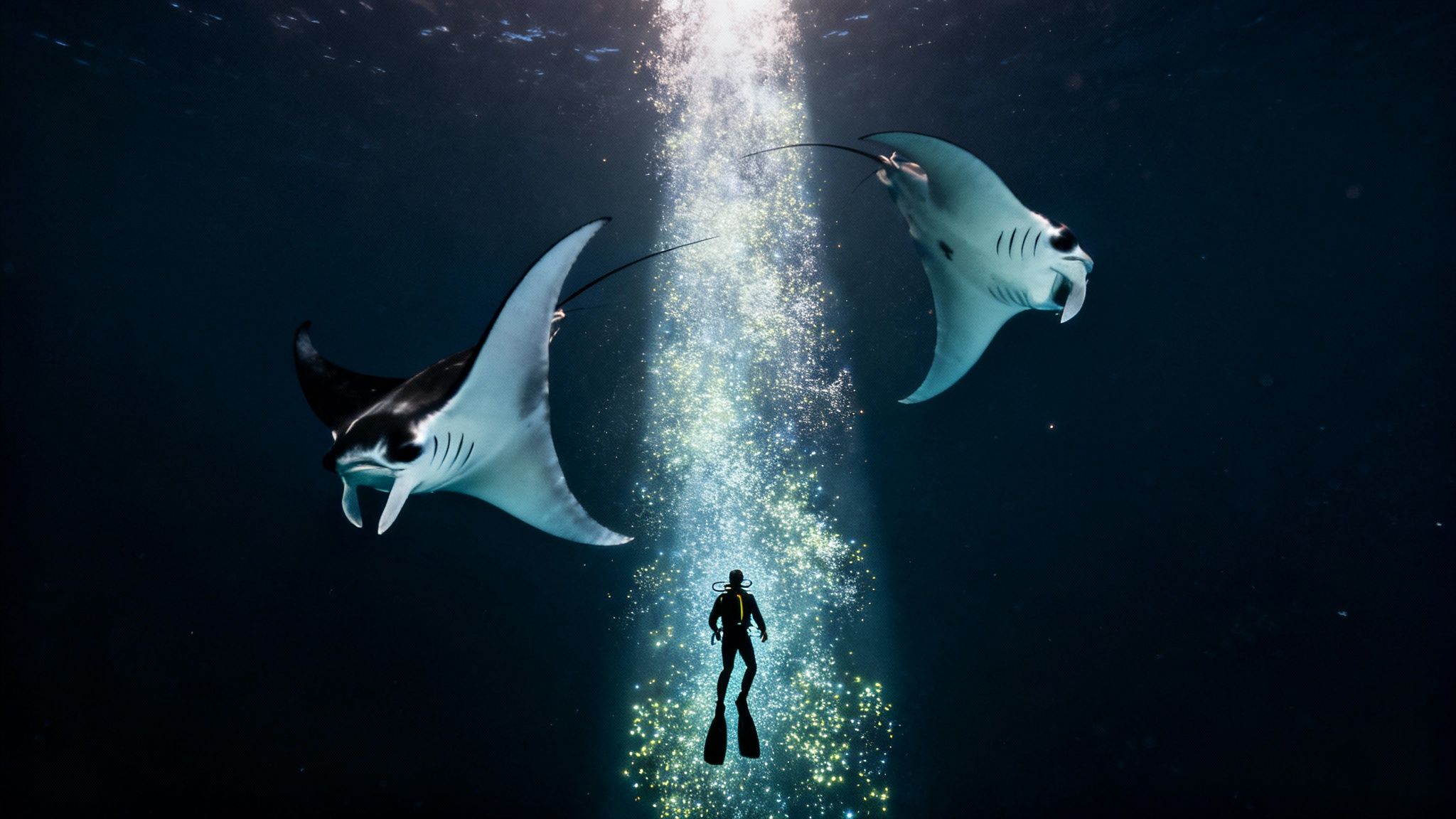
This isn't just about spotting some fish in the ocean; it's a full-on immersive performance. The entire spectacle hinges on a simple, brilliant idea. Dive operators submerge powerful lights on the ocean floor, which act like a massive bug zapper for the sea, attracting clouds of tiny plankton.
This all-you-can-eat buffet is exactly what the local manta rays are looking for. They swoop in to feast, performing these incredible, acrobatic barrel rolls as they filter the plankton from the water. The way they move through the beams of light is just mesmerizing. It's an up-close and personal encounter that feels absolutely otherworldly.
Why Kona Is the World's Premier Manta Destination
Sure, you can find manta rays in other places, but nothing compares to the experience in Kona. The island's unique underwater landscape, formed by ancient lava flows, has created naturally sheltered bays that are ideal feeding grounds. Because of this, a large, resident population of manta rays calls this area home, making sightings incredibly reliable all year long.
It's this consistency that really sets Kona apart. The sighting success rate for the manta ray night dive here is astonishing, with some spots reporting success over 90% of the time. This isn't just luck; it's a direct result of decades of dive operators creating a dependable feeding station that the mantas return to night after night. You can find more details on why the Kona Manta Ray Night Dive success rate is so high on konahonudivers.com.
This mix of perfect geography and reliable encounters has put the manta ray night dive in Kona on the bucket list of divers and ocean enthusiasts around the globe. For a safe and truly front-row seat to one of nature’s greatest shows, operators like Kona Honu Divers have the experience to make it unforgettable.
Choosing Your Adventure: Scuba Diving vs. Snorkeling
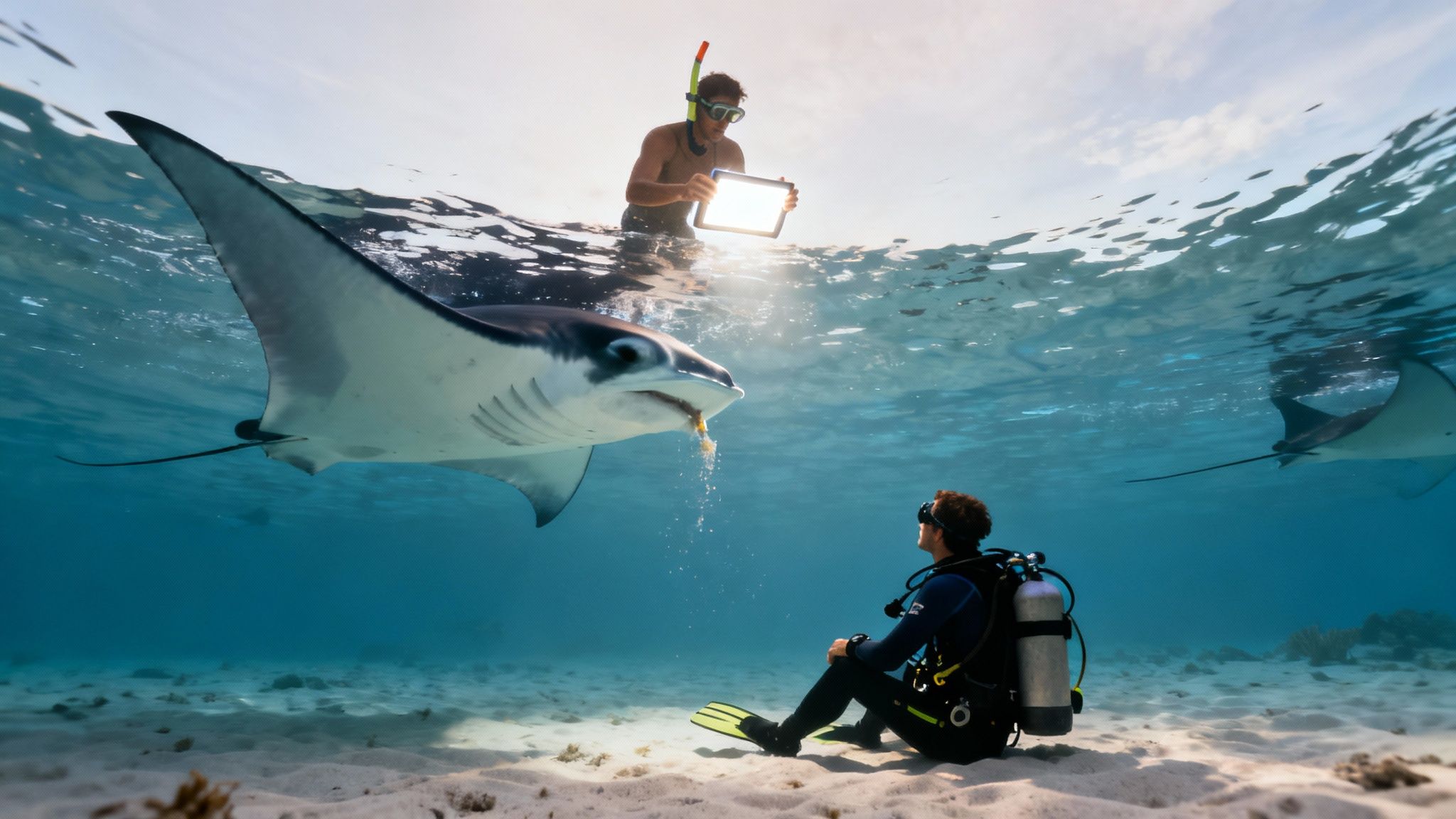
So, you're ready to see the famous Kona manta rays. The first big question you need to answer is: how do you want to see them? Are you picturing yourself on the ocean floor, looking up at these giants, or floating on the surface with a stunning bird's-eye view?
Both scuba diving Kona and snorkeling offer incredible, yet totally different, ways to experience the underwater ballet. Your choice really boils down to your personal comfort in the water, whether you're a certified diver, and what kind of memory you want to make. One isn't better than the other; they're just two unique tickets to the same spectacular show.
The Snorkeler's View From Above
If you're not a scuba diver or just prefer to stay on the surface, snorkeling is a fantastic way to witness the magic. We'll give you a specially designed, high-powered light board to hold onto. It's a brilliant piece of gear that serves two purposes: it gives you something stable to float with and, more importantly, it shines a powerful beam of light into the dark water, which is what attracts the plankton.
You'll float on the surface, looking down into the light as manta rays, some with wingspans wider than a car, glide and barrel roll right beneath you. It’s like having an aerial view of a dance floor, watching these graceful animals perform their acrobatic feeding routine.
The Scuba Diver's Immersive Experience
For certified scuba divers, the experience is completely different. You get to descend to the sandy bottom, around 30-40 feet deep, and find a spot to settle in. From there, you'll shine your dive light straight up, creating a column of light that acts like a dinner bell for the plankton—and in turn, the mantas.
Being on the ocean floor puts you right in their world. The mantas will swoop down, sometimes passing just inches over your head, their massive bodies momentarily blocking out everything. It’s a humbling, awe-inspiring feeling to be that close to such magnificent creatures.
To help you decide which path is right for you, here’s a quick breakdown of what to expect from each experience.
Manta Ray Night Experience: Diver vs. Snorkeler
| Feature | Scuba Diver Experience | Snorkeler Experience |
|---|---|---|
| Perspective | Bottom-up view from the ocean floor. | Top-down "bird's-eye" view from the surface. |
| Proximity | Mantas can glide inches above your head. | Mantas swim just a few feet below you. |
| Requirements | Scuba certification is mandatory. | No certification needed; basic swimming ability. |
| Equipment | Full scuba gear and a dive light. | Wetsuit, snorkel gear, and a floating light board. |
| Depth | Around 30-40 feet on the sandy bottom. | Floating on the surface (0 feet). |
| Best For | Certified divers wanting an immersive encounter. | Non-divers, families, and those who prefer the surface. |
Ultimately, both options provide an unforgettable front-row seat to one of the most incredible wildlife encounters on the planet.
Still on the fence? We've got a more detailed guide that can help you figure out if it's better to snorkel or dive with manta rays.
No matter which adventure you pick for your Kona manta ray tour, you're in for a night you’ll be talking about for years to come.
What to Expect on Your Manta Ray Night Tour
Knowing what’s going to happen step-by-step on a manta ray night dive in Kona can help turn any pre-trip nervousness into pure, unadulterated excitement. So let's pull back the curtain on the whole experience, from the moment you step onto the dock to the moment you’re heading back to shore, buzzing with what you just saw.
Your night kicks off at the harbor, where the crew will welcome you aboard. The check-in is usually quick and painless. They'll get you sized up for gear, including a wetsuit to keep you warm, giving you a chance to meet the other divers and snorkelers who are just as thrilled as you are.
The Boat Briefing and Journey to the Dive Site
Before you even cast off, the guides will run through a detailed boat briefing. This is a critical part of the tour, so it’s time to listen up! They’ll cover all the boat's safety features and lay out the plan for the entire evening.
Most importantly, this is when you’ll learn the golden rules of a safe and respectful manta encounter. The absolute number one rule is simple: look, but don’t touch. The guides will explain exactly why this is so important—it protects the mantas' delicate skin and ensures we don't disrupt their natural feeding habits.
With the briefing done, the real adventure begins. The boat ride out to one of the iconic sites like Manta Heaven or Manta Village is an experience in itself. You'll get to watch the sun dip below the Pacific horizon, often painting the sky with incredible colors. It’s the perfect opening act for the main event.
In the Water: The Famous Manta 'Campfire'
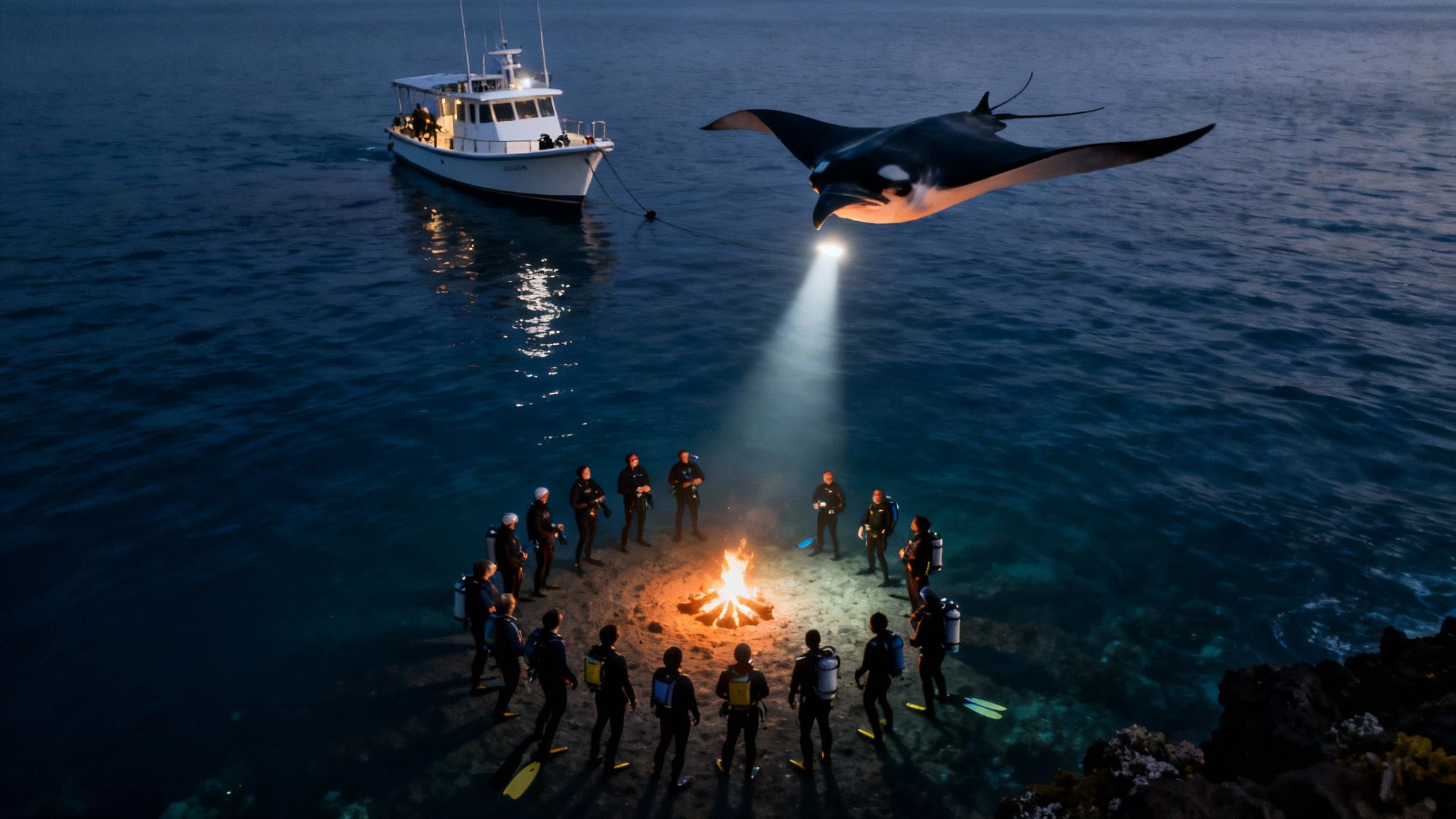
Once the boat is anchored, it’s time to hit the water. If you’re a scuba diver, this is where things get truly magical. You’ll make a controlled descent to the sandy bottom, usually somewhere around 30-40 feet deep, and gather in a circle around a powerful central light source.
This setup is affectionately known as the "campfire." Divers kneel or sit comfortably on the sand, pointing their dive lights straight up. Together, these beams of light create a massive column that attracts plankton, the mantas' favorite food. You're basically setting the table for a feast.
You can expect to be in the water for about 45-60 minutes. This gives you more than enough time to witness the mantas glide, swoop, and perform their hypnotic feeding ballet right over your head. The water is pleasantly warm all year, and the wetsuit will keep you perfectly comfortable for the whole show.
After your time with the mantas wraps up, you'll head back to the boat. The crew will be right there to help you out of the water, get your gear off, and hand you a warm drink and some snacks for the ride home. This is always a great time to swap stories, share photos with new friends, and just soak in the afterglow of one of the planet's most incredible wildlife encounters.
How to Be a Responsible Manta Ray Observer
Witnessing the manta ray ballet is a privilege, plain and simple. The entire future of the manta ray night dive in Kona depends on a healthy, thriving manta population, and that’s a responsibility we all share. Every single person in the water plays a part in keeping these gentle giants safe.
The core principle is simple: passive interaction. Think of yourself as a quiet guest in their underwater dining room. You're there to observe their incredible, natural behavior, not to become part of the show. That means looking but never, ever touching. Manta rays have a delicate mucus coating on their skin that acts as a shield, and our touch can strip it away, leaving them vulnerable to nasty infections.
Giving Them Space to Feed
Giving the mantas plenty of space is absolutely critical. Chasing, cornering, or blocking a manta's path is a huge no-no. It causes them stress and, just as importantly, interrupts their feeding—which is the whole reason they’re there! The lights bring in the plankton, and the mantas show up for dinner. Our job is to stay out of the way and let them eat.
To make sure everyone (mantas included) has a great experience, stick to these essential guidelines:
- No Touching: This is the golden rule. We can't say it enough. Resist every impulse to reach out. Even a slight touch can harm their protective skin.
- Stay in Your Zone: If you're a diver, your place is on or near the sandy bottom. If you're a snorkeler, you stay on the surface. This creates a clear "water column" in the middle for the mantas to do their thing.
- Don't Chase: Let the mantas come to you. Trust us, they will. Chasing them only scares them off and ruins the experience for the entire group.
- Watch Your Bubbles: For our scuba divers, try to time your breathing. Avoid exhaling a big cloud of bubbles right into a manta’s face as it glides overhead.
Night Diving Safety and Etiquette
How you act in the water doesn't just protect the mantas; it keeps you and everyone else safe, too. For divers, solid buoyancy control is a must. It keeps you from accidentally kicking up sand, bumping into other divers, or making contact with the animals swimming above you.
Be smart with your dive light, too. There's a system to it. Divers point their lights upwards from the bottom to attract plankton. Snorkelers point their lights downwards from the surface. This teamwork creates a concentrated column of food, drawing the mantas right in. Never shine your light directly into a manta's eyes or into the face of another person.
By following these simple rules, you're doing more than just having an amazing dive—you're actively helping to conserve Kona's world-famous manta ray population. Your respect ensures this magical encounter will be here for generations to come. For more on proper underwater conduct, take a look at our guide on responsible and considerate diver etiquette.
Getting to Know the Resident Kona Manta Rays
One of the coolest parts of the manta ray night dive in Kona is that you’re not just watching wildlife—you’re meeting local celebrities. The mantas here aren't just passing through; they're a resident population. In fact, many are so familiar to the local guides and researchers that they actually have names.
This completely changes the dynamic of the dive. It’s not about seeing a manta ray. Your guide might point one out and say, "Hey, that's Lefty!" and tell you a little about its story. It feels like being introduced to a famous local who just happens to have a 12-foot wingspan.
So, How Do They Get Their Names?
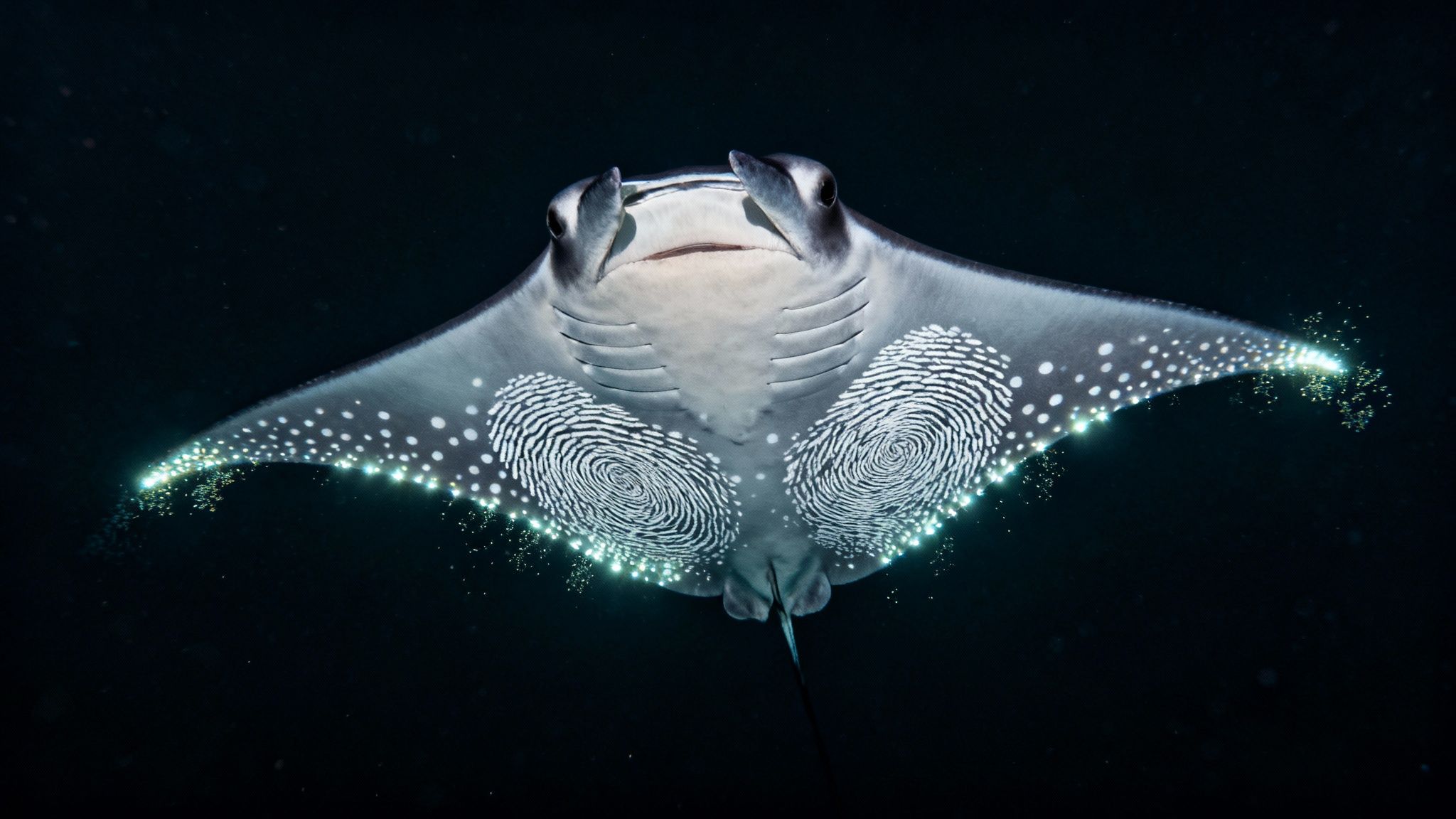
You might be wondering how anyone can tell these massive creatures apart, especially at night. The secret is on their bellies. Every single manta ray has a unique pattern of black spots on its white underside, much like a human fingerprint. These markings are permanent, allowing scientists and dive operators to identify and track them for life.
When a new, unknown manta shows up, someone snaps a photo of its belly. That picture goes into a huge database, and the manta gets a name. Over decades, this has allowed the local community to build something of a family tree, tracking famous regulars like:
- Lefty: Easily recognized by his injured left cephalic fin (the little fins near the mouth).
- Big Bertha: One of the largest and most famous females in the area.
- Uhane: A beloved and frequent visitor to the feeding sites.
Meeting these underwater personalities adds an entirely new dimension to your dive. You start to recognize them, learn their stories, and feel a real connection. It’s this deep sense of familiarity that makes the Kona experience so special.
The Kona Coast is home to a thriving population of nearly 200 individually identified manta rays. This is a big deal, and it's all thanks to the dedicated community of researchers and tour operators who monitor them. Back in 2013, at Manta Heaven (one of the prime spots), divers saw an average of 11 manta rays per night! You can read more about the incredible Kona manta ray population to get a feel for how healthy it is.
Your Dive Makes a Difference
This whole identification process isn't just for fun; it's a cornerstone of conservation. The data collected gives researchers a window into the mantas' population health, their behavior, and their life cycles.
When you book a manta ray dive tour, you're not just a tourist. You're directly supporting these critical efforts and helping protect this amazing marine population for generations to come.
Explore More of Kona’s Underwater World
While the manta ray night dive in Kona is an absolute bucket-list experience, it's really just the beginning of what the Big Island has to offer. The underwater adventure doesn't stop when the sun comes up. Kona's coastline is a diver's playground, packed with a ton of different experiences to round out your trip.
After the famous night dive, you can spend your days exploring some of the most unique underwater landscapes on the planet. Kona is known for its breathtaking coral reefs, which are just bursting with colorful fish and other marine critters. Many daytime diving adventures in Kona will guide you through ancient lava tubes and dramatic archways, giving you a completely different kind of thrill. These volcanic formations create an incredible playground for divers and a perfect home for countless species.
Dive Into the Abyss on a Blackwater Dive
If you thought the manta dive was the ultimate nighttime adventure, you're in for a surprise. For divers who are after something truly surreal and otherworldly, the Kona blackwater dive is a mind-bending experience you'll never forget. You'll find yourself drifting in the deep, dark ocean miles from shore, suspended over thousands of feet of water.
This is where you get to witness the largest migration on Earth. Strange, bioluminescent creatures rise from the abyss to feed near the surface, all under the cover of darkness. It’s a face-to-face encounter with life forms that look like they’ve been pulled straight from a sci-fi movie—a totally different and mesmerizing kind of night dive.
Advanced Dives for the Experienced Diver
For certified divers with some solid experience, Kona serves up challenges that will definitely put your skills to the test. We have advanced dive sites that feature deeper reefs, stronger currents, and the chance to spot larger pelagic species like sharks and eagle rays. These dives give you a whole new appreciation for the powerful volcanic forces that shaped this island. To get a better idea of all the possibilities, check out our guide to the top Kona dive sites.
Your Questions Answered
Got a few last-minute questions before you commit to this incredible adventure? It’s completely normal. Let’s clear up some of the most common things people ask about the Kona manta ray night dive.
Is This Manta Ray Experience Safe for Beginners?
Absolutely. Whether you're a seasoned diver or have never even put on a snorkel mask before, the tour operators have you covered. The whole operation is designed to be incredibly safe and accessible.
If you’re snorkeling, you don't need any prior experience. You'll just float on the surface holding onto a custom-built light board. For divers, you’ll need your open water certification, but don't let that intimidate you. The dive itself is shallow and you stay in one spot, so it’s a perfect and relatively simple dive for those who are newly certified.
When Is the Best Time of Year to See Manta Rays?
Believe it or not, there's no "bad" time to go. The manta rays are here in Kona all year round, which is one of the things that makes this experience so special. The chance of seeing them is consistently high no matter when you book your trip.
This incredible reliability is why an estimated 80,000 people a year get to witness this spectacle firsthand. You can read more about why this is such a popular Kona activity on konasnorkeltrips.com.
Will I Get Cold in the Water at Night?
Kona's waters are pretty warm, but you'll be in the ocean for about 45-60 minutes after the sun goes down, so a chill can definitely set in. Don't worry, though—every tour operator provides a wetsuit to keep you warm and comfortable.
If you tend to get cold easily, it's a good idea to ask your chosen operator what thickness their wetsuits are.
Ready for an underwater show you'll never forget? Kona Honu Divers runs one of the best-rated manta ray dive tours on the island. It's an experience that truly leaves you breathless. Go ahead and book your spot!