
Picture this: you're descending into the warm, dark Pacific waters off the coast of Kona. Suddenly, a giant, graceful creature with the wingspan of a small car glides effortlessly overhead, like an underwater acrobat. This isn't a scene from a movie; it's the manta ray night dive in Kona, a true bucket-list experience that many call one of the best night dives in the world.
It’s an almost surreal encounter where divers and snorkelers get a front-row seat to watch massive manta rays feast on plankton, all illuminated by powerful underwater lights.
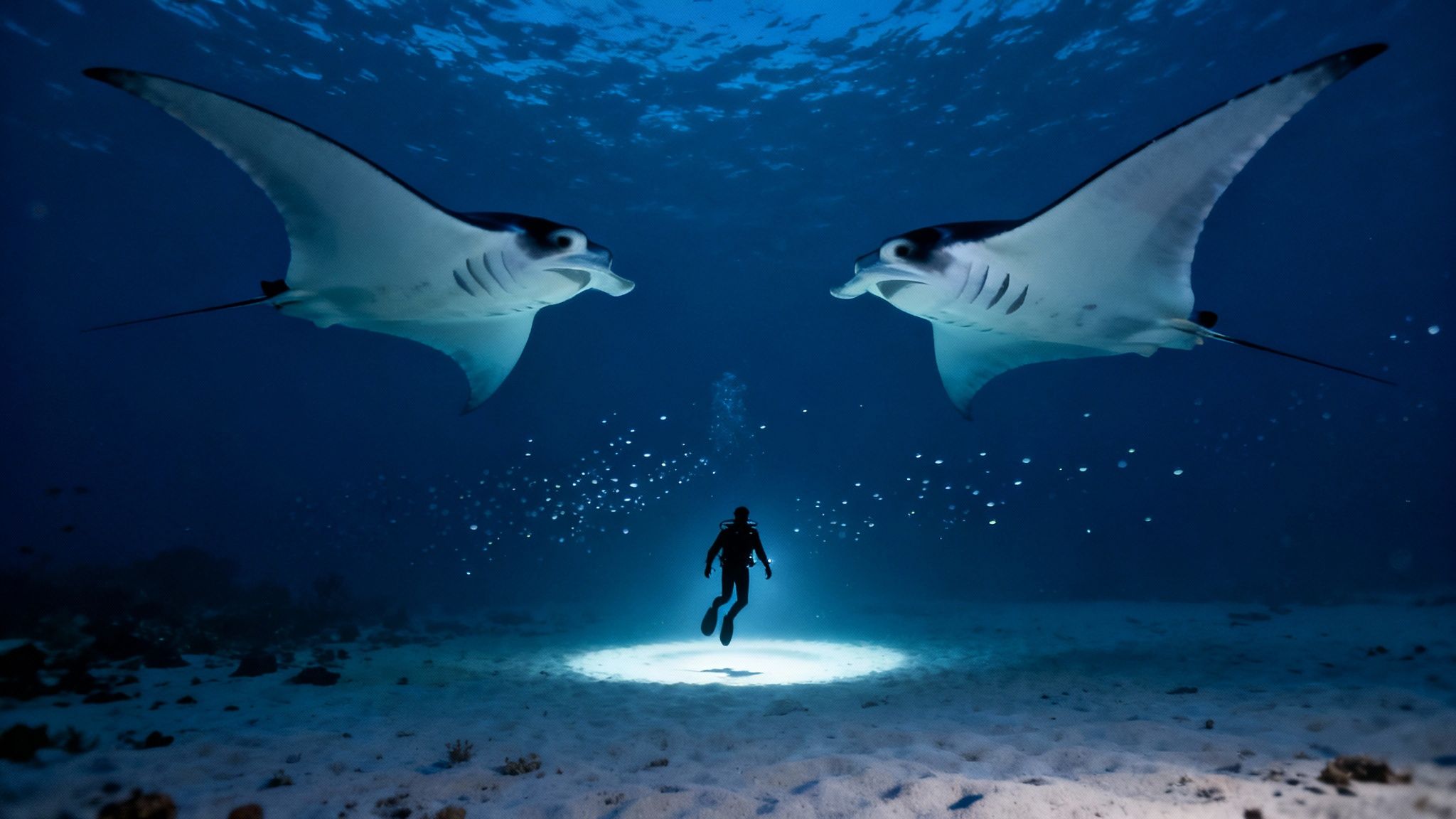
Welcome to the World’s Premier Manta Ray Encounter
There's a very good reason the Kona coast is world-famous. It offers a consistently magical underwater show you simply won't find anywhere else. This guide will walk you through everything you need to know about this incredible adventure and explain why Kona's unique environment sets the perfect stage for these "ballerinas of the sea."
With an estimated 80,000 participants annually, the Kona manta ray dive is one of the most productive and popular in the world. Its fame comes from an incredible 85% to 95% sighting success rate, making an encounter almost guaranteed.
The dive itself is very accessible, taking place in calm, shallow waters between 30 to 40 feet. This allows for plenty of bottom time—typically 45 to 60 minutes—to just relax and take in the show. You can learn more about what makes the Kona manta ray night dive such an iconic experience.
What Makes This Dive So Special?
This is so much more than just looking at fish. It's a peaceful, immersive, and truly awe-inspiring event. Local operators like Kona Honu Divers have the logistics dialed in to ensure a safe and breathtaking adventure for everyone. The concept is beautifully simple: powerful lights are placed on the ocean floor, which attracts clouds of plankton. This floating buffet, in turn, draws in the hungry manta rays.
"Diving with mantas is one of the most satisfying things a person can do in the water. It’s impossible to describe the feeling of watching a massive fish the shape of a stealth bomber coming into vision."
This setup lets you witness the mantas' natural feeding behavior up close as they perform graceful barrel rolls and somersaults to scoop up the plankton. Whether you're a seasoned diver or trying snorkeling for the first time, it's an accessible and profound experience. For another great perspective, check out this Ultimate Guide to the Kona Manta Ray Night Snorkel.
Setting the Stage for an Unforgettable Journey
Joining a manta ray night dive in Kona is an opportunity to connect with the ocean in a way you'll never forget. These gentle giants, some with wingspans over 12 feet, glide just inches from you, creating a silent, mesmerizing underwater ballet.
Here's a quick look at what makes this a must-do activity:
- High Success Rate: The incredible reliability of sightings makes it a dependable highlight for any trip to Hawaii.
- Accessibility for All: Since both certified divers and snorkelers can participate, it’s a fantastic activity for families and groups with mixed experience levels.
- Focus on Conservation: Reputable tour operators are deeply committed to protecting these amazing animals and often contribute to ongoing research.
Ready to see it for yourself? Let's dive into the details that will help you plan the adventure of a lifetime.
A Step-by-Step Walkthrough of Your Dive
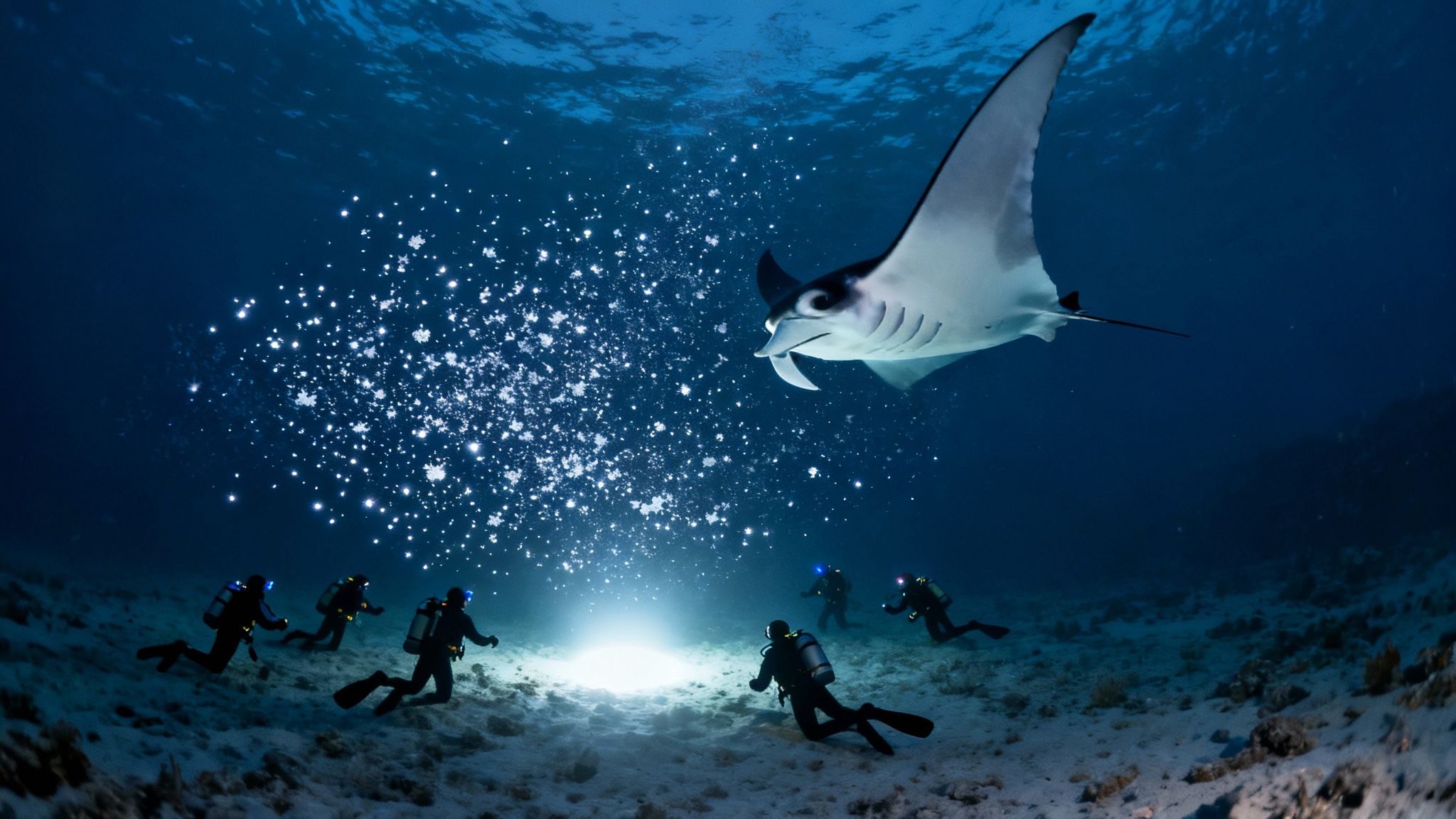
So, what’s it really like to be on a manta ray night dive in Kona? People often describe it as otherworldly, like watching a silent, underwater ballet performed by gentle giants. To give you a real feel for it, let's walk through the entire journey, from the moment you step on the boat to your final ascent.
The buzz of anticipation starts long before you even touch the water. It all begins with a thorough pre-dive briefing from the crew. This is a critical moment where your divemasters lay out the plan for the night, making sure everyone feels confident and prepared. They'll run through safety procedures, special hand signals for night diving, and, most importantly, the rules for respectfully interacting with the manta rays.
The golden rule is passive observation. You'll be asked to never touch, chase, or block a manta's path. This isn't just for their protection; it allows them to feed naturally and gives everyone a much more authentic, awe-inspiring experience.
Once the briefing is done and the gear checks are complete, it's time to make your entry as dusk settles over the Kona coast. The descent is usually slow and calm, with your divemaster’s light guiding the way. You're not heading for a coral reef, but for a specific sandy patch on the seafloor, typically at a comfortable depth of 30 to 40 feet.
Finding Your Spot at the Underwater Campfire
When you reach the bottom, your guide will help you find a spot to settle in with your group. The centerpiece of the whole operation is a set of powerful lights placed in the middle of the site—we affectionately call it the "underwater campfire." This is where the magic happens.
The beams of light shooting up into the dark water act like a massive bug zapper for microscopic plankton. Within minutes, thick, swirling clouds of these tiny creatures gather, creating a floating, all-you-can-eat buffet. This concentrated feast is the dinner bell that rings for the local manta rays.
This simple yet brilliant setup is what makes the manta ray night dive in Kona so reliably spectacular. It lets us divers stay put and watch the mantas' natural feeding behavior without getting in their way. You just get comfortable on the sand, point your dive light up to add to the attraction, and wait for the show to begin.
The Graceful Ballet Begins
You usually don't have to wait long. The first sign might be a massive shadow gliding through the edge of the light. Then, one by one, the manta rays soar into the illuminated arena. They perform these incredible, graceful somersaults and barrel rolls, scooping up mouthfuls of plankton as they go.
It's absolutely exhilarating. These huge animals, with wingspans that can stretch over 12 feet, will often glide just inches above your head. You get a perfect view of the intricate spot patterns on their bellies, which are like fingerprints that researchers use to identify each individual. The only sounds are the rhythmic hum of your own breathing and the soft bubbles of your fellow divers, making it a serene and deeply personal encounter. You can see how this all fits into the schedule by checking out the itinerary on the manta ray dive tour page.
This silent, elegant ballet continues for your entire bottom time, which is typically about 45 minutes. When it's time to go, you'll ascend slowly, leaving the mantas to their feast. The boat ride back to the harbor is always buzzing with excitement as everyone shares their favorite moments from the unforgettable show below.
Getting to Know Kona’s Famous Manta Rays
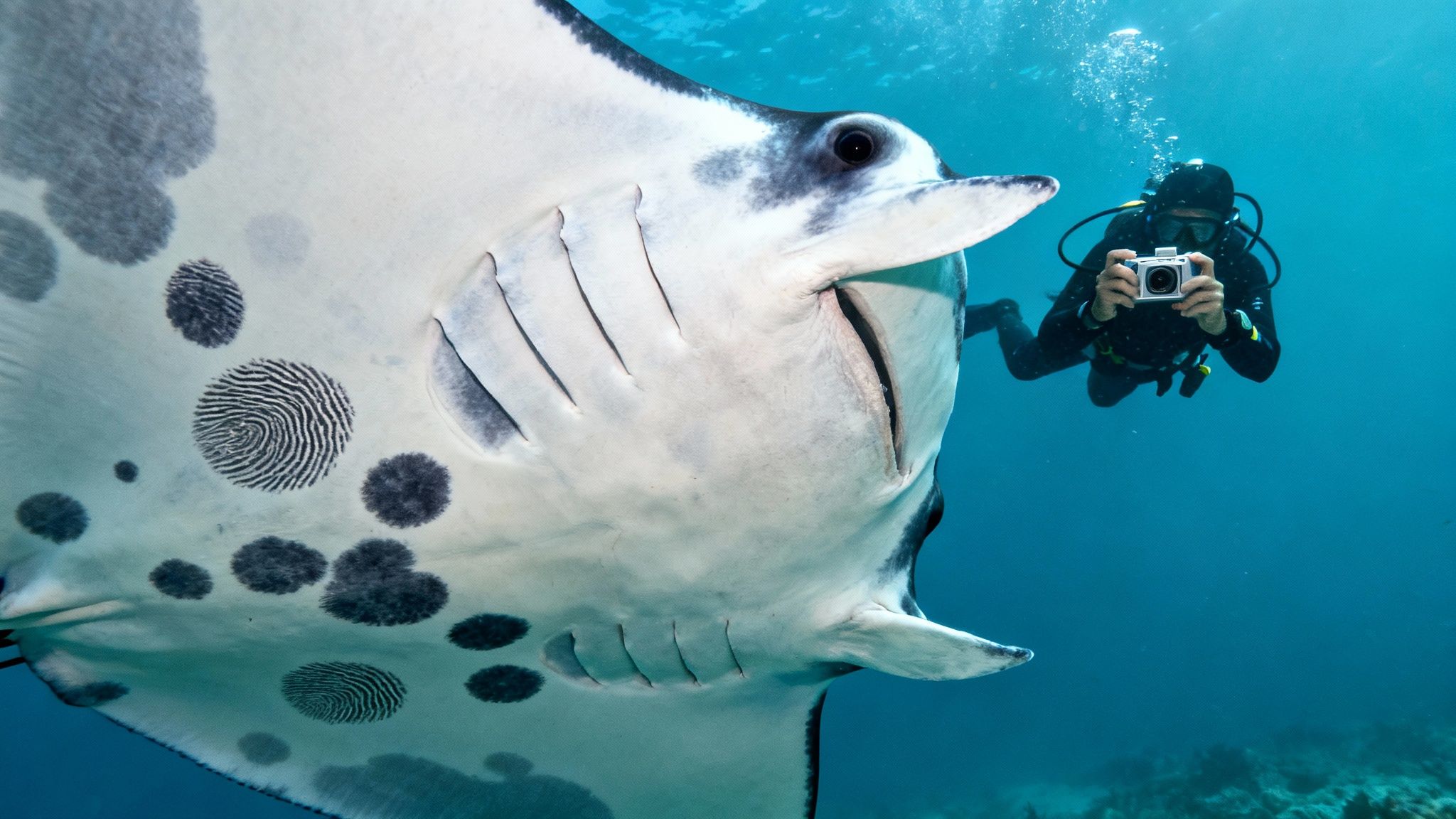
The manta ray night dive in Kona isn't just an incredible spectacle; it's more like a meet-and-greet with local celebrities. Every manta you see is a known individual, a long-term resident of the Kona coast.
So, how do we tell them apart? Researchers and veteran divemasters identify each one by the unique constellation of black spots on their white bellies. These patterns are as distinct as a human fingerprint, allowing every manta to be named, tracked, and studied over its entire lifetime.
You're not just seeing anonymous wildlife. You might be meeting famous residents like "Big Bertha," "Lefty," or "Koie," who have been gracefully greeting divers for years. Each has a known history and personality, transforming your dive from a sightseeing trip into a real interaction.
The Science Behind the Spectacle
What makes this little slice of the Pacific so special for manta rays? It boils down to a perfect recipe of geography and a reliable food source. The sheltered bays provide calm waters, while deep offshore currents deliver a steady supply of plankton-rich water.
This dependable "plankton buffet" is precisely why the mantas return to the same spots, night after night. And the best part? Your participation helps protect them. Reputable operators like Kona Honu Divers collaborate with marine biologists, turning every dive into a valuable data collection opportunity.
When your guide points out a manta and names it, that sighting is often recorded. This citizen science effort helps researchers understand:
- Population Health: Tracking individuals gives a more accurate picture of the local manta population size and its well-being.
- Behavioral Patterns: The data reveals how mantas interact, their specific feeding habits, and even their social structures.
- Site Fidelity: It shows which mantas prefer which "restaurants" (dive sites) and how often they visit.
By simply joining a tour, you become an active participant in protecting these magnificent creatures. The information gathered on your dive helps shape policies that keep Kona a safe haven for mantas for generations to come.
Decades of Dedicated Research
The knowledge we have about Kona's mantas is simply staggering, built on years of meticulous observation. An extensive study between 2009 and 2014 stands as one of the most complete ecological monitoring efforts for this species anywhere on the planet.
During that time, a team of divers, videographers, and marine biologists logged over 10,000 separate sightings, cataloging more than 300 individual manta rays. This groundbreaking research confirmed that mantas consistently return to specific feeding sites like 'Manta Village' and 'Manta Heaven,' with their attendance influenced by plankton levels and lunar cycles. You can dive deeper into the fascinating statistical findings from this study.
This deep understanding helps us manage the dive sites responsibly. While the dive lights create a predictable food source by attracting plankton, it’s the long-term commitment to research that ensures the experience is sustainable. Knowing the story behind the animal gracefully soaring above you adds an entirely new dimension to an already unforgettable encounter, making your manta ray night dive in Kona a truly profound experience.
Choosing the Best Time for Your Manta Dive
Timing can make all the difference when you're planning an unforgettable manta ray night dive in Kona. While our resident mantas are here year-round, certain conditions can turn a great dive into a truly mind-blowing one. If you understand how the seasons, the moon, and even the specific dive site come into play, you can pick the perfect window for your trip.
The seasons definitely have a say in the matter. Summer, from about June through August, typically gives us the flattest, calmest ocean and fantastic visibility. This not only makes for a much smoother boat ride but also means your chances of a stellar encounter are sky-high, with sighting rates often pushing past 90%. Winter, on the other hand, can be a bit more unpredictable. From November to March, the seas can get rougher, which sometimes leads to more challenging conditions or even cancellations. For a deeper dive into this, check out our guide on the best time of year to see manta rays in Kona.
The Moon and the Mantas
Beyond the time of year, one of the most interesting factors we see out on the water is the lunar cycle. The amount of moonlight has a direct effect on the underwater world and how the mantas feed.
We’ve found that the nights around a new moon are often the absolute best time for a manta dive. With a dark sky, our lights create a super-concentrated beacon, pulling in massive clouds of plankton. The result? A more intense, action-packed feeding frenzy right in front of you.
This effect is boosted by bioluminescent plankton, which glows much more brightly when there's no moonlight to wash it out. You can absolutely see mantas on any given night, but aiming for a new moon can seriously ramp up the "wow" factor.
Comparing the Two Premier Dive Locations
Here in Kona, two dive sites have become world-famous for their reliable manta encounters: Manta Heaven and Manta Village. They each offer a slightly different vibe, so the choice really comes down to what you're looking for.
- Manta Heaven (Garden Eel Cove): Located just north of the airport, this site is legendary for attracting huge numbers of manta rays. The underwater layout here can act like a funnel for plankton, making it a five-star restaurant for mantas.
- Manta Village (Keauhou Bay): This is the original manta site, located south of Kona. It’s known for being incredibly consistent and is often shallower and more protected from the swell, making it a fantastic option for divers of all experience levels.
The best manta ray night dives happen when the conditions align. Calm summer seas, clear water, and a dark, moonless night create the perfect stage for the mantas to put on a show. The table below lays out these key factors to help you nail down the perfect time for your underwater adventure.
Manta Ray Night Dive Kona Planning Guide
| Factor | Optimal Conditions | Considerations |
|---|---|---|
| Season | Summer (June – August) | Summer offers the calmest seas and highest visibility. Winter can be less predictable with rougher conditions. |
| Lunar Phase | New Moon | Darker nights concentrate plankton around the lights, often leading to more intense manta feeding activity. |
| Dive Site | Manta Heaven or Manta Village | Manta Heaven may have more mantas, while Manta Village is known for its high consistency and calmer conditions. |
At the end of the day, there's no "bad" time to go. But a little planning around these elements can help you make the absolute most of this incredible opportunity.
How to Prepare for Your Dive Adventure
A little preparation goes a long way in making sure you can soak in every incredible moment of your manta ray night dive in Kona. This is your pre-dive checklist, designed to get you to the dock feeling confident, comfortable, and ready for the main event. When you're not worrying about the small stuff, you can focus on the graceful giants gliding overhead.
First things first, let's talk qualifications. For scuba divers, a standard Open Water Diver certification is required. This ensures you have the core skills to be safe and relaxed underwater, especially in a night environment. If you're not a certified diver, don't worry! The snorkel option is just as breathtaking and doesn't require any prior certification.
Essential Skills and What to Bring
Beyond your certification card, a few practical skills will make your dive much smoother. The big one is buoyancy control. Since you'll be settled on the sandy bottom for the show, being able to hold your position without kicking up sand or floating up is crucial. Good buoyancy keeps the water clear for everyone and prevents you from accidentally getting too close to the mantas. For more tips on navigating the dark, check out our guide on what to expect when scuba diving at night.
Packing smart is all about comfort. Here’s a quick rundown of what you’ll want to have with you:
- A Towel and a Warm Jacket: Even in paradise, the boat ride back to the harbor can get surprisingly chilly after a night dive. A dry towel and a windbreaker are your best friends.
- Reef-Safe Sunscreen: If your trip starts before the sun goes down, make sure to apply reef-safe sunscreen to protect your skin and our delicate coral ecosystems.
- Reusable Water Bottle: Hydration is key. Bring a water bottle to stay refreshed before and after your time in the ocean.
- Proof of Certification: Don't forget your cert card! A digital copy on your phone usually works just fine and makes for a quick check-in.
While you're getting your dive-specific gear sorted, it's easy to forget the basics for the rest of your trip. For a more complete rundown of general travel items, this Ultimate Travel Packing List is a fantastic resource.
Understanding the Rules of Engagement
The most critical part of your prep is learning how to be a respectful observer. These guidelines are non-negotiable; they protect the manta rays and ensure this experience remains a sustainable, magical encounter for generations to come.
The number one rule is simple but absolute: never touch the manta rays. Their skin is coated in a protective mucous layer that acts like an immune system. Touching them can damage this coating, leaving these beautiful animals vulnerable to infection.
You'll be asked to stay on the bottom as a diver or at the surface as a snorkeler. This creates a safe "viewing theater" and gives the mantas a wide-open water column to feed and maneuver gracefully. By following these rules, you're not just a tourist—you're a guardian of Kona's beloved manta ray population.
Exploring More of Kona’s Underwater World
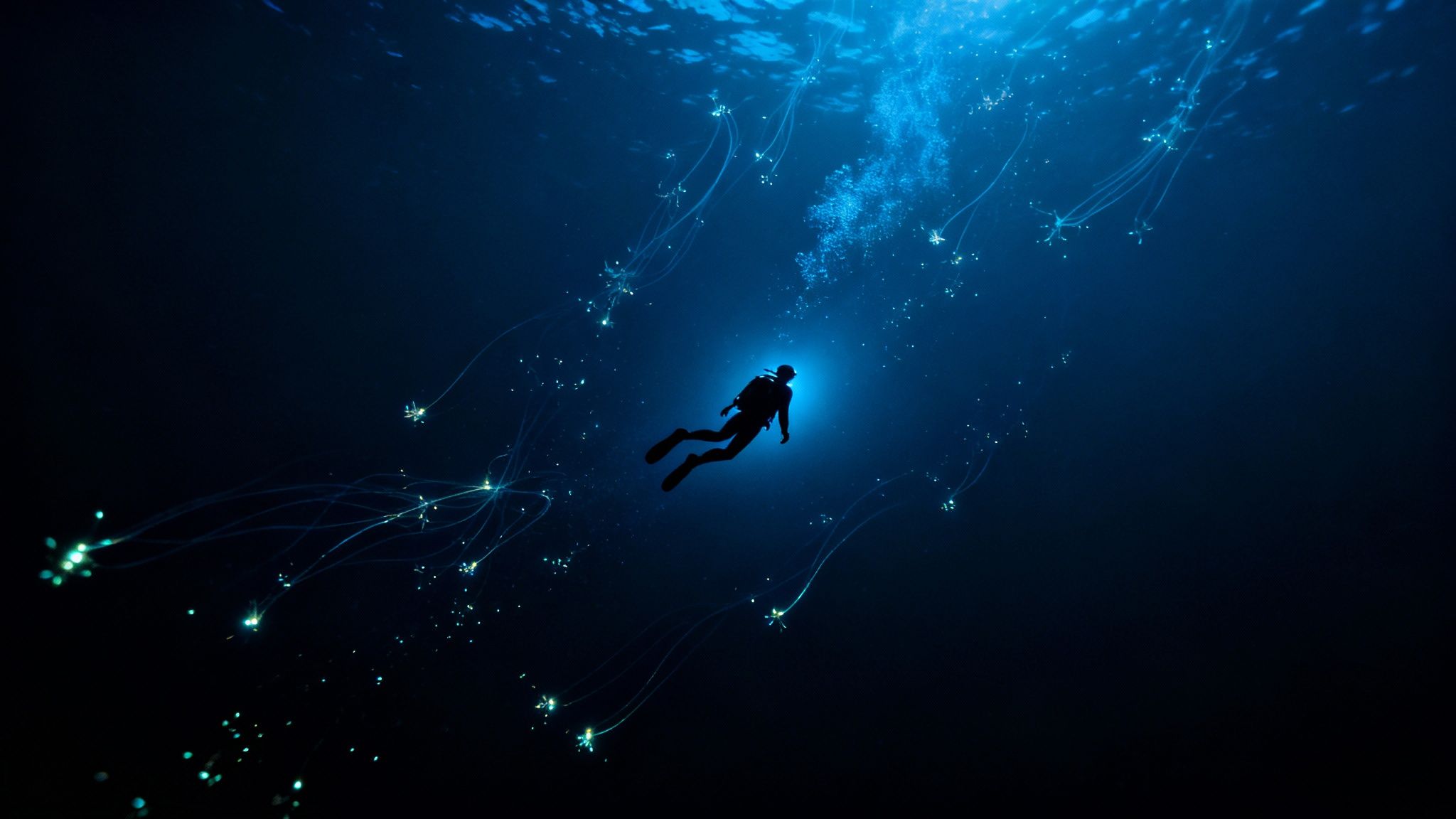
The unforgettable manta ray night dive in Kona is an absolute showstopper, but it's really just the opening act for the incredible underwater theater the Big Island has to offer. While the mantas definitely own the night, the daylight reveals a completely different world filled with vibrant coral gardens, dramatic lava tube swim-throughs, and a staggering amount of marine life.
Think of the manta dive as your perfect introduction to why Kona is considered a world-class diving destination. Once you’ve witnessed that ballet of gentle giants, you’ll be hooked and itching to see what else lies beneath the waves. The great news is, the adventure doesn't stop when the sun comes up. Kona’s coastline is dotted with dozens of unique dive sites, each one offering a new perspective. For a better look at what's possible, you can explore the many dive sites Kona Honu Divers will take you to.
Beyond the Manta Madness
If the thrill of night diving has you captivated, Kona has another surreal experience waiting in the wings: the Blackwater Dive. This is nothing like a reef dive. We head miles offshore and drift in the deep, open ocean. Suspended in the inky blackness, you'll come face-to-face with some of the ocean's strangest and most beautiful creatures—bioluminescent organisms and alien-like larvae that migrate from the abyss only under the cover of darkness. It’s a mind-bending adventure that feels more like floating through outer space than diving.
Of course, for those who love the brilliant colors of the day, our daytime scuba diving tours in Kona are a must. These trips showcase a variety of stunning underwater landscapes where you can expect to run into:
- Honu (Green Sea Turtles): It’s always a treat to see them resting peacefully on the reef or gracefully gliding by.
- Playful Dolphins: We’re often greeted by pods of spinner dolphins who love to put on an incredible acrobatic show.
- Reef Sharks: White-tip reef sharks are a common and exciting sight, usually found relaxing in sandy patches on the ocean floor.
For the Experienced Diver
Are you an experienced diver looking for a bit more of a challenge? Kona absolutely delivers. Our Advanced dive tours unlock deeper and more remote sites that very few divers ever get to see. These dives often feature more dramatic underwater topography, the occasional current, and a better chance to encounter larger pelagic species.
The sheer diversity of diving in Kona is what truly sets it apart. You can spend one night with gentle giants and the next day exploring ancient lava formations that are just teeming with life.
From the eerie beauty of a Kona Blackwater Dive to the sun-drenched coral gardens, there is a full spectrum of adventure waiting for you just beneath the surface. Let the manta dive be your gateway to exploring all the underwater wonders the Big Island has to offer.
Your Manta Dive Questions, Answered
Let's dive into some of the most common questions we hear from divers getting ready for their first manta ray night dive in Kona. We want you to feel completely prepared and excited for this incredible adventure.
Is This Dive Okay for New Divers?
Yes, absolutely. This is one of the most beginner-friendly night dives you can do. The plan is simple: we descend to a sandy bottom at about 30-40 feet and stay put, letting the show come to us.
There’s no complex navigation or swimming involved, which makes it perfect even if you just got your Open Water certification. Our divemasters give a thorough briefing beforehand and are in the water with you the whole time, making sure everyone is safe and having a blast.
What if I'm Not Scuba Certified? Can I Still See Them?
You sure can! The manta snorkel experience is just as breathtaking. Snorkelers gather around a specially designed float—basically a big, bright raft with powerful lights pointing down.
The lights draw in the plankton, and the mantas often swoop right up to the surface, performing barrel rolls just inches beneath you. It’s an amazing, top-down view of the action that rivals what the divers see from below.
Are We Guaranteed to See Manta Rays?
Manta rays are wild animals, so a sighting can never be 100% guaranteed. That said, the success rate in Kona is phenomenal, easily over 90% on most nights. These are well-established feeding sites the mantas have been visiting for decades.
Just in case you hit that rare, unlucky night, most reputable companies (including us!) have a "manta guarantee." If the mantas don't show, you can come back another night for free. Always double-check the policy when you book.
What’s the Best Camera to Bring?
To really capture the scale of these gentle giants, a wide-angle lens is your best friend. Their wingspans are huge, and a standard lens just won't fit it all in. You’ll also need external strobes or strong video lights; a camera's built-in flash will just light up all the tiny particles in the water, creating a "backscatter" snowstorm in your shot.
Action cameras like a GoPro are a fantastic, simple option because they handle low light well and have that wide view built-in. But honestly, the most important thing is to remember to put the camera down for a bit and just watch the spectacle with your own eyes. It’s something you’ll never forget.
Ready to see the underwater ballet for yourself? Kona Honu Divers runs expert-led tours focused on safety, respect for the mantas, and an unforgettable experience. You can find all the details and book your spot on our manta ray dive tours page.