
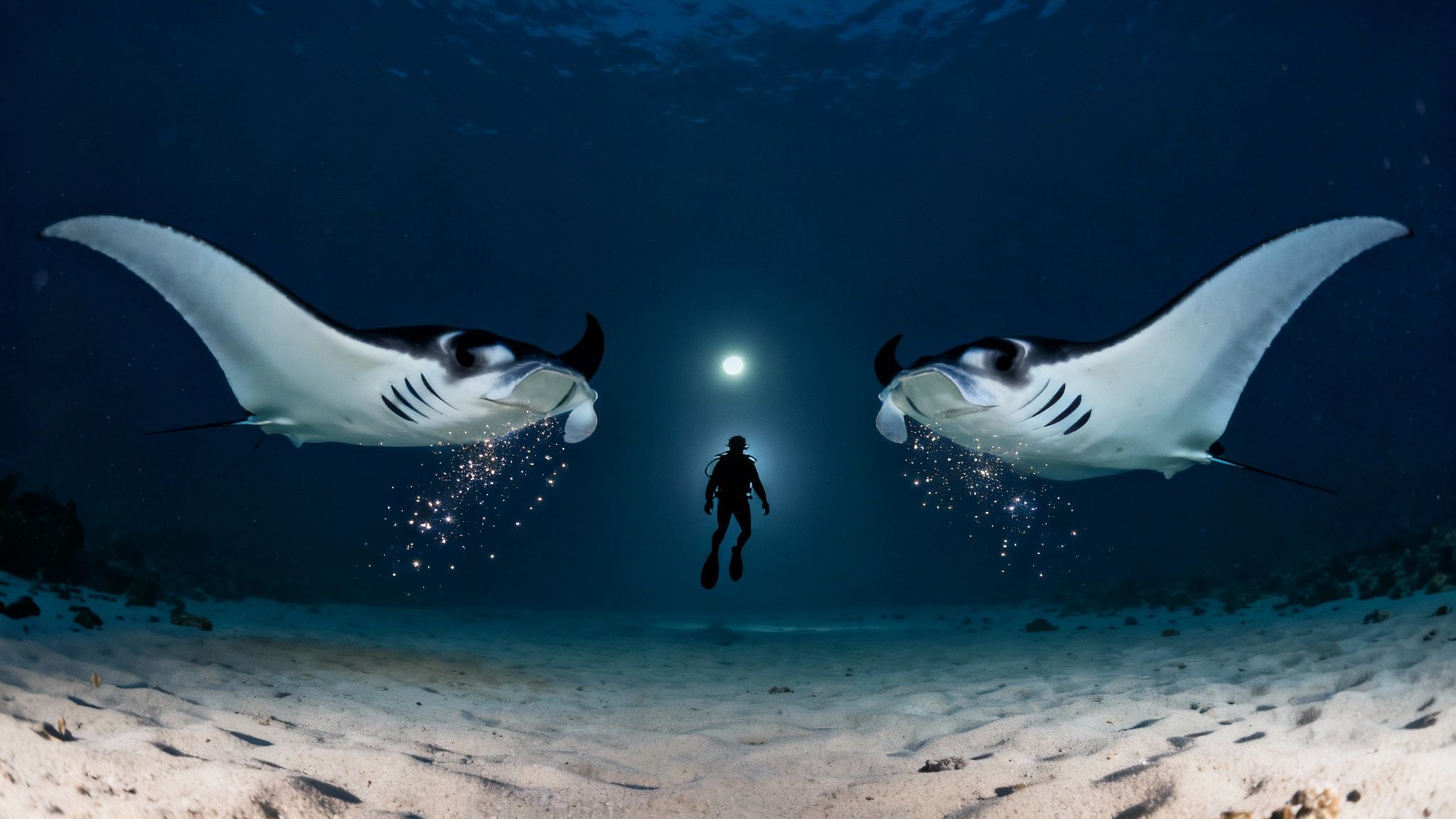
Imagine drifting in the warm, inky waters off Kona as colossal, ghostly silhouettes wheel gracefully around you. It feels less like a dive and more like front-row seats to nature’s most enchanting performance. Welcome to the manta ray night dive in Kona, the ultimate marine spectacle for anyone who craves an unforgettable underwater adventure.
Experience Kona’s Unforgettable Underwater Ballet
The Kona coast on Hawaii’s Big Island has earned its reputation as the world’s go-to spot for night-time manta encounters. Year after year, divers return spellbound, drawn by the promise of seeing these gentle giants up close.
As darkness falls, guides lead you to sandy patches on the sea floor and switch on bright lights aimed skyward. These beams lure in dense clouds of plankton, and soon enough the mantas arrive to feast—performing elegant barrel rolls and flips as they glide through the shimmer of suspended life.
What Makes This Dive So Special
Most manta tours elsewhere rely on “cleaning stations,” where rays pause to have parasites picked off by smaller fish. In Kona, you witness feeding behavior in its purest form—a truly dynamic show.
Key highlights of the manta ray night dive in Kona include:
- Up-Close Encounters: Mantas often sweep within inches, revealing their broad wingspans and unique spot patterns.
- Safe and Serene: These filter feeders carry no teeth, stingers, or barbs—just endless grace.
- Year-Round Magic: A resident population means you can book your dive any season and still catch the action.
A skilled guide is your ticket to a safe, ethical experience. They’ll share insights on manta biology and conservation, ensuring you leave with both memories and knowledge.
For many divers, this underwater ballet sparks a profound connection to the ocean. Kona Honu Divers specializes in small-group tours that balance thrill with respect for the reef. Below, we’ll cover everything from prep tips and gear recommendations to photography advice and booking details—so you’re ready to join this nocturnal spectacle.
Why Kona Is The Manta Ray Capital Of The World
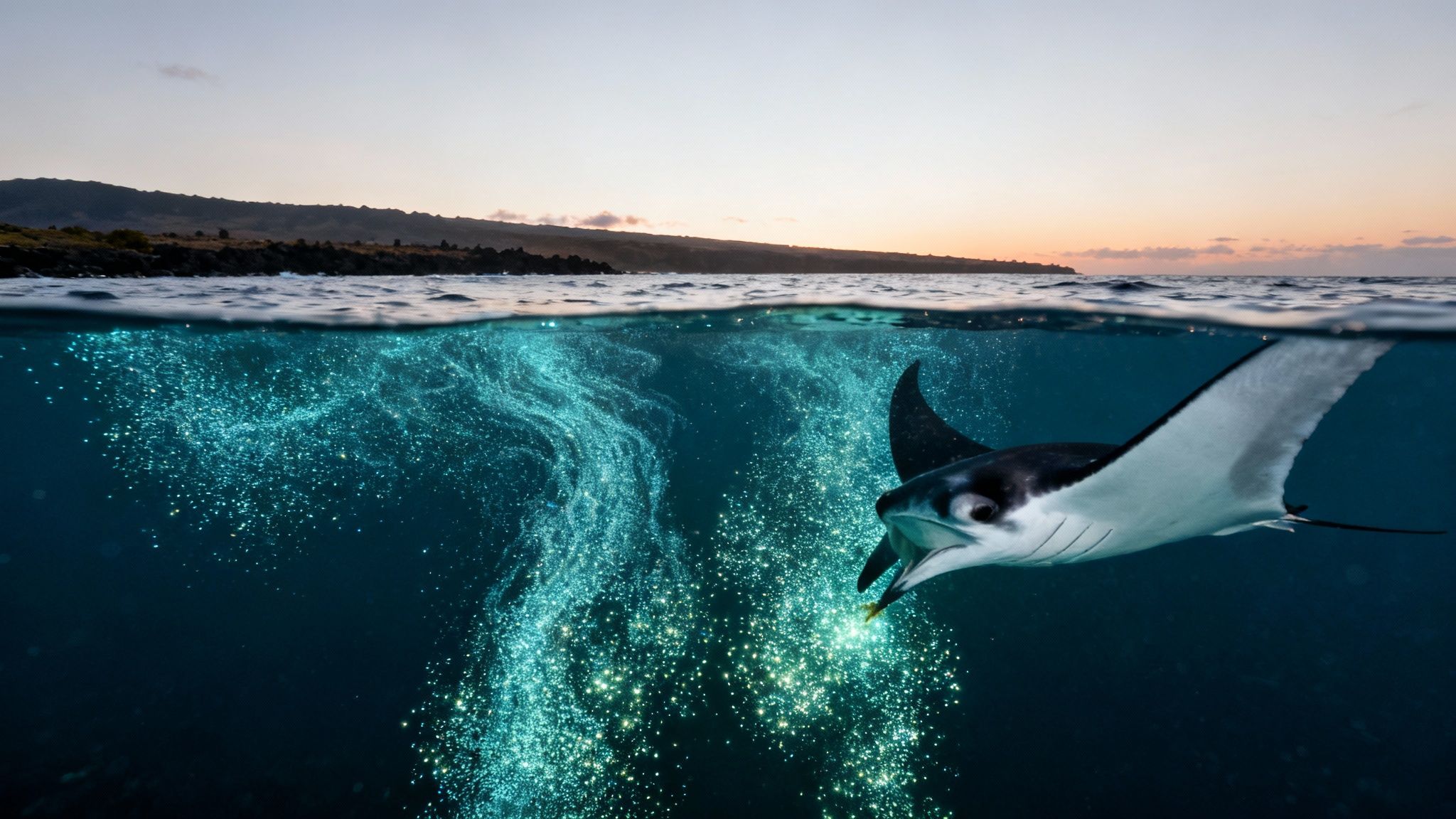
So, what makes the Kona coast the undisputed best place on the planet to see manta rays at night? It’s a perfect storm of geography, biology, and a bit of human ingenuity.
The secret starts with the island itself. Kona’s steep volcanic slopes plunge dramatically into the deep Pacific, creating a natural phenomenon called upwelling. This process pulls cold, nutrient-rich water up to the surface, which in turn feeds colossal blooms of plankton—the manta rays’ favorite meal.
For more than 30 years, local dive operators have learned to work with this natural buffet. By setting up powerful, eco-friendly lights on the seafloor at specific spots, they've created what are essentially underwater spotlights. The light attracts the plankton, and the plankton attracts the mantas. It's like ringing a dinner bell for these gentle giants.
Understanding Kona's Underwater Geography
The seafloor here isn’t just a flat, sandy bottom. Kona’s unique underwater landscape is perfectly designed to concentrate the plankton. The deep, cold water gets funneled toward the coast and mixes with the warmer surface layers, creating dense clouds of microscopic life right above the sandy patches where divers wait.
It’s a combination of a few key factors:
- Volcanic Slopes: These steep drop-offs are the engine, driving the nutrient flow that kicks off the whole food chain.
- Sandy Basins: The relatively flat, sandy areas near the shore give divers a perfect place to settle down and watch the show.
- Crystal Clear Water: Kona's famous visibility means the lights can penetrate deep, creating a massive, glowing column of plankton that mantas can see from far away.
This incredible setup creates a reliable, consistent feeding ground where mantas show up night after night. For divers, this means we get to witness an unbelievable ballet as these huge creatures swoop and glide through the illuminated water.
"Kona’s manta dive offers an astonishing 85-90% sighting success rate, unmatched anywhere else in the world."
History Of The Feeding Stations
This whole thing started organically. Back in the early 1990s, divers and boat captains noticed that manta rays were naturally drawn to the lights from hotels and docks along the shore. A few forward-thinking operators realized the potential and started offering guided night dives to get a closer look.
From there, it evolved into the world-class experience it is today.
- 1992: The very first commercial manta ray night dives were launched by a few small charter boats.
- 2005: Operators collaborated to standardize the use of low-impact, eco-friendly LED lights to protect the mantas and their environment.
- 2010: Research programs began, with divers helping to track individual mantas using photo identification of their unique spot patterns.
- 2020: The Kona manta dive became a model for citizen science projects worldwide, blending tourism with conservation.
This long history shows a real partnership between the dive community, scientists, and the mantas themselves, ensuring the whole operation remains sustainable for years to come.
The Science Behind the Plankton Attraction
The numbers behind this experience are just staggering. Researchers estimate that the local Kona population includes over 450 resident manta rays. We're talking about individuals with wingspans stretching over 12 feet!
The dive itself happens in relatively shallow water, usually between 30-40 feet, which allows for a generous bottom time of 45-60 minutes to just relax and watch the feeding frenzy. All these factors contribute to that 85-90% success rate that brings divers here from all over the globe. You can learn more about these findings and the ongoing research.
It’s this stable population and the incredibly reliable conditions that have cemented Kona’s reputation.
- Population: 450+ resident manta rays
- Wingspan: 12+ feet on average
- Sighting Rate: 85-90%
- Dive Duration: 45-60 minutes
Comparing Garden Eel Cove And Keauhou Bay
Here in Kona, we have two primary sites for the manta dive: Garden Eel Cove (often called "Manta Heaven") and Keauhou Bay (known as "Manta Village"). While both are fantastic, they offer slightly different experiences.
Manta Heaven, just a bit further north, often attracts larger groups of mantas—it’s not uncommon to see an average of 11 mantas on a single dive. Manta Village is a bit closer to town and more protected, making for an easier boat ride. It delivers a slightly lower average of 4 mantas per night but is just as consistent.
| Dive Site | Nickname | Avg Mantas Per Night | Typical Water Depth |
|---|---|---|---|
| Garden Eel Cove | Manta Heaven | 11 | 35 ft |
| Keauhou Bay | Manta Village | 4 | 30 ft |
Having two world-class sites gives divers a choice. Are you hoping for the highest possible manta count, or would you prefer a shorter boat ride? Either way, you're in for an amazing night.
Global Comparison
You can see manta rays in other beautiful places, of course, but nowhere else offers an experience quite like Kona's. Most other destinations feature "cleaning stations," where mantas go to have smaller fish clean them. These are incredible encounters, but they're less predictable and often much shorter.
Kona’s feeding dives are in a class of their own.
- Maldives: Sighting rate is around 60% and depends heavily on season and location.
- Great Barrier Reef: Encounters at cleaning stations are common, with a ~70% rate, but you don't see the same feeding acrobatics.
- Galapagos Islands: A much wilder, more unpredictable environment with a sighting rate around 55%.
- Kona: Our 85-90% sighting rate for a guaranteed feeding spectacle is simply unbeatable.
This is why divers who have "see manta rays" at the top of their bucket list come to Kona. It's the most reliable, up-close, and personal encounter you can have with these magnificent animals.
If you’re ready to see it for yourself, Kona Honu Divers specializes in small-group trips focused on safe, respectful wildlife encounters. You can check out their Manta Ray Night Dive Tour or browse the other scuba diving tours they offer. Their experienced guides will make sure you have a safe and unforgettable adventure.
Choosing The Right Guide For Your Manta Adventure
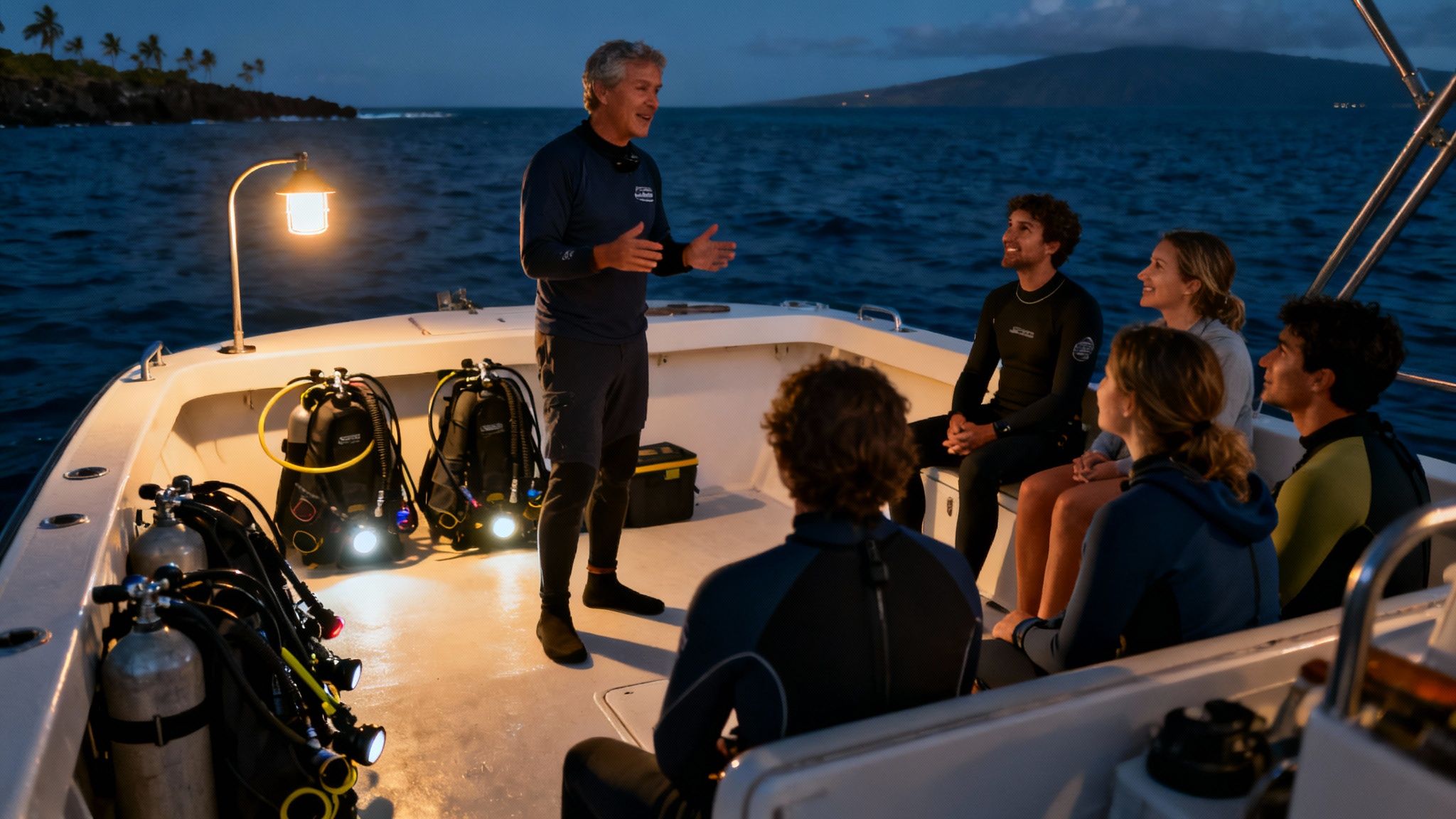
Let’s be honest, the single most important decision you'll make for your manta ray dive is choosing who you go with. The right operator can turn a cool dive into a life-changing memory. This isn't just about getting on a boat; it's about a carefully managed, respectful encounter with protected wildlife.
A great dive company puts your safety and the mantas' well-being on the same level. This is where operators like Kona Honu Divers really shine. By keeping their groups small, they ensure the experience is personal and uncrowded. You feel less like a tourist and more like a privileged guest at the mantas' dinner table, guided by a crew that genuinely cares about conservation.
When you go with a reputable company, you know every detail is handled, from the briefing on the boat to the moment your feet are back on dry land.
Why Small Groups Matter
Picture this: you're settled on the sandy bottom, the boat's lights create a glowing stage in the dark water, and you have a perfect, unobstructed view as the first manta ray glides in. That's what a small group gets you. On a crowded boat, the experience can be a chaotic mess of fins, bubbles, and people jockeying for a view, which completely shatters the magic.
There's a reason Kona Honu Divers focuses on smaller, more intimate groups:
- More Personal Attention: Guides have the time to share insights, answer your questions, and offer one-on-one tips.
- Safer Dives: With fewer divers in the water, the crew can keep a much closer eye on everyone.
- A Front-Row Seat: No need to crane your neck or swim over someone's shoulder. Everyone gets an amazing view of the underwater ballet.
- Respect for the Mantas: Smaller groups are far less disruptive to the rays' natural feeding behavior, which is a cornerstone of responsible tourism.
This "quality over quantity" approach makes all the difference. For a deeper dive, check out our guide on how to choose a Kona dive shop.
What to Expect on a Premier Manta Dive Tour
With Kona Honu Divers, the whole trip is smooth and professional. Their Manta Ray Night Dive tour is built around your comfort and creating the best possible encounter. You'll board a spacious, well-kept boat where the crew gives a fantastic briefing, covering safety, manta etiquette, and some amazing facts about the local rays you're about to meet.
The best dive operators do more than just take you to a location; they educate and inspire, fostering a deeper connection to the ocean and its incredible inhabitants.
Once you hit the water, experienced guides lead you to the perfect spot and set up the lights to attract the plankton. Their expertise means you'll be perfectly positioned when the mantas start their looping, graceful dance. And after the dive? Little comforts like hot showers and warm drinks make the boat ride back to the harbor that much better. You don't have to take our word for it—their reputation speaks volumes.
If you're looking to see more of what the Big Island has to offer underwater, Kona Honu Divers also runs a variety of other scuba diving tours that hit the best spots along the Kona coast. Ready to book an experience you’ll never forget?
How To Prepare For Your Manta Ray Night Dive
A little bit of prep work goes a long way toward making your manta ray night dive in Kona a truly unforgettable experience. When you're not scrambling at the last minute, you can just relax and soak in the magic. Think of this as your personal checklist for an incredible, stress-free adventure.
First things first, for the dive itself, you’ll need to be a certified diver. An Open Water Diver certification from any recognized agency (like PADI, NAUI, or SSI) is the standard. Make sure you have your certification card—or a digital version on your phone—ready to show our crew when you check in.
Not a certified diver? No problem. You can still experience the whole show as a snorkeler and watch the mantas from the surface.
What To Bring With You
While we provide all the essential dive and snorkel gear, packing a few personal items will make your trip much more comfortable. Essentially, you're getting ready for a cool evening boat ride after a swim.
- Towel and a Change of Clothes: You’ll be so glad you have something warm and dry to slip into after the dive. The evening air on the boat ride back can get a bit brisk.
- Swimsuit: The easiest way to get ready is to arrive with your swimsuit already on under your clothes.
- Reusable Water Bottle: It's always a good idea to stay hydrated, and bringing your own bottle is great for our oceans.
- Reef-Safe Sunscreen: This is key if you’re on a "manta ray double" trip that starts with a sunset dive. Just be sure to apply it at least 30 minutes before you hit the water.
We've got the heavy lifting covered. Your tour with Kona Honu Divers includes a full set of high-quality, well-maintained scuba or snorkel gear. We also provide the powerful underwater lights that make the whole experience possible, plus some light refreshments for the ride home. If you want a deep dive into the specifics, check out this guide on the gear you will need for your Kona diving adventure.
To help you keep track of everything, here’s a quick-reference checklist.
Manta Dive Preparation Checklist
Use this table to make sure you have everything you need for a smooth and successful manta ray night dive.
| Item/Requirement | What You Need to Do/Bring | Provided by Kona Honu Divers |
|---|---|---|
| Dive Certification | Bring your physical or digital Open Water card. | N/A |
| Comfort on the Boat | Pack a dry towel and warm clothes for after. | Light refreshments are provided. |
| Personal Items | Arrive in your swimsuit; bring a reusable water bottle. | N/A |
| Dive/Snorkel Gear | Let us know your sizes when booking. | Full set of gear is included. |
| Underwater Lights | Just show up ready to dive! | Powerful, professional-grade lights. |
With these items checked off, you'll be all set for an amazing night.
Easing Into The Night Dive Experience
I get it—the thought of diving in the dark can sound a little intimidating if you've never done it before. But the reality is surprisingly calm and focused, not at all like jumping into a black, empty ocean.
Your powerful dive light cuts through the darkness, creating a bright beam that illuminates everything right in front of you. It's less about the vastness of the ocean and more about the vibrant, detailed world within your cone of light.
The focused beam of your dive light creates a personal bubble of light, making the experience feel surprisingly serene and intimate rather than overwhelming.
Our guides set up a well-lit area on the seafloor, what we like to call the "campfire." This collection of lights attracts the plankton, which in turn brings in the mantas. It gives everyone a bright, shared space to watch the show, creating a secure and controlled environment where you can truly relax.
The Typical Trip Timeline
Knowing the flow of the evening helps you settle in and enjoy the ride. Here’s a general rundown of what to expect from start to finish.
- Check-In (Late Afternoon): You'll arrive at the harbor, meet our awesome crew, sign a waiver, and get fitted for your gear.
- Boat Departure and Briefing: We head out as the sun starts to dip toward the horizon. On the way, your guides will give a full safety briefing and share some amazing facts about manta ray behavior and proper etiquette.
- The Dive/Snorkel: Once we're at the site, it’s time to get in the water and find your spot for the main event. You'll spend about 45-60 minutes in the water with these gentle giants.
- Return to Harbor: After everyone is safely back on the boat, we'll serve up some snacks and drinks for the cruise back, getting you to the dock in the evening.
Now you’re fully prepared and know exactly what's in store. You're ready to immerse yourself in one of the most incredible wildlife encounters on the planet.
Understanding Manta Ray Dive Safety and Etiquette
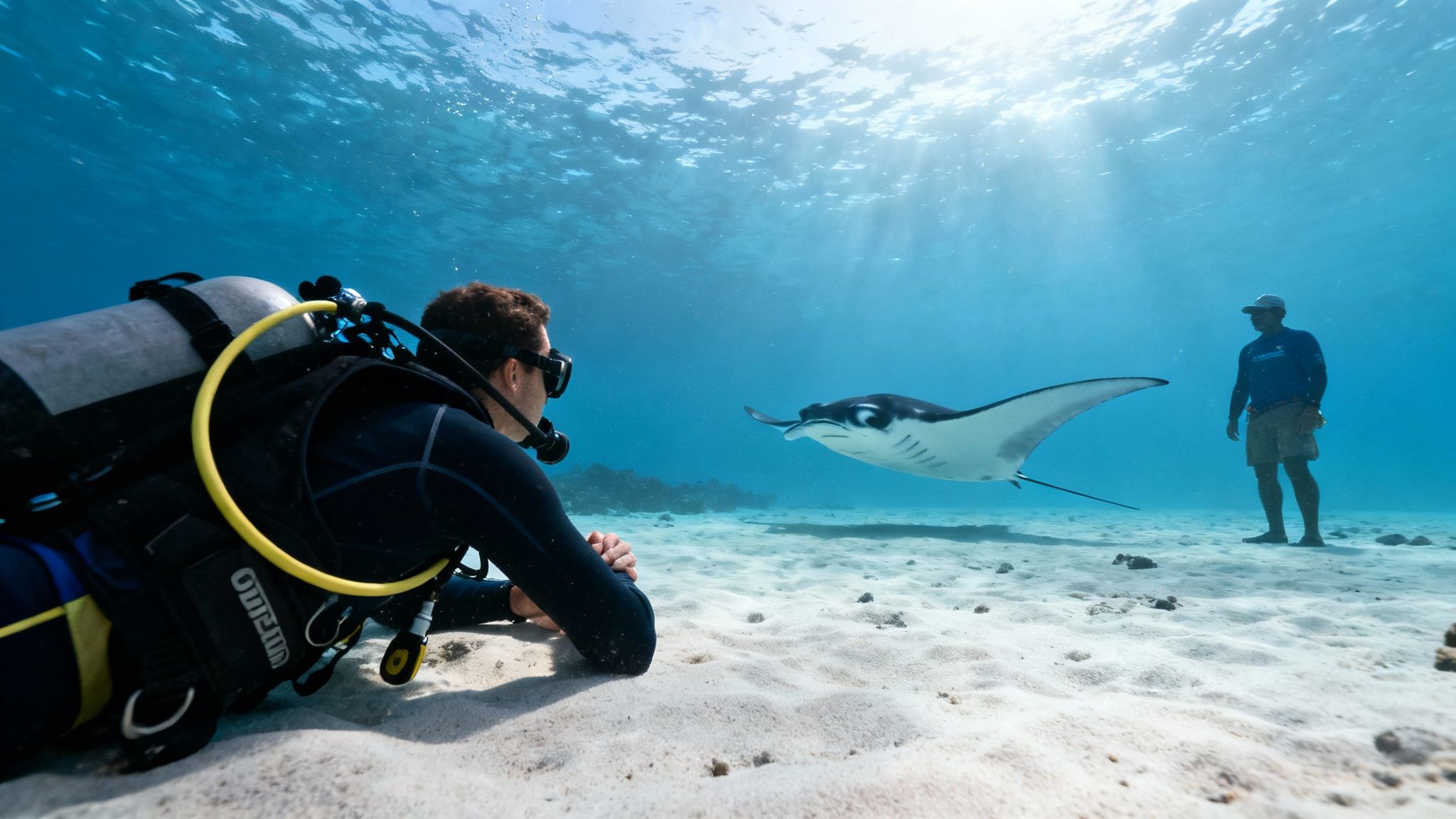
Diving with Kona’s manta rays at night is a bucket-list experience—and it only works if everyone moves with care. From the moment you slip beneath the surface, your job is to observe quietly and let these gentle giants feed without disturbance.
At its core, the manta ray night dive in Kona is all about passive observation. We’re visitors in the mantas’ world, watching their graceful feeding routines rather than interacting directly.
Touching, chasing, or crowding them is off-limits. Those broad wings carry a delicate mucus coating that wards off infections. If we strip that away, even with the lightest touch, we put their health at risk.
Your Role As A Responsible Diver
To keep the encounter safe and memorable, you’ll settle on the sandy bottom and stay put. This stationary “viewing platform” lets the mantas glide in comfortably.
- Stay Low: Plant yourself on sand or rubble, minimizing your profile.
- No Free Swimming: Keep vertical clearance clear—this is the mantas’ dining room.
- Point Your Light Up: Aim beams toward the surface; it draws plankton and highlights each pass.
- Watch Your Bubbles: Time exhalations so you don’t blast a manta in the face.
These simple habits create a predictable scene that encourages mantas to approach on their own terms. For a deeper look at respectful underwater conduct, see our guide on responsible and considerate diver etiquette.
This night dive draws roughly 80,000 people every year. On busy evenings at Manta Village and Manta Heaven, there can be 50 to 100 people in the water at once. Clear rules and proper grouping make all the difference—otherwise, the magic starts to fade. For detailed site and tourism figures, check out Big Island Manta Ray Night Dive Stats.
The Guide’s Responsibility And Green List Standards
Your dive guides do more than point out mantas. They’re the stewards of your safety and the mantas’ well-being, orchestrating group positions, light management, and overall flow.
Reputable operators like Kona Honu Divers adhere to the Manta Ray Green List standards for sustainable tourism. This commitment ensures that every dive is conducted with the utmost respect for marine life, helping to preserve this magical encounter for generations to come.
By choosing a Green List–certified operator and following these guidelines, you do more than watch mantas—you help protect their future in Kona’s clear, star-lit waters.
Your Manta Dive Questions, Answered
Got a few last-minute questions before you commit to this incredible adventure? We get it. Here are some of the most common things people ask about the Kona manta ray night dive.
Can I See The Mantas If I'm Not A Certified Diver?
Absolutely! You don't have to be a scuba diver to experience the magic. We run a manta ray snorkel trip right alongside our dive trip, often from the same boat.
Snorkelers hang onto a custom-built, high-powered light board that floats on the surface. The lights draw in the plankton, and the mantas come right up to feed just inches below you. It's a completely different perspective, but every bit as breathtaking.
How Deep Is The Dive? How Long Do We Stay Down?
The dive itself is surprisingly shallow, which is great news for divers of all levels. We set up our lights on a sandy patch of the ocean floor that's only about 30-40 feet (9-12 meters) deep.
Because we aren't going deep, you get to enjoy a nice long bottom time—usually between 45 and 60 minutes. That’s plenty of time to get comfortable and just watch the unforgettable spectacle unfold.
Is The Manta Ray Night Dive Actually Safe?
Yes, the manta ray night dive in Kona is incredibly safe, especially when you go with a professional, safety-conscious crew like ours at Kona Honu Divers. Safety is everything for us.
First, it's important to know that manta rays are true gentle giants. They don’t have teeth, barbs, or stingers—they're just big, curious filter feeders. Second, our dive guides give a detailed safety briefing before you even touch the water, and they are right there with you the entire time to make sure everything goes smoothly.
What's The Best Time Of Year To See The Mantas?
This is the best part: any time is a great time! The Kona manta population lives here year-round, so there's no specific "manta season" you need to plan your vacation around. The show goes on every single night.
In fact, years of local research have identified nearly 200 individual rays in our area. This gives us a stunning 80-90% success rate for sightings on any given evening. While it’s not guaranteed, some nights are truly epic—researchers have even documented 36 mantas at once! You can read more about the fascinating manta research in Kona. Just pick a night, and get ready for an amazing experience.
Your unforgettable underwater adventure is just a booking away. Kona Honu Divers is committed to providing a safe, ethical, and breathtaking experience you'll remember for a lifetime. Check out our highly-rated manta ray dive and snorkel tours and reserve your spot today.