
Picture this: you're floating in the warm, dark Pacific Ocean off the coast of Kona. Suddenly, giant, ghost-like figures emerge from the deep, their massive wings spanning over 12 feet as they perform a silent, graceful ballet just inches from your face. This isn't a scene from a nature documentary. This is the world-famous manta ray night dive in Kona, Hawaii, and it's an experience that lands on bucket lists for a very good reason.
What Makes the Kona Manta Ray Dive a Must-Do Experience
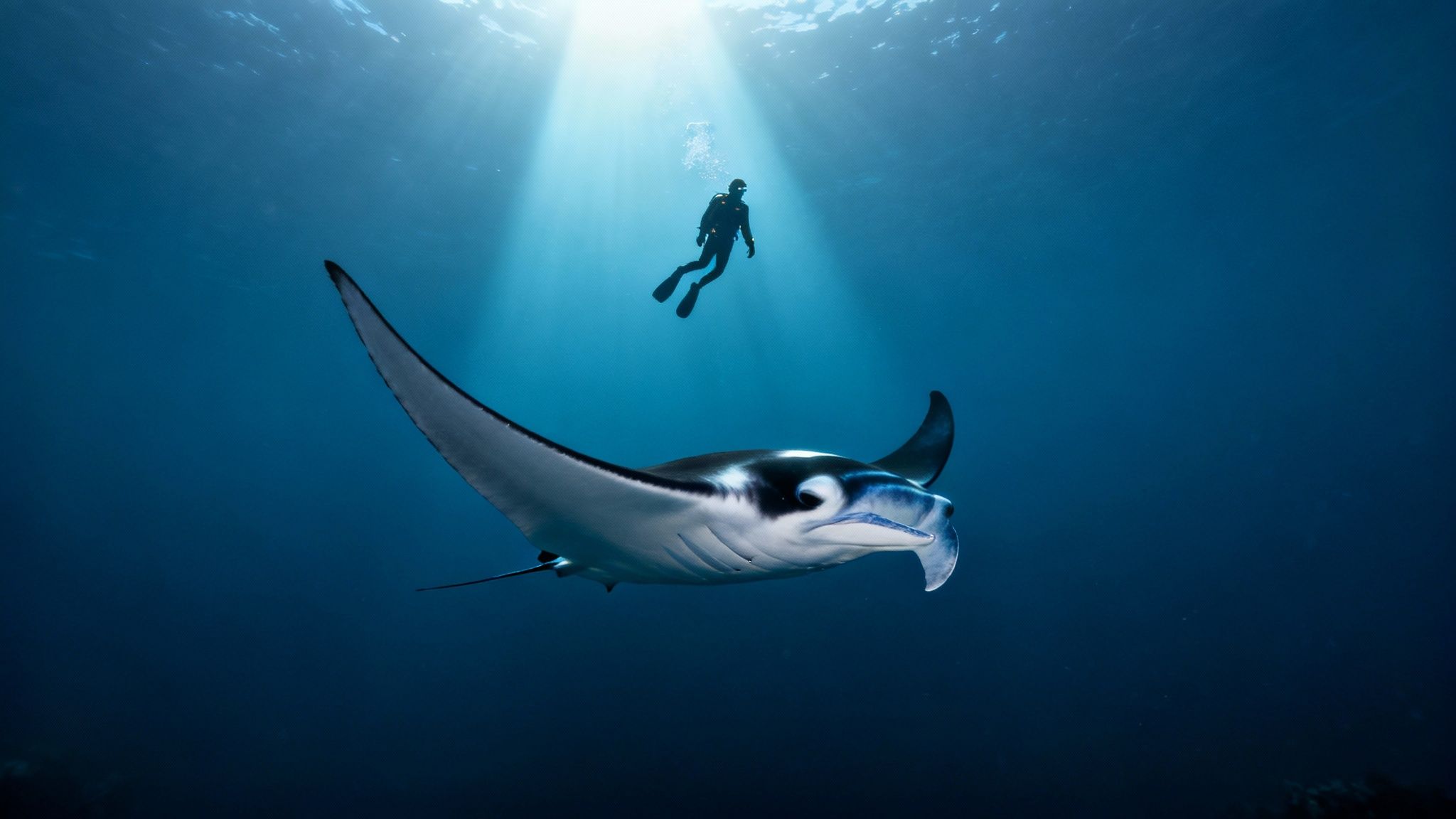
So, what makes this dive so special? It's the unique blend of accessibility, consistency, and pure, unadulterated spectacle. Many wildlife encounters are a gamble—a lot of waiting for a fleeting glimpse. The Kona manta dive is different. It’s an incredibly reliable, up-close-and-personal performance that happens almost every single night.
This isn't just a happy accident. The Kona Coast is one of the most dependable places on the planet for this encounter, with tour operators reporting sighting success rates that often top 95%. This is backed by years of research from marine biologists and dive operators who have identified over 400 individual manta rays in the area.
These gentle giants—some with truly massive wingspans—are drawn to specific sites like "Manta Village" and "Manta Heaven" to feed. Because the dives happen in relatively shallow water, typically 30 to 40 feet deep, you get plenty of bottom time, often 45 minutes or more, to just soak it all in. You can dig into the long-term manta sighting studies to see just how consistent this amazing natural event truly is.
For a quick overview of what to expect, here's a look at the key details.
Kona Manta Ray Night Dive At a Glance
| Aspect | Details |
|---|---|
| Location | Kona Coast, Big Island of Hawaii |
| Creatures | Pelagic Manta Rays (Mobula birostris) |
| Wingspan | Up to 12-16+ feet |
| Water Depth | Typically 30-40 feet |
| Sighting Success | Consistently over 95% |
| Best Time to Go | Year-round |
| Activity Options | Scuba Diving & Snorkeling |
This table just scratches the surface, but it gives you an idea of why this adventure is so accessible and reliable.
A Journey From Sunset to Starlight
Your adventure usually kicks off with a stunning boat ride along the Kona coast as the sun melts into the Pacific, setting the sky ablaze with color. The warm Hawaiian air and the growing anticipation for what's to come create an electric atmosphere. Once darkness settles, your boat will moor at a designated dive site, and the real show begins.
Whether you're a seasoned diver or have never even worn a snorkel mask, the entire experience is set up for maximum comfort and an incredible view. The concept is simple but genius, guaranteeing everyone gets a front-row seat.
The feeling of watching a massive fish shaped like a stealth bomber materialize out of the darkness is impossible to describe. It's an awesome, almost surreal experience that stays with you long after you've left the water.
This is so much more than just a tour; it's a profound connection with the natural world. Watching these intelligent, graceful creatures glide through the water is both humbling and awe-inspiring. It’s a rare chance to see a side of the ocean few ever will, making the manta ray night dive an absolutely essential Hawaiian experience.
How the Underwater Manta Ray Ballet Works
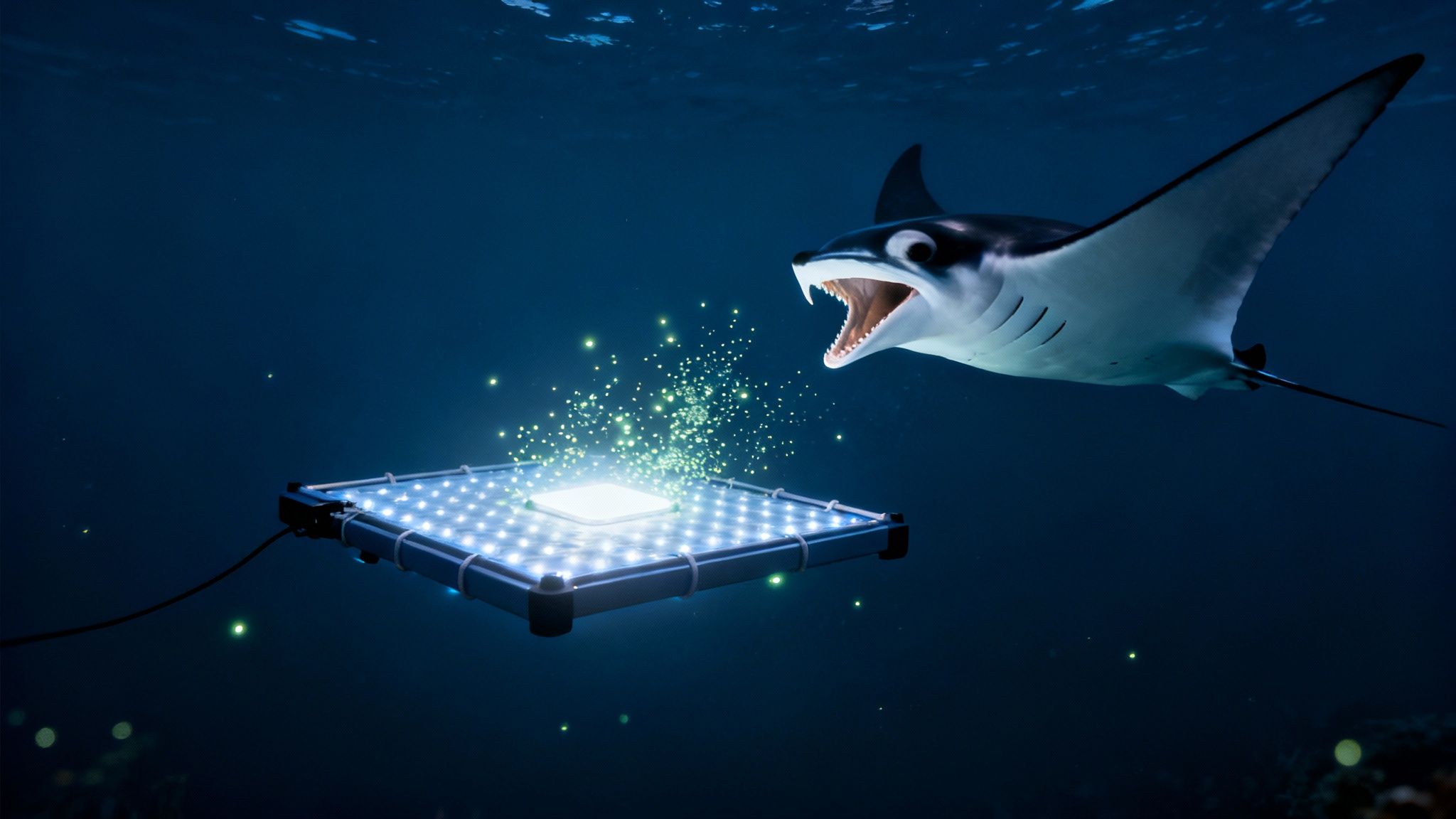
You might be wondering how tour operators can practically guarantee such an incredible wildlife encounter, night after night. It feels like magic, but the secret is actually a brilliantly simple and effective setup. Think of it as throwing the world's best dinner party for Kona's resident manta rays.
It all boils down to the natural food chain: light attracts plankton, and plankton attracts mantas. The dive operators place powerful, eco-friendly lights in the water, which act like a giant bug zapper in reverse. Instead of zapping, these lights draw in massive clouds of tiny marine organisms called zooplankton.
This creates a dense, shimmering buffet right where the mantas can find it. It's this ingenious technique that leads to the incredibly high success rates that have made the manta ray night dive in Kona famous around the globe.
Setting the Stage for the Show
The whole experience kicks off just before sunset. You'll get a detailed pre-dive briefing from your guide and then take a short boat trip out to one of the iconic manta sites, like 'Manta Village' or 'Manta Heaven'. Pay close attention during the briefing—it covers everything from manta biology to the simple rules that ensure both you and the animals have a safe and respectful encounter.
Once the boat is moored, the crew gets to work setting up the "stage." The setup is a little different for divers and snorkelers, but both are designed to give you a front-row seat to the spectacle.
-
For Scuba Divers: Divers make their way down to a sandy patch on the ocean floor, usually around 30 to 40 feet deep. A central light box, nicknamed the "campfire," is placed in the middle. You'll find a spot in the circle and point your own dive light up, adding to the column of light that attracts the plankton.
-
For Snorkelers: Snorkelers hang out at the surface, holding onto a specially designed float. This raft has its own powerful lights that shine down into the water, creating another plankton-rich column and drawing mantas right up to the surface for an amazing view.
The Curtain Rises on a Natural Spectacle
As the plankton gathers, it’s only a matter of time before the first graceful giants appear. They swoop in, performing effortless barrel rolls through the light beams with their cavernous mouths open, filtering the feast from the water. They are completely absorbed in their meal and pay almost no attention to their human audience.
The entire trip usually lasts between 1.5 and 2 hours, making it an easy fit for an evening. The shallow depth means divers get plenty of bottom time—typically 45 to 60 minutes—just watching the show unfold. You can learn more about the structure of these incredible tours and what makes them work so well.
This simple yet brilliant process results in a safe and predictable encounter that feels wild and profoundly moving. It's a raw, beautiful display of nature happening just feet away, all thanks to the clever use of light. It's a win-win, ensuring guests get an unforgettable experience while the mantas get a reliable meal in a non-invasive way.
Picking the Best Manta Ray Tour Operator in Kona
With a handful of fantastic companies offering the manta ray night dive in Kona, your first big decision is choosing the right one. This isn't just about booking a ticket; the quality of your operator directly impacts your safety, your comfort, and the overall magic of the night. It's about looking past the price tag to find the crew that will make your experience truly unforgettable.
First things first: safety. This should be a deal-breaker. A top-notch operator will have an impeccable safety record, with well-maintained boats and high-quality gear. Their crew will be made up of seasoned, certified pros who make your well-being their absolute priority. You'll know you're in good hands when they give a thorough, clear pre-dive briefing, explaining exactly what to expect and how to interact safely with the mantas.
Next up, think about the crowd. Smaller group sizes almost always mean a better, more personal experience. With fewer people in the water, you're guaranteed a front-row seat to the underwater ballet without having to jostle for a view.
What Separates the Good from the Great?
Beyond the absolute must-haves, a few other details can turn a good trip into an amazing one.
- The Boat Matters: A comfortable boat makes a world of difference, especially on the ride home. Look for operators with spacious, modern vessels. Little luxuries like a warm freshwater shower, snacks, drinks, and a dry place to sit can feel like a five-star treat after an evening in the ocean.
- A Passionate Crew: The best guides aren't just there to keep you safe; they're walking encyclopedias of marine knowledge. Their passion for the ocean is infectious, and they’ll share fascinating stories about the mantas that add a whole new layer to the experience.
- Commitment to Conservation: The most responsible operators are guardians of the ocean. They don't just follow the rules for manta interaction; they champion them, educating their guests and leading by example.
One operator that consistently gets rave reviews across the board is Kona Honu Divers. They’ve earned a stellar reputation for their professional crew, rigorous safety standards, and a genuine love for marine life that shines through in everything they do.
The Manta Ray Green List: A Standard for Responsibility
Here's an insider tip: look for an operator that follows the principles of the Manta Ray Green List. While the official list was discontinued in 2023, its guidelines remain the gold standard for responsible manta tourism. It was created to promote practices that protect both the mantas and the people watching them.
Choosing a company that still lives by these rules means you're supporting ethical tourism. These operators have committed to a few key standards:
- Look, Don't Touch: A strict "no touching" policy is enforced to protect the mantas' delicate, slime-like coating.
- Give Them Space: Divers are instructed to stay on the seafloor and snorkelers on the surface. This creates a clear "flight path" for the mantas to feed without obstruction.
- Smart Lighting: They use their lights to attract plankton in a way that is effective but doesn't disorient or disrupt the mantas' natural behavior.
When you go with an operator that upholds these conservation-first principles, you become part of the solution, helping ensure this incredible encounter exists for years to come. For a wider view of all the great dive shops here, check out our guide on the top 10 Kona diving companies ranked.
"Choosing a responsible tour operator isn't just about having a better trip—it's about actively participating in the conservation of these magnificent creatures. Your choice directly supports the long-term health of Kona's manta ray population."
At the end of the day, the best tour operator is one that nails the trifecta of safety, comfort, and a deep respect for the ocean. Companies like Kona Honu Divers have built their entire reputation on these pillars, making sure every single person leaves with amazing memories and a new appreciation for the sea.
Ready to book your front-row seat to one of nature's greatest shows?
How to Prepare for Your Manta Ray Adventure
A little prep work goes a long way in making your manta ray night dive in Kona truly unforgettable. Getting ready is straightforward, but knowing what to expect and what to bring means you can relax and soak in the magic without any last-minute worries. Think of it as your pre-flight check before launching into an incredible underwater spectacle.
The biggest choice you'll make is whether to watch the show from below as a scuba diver or from the surface as a snorkeler. Both give you a front-row seat to the action, but they're tailored for different comfort levels and qualifications.
Diving vs. Snorkeling: Which Is Right for You?
So, how do you choose? It really boils down to the kind of experience you're looking for and whether you're a certified diver. Each vantage point offers a completely unique perspective on the manta feeding frenzy.
This table breaks down the key differences to help you decide.
| Feature | Scuba Diving | Snorkeling |
|---|---|---|
| Perspective | You're on the ocean floor, looking up as these gentle giants glide right over your head. | You're floating on the surface, looking down as the mantas swoop up towards the light. |
| Requirements | You'll need at least an Open Water Diver certification to join the dive group. | Absolutely no prior experience is needed. If you can float, you can do this! |
| Proximity | Incredibly close. Mantas often pass within inches of your mask while feeding in the light beams. | The view is just as stunning, as the mantas come right to the surface to scoop up plankton. |
| Immersion | A completely immersive experience, surrounded by the quiet sounds of the ocean at night. | A fantastic option for families, non-swimmers, or anyone new to ocean adventures. |
Honestly, there's no bad choice here. Whether you're diving or snorkeling, you're going to have an incredible view. It just comes down to personal preference and your certification level.
What to Wear and What to Pack
Simplicity is your best friend when getting ready for the boat. The goal is to be comfortable both on the ride out and in the water.
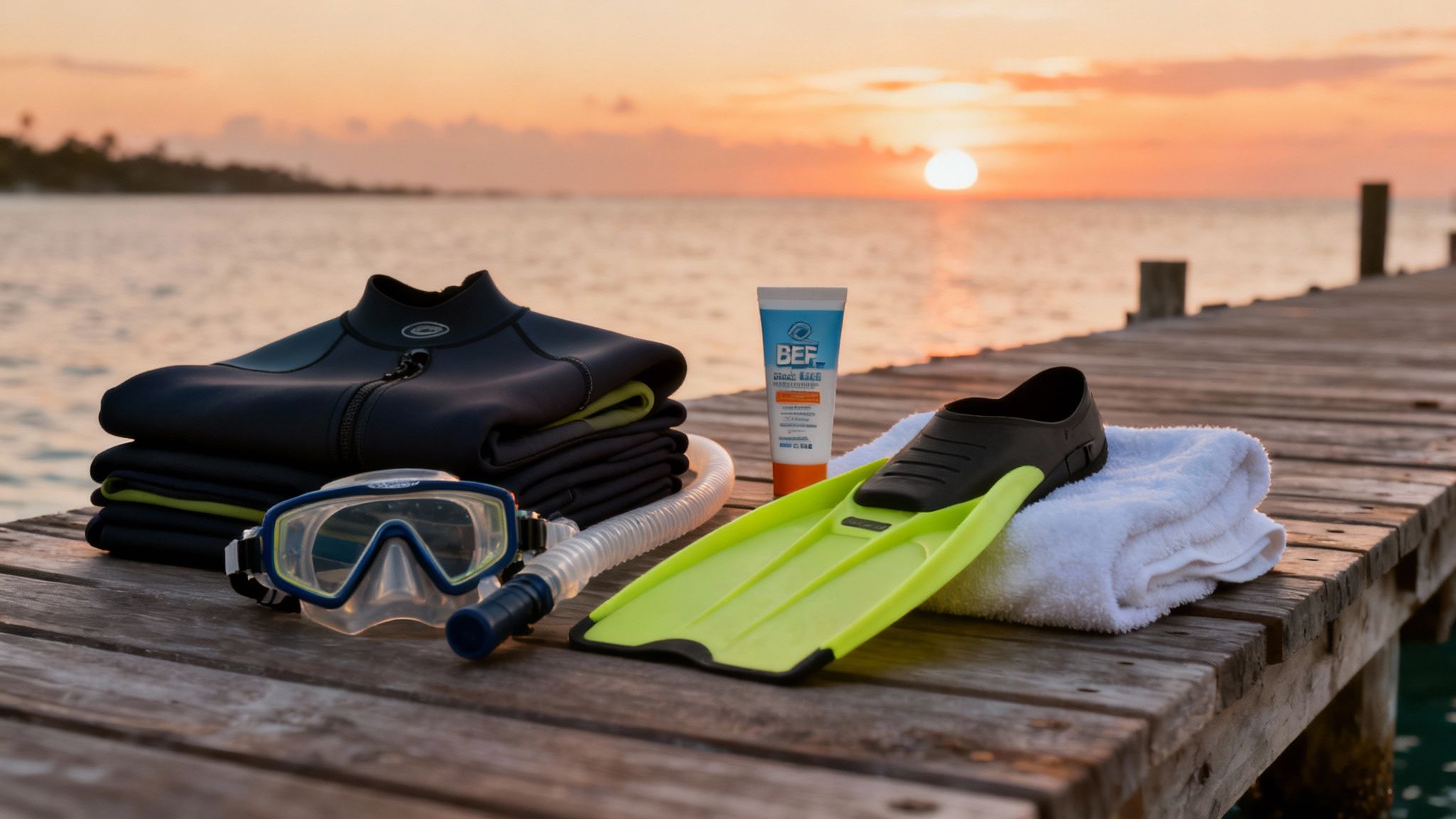
The easiest approach is to arrive at the marina already wearing your swimsuit under your clothes. It makes gearing up a breeze. After the swim, you'll be glad you brought a few things to warm up for the ride back to the harbor.
Here’s a quick checklist of what to toss in your bag:
- A Towel: An absolute must for drying off after you climb back on board.
- Warm Change of Clothes: Even in Hawaii, the night air on a moving boat can be chilly. A dry hoodie or light jacket is perfect.
- Reef-Safe Sunscreen: If you're on a sunset trip, make sure to apply this beforehand to protect both your skin and the delicate coral reefs.
- Reusable Water Bottle: Staying hydrated is always a good idea before and after spending time in the ocean.
You can leave the heavy gear at home. Reputable operators like Kona Honu Divers provide all the necessary scuba and snorkel equipment. You can get a better sense of what's included by reading about the gear you will need for your Kona diving adventure.
Tips for Capturing the Magic
Bringing a camera is a fantastic idea, but getting great shots underwater at night takes a little know-how.
The number one rule? Be respectful of the mantas. Never use a bright, flashing strobe, as it can easily startle them and disrupt their natural behavior. The powerful lights provided by the dive crew are all you'll need.
Your best bet is to find a good spot, hold your camera as steady as you can, and just let the mantas come to you. They move in graceful, predictable patterns within the light beams, giving you amazing photo and video opportunities without any need to chase them. Remember, you're a passive observer here. That's the best way to ensure the animals are comfortable and the show goes on.
Practicing Responsible Manta Ray Tourism
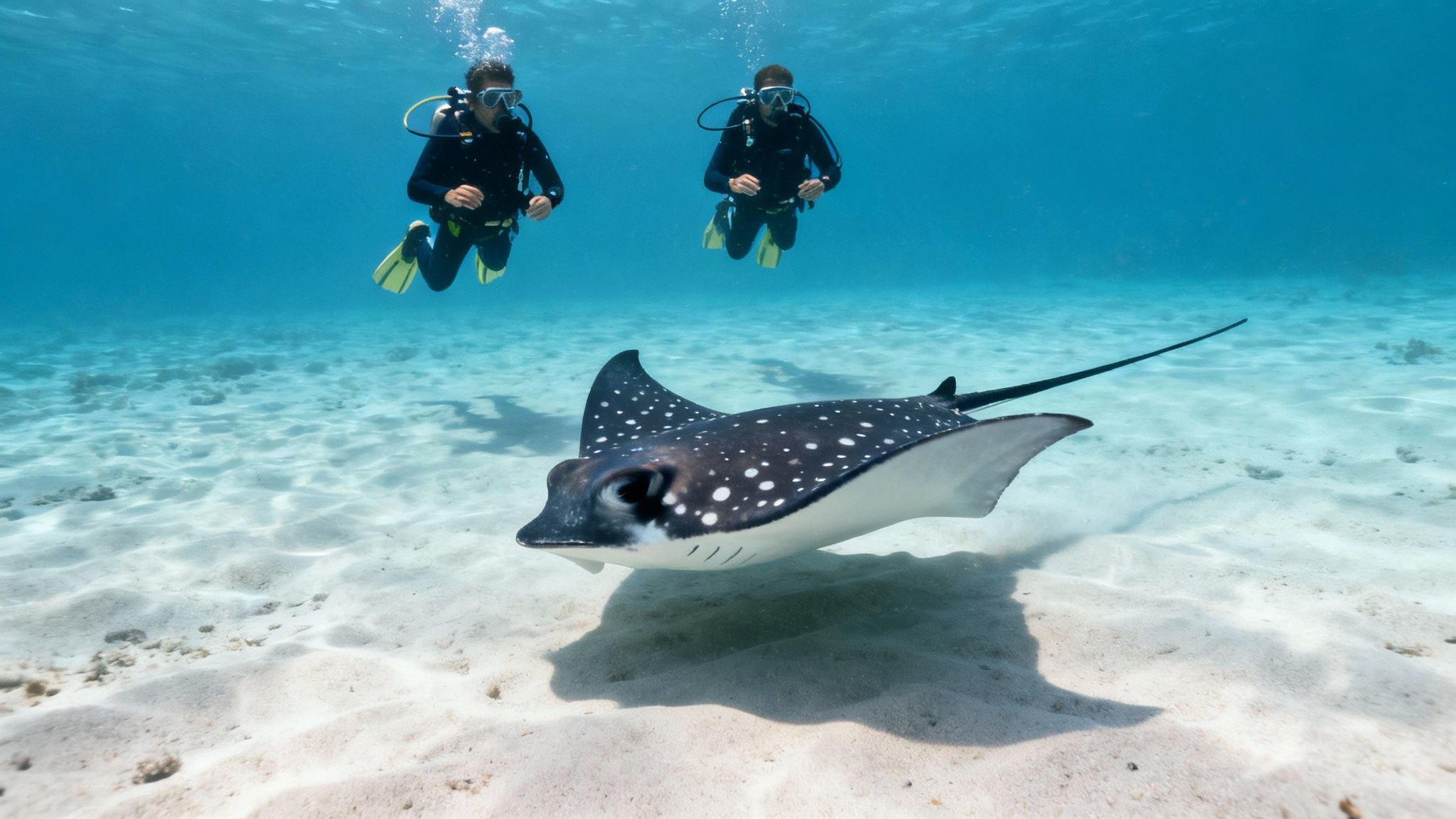
The manta ray night dive in Kona is so much more than a cool underwater light show; it’s an incredible privilege that comes with a shared responsibility. We're stepping into their world, and it's on us to protect these gentle giants so this magical encounter can continue for generations. When you practice responsible tourism, your dive becomes a meaningful interaction with nature, not just another tour.
So, what does that actually mean? Understanding what is sustainable tourism is the perfect starting point. It’s all about leaving a positive mark on the environment and community you're visiting. By choosing an eco-conscious dive operator, you're directly helping to preserve this unique marine ecosystem.
The entire experience hinges on one golden rule: passive observation. This simple but absolutely critical principle ensures the mantas can feed naturally, feel safe, and go about their business without stress.
The Rules of Engagement
To make passive observation second nature, dive operators have developed clear guidelines based on years of firsthand experience and research. These rules aren't just for show; they protect the mantas' health and guarantee everyone gets a safe, spectacular view of the underwater ballet.
- Look, Don’t Touch: This is the big one. Manta rays have a special mucous coating on their skin that acts like their immune system. Touching them can rub off this protective layer, making them susceptible to nasty infections.
- Stay in Your Spot: Divers are positioned on or near the sandy bottom, and snorkelers float at the surface. This creates a wide-open "water column" in the middle, giving the mantas plenty of room to glide, loop, and feed.
- No Chasing: Never, ever swim after a manta ray. Let them come to you. Chasing a manta causes stress and can scare them away from the feeding area for good.
Following these simple rules is non-negotiable. To get fully up to speed, take a look at this detailed guide on responsible and considerate diver etiquette before you go.
Identifying Kona's Gentle Giants
What makes the Kona manta population so special is how well we know them. Researchers and local conservationists can identify individual rays by the unique black-and-white spot patterns on their bellies.
Think of a manta ray's ventral spots like a human fingerprint—no two are exactly alike. This natural marker allows scientists to track individuals, monitor their health, and understand their behavior over their entire lifespan, which can be 50 years or more.
This incredible identification process has allowed the local community to name many of the resident mantas, creating a real, personal connection between people and these amazing animals. When your dive guide points out a local celebrity like "Lefty" or "Big Bertha," you’re not just looking at a fish; you're meeting a known individual with a documented history.
Choosing an operator like Kona Honu Divers is a great way to support these conservation efforts directly. They're deeply committed to educating their guests and holding themselves to the highest standards of responsible tourism. Their passion for marine life ensures your adventure makes a positive impact on the ongoing protection of Kona’s incredible manta rays.
Your Manta Ray Night Dive Questions, Answered
Thinking about your first manta ray night dive in Kona? You probably have a few questions. I hear them all the time from first-timers, both divers and snorkelers. Getting clear answers is the best way to feel prepared and get hyped for what is truly a once-in-a-lifetime adventure.
Let's dive into the most common questions people ask.
What’s the Best Time of Year to See the Mantas?
This is the best part: there is no "off-season." The Kona mantas are homebodies; they live here year-round and don’t migrate. They show up for their plankton buffet every single season, so you can plan your trip for January or July and have an equally amazing chance of a great encounter.
That said, the ocean conditions can change a bit. Summer often brings calmer, glassier water, while winter can have bigger swells. But the mantas? They're remarkably consistent.
Is This Whole Thing Actually Safe?
Absolutely. Every reputable operator puts safety above all else. And the mantas themselves? They're gentle giants. Despite being related to stingrays, they have no stinger, no barb, and not a single tooth in their heads. They're filter feeders who are only interested in tiny plankton, not people.
You'll be in good hands. The professional crews give detailed safety briefings, provide top-notch gear, and keep a close eye on everyone in the water. The dive sites are well-known, fairly shallow, and usually protected from strong currents, making for a very controlled and secure environment.
Do I Need to Be a Certified Diver?
Only if you want to see the show from the "front row seats" on the ocean floor. To do the scuba dive, you’ll need at least an Open Water Diver certification (or an equivalent from any major agency). This lets you kneel on the sand and watch the mantas soar right above you.
But you absolutely don't need any certification to go as a snorkeler! The snorkel option is fantastic for families, first-timers, or anyone who isn't a diver. You'll float on the surface, holding onto a big light board, and watch the mantas glide up from the darkness to feed just below you.
What Happens if We Don’t See Any Manta Rays?
Look, these are wild animals, and nature doesn't offer a 100% guarantee. But the success rate for the Kona manta ray night dive is incredibly high—we're talking over 95% on most nights. It is extremely rare for the mantas to be a complete no-show.
On that very slim chance they don't appear, most reputable companies have a great "manta guarantee." It's standard practice to let you come back another night for free. This is why I always tell people to book their manta trip early in their vacation—it gives you a buffer to reschedule just in case. Always double-check the operator's specific policy when you book.
Can I Touch the Manta Rays?
No. This is the single most important rule of the night. It’s a hard and fast rule for a very good reason. Manta rays are covered in a protective mucous layer, kind of like a slime coat, that shields them from nasty bacteria and infections.
Touching them, even gently, can wipe off this coating and make them vulnerable to disease. Every responsible tour operator enforces a strict "look, don't touch" policy. By keeping your hands to yourself, you're playing a direct role in keeping Kona's incredible manta population healthy.
What's the Real Difference Between Diving and Snorkeling?
It all comes down to your point of view. Both spots offer a mind-blowing show, just from different angles.
- Scuba Divers: You’ll head down to a sandy patch on the ocean floor, usually around 30-40 feet deep. You get to look up and see these massive, graceful creatures barrel roll just inches above your head, silhouetted by the lights from above.
- Snorkelers: You'll hang out on the surface, holding onto a big, custom-made light raft. Your view is looking down as the mantas swoop up from the deep, mouths wide open, to feed in the beams of light directly beneath you.
Honestly, there's no bad choice here. It just depends on your certification and what kind of experience you want. Many people say the view from the surface is just as spectacular. This unforgettable experience is available through the 2-tank manta dive and snorkel tour.
Which Tour Operator Should I Choose?
Picking the right operator makes all the difference. You want a company with a rock-solid safety record, experienced guides who love what they do, and a genuine commitment to protecting the mantas. Kona Honu Divers is a local favorite known for hitting all those marks and then some.
A good tip is to read recent reviews and see who is still following the conservation-focused guidelines of the old Manta Ray Green List. It’s the best way to know you're supporting responsible, sustainable tourism.
Ready to see the underwater ballet for yourself? Kona Honu Divers runs world-class manta ray tours for both divers and snorkelers. Their crew is dedicated to safety, education, and preserving this incredible natural wonder for years to come.