
Picture this: you slip into the warm, inky black waters of the Pacific. Below you, powerful lights cut through the darkness, creating an illuminated stage on the ocean floor. Then, they appear. Giant, ghost-like figures emerge from the shadows, gliding and barrel-rolling in a silent, mesmerizing ballet.
This isn't a dream or a scene from a sci-fi movie. It's the world-famous manta ray night dive in Kona, and it’s an adventure that belongs at the very top of your bucket list.
The Magic of Kona’s Manta Ray Night Dive
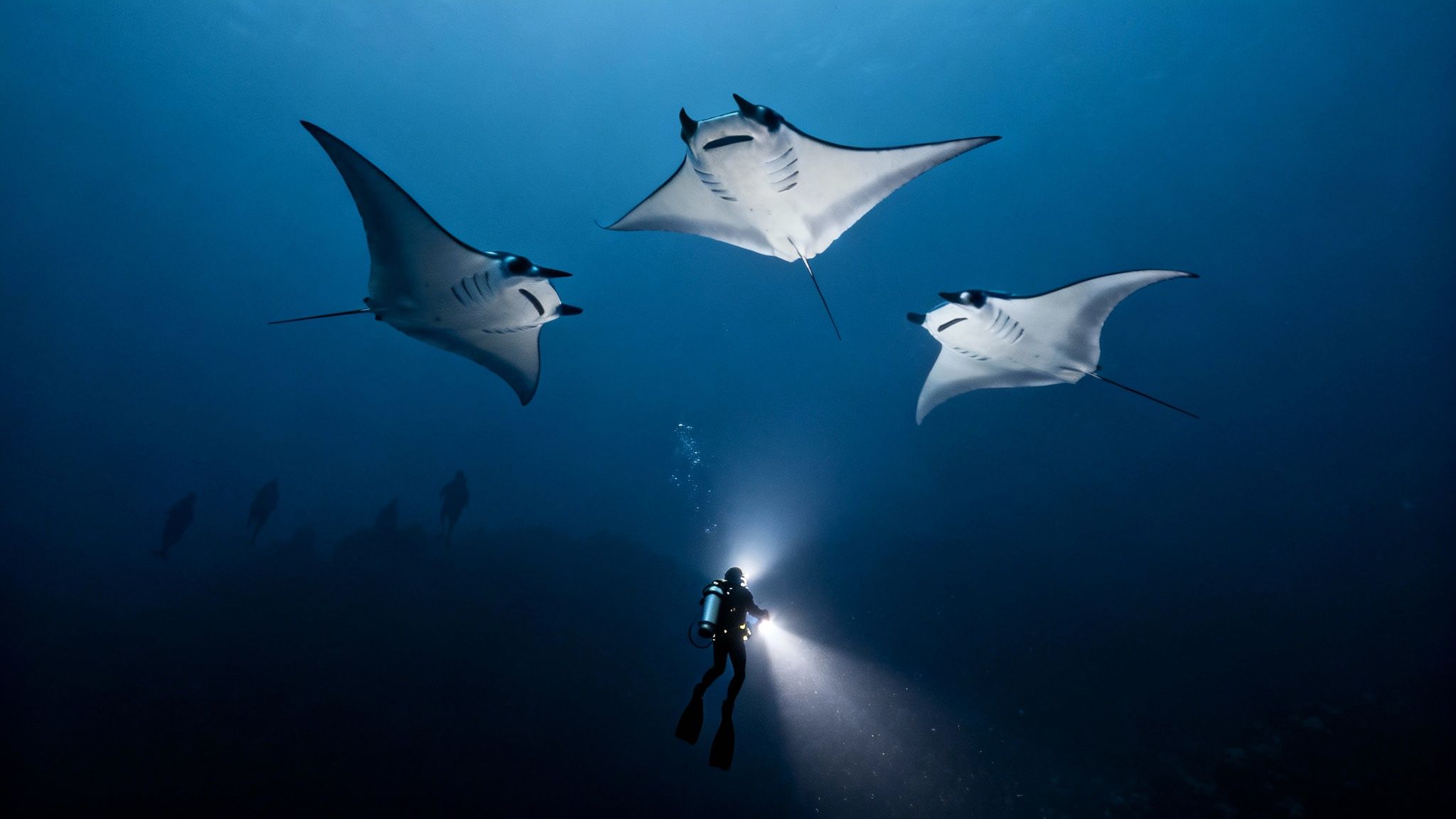
The Kona coast on Hawaii’s Big Island has earned its reputation as the most reliable place on Earth to see manta rays at night. That's not just marketing hype; it's a fact built on decades of a unique, symbiotic relationship between dive operators and these incredible animals.
So, how does it all work? Think of it as a dinner bell. Dive operators set up powerful, submerged lights that attract massive swarms of plankton—the manta rays' favorite meal. This creates a dependable, all-you-can-eat buffet that draws the rays in night after night with amazing consistency.
This guide will break down everything you need to know to witness this spectacle for yourself. We'll cover how it all began, what to expect, and how to choose a tour that's not only thrilling but also respectful of these gentle giants.
Why Kona is Uniquely Suited for Manta Encounters
When we say Kona is the best place in the world for this, we mean it. The sighting success rate consistently hovers above 95% at popular spots like Manta Village. It’s an almost unbelievable statistic. The next most successful site in the area, Manta Heaven, still boasts a 90% sighting rate.
The local manta population is estimated to be over 450 individuals, many of whom are regulars at these feeding sites. On any given night, it's common to see between 4 to 11 manta rays, though some lucky groups have reported seeing 20 or even 36 at once!
The dive itself is quite accessible. You’ll spend about 45–60 minutes at a shallow depth of just 30–40 feet. This predictability has turned the manta ray night dive Kona into a cornerstone of the island’s ecotourism. If you want to dive deeper into the history and details, you can learn more about the specifics of the Kona manta ray night dive.
What to Expect on Your Adventure
This isn't just another dive or snorkel trip; it's a full-blown experience. And the best part? You don’t have to be a certified diver to join in.
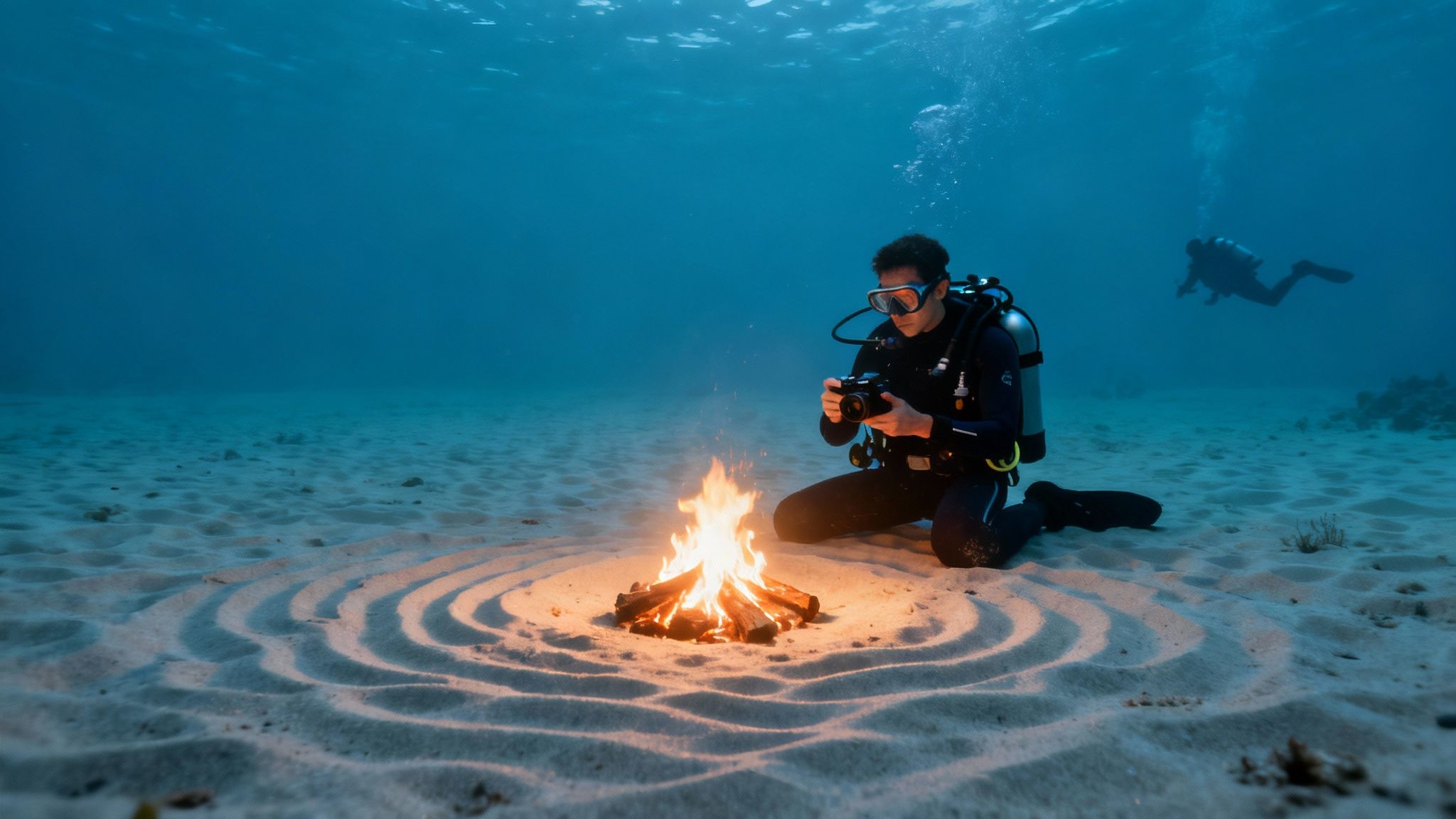
- For Divers: You’ll descend to a sandy bottom at about 30-40 feet and gather around a central light source, which the locals affectionately call the "campfire." From there, you just sit back, relax, and look up as the mantas swoop and glide directly overhead, sometimes just inches from your face.
- For Snorkelers: You'll hold onto a custom-built flotation board on the surface. These boards are equipped with lights that shine down into the water, attracting the plankton and giving you a perfect bird's-eye view of the underwater dance happening below.
Both options provide absolutely breathtaking, up-close views of these magnificent animals. If you're ready to lock in your spot for an unforgettable night, you can explore the premier Kona Manta Ray Tour and book your adventure.
How the Manta Ray Spectacle Works
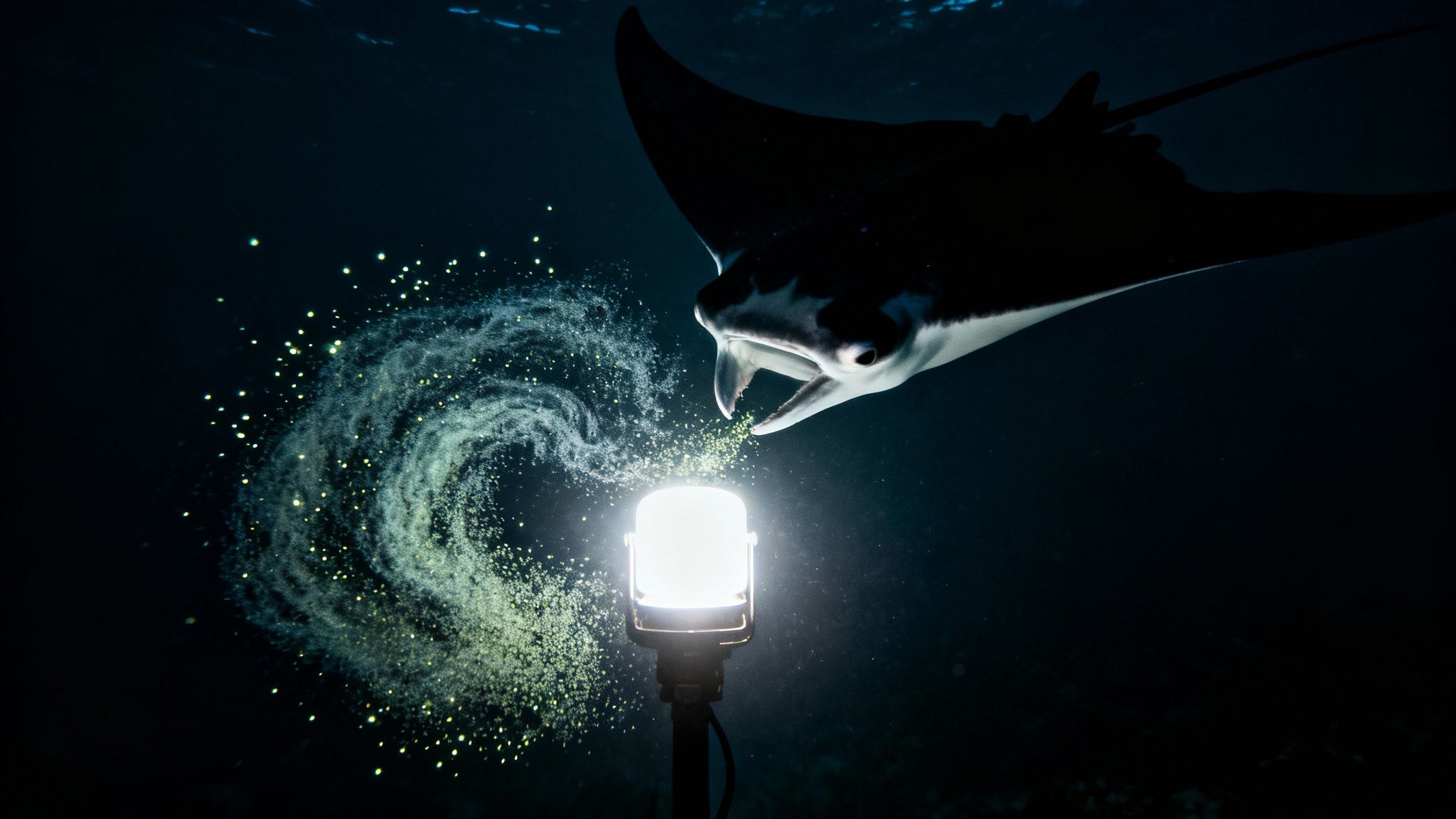
So, how does the manta ray night dive in Kona deliver such a magical show, night after night? It's not just a lucky coincidence. This incredible spectacle is the result of a fascinating, almost accidental partnership between marine biology and smart, responsible tourism.
The whole thing boils down to one simple ingredient: light. The story goes that decades ago, a hotel on the Kona coast kept its floodlights on after dark, shining out over the water. It didn't take long for divers to notice something amazing happening—giant manta rays were showing up to hang out in the glow.
It turns out those bright lights were acting like a magnet for phytoplankton, the microscopic critters that are the foundation of the ocean's food chain. For manta rays, who are filter feeders, this was like discovering an all-you-can-eat buffet that opened every single night. They just had to show up and glide through the water with their mouths open. Dive operators caught on, figured out how to recreate the effect, and one of the world's most legendary underwater experiences was born.
The Underwater Dinner Bell
Today, the process is a well-oiled machine. When you head out on a tour, the crew sets up powerful, eco-friendly lights and submerges them in the water. You can think of these lights as a giant dinner bell, ringing out across the dark ocean to announce that supper is served.
Almost immediately, the beams of light begin to fill with swirling plankton, drawn in from all around. This creates a thick, glowing column of food that the local manta population simply can't resist. They cruise in from the surrounding waters to perform their nightly feeding ballet, swooping, and somersaulting right through the illuminated banquet.
This brilliant system is precisely why Kona can claim sighting success rates of over 90%—a number you won't find anywhere else on the planet. To see this incredible behavior for yourself, booking a top-tier manta ray dive tour is an absolute must.
Kona's Premier Manta Ray Hotspots
While you might spot a manta anywhere along the coast, the main event happens in two primary locations. Each site has its own vibe and offers a slightly different experience.
-
Manta Village (Keauhou Bay): This is the original spot, located just south of Kailua-Kona. It’s known for being incredibly reliable. The water here is relatively shallow with a sandy bottom, making it a calm, protected spot that's perfect for both divers and snorkelers.
-
Manta Heaven (Garden Eel Cove): Found north of the airport, this site often pulls in a larger number of mantas on any given night. The underwater terrain here can create currents that act like a funnel, concentrating even more plankton and attracting a bigger crowd of these gentle giants.
Honestly, both sites deliver phenomenal, up-close encounters. The decision on where to go often comes down to the ocean conditions and where the mantas have been most active that day.
Getting to Know the Locals
One of the coolest parts about the Kona manta dive is that you're not just seeing random animals—you're meeting the local celebrities. Every manta ray has a unique pattern of black spots on its belly, which works just like a human fingerprint.
This natural ID system lets our guides and local researchers recognize individual rays. We can track their health, get to know their personalities, and follow their lives over decades. Many of the regulars even have names, so your guide might point out famous residents like "Big Bertha," "Lefty," or "Sugar Ray."
This is what elevates the dive from a simple wildlife viewing to a truly meaningful encounter. You stop being just a spectator and become a guest in their world, witnessing a nightly ritual that connects you directly to the heartbeat of the ocean.
Choosing the Right Tour Operator in Kona
Let’s be honest, picking the right company for your manta ray night dive in Kona is probably the biggest decision you'll make for this trip. A great operator does more than just ferry you out to a dive site; they create an entire experience. The best ones deliver a night that’s not only safe and mind-blowing but also deeply respectful of the ocean and its inhabitants. The quality of your guide, the comfort of the boat, and the company's conservation ethos will stick with you long after your wetsuit has dried.
Your absolute first filter should be this: only go with a Manta-SAFE certified operator. This isn't just a sticker on a boat—it's a promise. It means the company adheres to strict guidelines designed to keep the mantas safe and the encounter passive. It’s about ensuring these incredible animals are not stressed or harmed, which keeps Kona’s resident manta population healthy for years to come. Making this a dealbreaker ensures your tourist dollars support ethical, sustainable diving.
What Makes a Great Operator Stand Out?
When you start comparing companies, it's easy to get tunnel vision on price and departure times. But the truly top-tier operators focus on quality, not just cramming as many people as possible onto a boat. A perfect example is Kona Honu Divers, a highly-rated and eco-minded company that really gets it right. They intentionally keep their group sizes small, which makes a huge difference. You get a far more personal and less chaotic experience in the water.
And their guides? They aren't just there to point. They give you a full briefing that helps you actually understand the incredible ecosystem you’re about to become a part of. You’ll learn about the mantas' behavior, how to identify individuals by their unique spot patterns, and how your dive directly supports conservation. It elevates the whole thing from just watching an animal to truly connecting with it.
Key Things to Look For
Beyond the big picture, a few practical details can make or break your night. Don’t gloss over these when you’re booking:
- Boat Comfort & Amenities: You’ll be on that boat for a while, especially on the ride back in the dark. Is it spacious? Does it have a warm shower? Snacks? These small comforts become big deals after a night dive.
- Time in the Water: Pay attention to the actual "bottom time" offered. Some cheaper tours might cut this short. A quality trip makes sure you have plenty of time with the mantas without feeling like you're on a stopwatch.
- Rental Gear Quality: If you’re not traveling with your own gear, this is huge. A good operator provides well-maintained, high-quality wetsuits, masks, and fins that actually fit. A leaky mask or a flimsy wetsuit can ruin the magic.
The Kona manta ray dive is an amazing success story of tourism done right. Every year, thousands of visitors bring in millions of dollars, which supports the local economy far beyond the dive boats—we’re talking hotels, restaurants, and countless other businesses. This has created a powerful incentive to protect the rays, with many operators actively participating in research and citizen science. You can read more about this incredible conservation model in the Kona Manta Report.
Ultimately, choosing the right operator means finding a company that values your experience as much as they value the well-being of the mantas. A little research goes a long way. To get a better feel for what makes this dive so unforgettable, be sure to check out our detailed guide on the manta ray dive in Kona.
Preparing for Your Manta Ray Encounter
Knowing what to expect on your manta ray night dive in Kona can make all the difference. It turns a cool trip into an absolutely unforgettable one. When you understand the flow of the evening—from leaving the dock to returning under the stars—it helps calm any pre-dive jitters and lets you soak in the moment. So, let's walk through what a typical tour looks like.
Your adventure will likely kick off in the late afternoon. You'll meet the crew at the harbor, get checked in, and be fitted for any rental gear you need, like your wetsuit, mask, and fins. This is the perfect time to ask any final questions and just get comfortable on the boat before you head out.
The Pre-Dive Briefing and Sunset Cruise
Once everyone's on board, you'll start your journey out on the water as the sun dips toward the Pacific horizon. This boat ride is more than just getting from point A to point B; it’s a vital part of the experience. Your guide will give everyone a thorough pre-dive briefing, which is critical for both your safety and the well-being of the mantas.
During this briefing, you'll learn all about "manta etiquette." This covers the most important rule of all—never touch a manta ray—along with other guidelines for a passive, respectful encounter. If you want to dive deeper into why this matters, our guide on scuba diving at night has some great insights into how to interact with nocturnal marine life.
This briefing is also where you'll get the game plan. Your guide will lay out exactly how the dive will unfold, how to position yourself in the water, and what hand signals to use. The goal is to make sure everyone feels confident and ready to go.
The Main Event Underwater
As dusk gives way to full darkness, you'll arrive at the dive site. The crew will set up powerful underwater lights that attract plankton, basically setting the dinner table for the mantas. What happens next depends on whether you're diving or snorkeling.
-
For Divers: You’ll descend with your guide to the sandy bottom, usually around 30-40 feet deep. There, you'll get situated in a semi-circle around a central light source, which we affectionately call the "campfire." From that spot, you just look up and wait for the show to start.
-
For Snorkelers: You'll hop in the water and hold onto a large, custom-built light board that floats on the surface. This board shines a bright light down, drawing plankton up and giving you a perfect bird's-eye view of the mantas as they swoop and glide right underneath you.
Both experiences get you incredibly close to these gentle giants. The fact that specific mantas return so consistently has given researchers an amazing opportunity. Detailed tracking has shown that while new rays always join the party, a core group of mantas comes back again and again, with some showing up over 100 times in a single year. These numbers really underscore why Kona is such an important place for both ecotourism and science.
Your Preparation Checklist
Being prepared means you can stay comfortable and focus on the magic. While you’ll want to pack your own bag, it's always a good idea to mentally run through an ultimate boat safety checklist before any trip out on the water.
To make things easy, here’s a quick breakdown of what you should probably bring and what the tour operator will likely have covered for you.
Manta Ray Night Dive Checklist
| What to Bring | What's Usually Provided |
|---|---|
| Swimsuit & Towel | Wetsuit |
| Warm Jacket/Sweatshirt for after | Mask, Snorkel, Fins |
| Reusable Water Bottle | Dive/Snorkel Lights |
| Motion Sickness Medication (if needed) | Snacks & Drinks |
| Waterproof Camera | Professional Guide |
| Gratuity for the Crew | Safety Briefing & Equipment |
With this simple checklist, you'll be all set to relax and fully immerse yourself in one of the most incredible underwater encounters you'll ever have.
Rules for a Safe and Respectful Encounter
Being part of the Kona manta ray night dive is an incredible privilege, not just another tour. The future of this amazing marine spectacle rests on our shoulders, and that means being a responsible tourist. To make sure these gentle giants are here for years to come, every single diver and snorkeler needs to follow a few straightforward rules for a safe and respectful encounter. It's how we move from being just a spectator to becoming a guardian of the reef.
The biggest rule is the most important one, and it's non-negotiable: never, ever touch a manta ray. This isn't just a polite request; it's the golden rule of manta conservation. Manta rays have a thin, protective mucus layer covering their skin, which is their first line of defense against nasty bacteria and parasites in the ocean.
When a human touches them, that delicate slime coat gets rubbed off. This leaves their skin exposed and makes them vulnerable to serious, sometimes life-threatening, infections. Following this one simple rule is the best thing you can do to keep the local manta population healthy.
The Manta-SAFE Standards
Beyond the no-touching policy, all the best operators follow a set of guidelines known as the Manta-SAFE standards. The whole point is to create a passive viewing experience where the mantas are always in charge of the interaction.
- Be a Silent Observer: Your job is to be still and watch the show. No sudden movements, no chasing, and definitely no trying to ride a manta. When you're calm, they feel safe, which actually encourages them to come closer for a more natural and breathtaking experience.
- Stay in Your Spot: Divers are asked to stay settled on or near the sandy bottom. Snorkelers hold onto their light boards at the surface. This keeps the middle of the water column wide open, giving the mantas a clear, uncrowded path to swim and feed.
- Lights Up (or Down): Your dive light is a tool to attract plankton, not a spotlight to shine on the mantas. Divers should always point their lights straight up toward the surface. Snorkelers should point theirs straight down. This creates that "campfire" effect that draws in the food without blinding or stressing out the animals.
By sticking to these simple but powerful rules, you're playing an active role in protecting one of the most magnificent animals in the ocean. Your respect ensures this incredible encounter remains sustainable and ethical for everyone.
These guidelines are really just part of a bigger commitment to being a good steward of the ocean. Taking a moment to understand the basics of responsible and considerate diver etiquette will make all of your underwater adventures better, not just this one. When we enter their world, we become ambassadors for the ocean, and every action we take matters. Embracing that responsibility is what makes the Kona manta ray night dive a truly unforgettable and meaningful experience.
Exploring Other Kona Night Dives
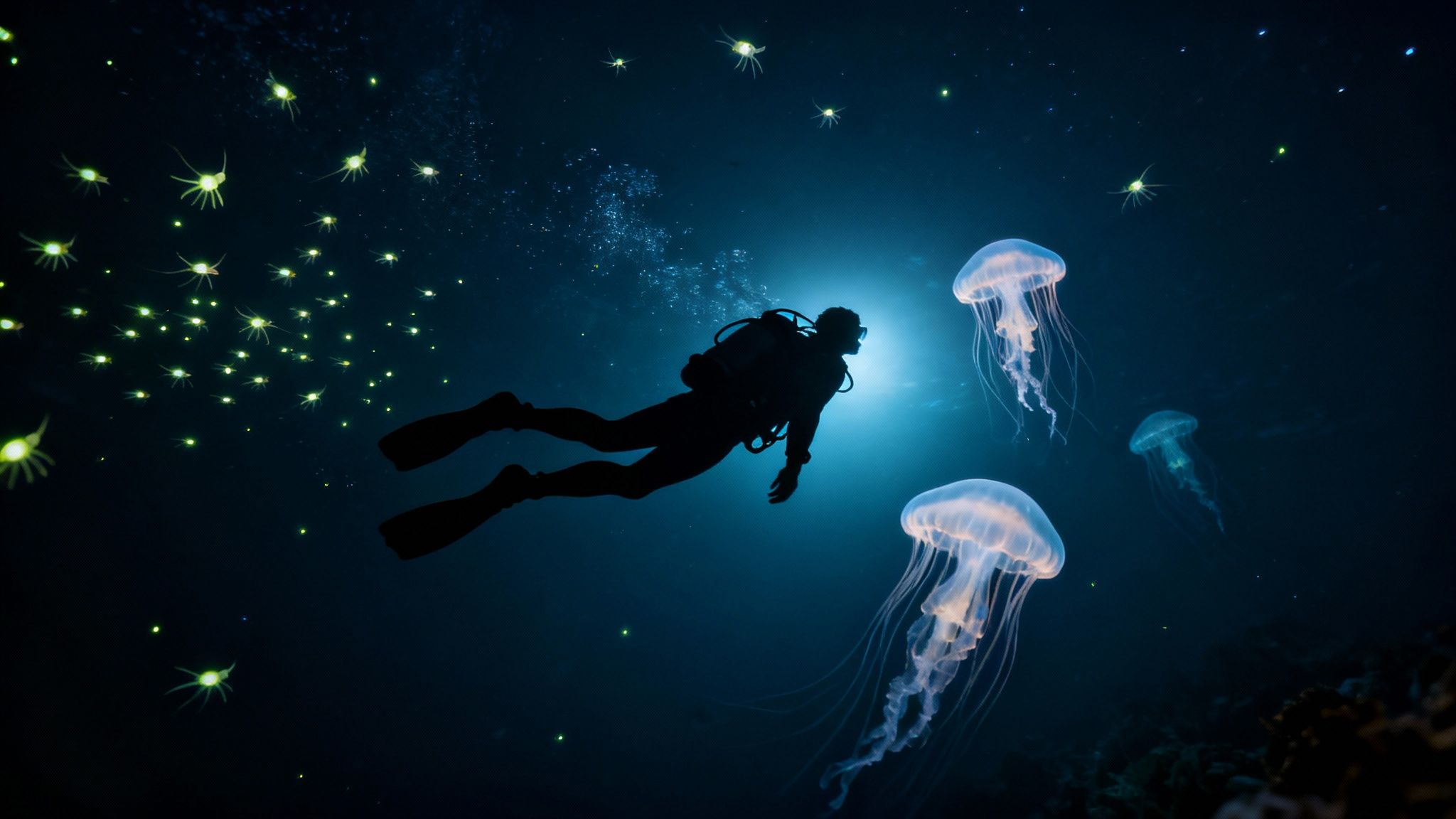
The manta ray night dive in Kona is absolutely the main event, but the show isn't over when the mantas swim off. Once the sun dips below the horizon, Kona’s waters completely transform. It’s like a hidden world opens up, full of strange and wonderful creatures that only come out to play after dark.
Beyond the famous manta gathering, a totally different kind of magic unfolds. The same vibrant reefs you explore by day become the hunting grounds for a whole new cast of characters at night. These traditional night dives give you a chance to see familiar spots in a completely new light—literally.
The Reef Comes Alive After Dark
Think of it as a changing of the guard. On a typical reef night dive, you'll see the daytime fish—like colorful parrotfish and wrasses—tucked away into crevices for the night. This is when the nocturnal predators come out.
It's your best chance to spot critters you’d almost never see during the day.
- Octopuses are a real highlight, often seen creeping out of their dens to hunt for crabs.
- Eels become much bolder, slithering freely from their rocky homes to find a meal.
- Lobsters and other crustaceans confidently scuttle across the reef floor.
These dives are an incredible way to appreciate the full, 24-hour cycle of life on the reef. Taking a look at all the different scuba diving tours in Kona can give you a whole new perspective on the Big Island’s underwater world.
The Ultimate Adventure: Blackwater Diving
Ready for something truly out of this world? For certified, experienced divers looking for a real challenge, the Kona Blackwater Dive is an absolute must-do.
This is nothing like a reef dive. In fact, you completely forget about the bottom. You’re tethered to a boat, drifting in the deep open ocean miles from shore, suspended over thousands of feet of inky black water.
I’ve heard it described as floating through outer space, and that’s exactly what it feels like. You're just hanging in the darkness, witnessing one of the largest migrations on Earth as tiny, bizarre, and often bioluminescent creatures rise from the abyss to feed near the surface.
This is an advanced dive, no question. It demands excellent buoyancy control and a very calm mindset. You’ll see alien-like larval fish, strange jellies, and creatures that look like they belong on another planet. It’s a profoundly humbling and surreal adventure—unlike any other night dive you'll ever do.
Kona Honu Divers is a premier operator for this unique and challenging experience.
For the truly adventurous diver ready to take on this incredible challenge, you can learn more about the Blackwater Dive tour. And if you're an experienced diver looking to push your limits at other demanding sites, be sure to check out our premium advanced dive trips as well.
Your Manta Night Dive Questions Answered
Alright, let's tackle some of the most common questions we hear from people gearing up for this incredible adventure. Think of this as your final check-in before you head to the boat, making sure you feel totally ready and excited for what's to come.
Do I Have to Be a Scuba Diver to Do This?
Nope, not at all! This is one of the best things about the manta experience—it’s designed for everyone, regardless of your in-water experience.
- For Snorkelers: You'll hang out on the surface, holding onto a specially designed light board. These boards shine powerful lights down into the water, attracting the plankton and giving you the perfect overhead view of the mantas as they swoop in to feed just a few feet below you.
- For Scuba Divers: If you're certified, you'll head down to the sandy bottom. From there, you get a truly mind-blowing perspective, looking up as these gentle giants glide gracefully right over your head.
Both options give you a front-row seat to the action, which is why it's such a great trip for families or groups with both divers and snorkelers.
Just How Safe Is the Manta Ray Night Dive?
It's incredibly safe, especially when you book with a reputable, professional outfit like Kona Honu Divers. Manta rays are called "gentle giants" for a good reason—they literally can't hurt you. They have no teeth, no stingers, and no barbs.
The whole encounter is based on passive observation. Your biggest safety job is simply to listen to your guide's briefing and follow their instructions once you're in the water. They do this every single night and know exactly how to keep both you and the mantas safe.
When Is the Best Time of Year to See the Mantas?
You’re in luck—the manta ray night dive in Kona is a year-round spectacle. The local manta population sticks around all year, and operators see them almost every single night, with a success rate that’s consistently over 95%.
That said, if you're looking for the flattest, calmest ocean conditions, you'll usually find them in the summer months (May through September). Winter can occasionally bring bigger swells, but the tours still go out and have amazing encounters most of the time. Pro tip: try to book your dive for one of your first nights on the island. That way, if bad weather forces a cancellation, you have plenty of time to reschedule.
Can I Touch the Manta Rays?
This is a hard no. It’s the golden rule of the manta dive. A manta ray's skin is covered in a protective mucous layer, which is basically its immune system.
Touching them, even gently, can rub this coating off and leave them vulnerable to nasty infections and diseases.
Every responsible tour operator in Kona has a strict hands-off policy. This is all about protecting the health of these amazing animals. The goal is to be a passive observer and let the mantas choose how close they want to get.
Ready to see this underwater ballet with your own eyes? Kona Honu Divers runs a world-class manta ray dive tour that’s respectful, safe, and absolutely unforgettable.