
Welcome to one of the most mesmerizing wildlife encounters on the planet: the manta ray night dive in Kona, Hawaii. It's often called an "underwater ballet," and for good reason—you get a front-row seat to watch majestic manta rays as they glide, swoop, and feed on plankton just inches away.
This guide will walk you through everything you need to know to make this incredible adventure a reality.
Your Guide to the Kona Manta Ray Night Dive
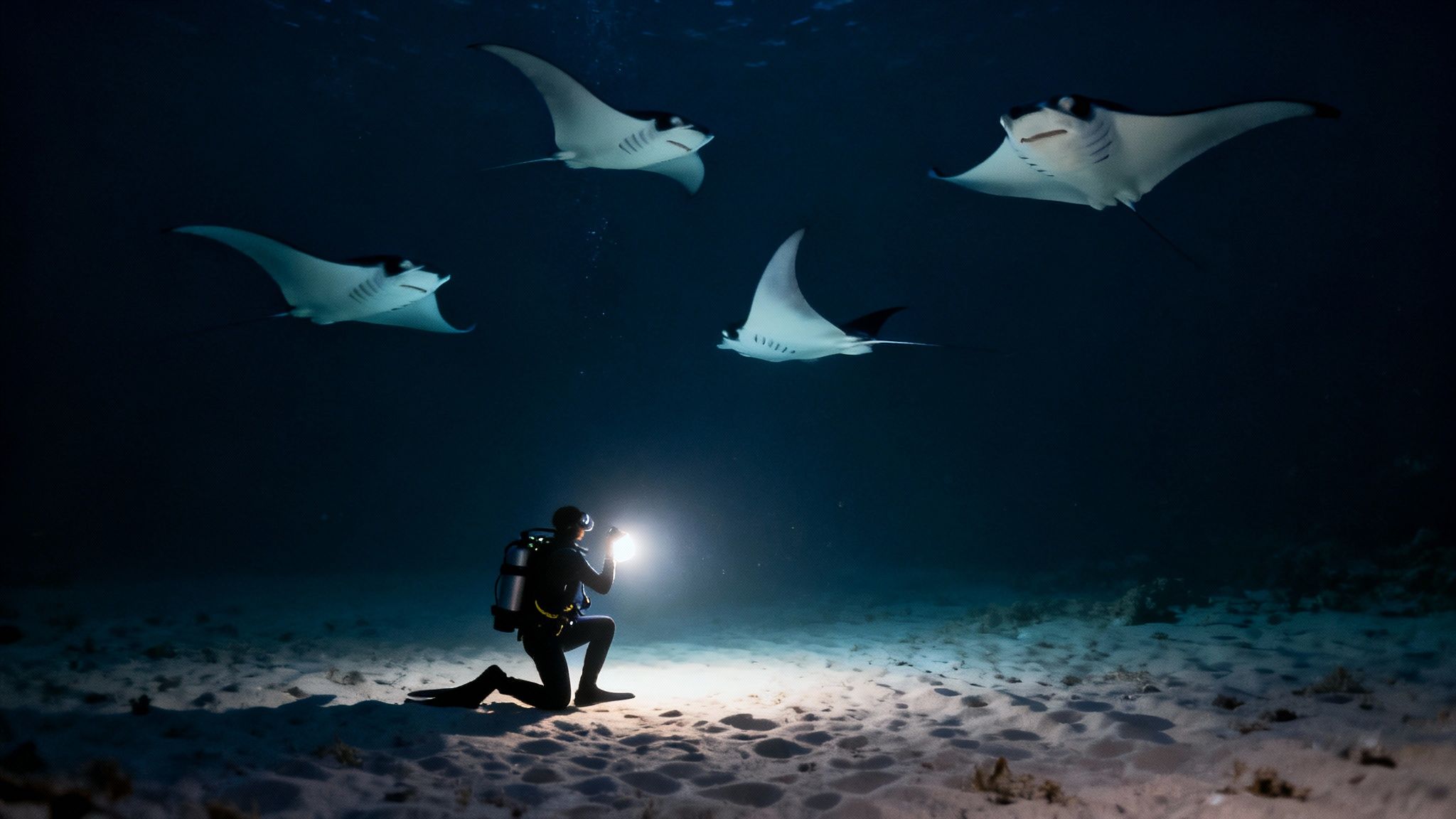
Picture this: you slip into the warm, dark Pacific just as the sun dips below the Big Island's horizon. On the ocean floor, powerful lights point upward, creating glowing columns that attract clouds of microscopic plankton.
Then, out of the darkness, the first shadow appears. A giant manta ray, wings spanning over 12 feet, glides effortlessly toward the light. This is the magic of the Kona manta ray night dive, an experience that consistently lands on bucket lists for divers around the world.
This isn't some lucky, one-off sighting; it's a remarkably reliable phenomenon. The Kona Coast is famous for these dives because the manta rays show up night after night. In fact, most operators boast a sighting success rate of over 85-90%, with some even reporting a 95% success rate.
What Makes This Dive So Special?
The Kona manta ray encounter is unique because you're observing a completely natural feeding behavior in a controlled and safe setting. While you might spot mantas at cleaning stations in other parts of the world, Kona gives you an unparalleled view of their nightly feast.
To get you ready, this guide will cover everything from A to Z:
- Why Kona is the world's best place for this dive.
- The key differences between scuba diving and snorkeling with the mantas.
- A step-by-step look at what to expect—from the boat ride to your time in the water.
- Practical tips to ensure your adventure goes off without a hitch.
For another fantastic resource on the snorkeling side of this amazing experience, check out the Ultimate Guide To The Kona Manta Ray Night Snorkel.
To give you a quick snapshot, here's what to expect from this world-famous underwater adventure.
Kona Manta Ray Night Dive At A Glance
Here’s a quick overview of what to expect on this world-famous underwater adventure, from what you'll see to how to prepare.
| Aspect | Details |
|---|---|
| Location | Makako Bay (“Garden Eel Cove”) or Keauhou Bay (“Manta Village”) |
| Avg. Water Temp | 75-80°F (24-27°C) |
| Avg. Dive Depth | 30-40 feet (9-12 meters) |
| Typical Sighting | 1-15+ Reef Manta Rays (Manta alfredi) |
| Manta Wingspan | Up to 15 feet (4.5 meters), but average is 10-12 feet |
| Sighting Success Rate | 85-95% on average |
| Required Certification | Open Water Diver (or snorkelers on a separate boat) |
This table should help set the scene for the incredible journey ahead.
Think of this as your personal briefing before embarking on an unforgettable journey with Kona's gentle giants. Our goal is to ensure you feel prepared, confident, and ready for the magic that awaits.
We've designed this guide to cut through the noise, helping you pick the right tour and prepare for an evening you’ll talk about for years to come. Ready to dive in?
Why Kona Is the World’s Best Manta Encounter
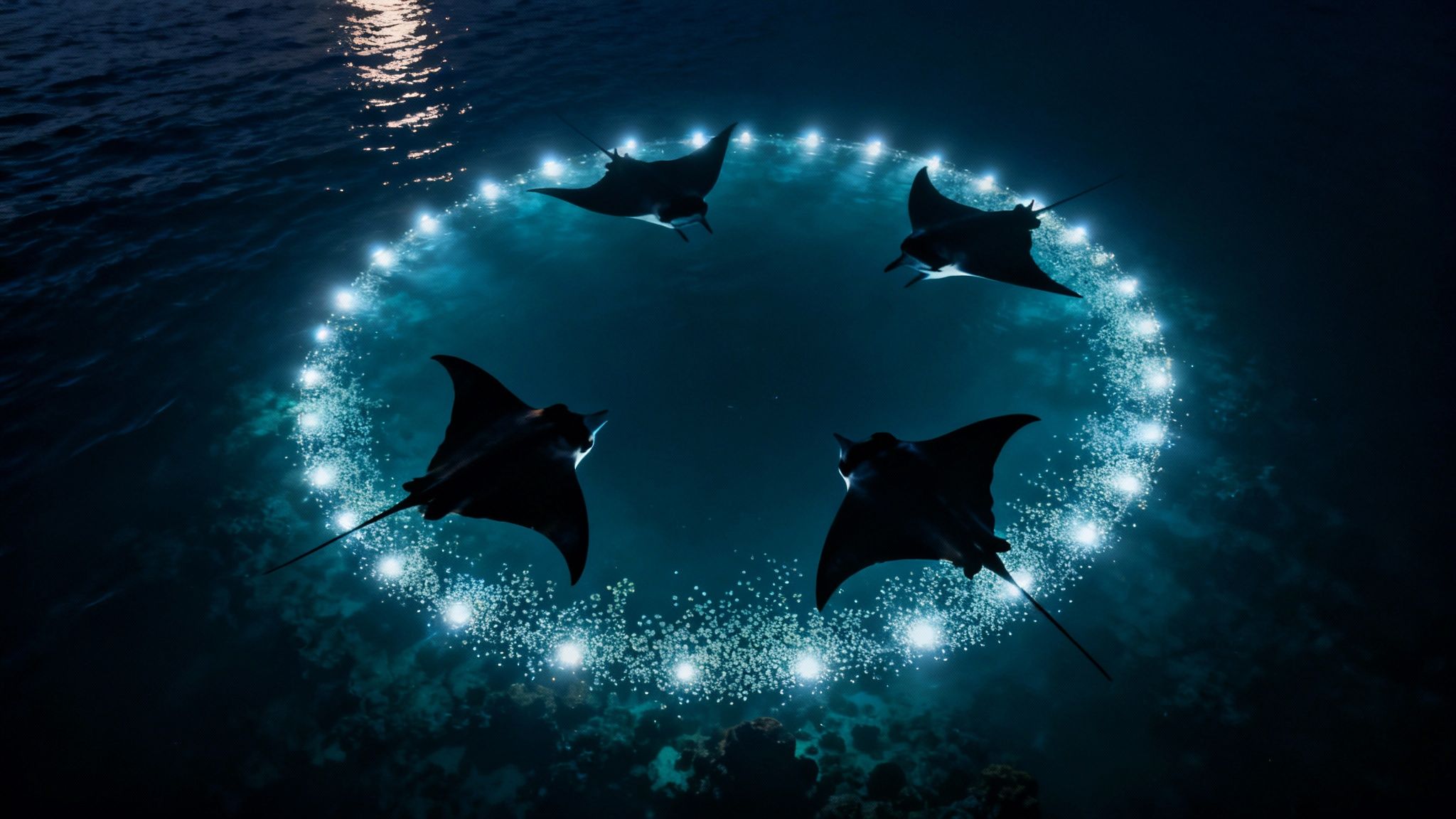
So, what makes the manta ray night dive in Kona the experience everyone talks about? It’s not just a lucky guess. The Big Island's west coast is a perfect storm of geography and biology, creating what is hands-down the most reliable and awe-inspiring manta encounter on Earth.
Most famous dive spots around the world host migratory manta populations. You have to be there at the right time of year. But not Kona. We have a year-round, resident population of reef manta rays. Researchers have actually identified over 250 individual mantas living in these waters, each one known by the unique spot patterns on its belly. This means that no matter when you decide to visit, the mantas are here waiting for you.
The island’s geology is the real hero here. The leeward coast is perfectly sheltered from the powerful trade winds, which gives us exceptionally calm and clear water. Combine that with nutrient-rich currents, and you get dense clouds of plankton—the mantas' favorite food. It's like a natural pantry that opens for business every single night.
Kona's Premier Manta Dive Sites
Two main spots have become legendary for the manta dive, and each offers a slightly different flavor. Knowing what makes them tick helps explain why Kona’s encounters are so incredibly consistent.
-
Manta Village (Keauhou Bay): This is the original, the classic. Right offshore from the Sheraton Kona Resort, this spot has a long history. The hotel's lights have been attracting plankton for decades, which in turn trained generations of mantas to show up for dinner. Its shallow, sandy bottom and protected conditions make it a fantastic, accessible dive.
-
Manta Heaven (Garden Eel Cove): A bit further north near the airport, this site often pulls in a larger crowd of mantas. While it's just as reliable, it's a little deeper and can sometimes have a bit more current. This current is a good thing, though—it brings in massive clouds of plankton, setting the stage for a truly mind-blowing feeding frenzy.
Years of observation have given us an incredible window into their world. Researchers have painstakingly tracked individual rays, their feeding routines, and their loyalty to these sites. You can even read more about the dedicated research on Kona's manta ray sightings to see the science behind the magic.
The consistency isn't an accident; it's a finely tuned ecosystem. The mantas have learned that the lights from dive operators signal an easy, all-you-can-eat plankton buffet, and they show up reliably for their nightly meal.
This learned behavior is the secret sauce behind Kona’s ridiculously high success rate. When you book a manta ray dive tour, you aren't just crossing your fingers for a random sighting. You’re taking a front-row seat at a well-established, natural dinner theater.
Check Availability
Choosing Your Adventure: Scuba Diving vs. Snorkeling
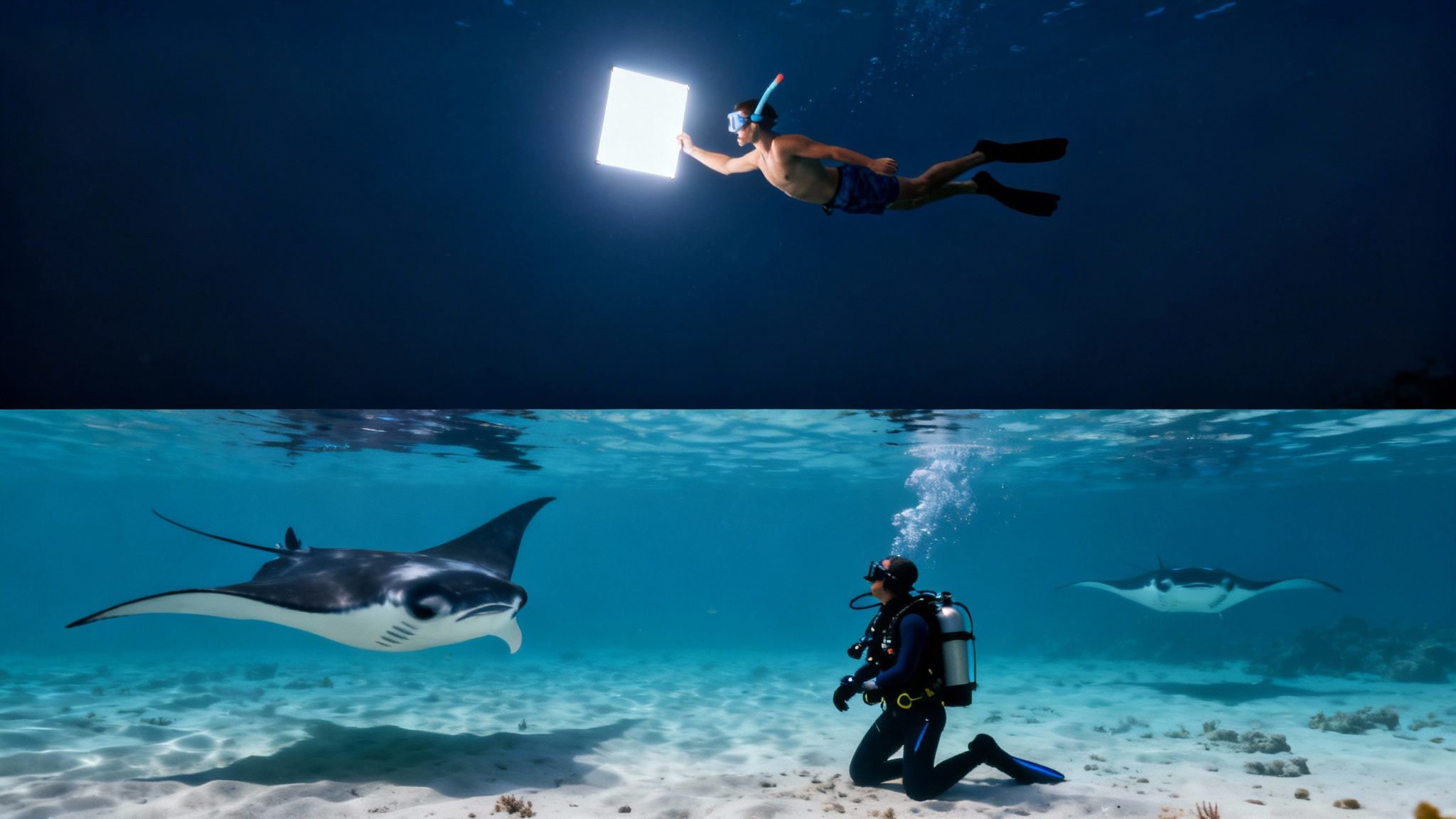
One of the first big decisions you'll make when planning your manta ray night dive in Kona comes down to perspective. Do you want to be on the ocean floor looking up, or floating on the surface looking down? Both scuba diving and snorkeling offer jaw-dropping views of the manta ballet, but they are fundamentally different experiences.
As a scuba diver, you get a front-row seat from the "front row" of the theater. You’ll descend to a sandy bottom, usually around 30-40 feet, get settled, and aim your dive light straight up. From this unique vantage point, you become part of their world as the giant mantas materialize from the dark and soar just inches over your head. It’s serene, humbling, and utterly surreal.
Snorkelers, on the other hand, get the birds-eye view. You’ll be floating at the surface, holding onto a specially designed light board. These boards cast powerful beams down into the water, creating a column of light that attracts the plankton. The mantas then come right up to the surface to feed, performing their graceful barrel rolls just feet beneath you. It’s an equally thrilling and much more accessible way to join the action.
Comparing The Two Experiences
So, which one is for you? It really boils down to your comfort in the water, whether you're a certified diver, and what kind of encounter you're dreaming of. There’s no "better" option—just the one that’s a better fit for you. For a really deep dive into this topic, you can learn more about whether it is better to snorkel or dive with manta rays in our guide.
To help you figure it out, we’ve put together a quick side-by-side comparison of the two experiences.
Scuba Diving vs Snorkeling With Manta Rays
Use this side-by-side comparison to decide which manta ray experience is the right fit for you and your group.
| Feature | Scuba Diving | Snorkeling |
|---|---|---|
| Certification | Open Water certification is required | No certification needed at all |
| Perspective | Bottom-up view; mantas glide overhead | Top-down view; mantas roll just below |
| Physical Effort | Very little effort once settled on the bottom | Requires actively floating and holding on |
| Accessibility | Limited to certified divers in good health | Open to almost all ages and swim levels |
Ultimately, both options deliver an unforgettable night.
Which Adventure Is Right For You?
The best choice is the one that gets you excited and feels right. If you’re a certified diver who cherishes that feeling of total immersion in the underwater world, the scuba experience is truly hard to top. Having a 12-foot manta ray blot out the surface lights as it glides over you is a moment that will be seared into your memory forever.
If you aren't a diver, you're traveling with kids, or you just prefer to stay at the surface, snorkeling is a fantastic choice that doesn’t compromise on the magic. It’s easier, involves less gear, and opens up this incredible natural wonder to just about everyone.
No matter which you choose, you're guaranteed a front-row seat to one of the most spectacular wildlife encounters on Earth.
What to Expect on Your Manta Ray Night Tour
Knowing the step-by-step flow of a manta ray night dive in Kona can make the whole experience feel much more comfortable and exciting. Think of it as a well-rehearsed play, designed for maximum safety, comfort, and, of course, a whole lot of awe. Let’s walk through a typical tour so you know exactly what’s coming.
Your adventure starts late in the afternoon, right at the harbor. After you check in with your chosen tour operator, the crew will gather everyone for a detailed pre-trip briefing. Pay close attention here—this is where the guides cover everything you need to know, from fascinating facts about manta ray behavior to the safety rules for the evening.
The most important takeaway from this briefing is the golden rule of interacting with these creatures: do not touch the animals. Manta rays are covered in a delicate, protective mucus layer, and our touch can damage it, leaving them vulnerable. This chat ensures everyone is on the same page about being a responsible, respectful guest in their world.
The Sunset Cruise and Campfire Setup
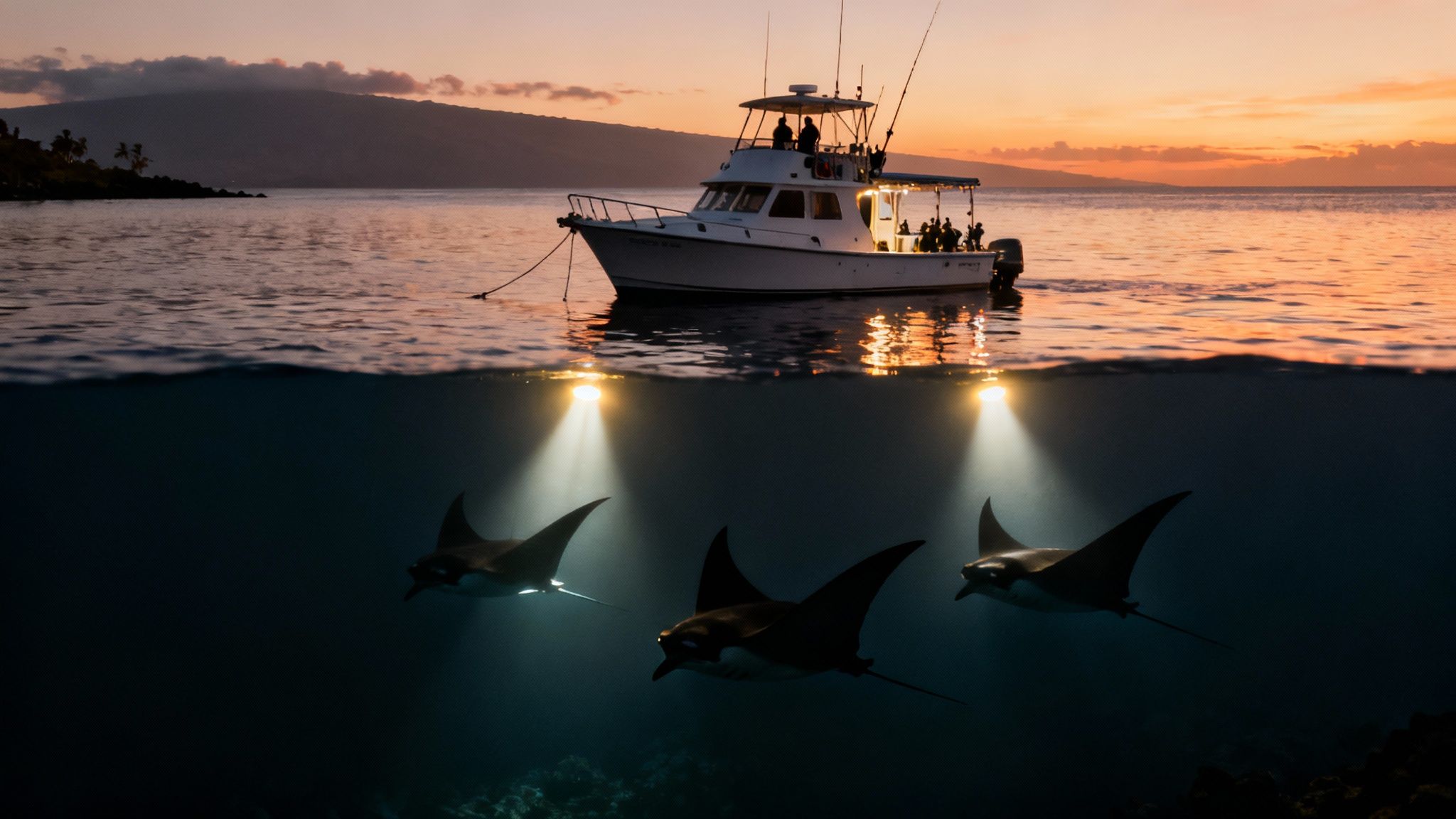
With the briefing done, it’s time to board the boat and head out to the dive site. The ride itself is a treat, often happening right as a classic Kona sunset paints the sky in brilliant colors. It's the perfect, serene start to the main event.
While you're soaking in the view, the crew gets to work setting up the famous underwater "campfire." No, it’s not a real fire. It's a powerful array of lights placed on the ocean floor, all pointing straight up toward the surface. Snorkelers get a similar setup, usually a floating light board that they can hold onto.
This light is the secret sauce. It attracts huge clouds of plankton—the manta rays' favorite meal—essentially ringing a massive dinner bell that draws the gentle giants in from the dark, open ocean.
Once the campfire is lit and the plankton buffet is starting to form, it’s your turn to get in the water. Slipping into the dark ocean at night might sound a little nerve-wracking, but your guides are right there with you. As your eyes adjust, you’ll see this incredible column of light, already buzzing with tiny life. It's like a beacon in the deep blue.
And then, you wait. The anticipation is a huge part of the magic. All of a sudden, a massive, silent shadow emerges from the darkness, gliding into the light with impossible grace. The first manta has arrived.
For the next 45 minutes or so, you’ll witness an underwater ballet. One, two, maybe more mantas will swoop, dive, and perform effortless barrel rolls as they scoop up plankton, often passing just inches away. It’s a humbling, breathtaking spectacle you won’t ever forget. Ready for your front-row seat? A top-rated manta ray dive tour is just a click away.
How to Prepare for Your Manta Ray Adventure
A bit of prep work can make a world of difference between a good dive and an unforgettable one. First things first: book your tour as far in advance as you can.
The Kona manta ray night dive is no hidden gem—it draws an estimated 80,000 people every year and is a huge part of the Big Island’s tourism scene. The best operators get booked up fast, especially during high season. You can get a great overview of the experience in this insightful article on the manta ray night dive.
To make life easier on dive day, show up at the boat ramp ready to go. Wearing your swimsuit under your clothes is a classic pro-move that saves you from fumbling around in a tiny boat head (bathroom) later on.
What to Bring and Certification Needs
You'll thank yourself later for packing a small "go bag" with a few essentials. After an hour or so in the water at night, a warm, dry towel and a fresh change of clothes or a jacket will feel like pure luxury on the boat ride back to the harbor.
Your comfort is key. A little forethought means you can relax and fully immerse yourself in the awe of the underwater ballet without worrying about being cold or unprepared afterward.
If you're planning to scuba dive, don't forget your certification card! Operators will need to see proof that you're a certified Open Water Diver (or higher) before they let you in the water. For snorkelers, though, there's no certification required, which makes this an amazing adventure for just about everyone.
Curious about what gear the operator provides or what you might want to bring yourself? We've got you covered in our guide on the gear you will need for your Kona diving adventure.
One last tip: if you're even slightly prone to seasickness, it’s best to be proactive. Taking an over-the-counter remedy about an hour before departure or keeping some ginger chews handy can be a trip-saver. With these simple steps, you'll be all set for an incredible evening with Kona's gentle giants.
Choosing the Best Manta Ray Tour Operator
Picking the right company for your manta ray night dive in Kona is probably the single most important decision you'll make for this adventure. The right crew can turn a great dive into an absolutely life-changing experience. A bad one? Well, that can just lead to frustration and a missed opportunity.
Ultimately, the best operators put two things above all else: your safety and the well-being of the manta rays.
Look for companies that are known for their solid safety record and run comfortable, well-cared-for boats. It’s also a huge plus if they commit to small group sizes. Think about it—a more intimate setting means you get a much better, less crowded view of the action. You'll be able to fully appreciate the underwater ballet without constantly bumping into other divers.
What to Look for in a Top-Tier Company
One of the clearest signs of a quality, responsible operator is their commitment to the Manta Ray Green List standards. These are the established best practices for ensuring the dives are safe and sustainable for the mantas and their habitat. When a company follows these guidelines, it shows they're serious about conservation, not just running a tourist attraction.
A top-tier outfit also invests in experienced guides—people who are not only dive professionals but are genuinely passionate about marine life and love sharing what they know. This passion always shines through in customer feedback. For a deeper dive, check out our guide on how to choose a Kona dive shop.
Choosing an operator is about more than just a boat ride; it’s about entrusting your safety and this once-in-a-lifetime experience to a team that respects both you and the ocean's gentle giants.
Spending a few minutes reading reviews from other divers is one of the best ways to get a real feel for a company. It's unfiltered social proof that can help you make a smart choice. Below, you can see what actual customers have said about Kona Honu Divers to get an idea of the kind of service you should be looking for.
Your Top Manta Ray Dive Questions Answered
Even the most experienced divers usually have a few questions before plunging into their first manta ray night dive in Kona. Let's clear up some of the most common ones so you can feel totally ready for the adventure.
Is The Manta Ray Night Dive Safe?
It is incredibly safe. In fact, safety is the number one priority for every reputable dive operator in Kona. Manta rays themselves are completely harmless to humans; they're often called "gentle giants" for a reason. They don't have teeth, stingers, or barbs—they are simply filter feeders.
You'll have professional guides in the water with you the entire time. Top-tier companies like Kona Honu Divers have strict, time-tested safety protocols that make the whole experience feel controlled, secure, and comfortable for everyone.
When Is The Best Time Of Year To See Mantas?
You can come anytime! That’s the magic of Kona. We have a resident population of manta rays, which means they live here all year long. Sighting rates stay consistently high no matter the month.
The ocean might be a touch calmer in the summer months, but the mantas don't care about the season. They show up for their plankton buffet like clockwork, night after night.
This year-round consistency is what puts Kona on the map. You can book a trip for January or July and have an equally fantastic shot at a mind-blowing encounter.
Is A Manta Sighting Guaranteed?
While the sightings are incredibly reliable—most operators boast a success rate well over 90%—it’s crucial to remember we're dealing with wild animals. There are no guarantees in nature.
That's why most of the best dive charters offer a "manta guarantee." If for some rare reason the mantas don't show up on your dive, you can usually come back another night for free (just keep in mind it's based on availability). It’s a great policy that shows just how confident they are that you'll see them.
Can I Touch The Manta Rays?
Absolutely not. Touching the manta rays is strictly forbidden, and for a very important reason. Their skin is covered in a special mucus layer that protects them from infections and parasites.
When a person touches them, it can rub off this protective slime, leaving them vulnerable to disease. Every pre-dive briefing will stress the importance of passive observation—look, but don't touch—to keep these beautiful creatures safe and healthy.
Your unforgettable underwater ballet is waiting. When you dive with Kona Honu Divers, you're not just signing up for a tour; you're joining a crew that is passionate about safety, conservation, and making sure you have the experience of a lifetime. Come see why thousands of divers have given us five-star reviews.
Check Availability