
Picture this: you're floating in the warm, dark Pacific waters just off the Kona coast. Out of the darkness, a shadow emerges. It's a majestic manta ray, with a wingspan wider than you are tall, gliding silently towards you. It performs a graceful barrel roll just inches from your face. This isn't a scene from a nature documentary—it's the world-famous Kona manta ray night dive, an experience so profound it's consistently ranked as one of the best dives on the planet.
Your Unforgettable Manta Ray Adventure Awaits
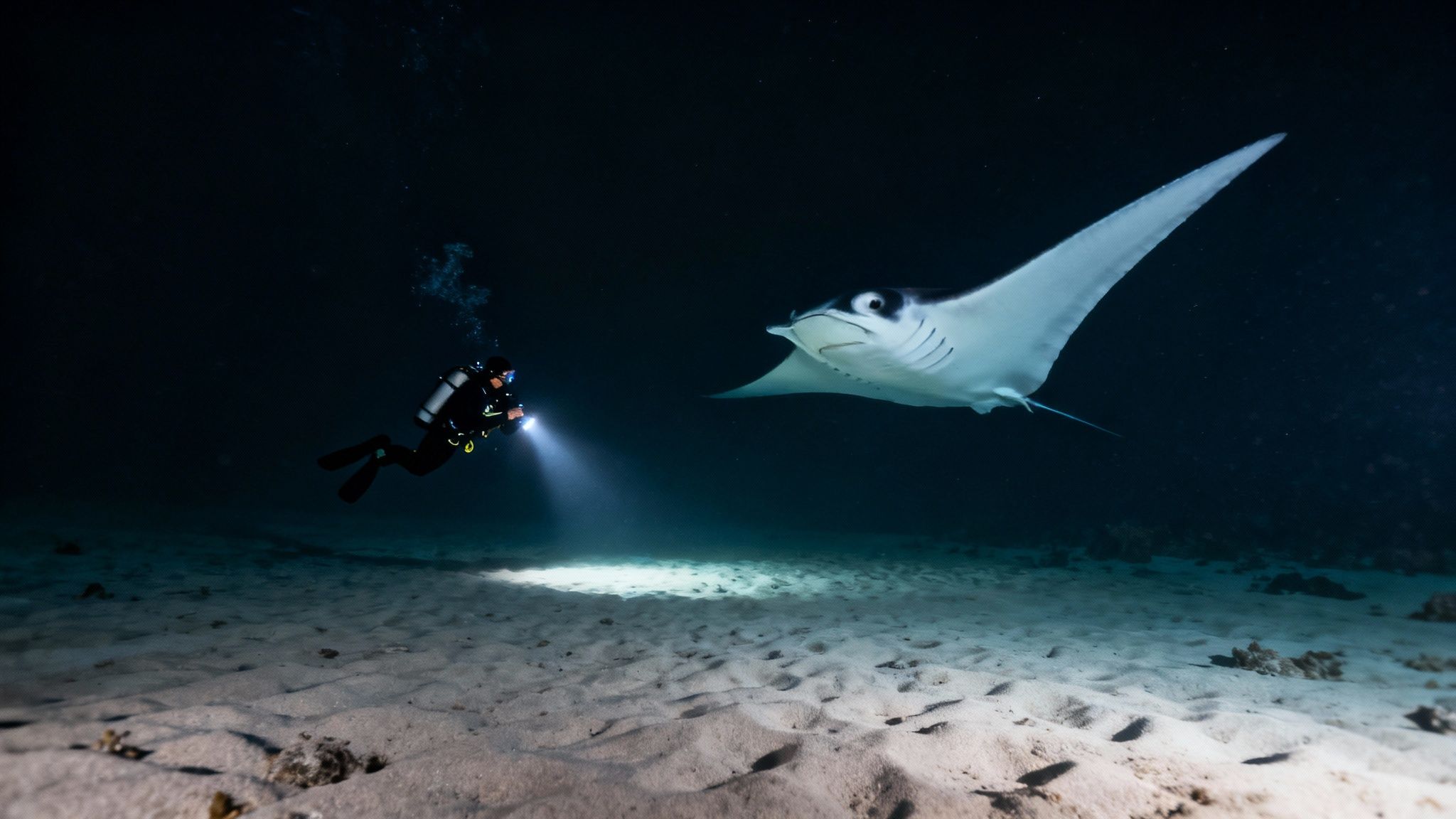
If this bucket-list adventure is on your radar, you've come to the right place. This guide is your complete playbook. We'll break down why Kona is the global hotspot for these encounters, what to really expect during the dive, and how you can prepare for a safe and absolutely breathtaking experience. Ready to swim with the "angels of the sea"?
The Kona Coast, on the Big Island of Hawaii, is truly special. It's home to a resident population of over 450 identified manta rays, which means your chances of a magical encounter are incredibly high. In fact, these manta ray dive tours boast a sighting success rate of more than 95%. It's an unparalleled opportunity to witness these gentle giants. Better yet, the dives happen at comfortable, shallow depths of 30-40 feet, letting you spend more time just soaking it all in. You can learn more details about the Kona manta ray night dive directly from the experts.
What Makes This Experience So Unique?
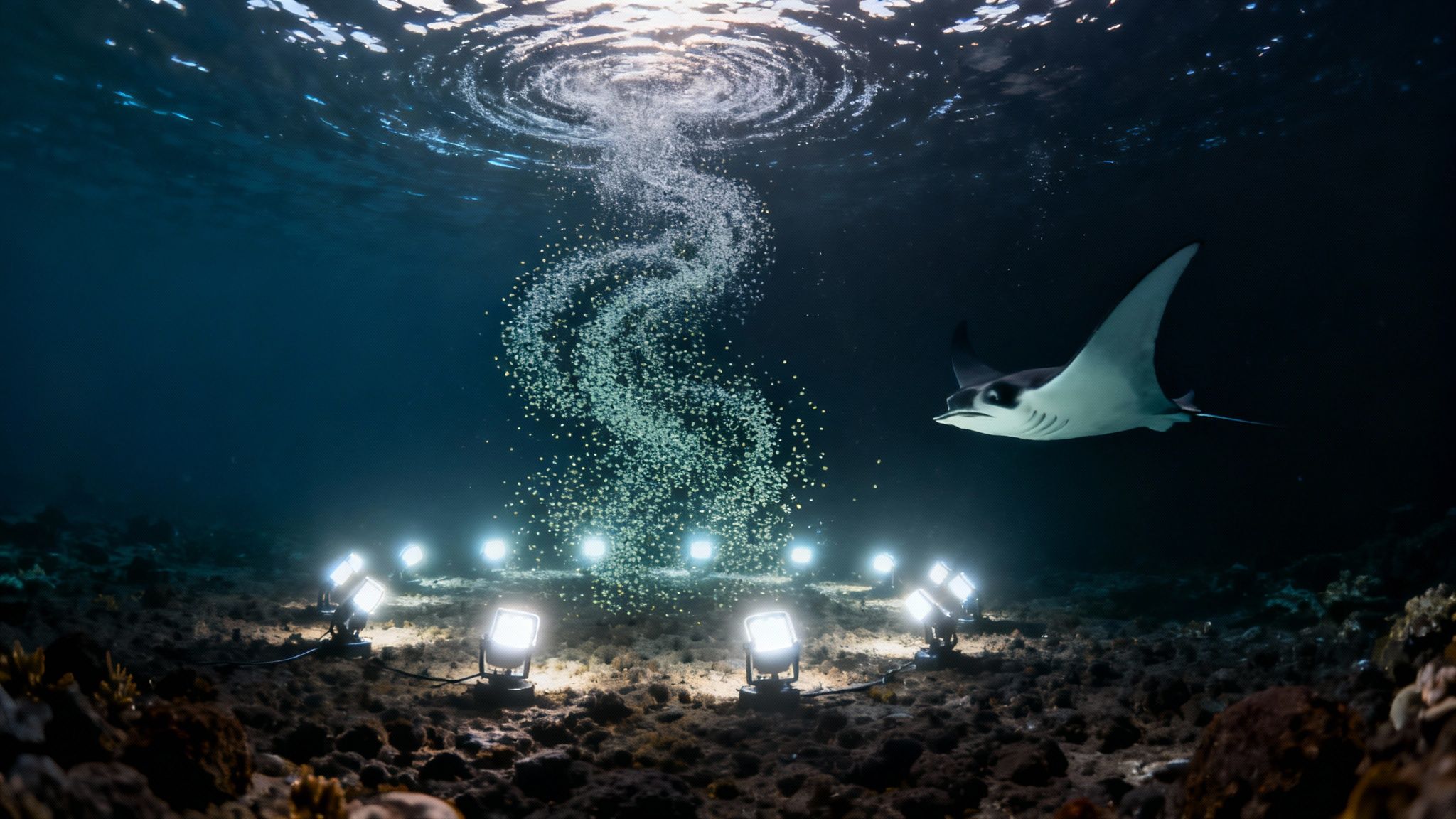
The magic behind this incredible spectacle is actually a brilliantly simple concept. Dive operators set up a "campfire" of powerful lights on the ocean floor. This light attracts swarms of plankton—the manta rays' favorite meal—and the mantas show up for the feast. As a diver or snorkeler, your job is simple: get settled, and watch the show unfold.
Here's what you can expect on a typical tour:
- A Majestic Spectacle: You’ll watch as multiple manta rays, some with wingspans stretching over 12 feet, perform graceful acrobatics while they feed.
- Up-Close Encounters: The mantas often glide within inches of you, creating an intimate and genuinely awe-inspiring moment you'll never forget.
- Professional Guidance: Expert crews are on hand to ensure a safe, informative, and respectful interaction for both the guests and the mantas.
This isn't just a dive; it's an immersive, underwater ballet where nature takes center stage. The sheer scale and grace of these animals create a memory that truly lasts a lifetime.
To give you a quick snapshot of what the adventure entails, here's a look at the key details.
Kona Manta Ray Night Dive At a Glance
| Aspect | Details |
|---|---|
| Location | Kona Coast, Big Island, Hawaii |
| Activity | Night Scuba Diving & Snorkeling |
| Primary Marine Life | Giant Manta Rays (Mobula alfredi) |
| Success Rate | Over 95% Sighting Chance |
| Typical Depth | 30-40 feet (9-12 meters) |
| Best Time to Go | Year-round |
This table gives you the basics, but the real experience is something you have to see to believe.
Going with a top-tier, eco-conscious operator like Kona Honu Divers ensures you're in good hands. Their deep commitment to safety and protecting the marine environment makes the whole experience even more special and meaningful.
Why Kona is the World’s Best Manta Ray Destination
So, what makes the manta ray night dive in Kona a bucket-list experience for people all over the world? It’s not just one thing. It's really a perfect storm of biology, geography, and a bit of accidental genius that grew into one of the most incredible wildlife encounters you can have.
The whole thing started decades ago. An oceanfront hotel flipped on its lights, lighting up the water below. Those lights drew in swarms of plankton—the go-to meal for manta rays. It didn't take long for the local mantas to figure out this was a reliable, all-you-can-eat buffet.
Dive operators saw what was happening and had a brilliant idea: recreate the effect, but do it safely and sustainably out on the open water. And that’s how the world-famous manta ray night dive was born. It just goes to show how a simple observation can spark something truly magical.
The Science of the Manta Campfire
At the heart of it all is a concept we call the "manta campfire." Once the sun goes down, dive boats head out and place powerful, eco-friendly lights on the ocean floor. This concentrated beam of light acts like a giant magnet for plankton, pulling in countless microscopic critters and creating a thick, swirling column of food.
The concept is simple yet brilliant: bring the food to one spot, and the mantas will come to you. This turns a random encounter into a highly predictable event, which is exactly why Kona's sighting success rate is over 95%.
This dependable food source is what keeps Kona’s resident manta population coming back, night after night. For divers and snorkelers, it's a front-row seat to an underwater ballet. You get to watch these gentle giants glide, loop, and somersault through the light beam, scooping up mouthfuls of plankton. But this clever setup is only part of the story; Kona's unique geography also plays a huge role.
Ideal Conditions and a Resident Population
The Kona coast is perfectly shielded from the rough open-ocean swells by the Big Island's massive volcanoes. This geography creates incredibly calm and clear water, making for perfect night diving conditions almost all year long. There really isn't an "off-season" for this adventure because the mantas here don't migrate—they're a resident population that sticks around.
Many of the 450+ identified individuals have been studied for years and are even known by name. This adds a personal touch to the experience; you might actually meet famous mantas like "Big Bertha" or "Lefty" on your trip. It feels less like you’re just observing wildlife and more like you’re meeting the locals.
Knowing where to see manta rays in Hawaii helps you understand why these specific sites off the Kona coast are so special. It's this combination of history, science, perfect geography, and a well-known community of mantas that makes Kona the undisputed best place in the world to see them.
Choosing Your Manta Adventure: Scuba vs. Snorkel
One of the best things about the Kona manta ray night dive is its accessibility. You don’t need to be a certified scuba diver to witness the magic. You just have to decide what kind of view you want: looking up from below or floating on the surface looking down.
The choice really boils down to your personal comfort in the water and whether or not you have a dive certification. Both experiences offer a front-row seat to the same incredible underwater ballet, just from different angles.
The Scuba Diver's Perspective
If you're a certified diver, getting underwater puts you right in the middle of the action. You'll descend to a comfortable 30-40 feet and settle in on the sandy ocean floor. From there, it’s like having seats in the front row of an otherworldly theater.
You get to watch these gentle giants, some with wingspans stretching over 12 feet, perform a graceful, acrobatic routine right above your head. They swoop, glide, and barrel-roll through the powerful light beams, sometimes coming so close you could almost count their spots.
To join the dive, you’ll need at least an Open Water Diver certification. The dive itself is very straightforward—no complex navigation or depth changes—so even relatively new divers can relax and just soak in the spectacle.
"There's nothing quite like the feeling of looking up from the ocean floor as a dozen massive mantas dance in the lights above you. It's a humbling and awe-inspiring perspective that makes you feel a part of their world."
The Snorkeler's Bird's-Eye View
No certification? No problem. The view from the surface is just as breathtaking. Snorkelers hold onto a custom-made flotation board that has its own powerful lights pointing down into the dark water. It’s a brilliant setup that gives you a stable and secure spot to watch the show unfold.
From this bird's-eye view, you’ll witness the mantas rising from the depths, their huge mouths open to scoop up the plankton that has gathered just beneath the surface. They often come incredibly close, giving you a completely different but equally spectacular perspective. It’s an absolutely thrilling experience.
At the end of the day, you can't go wrong. Both options guarantee an unforgettable encounter with Kona's famous manta rays. If you're still on the fence, you can learn more about whether it's better to snorkel or dive with manta rays to help you decide.
What to Expect on Your Manta Ray Night Dive Tour
From the buzz of excitement at the harbor to the quiet, star-lit boat ride home, a manta ray night dive in Kona is an experience you won't forget. Knowing how the evening will unfold can help you shake off any nerves and just soak it all in. When you head out with a seasoned crew like the one at Kona Honu Divers, you're in for a smooth, professional, and genuinely respectful ocean adventure.
It all kicks off when you check in. The crew will get you sorted with gear, and then you’ll gather for the pre-dive briefing. This is way more than just a quick safety rundown. It’s where your guides share the secrets of the dive, explaining procedures and the all-important "manta etiquette." You’ll learn exactly why you should never, ever touch a manta ray—their skin is covered in a delicate mucus layer that protects them from infection, and our touch can do serious harm.
The Journey to the Dive Site
With the briefing done, it's time to hop on the boat and cruise out to one of Kona's legendary manta ray hangouts. The area has a few different spots, each with its own vibe. Two of the most famous are Manta Heaven and Manta Village, both known for consistent manta sightings. At its peak, Manta Heaven, located just offshore from the airport, was seeing an incredible average of 11 manta rays per night—a huge number compared to the four or so at Manta Village.
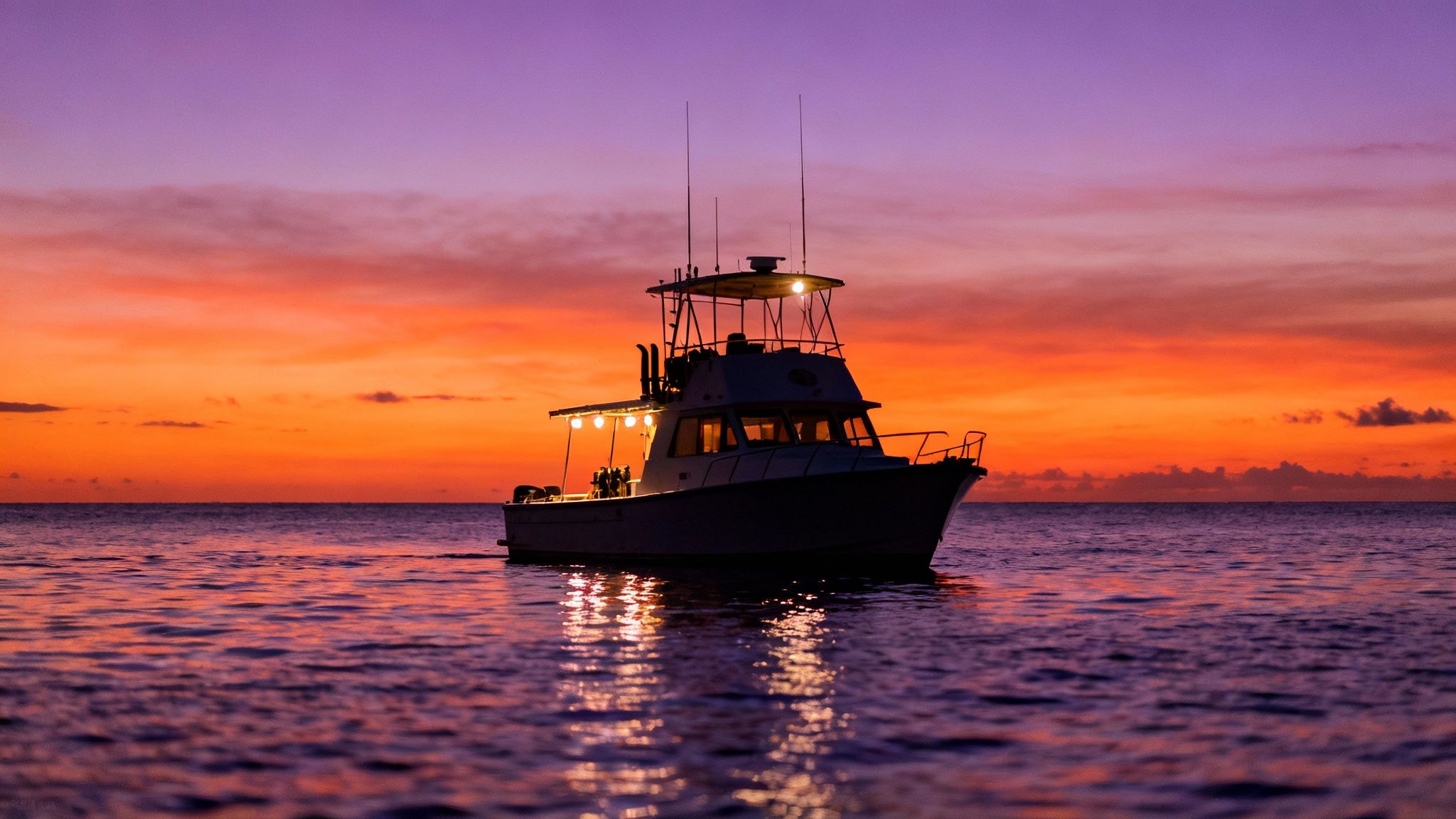
The boat ride out is an experience in itself. The crews time it perfectly, so you’re treated to a classic Kona sunset over the Pacific. Watching the sky explode with color as you motor toward the dive site is the perfect way to build the anticipation for what's coming next.
The Underwater Ballet Begins
Once the boat is anchored, it’s showtime. You'll slip into the dark, surprisingly warm water and follow your guide down to the "campfire"—a circle of powerful, eco-friendly lights set up on the ocean floor. Everyone finds a spot and points their dive light up, adding to the glow that attracts the plankton.
And then, it happens.
The first time you see a manta appear from the darkness is a moment that will stick with you forever. A huge, graceful shadow emerges, gliding effortlessly through the beams of light. Before you know it, more have joined, performing a silent, acrobatic dance as they feast on the clouds of plankton right above your head.
Your only job is to be a quiet observer. You’re a visitor in their dining room, and the best thing you can do is stay still and let the magic happen around you. For a deeper dive into what makes this kind of dive so special, check out our guide to scuba diving at night.
After an amazing time in the water, it’s back to the boat. The ride to the harbor is usually a warm, cozy affair. Most crews, including Kona Honu Divers, break out hot chocolate and snacks. It's the perfect chance to trade stories with your fellow divers and just marvel at the incredible encounter you all shared.
Meet the Stars of the Show: The Kona Manta Rays
The mantas you'll meet on a manta ray night dive in Kona aren't just a school of anonymous fish. Think of them more like local celebrities—each with a name, a distinct personality, and a life story that stretches back for years, sometimes even decades.
This is what makes the Kona dive so special. It’s not just about seeing an animal; it's about having a genuine encounter with an individual you can recognize.
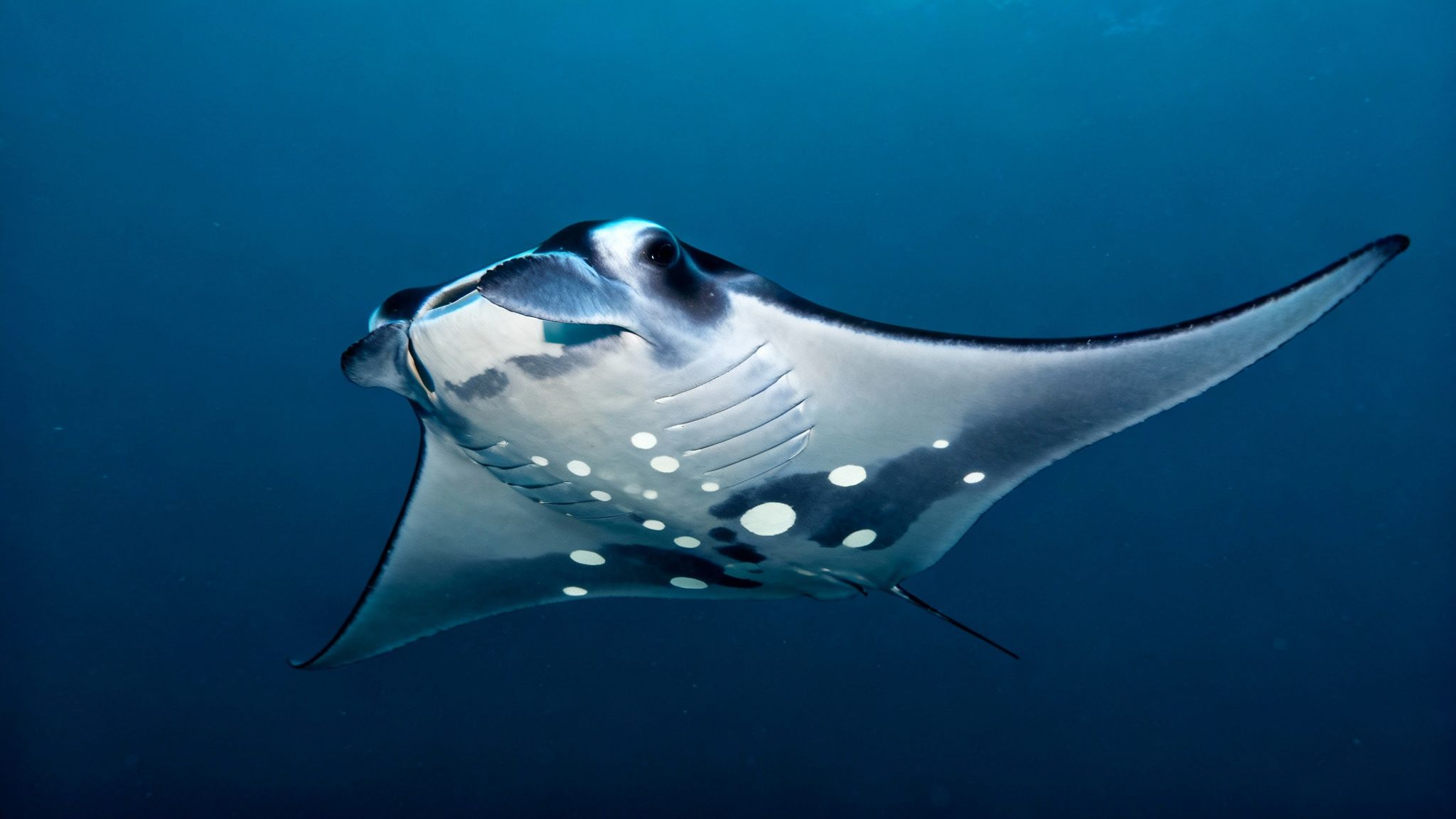
So, how is this even possible? It all comes down to a fascinating quirk of manta biology. Every single manta ray has a unique constellation of black spots on its white belly. They’re as distinctive as a human fingerprint, meaning no two are ever exactly alike. This natural "barcode" allows local researchers and dive guides to identify and track each ray with amazing precision.
Getting to Know the Locals
Before you even hit the water, your guide will probably give you a rundown of who you might meet that night. You’ll hear tales about the legendary mantas who have been showing up to the "campfire" for years.
- Big Bertha: One of the largest and most famous residents, known for her massive wingspan and incredibly graceful presence.
- Lefty: You can't miss him. Lefty is a true survivor, easily identified by a cephalic fin that was partially tangled and lost to fishing line.
- Koie: Another regular who has been delighting divers for ages, named after a beloved local divemaster.
There’s a truly magical feeling that happens when you're down there, watching the show, and you actually recognize a manta from the briefing. Seeing "Lefty" glide overhead and spotting his unique fin instantly connects you to the ocean on a much deeper, more personal level.
This identification work isn't just for fun, either. It’s serious science. Thanks to this process, researchers have cataloged nearly 200 individual manta rays in the Kona area alone. It’s a massive database that helps them track everything from migration patterns to social behaviors, giving us a clearer picture of these gentle giants. You can read more about the research behind the Kona manta night dive to see just how much we've learned.
Ultimately, this personal connection is what the Kona experience is all about. You're not just a passive observer—for a brief moment, you become part of their world. When you're ready to see it for yourself, book a manta ray dive tour and get ready to meet the stars.
Why We Recommend Kona Honu Divers for Your Manta Dive
Let’s be honest: the operator you choose for your manta ray night dive in Kona will make or break your entire experience. It’s the single most important decision you'll make, and it's what separates a good dive from a truly unforgettable, safe, and ethical encounter. After looking at all the options, we believe Kona Honu Divers consistently gets it right.
What sets them apart? It starts with their commitment to safety and quality. Their boats are top-notch and meticulously cared for, and every trip is led by seasoned guides who know these waters like the back of their hand. When you feel that level of confidence in the crew, you can truly let go and soak in the magic unfolding below.
A Deeper Commitment to Conservation and Education
Kona Honu Divers is more than just a tour company; they are genuine guardians of the ocean. They operate with a deep respect for marine life, following the highest standards for responsible wildlife interaction—principles once championed by the Manta Ray Green List.
They also take the time to educate every single guest. This turns a spectacular dive into something more profound: a real lesson in marine conservation and the importance of protecting these incredible animals.
When you dive with an operator like Kona Honu Divers, you’re doing more than just sightseeing. You’re actively contributing to a company that reinvests in the health of the very ecosystem you’ve traveled so far to see.
Their reputation speaks volumes. You don’t have to take our word for it—just look at the thousands of glowing reviews from divers and snorkelers all over the globe. That kind of feedback is earned, one incredible dive at a time.
Booking with Kona Honu Divers isn’t just about ticking an item off your bucket list. It’s an investment in a world-class, responsible adventure that puts the gentle giants of Kona first.
Ready to see for yourself? You can check availability for their manta ray dive tour right now.
Your Top Questions About the Kona Manta Night Dive Answered
If you're thinking about diving with Kona's famous manta rays, you probably have a few questions. I've heard them all over the years, so I've put together some straight-to-the-point answers to help you get ready for this once-in-a-lifetime experience.
Is the Manta Ray Night Dive Safe?
Absolutely. When you book with a professional, safety-conscious operator like Kona Honu Divers, you're in great hands. The biggest misconception is about the mantas themselves, so let's clear that up: they are completely harmless to humans.
Manta rays are gentle giants of the sea. They're filter feeders, which means they don't have teeth, and they lack any kind of stinger or barb. The real focus is simply on good, standard water safety, which the crews have down to a science.
Before you even dip a toe in the ocean, you'll get a thorough safety briefing. Professional guides are in the water with you the entire time, making sure everyone follows the number one rule: never, ever touch the mantas. It keeps you safe, and more importantly, it keeps these beautiful creatures safe and respected.
When Is the Best Time of Year to Go?
This is one of the best parts—there's truly no bad time to go! The Kona manta ray population doesn't migrate; they live here year-round. That means you can book this adventure in January or July and have an equally incredible chance of a spectacular encounter.
The sighting success rate is consistently over 95%, no matter the season. So, you can plan your trip around whatever works best for you, knowing the mantas will likely be there to greet you.
What Should I Bring on the Tour?
The great thing about a quality manta ray dive tour is that they provide all the main gear—wetsuits, masks, fins, and the scuba equipment. You just need to handle the personal comfort items.
Here’s a quick checklist of what to pack:
- A towel to dry off with.
- A warm change of clothes (a hoodie or jacket is perfect for the boat ride back).
- Any personal medications you might need.
- Motion sickness medicine if you're even slightly prone to it. It's better to be safe than sorry!
Do I Need to Be a Strong Swimmer?
Not at all for the snorkeling version. As long as you're comfortable floating in the water, you'll be fine. Snorkelers hold onto a large, custom-designed light board, which is very stable. Plus, the wetsuit gives you plenty of extra buoyancy, so you just float along and enjoy the show.
For the scuba diving option, however, you do need to be a certified Open Water diver. That certification is your proof that you have the necessary swimming skills and training to be safe and comfortable underwater.