
Picture this: you slip into the dark ocean at twilight, and suddenly, you're surrounded by massive, graceful giants gliding through the water like underwater birds. That's the unforgettable magic of the manta ray night dive in Kona, an experience that puts the Big Island on the map as the single best place on the planet for this encounter. This isn't just another dive; it's a world-famous aquatic ballet.
Why Kona Is the World’s Premier Manta Ray Destination
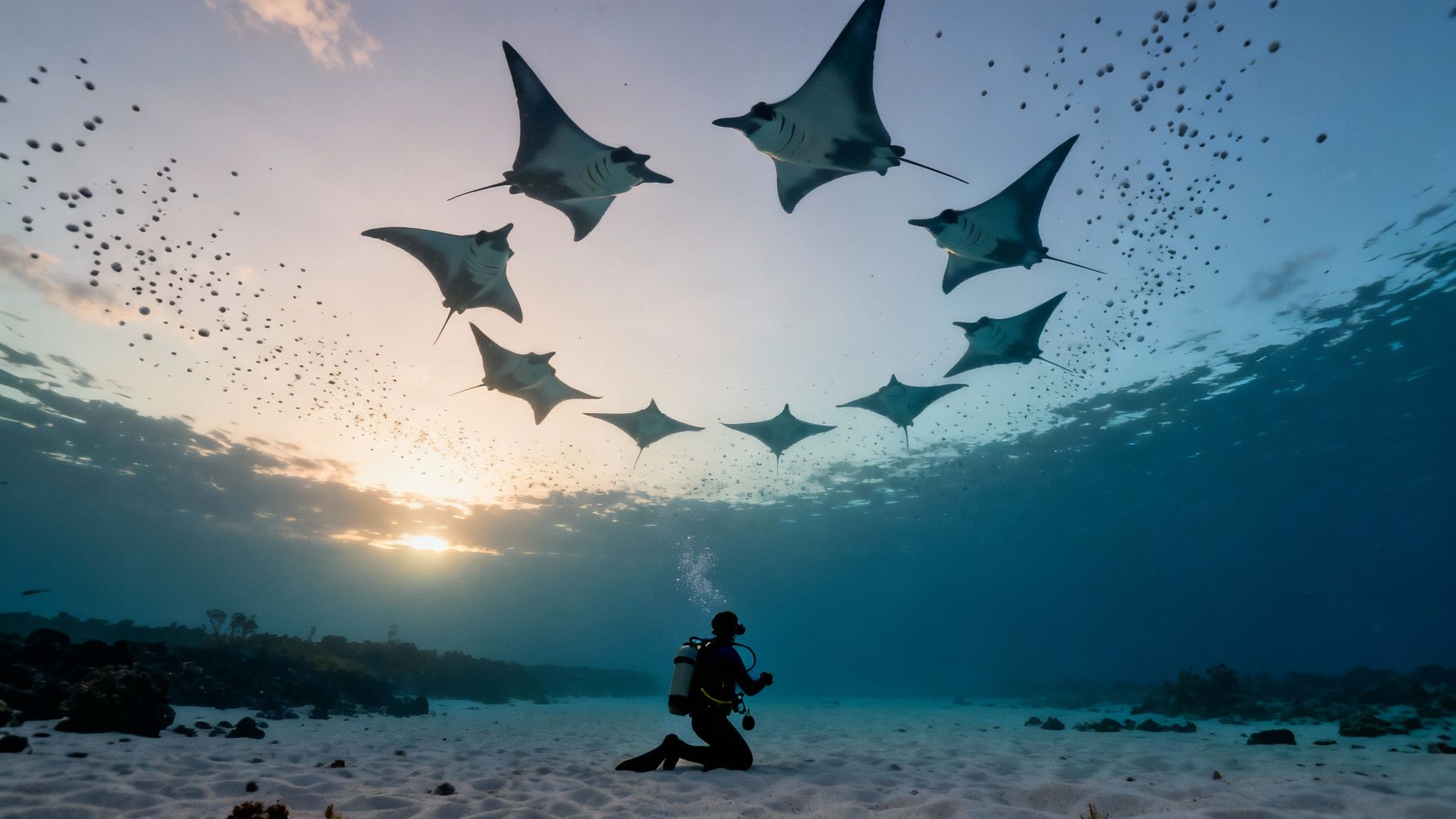
So, what makes Kona the undisputed global champion for manta ray dives? It's really a perfect storm of unique environmental conditions and a huge, non-migratory population of these incredible animals. While other destinations might offer seasonal sightings, Kona delivers reliable, year-round interactions with a well-documented community of over 450 identified manta rays.
The real secret to Kona's success is the food. The underwater landscape of the Kona coast forms naturally protected bays where plankton, the mantas' favorite meal, gathers in huge quantities. When dive boats shine powerful lights into the water after sunset, it acts like a giant magnet for the plankton, effectively ringing a dinner bell that the mantas just can't resist.
A Reliable Natural Spectacle
This dependable food source has actually taught the local manta population a unique trick. They've learned to associate the bright lights with an all-you-can-eat buffet, which is why the success rate for seeing them is so incredibly high. We're talking an 85% to 90% chance of a spectacular encounter on any given night.
The whole experience is also incredibly accessible. The dives typically happen in calm, shallow water around 30 to 40 feet deep. This means you get a nice, long bottom time—often 45 minutes or more—to just relax on the seafloor and watch the show.
The sheer consistency of having a large, resident manta ray population combined with a genius (and safe) way to attract their food source makes the Kona manta dive one of the most dependable and awe-inspiring wildlife encounters anywhere in the world.
This reliability has turned Kona into a major ecotourism destination, drawing thousands of divers and snorkelers every single year. It’s an adventure that works for almost everyone, from first-time snorkelers to divemasters with hundreds of logs.
Of course, the mantas are just one piece of the puzzle. To see what else makes these waters so special, check out our guide on what makes Kona's underwater world so famous.
Choosing a top-rated operator like Kona Honu Divers ensures you’re signing up for a safe, respectful, and truly unforgettable experience.
Choosing the Right Kona Manta Ray Tour
Picking the right tour operator is easily the most critical decision you’ll make for your **manta ray night dive in Kona**. It’s the difference between a good trip and an absolutely unforgettable one. The best companies don’t just ferry you out to a spot; they curate the entire experience, grounded in expertise, a deep respect for marine life, and a genuine passion for sharing this underwater world.
First up, you need to decide how you want to see the show. Will you be a scuba diver on the seafloor, watching the mantas swoop and glide overhead like giant, graceful UFOs? Or will you be a snorkeler on the surface, looking down as they soar up from the depths to feed just inches from your face? Both give you a jaw-dropping perspective, and thankfully, most boats are set up to accommodate both divers and snorkelers on the same trip.
What to Look for in a Manta Ray Tour Operator
Let's be clear: not all manta tours are created equal. The best operators, like our team at Kona Honu Divers, really focus on keeping group sizes small. This isn't just a comfort thing—it means you get a clear, unobstructed view of the action without constantly bumping fins with other people. It makes the entire experience feel more personal and less like a crowded stadium.
Another huge factor is the quality of the guides. A truly experienced guide does so much more than just point you in the right direction. They can often identify individual manta rays by the unique spot patterns on their bellies, sharing their names and personal histories. Suddenly, it’s not just a dive; it’s a meaningful connection with these incredible animals. A top-notch crew is also fanatical about safety and conservation, ensuring the whole operation is sustainable for years to come.
Understanding the Dive Sites
The Kona coast has become a global hotspot for manta encounters, with an estimated 80,000 people jumping in the water each year to see them. Most operators frequent three primary sites, and a good crew will always choose the best location based on recent manta activity and the night's ocean conditions.
Here’s a quick rundown of the main "stages" for the manta ballet, which will help you understand what to expect.
Manta Dive Sites At a Glance
| Dive Site | Typical Sighting Success Rate | Average Manta Count | Best For |
|---|---|---|---|
| Manta Village (Kaukalaelae Point) | Over 95% | 4-8 | The highest reliability, perfect for first-timers |
| Manta Heaven (Garden Eel Cove) | Around 90% | ~11 | Seeing a higher number of mantas at once |
| Kohala Coast | Variable | Variable | A less crowded, more exclusive-feeling experience |
Manta Village is incredibly consistent, boasting a success rate of over 95%, making it a fantastic bet. Manta Heaven, on the other hand, can sometimes feature a higher average number of rays per dive. There’s also a third site up along the Kohala Coast that often provides a less crowded, more intimate feel. If you're interested in learning more about this amazing ecotourism phenomenon, you can discover more insights from Outrigger Kona Resort & Spa.
The Secret to a Five-Star Manta Encounter: The magic formula is booking with an operator that prioritizes small groups, has truly knowledgeable guides, and has the flexibility to pick the best dive site for that specific night.
Ready to book an experience you'll be talking about for years? Take a look at our highly-rated manta ray dive and snorkel tours.
What to Expect During Your Underwater Ballet
The experience really kicks off as the Hawaiian sun starts its descent, setting the sky ablaze in shades of orange and gold. That boat ride out to the dive site during the "golden hour" is a special kind of magic, thick with anticipation and the gentle rock of the Pacific.
Once you’re anchored, the crew will walk you through a detailed pre-dive briefing. This isn’t just about ticking safety boxes; it's your first real introduction to the incredible world you’re about to drop into. They'll cover the behavior of Kona's resident mantas, the golden rule of passive observation (don't touch!), and the exact dive plan. It ensures everyone—divers and mantas alike—has a fantastic and safe encounter.
The Descent Into Darkness
Slipping into the warm, dark ocean is a total sensory reset. The topside world melts away, and you're left with the quiet hum of the sea and the rhythmic sound of your own breathing. You’ll follow your guide’s light down to a designated spot on the sandy bottom, usually somewhere around 30 to 40 feet deep.
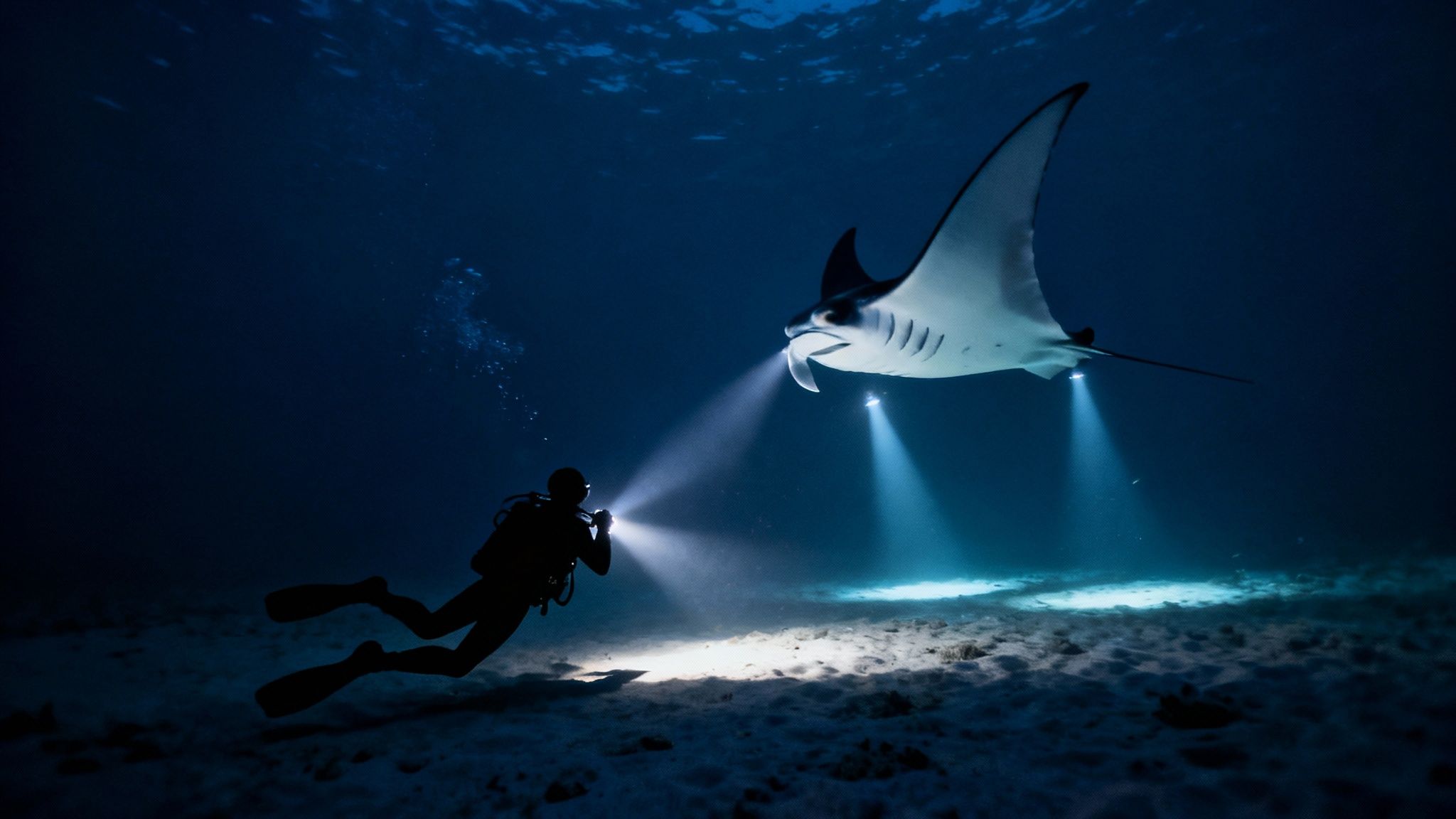
Down below, you’ll find your spot among the other divers, typically kneeling or lying in a semi-circle around a central light source. It feels a lot like sitting around a submerged campfire. On cue, everyone points their dive lights straight up, creating beams that slice through the dark and merge into a brilliant column of light.
This pillar of light is the dinner bell. Almost instantly, it starts attracting clouds of microscopic plankton—the mantas’ favorite meal. You can get an even better picture of the whole scene by reading up on what it's really like on a Kona manta ray dive.
The Performance Begins
And then, you wait. The anticipation is a tangible, shared silence among everyone on the seafloor. All of a sudden, a massive shadow materializes from the inky blackness. The first manta has arrived.
Before you know it, another one follows, and then another. They glide effortlessly into the light, their huge mouths wide open to filter the plankton from the water. What happens next is pure, unscripted magic. The mantas put on a mesmerizing underwater ballet, soaring and swooping just inches above your head.
- Barrel Rolls: You'll watch them perform these graceful, looping barrel rolls right through the light beams to get every last bit of plankton.
- Close Encounters: The mantas are completely unfazed by your presence. They’ll often glide so close you can feel the water move as their massive wings pass by.
- A World of Silence: Aside from the sound of your own bubbles, the experience is profoundly quiet. It allows you to be completely immersed in the silent, graceful dance unfolding right in front of you.
There’s simply nothing that can prepare you for looking up and seeing a creature with a 12-foot wingspan glide directly over your head. It's a humbling, exhilarating moment of connection with the natural world that you won't soon forget.
The sheer scale and grace of these animals are impossible to truly capture in words or on video. It’s a deeply personal and moving experience that often leaves divers completely speechless.
As your bottom time winds down, you'll begin a slow ascent, watching the incredible underwater stage fade back into the darkness below. Breaking the surface under a sky full of stars, with the image of the mantas still burned into your memory, you’ll find yourself with a smile that’s going to last for days.
For a lot of people, this isn't just another dive. It’s the single most incredible wildlife encounter of their lives.
Essential Tips for a Safe and Responsible Manta Encounter
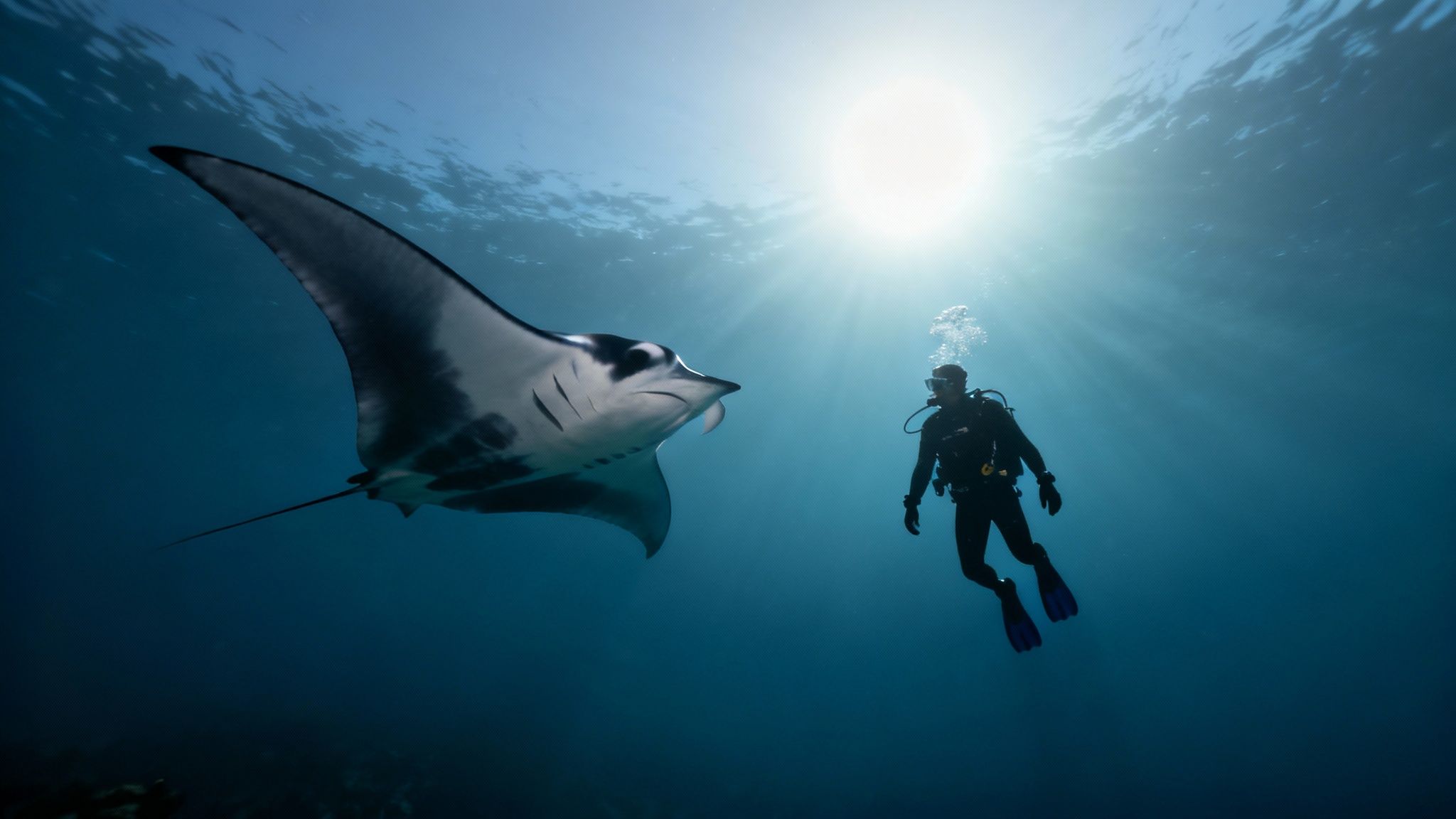
An unforgettable manta ray night dive in Kona isn't just about the thrill; it’s about being a respectful guest in their world. The entire experience hinges on a commitment to safety—for you and for the mantas. When we get it right, we ensure these magical encounters can happen for years to come.
The whole philosophy boils down to one simple idea: passive observation. You're a spectator in their underwater ballet, not a participant. The absolute number one rule? Never, ever touch a manta ray. Their skin has a delicate, protective mucus coating. Touching them can damage this layer, leaving them wide open to dangerous infections.
So, let the mantas take the lead. Never chase them, block their path, or even think about trying to ride one. Just relax and enjoy the show.
Mastering Your Position and Light
Where you are in the water makes a huge difference. If you're diving, your place is on or near the sandy bottom. This creates a wide-open space above you for the mantas to swoop and glide through as they feed. If you're snorkeling, the rule is to stay flat on the surface and hold onto the light board provided by the crew.
Your dive light is just as important. Think of it as a beacon for plankton, not a spotlight for the mantas.
- For Divers: Point your light straight up toward the surface. This draws the plankton into the water column, creating a buffet line for the mantas.
- For Snorkelers: Your lights will be on the raft, pointing straight down. This has the same effect, attracting plankton right to the surface.
- For Everyone: Never shine your light directly into a manta's eyes or mouth. It's disorienting and stressful for them.
Following these guidelines helps create the perfect feeding environment without disrupting the main event. You can learn more about the finer points of being a responsible and considerate diver.
General Safety and Preparation
Night diving always requires a little extra attention. Stick close to your guide and keep a close eye on your buoyancy—you don't want to accidentally kick up sand or bump into a passing manta.
Here's a pro tip: consider a slightly thicker wetsuit, maybe a 5mm, even if you're comfortable in a 3mm during the day. You’ll be staying relatively still for much of the dive, and it's easy to get chilled once the sun goes down.
Because this is an adventure activity, it’s always a good idea to have specialized travel insurance for adventure sports just in case.
The single best thing you can do for a successful trip is to choose a dive operator who is serious about safety and follows the established Manta Ray Tour Operator Standards.
These guidelines aren't just guesses. They're based on real science. A massive research project from 2009 to 2014 along the Kona coast gave us incredible insight into manta behavior. The study cataloged over 300 individual mantas from more than 10,000 sightings, helping to create sustainable practices that protect these animals while still allowing us to witness them up close. This ongoing work ensures the Kona manta population continues to thrive.
Beyond the Mantas: Exploring Other Epic Kona Dives
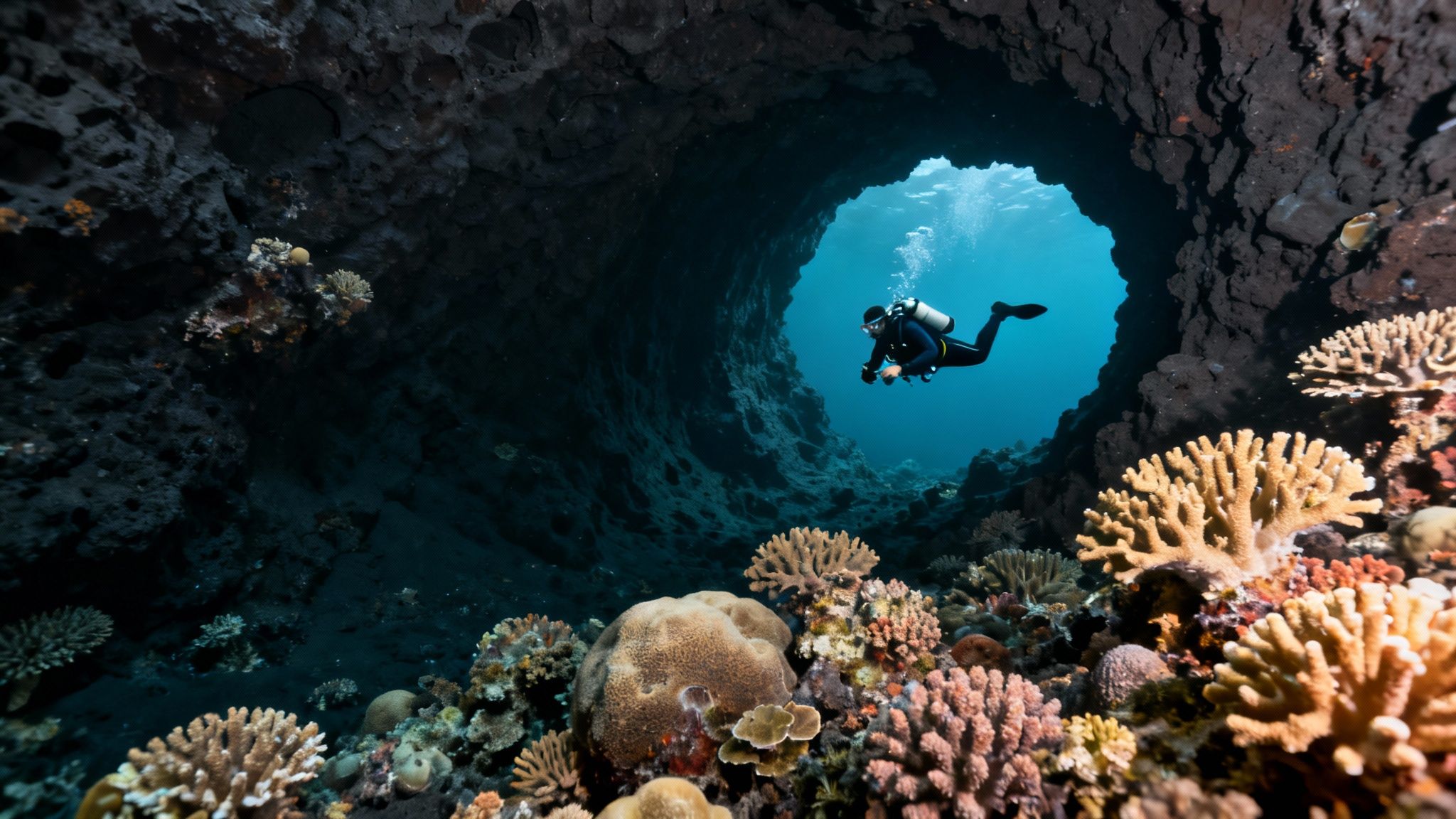
Look, the manta ray night dive in Kona is absolutely a bucket-list experience, and for good reason. But trust me, it's just scratching the surface of what these waters have to offer. The Big Island's volcanic past has sculpted an underwater landscape that is nothing short of dramatic. We're talking about incredible canyons, ancient lava tubes you can swim through, and massive arches completely covered in coral.
Jumping on some daytime Kona scuba diving tours shows you a totally different side of this place. The reefs are healthy and just buzzing with life—schools of colorful fish, mellow green sea turtles, and every now and then, a reef shark cruising by. It’s the perfect way to make your dive trip complete and really see the full picture of Kona's marine ecosystem.
The Famous Kona Blackwater Dive
If you’re a certified diver and want something truly different—something almost otherworldly—then you have to experience the Kona blackwater dive. This is not your typical reef dive.
You’re taken miles offshore, where you drift in the deep, dark open ocean, tethered to the boat. Your dive light becomes your entire world, illuminating a procession of bizarre, alien-like creatures migrating from the depths to the surface. It's an unbelievable display of bioluminescence and tiny, rarely seen larval critters. Most people say it feels like floating through outer space, and it's an absolute dream for underwater photographers.
Advanced and Deeper Explorations
Got the experience and an adventurous streak? Kona delivers. There are plenty of deeper, more challenging sites that will put your skills to the test.
Specialized advanced dive charters are designed to take small groups to the more remote spots that the regular tours just don't go to. These trips are where you get to explore the deeper lava formations and increase your chances of seeing different marine life, like the elusive schools of hammerhead sharks.
From the world-famous manta encounter to the alien world of a blackwater dive and the pristine deep reefs, Kona offers a complete and world-class diving destination for every skill level.
Getting out and seeing these other sites really proves why the Big Island is so much more than a one-trick pony. It’s a true diver’s paradise with endless underwater worlds to discover.
Your Manta Ray Night Dive Questions, Answered
Got a few questions before you take the plunge? Perfect. After countless trips out to see the mantas, we’ve heard them all. Here are the real answers to the most common things people ask, so you can feel completely ready for your big night.
Do I Have to Be Scuba Certified to See the Mantas?
Absolutely not! While divers get an amazing view from the "campfire" on the ocean floor, snorkelers get their own incredible, front-row experience.
You'll float on the surface, holding onto a custom light board that acts like a giant bug zapper for plankton. As the mantas swoop in to feed, they come right up to the surface, often getting within inches of you. It's a completely different perspective, and just as mind-blowing.
Most boats, including ours at Kona Honu Divers, take both divers and snorkelers. It’s the perfect adventure for families or groups where not everyone is a certified diver. You can find the right option for your crew on our manta ray tours page.
When's the Best Time of Year to Go?
This is the best part—anytime! Kona's manta rays are residents, meaning they hang out here all year long. There’s no specific "manta season," so your chance of a magical encounter is fantastic whether you visit in July or December.
Year-round, the sighting success rate is consistently above 90%. The only real variable is the ocean. Winter can sometimes bring bigger swells, but the boat captains here are pros at finding the calmest, most protected spot for the dive.
What if We Don't See Any Manta Rays?
It’s incredibly rare, but it's important to remember these are wild animals on their own schedule. While sighting rates often top 95%, nothing in nature is ever a 100% guarantee.
That's why top-tier operators like Kona Honu Divers offer a "manta guarantee." If your trip happens to be one of the very few where the mantas don't show up, you can come back and try again on another night for free (on a space-available basis). Always confirm the specific policy when you book.
A little pro tip: Try to book your manta dive for one of your first nights in Kona. That way, in the slim chance you need to reschedule, you have plenty of open days in your vacation schedule to do it.
How Deep Is the Dive, and Will I Get Cold?
The dive itself is nice and shallow, usually in just 30 to 40 feet (9 to 12 meters) of water. You'll spend most of your time settled on the sandy bottom, watching the spectacle unfold above you. The shallow depth is great for extending your bottom time and is comfortable for divers of all experience levels.
Water temps in Kona hover between a pleasant 75-80°F (24-27°C). But don't let that fool you. You're not moving around much, and it's a night dive, so your body can cool down surprisingly fast. A full 3mm or 5mm wetsuit is what most people are comfortable in. If you don't have your own, don't worry—we have high-quality rentals ready to go.
Ultimately, choosing a great, experienced operator is the key to an adventure that's not just breathtaking, but also safe and comfortable from start to finish.
Ready to witness the magic for yourself? Join Kona Honu Divers for an adventure you’ll never forget. Check out our world-famous 2-Tank Manta Dive & Snorkel Tour and book your spot today.