
The manta ray night dive in Kona is one of those rare, almost surreal experiences that stays with you forever. Imagine watching enormous, gentle rays dance through beams of underwater light, and you'll get a sense of the magic. Kona isn't just a good place for this dive; it's arguably the best place on the planet, thanks to calm seas and a large, year-round manta ray population that makes sightings incredibly reliable.
Witnessing Kona’s Legendary Underwater Ballet
Picture this: you descend into the warm, dark Pacific Ocean just after sunset. As you settle onto the sandy bottom, giant, silent shadows begin to glide through the water all around you. This is the heart of the Kona manta ray night dive—a breathtaking spectacle that feels like you've been transported to another world.
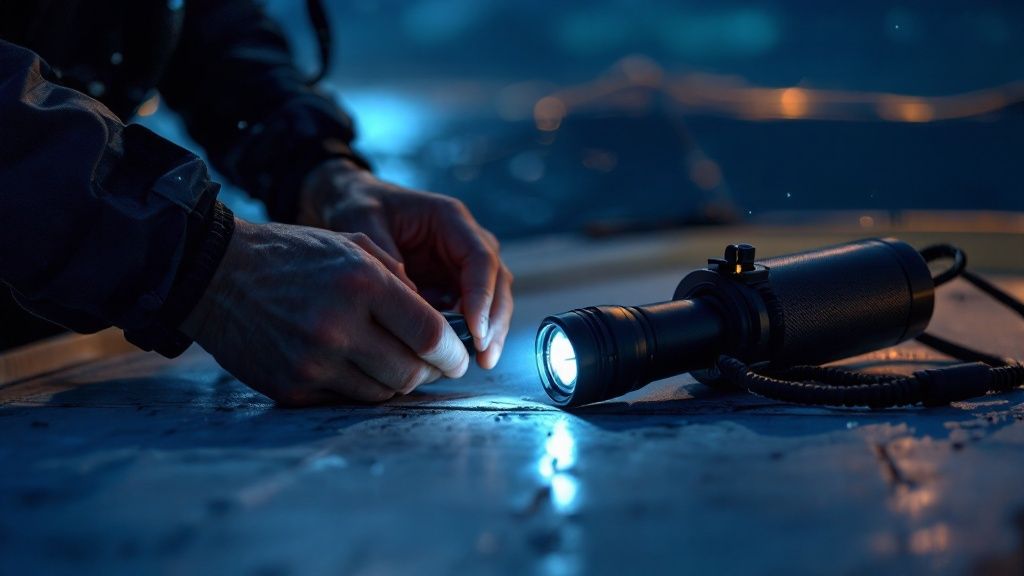
The whole encounter is built around a brilliantly simple idea. Dive operators place a powerful set of lights on the ocean floor, creating what divers lovingly call the "underwater campfire." These bright lights attract swarms of plankton, which happen to be a manta ray's favorite meal.
Essentially, it's a dinner invitation. The mantas swoop in to feast on the illuminated buffet, turning the dark ocean into a grand stage. Divers and snorkelers simply watch from the sidelines as these gentle giants perform graceful, acrobatic barrel rolls, often just inches away.
Why Kona is the Premier Destination
You can find manta rays in other beautiful spots around the globe, but the Kona experience is in a league of its own for one key reason: consistency. The Kona Coast is famous for its manta ray night dives because the sighting success rate is astonishingly high.
At the main dive site, affectionately known as "Manta Village," the success rate is over 95%. That's right—the mantas show up almost every single night. These incredible animals, with wingspans often exceeding 12 feet, have learned to associate the lights with an easy meal, all but guaranteeing an unforgettable encounter. If you want to dive deeper, you can learn more about the incredible consistency of Kona's manta ray sightings and what makes it a world-class destination.
To have the best experience, you'll want to go with a top-rated, responsible operator like Kona Honu Divers. Their experienced guides make sure everyone is safe, comfortable, and well-informed, so you can just relax and soak in the awe of the moment.
This isn't just another item to tick off your scuba diving bucket list. It's a genuine, once-in-a-lifetime adventure. There’s nothing quite like watching these majestic creatures glide so effortlessly, connecting you directly to the profound wonder of the ocean. Ready to see the show for yourself?
Choosing the Right Stage for the Manta Show
When you’re planning a manta ray night dive in Kona, you’ll hear two names pop up again and again: Manta Village and Manta Heaven. Think of them as two different five-star restaurants that the mantas frequent. Each has a unique vibe, and knowing what makes them special helps you understand the incredible show you're about to witness.
This is where the expertise of your dive operator really shines. Top-tier outfits like Kona Honu Divers don't just pick a spot and hope for the best. Every single night, they make a calculated decision on where to go. They’re constantly checking recent sightings, ocean currents, and conditions to put you in the absolute best place for a mind-blowing encounter. It's all about giving you a front-row seat to the ballet.
Manta Village vs. Manta Heaven
So, what’s the real difference between these two legendary sites?
Manta Village, just south of Kona near Keauhou Bay, is the original. It’s the old, reliable local favorite that’s been serving up plankton for decades. Its consistency is off the charts, and its location often means a shorter boat ride and calmer waters, which is a nice bonus.
Manta Heaven, up north by the airport, has a slightly different flavor. While it’s also a very reliable spot, it's famous for sometimes attracting huge congregations of rays. Divers often call the site "The Cathedral" because when a dozen or more of these gentle giants are gliding over you, it truly feels like a spiritual experience.
The numbers back this up. Long-term research shows that while both spots are phenomenal, they have their own unique patterns. A 2013 study, for example, found Manta Heaven averaged around 11 manta rays per night, while Manta Village was closer to four. This doesn't mean one is "better," it just highlights the night-to-night variability. You can actually dig into the manta ray sighting statistics yourself to see how the numbers play out.
Kona Manta Ray Dive Site Comparison
To make it even clearer, let's break down the key differences between Kona's two premier manta dive locations. This side-by-side look should help you get a feel for what each site offers.
| Feature | Manta Village (Kaukalaelae Point) | Manta Heaven (Garden Eel Cove) |
|---|---|---|
| Location | South of Kona, near Keauhou Bay | North of Kona, near the airport |
| Typical Depth | 30-40 feet | 30-45 feet |
| Success Rate | Extremely high, often >95% | Very high, around 90% |
| Best For | Consistent sightings, easy access | Potentially larger groups of mantas |
| Nickname | "The Original" | "The Cathedral" |
At the end of the day, you can't make a bad choice here. Both sites are world-class. The best strategy is always to trust your crew. They have the local knowledge and daily intel to get you to the right place at the right time for an unforgettable manta ray dive adventure.
How to Prepare for Your Night Dive Adventure
The secret to truly soaking in the magic of the manta ray night dive in Kona is feeling prepared. When you get the logistics out of the way beforehand, you can step onto the boat feeling nothing but pure excitement for the show that's about to begin. Let's walk through a simple checklist to get you ready.
First things first, what to bring. You don't need to haul all your own dive gear; any good operator will have that covered. Your focus should be on personal comfort. A warm towel and a change of dry clothes are absolute must-haves. That boat ride back can feel surprisingly chilly after you’ve been in the water, even in Hawaii.
Certification and Common Concerns
So, what kind of certification do you need? You’ll be happy to know your standard Open Water certification is all that's required to join in. This isn't some deep, technical dive. The sites are quite shallow, usually around 30-40 feet, which makes for a very controlled and accessible first night dive for most divers.
Even with the right ticket, it’s completely normal to feel a little anxious. Two things tend to pop up: seasickness and a general fear of the dark.
- Seasickness: If you know you're susceptible to motion sickness, do yourself a favor and take an over-the-counter remedy before you even get on the boat. It also helps to stay hydrated and keep your eyes fixed on the horizon during the ride out.
- Night Diving Anxiety: It’s natural to be a bit nervous about dropping into the ocean after sunset. Just remember that you're with seasoned professionals. They bring powerful dive lights, and the main viewing area is lit up like an "underwater campfire," so you’re never truly in the pitch black.
For those wanting to get a wider perspective on underwater activities before a specialized trip like this one, it can be helpful to look into general scuba diving and water sports information.
On the Boat and In the Water
Once you’re on board, listen up for the pre-dive briefing. This is the most critical part of your preparation. The crew will lay out the entire plan, go over safety protocols, and explain how to interact with the mantas respectfully. This isn't the time to zone out—this info is key for a safe and memorable dive.
One skill that will make a world of difference is good buoyancy control. The goal is to hover neutrally just above the sandy bottom. This protects the fragile marine life and prevents you from bumping into a gracefully gliding manta. It’s a simple skill, but it's everything on this dive.
Taking these few simple steps will set you up for an unforgettable adventure. After you see the mantas, you’ll probably be hooked and want to see what else the Big Island has to offer. And if you're curious about what to pack for any dive trip here, we have a great guide on the gear you will need for your Kona diving adventure that covers all the bases.
What to Expect During Your Manta Encounter
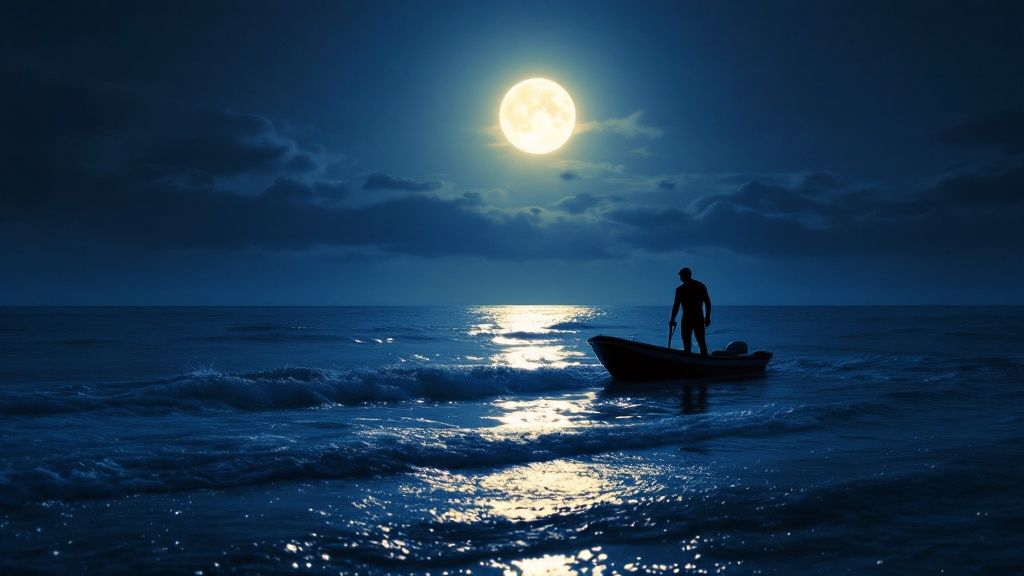
The whole manta ray night dive experience in Kona is like a perfectly choreographed show, and you have a front-row seat. It all starts with the boat ride out. As you motor along the coast, the Hawaiian sun starts to dip below the horizon, lighting up the sky in incredible shades of orange and purple. It’s more than just a trip to the dive site; it's your chance to unwind and just soak in the view before the real adventure begins.

Once twilight takes over, the crew will pull everyone together for a briefing. They’re passionate about these animals, and it shows. You'll hear some amazing facts about Kona's resident mantas, get a clear rundown of how the dive will work, and go over the ground rules for keeping both you and the mantas safe. Any pre-dive jitters you might have tend to melt away right here, replaced by pure excitement.
The Descent Into the Amphitheater
Then comes the moment you've been waiting for. You’ll take that giant stride off the boat and into the dark, surprisingly calm water. As you start to descend, the world above disappears. All you can hear is your own breathing as your dive light cuts a path through the ocean.
Your guide will lead the group down to a sandy patch on the ocean floor, usually around 30-40 feet deep. Here, everyone finds a spot and settles in, forming a semi-circle around a powerful, centrally-placed light source that divers often call "the campfire."
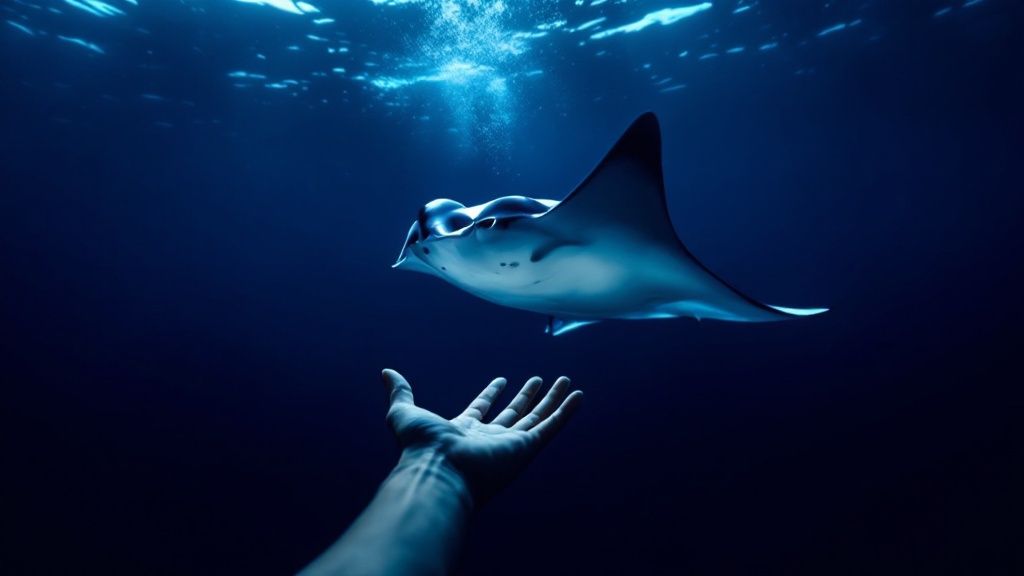
The show starts the second those big lights are flipped on. They act like a massive bug zapper, instantly attracting a swirling vortex of plankton. It’s a cool sight on its own, but it's really just the dinner bell. Before you know it, a huge, graceful shadow emerges from the darkness. Then another. The first manta ray glides into the light. If you want a deeper look at their diving patterns, you can learn more by checking out our guide that answers, how deep do manta rays dive in Kona?
People often call it an "underwater ballet," and honestly, that’s the perfect way to describe it. The mantas perform these elegant barrel rolls, swooping just inches above you with their huge mouths wide open to filter the plankton. It's a completely silent, mesmerizing performance that just leaves you in awe.
A Shared Spectacle
What's great is that both divers and snorkelers get an incredible view, just from different angles.
- Divers: You get the amazing bottom-up perspective. You're looking straight up as the mantas' white bellies are illuminated by the lights, soaring right over your head.
- Snorkelers: You're floating on the surface, holding onto a custom light board. The mantas swim right up toward the light—and you—in a stunning display.
After about 45 minutes of what feels like a dream, your guide will signal that it’s time to head back up. The boat ride back to the harbor is buzzing with energy. Everyone is on a high, swapping stories and looking at their photos under a sky full of stars. It's the perfect way to cap off an evening that truly feels like it was on another planet.
Diving with Respect for the Gentle Giants
Taking part in a manta ray night dive in Kona is an incredible privilege. You're getting a front-row seat to one of nature's most breathtaking shows. But with that privilege comes a serious responsibility to protect these magnificent animals.
Think of it like being an invited guest in their underwater dining room. Proper etiquette is non-negotiable, and it ensures the mantas stay safe and this amazing experience can continue for years to come.
The single most important rule is simple and absolute: look, but don't touch. Manta rays have a protective mucous layer covering their skin, which is vital to their health. This slime coat is basically their immune system, shielding them from nasty bacteria and infections. Touching a manta, even for a second, can strip away this coating and leave the gentle giant exposed to disease.
Manta Interaction Guidelines
To make sure every encounter is a good one for both people and mantas, top-tier operators like Kona Honu Divers follow strict, science-backed guidelines. These aren't just polite suggestions; they're critical rules for responsible eco-tourism. Getting to know them ahead of time helps you become a true steward of the ocean on your dive.
Here are the key things to remember:
- Be a Passive Observer: Find your spot and stay put. Let the mantas come to you. Never chase, pursue, or try to ride a manta ray.
- Hold Your Position: Divers should stay on or near the sandy bottom. Snorkelers should remain on the surface. This keeps the water column—the manta's "fly zone"—completely open for them to maneuver.
- Lights Up, Lights Down: If you're diving, point your light straight up to attract the plankton. If you're snorkeling, point your light straight down. Never shine your light directly into a manta's eyes.
The whole idea is to be an invisible observer. Your goal is to have as little impact as possible, allowing the mantas to go about their natural feeding routine without feeling stressed or interrupted.
Following these rules is fundamental to being a good guest in their world. You can learn more about how to be a courteous diver by reviewing our guide on responsible and considerate diver etiquette.
No matter what adventure you're on, understanding how to balance the thrill with safety and respect for the environment is what matters most. For broader guidance, resources on essential precautions for adventure activities can offer some great insights. When we all embrace these principles, we help ensure Kona's magical manta encounters will be around for generations.
Common Questions About the Manta Ray Night Dive
Even after hearing all about the magic of the Kona manta ray night dive, you probably still have a few questions floating around. That’s perfectly normal. Getting straight answers will help you feel excited and ready for what is truly an incredible adventure.
We've gathered some of the most common questions we hear from divers and snorkelers to clear up any last-minute uncertainties you might have.
Do I Need to Be a Certified Scuba Diver?
Nope! And that's one of the best parts about this whole experience. While certified divers get that amazing view from the seafloor looking up, snorkeling is an equally breathtaking and wildly popular option.
Snorkelers get to hang onto a custom-built, high-powered light board that floats on the surface. These bright lights are like a dinner bell, attracting the plankton, which brings the mantas right up to you. It’s a fantastic way for non-divers, families with kids, and anyone who prefers staying on the surface to see the exact same unbelievable show.
Is the Manta Ray Night Dive Safe?
Absolutely. For every reputable operator in Kona, safety is priority number one. Manta rays themselves are completely harmless to people—they’re gentle giants with no teeth, no stingers, and no barbs. They are only interested in one thing: scooping up clouds of plankton.
Before anyone even gets in the water, your guides will run through a thorough safety briefing. They provide all the gear and stick with you the entire time. The dive sites are also fairly shallow, usually just 30-40 feet deep, which makes for a very controlled and comfortable environment.
The whole trip is designed to be as safe as it is awe-inspiring. From the moment you board the boat to the moment you get out of the water, you are in the hands of experienced professionals who are 100% focused on your well-being.
What Is the Best Time of Year to Go?
I've got great news for you: the manta ray night dive is incredible all year long! Kona has a resident population of over 200 identified manta rays, and they don’t migrate. They show up for their plankton buffet pretty much every single night, no matter the season.
The success rate for seeing mantas is consistently sky-high—often over 90%. This really means the best time to book your dive depends more on your own travel schedule and weather preferences than on the mantas.
Can I Take Photos or Videos?
Of course, and you'll definitely want to! Capturing this underwater ballet is part of the magic. The key is to be aware of your camera, your buoyancy, and everything around you to ensure the encounter is safe for you and respectful to the animals.
A couple of quick tips:
- Be Mindful of Your Lights: Try to avoid pointing powerful strobes directly up into the mantas' faces. A lot of photographers find that a steady video light works better and is far less disruptive.
- Stay Aware of Your Gear: The golden rule is "no touching," and that includes your camera. Keep a good grip on your equipment so it doesn't drift and accidentally bump a manta.
Being a responsible underwater photographer helps keep the animals calm and ensures everyone gets to enjoy the show.
Ready to witness this natural wonder for yourself? The team at Kona Honu Divers is prepared to guide you on this once-in-a-lifetime adventure. With a commitment to safety, sustainability, and providing an unforgettable experience, they offer the premier manta ray dive tour on the Big Island.