
Picture this: you're floating in the dark Pacific Ocean as the sun sets, your dive light slicing through the inky black water. Suddenly, a massive, graceful shadow emerges from the deep, performing an effortless underwater ballet right before your eyes. This is the manta ray night dive in Kona, and it’s consistently ranked as one of the best dives in the world for a reason.
It’s more than just a dive; it’s a genuinely profound connection with one of the ocean's most gentle and majestic giants.
Witnessing Kona’s Legendary Underwater Ballet
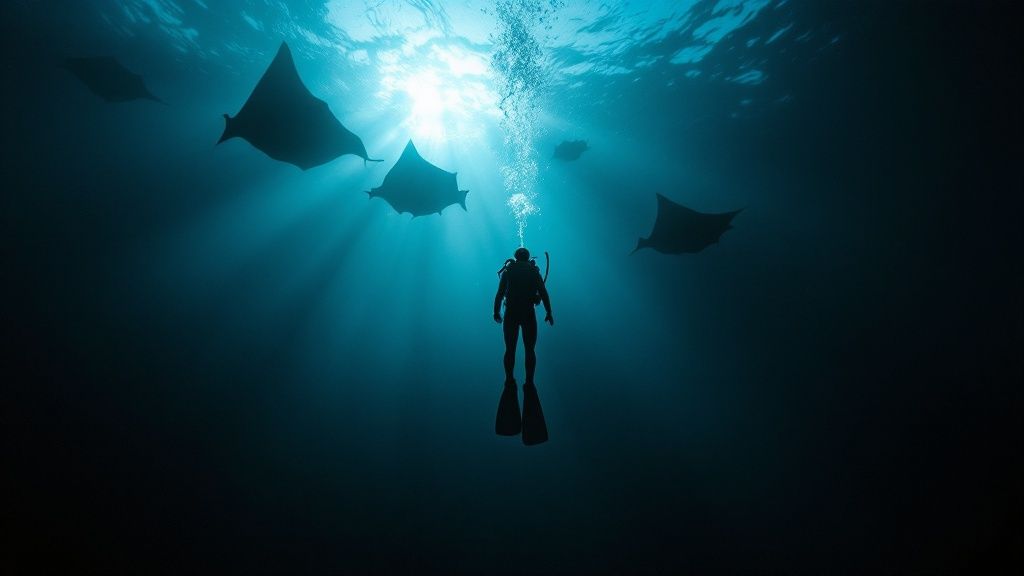
The Kona coast of Hawaii’s Big Island is a truly special place, offering one of the most reliable manta ray encounters anywhere on the planet. Local operators report an astounding 85–90% success rate for sightings on their night snorkel and dive tours. That incredible consistency has turned this into a can't-miss experience for about 80,000 people every year.
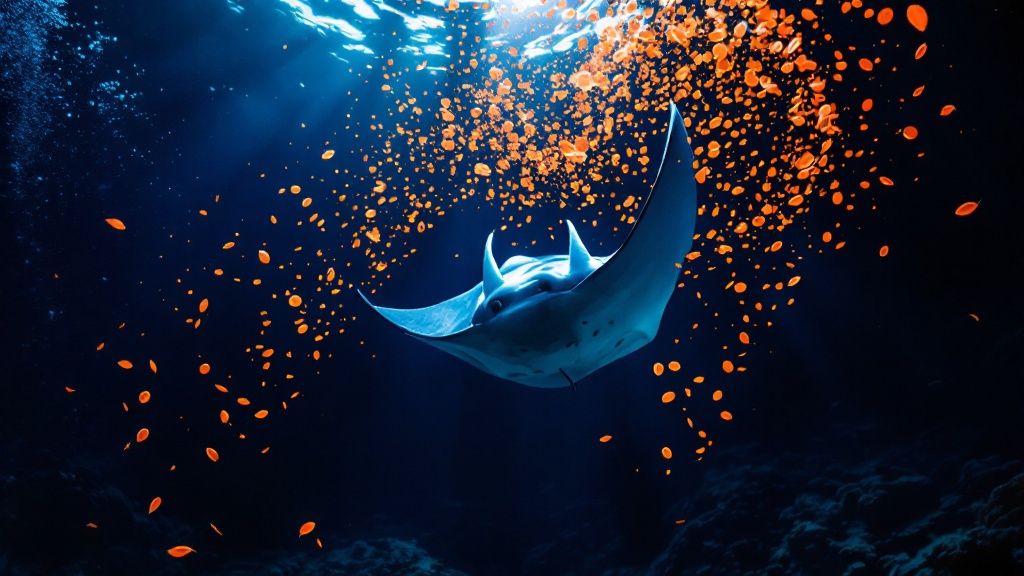
So, how does this nightly performance happen? It all comes down to plankton. The tour boats shine powerful lights into the water, which attracts a thick cloud of these microscopic organisms—a manta ray's favorite meal. This essentially creates a dependable, all-you-can-eat buffet that the local manta population has learned to show up for, night after night.
The Gentle Giants of the Pacific
These magnificent creatures, with wingspans that can stretch over 12 feet, glide effortlessly through the light beams. They perform mesmerizing barrel rolls and somersaults, scooping up plankton with their huge, cavernous mouths.
Despite their intimidating size, manta rays are completely harmless to people. They don't have teeth, stingers, or barbs, which makes the interaction incredibly safe and peaceful. Their gentle nature allows you to get an up-close look that is both thrilling and strangely calming at the same time.
The experience is a vivid reminder of the ocean's wonders. You're not just observing wildlife; you are a quiet guest at an extraordinary, subaquatic feast that has become a celebrated Kona tradition.
It's this unique combination—a healthy resident manta population, a reliable food source, and calm coastal waters—that makes Kona the world's top spot for this dive. You can learn more by checking out our guide on where to see manta rays in Hawaii. The adventure kicks off with a sunset boat ride and ends with a moment you’ll never forget: the first shadow of a manta ray gliding out of the darkness.
How to Choose the Right Manta Ray Tour in Kona
Booking your manta ray night dive in Kona is easily the most important decision you'll make for this adventure. The right operator doesn't just give you a good time; they ensure the encounter is safe for you and, crucially, for the manta rays themselves. I always tell people to look past the flashy brochures and focus on companies that genuinely care about marine conservation.
The best way to do that? Look for operators who are part of the Manta Ray Green Listed program. This isn't just a sticker on a window; it's a commitment. These companies voluntarily follow strict, science-backed guidelines to make sure their tours are sustainable and don't harm the mantas. When you go with a Green Listed operator, you're voting with your wallet for the long-term health of Kona's manta population.
What Makes a Tour Operator Stand Out?
So, how do you separate the great from the just-okay? A few key things really make a difference once you're out on the water.
Small group sizes are a game-changer. Imagine trying to enjoy a graceful manta ballet with a massive crowd—it's chaotic. Smaller groups mean more space, a better view, and a much more personal experience. You'll also want an operator that's serious about safety, with detailed pre-dive briefings and professional guides in the water with you every step of the way.
It's always a good idea to see what other divers are saying. For example, a reputable company like Kona Honu Divers consistently gets high marks for their focus on both the customer experience and ocean stewardship.
When it comes to the actual experience, you've got two main options for seeing these incredible animals.
- Scuba Diving: If you're a certified diver, this is the ultimate perspective. You'll be on the ocean floor, looking up as these gentle giants swoop and glide just inches above your head. It’s absolutely surreal.
- Snorkeling: Not certified? No problem. Snorkelers get an equally amazing view from the surface. You'll hold onto a floating light board which attracts the plankton, bringing the mantas right up to you.
Honestly, both are incredible. Your choice really just comes down to your certification and how you feel most comfortable in the water. For a deeper look at the different options, check out our guide on the top 5 manta ray night dive tours.
Ready to book an ethical and unforgettable adventure? The 2-Tank Manta Ray Dive & Snorkel is a fantastic, highly-regarded option.
Your Manta Ray Night Dive From Start To Finish
Knowing exactly how the evening will unfold can turn any pre-dive nerves into pure, bubbling excitement. Your adventure usually kicks off with a boat ride just as the sun begins to melt into the Pacific, setting the sky ablaze with color. Since the real show happens after dark, it’s worth understanding the unique challenges and considerations for boating at night before you head out.
Once you arrive at a legendary spot like 'Manta Heaven' or 'Manta Village,' the crew’s job is to make you feel completely prepared. They’ll give a thorough safety briefing that covers everything from the easiest way to get in the water to the do's and don'ts of interacting with the mantas. Pay close attention here—it’s not just about rules, but about showing respect for these incredible animals. It’s also a great chance to hear some amazing facts about the very mantas you’re about to meet.
The Underwater Light Show
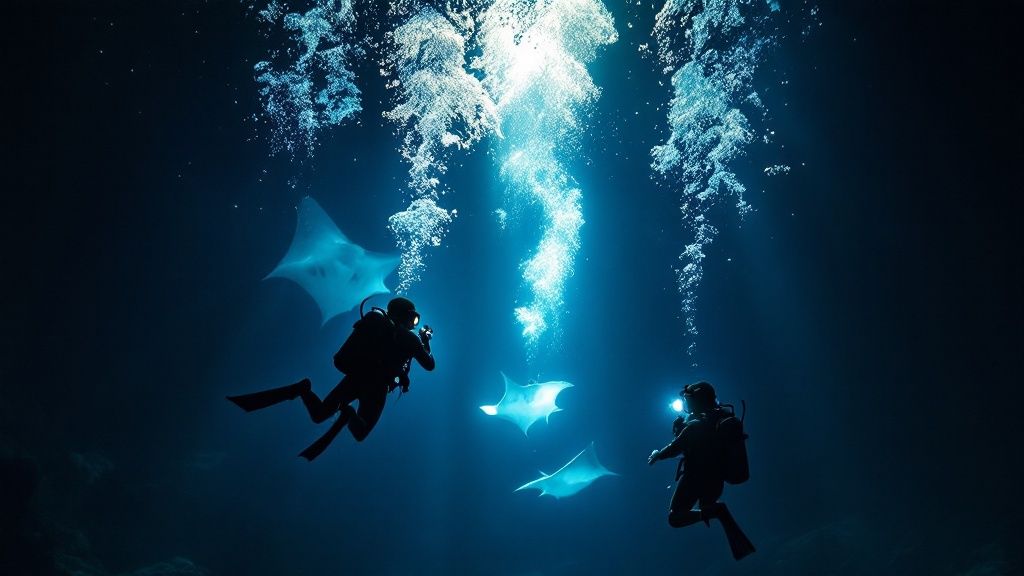
The magic really starts with what we call the "campfire." For divers, this is a powerful set of lights placed on the ocean floor. If you're snorkeling, you'll gather around a custom float with lights pointing down into the depths.
This brilliant glow acts like a giant dinner bell, attracting swarms of plankton. And where there’s plankton, the mantas are sure to follow for their nightly feast.
The first time you see a massive shadow emerge from the dark and gracefully glide into the light, it’s a moment that will stick with you forever. These gentle giants, with wingspans that can stretch over 12 feet, perform a mesmerizing underwater ballet, swooping and barrel-rolling within inches of your face.
This isn’t a lucky, one-off encounter. It’s a reliable spectacle thanks to Kona's resident manta ray population, which has been studied for decades.
After an incredible 45 minutes or so in the water, it’s time to climb back onto the boat. Most crews will have hot chocolate and snacks waiting for you—a perfect way to warm up. The ride back to the harbor under a sky full of stars, buzzing with excitement and sharing stories with your fellow adventurers, is the perfect cap to a truly unforgettable night.
To make things simple, here's a quick checklist of what to pack and what to anticipate.
| Your Manta Ray Night Dive Checklist |
|---|
| A quick reference guide to ensure you're fully prepared for your adventure. |
| What to Bring | What to Expect Onboard | What to Do in the Water |
|---|---|---|
| Swimsuit (wear it!) | A detailed safety briefing | Hold onto the lights/float |
| Towel & dry clothes | All gear provided (or bring your own) | Stay horizontal & calm |
| Reef-safe sunscreen | Snacks and drinks (often hot chocolate!) | Let mantas approach you |
| Camera (waterproof, of course) | Professional, knowledgeable guides | Absolutely no touching! |
| Any personal medications | A scenic sunset boat ride | Enjoy the show for ~45 mins |
Following this checklist will help ensure your experience is as smooth and magical as the mantas themselves.
How to Be a Good Guest in the Manta’s World
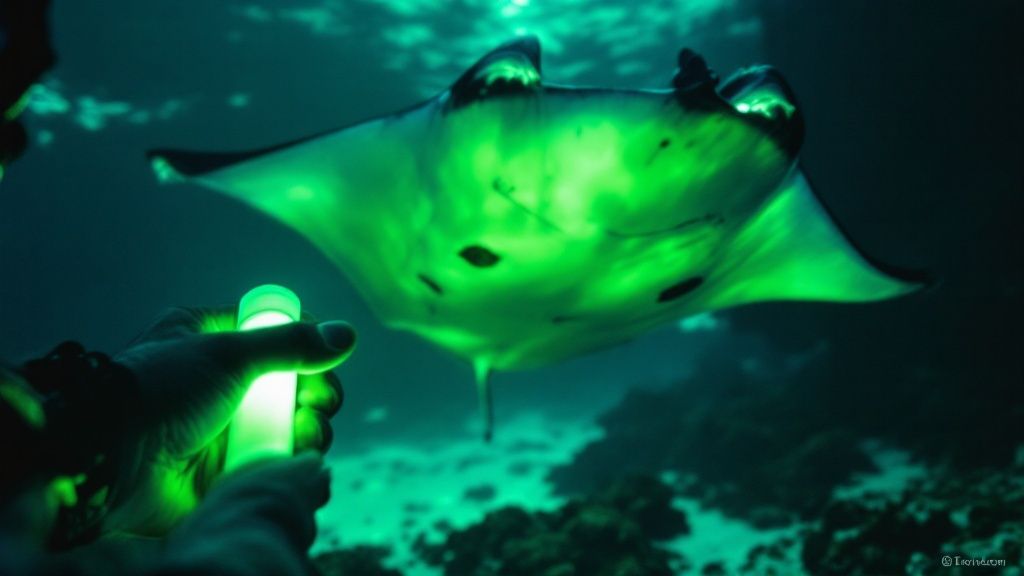
When you slip into the water for a manta ray night dive in Kona, the entire experience is built around being a silent, respectful observer. We're there to witness their world, not interfere with it. This all comes down to one absolute golden rule: never touch, chase, or block a manta ray's path.
Why are we so strict about this? Manta rays are covered in a thin, slimy mucus layer. It might not look like much, but it's their primary defense against harmful bacteria and skin infections. Even a gentle touch from a human hand can strip this protective coating away, leaving them vulnerable. Following this hands-off rule is the single most important thing you can do for their well-being.
Finding Your Place in the Water
Your positioning is everything. The goal is to make yourself part of the scenery so the mantas feel comfortable and can go about their business—which, luckily for us, involves swooping and barrel-rolling right nearby!
- If you're diving, you'll get settled on or near the sandy bottom. Try to stay low and horizontal. This simple act gives the mantas the entire space above you to glide and feed without feeling crowded.
- If you're snorkeling, you'll be at the surface, usually holding onto a custom light board that attracts the plankton. The key here is to stay flat on your stomach and resist the urge to kick or dive down. Let the show come to you.
Sticking to these positions creates a predictable, safe space for the mantas. For a deeper dive into ocean etiquette, check out our complete guide on how to be a responsible and considerate diver.
Think of it this way: you are a guest in their home. The most incredible moments happen when you simply stay still and calm. The mantas are naturally curious, and when they don't feel threatened, they'll often come incredibly close on their own.
For all the photographers out there, getting that perfect shot is tempting, but it has to be done right. Camera flashes are a big no-no; they can easily startle or disorient the mantas. Instead, you'll need to rely on the powerful lights provided by the tour and your camera's own low-light capabilities.
When we all share this mindset of respect, we ensure this incredible, world-class encounter remains just that for years to come.
Don’t Stop at the Mantas: Kona’s Other Underwater Adventures
The manta ray night dive is an unforgettable, bucket-list experience. But trust me, you'd be missing out if you packed your gear away after just that one dive. The volcanic coast of the Big Island offers some of the most unique and thrilling diving on the planet, so it’s well worth extending your trip to see more.
Ready for Something Truly Different? Try a Blackwater Dive.
If the magic of a night dive has you hooked, then the Kona blackwater dive is your next logical step into the extraordinary.
Picture this: you're drifting in the deep, inky-black open ocean at night, suspended over thousands of feet of water. What you'll witness is the planet's largest daily migration, as otherworldly, bioluminescent creatures rise from the abyss. It's like floating through outer space, and it’s an experience that’s hard to put into words. You can get a better sense of this surreal adventure on the Blackwater Night Dive page.
Daytime Dives and Advanced Expeditions
Of course, the daylight hours are just as spectacular. Kona's coastline is a diver's dream, sculpted by ancient lava flows into a maze of underwater tubes, dramatic archways, and vibrant coral gardens. These structures are teeming with an incredible amount of marine life, including tons of endemic species you won't find anywhere else on Earth.
For those with a bit more experience under their weight belt, why not take it up a notch? Our advanced dive trips are designed to take you to more remote and challenging sites that offer a completely different kind of thrill.
Whether you're exploring deep volcanic reefs or navigating complex lava formations, Kona Honu Divers has a range of incredible scuba diving tours waiting for you.
Your Top Manta Ray Dive Questions, Answered
If you're thinking about booking a manta ray night dive in Kona, you probably have a few questions. I get it. To help you feel completely ready for this incredible adventure, I've pulled together the answers to the questions we hear most often from divers and snorkelers.
Do I Have to Be Scuba Certified?
Absolutely not! While getting to see the mantas from the sea floor is a pretty unique perspective for certified divers, the snorkeling experience is just as breathtaking.
Snorkelers hang onto a large, custom-built board that floats on the surface. Bright lights on the board shine down into the water, attracting the plankton that mantas feed on. The mantas swim right up to the lights for their dinner, often getting within inches of you. It's an amazing way to be part of the action, no certification required.
Is the Manta Ray Night Dive Actually Safe?
Yes, it is. When you go out with a professional, reputable crew like Kona Honu Divers, safety is the top priority. People often ask about the mantas themselves, but they're incredibly gentle. Manta rays are filter feeders, so they don't even have teeth, and they lack any kind of stinger or barb.
The real safety measures revolve around boat procedures and how everyone acts in the water. Your guides will give you a thorough briefing before you get in, and they'll be with you the entire time to make sure everything goes smoothly.
When Is the Best Time of Year to See Mantas?
This is the best part: there is no bad time! The Kona manta ray dive is a fantastic year-round experience. We have a resident population of manta rays here, which means sighting success rates stay consistently high—usually between 85-90%, no matter when you visit.
While the weather can always be a factor, you don't need to plan your trip around a specific "manta season." They're almost always here and ready for their nightly buffet.
Here's an insider tip: Look for an operator that offers a "manta guarantee." If for some rare reason the mantas don't show up on your night, most top-tier companies will let you come back on another night for free. Just be sure to ask about their specific policy when you book.
Choosing an experienced crew is the key. They put you in the right place at the right time for a night of pure underwater magic.
Ready to see this incredible underwater ballet for yourself? Kona Honu Divers runs a world-class Manta Ray Dive & Snorkel tour that you will be talking about for years to come.