
Picture this: you're descending into the warm, dark Pacific waters just after sunset, your dive light cutting a path through the deep blue. Then, out of the darkness, a massive, winged shadow glides into view, soaring effortlessly towards you. This is the world-famous Kona manta ray night dive, an underwater ballet that’s hands-down one of the most incredible wildlife encounters you can have.
And the best part? It's an adventure open to almost everyone, whether you're a seasoned diver or have never even put on a snorkel mask before.
The World-Famous Kona Manta Ray Night Dive
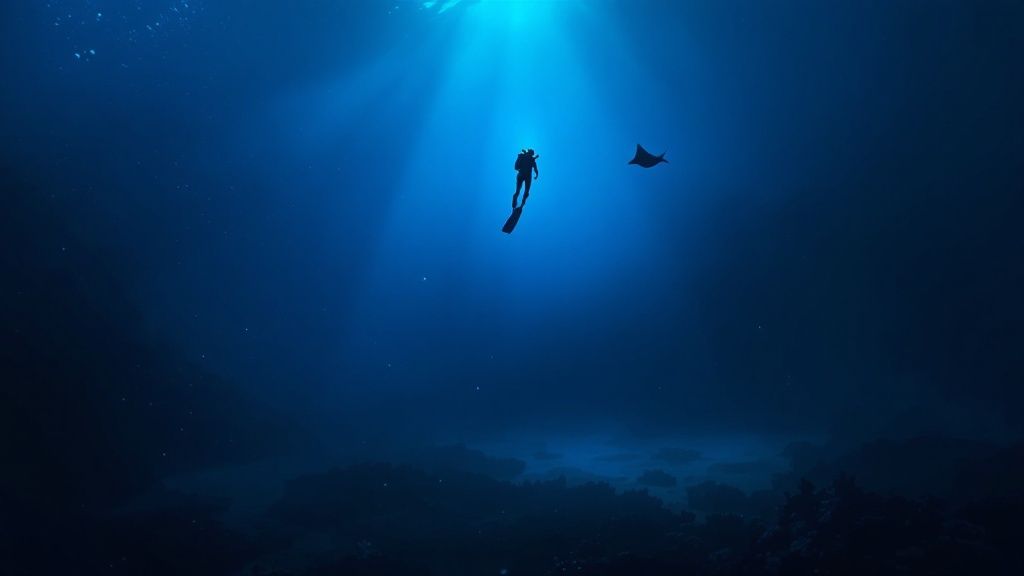
This isn't just another dive—it's a front-row seat to one of nature's greatest dinner shows. The idea behind it all is beautifully simple but incredibly effective. For years, local dive operators have used a few specific sites where they set up powerful, upward-facing lights on the ocean floor. It creates an illuminated arena that divers have nicknamed the "campfire."
So, why the lights? They serve one critical purpose: attracting plankton. Like moths to a flame, these tiny organisms flock to the bright beams, forming a thick, soupy buffet that Kona's resident manta rays just can't resist. What follows is a mesmerizing feeding display, with these gentle giants performing graceful barrel rolls and looping through the water just inches from your face.
An Experience for Everyone
One of the most fantastic things about the Kona manta experience is how accessible it is. You don't have to be a hardcore scuba pro to get in on the action. Tour operators have this down to a science, with options for every comfort level.
- For Certified Scuba Divers: You'll make your way down to a shallow sandy bottom, usually around 30-40 feet, and settle in. From there, you just look up and watch the show as the mantas swoop and glide through the light beams right above you.
- For Snorkelers: You get to float on the surface, holding onto a specially designed light board. These boards have their own powerful lights pointing down, giving you an amazing bird's-eye view of the mantas as they feed below.
Choosing a Premier Operator
To make sure your trip is safe, ethical, and absolutely unforgettable, picking the right operator is key. A top-notch company like Kona Honu Divers has perfected the logistics of the manta ray dive tour. They focus on keeping groups small, using knowledgeable guides, and showing deep respect for the animals and their habitat.
Their commitment to the well-being of the manta rays ensures these encounters are sustainable, so people can continue to enjoy them for years to come. With decades of experience under their belts, their crew delivers a seamless, safe, and truly memorable trip, making this a can't-miss activity for anyone visiting the Big Island.
How the Underwater Ballet Actually Works
The incredible magic of the manta ray night dive in Kona isn't just a happy accident. It's a brilliantly orchestrated performance where you get the best seat in the house—an underwater dinner theater with nature as the main act. The whole thing works because of a simple, ingenious setup that turns the dark ocean floor into a vibrant stage.
It all begins with what local guides affectionately call the "campfire." Don't worry, there's no actual fire. This is a collection of powerful, stationary lights placed on the sandy bottom. These lights are the secret sauce, acting as a giant beacon for microscopic marine life.
Just like moths to a flame, countless tiny organisms called plankton are drawn to the intense beams of light. They swarm together in a thick, shimmering cloud, creating a five-star, all-you-can-eat buffet that Kona's resident manta rays simply can't resist.
The Diver's Perspective
If you're a certified scuba diver, your role in this amazing show is to be a quiet observer. After a detailed pre-dive briefing, you'll make your way down to a shallow, sandy area, usually around 30 to 40 feet deep. Once you’re settled, you just kneel on the bottom, point your own dive light up to add to the plankton buffet, and wait for the show to begin.
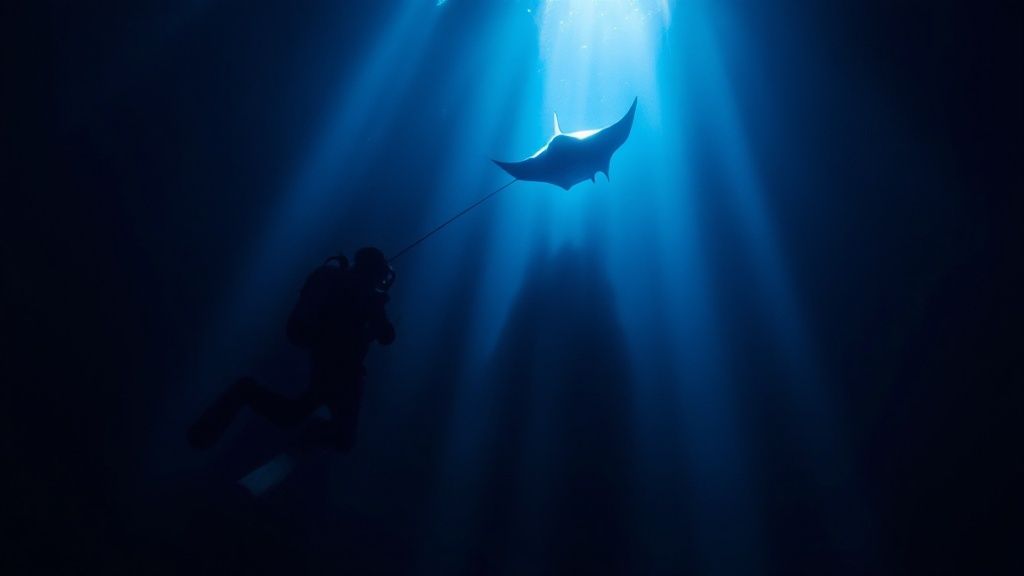
What happens next is pure, unadulterated magic. Manta rays, some with wingspans stretching over 12 feet, emerge from the darkness above. They glide effortlessly into the light, performing graceful barrel rolls and somersaults as they filter-feed on the plankton. They’ll often swoop just inches over your head—so close you can see the unique spot patterns on their bellies—but always with a mind-blowing sense of their surroundings.
The experience is completely passive. Your only job is to remain still and witness the show. This non-invasive approach ensures the mantas are comfortable and can feed naturally, which is the cornerstone of a responsible and ethical encounter.
The Snorkeler's View from Above
No scuba certification? No problem. The view from the surface is just as spectacular. Snorkelers get a unique top-down perspective of the entire feeding frenzy, and it is absolutely breathtaking.
You'll be positioned on the surface, holding onto a large, custom-built flotation device. These "light boards" have their own powerful lights that shine straight down into the water, creating another concentrated column of plankton.
From this vantage point, you'll watch the mantas soar up from the depths to feed right below you. Seeing their massive forms materialize from the dark to dance in the light is an experience you won't soon forget. You get a perfect view of their elegant movements and sheer size as they gracefully navigate the illuminated water. For a deeper dive into the specifics, you can learn more about how a manta ray dive works in our detailed guide.
Whether you're diving or snorkeling, the entire operation is designed for maximum safety and impact. The shallow depth gives divers plenty of bottom time, and the calm, protected bays mean the conditions are almost always ideal. It’s a perfectly choreographed system that reliably brings humans and these gentle giants together for an unforgettable night.
Planning Your Trip for the Best Manta Encounter
While you can see manta rays in Kona any night of the year, a little bit of planning can turn a great experience into an absolutely unforgettable one. Timing your manta ray night dive in Kona just right means looking at a few factors that can really change the nature of your encounter.
Things like the season, weather, and even the phase of the moon can influence the underwater show. By understanding how these pieces fit together, you can book your trip for the best possible chance of seeing something truly spectacular.
The Best Time of Year for Your Kona Manta Dive
One of the best things about Kona is its resident population of manta rays, which means you’re almost guaranteed a sighting no matter when you visit. That said, certain months definitely bring calmer seas and better overall conditions.
The Kona Coast is world-famous for this dive, drawing about 80,000 people every year. The most popular time to go is during the summer months, from June through August, when the ocean is typically calm and the water is crystal clear.
During this peak season, the boat ride is smoother, and there's less chance of a trip getting called off due to rough weather.
On the other hand, the winter months from November to March can bring bigger ocean swells. The mantas are still there and the tours are still running, but you might face choppier seas and slightly reduced visibility. For a deeper dive into the seasonal specifics, check out our full guide on https://konahonudivers.com/what-is-the-best-time-to-see-the-manta-rays-in-kona/.
The Moon's Surprising Influence
Here’s an insider tip that many people overlook: keep an eye on the lunar cycle. The whole manta experience hinges on our powerful lights attracting plankton, and the moon’s brightness can play a big part in that.
The best viewing conditions often happen around the new moon, when the night sky is at its darkest.
Think of it this way: on those pitch-black nights, our underwater lights are the main event, becoming an irresistible beacon for plankton. Without a bright full moon competing for attention, the plankton gathers in a denser cloud, which can lead to a more intense and active feeding frenzy.
This isn't to say a full moon dive will be a bust—far from it. But if you can, scheduling your trip during a darker moon phase really stacks the deck in your favor for an incredible show.
Kona Manta Dive Season Comparison
To make it easier to decide, here’s a quick guide comparing the peak and off-peak seasons for your Kona manta ray adventure.
| Factor | Peak Season (June – August) | Off-Peak Season (November – March) |
|---|---|---|
| Sea Conditions | Calm, smooth, and less chance of cancellation. | Can be rougher with a higher chance of cancellation. |
| Water Visibility | Excellent, often exceeding 100 feet. | Good to moderate, depending on recent weather. |
| Manta Sightings | Consistently high, with reliable encounters. | Still high, but can be less predictable. |
| Crowds | Higher, so it’s essential to book well in advance. | Fewer people, allowing for more booking flexibility. |
At the end of the day, any night you get to share the water with these gentle giants is a good one. When packing for your trip, throwing in a high-quality beach towel is a great idea for warming up after the dive. By keeping the season and moon in mind, you're just giving yourself the best shot at an experience you'll never forget.
Meeting the Famous Manta Ray Residents of Kona
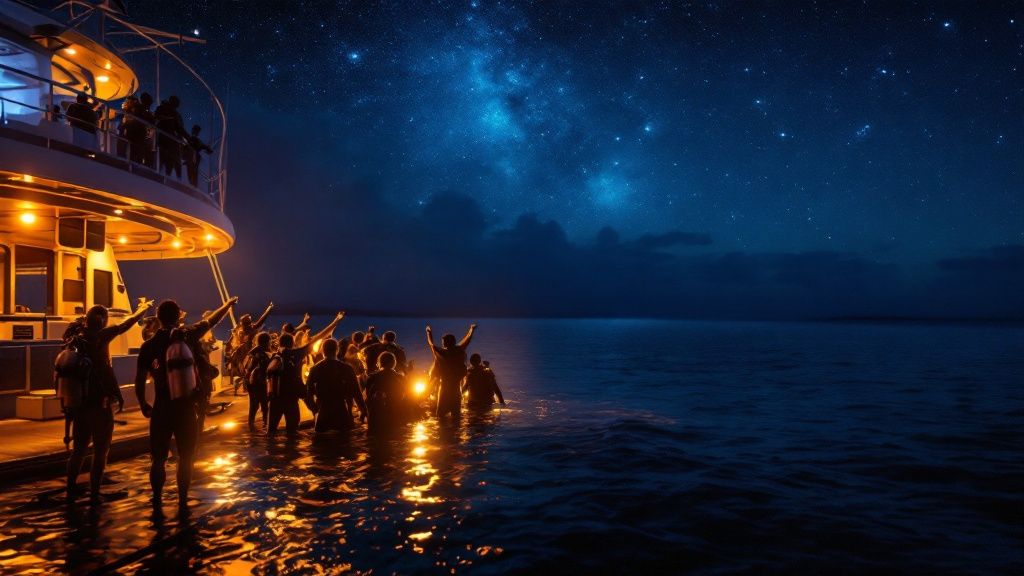
The gentle giants you’ll meet on a manta ray night dive in Kona aren't just random visitors passing through. They're local celebrities. Each one has a name, a unique personality, and a life story that the local dive community has been following for years—sometimes even decades.
This is what makes the experience so special. You’re not just observing wildlife; you’re being introduced to members of a well-known and beloved underwater family. It transforms the whole dive.
How We Know Who's Who
So, how can anyone tell these incredible animals apart in the dark? The secret is on their bellies.
Every manta ray has a completely unique pattern of black spots on its white underside, which works just like a human fingerprint. No two are ever the same. This allows local researchers and divemasters to identify and track individual rays with amazing accuracy.
When a new, unidentified manta ray shows up at one of the feeding sites, the community springs into action. Dive guides snap a clear photo of its belly—the "ID shot"—and compare it against a massive database of known individuals. If there's no match, the new ray is given a name and officially welcomed to the Kona roster.
This isn't just a fun naming game; it's a critical part of a long-running conservation project. By tracking individual rays, we learn about their travel patterns, social habits, and lifespans—all vital information needed to protect them.
Meet Kona's A-List Celebrities
Over the years, a few mantas have become true legends in the Kona diving world. Their consistent appearances and memorable personalities have made them fan favorites.
Keep an eye out for some of these famous residents:
- Big Bertha: One of the original and most recognized rays in Kona, she's known for her incredible size and calm, majestic presence.
- Lefty: A real survivor, you can't miss Lefty—he’s missing a cephalic fin (the lobe near his mouth). His injury doesn't slow him down one bit; he's a regular and enthusiastic visitor.
- Koie: Named for a respected local waterman, Koie is famous for her graceful, acrobatic feeding style. She often performs beautiful, tight barrel rolls right in front of divers.
Spotting one of these famous individuals feels like a celebrity sighting. Your dive guide will get genuinely excited, pointing them out by name and sharing stories about their history. It adds a rich, personal layer to the dive that you just won't find anywhere else on Earth.
This decades-long monitoring effort has created an incredible catalog of local marine life. Researchers and photographers have identified nearly 200 individual manta rays that live in the Kona area year-round, tracking them by their unique belly patterns. On any given night, it’s common to see 4 to 20 different individuals, but some incredible nights have brought gatherings of 36 manta rays at once. Explore more about Kona's unique role in manta ray research to see how these efforts contribute to our global understanding of these animals.
When you choose a responsible operator for your manta ray night dive in Kona, you're doing more than just booking a tour. You're directly supporting these critical identification and conservation efforts, ensuring the stories of these magnificent creatures continue for generations to come.
Getting You Ready: The Pre-Dive Briefing and Gear Essentials
Every single manta ray night dive in Kona kicks off with a detailed pre-dive briefing. We don’t do this just to check a box—it's absolutely essential for making sure the dive is safe, respectful, and as mind-blowing as it should be for both you and the mantas. This briefing sets the stage for the entire experience.
Your guides will cover all the bases, but there’s one non-negotiable, golden rule we live by: look, but never, ever touch. Seriously. If you remember nothing else, remember that. It’s the single most important thing you can do to protect these incredible animals.
The Golden Rule of Manta Etiquette
So, why are we so strict about the no-touching rule? Manta rays have a special mucous coating all over their skin. Think of it as their immune system’s first line of defense, shielding them from nasty bacteria and infections.
When a person touches a manta, even with a gentle brush of the fingers, that protective slime gets rubbed off. This leaves the manta wide open to diseases, much like how a simple cut can get infected on our own skin.
Beyond that crucial rule, the briefing will get you dialed in on a few other key behaviors to keep everything running smoothly.
- Find Your Spot: If you’re diving, you’ll be on or near the sandy bottom. This leaves the water column wide open for the mantas to do their thing. Snorkelers stay up top, holding onto their light boards.
- Let There Be Light (in the right direction): To create the ultimate plankton feast, divers point their lights straight up. Snorkelers, you’ll point yours straight down. This light sandwich is what draws in the food.
- Don't Blind Them: This one's just common courtesy. Avoid shining your light directly into a manta's eyes. It’s disorienting for them.
- Patience is Key: The best encounters happen when you just relax and stay put. Never chase after a manta. Let their curiosity bring them to you—and trust us, it will.
Gearing Up for Comfort and Safety
While we provide the big-ticket items like your tank and powerful lights, bringing the right personal gear can be the difference between a good dive and an unforgettable one. When you’re comfortable, you can truly soak in the magic unfolding in front of you.
The water here in Kona is beautiful and warm, but you’d be surprised how chilly you can get when you’re not moving much for a while, especially at night. A full-length wetsuit is a game-changer. For most of the year, 3mm is usually perfect to keep you toasty.
For divers, getting your weighting right is also a huge deal. You want to be just a little bit negative so you can rest effortlessly on the bottom without floating up or kicking up sand. Your guide will help you dial this in perfectly. And while we provide a primary light, it’s just smart practice to bring a small backup on any night dive.
For a deeper dive into everything you might want to pack, you can check out our complete guide covering the gear you will need for your Kona diving adventure.
Following these simple guidelines makes you more than just a tourist. It makes you a responsible visitor in the mantas' home, fully prepped to witness the spectacle while helping to protect the very creatures you came to see.
Explore More Kona Diving Adventures
The famous manta ray night dive in Kona is what brings most divers here, and for good reason. But trust me, it’s just the opening act for what the Big Island’s underwater world has in store. The volcanic coastline has sculpted a dramatic and wild seascape, with entirely different diving experiences waiting around every corner. Once you've seen the manta ballet, your next adventure is just a boat ride away.
Don't get me wrong, the mantas are incredible, but Kona is a world-class diving destination in its own right. There’s something for every diver here. You can spend an afternoon floating over shallow, sun-drenched reefs, or you can test your skills exploring deep, ancient lava tubes. The same crystal-clear, warm water that makes the manta dive so special supports a ridiculously rich ecosystem.
The Thrilling Kona Blackwater Dive
Ready for something completely different? For the truly adventurous diver, the next step into the darkness is the Kona Blackwater Dive. This is nothing like a reef dive. We head miles offshore, suspend you over thousands of feet of inky black water, and simply drift. Tethered to the boat, you become a spectator to one of the largest migrations on earth as bizarre, bioluminescent creatures rise from the abyss.
It's hard to describe the feeling of seeing translucent larval fish, glowing squid, and alien-like jellies appear out of the darkness—things you'd never see on a normal dive. People often call it an underwater spacewalk, and that’s pretty accurate. If you’re ready to see what comes up when the sun goes down, you can learn more about the Blackwater Dive tour.
Advanced Dives for Experienced Divers
If you’re an experienced diver looking to get your fins into something a little more challenging, Kona absolutely delivers. Our advanced boat charters head out to more remote sites that most visitors never get to see. These spots are all about the dramatic underwater topography carved out by ancient lava flows.
On these advanced trips, you can explore deep underwater arches, intricate lava tubes, and sheer vertical drop-offs that plummet into the deep blue. These structures are magnets for bigger marine life, giving you a real shot at spotting sharks, pods of dolphins, and other open-ocean species.
These charters are specifically for divers who are comfortable with deeper profiles and navigating more complex environments. If you’re looking for a challenge that goes beyond the typical reef tour, check out the advanced dive tour opportunities we offer. Exploring a lava tube or drifting over a pristine deep reef really shows you the raw, untamed side of the Big Island.
The manta ray night dive is an experience you'll never forget, but let it be your gateway to the full spectrum of incredible scuba diving tours in Kona.
Your Manta Ray Night Dive Questions, Answered
Even after hearing all about this incredible experience, it's totally normal to have a few lingering questions before you book your manta ray night dive in Kona. We get asked these all the time, so let's clear up the most common ones to make sure you feel completely ready for the adventure.
Is This Dive Safe for Beginners?
Absolutely. The whole encounter is designed to be incredibly safe, whether you're a seasoned diver or just starting out. For certified divers, the site is shallow—we're talking 30-40 feet deep—with a sandy bottom and almost no current. This makes it one of the most straightforward night dives you can do. Your main job is just to stay put and enjoy the show, so there's no tricky navigation involved.
If you're snorkeling or aren't a certified diver, the setup is just as secure. You'll hold onto a big, sturdy float board that's lit up to attract the mantas. You're never alone, either; professional guides are always in the water making sure everyone is safe and comfortable. As long as you feel at ease in the water, you can watch the entire spectacle from the surface.
What Are the Chances of Actually Seeing Manta Rays?
Your odds are fantastic. The success rate for seeing mantas in Kona hovers between 80% and 90% all year round. Think of it less like a random wildlife sighting and more like visiting a favorite local restaurant. The mantas have learned that our lights attract their food (plankton), so they show up for dinner night after night.
Of course, with wild animals, nothing is ever 100% guaranteed. That said, the Kona manta ray dive is one of the most reliable wildlife encounters on the planet. Most nights, you'll see at least a few mantas, but on a really good night, you could be surrounded by more than a dozen.
Why Can't I Touch the Manta Rays?
This is the golden rule, and it's all about protecting these gentle giants. Manta rays have a special mucous coating on their skin that acts as their immune system, protecting them from bad bacteria and infections.
Touching a manta, even for a second, can strip away this crucial protective slime. This leaves them exposed and vulnerable to disease. Every responsible tour operator enforces a strict hands-off policy to ensure the mantas can feed and glide around us safely and naturally.
What Should I Bring on the Boat?
Most tour companies, including us at Kona Honu Divers, will provide all the necessary dive or snorkel gear. Still, a few personal items will make your trip much more comfortable. Here’s what we recommend you pack:
- A towel and a change of warm, dry clothes for the ride back to shore. It can get chilly!
- Reef-safe sunscreen if you're on one of the earlier charters that departs in the late afternoon.
- An underwater camera, but only if you're comfortable with your buoyancy control. Your focus should be on the experience, not fumbling with gear.
With these few things in your bag, you'll be all set to relax and soak in every moment of your unforgettable manta ray night dive in Kona.
Ready to see the underwater ballet for yourself? At Kona Honu Divers, we run world-class manta ray night dive and snorkel tours with experienced pros who are passionate about safety and conservation. Book your adventure and get ready to make some lifelong memories.