
Picture this: you're floating in the warm, dark waters off the Kona coast, and suddenly, a massive, graceful shadow glides inches over your head. That's the heart-stopping magic of the Kona manta ray night dive, an experience so incredible it's considered one of the best underwater encounters on the entire planet.
And it’s not just hype. Kona, Hawaii, is hands down the most reliable place in the world to swim with these gentle giants, making it a true bucket-list adventure.
Why the Kona Manta Ray Dive Is a Must-Do Adventure
People often call it an "underwater ballet," and honestly, that’s the perfect description. Once the sun sets, dive operators submerge powerful lights into the water. These lights act like a massive bug zapper for the ocean, attracting clouds of microscopic plankton.
What happens next is pure theater. The local manta rays, who have figured out this nightly dinner bell, swoop in for an all-you-can-eat buffet. These creatures are huge, with wingspans that can stretch over 12 feet, and they perform effortless somersaults and barrel rolls right in the beams of light, scooping up plankton with their massive mouths.
They glide so close you can see every detail, creating a powerful, almost personal connection. It's not just a dive—it's a front-row seat to one of nature's most spectacular performances.
To give you a clearer picture, here’s a quick rundown of what to expect.
Kona Manta Ray Night Dive At a Glance
| Attribute | Details |
|---|---|
| Location | Kona, Big Island, Hawaii |
| Best Time to Go | Year-round |
| Sighting Success Rate | Consistently over 90% |
| Typical Depth | 30-40 feet (9-12 meters) |
| Water Temperature | 75-80°F (24-27°C) |
| Wildlife | Giant Pacific Manta Rays |
| Activities | Scuba Diving & Snorkeling |
| Experience Level | All levels, from beginners to advanced |
This table just scratches the surface, but it highlights why this dive is so accessible and reliable for everyone.
An Unmatched Sighting Success Rate
Unlike whale watching or shark diving where you cross your fingers and hope for the best, the manta ray night dive in Kona is about as close to a sure thing as you can get in the wild.
The consistency is what truly sets Kona apart. Tour operators in the area report sighting success rates that are consistently above 90%. This isn't just luck; it's because the dive sites are established feeding stations that the mantas have been visiting for years.
The dive itself usually takes place in shallow water, around 30-40 feet, so you get plenty of bottom time to just kneel on the sand and watch the show above. It’s this combination of reliable sightings, calm conditions, and the sheer awe of it all that makes Kona the undisputed champion of manta ray encounters. You can learn more about what makes the Kona manta ray night dive so unique and reliable on our blog.
Best of all, you don't even have to be a certified diver to experience it. Divers get an amazing view from the ocean floor, looking up at the action. But snorkelers on the surface have an equally breathtaking perspective as the mantas glide right beneath them.
Ready to see it for yourself? You can book your spot on the world-famous manta ray dive tour and get ready for a night you'll be talking about for years.
Understanding the Underwater Ballet
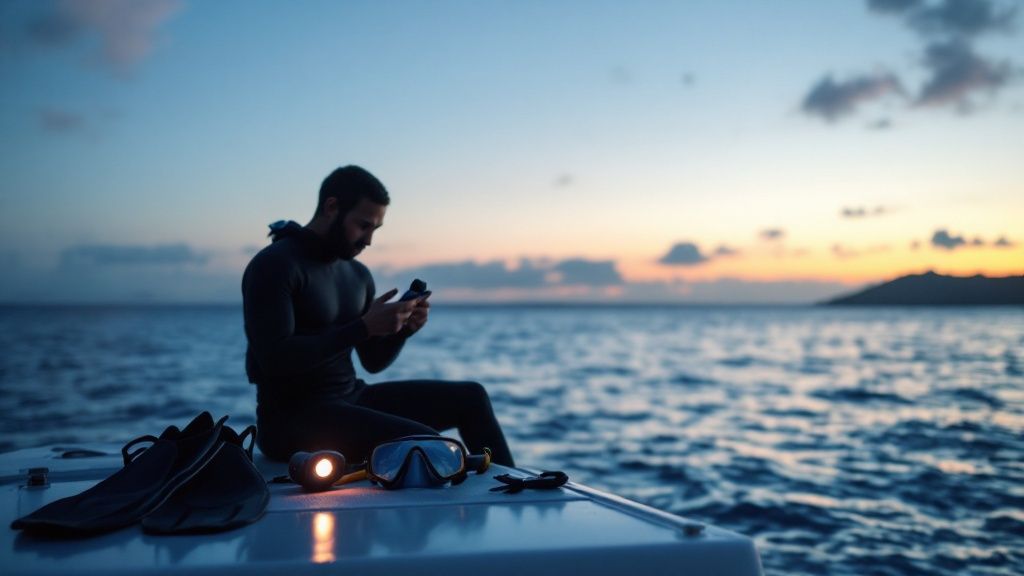
So, what brings dozens of giant manta rays to the exact same spot off the Kona coast, night after night? It's not magic, but it is a brilliant example of marine biology at work. Once you understand the "why" behind the manta ray night dive Kona, the whole experience becomes that much more incredible.
Imagine the powerful lights the dive boats shine into the water. To microscopic organisms called plankton, these lights are irresistible. The light draws them in from all around, creating a dense, shimmering cloud—basically, an all-you-can-eat plankton buffet for manta rays.
It didn't take long for the local mantas to figure this out. Over the years, they’ve learned that the lights mean an easy dinner. They show up reliably to feast, gliding through the water and performing incredible barrel rolls to scoop up as much plankton as possible.
Meet Kona's Gentle Giants
The stars of this nightly show are reef manta rays, or Mobula alfredi. These are the second-largest species of manta in the world, and they can have wingspans stretching over 18 feet. The ones we see here in Kona are usually a still-massive 12 feet from wingtip to wingtip.
Don't let their size intimidate you. Manta rays are completely harmless to people. They're gentle filter-feeders and, unlike their stingray cousins, they have no stinger or barb. They’re also incredibly smart, with the largest brain-to-body-size ratio of any fish.
One of the coolest things about the Kona mantas is that we know them as individuals. Each ray has a unique pattern of black spots on its white belly, which works just like a human fingerprint. This allows researchers and local dive guides to identify, track, and even name them.
This adds a personal touch to the whole encounter. You might find yourself diving with local celebrities like "Big Bertha," "Lefty," or "Kailey," all well-known regulars at the dinner table.
A Thriving, Predictable Ecosystem
This nightly feeding frenzy isn't just a happy accident; it's a learned behavior that has become a predictable part of the local ecosystem. The mantas you’ll meet aren't just passing through—they live here year-round. That's why the chance of seeing them is consistently over 90%.
When you join a manta ray night dive, you’re doing more than just watching a show. You’re stepping right into the middle of a beautiful, natural phenomenon. Witnessing this underwater ballet gives you a real appreciation for just how intelligent and adaptable these creatures are.
Understanding what's happening turns a thrilling dive into a profound connection with the ocean. Ready to see it for yourself? Book your unforgettable manta ray dive tour and get ready for the experience of a lifetime.
How to Choose the Right Manta Ray Tour
Picking the right tour operator for your manta dive is a huge deal. Seriously, it can be the difference between a magical, once-in-a-lifetime memory and a disappointing, overcrowded mess. The right crew doesn't just give you an incredible adventure; they put safety and the well-being of the mantas first.
With so many companies offering a manta ray night dive in Kona, it’s easy to get overwhelmed. But this isn't a time to just shop for the lowest price. You're looking for an experienced, ethical team that genuinely loves what they do. A huge part of that is their commitment to sustainable tourism—look for companies that follow the established rules for interacting with these gentle giants.
It all comes down to respect. The best operators have strict, non-negotiable rules like no touching the mantas and keeping group sizes manageable. This isn’t just about your experience; it’s about protecting Kona’s manta population for generations to come.
What to Look for in a Tour Operator
As you start comparing your options, a few key things should jump out at you. These are the details that separate a decent trip from a truly phenomenal one.
- Safety Standards: Don't compromise on this. The operator must have a squeaky-clean safety record, seasoned Divemasters, and boats and gear that are clearly well-cared-for. Their safety briefing should be thorough, clear, and mandatory for everyone.
- Ethical Practices: Look for a company that’s a recognized part of the sustainable tourism community. These crews take the time to teach you how to watch the mantas without disrupting their natural feeding patterns.
- Group Size: Honestly, smaller is almost always better. You get a much more personal experience with fewer people in the water. It means more one-on-one time with the guides and a less crowded, more peaceful view of the show.
- Experienced Crew: A crew that has been doing this for years knows the dive sites and the mantas like the back of their hand. They can often point out individual rays by name and share incredible stories and facts that bring the whole experience to life. Their passion is contagious.
Here at Kona Honu Divers, we don't just meet these standards; we live by them. Our entire team is dedicated to giving you a safe, educational, and completely unforgettable manta ray dive tour. Our guests consistently tell us it’s the highlight of their trip, and we work tirelessly to protect the animals that make it all possible.
For an honest breakdown of the local players, check out our guide on the top 5 manta ray night dive tours.
But you don’t have to take our word for it—see what divers who have been out with us have to say.
Choosing the right guide is the first and most important step toward an amazing night with the mantas. When you put safety and sustainability first, you’re guaranteeing that your adventure will be both breathtaking and respectful.
Ready to book your spot with a crew that cares?
What to Expect on Your Manta Adventure
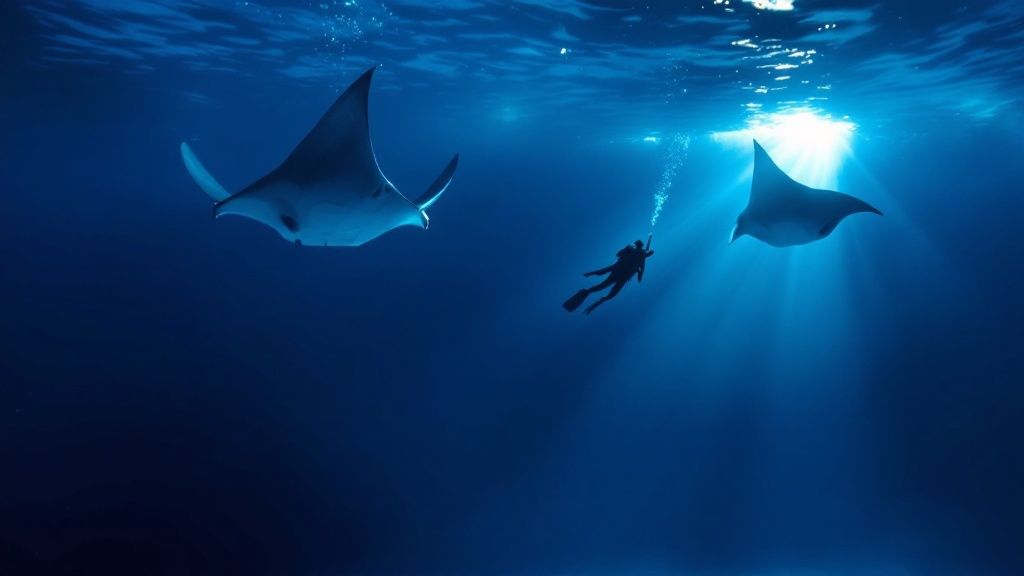
Knowing what’s in store for your manta ray night dive in Kona helps you shake off any jitters and just get lost in the moment. The whole evening is carefully planned for both safety and pure awe, starting right from the pre-dive briefing your crew gives you on the boat. This is where they’ll lay down the single most important rule of the night.
The number one rule? Passive observation. Think of yourself as an audience member at a spectacular underwater ballet. Your only job is to watch the show unfold. That means no touching, no chasing, and never, ever blocking a manta ray's path.
These gentle giants have a delicate mucus layer on their skin that acts as their immune system, protecting them from infection. Touching them can strip it away, leaving them vulnerable to disease. By staying still and keeping your hands to yourself, you’re not just following the rules—you're helping protect this incredible population for years to come.
What to Bring and What's Provided
Your tour operator has you covered with all the big-ticket items: tanks, weights, masks, fins, and wetsuits. You just need to pack a small bag with a few personal items to make the trip as comfortable as possible.
- Towel and a Change of Clothes: Trust me, you'll want something warm and dry to slip into for the boat ride back to the harbor. A sweatshirt or light jacket is perfect for cutting the chill that sets in on the water after sunset.
- Reef-Safe Sunscreen: If your trip leaves before the sun goes down, slather this on. It protects both your skin and our delicate coral reefs.
- Swimsuit: The easiest thing to do is wear it under your clothes to the boat, so you’re ready to jump into your wetsuit without any fuss.
That's really it. The crew handles all the heavy lifting, leaving you free to focus on the amazing experience ahead.
A Model for Sustainable Eco-Tourism
The wild popularity of the manta ray night dive has really forced the local community to pioneer a balance between amazing tourist experiences and true ecological protection. Things like moon phases and plankton density can affect how many mantas show up, which is why operators track this data so closely. If you’re curious about timing your trip, you can dive deeper into the best time to see manta rays in Kona.
The Kona manta ray night dive has become a global model for sustainable eco-tourism. Through decades of careful management and long-term monitoring, the dive industry here supports a world-renowned attraction while actively protecting a vulnerable species.
So, as you gear up for your dive, you can feel good knowing you're participating in a well-managed, respectful, and truly sustainable wildlife encounter. You're ready to be the perfect guest at the underwater ballet.
Comparing the Top Kona Manta Dive Sites
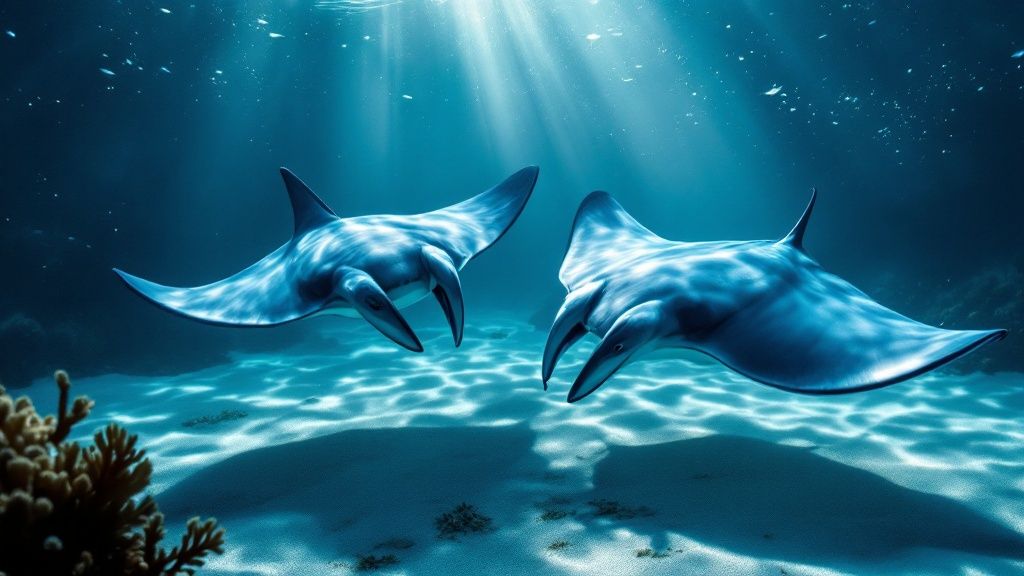
When you book a manta ray night dive in Kona, you’re almost certainly heading to one of two world-famous spots. Each one has its own personality, and knowing what makes them different can help you get the most out of your underwater adventure. The two prime locations are nicknamed "Manta Village" and "Manta Heaven."
While your boat captain will always make the final call based on the day's ocean conditions, understanding the nuances of each site just makes the whole experience that much richer.
Manta Village (Kaukalaelae Point)
Just south of Kailua-Kona, you'll find Manta Village. This spot is a fan favorite for its consistency and easy access. It’s tucked into a more protected bay, which often translates to calmer water—a huge bonus if you're worried about getting seasick.
The reliability here is legendary. Divers report consistent manta sightings all year long, which is why so many dive operators love it. You might see a slightly smaller group of mantas here compared to the northern site, but the dependable conditions make it a fantastic choice for a comfortable and absolutely mind-blowing dive.
Manta Heaven (Garden Eel Cove)
North of the Kona airport is Manta Heaven, which goes by Garden Eel Cove during the day. This site is a bit more exposed to the open ocean, so the conditions can be more of a wildcard. But when the stars align and the ocean is calm, Manta Heaven is nothing short of magical.
It definitely earned its name. This spot is known to attract larger gatherings of mantas, sometimes creating an underwater ballet that will leave you speechless. For example, back in 2013, Manta Heaven averaged around 11 mantas a night, while Manta Village had a still-impressive average of four. This kind of data, gathered over years of photo identification, gives us incredible insight into the mantas' habits.
At the end of the day, you really can't go wrong. Both sites offer a fantastic chance for an unforgettable encounter with Kona's gentle giants. If you're curious about what else is out there, check out our guide to the top dive sites on the Big Island.
Exploring Other Incredible Kona Night Dives
The manta ray night dive in Kona is absolutely legendary, but the ocean’s magic doesn't stop when the mantas swim off. For certified divers craving a different kind of after-dark adventure, Kona has a few other world-class experiences up its sleeve. You can see all of the available scuba diving tours on the Big Island here.
One of the most mind-bending options is the famous Kona Blackwater Dive. Think of it as a "pelagic magic carpet ride" into the abyss. You're tethered to a boat miles offshore, drifting in the deep, dark ocean. It’s here that you witness one of the largest migrations on the planet, as strange, bioluminescent creatures rise from the depths to feed. Trust me, it’s a surreal encounter with life forms that look like they belong in a sci-fi film. You can book your own Kona blackwater dive tour here.
Venturing Beyond the Usual Reefs
If you're an experienced diver, Kona’s underwater world presents a whole new set of challenges once the sun goes down. Night dives can guide you through ancient lava tubes and along stunning reefs, where the entire ecosystem transforms.
The creatures that stay hidden by day—like elusive octopuses, shy lobsters, and rare eels—emerge to hunt and explore. Suddenly, a reef you thought you knew becomes a completely different world. These advanced dives truly pull back the curtain on a hidden side of Kona's marine life.
Ready for a different kind of challenge? Exploring these sites will give you a much deeper appreciation for the Big Island’s incredible underwater topography. We offer exclusive charters for certified divers, which you can learn more about on our advanced dive tour page.
Of course, Kona's adventurous spirit isn't just confined to the water. The island is also world-renowned for hosting grueling events like the Kona Ironman World Championships. From the deep ocean to the rugged lava fields, this place is built for unforgettable experiences.
Your Kona Manta Ray Night Dive Questions Answered
Thinking about booking a manta ray night dive? It’s a huge thrill, but it’s natural to have a few questions before you commit. Let's run through some of the most common things people ask so you can feel totally confident about your upcoming adventure.
Is the Manta Ray Night Dive Safe?
This is usually the first question on everyone's mind, and the answer is a resounding yes. When you're with a reputable charter, you’re in a very controlled environment. The divemasters are seasoned pros who’ve done this hundreds, if not thousands, of times. They know the dive site like the back of their hand.
And what about the mantas? They're often called "gentle giants" for a reason. Unlike their stingray cousins, manta rays don't have stingers or barbs, so they pose no threat to people. Their only focus is on scooping up mouthfuls of plankton—they're just not interested in us.
Do I Need to Be a Certified Diver?
Nope, and that’s what makes this experience so special! While certified divers get an incredible bottom-up view from the seafloor, non-divers can join the fun as snorkelers.
You'll be floating at the surface, looking down as these massive, graceful creatures perform their underwater acrobatics just inches beneath you. It’s an equally stunning perspective. For those who do want to scuba, a basic Open Water certification is all you need.
When Is the Best Time of Year to See Mantas?
You’re in luck—the mantas along the Kona coast are here year-round. They're resident animals, which means there isn't really a "manta season." Dive operators see them consistently, month after month, with incredibly high success rates.
That said, if you're looking for the most comfortable conditions, the summer months generally bring calmer seas and warmer weather. This can make the boat ride out and back a bit smoother.
Can I Take Photos and Videos?
You absolutely can, but I’ll be honest with you: getting a good shot is tough. Shooting underwater at night is a real challenge without professional lighting and a steady hand. My best advice? Leave the camera behind for this one.
Just be present and soak in the magic of the moment. Many operators, like Kona Honu Divers, have a professional videographer on board. You can buy their high-quality footage afterward, which lets you relive the experience without the stress of fumbling with gear in the dark.
Ready to see this unbelievable underwater ballet for yourself? Kona Honu Divers runs incredible manta ray dive tours that focus on safety, education, and respecting these amazing animals.