
Picture this: you're floating in the dark, warm waters of the Pacific, and a giant, graceful creature performs a silent ballet just inches above your head. This isn't a scene from a nature documentary—it's the very real, very incredible experience of the manta ray night dive in Kona. It’s consistently ranked as the world's best spot for this kind of encounter, and for good reason. It's a true bucket-list adventure that's as epic as it is safe for both divers and snorkelers.
Why Kona’s Manta Ray Dive Is a Global Phenomenon
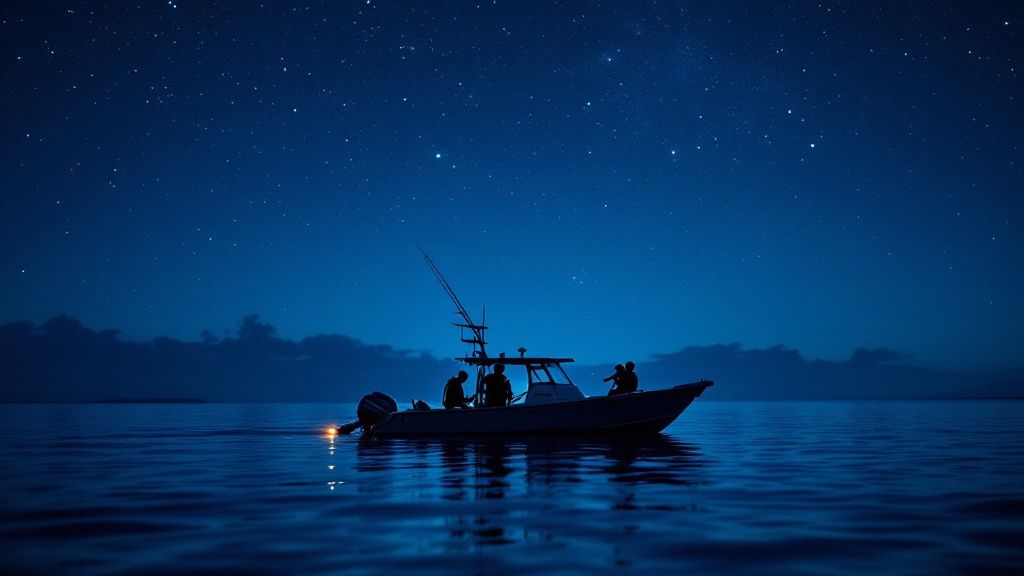
The Kona coast on the Big Island is more than just a pretty place; it's a world-famous sanctuary for giant manta rays. This isn't just a happy accident. The unique combination of ancient volcanic geography and steady ocean currents has created the perfect environment for these magnificent animals to thrive.
Because of this ideal setup, the Kona manta ray dive has become one of the most reliable and unforgettable wildlife encounters you can find anywhere on the planet. While manta sightings can be hit-or-miss in other locations, Kona delivers a spectacular show pretty much every single night of the year.
The Underwater Campfire Effect
The secret behind this nightly spectacle is surprisingly simple, something we like to call the "underwater campfire." Dive operators place powerful, eco-friendly lights on the seafloor (or on floating rafts for snorkelers). In the pitch-black water, these lights act like a magnet for clouds of plankton, which happen to be the mantas' favorite meal.
This creates a dependable, all-you-can-eat plankton buffet that draws in the local manta population night after night. The result is a breathtaking performance where these gentle giants swoop, glide, and do barrel rolls through the beams of light to scoop up their dinner.
"Diving with mantas is one of the most satisfying things a person can do in the water. It’s impossible to describe the feeling of watching a massive fish the shape of a stealth bomber coming into vision."
As a participant, you get a front-row seat to this incredible feeding frenzy. Whether you’re a scuba diver settled on the sandy bottom or a snorkeler floating on the surface, you're just feet away from the action.
More Than Just a Dive
This experience goes beyond just watching cool animals. It’s a chance to connect with one of the ocean's smartest and most gentle creatures. Many of the mantas you'll meet are long-time residents of the area, each with its own name and distinct personality, which makes every encounter feel genuinely personal.
If you're ready to see this unforgettable spectacle for yourself, the manta ray dive tour is an absolute must-do on the Big Island. It’s a chance to witness a thriving marine ecosystem up close, all while being guided by professionals who are deeply committed to conservation and your safety.
The Science Behind Kona’s Underwater Ballet
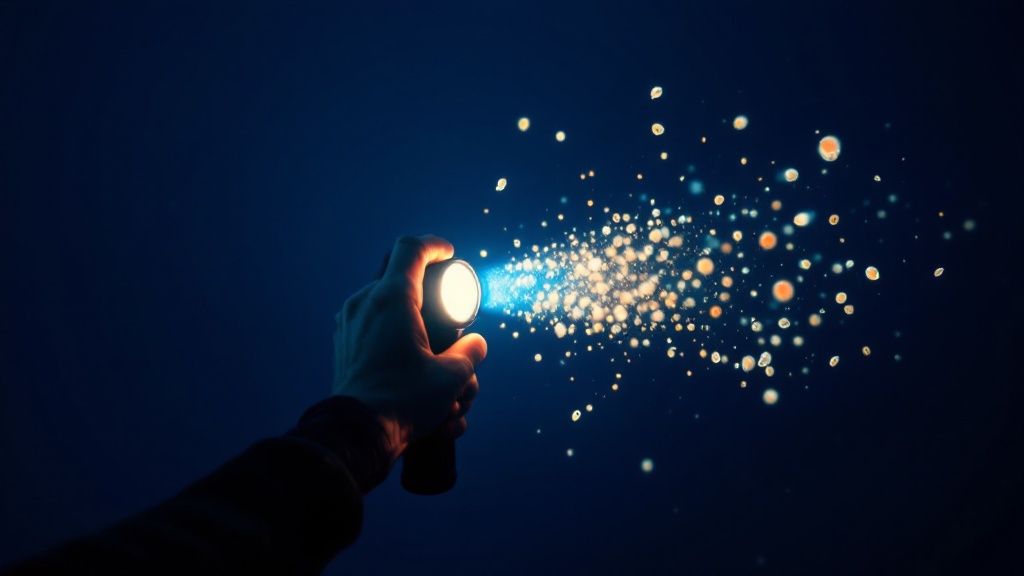
So, what makes the manta ray night dive in Kona such a reliable, jaw-dropping experience? It’s not just good fortune. It’s a fascinating mix of biology and smart ecotourism, fine-tuned over decades to create a nightly spectacle you can count on.
Think of it like a giant, underwater dinner bell. Dive operators set up powerful lights on the ocean floor, and in the dark waters, these beams attract massive swarms of tiny organisms called phytoplankton. For manta rays, this is an all-you-can-eat buffet.
This thick, nutritious cloud of plankton is simply irresistible to the local manta population. Being the clever creatures they are, the mantas have figured out that these lights mean an easy, guaranteed meal, so they show up night after night.
A Predictable and Sustainable Feast
This nightly gathering transforms spots like 'Manta Village' and 'Manta Heaven' into world-famous feeding grounds. It’s no surprise the Kona coast draws around 80,000 visitors a year for this dive, especially with a sighting success rate that hovers between 80% and 95%.
It’s one of the most consistent big animal encounters on the planet, supported by a known local population of over 450 individual mantas. The setup is a brilliant win-win: we get a breathtaking, up-close view of these gentle giants, and the mantas get a high-calorie meal without having to work very hard for it.
This sustainable model works because the mantas aren't baited with anything unnatural. The lights simply concentrate their existing food source, preserving the natural balance of the marine ecosystem.
The Perfect Spot
Kona’s unique underwater landscape is a huge piece of the puzzle. The sheltered bays and volcanic slopes are already perfect for plankton to congregate. On top of that, the dive sites are fairly shallow—typically just 30-40 feet—which means divers get more bottom time to soak in the incredible view.
It’s also fascinating to learn about the different depths manta rays frequent to understand more about their feeding patterns.
When you understand this simple, effective relationship between light, food, and mantas, the whole experience becomes even more amazing. You’re not just watching a beautiful animal; you're witnessing a clever, harmonious interaction that makes the manta ray night dive in Kona a truly unforgettable adventure.
A Guide to Safe and Respectful Manta Encounters

If there's one golden rule for the manta ray night dive in Kona, it’s this: look, but don't touch. It’s a simple concept, but it’s the foundation of everything we do out there. This single principle keeps both the incredible manta rays and every diver and snorkeler safe, ensuring we can continue to witness this spectacle for years to come.
So, why the strict hands-off policy? Manta rays have a special mucous coating on their skin, which is their first line of defense against nasty bacteria and infections. When a person touches them, even with the lightest graze, it can strip away that protective layer. This leaves them exposed and vulnerable to disease. It's not just a polite suggestion—it’s a critical rule for their well-being.
The entire experience is built around passive observation. By just being a calm, respectful observer, you get to see the mantas in their element, performing their nightly ballet without interference. It’s a truly authentic and breathtaking sight.
Guidelines for a Safe Manta Dive
Every dive operator runs through a thorough safety briefing before anyone hits the water. Paying close attention here is key, as these rules are designed to make the dive smooth, safe, and magical for everyone.
Here’s what you can expect:
- Divers on the Bottom: If you're scuba diving, you'll be positioned on the sandy seafloor. This is your designated spot. Staying low and still keeps the main water column open, giving the mantas plenty of room to swoop and glide right over you.
- Snorkelers on the Surface: Snorkelers hang out at the surface, usually holding onto a large, custom-built float with lights pointing downward. This gives you a stable viewpoint and prevents anyone from accidentally kicking down into the action.
- Light Discipline: The lights are what draw in the plankton, the mantas' food. Divers are instructed to point their flashlights straight up. The snorkelers' float shines its lights straight down. This creates a "light sandwich," concentrating the plankton right in the middle and turning the area into a manta buffet.
This careful positioning creates a predictable, organized environment where the mantas feel comfortable coming in to feed. They know the drill, and it allows for incredible, up-close encounters without crowding them.
By following these simple rules, you become part of a conservation effort that prioritizes the well-being of these magnificent animals. Your respectful behavior directly contributes to the long-term health of Kona's manta ray population.
Night Diving Safety and Comfort
For anyone who hasn't dived at night before, the thought can be a little intimidating. But rest assured, the Kona manta dive is one of the most controlled and well-supervised night dives you can find anywhere on the planet. The divemasters are absolute pros at managing groups in the dark.
Your guide will go over everything you need to know, including how to communicate with light signals, before you even get in the water. To get a head start, you can learn more about practicing considerate diver etiquette before your trip. Following these guidelines is what makes the experience a magical and respectful encounter for everyone involved.
Choosing Your Adventure: Scuba Diving vs. Snorkeling
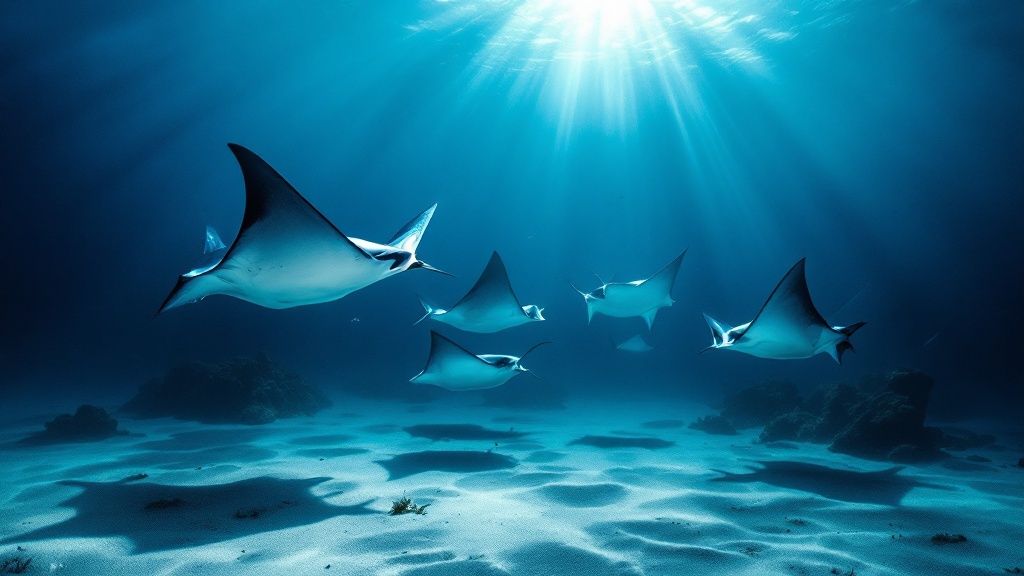
When you book a manta ray experience in Kona, you’re really choosing between a front-row seat on the ocean floor or a skybox view from the surface. Both are absolutely incredible, but they give you completely different perspectives of the show.
Let’s break down the two ways you can witness this underwater ballet: scuba diving and snorkeling. The best choice for you really boils down to your comfort in the water, your certifications, and what kind of experience you’re looking for.
The Scuba Diving Experience
For certified divers, this is about as immersive as it gets. You’ll make your way down to the sandy bottom, usually about 30-40 feet deep, and find a spot to settle in. From there, you just look up.
It’s a breathtaking perspective. The giant manta rays swoop, glide, and do barrel rolls just inches above your head, outlined by the bright lights shining down from the snorkelers' boards. You truly feel like you’re part of their world, not just a spectator. It's a surreal, up-close encounter that’s hard to put into words.
To join the scuba group, you absolutely must be a certified diver. No exceptions.
- Your View: You'll be on the ocean floor, looking straight up as these gentle giants dance overhead.
- Requirements: A valid scuba certification card (like PADI Open Water or similar) is required.
- Effort Level: You need to be comfortable with your scuba gear and the basics of a night dive, but it's a very calm and controlled experience.
The Snorkeling Experience
Snorkeling, on the other hand, is an amazing option for just about everyone. It’s accessible, safe, and still offers a spectacular view.
You’ll hang out on the surface, holding onto a specially designed light board that floats. This board shines powerful beams of light into the water, attracting the plankton that mantas love to eat. From this "skybox seat," you get a perfect top-down view as the mantas rise from the dark and gracefully feed right below you.
- Your View: Floating comfortably, you'll watch the mantas soar up from the depths to feast in the light beams beneath you.
- Requirements: No certifications needed! You just need to be able to swim and feel comfortable in the ocean at night.
- Effort Level: It’s very low-effort. You mostly just hold onto the board and let the show unfold.
Deciding between diving and snorkeling can be tough, as both offer a front-row seat to one of nature's most spectacular shows. This table breaks down the key differences to help you find the perfect fit.
Manta Ray Dive vs. Snorkel Experience
| Feature | Scuba Diving | Snorkeling |
|---|---|---|
| Perspective | Bottom-up view from the ocean floor | Top-down view from the surface |
| Proximity | Mantas can glide inches above you | Mantas feed just a few feet below you |
| Certification | Required (Open Water or higher) | Not Required |
| Best For | Certified divers seeking an immersive, up-close encounter | Non-divers, families, and those wanting a less gear-intensive option |
| Physical Effort | Moderate; requires comfort with scuba gear | Low; requires basic swimming skills and holding onto a float |
No matter which you choose, you're in for a treat. Both options are part of the same incredible manta ray dive and snorkel tour, so everyone on the boat gets to share in the magic of the evening. The real question is, do you want to be on the ocean floor looking up, or at the surface looking down?
Either way, you’re about to have a night you'll never forget.
Meet Kona’s Famous Resident Manta Rays
When you slip into the water for a manta ray night dive, you're not just crashing a party—you're being invited into a community. The mantas you’ll meet aren't just passing through Kona; many are long-time residents, local celebrities with names, personalities, and some seriously fascinating backstories.
So, how do we know who's who? It's all in the belly spots. Each manta ray has a unique constellation of black spots on its white underside. Think of it like a human fingerprint—no two are ever the same. Local researchers and dive guides have spent years photographing these patterns, creating a catalog that lets them identify and track individuals year after year.
This turns a simple wildlife encounter into a personal introduction.
The Stars of the Show
Because we can recognize them, the dive community here has gotten to know these animals on a first-name basis. On your dive, you might hear your guide get excited about seeing a local legend like "Big Bertha," "Lefty," or "Sugar Ray."
Each one has a story. Some are known for being incredibly curious, swooping right over your head to get a better look. Others are a bit more shy and graceful from a distance. Your guide will likely share tales about their unique quirks, injuries they've heroically recovered from, or even their "friendships" with other mantas. It adds a rich, personal layer you just can't get anywhere else.
You're not just observing a species; you're meeting individuals. Recognizing a specific manta by its name and story makes the encounter incredibly meaningful and unforgettable.
Counting the Cast
This amazing identification effort has given us an incredible window into Kona's manta population. Since 2009, researchers have identified and cataloged nearly 200 different manta rays that call this coastline home. These individuals tend to stick around, making them reliable regulars at the nightly feeding sites.
On an average night, you can expect a fantastic showing of four to eleven mantas, but some nights are just pure magic. Divers have witnessed what we call a "manta vortex," with as many as 36 individuals swirling in the lights at once. Sightings are almost guaranteed, but on the rare chance the mantas are a no-show, operators usually just motor over to another nearby feeding ground. You can learn more about the incredible consistency of Kona's manta sightings.
Joining a manta ray night dive in Kona means you’re stepping into a long-running drama with a beloved cast of characters. It’s an adventure that feels both epic and surprisingly personal, leaving you with stories you'll be telling for years.
How to Book Your Manta Ray Adventure
Alright, you're ready to take the plunge. Choosing the right operator for your manta ray night dive in Kona is probably the single most important decision you'll make, and it can truly make or break the experience.
For an adventure that’s as safe as it is awe-inspiring, we always point people toward a top-tier company like Kona Honu Divers. They have a stellar reputation built on years of prioritizing conservation, diver safety, and just an all-around fantastic time out on the water.
Their commitment really shines through in the feedback from divers and snorkelers who have gone before you. But don't just take my word for it; see what people are saying about their world-class service.
What to Expect on Your Tour
Booking the 2-Tank Manta Dive & Snorkel with Kona Honu Divers is a breeze. Their professional crew takes care of everything, letting you just soak in the anticipation of the main event.
- Expert Guidance: Your tour is led by seasoned divemasters and instructors. They don't just give you a safety briefing; they share fascinating insights into manta ray behavior that make the experience even richer.
- All Gear Included: No need to pack your own heavy equipment. They provide high-quality, well-maintained scuba or snorkel gear, including the right wetsuit to keep you comfortable in the water.
- Prime Viewing: The crew knows exactly where to be. They’ll get you set up in the perfect spot for unbelievable views, whether you're settled on the seafloor or floating at the surface.
Word to the wise: this is one of the most sought-after experiences on the Big Island. It's a really good idea to book well in advance, especially if your trip falls during the high season. Nailing down your spot early means you won't miss out on what is truly a bucket-list adventure.
And if you get bitten by the night diving bug, Kona Honu Divers offers other incredible after-dark adventures. You could try the surreal Blackwater Night Dive to witness some of the bizarre and beautiful creatures that migrate up from the deep. Be sure to check out all the amazing diving tours in Kona to round out your underwater itinerary.
Your Top Questions Answered
Got a few lingering questions before you book? Let's clear things up so you can plan your Kona manta ray adventure with total confidence.
Is There a Best Time of Year to See the Mantas?
This is one of the best parts—there isn't one! The manta rays that frequent Kona are residents. They live here year-round and don't migrate, which is fantastic news for visitors.
That means you can book your trip for January or July and have an equally incredible chance of a mind-blowing encounter. It's truly one of the most dependable big animal experiences in the world. Just pick the dates that work for you.
What Happens If We Don't See Any Manta Rays?
It's a valid question, as we are dealing with wild creatures. While it’s highly unlikely (most operators report success rates over 90%), it can happen.
The best tour companies get it, and they want you to leave happy. Reputable operators like Kona Honu Divers have a "Manta Guarantee." If the mantas decide to be shy on your night, you can usually try again on another trip for free, depending on their availability.
Just How Cold Is the Water at Night?
Probably warmer than you think! Kona’s waters are surprisingly pleasant, typically hovering between 75-80°F (24-27°C) all year.
Plus, any professional manta ray dive tour will gear you up properly. They provide either a 3mm or 5mm wetsuit, which is plenty to keep you comfortable and focused on the amazing show below.
Do I Need to Be a Certified Scuba Diver?
Not at all. While divers get an incredible view from the "campfire" on the ocean floor, snorkelers get a breathtaking bird's-eye view from the surface.
The snorkeling experience is just as magical. You'll float on the surface and watch the mantas swoop and glide right beneath you. If you're comfortable in the water, you're good to go—no certification needed.
Ready to see this underwater ballet for yourself? Kona Honu Divers is a highly-rated, professional outfitter that focuses on a safe, respectful, and truly unforgettable experience with these gentle giants.