
The manta ray night dive in Kona is famous for a reason. It's not just another dive; it's a front-row seat to one of nature's most mesmerizing performances, and it happens almost every single night. People come from all over the world for this experience, and it consistently tops the charts as one of the best night dives you can do, anywhere.
Why Kona Is the Best Place for a Manta Ray Night Dive
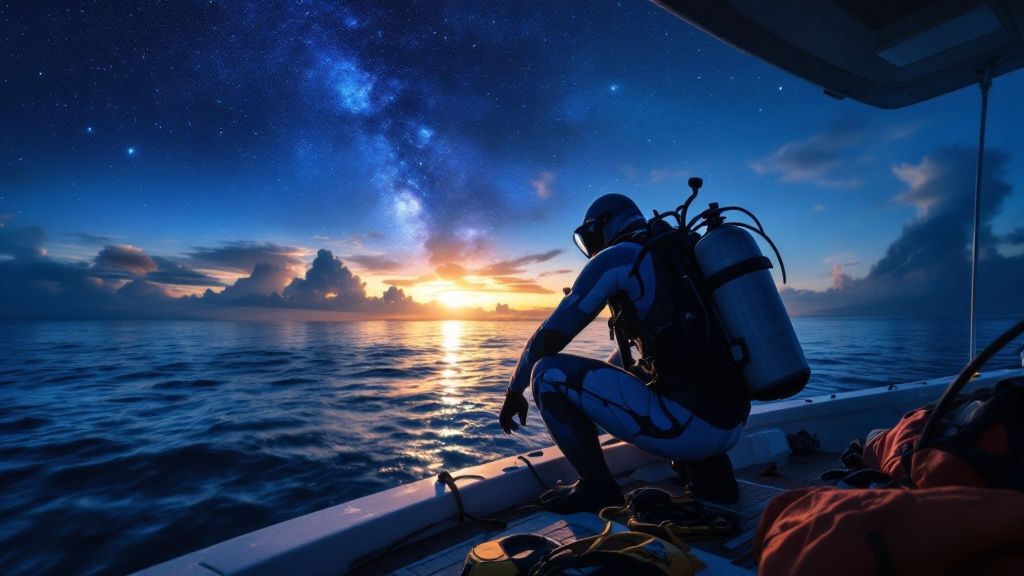
Picture this: you slip into the warm, dark Pacific Ocean. As your eyes adjust, massive, ghost-like figures emerge from the gloom, swooping and gliding in an underwater ballet just inches from your face. This isn't some rare, once-in-a-lifetime sighting. It's the nightly show off the Kona coast, which is exactly what makes this the undisputed best place on Earth for this adventure.
Kona's magic comes down to a few key ingredients. First, the island’s natural geography blesses us with calm, protected bays that make for a comfortable and easy dive. But the real secret is the large, resident population of reef manta rays that call these waters home year-round.
A Reliable Natural Wonder
Unlike other places where manta sightings are seasonal, Kona's mantas don't migrate. They're here to stay, drawn to the rich buffet of plankton that congregates in the light of our dive boats. This incredible reliability is what truly sets the Kona manta ray night dive apart.
We're talking about a sighting success rate that consistently hovers above 95%. These aren't deep, technical dives, either. We do them in shallow water, usually 30 to 40 feet, which means you get plenty of bottom time—often 45 to 60 minutes—to just relax and watch the show. With a local population estimated at over 450 identified mantas, some with wingspans stretching over 12 feet, you're in for a spectacular encounter.
This isn't just a dive; it's a carefully managed, respectful interaction with nature. Decades of responsible tourism have taught the mantas that our lights mean an easy meal, creating a predictable and safe encounter that still feels completely wild and awe-inspiring.
If you're wondering when to plan your trip, we break down the seasons in our guide to the best time of year to see manta rays in Kona.
What to Expect on Your Manta Ray Tour
Your adventure usually kicks off in the late afternoon. You'll hop aboard a custom dive boat, meet the crew, and get settled in. The first part of the trip is often a stunning cruise along the Kona coast—the perfect backdrop as the sun starts to set and the sky lights up.
On the way out to the site, the crew will give you a full rundown of the plan. This is a crucial safety briefing where they’ll cover everything from how to interact with the mantas to the specific way you'll get in and out of the water. Don't be shy; this is your chance to ask anything that’s on your mind. The whole team is there to make sure you're comfortable and ready for what's ahead.
Gearing Up for the Show
Once you arrive at the manta site, it’s time to get your gear on. The crew is fantastic about helping everyone, whether you're a seasoned diver or a first-time snorkeler. They'll double-check that your mask, fins, and BCD fit just right. As the last bit of daylight disappears, the excitement really starts to build.
Then, you hit the water. This is where the magic happens.
If you’re diving, you’ll head down to the sandy bottom, usually around 30-40 feet, and settle in with your group around a collection of powerful lights often called "the campfire." Snorkelers, you'll be at the surface, holding onto a custom-built float with lights pointing down, giving you a front-row seat from above.
The Underwater Campfire
So, what’s with all the lights? Think of it as setting the dinner table. These bright beams attract swarms of microscopic plankton, which are the manta rays' absolute favorite food. It essentially creates a concentrated, all-you-can-eat buffet right in front of you.
And it doesn't take long for the guests of honor to arrive.
Drawn by the plankton, the giant mantas emerge from the darkness, gliding effortlessly through the water. They perform incredible, acrobatic barrel rolls, swooping inches over the divers' heads and just below the snorkelers to filter-feed. Your only job is to stay put, breathe, and take in the unbelievable underwater ballet unfolding before your eyes.
The entire operation is a well-orchestrated and highly professional system designed for minimal impact on the mantas and maximum wonder for participants. Every step, from the briefing to the final ascent, is managed for safety and enjoyment.
Ready to see it for yourself? You can learn more about the specific structure of a manta ray dive and snorkel tour and find the perfect option for your group. After about 45 minutes of pure awe, your guide will signal that it’s time to head back to the boat, where you’ll usually be greeted with hot chocolate and snacks.
Exploring Kona’s Premier Manta Dive Sites
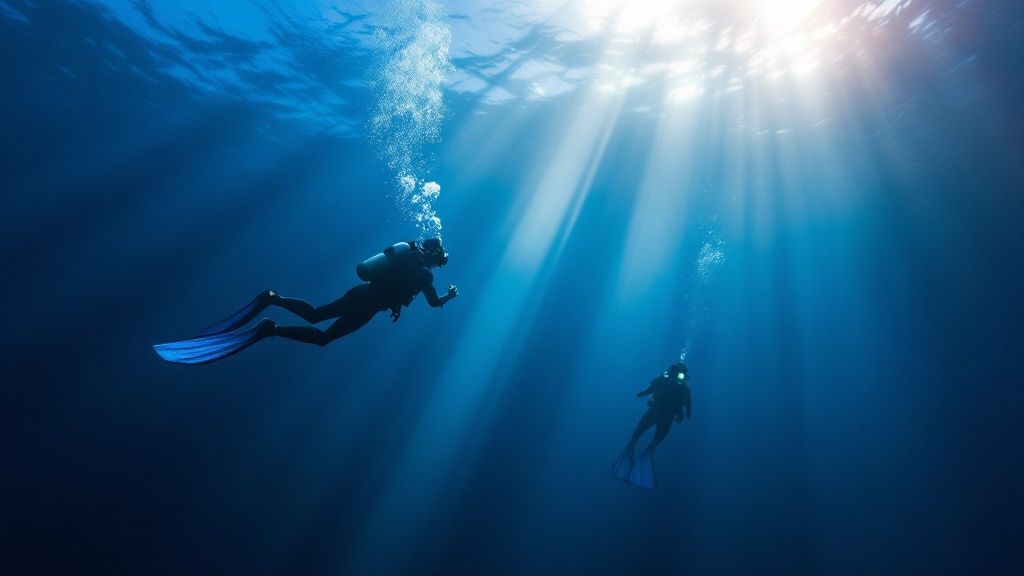
When you book a manta ray night dive in Kona, you’re essentially getting a ticket to one of two world-famous underwater stages. And while both promise an incredible show, they each have their own unique character and reputation among local dive crews. Knowing the difference can help set your expectations for the night.
The two main spots are affectionately known as "Manta Village" to the south and "Manta Heaven" to the north. Your tour operator, like the seasoned pros at Kona Honu Divers, will make the final call on where to go. They’re constantly monitoring recent manta activity, weather, and ocean conditions to give you the best possible chance for a magical encounter.
Manta Village: The Reliable Southern Star
Just off the coast of the Sheraton Kona Resort in Keauhou Bay, you’ll find Manta Village. This site is legendary for one thing above all else: consistency. For decades, the lights from the resort have spilled into the water, attracting a steady buffet of plankton that the mantas simply can't resist.
This incredible reliability makes Manta Village the go-to spot on many nights. It’s easily accessible and has a rock-solid reputation for delivering breathtaking, up-close encounters. It might host slightly fewer mantas at once compared to its northern counterpart, but its consistency is its superpower.
Manta Heaven: A Grand Northern Gathering
Further up the coast, near the Ellison Onizuka Kona International Airport, is Manta Heaven. It earned that name for a reason. On a good night, this site can host a truly massive gathering of manta rays, creating a spectacle that will leave you speechless. We’re talking about graceful giants gliding in from every direction—it’s an unforgettable underwater ballet.
While historically very reliable, the sighting rates here can fluctuate a bit more than at Manta Village. But when the mantas show up in force, the experience is absolutely electric.
So, how do the two sites stack up? To help you visualize the differences, here’s a quick comparison of what makes each location special.
Comparing Kona's Top Manta Dive Sites
| Feature | Manta Village (South Site) | Manta Heaven (North Site) |
|---|---|---|
| Location | Off Keauhou Bay, near the Sheraton Resort | Near Kona International Airport |
| Key Trait | Consistency. A reliable, year-round feeding station. | Large numbers. Known for hosting bigger groups of mantas. |
| Average Depth | Shallow, typically 25-40 feet. | Also shallow, around 30-45 feet. |
| Best For | Divers and snorkelers looking for a highly probable encounter. | Those hoping for a truly massive, awe-inspiring spectacle. |
| Keep in Mind | May have slightly fewer mantas on a given night. | Sighting rates can fluctuate more than at the southern site. |
Interestingly, a 2013 study highlighted these differences, noting that Manta Heaven saw an average of 11 individual mantas per night, while Manta Village averaged about four. But the most important takeaway was that both locations have incredibly high success rates, often topping 80% year-round. You can dive deeper into the manta sighting statistics to see just how dependable Kona is.
No matter which site your captain chooses, you’re in for a world-class wildlife encounter. Both Manta Village and Manta Heaven deliver the magic that makes the manta ray night dive in Kona a bucket-list adventure for any ocean lover. If you're ready to see it for yourself, Kona Honu Divers offers an exceptional manta ray dive tour to these incredible locations.
How to Have an Amazing Manta Experience
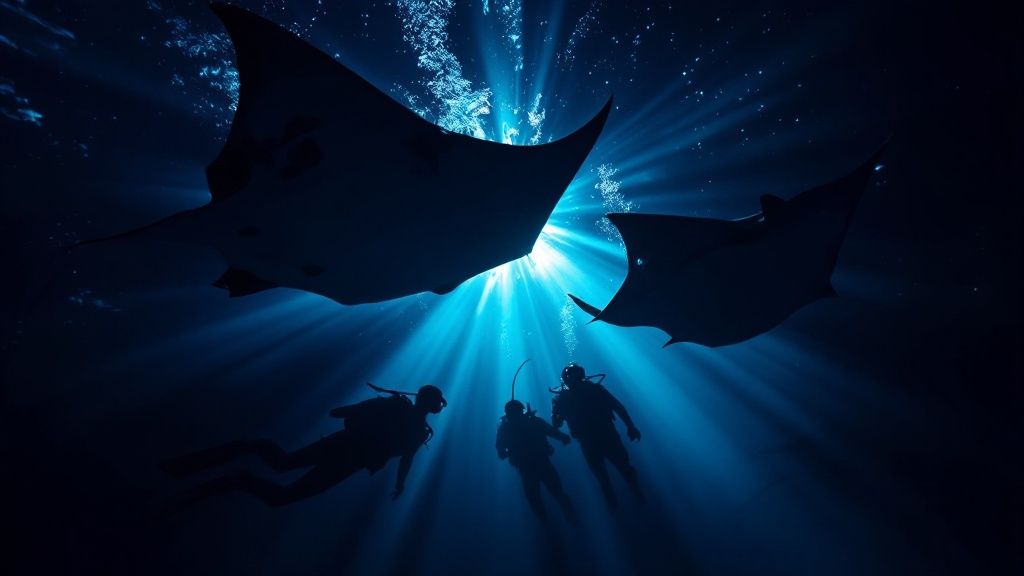
Diving or snorkeling with Kona's manta rays is more than just a tour; it’s a genuine privilege. I’ve seen this experience change people, and with a little preparation, you can make sure your trip is one you’ll never forget. It’s not just about showing up—it’s about knowing how to be a good guest in their underwater world.
First things first, let's talk about staying comfortable. Hawaii might be tropical, but getting out of the ocean at night can leave you with a serious chill. Trust me on this one: pack a warm jacket or a big, dry towel. You'll thank yourself later when you're warming up with hot cocoa on the boat ride back. And if you even think you might get seasick, take something for it before you leave the harbor. The last thing you want is a queasy stomach distracting you from the main event.
Practice Good Manta Manners
The whole experience hinges on one simple principle: be a passive observer. This is what we call "manta manners," and it's the most important thing to remember. The mantas trust us to be in their space, and how we behave directly affects how they interact with us.
Here’s what that looks like in the water:
- Hands Off, Always: Manta rays are covered in a protective mucus coating, kind of like a shield against infection. Touching them strips this layer away, making them vulnerable. Let them be the ones to get close.
- Find Your Spot and Stay There: Whether you’re a diver settled on the sand or a snorkeler holding onto the light board, hold your position. The mantas are incredibly graceful and can navigate tight spaces, but they need you to be predictable.
- Tuck Everything In: Keep your arms and legs close to your body. No sudden movements or flailing. Just relax and become part of the scenery. They’ll glide inches from you, but they are masters of their environment and won’t bump into you.
It might sound counterintuitive, but by being as still and boring as possible, you actually get a better show. The mantas learn you're not a threat, which makes them comfortable enough to perform their mesmerizing barrel rolls right in front of you.
Capturing the Moment Responsibly
Want to bring a camera? Go for it! But remember the golden rule: the mantas come first. A bright, white camera flash or video light can easily startle or disorient them.
Many seasoned underwater photographers use a red light. Why? Most marine animals don't see red light very well, so it allows us to get incredible footage without disrupting the natural behavior we came all this way to see.
This incredible wildlife encounter has become a cornerstone of tourism on the Big Island, bringing in around 80,000 visitors every year. The reason operators at Manta Village and Manta Heaven can boast 80-90% sighting rates is because they’re committed to these sustainable practices. It’s a perfect example of how Kona's manta tourism supports the local economy while protecting the animals.
Following these simple tips doesn't just make your trip better—it helps ensure the manta ray night dive in Kona remains a world-class, ethical experience for many years to come.
Choosing Your Adventure: Diving vs Snorkeling
One of the best things about the Kona manta ray experience is its accessibility. You absolutely don’t need a scuba certification to see the show, which is a huge plus. Both divers and snorkelers get a front-row seat, but the perspective you get is totally different.
Figuring out which one is right for you really just boils down to where you want to watch the underwater ballet from. Neither one is "better" than the other—they're just two unique ways to witness the same incredible event.
The Scuba Diving Experience
If you're a certified diver, this is the classic manta encounter you've probably heard about. After a short boat ride, you'll gear up and descend with your guide to a spot on the sandy bottom, usually somewhere between 30 and 40 feet down. The crew sets up powerful lights on the seafloor that shine straight up toward the surface.
This is where the magic happens. You’ll kneel or lie flat on the sand, and from this vantage point, you're looking up as the mantas swoop and glide directly overhead. They perform their famous barrel rolls just feet, sometimes mere inches, above you. It's a completely immersive experience, making you feel like a quiet observer in their world.
Settling in on the ocean floor allows you to be perfectly still and stable. You don't have to think about kicking or staying buoyant; you just get to watch the spectacle unfold. It's almost meditative.
The Snorkeling Adventure
Not a diver? No problem. The snorkeling option is just as breathtaking. You'll be given a wetsuit, mask, and snorkel, and you'll hold onto a custom-made floatation board. Think of it as a big, stable raft designed specifically for this.
These boards are outfitted with their own set of high-intensity lights that shine down into the water. This light attracts the plankton, which in turn brings the mantas right up to the surface to feed. You just float comfortably, watching them emerge from the darkness below. They often get close enough to touch the board (but remember, no touching!). For a deeper dive into this option, check out our complete guide on how to snorkel with manta rays in Kona.
Ultimately, you can't go wrong. Divers get to feel completely surrounded by the ocean, watching from below. Snorkelers get a stunning bird's-eye view of the action from the best seat in the house.
Discover More of Kona’s Underwater World
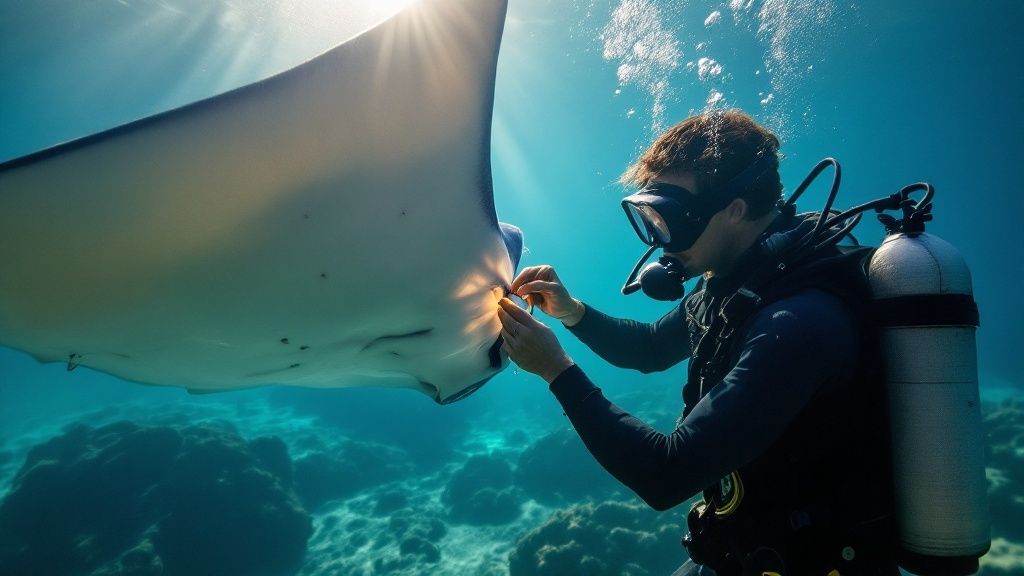
That incredible manta ray night dive in Kona? It’s an absolute must-do, but I’ll let you in on a local secret: it’s just scratching the surface of what this island offers underwater. The same volcanic magic that draws in the mantas has also created a jaw-dropping playground for daytime adventurers.
Picture this: you’re drifting along a sun-drenched coral reef bursting with color, or maybe you’re exploring ancient lava tubes and dramatic archways sculpted by centuries of raw volcanic power. These daylight dives reveal a completely different, vibrant side of Kona’s marine life.
While the mantas own the night, the daytime is a whole different world. In fact, many of the top snorkeling spots in Kona, Hawaii are just as spectacular with a tank on your back. Getting out there with a crew like Kona Honu Divers gives you a real feel for the incredible biodiversity of the Big Island.
Beyond the Manta Madness
If the thrill of a night dive has you hooked, Kona has another after-dark experience that’s a complete 180 from the manta show: the blackwater dive. This isn't about attracting marine life; it’s about dropping into the deep blue abyss yourself.
Tethered to the boat, you descend into the open ocean at night to witness the largest migration on Earth, as bizarre, bioluminescent creatures rise from the depths. Seriously, some of the things you’ll see look like they’re straight out of a sci-fi movie. It’s a humbling, surreal experience that hardcore divers travel the world for.
Whether you're exploring sunlit reefs, venturing into the deep for a blackwater dive, or seeking out challenging new environments, Kona’s diverse underwater landscape has something for every level of diver.
Kona Honu Divers are the pros who can guide you through it all. Their local knowledge is second to none, and their crew will make sure you see the very best of what this coastline has to offer. You just have to look at their reviews to see what people think.
From stunning scuba diving tours to the one-of-a-kind Kona blackwater dive, your next adventure is right here. For those with more experience under their belt, they also run an advanced dive tour that hits some of the more remote and technically demanding sites.
Your Kona Manta Dive Questions, Answered
It's completely normal to have a few questions swirling around before you book a once-in-a-lifetime experience like the manta ray night dive in Kona. We get it. So, let’s clear up some of the most common things people ask, so you can book with total peace of mind.
Is the Manta Ray Night Dive Actually Safe?
Yes, it's incredibly safe, and here’s why. First, the professional operators who run these tours, like Kona Honu Divers, are absolute pros. They live and breathe ocean safety. Every tour starts with a thorough safety briefing, and you'll have certified Divemasters or instructors in the water with you every step of the way.
But what about the mantas themselves? They're often called "gentle giants," and it’s the perfect description. These magnificent creatures are filter feeders—they don’t have teeth, stingers, or barbs. They're curious and graceful, but completely harmless to humans. It’s one of the safest big animal encounters you can have anywhere in the ocean.
When’s the Best Time of Year to See Manta Rays in Kona?
This is one of the best parts about diving in Kona: there is no "off-season" for mantas. The local population lives here year-round and doesn’t migrate, which means your chances of an incredible encounter are always high.
Seriously, the success rate for sightings hovers above 90% all year long. The water stays comfortably warm too, typically ranging from the mid-70s to the low-80s Fahrenheit. Just pick a date that works for you.
Do I Need to Be a Certified Scuba Diver?
Not at all! That's the beauty of this experience—it’s designed for almost everyone. Tour operators have perfected two different ways to witness the underwater ballet:
- For Certified Scuba Divers: You'll get to descend to the ocean floor, settle in, and watch the mantas soar and loop right above your head.
- For Snorkelers: You'll float comfortably at the surface, holding onto a specially designed light board. The light attracts the plankton, and the mantas glide up from the depths to feed just inches below you.
Both options provide a front-row seat to the action. You truly can't go wrong with either choice.
What if We Don't See Any Manta Rays?
It's a valid question. While sightings are incredibly consistent, we are dealing with wild animals in their natural habitat, so a 100% guarantee is never possible.
That said, the best companies have what they call a "manta guarantee." For instance, Kona Honu Divers knows how much this experience means to people. If your tour doesn't see any mantas, they'll let you come back on another night for free (subject to availability). When you're ready to book your manta ray dive tour, just double-check the operator's specific policy.
Ready to experience one of the most magical nights of your life? Book your adventure with Kona Honu Divers and prepare to be amazed.