
Of all the incredible dives you can do around the globe, the Kona manta ray night dive consistently lands at the top of the list. It’s an otherworldly experience, a chance to see dozens of giant manta rays swooping and dancing in an underwater ballet just inches from your face as they feed on plankton.
If you're heading to the Big Island, this isn't just another activity—it's an absolute must-do.
Your Guide to the Kona Manta Ray Night Dive
Welcome to your guide for one of the most magical underwater encounters this planet has to offer. For anyone chasing a truly awe-inspiring adventure, the Manta Ray Night Dive in Kona, Hawaii, delivers a memory that will stick with you for a lifetime. So, what makes this one dive so special?
The magic happens at the intersection of biology and geography. The Kona coast is the perfect natural amphitheater for this nightly show, thanks to its clear, warm waters and a big, reliable population of resident reef manta rays. These gentle giants show up to the same spots every night for one simple reason: dinner is served.
Why Kona is a Manta Ray Hotspot
This whole phenomenon really started getting noticed back in the 1990s when divers realized mantas were flocking to their underwater lights. The light attracts microscopic plankton—the mantas' favorite meal—and a brilliant feeding frenzy was born. The unique volcanic geography of the Kona coast creates the perfect conditions for these plankton blooms, turning the area into a five-star restaurant for rays. You can dive deeper into the history of the Kona manta ray night dive on konahonudivers.com.
The odds are overwhelmingly in your favor, too. The sighting success rate on these tours is often better than 90%, which is practically unheard of for a wild animal encounter.
Here’s a quick snapshot of what you can expect:
- Serious Hang Time: You’ll be in the water for about 45 minutes, giving you plenty of time to just float and watch the show.
- Truly Gentle Giants: Many of the local mantas here boast wingspans of over 12 feet. Seeing that up close is just breathtaking.
- Accessible for Everyone: The dive sites are shallow, typically between 30 to 40 feet, making it a comfortable experience for certified divers of all levels.
This guide will cover everything you need to know to get ready for this incredible experience, from what to bring and what happens on the boat to how to have an ethical and unforgettable dive. Let's get you ready for an adventure you'll be talking about for years to come.
What Really Happens on a Manta Ray Night Dive
Picture this: you’re floating in the warm, dark Pacific, and suddenly, a graceful giant with a massive wingspan performs an underwater ballet just inches above your head. That's the heart of a manta ray night dive in Kona, and it’s an experience that unfolds in stages, with the magic building every step of the way.
It all kicks off right at the dock. Before you even smell the sea salt, you'll get a thorough pre-dive briefing from the crew. They’ll cover the safety essentials, but more importantly, they'll teach you the golden rule of manta etiquette: observe only, never touch. This isn't just about being polite; it's crucial for protecting the mantas' delicate, slimy coating that acts as their shield against infection. This chat ensures everyone is on the same page, ready to be a respectful visitor in their world.
The Sunset Voyage
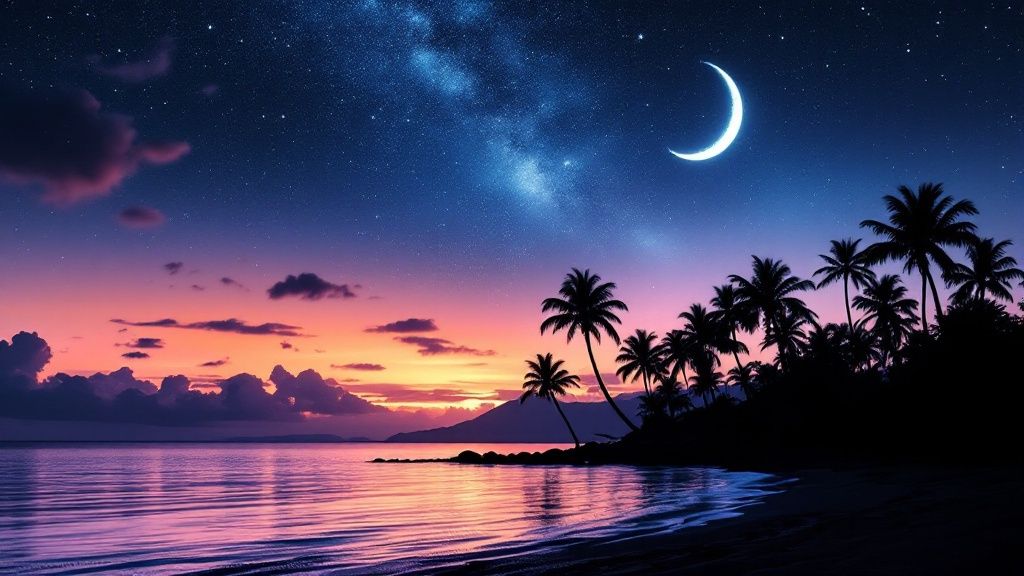
Once the briefing's done, you'll hop aboard the boat and motor out just as the Hawaiian sun starts to dip below the horizon, splashing the sky with fiery oranges and deep purples. This isn't just a taxi ride to the dive site. It’s your chance to unwind, take in the epic Kona coastline, and feel the buzz of anticipation from everyone on board. The crew will likely start sharing stories about the local manta celebrities—each one known by the unique spot patterns on their belly—which makes the whole thing feel incredibly personal before you've even seen a ray.
As darkness finally blankets the ocean, you'll arrive at the spot. The world above goes quiet, but a whole new one is about to light up below.
The Underwater Theater
You'll gear up under the stars and take that giant stride into the calm, inky water. Your divemaster will lead the way down to a sandy patch on the ocean floor, usually around 30-40 feet deep. Down there, everyone finds a spot and settles in, forming a circle around a powerful set of lights often called the "campfire." These lights shoot a brilliant beam straight up, creating a column of light that's about to become the star of the show by attracting the evening's first guests: plankton.
Before you know it, that beam of light is a swirling, dense cloud of tiny sea creatures—a dinner bell for manta rays. You’ll get your buoyancy dialed in, lie back on the sand, and just… wait. The only sounds are the rhythmic bubbles from your regulator and the quiet hum of the ocean.
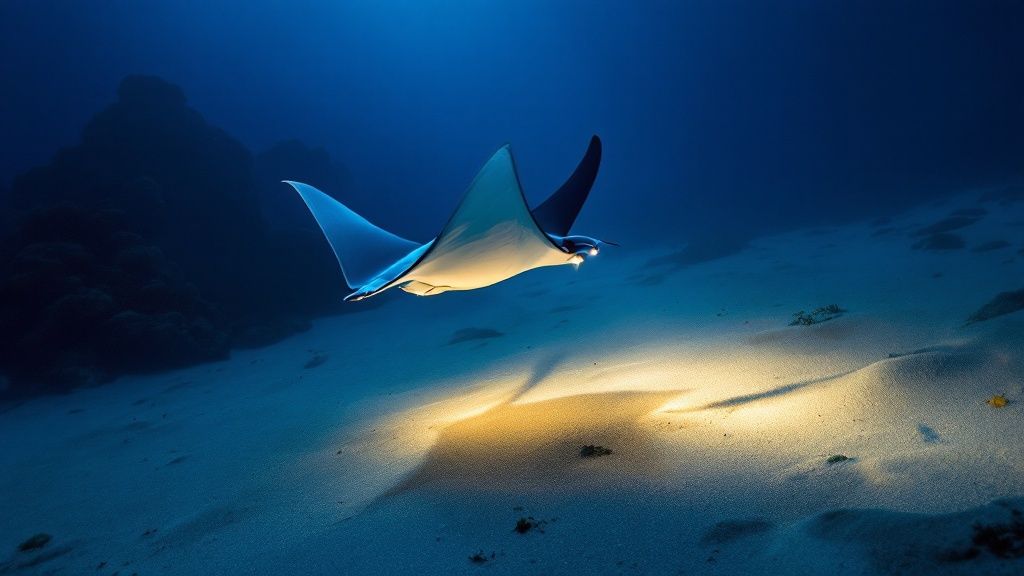
And then it happens. A massive, dark shape materializes from the blackness, gliding effortlessly into the light. The first manta has arrived for dinner. Soon, another follows, and then another, until you're surrounded. They swoop and barrel-roll through the plankton, their huge mouths wide open. They soar right over your head, so close you can feel the gentle push of water from their powerful wings. You’re not just watching them feed; you’re literally part of the dining room furniture. This is the core of the manta ray dive tour—that incredible feeling of being a silent, privileged guest in a wild and magnificent spectacle.
Choosing the Right Manta Ray Dive Operator
Let's be honest, the single biggest decision you'll make for your manta ray night dive in Kona is choosing who to go with. A truly great dive operator does so much more than just ferry you out to a spot. They are the difference between a good dive and a mind-blowing, unforgettable experience.
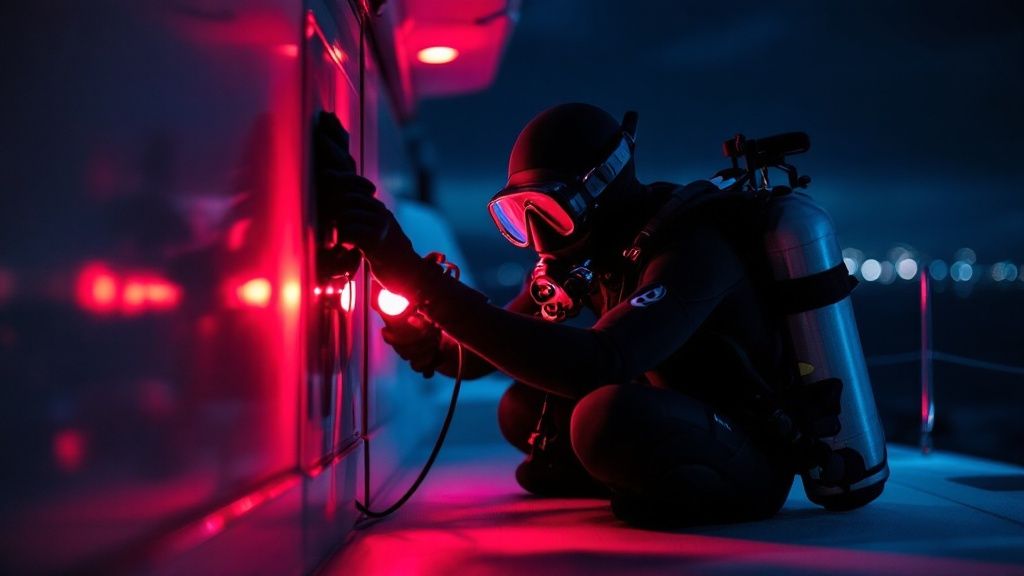
So, what should you look for? There are a few absolute must-haves. First and foremost, you want a company with a squeaky-clean safety record. You also want experienced guides who genuinely love what they do and comfortable, well-cared-for boats.
But the real secret sauce? Find an operator who is seriously committed to manta ray conservation. This isn't just about marketing fluff on a website; it’s about their actions on the water. The best companies provide detailed briefings on passive interaction and follow strict rules to ensure the dive has a minimal impact on the mantas. You can get a better sense of how to have a safe and respectful manta ray dive on konahonudivers.com.
Why Kona Honu Divers Stands Out
When you ask seasoned divers about the manta ray night dive, one name comes up again and again: Kona Honu Divers. They've built their stellar reputation on a solid foundation of safety, incredible customer service, and a palpable passion for Hawaii's marine life. Their crew members are true pros who do more than just point things out—they share their deep knowledge and love for the ocean.
"Diving with mantas is one of the most satisfying things a person can do in the water. It’s impossible to describe the feeling of watching a massive fish the shape of a stealth bomber coming into vision." – Samuel Beckett, Planet Dive
What really sets Kona Honu Divers apart are the little things that make a huge difference. They keep their dive groups small on purpose. This means you get a much more personal, less crowded view of the action, and the mantas get more space to do their thing. It’s a win-win.
This approach also guarantees you'll get more one-on-one time with your guide. Plus, with top-notch rental gear and a serious commitment to maintenance, you can relax and focus on the incredible underwater ballet without worrying about your equipment.
Ultimately, going with a company like Kona Honu Divers is an investment. You're not just booking a dive; you're supporting a high-quality, sustainable adventure that puts the well-being of the magnificent creatures you've traveled to see first. The glowing reviews they consistently receive speak for themselves.
How to Prepare for Your Kona Manta Dive
A little preparation goes a long way in making your manta ray night dive in Kona truly unforgettable. When you know what to bring and what to expect, you can kick back, relax, and focus on the main event—the incredible underwater ballet of the manta rays. Luckily, getting ready for this adventure is pretty straightforward.
First off, let's talk about what it takes to join the fun. All you need is a basic Open Water certification. This isn't some deep, technical dive. The real challenge, if you can call it that, is having solid buoyancy control. You'll be settled on the ocean floor for about 45 minutes, so being able to stay put without stirring up sand is a big deal for you, the other divers, and the mantas.
If it's been a while since you've been underwater, a quick refresher course is a great idea. It’s the perfect way to build your confidence and make the whole experience that much smoother.
What to Bring With You
Packing the right stuff is all about staying comfortable, both in the water and on the boat. While we handle the heavy gear, a few personal items will make your trip a whole lot better.
Here’s a quick rundown of the essentials:
- Swimsuit and Towel: The easiest approach is to just wear your swimsuit under your clothes to the marina. And don't forget a towel for afterward!
- Warm, Dry Clothes: This is a big one. Even after a warm day, the boat ride back can get surprisingly chilly once the sun goes down and you're wet. A hoodie or windbreaker makes all the difference.
- Reef-Safe Sunscreen: For any tours heading out before sunset, make sure you're protected with sunscreen that’s safe for our fragile coral reefs.
- Seasickness Medication: If you even think you might get seasick, take your preferred remedy well before you step on the boat. It's much more effective when taken proactively.
We can't stress this enough: a full-length wetsuit is your best friend on this dive. You're going to be fairly still for a long time, and the water does get cool after dark. Staying warm is the secret to truly enjoying every moment of the show.
To help you get organized, we've put together a simple checklist so you can be sure you have everything you need for a fantastic and comfortable experience.
Manta Ray Night Dive Checklist
| Item Category | Essential Items | Why It's Important |
|---|---|---|
| Clothing | Swimsuit, towel, warm layers (hoodie/jacket) | Arrive ready to go and stay warm and cozy on the boat ride back after your dive. |
| Health & Safety | Reef-safe sunscreen, seasickness medication | Protects both your skin and the ocean's ecosystem, and prevents motion sickness from ruining the fun. |
| Personal Items | Reusable water bottle, small dry bag, camera | Stay hydrated, keep your valuables safe and dry, and capture unforgettable memories. |
| Dive Documents | Certification card, logbook (optional) | Proof of certification is required to dive. A logbook is great for recording the experience. |
Packing these simple items ensures that all the small details are handled, allowing you to relax and fully immerse yourself in the magic of the manta ray night dive.
Gear, Logistics, and Booking
Don't worry about hauling heavy equipment; we provide the tanks, weights, and a powerful dive light. That light is your front-row ticket, attracting the plankton that brings the mantas right to you. If you want a more detailed look at the equipment we use, you can learn more about the gear you will need for your Kona diving adventure.
One final, but critical, piece of advice: book your tour in advance. The manta ray night dive is one of the most sought-after experiences on the Big Island. Spots fill up fast, especially during peak seasons, so locking in your reservation early means you won't miss out.
Meet Kona’s Gentle Giants
The Kona manta ray night dive isn't just another item to tick off a bucket list. It's a genuine, up-close encounter with one of the most intelligent and awe-inspiring creatures in the ocean: the resident reef manta ray, or Manta alfredi.
These are true gentle giants. People often confuse them with stingrays, but mantas are completely different—they have no stinger, no barb, and no teeth, making them entirely safe to be around. What they do have is sheer, breathtaking size, with many of the local mantas sporting wingspans that stretch over 15 feet.
A Unique Underwater Fingerprint
So, how do we tell them apart? It's one of the coolest parts of the experience. Every single manta ray has a unique pattern of black spots on its white belly. Think of it like a human fingerprint.
This allows researchers and our dive guides to identify and name individual rays, tracking them year after year. It turns a great dive into a personal one when your guide points out a local celebrity like "Big Bertha" or "Lefty" by their distinctive markings. You're not just seeing a manta ray; you're meeting a specific member of a wild, local community. Our guide on diving with manta rays in Hawaii dives deeper into this amazing relationship.
The Famous 'Campfire' Effect
Why is this dive so reliable? It all comes down to a simple but brilliant setup we call the 'campfire' effect. We place powerful, bright lights on the seafloor, pointing them straight up. This creates a massive beacon in the dark water.
This light acts like a giant magnet for plankton, the tiny marine organisms that manta rays love to eat. The plankton swarm to the light, creating a thick, soupy buffet. Over the decades, the mantas have learned that our lights mean an easy meal, so they show up almost every night to feast. You'll see them perform graceful, looping barrel rolls as they filter the plankton-filled water.
This learned behavior is what makes the Kona coast the most consistent place in the world to see manta rays. And the data backs it up. A 2013 study identified over 200 unique individuals here and reported a sighting success rate around 85-90%. It’s a pretty sure bet. For a closer look at the science, you can explore the comprehensive annual manta ray study.
When you understand how this all works, the dive becomes so much more than just a tour. It’s a front-row seat to a beautiful, symbiotic relationship between humans and nature. And by joining us, you’re helping support the conservation efforts that protect Kona's incredible manta ray population for years to come.
Frequently Asked Questions
It’s completely normal to have some questions before diving in for a big adventure like this. We get it! To put your mind at ease and get you properly excited, we’ve put together answers to the most common questions we hear from fellow divers and snorkelers.
We want you to feel totally confident and ready for what will likely be one of the most memorable nights of your life.
Is the Manta Ray Night Dive Safe?
Yes, absolutely. Safety is paramount, and when you go with a seasoned crew like Kona Honu Divers, you're in great hands. First off, the manta rays themselves are completely harmless. They're often called gentle giants for a reason—they have no teeth, no barbs, and no stingers. They are simply there to eat plankton.
The dive itself is also designed to be as safe and controlled as possible.
- It's a shallow dive. You’ll be in about 30-40 feet of water, which is well within basic recreational limits.
- You stay in one spot. This isn't a typical reef dive where you're swimming all over the place. You'll settle on a sandy patch, which minimizes risks and lets you focus on the show.
- You're never alone. Our divemasters give a thorough briefing before you hit the water and are right there with you the whole time, making sure everything runs smoothly.
When Is the Best Time of Year to Go?
This is the best part: there is no bad time! The Kona manta ray night dive is incredible year-round. Our local reef manta population doesn't migrate, so they are here every single month. We see a success rate of over 90% for sightings, no matter the season.
The real key is the light we bring, which attracts the plankton, and the mantas follow their food source every night. While a rare storm can affect ocean conditions, your odds of an amazing encounter are fantastic any time you visit the Big Island.
Do I Need to Be a Certified Diver?
You only need to be certified if you want to scuba dive. To join the dive group on the ocean floor, an Open Water certification (or equivalent) is the minimum requirement.
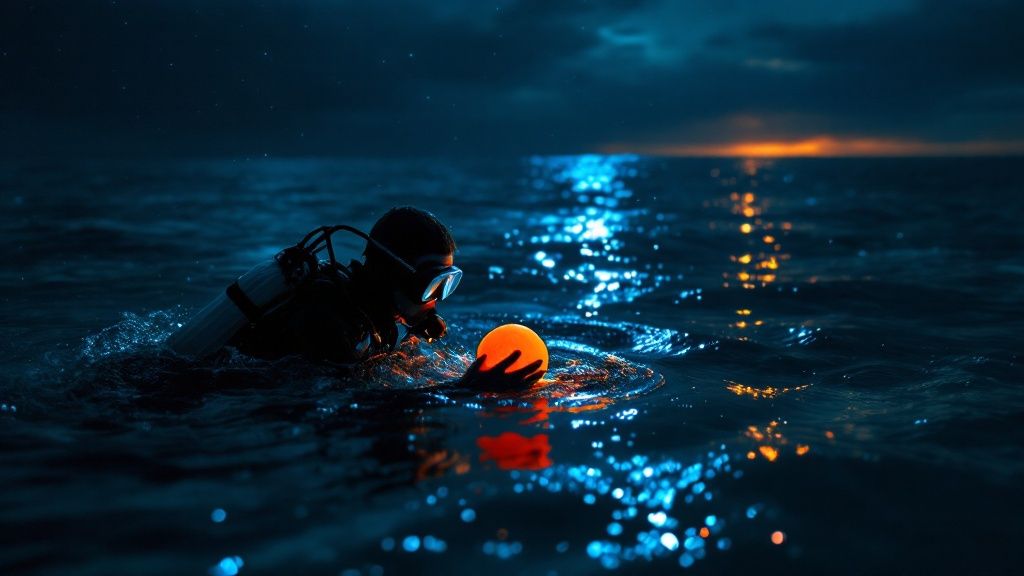
But you absolutely do not need to be a diver to experience the magic! Snorkeling with the mantas is just as spectacular. Kona Honu Divers has an awesome setup where snorkelers hold onto a custom-built light board that floats on the surface. The lights draw the plankton up, and the mantas come right to the top to feed, gliding just inches below you. It's a fantastic option for families or anyone who isn't certified.
You can check out both the dive and snorkel tour options on konahonudivers.com to see which fits you best.
What Other Unique Dives Can I Do in Kona?
If the manta dive gets you hooked on Kona's underwater world (and it probably will!), there's so much more to explore.
For another truly unique night-time experience, the Kona Blackwater Dive is out of this world. You drift in the deep open ocean at night, tethered to the boat, and watch as alien-like, bioluminescent creatures rise from the abyss. It’s a completely different kind of thrill.
For more experienced divers, our advanced dive tours can take you to deeper reefs, ancient lava tubes, and other amazing underwater formations. And of course, the daytime diving here is world-class, filled with vibrant corals and tons of marine life. Have a look at the full list of incredible diving tours in Kona on konahonudivers.com.
Ready to witness the magic for yourself? Join Kona Honu Divers for an unforgettable night with Kona's gentle giants. Book your Manta Ray Night Dive today!