
The manta ray night dive in Kona is famous for one simple reason: a massive, reliable gathering of plankton. Powerful lights placed on the seafloor act like a magnet, drawing in clouds of these microorganisms, which in turn creates an all-you-can-eat buffet for the local manta ray population.
For divers and snorkelers, this means witnessing an incredible underwater ballet. You get a front-row seat as these gentle giants swoop and glide, feeding on the plankton illuminated by the lights. It's one of the most consistent and jaw-dropping marine encounters you can find anywhere on the planet.
What Makes Kona’s Manta Ray Dive a Bucket-List Experience?
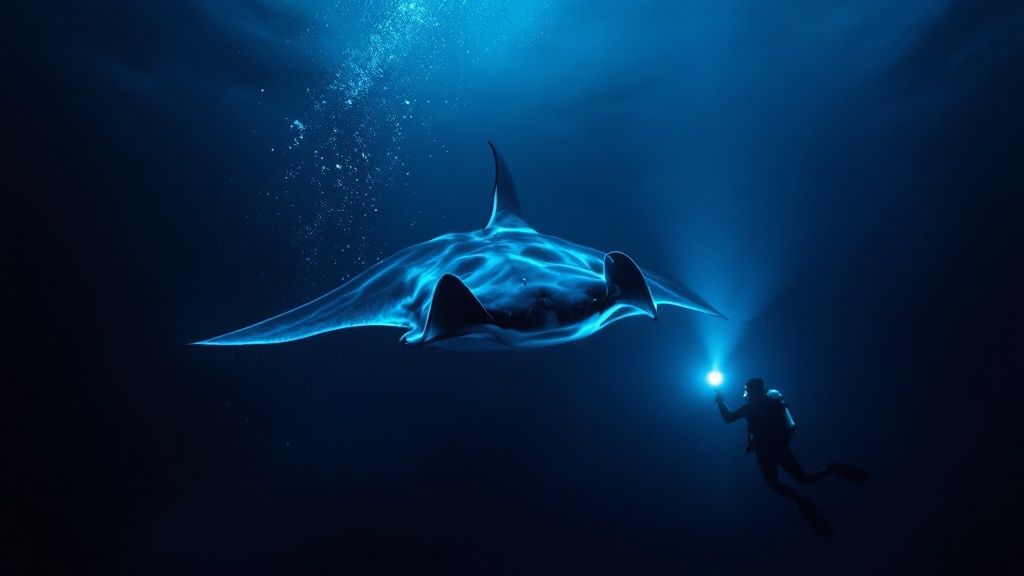
Picture this: you’re floating in the dark, warm waters of the Pacific, and suddenly, enormous, graceful shadows begin to soar just inches over your head. This isn't CGI—it's the real-life magic of the Kona Manta Ray Night Dive, an experience that consistently lands on "world's best dives" lists.
So, why here? What makes this one spot on the Big Island so special? It's really a perfect storm of biology and geography. The coastline's underwater lava rock formations create calm, sheltered bays where plankton—the mantas' favorite food—naturally gathers.
An Unforgettable Underwater Show
The whole thing started by accident decades ago when a hotel pointed its lights at the ocean, unknowingly creating a beacon for plankton. The incredibly smart local mantas quickly figured out this was an easy meal. Dive operators caught on and began replicating this phenomenon, creating a "campfire" of lights on the ocean floor to draw in a nightly feast for the mantas and put on an unforgettable show for divers.
This is the secret sauce behind the dive's legendary consistency. The Kona manta ray dive has an absurdly high success rate, with sightings on over 85-90% of trips. That means you have a nearly guaranteed chance of an incredible encounter. Dive sites like Garden Eel Cove are perfect for this, with shallow depths of around 30-40 feet, letting divers enjoy the show for 45-60 minutes. You can get more insights on this world-class dive from the experts at Kona Honu Divers.
Experience the Magic with Kona Honu Divers
Seeing this spectacle for yourself is one thing, but doing it with a professional, eco-conscious guide makes all the difference. Kona Honu Divers has built a stellar reputation as a top operator for the manta ray night dive in Kona, focusing equally on guest safety and the well-being of the mantas.
Their experienced crew knows the delicate balance needed to run these tours responsibly. They teach every diver and snorkeler how to be a passive observer, which allows the mantas to go about their natural feeding behavior completely undisturbed. It’s this commitment to sustainable tourism that helps protect this amazing experience for years to come.
Choosing a great operator elevates the trip from just a cool dive to a genuine connection with nature. You aren't just watching animals; you're being a respectful guest in their home. Trust me, it’s an experience that will stick with you long after you've dried off.
How to Choose the Best Manta Ray Tour Operator
Picking the right tour operator can truly make or break your Kona manta ray night dive. It’s the difference between a good dive and an absolutely unforgettable, once-in-a-lifetime experience.
The details really matter here—things like guide experience, boat size, what gear is included, and, most importantly, their commitment to conservation.
One of the first things I look for is an operator with Manta Ray Green Listed status. This isn't just a fancy sticker; it's a clear signal that they’re serious about protecting these incredible animals and their habitat.
Key Questions to Ask Before You Book
When you're shopping around, don't be afraid to dig a little deeper. A few pointed questions can reveal a lot about the kind of experience you'll have.
How many divers are assigned to each guide? A smaller group, say 6 to 8 divers, usually means you get more personalized attention and a less crowded view of the action.
Also, ask about the nuts and bolts. Does the price include tanks, weights, a dive light, and other gear rentals? Knowing this upfront helps you avoid surprise fees and logistical headaches.
And, of course, what's their approach to safety? A professional outfit will have no problem walking you through their safety briefings and emergency plans.
A few things to keep at the top of your list:
- Green List Accreditation: This is your best bet for ensuring you're diving with a company that prioritizes sustainable, respectful wildlife encounters.
- Guide Experience: Seasoned guides offer more than just a tour; they share incredible knowledge, point out specific mantas (they know them by name!), and keep you safe.
- Boat Amenities: Little things like a warm freshwater shower after the dive, snacks, and a comfortable place to sit can make a huge difference on a cool night.
- Group Size: Do you want an intimate experience or a more social, high-energy vibe? The number of people on the boat will shape the whole feel of the trip.
I always recommend spending some time reading recent reviews. Hearing directly from other divers is one of the best ways to get a feel for what an operator is really like.
For a head start, check out our Top 10 Kona Diving Companies Ranked guide for more detailed operator insights.
Comparing Dive Experiences: Small vs. Large Groups
The size of your group directly impacts everything from visibility to the overall vibe underwater.
Picture this: you're on a small boat with just 6 other divers. The water is quieter, there are fewer bubbles obscuring your view, and you feel like you have a front-row seat as the mantas glide just inches above your head.
Now, imagine a larger boat with 20 divers. The atmosphere on the boat will be lively and social, which can be fun, but underwater you'll be sharing the view with a lot more people and their lights. Neither is right or wrong—it just depends on what you're looking for.
Operator Comparison Table
To make your decision a little easier, I've put together this table. Use it as a checklist to compare the key features of different operators before you hand over your credit card.
Key Considerations When Choosing a Manta Ray Dive Operator
| Feature | What to Look For | Why It Matters |
|---|---|---|
| Manta Ray Green Listed | Official certification confirming sustainable tour practices. | This ensures your dive contributes to protecting the mantas and their critical feeding grounds for years to come. |
| Guide Experience | Look for guides with years of experience specifically at the Kona sites. | An expert guide can transform your dive from passive observation to an engaging, educational experience. They know the mantas' behaviors and can ensure everyone's safety. |
| Group Size | Ideally, 6–8 divers per guide. | Smaller groups mean a more personal dive, less crowding around the "campfire" of lights, and a better chance for incredible, unobstructed views. |
| Boat Comfort & Amenities | Warm showers, post-dive snacks, and plenty of dry, shaded seating. | These creature comforts are crucial for staying warm and comfortable both before and after your night dive, making the whole trip more enjoyable. |
| Inclusions | Confirm that tanks, weights, lights, and any needed rental gear are included. | This helps you avoid unexpected costs and simplifies your packing and planning. No one wants a surprise bill at the end of a great dive. |
An experienced guide does more than just lead the dive. They can point out the unique spot patterns on a manta’s belly, which are like fingerprints, helping researchers identify and track individuals. These little insights are what enrich the experience beyond just seeing the animals.
A Small Boat Story
I remember one trip with a smaller charter where our guide, who had been diving that site for a decade, noticed the current was shifting slightly. He had us adjust our positions by just a few feet. Moments later, three massive mantas started doing barrel rolls right in the new spot. His local knowledge gave us an unbelievable show.
"Choosing an operator committed to both safety and sustainability isn't just responsible—it's your ticket to a dream dive."
Real-World Operator Examples
If you prefer that intimate, small-group feel, a company like Kona Honu Divers is often praised for its eco-conscious approach and personalized trips.
Another highly respected operator is Jack’s Diving Locker, which has been around for decades and is known for its incredible team of experienced, knowledgeable guides.
For those who prioritize a bit more space and comfort, Big Island Divers often gets high marks for its large, well-equipped boats and top-notch rental gear.
Ultimately, whether you value the personal touch of a small boat or the amenities of a larger vessel, weighing these factors will help you find the perfect match.
Don't Forget to Check Gear Policies
Before you book, confirm what kind of gear is provided. A good, powerful dive light is essential for this dive, so ask if they provide high-quality lights and if extension poles are available to help attract plankton.
Renting your BCD, regulator, and wetsuit on board can also save you a lot of hassle and luggage space. Just make sure you verify their safety standards, including access to backup lights and a comprehensive first-aid kit.
Final Thoughts on Your Budget
Prices for the manta ray dive can vary quite a bit, and you generally get what you pay for. A higher price tag often reflects a smaller group size, a more experienced crew, or better boat amenities.
Decide what your priority is. Are you looking for a no-frills, budget-friendly way to see the mantas, or are you willing to invest a bit more for a premium, personalized experience? Answering that question will be the final step in guiding you to the right operator for an epic Kona adventure.
Getting Ready for Your Manta Night Dive

A little prep work can make all the difference between a good dive and an absolutely epic one. When you're heading out for the manta ray night dive in Kona, thinking ahead means you can show up at the dock relaxed, confident, and ready for the magic to unfold.
One thing that catches almost everyone by surprise is the boat ride back. You’ve just been in warm tropical water, but once you surface, the night air and wind can make you feel surprisingly cold. Trust me on this one: pack a dry sweatshirt or a windbreaker and a towel. You will be so glad you have them when you’re sipping hot cocoa on the way back to the harbor.
Part of what makes this dive so special is the resident manta population. We have around 200 uniquely identified manta rays that call the Kona coast home year-round. They're identified by the unique spot patterns on their bellies, which are like human fingerprints. It's not uncommon to see as many as 20 different individuals on a single dive, each with its own "name" and personality!
What to Bring on the Boat
Besides your warm layers, a few other items will make your trip go smoothly. Don’t forget the basics you’d bring on any dive boat, like your certification card.
Here’s a quick-and-easy checklist of things you won't want to forget:
- Warm, Dry Clothes: Seriously, a hoodie or jacket is a must for the ride home.
- Reusable Water Bottle: Hydration is key, even when you’re surrounded by water.
- Certification Card: Every certified diver needs to show their card, so don't leave it at the hotel.
- Reef-Safe Sunscreen: For the sunset dives, make sure to apply it well beforehand.
- Personal Items: Any medication you might need, plus a small dry bag for your phone and keys.
If you're new to night diving, it’s natural to feel a little apprehensive. But this isn't a dive into a dark, spooky abyss. Think of it more like an underwater theater—a brightly lit, stationary experience where the show comes to you.
Tips for Underwater Photographers
Photographing these gentle giants is an incredible experience, but it requires a bit of strategy. To get those jaw-dropping shots, you’ll want to have the right setup and, just as importantly, the right mindset.
If you’re aiming for high-quality photos, an external strobe is your best friend. It will help light up these massive animals properly and avoid the backscatter that often ruins shots taken with an internal flash.
Start with a wide-angle lens to capture the full scale of the mantas. You'll also want to play with a slower shutter speed to show their graceful movement and a higher ISO to work with the low-light conditions. The most important tip? Stay put. Let the mantas come to you. Chasing them not only stresses the animals but also guarantees blurry, disappointing photos.
For a full rundown on gear, you can check out a great guide about the gear you will need for your Kona diving adventure. Getting your equipment and approach dialed in beforehand lets you relax, enjoy the moment, and come home with some truly stunning images.
What to Expect During Your Underwater Encounter
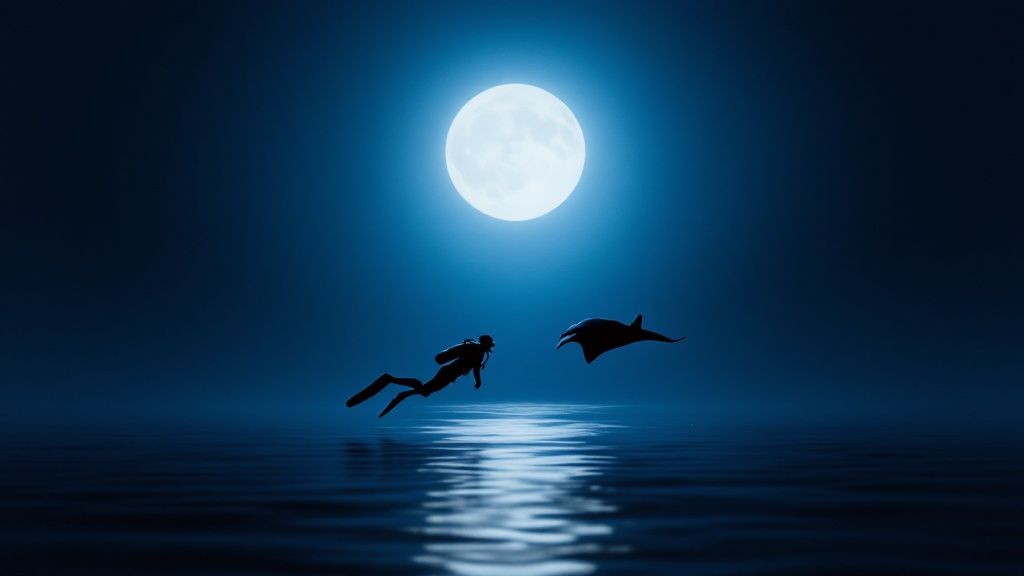
The boat ride out is filled with nervous excitement, but the real magic starts to unfold during the pre-dive briefing. Your dive guide will lay out the whole plan, making sure everyone is crystal clear on the safety procedures and how the dive will work. This isn't your typical swim-around-and-explore kind of dive; it's more like having front-row seats to a beautifully choreographed show.
You'll hear the crew talk about creating the "campfire"—a collection of powerful lights placed on the seafloor. These beams shoot up into the darkness, attracting swarms of tiny plankton, which happen to be the mantas' absolute favorite food. It's this concentrated, all-you-can-eat buffet that makes the manta ray night dive in Kona so reliably amazing.
Your job is pretty simple but absolutely vital. After making your way down, you’ll be guided to a spot on the sandy bottom, usually arranged in a semi-circle with the other divers. From there, you just need to stay put and point your dive light straight up, adding your beam to the glowing plankton magnet.
The Arrival of the Gentle Giants
And then, you wait. The first few minutes are pure anticipation as you watch the plankton dance in the beams of light. Then, out of the blackness, a huge, silent shadow glides into view. It’s a moment that genuinely stops you in your tracks.
The mantas are here to feed, and they put on a spectacular underwater ballet just inches above your head. You’ll see them swoop, bank, and perform breathtaking barrel rolls with their giant mouths wide open to filter the plankton. It’s an up-close-and-personal encounter that feels completely surreal.
This nightly feeding ritual is so consistent that it’s drawn serious scientific attention. In fact, between 2009 and 2014, researchers were out at the main Kona dive sites every single night, tracking the local manta population and studying their habits. You can learn more about their findings and other fascinating manta ray statistics.
The Golden Rule: Passive Observation
The single most important rule for this entire experience is passive observation. This is the key to a safe and respectful dive for both you and the mantas.
To make sure everyone—and every manta—has a good time, just keep these simple guidelines in mind:
- Look, Don't Touch: Manta rays are covered in a delicate, protective mucus layer. Touching them can rub it off, which makes them vulnerable to skin infections.
- Stay Put: Don't be tempted to chase or swim after a manta. Let them come to you; they are in control of the entire interaction.
- Give Them Space: Try not to block their flight path. A good tip is to time your exhale so you aren’t blowing a "bubble curtain" right in their face as they glide overhead.
By following these rules, you're being a responsible guest in their house. You're helping to protect this incredible natural wonder and ensuring the mantas continue to trust divers and return night after night. It’s what allows this magical encounter to happen in the first place.
Protecting the Mantas Through Responsible Diving
The manta ray night dive in Kona isn't just another item to tick off your bucket list; it's a profound interaction with a protected species in its own home. When you slip into that water, you’re a guest. It's a privilege that carries a real responsibility to keep these gentle giants safe and their environment undisturbed. The future of Kona's resident manta population truly depends on the choices we make as divers and the operators we support.
Sustainable tourism is what makes this entire experience possible. To keep this incredible encounter going for years to come, everyone involved has to commit to strict responsible tourism practices and nature conservation, a principle that's becoming more critical worldwide as we learn to manage our impact on delicate ecosystems.
Following Manta-Safe Guidelines
If there's one rule to remember, it's this: be a passive observer. Manta rays have a thin, protective mucus layer that acts as a shield against harmful bacteria. If you touch them, you can strip away that coating and leave them open to nasty infections. That’s why the "look, don't touch" rule is absolute. No exceptions.
Here’s what a respectful encounter looks like in practice:
- Hold Your Spot: If you're diving, stay on or very near the sandy bottom. Snorkelers, you're on the surface. This creates a wide-open "ballroom" in the middle of the water column for the mantas to do their thing.
- Never Chase or Block: It's tempting, but don't swim after a manta or get in its way. Let them be in control. If they want a closer look, they'll come to you.
- Watch Your Bubbles: As a diver, be mindful of your breathing. Try not to exhale a massive cloud of bubbles right into a manta’s face as it glides inches above you. It’s just good manners.
Following these simple rules helps create a low-stress buffet for the mantas, allowing them to feed just as they would if we weren't there. If you want to learn more about being a truly courteous underwater guest, our guide on responsible and considerate diver etiquette is a great place to start.
The Power of Citizen Science
Believe it or not, your dive can actually help protect these animals through citizen science. The unique spot patterns on a manta ray’s belly are just like a human fingerprint—no two are the same. This allows researchers to identify and track individual mantas over their entire lives.
When you capture a clear photo of a manta’s underside and submit it to a research organization, you're contributing vital data. Scientists use these photos to monitor the population's health, track their movements, and understand their life cycles, which all leads to better conservation strategies.
Every responsible diver becomes an ambassador for the ocean. Your actions underwater have a direct impact on the future of this amazing experience, ensuring it remains for generations to come.
Choosing an operator that is "Manta Ray Green Listed" is a powerful statement. It shows you're supporting a business that's committed to the highest standards of conservation and diver education. Your choice of a dive company is a vote for sustainable tourism, reinforcing just how important it is to protect these magnificent creatures.
Your Manta Ray Night Dive Questions Answered
Thinking about booking the manta ray night dive in Kona? You probably have a few questions. We've been there. Let's walk through some of the most common things divers and snorkelers ask before they take the plunge. This should help you lock in your plans and feel totally prepared for the adventure.
Do I Have to Be a Certified Diver?
This is easily the most frequent question we hear, and the answer is a little bit of both yes and no.
To join the scuba group on the ocean floor, you absolutely need to be certified as an Open Water diver or have an equivalent rating. No exceptions there.
But here's the great news: you don't have to be a diver to have an incredible experience. Nearly every operator, including us at Kona Honu Divers, offers a snorkeling option. You'll hang onto a specially designed light board at the surface, which attracts the plankton. The mantas often come right up to feed just inches below you. It's an equally breathtaking, up-close view, and many people say it's just as magical as the dive.
What if the Mantas Don't Show Up?
While the sighting rate for the Kona manta ray night dive is phenomenally high, we're still dealing with wild animals. It’s incredibly rare, but once in a blue moon, the mantas decide they have other plans for the evening.
This is where booking with a reputable operator really matters. Most will have a "manta guarantee." If you're on one of those rare trips with no manta sightings, they'll usually invite you back on another night for free, based on availability. It's always a good idea to ask about the specific policy when you book your tour, just so you know what to expect.
Is This Dive Safe for Beginners?
Absolutely. In fact, this is one of the safest and most controlled night dives you can do, which makes it perfect for newly certified divers.
The dive sites are quite shallow, typically between 30-40 feet. The best part? The entire dive is stationary. You simply descend to a designated spot on the sand, get comfortable, and watch the show unfold above you. There’s no complicated navigation or swimming around in the dark. Your divemaster gives a thorough briefing beforehand and is in the water with you the whole time, making sure everything runs smoothly.
Because the dive is well-lit, stationary, and closely supervised, it’s a fantastic first night dive for new divers looking to build confidence and have an unforgettable experience.
When’s the Best Time of Year to See Mantas in Kona?
One of the truly amazing things about Kona is that the mantas are here all year long! There's no specific "manta season" to worry about. We have a resident population of rays that stick around, so your chances of a great encounter are just as high in July as they are in December.
Our best advice is to book your dive for early in your vacation. That way, if a trip gets canceled due to weather or other unforeseen issues, you have some wiggle room in your schedule to try again.
And if you get hooked on night diving after meeting the mantas, you might want to try the Kona Blackwater Dive. It's a completely different kind of thrill, showcasing the bizarre and beautiful creatures that rise from the deep ocean after dark.
At Kona Honu Divers, our whole mission is to provide a safe, respectful, and absolutely unforgettable manta ray encounter. With our experienced guides and top-notch gear, we make sure you have the best experience possible. Find out more about our 2-Tank Manta Dive & Snorkel Tour and book your adventure today