
It’s been called one of the best night dives in the world, and for good reason. The manta ray night dive in Kona is a true underwater ballet, a bucket-list experience where divers and snorkelers come face-to-face with gentle giants in the warm Pacific waters off Hawaii's Big Island.
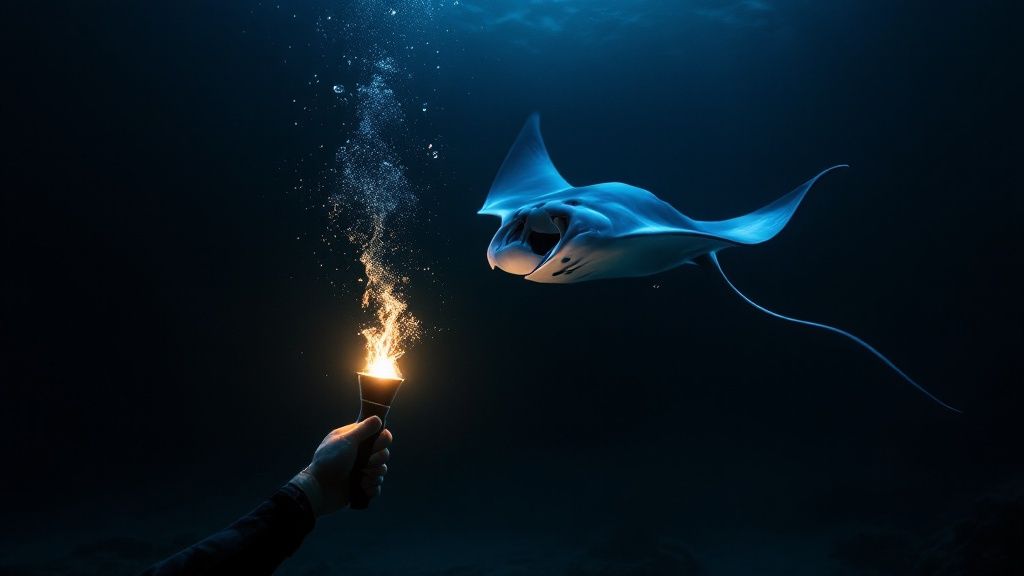
Imagine this: You’re floating in the dark ocean, your light beam cutting through the blackness, creating a glowing column of life. Then, out of the deep, a massive shadow emerges. A giant manta ray, with a wingspan that can top 15 feet, glides effortlessly toward the light, somersaulting just inches from your face as it feeds. This isn’t a scene from a nature documentary—it’s the breathtaking reality of the Kona manta ray dive.
This guide is designed to walk you through everything you need to know to make this incredible adventure happen. We'll cover what makes Kona such a special place for mantas, how to get ready for your trip, and what to expect, ensuring your encounter is safe, awe-inspiring, and utterly unforgettable.
Choosing Your Manta Ray Adventure
Picking the right tour operator is easily the most critical part of planning your manta ray night dive in Kona. A great crew doesn't just keep you safe; they have a deep respect for the mantas and the fragile marine ecosystem they call home. Operators like Kona Honu Divers have built a solid reputation for providing top-notch experiences that put both guest safety and manta conservation first.
Their professional guides and high-quality gear make them a go-to choice for thousands of visitors every single year. You don't have to take our word for it—their stellar reputation on the island speaks for itself.
You absolutely need to book a guided tour for this. The experts know exactly where to go and bring the powerful lights necessary to attract the plankton that the mantas feed on. Plus, they handle all the tricky logistics, from the boat ride out to supervising everyone in the water.
The best part? You don't need to be an expert diver to join in. This adventure is just as amazing for first-time snorkelers as it is for seasoned divers.
- For Divers: You’ll descend to a sandy spot on the ocean floor, around 30-40 feet deep. From there, you'll point your light up, creating a "campfire" of light that attracts the plankton.
- For Snorkelers: You'll hang out on the surface, holding onto a custom-made light board that floats and shines its beams down, attracting plankton from above.
Both spots offer an incredible, front-row seat as the mantas swoop and barrel-roll through the illuminated water to get their dinner. By going with a premier operator, you can book your unforgettable manta ray dive tour and rest easy knowing you're in the best possible hands for this once-in-a-lifetime experience.
Why Kona is the World’s Best Manta Ray Hotspot
So, what makes Kona the undisputed global capital for manta ray encounters? It isn't just a happy accident. It's a perfect storm of geography, biology, and a bit of human ingenuity that created a nightly, all-you-can-eat buffet for these gentle giants. This unique setup is why the manta ray night dive in Kona is one of the most reliable and breathtaking wildlife experiences on the planet.
The magic all comes down to a simple, brilliant concept that dive operators here perfected decades ago. The secret ingredient? Plankton—the microscopic critters that make up a manta ray's entire diet. By shining powerful lights into the water after dark, operators create an irresistible beacon for these tiny organisms.
You can think of it like an "underwater campfire." Just as moths are drawn to a flame, massive clouds of plankton swarm to the bright beams of the dive lights. This, in turn, attracts the manta rays, who have learned over the years that these lights mean dinner is served.
A Resident Population and Perfect Conditions
A huge part of Kona's magic is its large, non-migratory population of reef manta rays. Unlike wildlife hotspots that depend on seasonal migrations, these mantas live here all year. They don't have to go looking for food, because we bring the food to them almost every single night.
This has fostered a truly unique, learned behavior. The mantas now associate the lights with a feast and show up at the same spots—affectionately known as "Manta Village" and "Manta Heaven"—like clockwork.
On top of that, the Kona coast itself is perfectly suited for this nightly show. The local geography offers a few key advantages that make the experience what it is:
- Calm Waters: The coastline is naturally sheltered from big ocean swells, which means conditions are usually calm and predictable—exactly what you want for a night dive.
- Shallow Depths: The dive sites are surprisingly shallow, typically just 30-40 feet. This makes the dive accessible for all skill levels and gives you more time on the bottom.
- Easy Access: The feeding sites are a quick boat ride from the harbor, so you spend less time traveling and more time in the water with the mantas.
Unbeatable Success Rates
This blend of a resident manta population and a reliable food source leads to one of the most impressive statistics in wildlife tourism. The Kona Manta Ray Night Dive boasts an incredibly high success rate, with sightings reported at over 85–90%. In fact, many operators consistently see success rates well above 95%. That's almost unheard of for any wild animal encounter.
This incredible reliability is all thanks to the estimated 450 individual manta rays that call the Kona coast home. If you want to dive deeper into the details, you can learn more about the Kona manta ray night dive and what makes it so special.
This isn't just a dive; it's a carefully orchestrated, symbiotic relationship. The lights attract the plankton, the plankton attracts the mantas, and the mantas create an unforgettable spectacle for us. It’s a masterful example of sustainable ecotourism that allows us to witness a natural feeding behavior in a truly spectacular way.
Ultimately, it’s this combination—a captive audience of local mantas, a brilliant feeding strategy, and perfect ocean conditions—that has cemented Kona's reputation. It's why people from all over the world come here for a near-guaranteed, magical encounter with these graceful giants of the ocean.
How to Prepare for Your Manta Ray Encounter
Trust me, a little planning can make the difference between a good night and an absolutely unforgettable one. Getting yourself ready for the manta ray night dive in Kona starts well before you even smell the salt air from the boat.
First things first: book your tour well in advance. This isn't just another excursion; it's one of the most sought-after experiences on the Big Island. Spots fill up fast, especially with the best operators, so locking in your date early is a must.
It's also really important to choose a Manta Ray Green Listed operator. These are the companies that follow strict, sustainable guidelines to keep the mantas safe and healthy. When you book with them, you’re not just a tourist—you're actively helping protect the very creatures you came to see.
What to Bring Aboard
Packing smart will make your trip so much more comfortable. Your tour operator will have all the big stuff—the dive and snorkel gear—but you'll want to bring a few personal items to make the experience better. After an hour in the water, that boat ride back can feel pretty brisk!
Here's a quick checklist to make sure you've got everything you need.
Manta Ray Night Dive Checklist
| Item | Why You Need It | Notes for Divers/Snorkelers |
|---|---|---|
| Reef-Safe Sunscreen | The sun is still strong before sunset. Protect yourself and the reef. | Make sure you apply it at least 30 minutes before getting on the boat. |
| Towel and Dry Clothes | You’ll want to get warm and dry as soon as you're out of the water. | I always recommend a hoodie or windbreaker for the ride back to shore. |
| Reusable Water Bottle | Staying hydrated is key, even on an evening trip. | Most boats have a water cooler for refills. |
| Motion Sickness Remedy | If you're even slightly prone to seasickness, don't risk it! | Take it before you board, not when you start feeling queasy. |
| Dive Certification Card | This is a non-negotiable for anyone scuba diving. | A digital copy on your phone usually works fine. |
| Underwater Camera | You're going to want proof of this incredible encounter. | Make sure it’s fully charged! A red filter helps a ton for night video. |
For a deeper dive into gear recommendations and what to look for, take a look at our comprehensive guide on the gear you will need for your Kona diving adventure. It covers everything you need to know.
Health and Safety Considerations
A great dive starts with feeling great. If you get seasick, take a non-drowsy remedy before leaving the harbor. While the Kona coast is usually pretty calm at night, conditions can change, and it’s always better to be prepared.
Hydration is just as important. Drink plenty of water during the day leading up to your tour. It makes a huge difference in how you feel in the water.
While the focus is on the incredible experience, being a responsible diver means being aware of all aspects of dive safety. It can be helpful to spend some time understanding hyperbaric oxygen therapy, a critical treatment for certain diving-related incidents.
Once you’ve taken care of these simple steps, you're all set. With your tour booked and your bag packed, all that's left to do is get excited for the main event—a truly magical underwater ballet.
A Moment-by-Moment Guide to the Dive
So, what’s it really like to be on a manta ray night dive in Kona? It’s hard to put into words, but let’s walk through it. This isn't just another dive; it's a full-blown experience that starts with a spectacular sunset and ends with an underwater ballet you'll never forget.
Your adventure kicks off in the late afternoon. As the boat pulls away from the harbor, you can feel the excitement building. The crew goes over the plan for the night, covering all the safety checks and explaining the number one rule of manta etiquette: look, but don't touch. As they're talking, the Hawaiian sun starts its descent, lighting up the sky in fiery shades of orange and pink.
That boat ride out is more than just getting from point A to point B. It’s the perfect time to just relax and take in the incredible Kona coastline as the sun dips below the horizon and the first stars pop out. It's the calm before the magic.
Taking the Plunge
Once dusk settles in, it's time to gear up. You'll hear the familiar hiss of regulators and the snap of BCD buckles as everyone gets ready. Then, it's time for the giant stride. That step off the boat into the dark, warm Pacific is a thrill all its own. The sounds of the boat fade away, replaced by the quiet, muffled hum of the ocean.
After hitting the water, the real show starts to take shape. Your group heads toward the "underwater campfire"—a circle of powerful lights set up on the ocean floor, beaming straight up to the surface. It's a truly surreal sight.
Divers find a spot on the sandy bottom, usually somewhere between 30 to 40 feet down. Snorkelers hang onto a specially designed float on the surface that also has lights shining down. Both spots give you a front-row seat to the action.
This light setup is the secret ingredient. The bright beams attract massive clouds of plankton, the manta rays' favorite meal. As you get settled, you'll see these tiny organisms swarm the lights, creating a shimmering column of life in the dark water. All that’s left to do is wait.
The Grand Entrance
You can feel the anticipation in the water. Everyone is watching the plankton dance in the light beams, and then… it happens. A huge, dark shape glides silently out of the blackness. The first manta has arrived.
There’s nothing quite like it. These incredible animals, with wingspans that can easily top 12 feet, move with a grace that seems impossible for their size. They perform these incredible, slow-motion barrel rolls and flips, swooping inches over your head with their huge mouths open to scoop up the plankton.
They don’t seem to mind you being there at all; they're completely focused on dinner. Soon, one manta turns into two, then three, and before you know it, you're in the middle of a silent, swirling dance. They swoop and soar, their white bellies flashing in the lights. The only sounds are your own bubbles and the collective, unspoken awe from the other divers. This is the heart of the manta ray night dive Kona—a humbling and absolutely unforgettable encounter.
Getting to Know Kona’s Gentle Giants
When you slip into the dark water for the Kona manta ray night dive, you're meeting more than just a tourist attraction. These are intelligent, curious creatures, and they're the stars of the show for a reason. Taking a moment to understand who they are and how they live completely changes the experience. It transforms a cool dive into a genuine connection with one of the ocean's most incredible animals.
The mantas you'll meet are reef mantas (Mobula alfredi), the second-largest ray species on the planet. What makes Kona so special is that we have a resident population. These aren't just visitors passing through; they live here all year, which is why the encounters are so reliable and spectacular.
Once you know a bit about them, the strict "look, don't touch" rule that every good operator lives by makes perfect sense. It's all about respect.
A Manta's Fingerprint
So, how do we tell them apart? It's one of the coolest parts of the whole operation. Every single manta ray has a unique pattern of black spots on its white belly. Think of it like a human fingerprint—no two are the same.
This built-in ID system is a game-changer for researchers and dive guides. By snapping a quick photo of their underside, we can identify individual mantas, track their health, and watch their movements over their entire lives. It's a brilliant, completely non-invasive way to study them in their own backyard.
Don't be surprised if you hear your divemaster call out a name as a familiar manta swoops in. Regulars like "Big Bertha," "Lefty," or "Koie" are local celebrities, and recognizing them by name makes the whole encounter feel so much more personal.
Gentle Giants with a Big Appetite
Even though they can have wingspans stretching over 15 feet, manta rays are completely harmless to people. They're filter feeders, which means their diet is made up entirely of tiny zooplankton—microscopic critters floating in the water. They have no teeth for biting and no stinger for defense.
Watching them eat is where the real magic happens. They use two big lobes on either side of their heads, called cephalic fins, to funnel plankton-rich water right into their mouths. As they glide through the clouds of plankton drawn to the dive lights, they perform these incredible, looping barrel rolls.
It's not just a show, though. It’s a highly efficient way to cram as much food as possible into their mouths. This graceful, silent ballet is the heart and soul of the manta ray night dive Kona experience.
Surprisingly Smart and Social
Mantas have the largest brain-to-body weight ratio of any fish, putting their intelligence in the same league as dolphins and primates. They show real curiosity, solve problems, and have complex social lives. Divers swear the mantas make direct eye contact, as if they're as curious about us as we are about them.
Here on the Kona coast, we've identified over 200 individual manta rays, each known by its unique belly spots. On a really good night, you might see more than 20 mantas at once! The record at the main dive site, Garden Eel Cove, is around 36 individuals. Of course, these are wild animals, so there’s always the rare night with no-shows. You can dive deeper into these encounters and see some stunning underwater photography of the Kona manta dive to get a feel for it.
Their intelligence is just one more reason why responsible, sustainable tourism is so critical here. The partnership between researchers and local dive operators in Kona has become a worldwide model for how to do wildlife interactions right. When you book a tour, you’re not just a spectator—you’re actively supporting the research and conservation that allows this incredible population to thrive.
Diving with Purpose: How Your Dive Protects Manta Rays
The manta ray night dive in Kona is so much more than just a spectacular show. It's one of the best examples of sustainable wildlife tourism you'll ever find, and its continued success hinges on all of us doing our part. When you join a dive, you're not just a passenger—you're stepping into a vital role in protecting these gentle giants.
It all starts with one simple choice: picking the right tour operator. The best, most ethical companies operate under the Manta Ray Green Listed standard. This is a strict set of guidelines built to put the mantas' well-being first. Honestly, choosing a Green Listed operator is the single most powerful thing you can do to support Kona's resident manta population.
The Rules of the "Road"
Once you slip into the water, your actions matter immensely. Every reputable operator will give you a clear briefing on the non-negotiable rules for the dive. These aren't just suggestions; they ensure the mantas feel safe and comfortable.
- Look, Don't Touch: This is the golden rule. Manta rays have a special mucus coating on their skin that acts like an immune system, protecting them from bad bacteria. Touching them strips this layer away and can make them sick.
- Don't Chase: Let the mantas be the ones to decide how close they get. Chasing or pursuing them only causes stress and can scare them away from their dinner.
- Hold Your Position: The plan is simple. Divers stay low on the sandy bottom, and snorkelers stay flat on the surface. This creates a wide-open "stage" in the middle for the mantas to swoop and glide without obstacles.
- Check Your Buoyancy: For divers, this is key. Good buoyancy control prevents you from accidentally bumping into a manta or damaging the reef below.
Following these guidelines creates a calm, predictable environment where the mantas are happy to return night after night. Want a deeper dive into being a great underwater guest? Check out this guide on responsible and considerate diver etiquette.
How Your Dive Fuels Manta Ray Research
The money you spend on a manta ray tour does more than just cover the boat and crew. It's the primary funding source for the long-term research that has made Kona famous for ethical wildlife tourism. Every night, data is being collected.
Think about it: a study running from 2009 to 2014 used the nightly dives to count and identify individual mantas. By gathering data nearly every single evening, researchers learned incredible details about the rays' movements, feeding habits, and even seasonal patterns. This information was crucial for creating the sustainable dive rules we use today.
This powerful connection between tourism and science is what makes the Kona manta dive so special. You're not just a tourist watching from the sidelines. You're an active participant, a citizen scientist whose presence helps fund the protection of one of the most majestic animals in the ocean.
Your Manta Ray Night Dive Questions Answered
Got a few last-minute questions before you commit to this incredible adventure? We've got you covered. Here are the answers to the things we get asked most often about the manta ray night dive.
Do I Need to Be Scuba Certified to See the Manta Rays?
Nope! You definitely don't need a scuba certification to have a mind-blowing experience. While divers get an amazing view from the ocean floor, snorkelers get their own front-row seat.
Snorkelers hang onto a large, custom-built float board on the surface that shines bright lights down into the water. These lights are a magnet for plankton, which in turn brings the mantas soaring right up to you. It’s an equally thrilling experience and makes this encounter accessible to just about everyone.
Is the Manta Ray Night Dive Safe?
Absolutely. When you go with a professional and reputable operator, the manta ray dive is incredibly safe. It's important to remember that manta rays are gentle giants. They don’t have teeth, stingers, or barbs—their only interest is in scooping up mouthfuls of plankton.
Your guides are experts. They'll give you a detailed safety briefing before you even get in the water, handle all the gear, and make sure everyone follows the golden rule: passive observation. The dive sites are well-established and relatively shallow, and every certified operator has strict safety protocols they follow to the letter.
What is the Best Time of Year for a Manta Ray Dive?
This is one of the best parts—there is no "off-season" for manta rays in Kona! The local manta ray population lives here year-round and doesn't migrate, so we get to see them consistently no matter the month. In fact, the average success rate for sightings is over 90%.
Weather can, of course, be unpredictable, but your odds of having an unforgettable night with the mantas are fantastic whenever you choose to visit. For a deeper look into the seasons, check out our guide on the best time of year to see manta rays in Kona.
What Other Unique Dives Can I Do in Kona?
Kona is a diver's paradise with something for everyone, and the adventure doesn't stop with the mantas.
If you love night dives, the Kona Blackwater Dive is a must-do. We head miles offshore over thousands of feet of water to see the weird and wonderful bioluminescent creatures that migrate from the deep sea to the surface after dark. It's like a trip to another planet.
For certified divers looking for more daytime action, our advanced dive tours explore Kona's more challenging sites, like deep-water reefs and dramatic lava tube formations. Of course, we also offer a full range of incredible scuba diving tours in Kona suitable for all skill levels, showcasing the vibrant coral gardens and abundant marine life that make the Big Island so special.