
Picture this: you're floating weightlessly in the dark, serene Pacific Ocean. Suddenly, a giant, shadowy figure with massive wings swoops in, gliding just inches above your head. This isn't a scene from a movie—it's the world-famous manta ray night dive in Kona, and it's one of the most incredible natural encounters you can have anywhere on the planet. For divers and snorkelers visiting the Big Island, this underwater ballet is an absolute must.
An Unforgettable Underwater Ballet
There’s a good reason the Kona manta ray night dive is consistently voted one of the best night dives in the world. It’s a beautifully orchestrated spectacle that feels completely wild because it is wild. The adventure kicks off with a boat ride along the scenic Kona coast while the sun sets, casting fiery oranges and purples across the sky. The excitement really starts to build as your guides—experts from top-tier outfits like Kona Honu Divers—share fascinating facts about the rays and lay out the ground rules for a safe, respectful swim.
Then comes the moment you slip into the warm, dark ocean. Once everyone is in position, powerful lights are switched on, creating a glowing, ethereal stage on the seafloor. This light attracts swarms of phytoplankton, which just so happens to be the manta rays' favorite meal.
The Science Behind the Spectacle
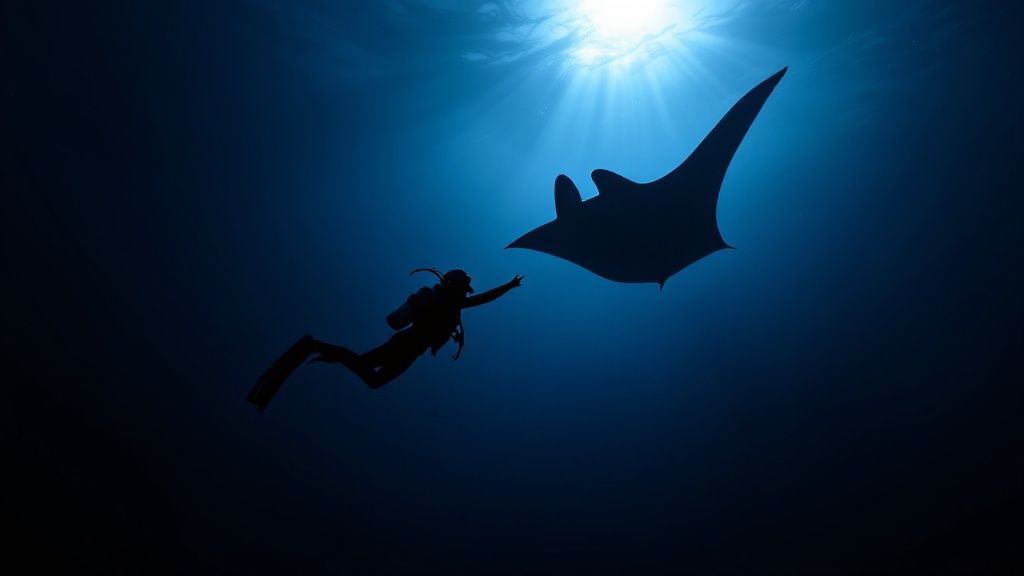
It’s a simple but brilliant strategy: the lights create a concentrated buffet that draws the mantas in. Before you know it, the stars of the show begin to arrive. One by one, massive manta rays emerge from the darkness, their huge wings propelling them in graceful, sweeping arcs. They perform effortless barrel rolls and somersaults through the beams of light, filtering the plankton-rich water through their cavernous mouths.
Honestly, words don't do it justice. It's a silent, mesmerizing dance where you feel like you've become a part of their world. Watching these majestic creatures, some with wingspans over 12 feet, glide within touching distance is a profoundly moving experience.
Why Kona is the Premier Manta Destination
So what makes this encounter so reliable and unique? The manta ray night dive in Kailua-Kona has become a major attraction, bringing in around 80,000 visitors every year. Unlike other places where mantas are just passing through, Kona is home to a large, resident population of rays that live here year-round. This stability results in incredibly high sighting success rates of 80-90%, giving you a fantastic chance to see these gentle giants up close.
This consistency has turned the Big Island into the global epicenter for this kind of dive. You can find out more by exploring our detailed guide on why you should go on a manta ray dive in Kona. For anyone visiting Hawaii, this isn't just another tour; it’s a chance to connect with one of the ocean's most magnificent animals in their own backyard. Learn more about this incredible tour and get ready for an adventure you’ll be talking about for years to come.
What to Expect on Your Manta Adventure
So, you’re ready to dive with the mantas in Kona? Fantastic. The anticipation is part of the fun, but knowing the flow of the evening helps you relax and soak it all in. Your adventure actually kicks off late in the afternoon, right at the harbor.
This is where you'll meet the crew, get the paperwork sorted, and try on any rental gear you need. As the boat heads out to the dive site, you're often treated to a classic Hawaiian sunset. It’s the perfect, serene start to an adrenaline-filled evening.
The All-Important Pre-Dive Briefing
Before anyone even thinks about getting wet, your guides will gather everyone for a detailed briefing. This isn’t just about safety rules; it's a genuine introduction to the incredible animals you're about to meet. You'll learn what makes them tick—their habits, their diet, and most importantly, how we can observe them respectfully.
They’ll explain exactly why you can't touch the mantas (it removes their protective slime coat, making them vulnerable) and lay out the game plan for the dive. They’ll show you how everyone will be positioned in the water to give the mantas space and ensure you get an amazing view.
Descending into the Twilight Ocean
As the last sliver of sun disappears, it’s time to gear up. Taking that first step off the boat into the darkening water is a feeling like no other. The world transforms from vibrant daylight to a deep, mysterious blue as you make your descent.
Divers will head down to the sandy bottom, settling in at a depth of about 40 feet. If you're snorkeling, you'll hang out at the surface, holding onto a custom float board that beams powerful lights down into the water column. Both setups create a brightly lit arena for the show to begin.
The Underwater 'Campfire' and the Grand Arrival
Once everyone is settled, the guides switch on a set of powerful lights often called the "campfire." This is the dinner bell. The intense light attracts swarms of plankton, the mantas' favorite meal. For a few moments, you’ll just watch as the water fills with these tiny organisms dancing in the beams.
And then, it happens. A shadow glides in from the darkness, growing larger and more defined with each passing second. The first manta ray arrives, performing an effortless swoop through the light. Before you know it, another appears, and then another. You’re suddenly in the middle of a silent, underwater ballet.
The mantas perform graceful barrel rolls and loop-the-loops, their cavernous mouths wide open to filter the plankton-rich water. They’ll pass within inches of your face, their intelligent eyes seeming to look right at you. It’s a connection you won't forget.
One of the coolest parts is noticing the unique spot patterns on their undersides. These markings are like fingerprints, and the local guides often know the regulars by name! It makes the experience feel less like watching wildlife and more like meeting individuals. To get an even better picture, you can read more about what it's like to go on the manta ray dive in Kona.
Your Manta Ray Night Dive Experience At A Glance
| Phase | What Happens | Key Tip |
|---|---|---|
| Arrival & Prep | Meet the crew at the harbor, sign waivers, and get fitted for gear. | Arrive a little early to avoid feeling rushed and to grab a good spot on the boat. |
| Sunset Boat Ride | Cruise to the dive site while enjoying a beautiful Hawaiian sunset. | Have your camera ready for some epic pre-dive photos. |
| Dive Briefing | Guides explain manta behavior, safety protocols, and the dive plan. | Listen closely! This info is crucial for a safe and respectful encounter. |
| Gearing Up | Suit up as the sun goes down and prepare to enter the water. | Double-check your gear and ask for help if anything feels off. |
| The Main Event | Divers and snorkelers get into position and watch the mantas feed. | Stay calm and still. The less you move, the closer the mantas will come. |
| Post-Dive | After about 45 minutes, you’ll head back to the boat for snacks and hot drinks. | Share your stories! The ride back is filled with excited energy. |
After an incredible 45 minutes or so in the water, it’s time to head back to the boat. The ride back to the harbor is always buzzing with energy as everyone shares their favorite moments from the spectacular show they just witnessed.
How to Choose the Best Manta Ray Tour
Picking the right company for your Kona manta ray night dive is easily the most important decision you'll make. It’s what separates a decent trip from a truly mind-blowing experience that’s safe, ethical, and unforgettable. With a sea of operators to choose from, knowing what to look for is key to ensuring you get an amazing adventure while supporting responsible tourism.
Your first move should be finding an operator who genuinely cares about the mantas. For a long time, the “Manta Ray Green List” was the gold standard, certifying companies that followed sustainable practices. While the official list isn't active anymore, its core principles are very much alive. Look for operators who still proudly operate under those conservation-first guidelines.
This isn't just about following rules; it's about a deep, genuine respect for the ocean and the incredible animals that live there.
Key Factors for Selecting a Tour Operator
Beyond a commitment to conservation, a few practical things can make or break your trip. As you research different companies, get into the nitty-gritty details about their boat and their crew.
Think about it: a comfortable, spacious boat makes a huge difference, especially on that chilly ride back to shore. Do they have warm showers, snacks, or maybe a hot drink waiting for you? Even more important is the crew’s experience and the guest-to-guide ratio. A smaller group means more personal attention and a much safer, more relaxed vibe in the water.
An experienced crew doesn’t just keep you safe—they make the entire experience richer with their knowledge. Some can even identify individual manta rays just by their unique spot patterns!
Why a Professional Crew Matters
The guides are the real heart and soul of any manta ray tour. Seasoned pros, like the crew at Kona Honu Divers, do more than just lead a dive; they are stewards for the mantas and incredible educators for their guests. They have an intimate understanding of the animals' behavior and can read the ocean’s subtle cues, which helps them pick the best possible spot for sightings each night.
That kind of expertise is priceless, especially when conditions aren't perfect. They run thorough safety briefings and stay in the water to manage the group, making sure everyone sticks to the passive observation rules. This level of professionalism creates a calm, respectful atmosphere that lets the mantas feel comfortable enough to put on their spectacular show.
Choosing a reputable company like Kona Honu Divers ensures you're with a team that has a proven track record of safety, customer satisfaction, and a genuine passion for marine conservation.
Did you know the Kona coast is home to roughly 200 identified manta rays? Each one has a unique pattern of spots on its belly, like a fingerprint. Experienced divemasters and local researchers keep a catalog of these individuals and often recognize them night after night. While a typical dive might bring about six mantas, some incredibly lucky groups have seen a record-setting 36 mantas in one dive!
Ultimately, your choice of tour operator has a real impact—on the health of the manta population and on the quality of your own adventure. To help you sort through the options, we've put together a guide on the top 5 manta ray night dive tours in Kona. When you choose wisely, you’re not just booking a tour; you’re helping to protect this world-class wildlife encounter for years to come.
When Is the Best Time to See Manta Rays?
So, when should you book your trip? This is one of the first questions people ask, and the answer is refreshingly simple: anytime you can. Kona’s manta ray night dive is an incredible underwater show that runs year-round.
This isn't like whale watching, which is tied to a specific migratory season. Kona is home to a large, non-migratory population of reef manta rays. They live here permanently, drawn to the consistent food source along the coast. That means whether you visit in the heat of July or the cool of December, your chances of a spectacular encounter are incredibly high.
Now, while the mantas are always here, the experience can feel a little different depending on the season. Ocean conditions and weather patterns change throughout the year, and that can affect everything from your comfort on the boat to the behavior of the plankton that the mantas are there to eat.
Summer vs. Winter Conditions
The main things that change between summer and winter are water temperature and surface conditions. Knowing what to expect just helps you pack and prepare for an even better dive.
- Summer (May – October): This is when you'll find the warmest water, usually a balmy 78-82°F (25-28°C). The ocean also tends to be flatter and calmer, which means a smoother boat ride and often fantastic underwater visibility.
- Winter (November – April): The water gets a little cooler in the winter, dipping to around 74-77°F (23-25°C). Winter also brings larger ocean swells, especially from the north, which can make for a choppier boat ride. A good wetsuit is a must year-round, but you'll be especially glad you have one in the winter.
Of course, weather is weather—it can be unpredictable. You can get a perfectly calm winter night or a surprisingly windy summer evening. Any good dive operator puts safety first and will always pick the best, most protected dive site for the conditions on any given night.
Does Weather Affect Manta Sightings?
While the mantas themselves don't go anywhere, their food source—the plankton—can be a bit more fickle. A really strong wind or a heavy downpour can sometimes spread the plankton out, making it less concentrated around the dive lights. On nights like that, the mantas might have to search a little more for their meal, or you might see a few less than on a perfectly calm night.
But here’s the thing: the reliability of this dive is still through the roof, no matter the season. The data backs this up, too.
Long-term sighting records kept along the Kona coast show that mantas are seen on 85-90% of all night dives. That incredible success rate is why Kona is known as the best place on Earth for this experience.
The bottom line is straightforward: the best time to see the manta rays is whenever you can make it to Kona. Summer might offer slightly warmer water, but the winter show is just as breathtaking. Don't let the calendar stop you from ticking this amazing adventure off your bucket list.
For a more detailed breakdown, you can read our complete guide on the best time of year to see manta rays in Kona.
Staying Safe and Protecting the Mantas
The Kona manta ray night dive is an experience you'll never forget, but keeping it special means everyone—divers, snorkelers, and operators—is committed to safety and respect. The well-being of the mantas and the safety of every participant are the absolute top priorities. When everyone knows the rules of the road, it ensures this incredible encounter stays magical for years to come.
Your dive operator will handle the heavy lifting, providing essentials like tanks, weights, and high-powered dive lights. Snorkelers get a mask, snorkel, and fins. Still, there are a few things you should pack to make your trip comfortable and seamless.
What to Bring for Your Dive
A little prep work before you head to the harbor goes a long way. Having these items ready will get you in the water faster and make the whole experience much more enjoyable.
- Certification Card & Logbook: If you're a certified diver, you'll need to show your C-card. It's also a good idea to bring your logbook, especially if it's been a little while since your last dive.
- Warm Clothes: This one surprises people. After a night dive, you'll feel a chill once you're out of the water. A dry towel and a warm sweatshirt or jacket will be your best friends on the boat ride back.
- Swimsuit: The easiest way to do it is to wear your swimsuit under your clothes to the harbor. It just makes gearing up that much simpler.
- Reusable Water Bottle: Staying hydrated is key. Bringing your own bottle is a great way to help us cut down on single-use plastic.
- Seasickness Medication: If you even think you might get seasick, take your preferred remedy well before you board the boat. The ocean can get a bit bumpy after sunset.
The Importance of a Good Wetsuit
Don't underestimate the need for a good wetsuit. Even in Kona's beautiful, warm water, you'll be staying pretty still for about 45 minutes in the dark. That inactivity can make you feel cold surprisingly fast.
We provide high-quality wetsuits, but if you have your own that fits like a glove, feel free to bring it. A wetsuit that fits snugly is crucial for keeping you warm and comfortable, letting you focus on the mantas instead of shivering.
The Golden Rule of Manta Interaction
If you take away only one thing, let it be this: do not touch the manta rays. This is the single most important rule, and it's non-negotiable for a very good reason. Manta rays have a protective mucous layer covering their skin, which is their primary defense against bad bacteria and infections.
Touching a manta, even with the lightest graze, can strip away this vital protective coating. This leaves the animal exposed and vulnerable to disease. To keep Kona's mantas healthy for future generations, we have to be passive observers.
Your guides will give you a thorough briefing on where to position yourself—divers on the seafloor, snorkelers on the surface. By staying still and predictable, you become part of the environment. This makes the mantas feel safe, and ironically, they often glide even closer to you. To learn more, check out our full guide on considerate diver etiquette in our guide.
Following these guidelines doesn't just protect these incredible animals; it makes the experience better for you. When the mantas are comfortable, they'll stick around to feed, giving you the front-row seat to that underwater ballet that makes the manta ray night dive in Kona so famous.
Explore More of Kona’s Underwater World
The manta ray night dive is, without a doubt, an unforgettable experience. For many divers, it’s the absolute peak of their Big Island trip. But what if I told you that incredible underwater ballet is just the beginning? Think of it as the gateway to a whole new world of adventure waiting just beneath the surface.
Kona’s dramatic volcanic coastline doesn’t just stop at the water's edge. It plunges down, creating a spectacular underwater landscape of ancient lava tubes, breathtaking archways, and vibrant coral gardens. Let the manta ray night dive in Kona be your first taste of what a full-blown Big Island diving vacation can be.
Daytime Diving and Coral Reef Exploration
The calm, stationary experience of the manta dive is a world apart from Kona’s daytime diving. During the day, you’re on the move, actively exploring some of the most stunning and healthy coral reef systems in all of Hawaii. The island's leeward side is blessed with crystal-clear, protected waters, making it the perfect place to discover an incredible diversity of life.
Imagine floating effortlessly through lava formations blanketed in a kaleidoscope of color. On any given dive, you’re likely to see:
- Honu (Green Sea Turtles): You'll often find them snoozing on the reef or gliding past with effortless grace.
- Vibrant Reef Fish: Schools of butterflyfish, munching parrotfish, and even Hawaii’s state fish, the famously named Humuhumunukunukuāpuaʻa.
- Unique Critters: Keep a sharp eye out for moray eels peeking from crevices, octopuses masterfully camouflaged against the rocks, and maybe even a spotted eagle ray soaring in the blue.
These underwater structures are an adventure in themselves. To see it firsthand, check out the incredible Kona diving tours that bring you to the heart of the action.
For the Thrill-Seekers: The Kona Blackwater Dive
Did the manta night dive light a fire for adventure in you? If so, the Kona Blackwater Dive is your next logical step. This is nothing like a reef dive; it’s a mind-bending journey into the deep open ocean. Tethered to the boat, you'll float suspended over thousands of feet of water, watching one of the planet's largest migrations unfold as bizarre and beautiful deep-sea creatures rise to the surface under the cloak of night.
This is where you meet the true aliens of the deep. You’ll see larval fish that look nothing like their adult forms, iridescent squids, and otherworldly jellies that pulse with their own light. It’s a truly humbling and unique experience for certified divers with a taste for the extraordinary. Take a plunge into the abyss with a one-of-a-kind Kona Blackwater Dive tour.
Advanced Diving Opportunities
For those with more experience under their weight belts, Kona delivers. The island’s unique geology serves up deep reef structures, dramatic pinnacles, and sheer drop-offs that are magnets for larger pelagic species.
These sites demand a higher skill level but pay off with some of the most rewarding encounters and jaw-dropping scenery you can imagine. The best way to safely explore these more challenging and remote spots is with an expert guide on an advanced dive charter.
Answering Your Top Manta Ray Dive Questions
As you get ready for this once-in-a-lifetime adventure, you probably have a few questions. That's completely normal! Getting the details straight beforehand helps you book with confidence. So, let's dive into the most common questions we hear about the manta ray night dive in Kona.
Can I See the Manta Rays Without Scuba Certification?
Absolutely! You don't need to be a certified diver to see the show. Snorkeling is an equally incredible way to watch the underwater ballet unfold.
Most tours have snorkelers hold onto a custom floatation board. These boards are outfitted with bright lights that shine down into the water, attracting the plankton right to the surface. The mantas follow their food source, swimming right up to feed and often performing graceful barrel rolls just inches below you. It's a fantastic option, and tour boats like those at Kona Honu Divers often accommodate both divers and snorkelers, which makes this the perfect outing for a mixed group.
Is the Manta Ray Night Dive Safe?
Yes, it is. When you go with a professional, reputable operator, the manta ray night dive is considered very safe. The whole experience is well-managed and supervised by experienced divemasters who give you a thorough safety briefing and are in the water with you the entire time.
And what about the mantas? They're true gentle giants. Manta rays are filter feeders—they don't have teeth, stingers, or barbs. They're only interested in the cloud of plankton, not the people watching them.
Are Manta Ray Sightings Guaranteed?
This is a wild animal encounter, so a 100% guarantee is impossible. That said, the Kona coast has one of the highest success rates for any wildlife interaction on the planet, with sightings on 85-90% of nights.
The secret to this incredible consistency is Kona's large, resident manta ray population—they live here year-round. On the rare night the mantas are a no-show, most reputable companies will offer a voucher to come back and try again on another night, completely free of charge.
With these questions out of the way, you can feel great about booking one of the most memorable wildlife encounters you'll ever have.
Ready for an unforgettable adventure? Kona Honu Divers offers a world-class manta ray dive tour led by an expert crew dedicated to your safety and the well-being of the mantas.