
Imagine this: you're floating in the warm, dark Pacific Ocean. Then, out of the blackness, a massive, gentle shadow glides just inches over your head. It's a giant manta ray, and it's performing an acrobatic underwater ballet. This isn't some rare, once-in-a-lifetime fluke. It's the world-famous manta ray night dive in Kona, and it's easily one of the most reliable and jaw-dropping wildlife encounters on the entire planet.
Why Kona Is The Premier Manta Ray Destination
Kona isn't just another pretty spot on the map; it's the undisputed global capital for getting up close with manta rays. Sure, you can find mantas elsewhere, but nowhere else on Earth offers the kind of consistent, spectacular show you'll find right here off the Kona coast. So, what’s the secret sauce?
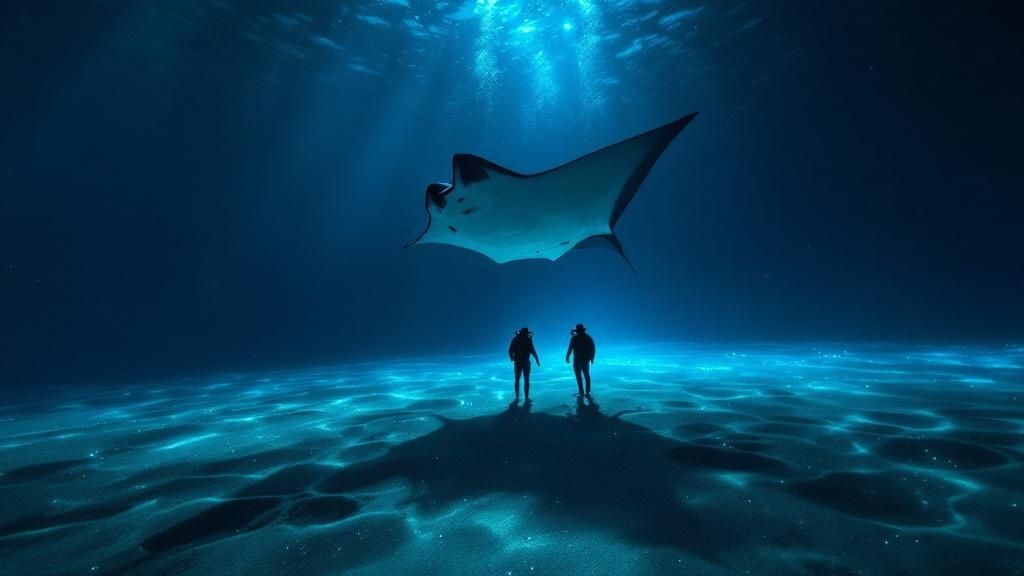
It all boils down to a brilliantly simple idea that locals call the "manta bonfire." We set up powerful, stationary lights on the ocean floor. These bright lights act like a massive bug zapper, but for plankton—the manta rays' favorite food. This creates a glowing, all-you-can-eat buffet that the mantas simply can't resist. For you, it means a front-row seat to one of nature's most mind-blowing performances. Divers just relax on the sandy bottom and look up as these graceful giants swoop and perform barrel rolls right overhead, feasting on the illuminated plankton.
The Perfect Underwater Stage
Kona's unique geography is what really sets the stage. The coastline is dotted with calm, protected bays, and the underwater landscape naturally funnels and concentrates the plankton. This makes the feeding spots incredibly dependable, night after night.
Two sites, in particular, have become legendary in the diving world:
- Garden Eel Cove (Manta Heaven): Just north of Kona, this spot is famous for attracting huge gatherings of mantas. It's not uncommon to see a dozen or more at once!
- Keauhou Bay (Manta Village): Located south of Kona, this is the original manta dive site and it remains one of the most consistent for amazing sightings.
This incredible reliability is precisely why the manta ray night dive Kona experience is a must-do for any ocean lover. The success rate for seeing mantas is consistently between 85% and 95%, drawing about 80,000 visitors every year to see the show. With a thriving local population of over 450 identified individuals, Kona's manta community is healthy and a true conservation success story.
Here at Kona Honu Divers, we’re all about creating a safe, unforgettable adventure that respects these magnificent animals. Our expert guides are as passionate about the mantas' well-being as they are about your experience. But don't just listen to us—see what our divers are saying.
When you book a manta ray dive tour with us, you're not just a spectator. You're becoming part of a sustainable ecotourism model that helps protect these gentle giants for generations to come. For an even deeper dive, check out our complete guide on the manta ray night dive.
Choosing Your Manta Adventure: Scuba or Snorkel?
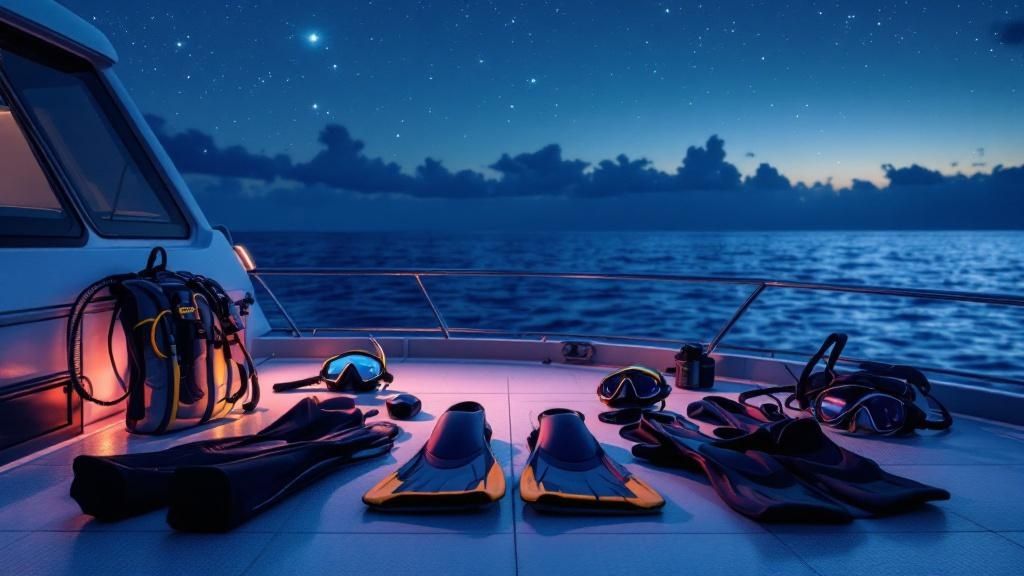
When you're planning your Kona manta ray adventure, the first big question is how you want to experience the show. Would you rather have a front-row seat on the ocean floor, looking up as these giants dance above you? Or do you prefer a skybox view from the surface, taking in the entire underwater ballet at once?
Both scuba diving and snorkeling offer jaw-dropping ways to see the mantas. There’s no "right" choice—it all comes down to what's right for you. Your comfort in the water, whether you're a certified diver, and the kind of experience you're after will help you decide.
The Scuba Diving Experience: A Bottom-Up Perspective
For certified divers, this is the one you write home about. It's an almost spiritual experience. After a short boat ride, you'll descend into the calm, dark water to a sandy patch about 30 feet deep. There, you just get comfortable, kneeling or lying on the bottom, and become part of the scenery.
You'll point your dive light straight up, and along with the other divers, you'll create a "campfire" of light that attracts the plankton. And then… the show begins. The mantas glide in from the darkness like silent bombers, swooping and doing barrel rolls just inches above your head. You're completely immersed, sheltered from any waves on the surface, with no sound but your own bubbles and the collective awe of everyone around you.
The feeling of a 12-foot manta ray gracefully gliding inches over your head is indescribable. It’s a moment of pure connection with nature that stays with you forever.
The Snorkeling Experience: An Aerial View of the Ballroom
Snorkeling is just as incredible, but a totally different vibe. Instead of being on the ocean floor, you'll be floating on the surface, holding onto a custom-built light board. These boards shoot powerful beams of light down into the water, creating a brightly lit stage for the mantas' feeding frenzy.
From up here, you get a bird's-eye view of the whole spectacle. You can see the divers below, the beams of light piercing the darkness, and multiple mantas swooping through the "ballroom." They often come right up to the surface, their huge mouths wide open, giving you a fantastic look. It's a great option for non-divers, families, or anyone who just feels more comfortable staying on top of the water. If you want to bundle this with other dives, we have some great Kona diving packages available.
Manta Ray Scuba Dive vs. Snorkel Experience
Still on the fence? Sometimes seeing it side-by-side makes the choice easier. Both are amazing, but this table breaks down the key differences to help you find your perfect fit.
| Feature | Scuba Diving Experience | Snorkeling Experience |
|---|---|---|
| Perspective | Bottom-up, an intimate view looking straight up. | Top-down, a wide view of the entire scene unfolding below. |
| Immersion | Fully submerged, feeling completely part of their world. | Floating on the surface, observing the action from above. |
| Requirements | Scuba certification is mandatory. | No certification needed. Must be a comfortable swimmer. |
| Physical Effort | Low effort once you're settled on the sandy bottom. | Requires holding onto a float and keeping your body flat. |
| Best For | Certified divers looking for a deeply immersive moment. | Non-divers, families, and anyone who prefers a surface view. |
Ultimately, whether you dive or snorkel, you're in for an unforgettable night with Kona's famous gentle giants. Our expert guides on the 2-tank Manta Dive & Snorkel trip are there to make sure your adventure is safe, respectful, and absolutely magical, no matter which option you pick.
Check Availability
What To Expect On Your Manta Ray Night Tour
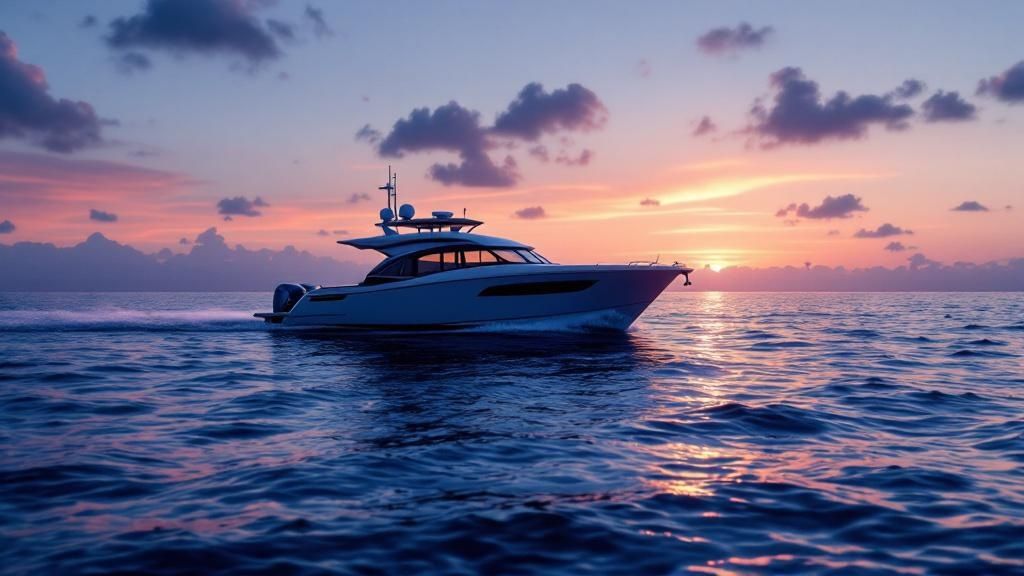
Knowing what your adventure is going to be like from start to finish helps you relax and just soak it all in. So, let's walk through the whole trip, from the moment you show up at the dock to the ride back under the stars, buzzing from the experience.
Your tour kicks off at the harbor. You'll be greeted by your crew, and you can just feel the excitement in the air as everyone boards the boat. Once you’re on your way, the trip to the dive site is the perfect time to enjoy the warm Hawaiian air and watch an incredible Kona sunset paint the sky.
The Pre-Dive Briefing
Before you even think about getting wet, your guides will give you a full pre-dive briefing. This is a really important—and fascinating—part of the experience. They'll cover all the safety need-to-knows, but they’ll also share some amazing facts about the very manta rays you’re about to meet.
You'll learn about their behaviors and how their unique spot patterns act like fingerprints for telling them apart. They’ll also talk about the conservation work being done to protect these amazing animals. This briefing makes sure you're not just a tourist, but a respectful guest in their underwater world.
Creating The "Manta Campfire"
Once you arrive at the dive site, the crew gets busy setting up the main event: the underwater "campfire." They lower a big, powerful light box down to the sandy bottom, about 30-35 feet below. This light is the secret to the whole show.
It lights up a huge column of water, which immediately starts attracting swarms of tiny plankton—the manta rays' favorite meal. For the mantas, this glowing light is basically a dinner bell they can't resist. You're about to see one of the most reliable and mind-blowing wildlife encounters on Earth.
Entering The Water And The Big Show
Alright, this is the moment you've been waiting for. You’ll slip into the dark, surprisingly warm water. That first splash gives way to a sense of calm as you get into position, either on the sandy bottom or holding onto a surface float. The only sounds are your own breathing and the gentle hum of the ocean.
Then it happens. A massive, graceful shadow glides out of the darkness and into the light. The first manta ray arrives, and it’s a moment that will absolutely take your breath away.
Soon, more follow. They swoop and perform effortless barrel rolls just inches above your head, their huge mouths wide open to filter the plankton from the water. It’s a completely silent, mesmerizing dance that feels both peaceful and totally out of this world. For an even closer look at this incredible experience, check out our complete guide on the manta ray night dive.
After about 45 minutes of pure awe, it's time to head back to the boat, still buzzing with what you just saw. The crew will be waiting with hot chocolate and snacks for the cozy ride back to shore, where everyone will be sharing stories about the night's incredible visitors.
Check Availability
How To Be A Responsible Manta Ray Observer
The incredible, almost unbelievable, reliability of the manta ray night dive in Kona hinges on one crucial factor: the health and trust of our local manta ray population. We're stepping into their world, their dining room, really. And it's on all of us to make sure this incredible encounter can continue for many, many years. By following a few simple but non-negotiable rules, you become a true partner in their conservation.
The whole philosophy behind a responsible manta encounter can be summed up in two words: passive interaction. We’re there to watch the ballet, not to join the dance. The golden rule is absolute—no touching, no chasing, and never, ever blocking a manta's path.
Manta rays are covered in a thin, protective mucous layer. Think of it as their immune system, shielding them from nasty bacteria and infections. Touching a manta, even with the lightest brush of a finger, can wipe off this delicate coating and leave them vulnerable to disease.
When you resist that powerful urge to reach out and touch, you're actively protecting them. This hands-off policy keeps the mantas comfortable and reinforces that our lights signal a safe, reliable buffet—which is the secret sauce to this whole amazing experience.
Guidelines For Divers And Snorkelers
Your part in protecting the mantas looks a little different depending on whether you're diving below or snorkeling above. Both offer a front-row seat to the action, and both come with specific responsibilities to keep things safe for everyone, mantas included. For a deeper dive, check out our article on what you should know about the Manta Ray Dive in Kona.
For Scuba Divers:
Your main job is to become one with the ocean floor. Once you descend, you’ll pick a sandy spot and make it your home for the dive.
- Nail Your Buoyancy: Good buoyancy control is everything. It keeps you from floating up into the mantas' flight path or kicking up a sandstorm that clouds the water.
- Stay Put: Once you're in your designated spot, stay there. This creates a predictable environment for the mantas and keeps the "water column" clear for them to swoop and glide through.
- Light It Up: Point your dive light straight up toward the surface. This is how we create the "campfire" of light that attracts the plankton and brings the mantas right to us.
For Snorkelers:
Your goal is to be a quiet observer from the top, holding onto a specially designed light board.
- Stay Horizontal: Keep your body flat on the surface like a pancake. Letting your legs dangle down can get in the way of the mantas as they barrel roll up to feed.
- Hold On: The light boards are both your ticket to the show and your point of stability. Stick with your group and hold on tight.
- No Freestyling: Resist the temptation to swim off on your own. It can be dangerous in the dark and can easily disrupt the mantas' feeding patterns.
By following these simple guidelines, you're doing more than just going on a tour; you're helping ensure the Kona manta ray night dive remains a world-class, ethical wildlife encounter. You're supporting a community dedicated to ecotourism and the long-term health of these magnificent animals. In fact, all our scuba diving tours in Kona, Hawaii, are built around this fundamental principle of respect.
Preparing For Your Kona Night Dive Adventure
A little prep work goes a long way in turning a great adventure into a truly perfect one. The manta ray night dive in Kona is a pretty polished experience, but knowing what to expect and what to toss in your bag means you can just soak it all in without a single worry.
Good news—reputable operators like Kona Honu Divers handle most of the heavy lifting. They’ll have all the scuba or snorkel gear you need, from wetsuits and fins to the powerful lights that are the key to the whole show. They usually even have snacks and drinks to help you warm up after you get out of the water.
What To Pack For Your Trip
While the big stuff is covered, a few personal items will make your trip that much more comfortable. Here's a simple checklist to make sure you've got the essentials covered:
- A Towel: You'll be glad you have it when it's time to dry off. Simple, but crucial.
- Warm Layers: Even on a balmy Hawaiian evening, the boat ride back to the harbor can get surprisingly chilly once you're out of the water. A sweatshirt or jacket is a game-changer.
- Reef-Safe Sunscreen: If you're on a sunset tour, make sure to apply this beforehand. It’s a must for protecting your skin and the fragile coral reef.
- Motion Sickness Medication: Prone to seasickness? Don't risk it. Take your go-to remedy before you even leave the dock.
That’s pretty much it. Packing light lets you relax and focus on the main event without being weighed down by a bunch of extra gear.
Tips For Underwater Photographers
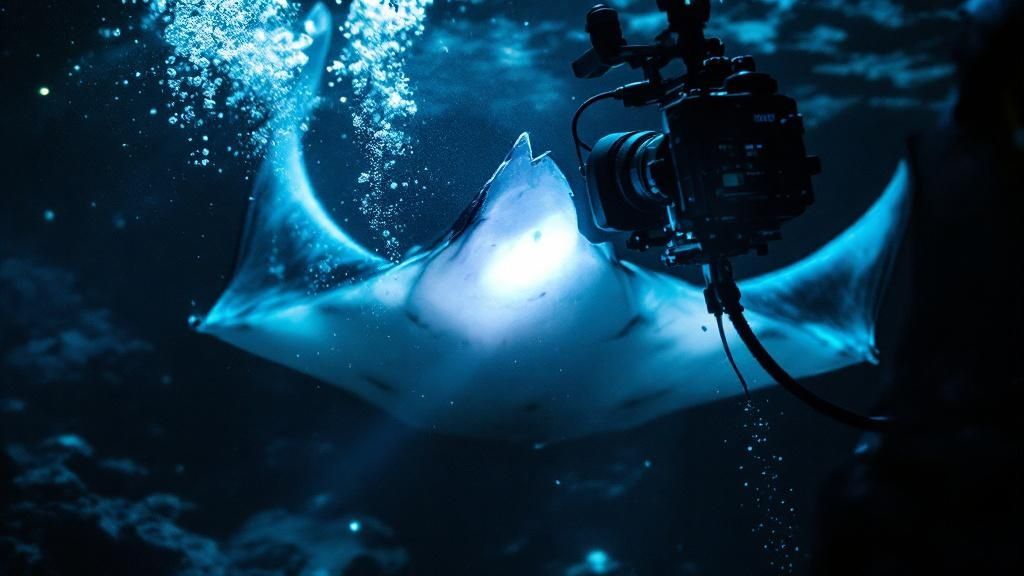
Trying to capture the ethereal beauty of the manta ray night dive is a rewarding challenge. The dark conditions and graceful, swooping movements of the mantas demand a specific approach, but the photos you can get are absolutely worth the effort.
First off, let's talk about light. Your guide will have a primary light, but bringing a red focus light for your camera rig can make all the difference. Red light doesn't bother marine life nearly as much—including the mantas—and it'll help your camera nail its focus without spooking the stars of the show.
When it comes to camera settings, a good starting point is a high ISO (think 1600-3200), a wide-open aperture (f/2.8 or lower), and a shutter speed around 1/60s to let in as much light as possible. Always shoot in RAW format; you’ll thank yourself later when you have all that extra flexibility in post-processing.
This dive is a massive deal for Kona, both economically and culturally. An estimated 80,000 people participate every single year! This one-of-a-kind activity supports a whole community of dive operators at key sites like Garden Eel Cove and Keauhou Bay. These spots are a bit different—Keauhou Bay often has calmer water, which is great for first-timers, while Garden Eel Cove might host bigger groups of mantas. Both sites are typically around 30 feet deep. You can learn more about the profound impact of Kona's manta dives on our local community.
Health And Physical Readiness
The manta ray night dive is an incredibly accessible adventure, but being comfortable in the water is key. You don’t have to be a triathlete, but if you're snorkeling, you should be a confident swimmer. For divers, having some recent experience and good buoyancy control is important so you can stay put on the ocean floor safely and without stirring things up.
Make sure you get a good night's sleep and drink plenty of water before your tour. If you have any medical conditions, it’s always smart to check with your doctor and give your dive operator a heads-up. Being ready physically and mentally allows you to fully lose yourself in this once-in-a-lifetime experience.
For many, this dive ignites a fire to see what else Kona's waters have in store. If you're a certified diver ready for your next challenge, we have some incredible opportunities to explore deeper reefs and dramatic lava formations on our premium advanced dive tours.
Answering Your Manta Ray Dive Questions
Taking the plunge for a manta ray night dive in Kona is one of those adventures you'll talk about for the rest of your life. But even with all the excitement, it's totally normal to have a few questions buzzing around in your head before you commit. We've heard just about every question you can imagine from future manta adventurers, so we've put the most common ones right here.
This is your quick-fire guide to get those last-minute uncertainties sorted, so you can book your spot feeling 100% confident and ready for the main event.
Is The Manta Ray Dive Safe For Beginners?
Absolutely! This is probably the most important question we get, and for good reason. The safety and comfort of everyone on board—divers and snorkelers alike—is the absolute top priority for every reputable operator in Kona, and that definitely includes us at Kona Honu Divers.
For snorkelers, the setup is brilliant and incredibly secure. You'll hang onto a large, custom-built float that has powerful lights beaming down into the ocean. You just float at the surface, holding on, and watch the show unfold beneath you. It gives you all the stability you need in a safe, controlled space. All you need is to be comfortable swimming.
What about certified scuba divers? Even if your certification card is brand new, this dive is about as straightforward as it gets. The sites are pretty shallow, typically around 30-35 feet, with a nice sandy bottom. You won't be navigating tricky reefs or fighting strong currents. The mission is simple: descend to a designated spot on the sand, get settled, and enjoy the show from your front-row seat. Your professional guide will be right there with you, making sure everything is smooth and safe from start to finish.
What Is The Best Time Of Year To See The Mantas?
Here's the beautiful thing: there's no bad time of year. The manta rays you'll meet are a resident population, which means they don't migrate. They live and feed right here in Kona's waters all year long. This amazing consistency is what makes the manta ray night dive Kona experience so world-famous. Your chances of a spectacular encounter are excellent whether you visit in July or December.
That said, the weather and ocean conditions do change with the seasons, which can affect the feel of your trip.
- Summer (April – October): This is when we usually see calmer seas and warmer water, making for some ridiculously comfortable nights out. Visibility is often at its absolute best, creating a crystal-clear underwater theater.
- Winter (November – March): The mantas are still here, but winter can bring bigger ocean swells and a bit more wind. This means trips have a slightly higher chance of being canceled due to rough weather. On clear nights, though, the encounters are just as mind-blowing.
The bottom line is the mantas are ready for dinner every night. While summer offers the most reliably calm conditions, you can confidently plan your trip for any time of year.
What Happens If We Don’t See Any Manta Rays?
It's a smart question. While Kona's success rate is consistently above a staggering 90%, we are dealing with wild animals in their own home. On very rare nights, they just decide not to show up for the plankton buffet.
At Kona Honu Divers, we have what we call a "Manta Guarantee." It's simple: if your manta ray dive tour doesn't see a single manta ray, you can come back again on another night for free, based on availability. This has become a standard, ethical practice among the best operators in Kona. It takes the risk out of your investment and gives you another shot at witnessing the magic. This is exactly why we always suggest booking your manta trip early in your vacation—if that one-in-a-million "no-show" night happens, you'll have plenty of other nights to reschedule. We want you to see the mantas just as much as you do!
Can I Participate If I Am Not Scuba Certified?
Yes, and you'll have an absolutely incredible time! You don't need a scuba certification to have a breathtaking encounter with Kona's manta rays. The snorkeling option is every bit as spectacular, offering a totally different—but equally amazing—point of view.
As a snorkeler, you'll float at the surface, holding onto a specially designed light board. These boards shoot bright beams down into the water, which is what attracts the plankton. The mantas then swim right up to the surface to feed, often doing graceful barrel rolls just a few feet beneath you. You get this incredible bird's-eye view of the whole scene: the divers on the ocean floor, the columns of light, and multiple mantas swooping through the water column. It's a fantastic option for families, couples with different experience levels, or anyone who just prefers to stay at the surface.
Our manta ray dive and snorkel tours are built to welcome everyone, ensuring that no matter your comfort level, you can be part of this unforgettable night.
Check Availability