
Picture this: you're floating, weightless, in the dark Pacific Ocean. Suddenly, gentle giants with wingspans wider than a car appear, performing a silent, beautiful ballet just inches from your face. This is the manta ray night dive Kona is famous for—an experience that consistently tops the charts as one of the best wildlife encounters on the planet. It's a true bucket-list adventure that feels otherworldly, magical, and completely unforgettable.
Kona’s World-Famous Manta Ray Night Dive
The Kona coast of the Big Island offers something truly special, an underwater spectacle you can't find anywhere else in the world with such amazing reliability. The real magic kicks off just after sunset. This is when powerful lights are submerged, creating an illuminated stage right on the ocean floor.
These lights attract swarms of phytoplankton, the tiny microscopic organisms that are the foundation of the entire marine food web. This plankton-rich buffet, in turn, draws in the majestic resident manta rays for a feeding frenzy you have to see to believe.
This isn't just a lucky, chance encounter; it's a nightly ritual. Divers settle in on the sandy bottom, about 30 to 40 feet deep, and point their lights straight up. Snorkelers float on the surface, holding onto a custom-built raft with lights pointing down. The mantas, driven purely by their instinct to feed, glide effortlessly between the two groups of people. They perform these graceful barrel rolls and somersaults, swooping in with their cavernous mouths wide open to filter the plankton from the water.
What really makes this experience so profound is how close you get and the gentle nature of these animals. They are not aggressive and have no stingers. They're simply there for dinner, and you have a front-row seat to one of nature's most incredible performances. For a more detailed look into this unique adventure, you can explore our complete guide to the manta ray dive in Kona. To dive deeper into the specifics of this incredible experience, explore the guide to the Manta Ray Dive Kona Epic Hawaiian Adventure.
For a quick overview, here's what the dive entails at a glance:
| Feature | Details |
|---|---|
| Location | Kona Coast, Big Island, Hawaii |
| Best Time | Year-round, after sunset |
| Depth | 30-40 feet for divers |
| Main Attraction | Graceful manta rays feeding on plankton |
| Interaction | Non-contact; observe their natural behavior up close |
| Safety | Mantas are gentle filter feeders with no stingers |
This adventure is more than just a dive; it's an immersive experience with one of the ocean's most majestic creatures.
What You Can Expect
This guide will walk you through everything you need to know to join this unbelievable underwater show. We'll cover all the essentials, including:
- The science behind this unique feeding behavior.
- What makes Kona the most reliable manta viewing spot in the world.
- A step-by-step breakdown of the tour, from the boat ride to the underwater magic.
- How to prepare for your dive and what gear you'll need.
- Tips for choosing a safe and responsible operator like Kona Honu Divers.
Consider this your first step toward an encounter you'll be talking about for the rest of your life. Get ready to witness a natural wonder that feels like it’s straight out of a dream.
Why Kona Is a Global Manta Ray Hotspot
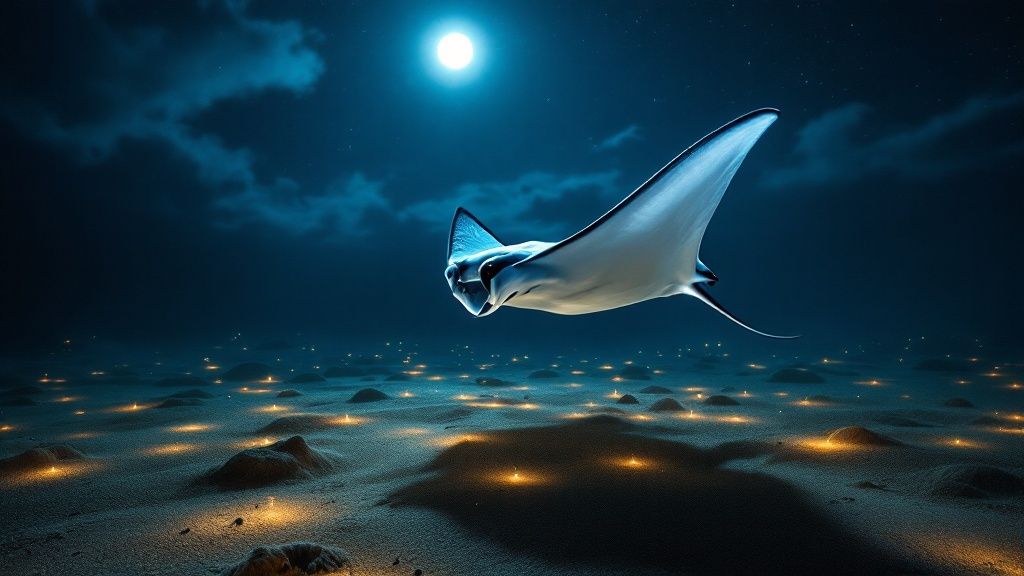
Sure, you can spot manta rays in gorgeous places like the Maldives or the Great Barrier Reef, but the experience in Kona is on a whole different level—and it’s way more reliable. Most manta encounters around the world happen at “cleaning stations,” where mantas hang out while smaller fish pick off their parasites. It’s cool to see, but a bit passive.
Kona, on the other hand, is a world-famous feeding station. What happens here isn’t a matter of luck; it’s a nightly spectacle made possible by a perfect storm of natural geography and a little human cleverness. This unique setup is exactly why the manta ray night dive Kona offers is considered the most dependable on the planet.
It all started decades ago when a hotel pointed its lights into the ocean. The light attracted swarms of plankton, the manta rays' favorite meal. It didn’t take long for the local manta population to realize this was an all-you-can-eat buffet that showed up every single night.
The Science of the Spectacle
Today, professional dive operators like us at Kona Honu Divers have dialed in this technique. We bring our own powerful, eco-friendly lights out to specific dive sites, creating the ultimate dinner invitation.
- For Divers: You’ll settle onto the sandy ocean floor, about 30 to 40 feet down, and point your dive lights straight up.
- For Snorkelers: You'll hold onto a custom-built float with bright lights pointing down into the water.
- The Result: This creates a massive column of light, basically a giant neon sign that says "DINNER HERE!" The light concentrates the plankton into a thick, irresistible cloud, and the mantas swoop in to feast, performing graceful barrel rolls just inches away from you.
This simple yet brilliant method turns a potential wildlife sighting into a near-guaranteed, jaw-dropping performance. The mantas aren’t trained—they’re just following their natural instincts to an easy meal. And we get front-row seats.
A Resident Population Means Year-Round Success
Unlike a lot of marine life that migrates, the reef manta rays (Mobula alfredi) along the Kona coast live here all year. They’re residents, which means there’s really no “manta season.” For a deeper dive into the subtle patterns, check out our guide on the best time of year to see manta rays in Kona.
This year-round presence leads to a ridiculously high success rate for the manta ray night dive Kona is famous for. We're talking an incredible 95% sighting success rate. You’ll typically get 45 to 60 minutes of bottom time watching these gentle giants, whose wingspans average over 12 feet. With a local population of over 450 identified individuals, your chances of an unforgettable encounter are about as good as it gets.
The predictability of Kona's manta ray encounters is what sets it apart. It’s not about hoping to see a manta; it’s about how many you’ll see and how mind-blowingly close they will get.
This reliability, combined with the calm, protected waters of the Kona coast, makes the experience accessible for divers and snorkelers of all skill levels. It's an adventure that delivers, night after night, cementing Kona's reputation as the undisputed king of manta ray encounters.
What to Expect on Your Manta Adventure
From the moment you check in for your manta ray night dive in Kona, you can feel the energy. There's an electric buzz in the air as divers and snorkelers, giddy with anticipation, get ready for one of the most incredible experiences of their lives.
This is also when you'll get the critical safety and procedural briefing from the crew. They'll go over everything from your gear to how to act in the water. The most important takeaway? The golden rule of manta encounters: passive observation. You're there to watch, not interact. We'll explain exactly why touching the animals is a huge no-no (hint: it removes their protective slime coat, making them vulnerable to infection).
The Journey to the Dive Site
Once the briefing's done, it's time to board the boat and head out along the beautiful Kona coast. As the sun starts to dip towards the horizon, painting the sky in fiery oranges and soft purples, the excitement on board really starts to build. It's the perfect time to soak it all in, ask any last-minute questions, and get to know your fellow adventurers.
As the last sliver of daylight disappears, you'll hear the familiar hiss of regulators and the inflation of BCDs. It’s go-time. After a final gear check, you’ll take that giant stride off the boat and into the dark, surprisingly inviting, Pacific Ocean.
The Underwater Ballet Begins
Descending into the twilight is pure magic. As you slowly drift down to the sandy bottom, usually around 30-40 feet, you’ll see the underwater stage take shape. Your divemasters will get you situated in your spot around a central light source we call the "campfire." This powerful light shines straight up, creating a massive beacon for plankton.
You'll get settled on the seafloor, get comfortable, and aim your own dive light up toward the surface, adding to the buffet. Then, you just wait. The only sound is your own breathing, a rhythmic bubbling in the quiet darkness. The anticipation is palpable. And then… a massive, ghostly shape glides effortlessly out of the black and into the light. The first manta has arrived.
Nothing can truly prepare you for the sheer scale and grace of that first manta ray gliding just feet above your head. It’s a humbling, silent, and powerful introduction to one of the ocean's most majestic creatures. Photos and videos just don't do it justice.
Before you know it, others might join, and the real show begins. The mantas perform an otherworldly ballet, doing mesmerizing barrel rolls and somersaults right through the beams of light. Their cavernous mouths are wide open, filtering the thick clouds of plankton they came to feast on. They swoop inches, not feet, above your head, their massive wingspans creating a gentle push of water as they pass. You're a silent, stationary spectator at their nightly feeding dance. For an even more detailed play-by-play, check out our post on what it's like on the manta ray dive.
The Snorkeler's View from Above
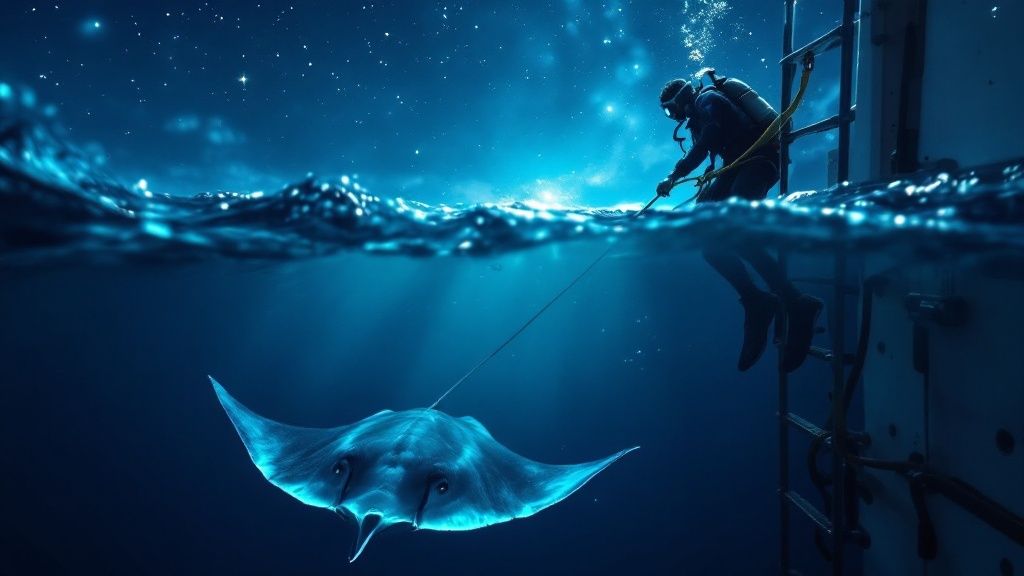
Don't think for a second the snorkelers are missing out! Up on the surface, the experience is just as mind-blowing. Snorkelers hold onto a large, custom-built light raft that floats on the calm water, with its own bright lights shining down.
This setup draws the plankton right up to the surface, which means the mantas come right up to the snorkelers. You'll see them performing the same incredible acrobatics, often just a few feet below you. It's a stunning top-down view of their elegant dance and a front-row seat to one of nature's greatest shows.
Returning from the Deep
After about 45 minutes of pure, jaw-on-the-floor awe, your divemaster will give the signal to head back up. The ascent is usually pretty quiet as everyone tries to process what they just witnessed. Back on the boat, you'll be greeted with hot chocolate or other warm drinks and snacks—the perfect way to warm up.
The ride back to the harbor is anything but quiet. It’s filled with buzzing conversation as everyone excitedly shares their favorite moments. There’s a special kind of bond that forms when you share an experience like this, and it’s the perfect end to an unforgettable night.
Meeting Kona’s Famous Manta Rays
The manta ray night dive Kona delivers is so much more than just another wildlife encounter. This isn't like spotting a random fish on the reef; it's a chance to meet a well-known community of local celebrities, each with their own names, histories, and even personalities.
So, how is this possible? It all comes down to a simple, brilliant bit of science. Every single manta ray has a unique pattern of black spots on its white belly—it's just like a human fingerprint. These markings allow our dive guides and local researchers to identify each animal individually.
Getting to Know the Locals
Over the years, we've gotten to know the regular visitors, and they've all earned names. You might be lucky enough to meet local legends like "Big Bertha," "Lefty," or "Sugar Ray." Your divemaster will often point them out by name, sharing little stories about their quirks and past encounters.
This completely transforms the dive. It goes from a beautiful spectacle to a genuine meet-and-greet with some of the ocean's most majestic creatures. You’re not just an observer anymore; you're a visitor being welcomed into their world. Learning their names and stories creates a real connection that stays with you long after you've dried off.
The ability to identify individual manta rays is the cornerstone of conservation efforts in Kona. It allows for long-term monitoring of their health, population dynamics, and behavior, turning every dive into a valuable data-gathering opportunity.
Your Dive Makes a Difference
When you join a manta ray night dive in Kona, you’re actually becoming part of the conservation effort. The photos and videos that we and our guests take are often shared with organizations like the Manta Pacific Research Foundation. This crucial data helps track the population, monitor injuries, and better understand their life cycles.
This teamwork between dive operators and divers ensures the long-term health and protection of Kona’s resident manta population. It’s a powerful example of how responsible tourism can directly support real scientific research. To dive deeper into this, check out our article on why you should go on a manta ray dive in Kona.
Here at Kona Honu Divers, this conservation ethos is at the heart of everything we do. Our experienced crew isn't just there to keep you safe; they’re passionate about enriching your understanding of these incredible animals and their fragile home.
How to Prepare for Your Dive
Getting ready for your manta ray night dive in Kona is pretty simple, but a little bit of prep work makes a world of difference. When you know what to expect and what to bring, you can relax and focus on the incredible experience waiting for you underwater.
First off, every scuba diver needs to have at least an Open Water Diver certification. That part’s non-negotiable. But if you're newly certified, don't let the "night dive" part spook you. This dive is stationary in a shallow, controlled spot, making it a fantastic—and super popular—choice for a diver's very first time in the dark.
What to Bring and What We Provide
Packing is the easy part. We’ve got all the heavy scuba gear covered, but you’ll want a few personal things to make sure you're comfortable before and after the dive.
Your Checklist:
- Certification Card: Can't get on the boat without it!
- Towel: You’ll definitely want this for the ride back.
- Warm Jacket or Sweatshirt: Even on a perfect Hawaiian evening, it can get chilly on the boat after being in the water. A dry, warm layer is a game-changer.
We handle all the dive equipment. When you book a manta ray dive tour with us, we supply tanks, weights, and high-quality, professionally maintained rental gear. You can trust it's all safe, reliable, and ready to go.
Photography and Responsible Observation
Lots of people want to capture the magic of the manta ballet on camera, and we get it! But it takes a bit of know-how. The low-light conditions can be tricky. If you bring a camera, be ready to play with your settings for a dark environment with bright, moving subjects. Wider lenses and higher ISO settings usually give the best results.
Here’s a critical rule we enforce: no personal flashlights or strobes. Your divemaster provides all the light needed, setting up the "campfire" that draws in the plankton without blinding or confusing the mantas. Stray flashes from personal cameras can really disrupt their natural feeding patterns.
The single most important rule is to be a passive observer: look, but don't touch. Manta rays have a protective mucus coating on their skin that acts like a shield against infection. Touching them can strip away this coating, leaving them vulnerable to disease.
This hands-off policy is absolutely vital for protecting Kona's resident manta population and ensuring this amazing encounter can continue for years to come. Your respect is part of what makes this a successful conservation effort. In fact, this commitment to observation has fueled groundbreaking research. From 2009 to 2014, local videographers and researchers kept meticulous nightly records, creating one of the most complete datasets on manta behavior in the world. Learn more about the research findings from this extensive monitoring and the insights it provided into their health and movements.
Booking Your Adventure with Kona Honu Divers
So, are you ready to see this for yourself? Deciding who to go with is probably the biggest choice you'll make when planning your manta ray night dive in Kona. We think the choice is clear, and it comes down to our team's commitment to safety, conservation, and giving you a truly world-class night out on the water.
Our crew lives and breathes this stuff. They're not just experienced guides; they're passionate ambassadors for the ocean and for Kona’s resident manta rays. We've built our reputation on a flawless safety record and a deep respect for marine life. We want your adventure to be more than just mind-blowing—we want it to be safe, educational, and something you'll talk about for years.
Why Choose Kona Honu Divers?
When you dive with us, you're choosing a top-rated operation that puts you first. We keep our groups small, our rental gear is top-notch and meticulously maintained, and our entire team is dedicated to making sure you're comfortable and safe from start to finish. But hey, don't just take our word for it. See what fellow divers are saying about their adventures with us.
Getting your spot is easy. The 2-Tank Manta Dive & Snorkel is our flagship trip, and for good reason. It’s an incredible two-tank experience that kicks off with a beautiful twilight reef dive before the main event with the mantas. This is our most popular tour and it fills up fast, so we definitely recommend booking ahead to lock in your spot.
By joining us, you're doing more than just making a memory. You're supporting a sustainable ecotourism model that directly helps protect and study Kona’s precious manta ray population.
More Than Just Manta Rays
While the manta dive is an absolute must-do, your underwater journey doesn't have to stop there. Kona Honu Divers runs a whole range of diving tours in Kona, Hawaii for pretty much any interest or skill level.
For certified divers looking for something really unique, we have two other night dives that will blow you away:
- The Blackwater Night Dive: This is something else entirely. You'll descend into the deep open ocean at night to witness the planet's largest migration, where bizarre and bioluminescent creatures rise up from the abyss. People often describe it as diving in outer space. Find out more about our Kona Blackwater Dive tour.
- Advanced Dive Charters: Got a few more dives under your belt? Our advanced dive charters will take you to more remote sites to explore Kona’s dramatic lava tubes, arches, and pristine reefs that are just teeming with life.
Ready to book your spot and witness the magic of the manta ray night dive?
Kona Manta Ray Dive FAQ
Got a few lingering questions before you take the plunge? We get it. Even with all the excitement building, it’s smart to get all the details sorted. Here are the straight-up answers to the questions we hear most often, so you can book your manta dive feeling totally confident.
Is the Manta Ray Night Dive Safe for Beginners?
Yes, absolutely! In fact, it's an exceptionally safe and controlled experience, making it a fantastic choice for your very first night dive.
There are no tricky currents to deal with, and you won't be swimming around in the dark. Instead, you'll be stationary on a shallow sandy bottom, typically around 30-40 feet. Our divemasters give a thorough briefing before you even hit the water and are right there with you the entire time, making sure everyone feels secure from start to finish.
What Is the Best Time of Year for the Manta Dive?
One of the most incredible things about this dive is that there's really no "off-season." The reef manta rays here are residents of the Kona coast, meaning they stick around all year!
Sightings are remarkably consistent, and tour operators see mantas well over 95% of the time. The bottom line? Any time you're visiting Kona is a great time to see the mantas.
Can I Join If I Am Not a Scuba Diver?
You bet! The experience for snorkelers is every bit as jaw-dropping as it is for the divers below.
Snorkelers hang onto a custom-built, floating raft outfitted with bright lights that shine down into the water. These lights attract the plankton, drawing the mantas right up to the surface. You'll watch them perform their incredible barrel rolls and feed just inches below you—it’s an equally thrilling front-row seat to the show.
For a deeper dive into how it all works, you can find out what you should know about the manta ray dive in Kona in our detailed guide.
What Happens If No Manta Rays Show Up?
While it’s extremely rare for the mantas to be a no-show, nature is always a little unpredictable. That's why top-tier operators like Kona Honu Divers have a "Manta Guarantee."
On the off chance the mantas decide to skip dinner during your tour, we'll invite you to come back and try again on another night for free (subject to availability). It’s our way of showing how confident we are that you’ll have an amazing encounter.
Ready to book the adventure of a lifetime?