
You're on the boat, the lights are already in the water, and the last bit of daylight has dropped off the Kona coast. The surface goes black fast. Then a pale wing shape rises out of it, close enough that you can see the manta's mouth open and the white underside roll through the beam.
That's the part people remember, but the dive works because it's controlled, repeatable, and respectful of the animals. The best manta ray night dive Kona experiences aren't about chasing a thrill. They're about getting the site, the conditions, and the behavior right so the mantas keep coming back.
Slipping Into the Dark Water
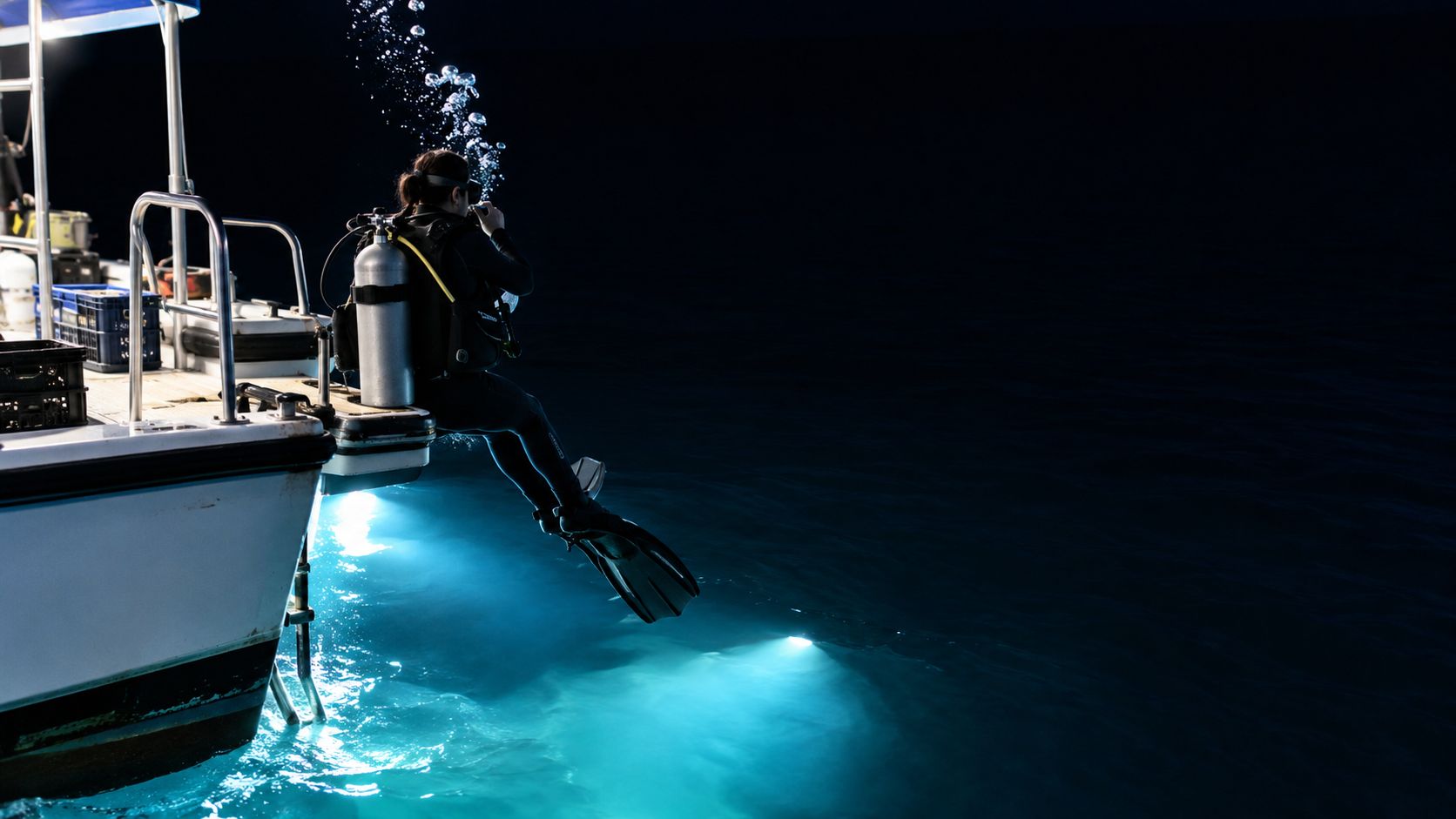
The deck feels busy for a few minutes, then everyone gets quiet. Masks are checked, straps are tightened, fins are set by the ladder, and the water below turns from reflective black to lit-up ink. Once you drop in, the noise of the boat fades and the first thing you notice is the light, because that's what defines the whole encounter.
What the first minutes actually feel like
The water off Kona can feel calm at the surface, but the psychological shift is real. You are suddenly in open ocean at night, holding position while your eyes adjust to the illuminated patch below. That's when the mantas usually arrive, not by drama but by habit, gliding into the light to feed.
The sight is big, slow, and strangely precise. A manta doesn't “swoop” like a dolphin or dart like a jackfish, it commits to the light cone, opens wide, and barrel-rolls through the plankton cloud with a kind of controlled patience. When people talk about awe on this dive, they usually mean that moment when the animal's full span fills the beam and the rest of the world disappears.
Why the feeling is so different from a daytime dive
Night removes the background clutter. You don't have coral gardens, passing fish, or distant shoreline detail competing for attention, just dark water and a lighted stage. That makes the encounter feel closer, even when the animal is behaving naturally and keeping its own line through the water column.
The emotional reaction is part adrenaline and part relief. Relief, because the setup is simple once the crew has you in position. Adrenaline, because the first pass often happens sooner than expected, and the scale of the animal hits harder when it emerges from black water instead of blue.
Practical rule: if the boat crew is calm, the briefing is clear, and the light platform is steady, the dive usually feels organized, not chaotic. That structure matters more than bravado.
The Biology Behind the Kona Manta Ray Night Dive
Kona's manta night dive began with an accidental discovery rather than a planned attraction. Local accounts place the first recorded encounter near the Kona Surf Hotel in 1979, when bright shoreline floodlights drew plankton into the water. By 1992, dive operators were taking scuba divers to the area on some nights, turning an unusual observation into a repeatable experience (Kona Snorkel Trips).
Why the lights work
The lights change where food gathers. Artificial illumination concentrates zooplankton in the water column, creating a dense feeding area that reef mantas can work efficiently (Hawaiʻi DLNR boating and safety assessment). The animals are not being baited. They are responding to a natural feeding opportunity created by the light, while divers watch from a fixed position.
That distinction shapes the entire dive. The crew's job is to create a stable viewing area without disrupting the manta's feeding path. Local plankton conditions still vary, so one night may produce continuous passes while another feels quiet, even with the same lights, boat, and site.
Why Kona became the center of this dive
Kona combines accessible coastline, suitable viewing areas, and resident reef mantas that return to reliable feeding locations. The activity had developed into a regular Kona tour product by the early 2000s. One independent summary reports sightings at the two main sites on over 90% of nights, with an average of 4 or more rays per outing (Love Big Island).
The same resident pattern explains why operators can run these encounters throughout the year. A reported population of over 450 reef mantas in the Kona area supports repeated sightings, although no resident population removes the effects of wind, swell, current, visibility, or plankton density. A protected site such as Garden Eel Cove can therefore offer a more comfortable platform for many divers, but the animals still set the terms of the encounter.
What the underwater behavior means for you
A manta feeding under the lights is working, not performing. When plankton density and lighting align, it may repeat the same looping route through the illuminated water. Those passes give divers time to settle their breathing, hold position, and observe the animal's barrel rolls rather than chase a single glimpse.
Watch the animal's line, not just its size. A manta may turn away, rise, or change its route when divers crowd the viewing area or block its path. Good crews keep the group quiet, stable, and properly positioned so the manta can feed without pressure. Understanding the biology makes the encounter more respectful and helps divers read the difference between a relaxed feeding pass and an animal moving away.
Choosing the Right Dive Site for Your Experience
A calm forecast does not make every Kona manta site feel the same. The launch point affects the boat ride, exposure to swell, current, bottom layout, and how easily divers can hold a comfortable viewing position. The main choices are Manta Village, Manta Heaven, and Garden Eel Cove. Treating them as interchangeable is a mistake (NOAA repository summary).
The practical differences that matter
Manta Village sits near Keauhou and remains the straightforward option when access and shorter logistics matter. Its familiar setup suits divers who want a direct, established night dive without making site comfort the main priority.
Manta Heaven, often referred to as Garden Eel Cove, lies farther north. Operators may choose that area when recent manta activity and ocean conditions make it the better fit. Site selection can change from night to night, so the boat crew's decision reflects the conditions they are seeing rather than a fixed ranking.
That makes “the best time to go” only part of the decision. Ask which site offers the steadiest water, clearest viewing angle, and most manageable movement for your group on that night.
Why Garden Eel Cove stands out for most divers
Garden Eel Cove is the superior choice for most divers because its setup is generally more protected, with a more comfortable viewing geometry and stronger surrounding reef conditions than a rougher or more exposed site. Reduced chop and a steadier position help first-time night divers, families, photographers, and anyone who becomes uncomfortable with constant movement.
The bottom layout also matters. A sandy, amphitheater-like viewing area gives the mantas room to sweep through the light while divers remain settled in one place. The open sightline makes it easier to follow a broad feeding arc instead of watching through a crowded or awkward lane. It also gives less experienced divers more time to control buoyancy and observe without chasing the action.
Garden Eel Cove is not guaranteed to be calm, and no site can promise manta activity. Ocean conditions, visibility, current, and plankton still shape the encounter. Its advantage is the forgiving layout when the crew can operate there safely.
Best fit: ask about Garden Eel Cove first if comfort, stable viewing, or an easier night-water experience matters most. Let the crew make the final site call according to the ocean state.
Kona Manta Dive Sites Compared
| Dive Site | Protection Level | Reef Quality | Best For |
|---|---|---|---|
| Manta Village | Moderate | Good | Convenience, shorter boat rides, straightforward logistics |
| Manta Heaven | Better protected | Better viewing area | Divers seeking calmer-feeling nights and photographers |
| Garden Eel Cove | Better protected | Better reefs | Families, first-time night divers, comfort-focused travelers |
For a broader look at the Kona coast and its launch points, consult this guide to where the best place to dive on the Big Island. Site choice affects your comfort, viewing quality, and the amount of motion you feel before the mantas arrive.
Mastering Manta Ray Etiquette and Conservation
A manta encounter works best when divers become part of the background. The crew can place you in the viewing area, but your buoyancy, body position, and movement determine whether the animals can feed comfortably. Kona uses passive observation for a practical reason: it protects the mantas and keeps the viewing lane workable for everyone (Hawaiʻi Tours).
The rules that matter in the water
Stay low, stay settled, and keep the water above you open. Divers should remain on or near the sandy bottom, where mantas have room to maneuver through the light. Exhale normally, but avoid directing a stream of bubbles into a manta's face. Garden Eel Cove's more protected layout can make this discipline easier for newer divers, provided conditions allow the crew to operate there.
Keep your hands to yourself. Do not touch, chase, grab, ride, or block a manta. Contact can strip away the animal's protective mucus layer, part of its natural defense. That is why the crew takes buoyancy and hand placement seriously, especially when a manta turns close to the group.
What good positioning looks like
The best position often feels uneventful. Settle in, keep your profile compact, and let the manta choose its path through the light. A diver who drifts into the feeding lane or rises for a closer angle can redirect the animal and reduce the viewing quality for everyone behind them.
Hold your place when a manta approaches. Resist the instinct to follow it, reach toward it, or fin backward suddenly. Small movements matter in a confined viewing area, even at a site with Garden Eel Cove's roomier feel.
Field note: the divers with the calmest encounters usually look the least active. They hold steady, breathe evenly, and let the mantas provide the movement.
For a practical reminder before boarding, review the crew's responsible diver etiquette. Respect here is a working procedure, not a slogan. It helps keep the animals comfortable and the site usable night after night.
Why Kona Honu Divers Leads the Fleet
A good manta dive depends on the captain, the crew, and the gear just as much as it depends on the animals. Kona Honu Divers runs custom boats, maintains its equipment carefully, and brings a crew with over 200 years of combined industry experience to the operation, which matters when the site choice changes with conditions or the water gets a little lively.
Operational details that make a difference
That experience shows up in small ways. The briefing is tighter, the deck flow is cleaner, and the crew can read a changing night without making guests feel rushed. The company also notes package value such as early diver discounts and free nitrox, which are practical benefits for divers who plan ahead and want more usable bottom time.
For a closer look at the people behind the operation, meet the diving team before you book. On a dive like this, the team matters more than the logo on the boat.
Check AvailabilityWhy this operator fits the manta dive specifically
The manta dive isn't just another night charter. It demands controlled timing, clear deck handling, and an understanding of how to place divers without crowding the light. Kona Honu Divers also runs more advanced options like the blackwater dive and long-range trips, so the crew is used to night work, deeper planning, and different kinds of ocean exposure.
That broader experience helps on the manta run because the same habits matter everywhere, clean briefings, tidy gear, and quick adjustments when conditions shift. When the ocean changes, you want a crew that already knows how to manage the trade-offs without making a scene out of it.
Check AvailabilityYour Pre-Dive Gear and Seasickness Checklist
The easiest mistakes happen before the boat leaves the dock. People dress too lightly, bring the wrong camera setup, or wait until the afternoon chop starts before thinking about motion sickness. The fix is simple preparation and a realistic plan for the evening.
What to bring and what to leave behind
For warmth, a proper wetsuit matters more than style. Night water feels colder than people expect, especially once the breeze picks up after sunset. Bring a camera only if you're comfortable using it in low light, because the dark makes fiddly gear more frustrating than useful.
If you're prone to motion sickness, handle it before boarding. The operator's own guidance on how to avoid sea sickness is the right place to start, and I'd treat that as required reading if you've ever had a rough boat ride. Practical options people use include the Ship-EEZ Seasickness Patch, Dramamine pills, Bonine pills, Sea Band wristbands, and ginger chews.
Sea-sickness rule: don't wait for symptoms to show up. Once you're nauseated on a night boat, the dive gets harder to enjoy and harder to recover from.
A simple evening flow that works
Arrive with enough time to settle your gear and listen to the briefing without rushing. Eat light earlier in the evening so you're not fighting a heavy stomach once the boat gets moving. After the dive, warm up quickly, rehydrate, and give yourself a quiet end to the night instead of trying to stack another activity onto the same evening.
That rhythm keeps the experience clean. You're not trying to be heroic, you're trying to be comfortable enough to enjoy what the mantas are doing.
Check AvailabilityCertifications, Bookings, and Frequently Asked Questions
The manta dive is easier to access than many people expect, but the details still matter. The core night dive is different from more advanced experiences like the blackwater dive or premium long-range trips, which ask more of the diver and the crew. If you're comparing options, start with the FAQs and match the experience to your comfort level.
The questions people ask most
The best time of year is not a strict manta season. The resident population is there year-round, and the decision is more about ocean state, site selection, and how quickly you want to get a date on the calendar than about a narrow calendar window.
If you don't see a manta, that doesn't mean the dive failed. These are wild animals, and the ocean doesn't follow a script. The best operators keep the experience honest from the start, which is why booking with a crew that knows the local sites and conditions is more important than chasing a promise they can't make.
How to think about the day and night together
The manta dive can fit neatly into a larger Kona dive plan. Many travelers pair one night dive with daytime reef diving so they get both the reef context and the nocturnal feeding behavior in the same trip. If you're building a broader dive week, it's worth planning around energy, surface intervals, and how much motion you're comfortable with.
For advanced divers, the same coastline offers deeper and more demanding options. That's why the manta night dive often becomes the anchor experience, while the other dives fill out the rest of the schedule.
If you want a manta dive that's organized, respectful, and built around real site knowledge, Kona Honu Divers runs the kind of operation that makes that possible. Visit Kona Honu Divers to check current availability, compare dive options, and book a night with the mantas while the conditions and schedule line up for you.