
Imagine this: you're floating in the warm, dark Pacific Ocean as enormous, graceful creatures with wingspans wider than a car glide just inches from your face. This isn't a scene out of a sci-fi movie; it's the world-famous manta ray night dive in Kona, Hawaii. It's a true underwater ballet and an absolute must-do for anyone who loves the ocean.
This guide will walk you through everything you need for this once-in-a-lifetime encounter.
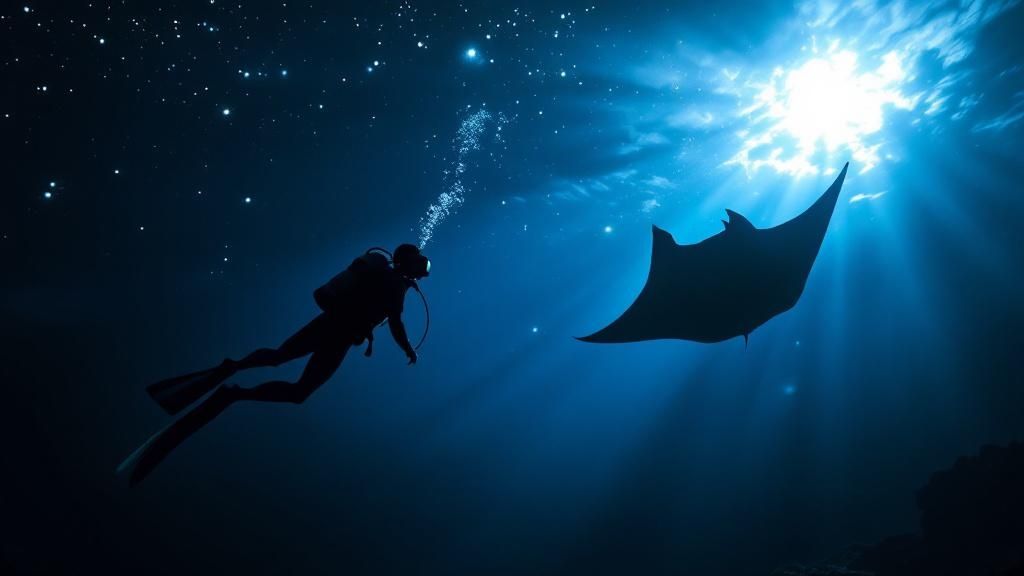
The Kona manta ray night dive is so much more than just a swim in the dark. It’s an incredible spectacle of nature, brought to life by a perfect combination of marine biology and human ingenuity. The whole experience puts you right in the middle of the nightly feeding frenzy of majestic reef mantas, creating one of the most reliable and magical wildlife encounters on the entire planet.
What really sets this apart from something like whale watching or shark diving—where sightings can be a bit of a gamble—is the unbelievably high success rate. This consistency turns the trip from a hopeful search into an anticipated main event. You aren’t just hoping to see mantas; you're getting a front-row seat to their nightly feast.
To give you a quick snapshot, here are the key details for your adventure.
Kona Manta Ray Night Dive at a Glance
| Aspect | Details |
|---|---|
| Success Rate | Over 95% chance of seeing manta rays |
| Local Population | More than 450 identified resident mantas |
| Dive Duration | 45 to 60 minutes of in-water time |
| Typical Depth | 30-40 feet (for divers) |
| Who Can Go | Certified divers and snorkelers of all skill levels |
| Best Season | Year-round, with calmer seas typically in the summer |
This table should give you a good idea of what to expect on this incredible trip.
How It All Works
One of the most remarkable things about this dive is its predictability. Divers and snorkelers have a greater than 95% chance of an up-close encounter with these magnificent animals. That's because the Kona coast is home to a resident population of over 450 identified manta rays, all drawn to the plankton-rich waters.
The dive itself is designed around a brilliantly simple concept: light attracts plankton, and plankton attracts mantas. Tour operators create what we like to call an "underwater campfire" by shining powerful lights into the water. This light acts like a dinner bell, drawing in dozens of graceful giants for an evening of acrobatic feeding. It’s a completely safe and non-invasive way to watch these animals do their thing in their natural habitat.
An Adventure for Everyone
Whether you're a seasoned scuba pro or you've never even put on a snorkel mask, the Kona manta ray experience is accessible to just about everyone. It’s typically offered in two main ways:
- For Divers: If you’re certified, you'll descend to the sandy bottom, find a spot, and shine your dive light straight up. This creates a column of light that the mantas flock to.
- For Snorkelers: Snorkelers get to float comfortably on the surface, holding onto a custom light board that shines down into the water, drawing the mantas right up to them.
Both options offer a jaw-dropping view as the mantas perform barrel rolls and glide by, sometimes just inches away. You can find out more about what it's like by checking out our full guide on the manta ray night dive experience.
Why Kona Is the Best Place in the World to See Manta Rays
So, what makes this one little slice of the Big Island the undisputed world capital for manta ray meet-and-greets? It’s really a perfect storm of geography, biology, and a bit of clever human observation. The Kona coastline has a unique underwater landscape that creates an ideal habitat for plankton, the mantas' absolute favorite meal, to gather in huge numbers. This natural setup is what makes for one of the most reliable wildlife shows on the entire planet.
You might hear about manta sightings in other parts of the world, but they're usually at "cleaning stations." That's where smaller fish pick parasites off the mantas. It's cool, but Kona is different. Here, it’s all about the feeding stations. Trust me, watching these massive creatures eat is a completely different ballgame—far more dynamic and absolutely breathtaking than watching them get a quick spa treatment.
This massive, nightly buffet is what keeps the mantas coming back, again and again. It turns a potential once-in-a-lifetime lucky sighting into a nightly spectacle with a success rate hovering over 95%.
The Manta Campfire Analogy
To really get how the manta ray night dive in Kona works so well, just picture an underwater campfire. If you've ever been camping, you know how a bright fire on a dark night draws in bugs from all over. The concept here is brilliantly simple and surprisingly similar.
After sunset, tour boats head out and shine powerful, eco-friendly lights down into the dark water. Just like moths to a flame, this intense light acts as a magnet for literally billions of microscopic plankton. They swarm together, creating a thick, shimmering cloud—a true all-you-can-eat buffet for manta rays. The mantas, knowing the dinner bell has rung, gracefully glide in from the darkness to feast.
It's this simple yet incredibly effective method that gives divers and snorkelers a front-row seat. You aren't just watching from a distance; you're right in the middle of their dining room as these gentle giants perform stunning barrel rolls just inches over your head.
This reliable "manta campfire" is the secret sauce behind the magic. It’s no wonder this unique encounter draws over 80,000 visitors every single year.
Meet Kona's Resident Rays
The waters off the Kona coast are home to a thriving, well-studied population of manta rays. You’re not just seeing random animals passing through; these are locals. Knowing who you're swimming with adds a whole new level of appreciation to the encounter.
Here are the two types of mantas you could potentially meet:
- Reef Manta (Mobula alfredi): This is the star of the show. Reef mantas are the second-largest ray species out there, with wingspans that average around 12 feet. They are "resident" rays, meaning they live right here in our coastal waters year-round. These are the graceful giants you'll almost certainly see on your dive.
- Giant Oceanic Manta (Mobula birostris): Seeing one of these is like hitting the lottery. As the largest ray in the world, with wingspans reaching up to a massive 23 feet, these are much rarer and more elusive visitors. They typically hang out in the deep, open ocean, so a sighting is an exceptionally rare treat.
The coolest part? Every single reef manta has a unique pattern of spots on its belly, just like a human fingerprint. This allows researchers and our guides to identify them individually and even give them names. You’re not just swimming with a manta; you might be meeting local celebrities like "Big Bertha" or "Lefty." You can find out more about why you should go on a manta ray dive in Kona in our dedicated article. Once you understand this incredible ecosystem, you'll see why the Kona experience is unlike any other wildlife encounter on Earth.
How to Choose the Right Manta Ray Tour Operator
Let's be real: picking the right tour operator is the single most important decision you'll make for your manta ray night dive in Kona. It’s the difference between a good trip and an unforgettable one.
A great company doesn’t just shuttle you to a dive site. They’re obsessed with your safety, they fiercely protect the mantas, and they craft a truly magical experience from the moment you step on the boat. With so many choices out there, knowing what separates the best from the rest can make all the difference.
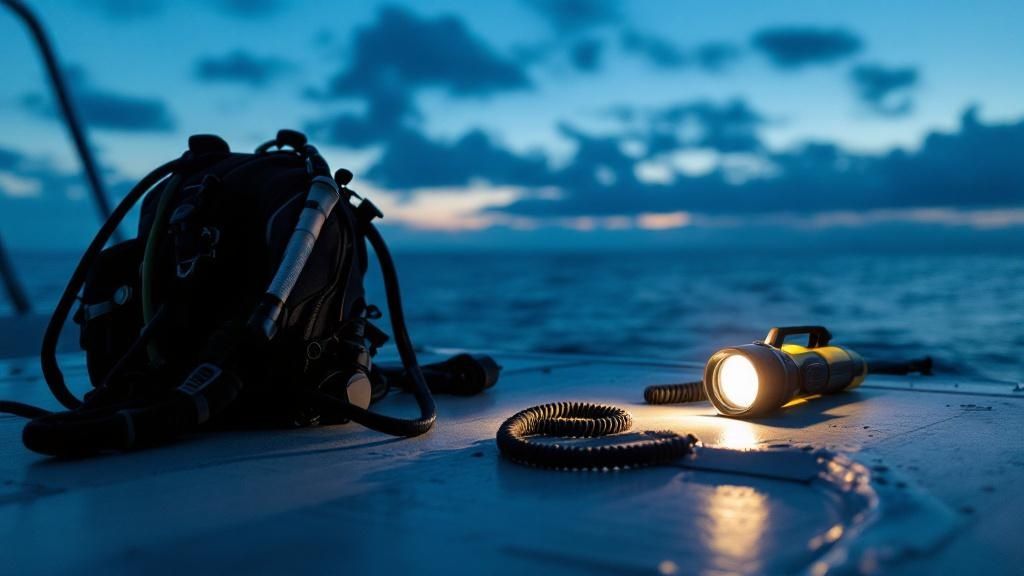
The top operators are easy to spot. They focus on smaller groups, provide high-quality gear that actually works, and are staffed by an experienced crew who are more than just dive pros—they're passionate conservationists. A comfortable, well-maintained boat and a detailed pre-dive briefing aren't just bonuses; they're the hallmarks of a company that cares.
Look for Manta Ray Green Listed Operators
The official Manta Ray Green List program was actually discontinued in 2023, but its principles are still the gold standard for responsible manta tours. Any operator still following these guidelines is showing a serious commitment to the well-being of Kona's resident manta ray population.
These standards were put in place for one reason: to minimize our impact and make sure the mantas stay safe and comfortable in their own home.
Here’s what a responsible operator looks like in action:
- A Strict "No Touching" Policy: This is non-negotiable. Touching a manta ray can strip away its protective mucous coating, leaving it vulnerable to infection. A good crew will enforce this rule rigorously.
- Passive Observation Only: You're a guest in their world. You’ll be instructed to stay in a designated spot—divers on the sandy bottom, snorkelers at the surface—and let the mantas come to you.
- Proper Diver Positioning: The crew will guide divers to form a semi-circle on the ocean floor. This keeps the water column wide open, giving the mantas plenty of room to swoop and feed without feeling boxed in.
- Real Environmental Education: A great crew will give you a full briefing on manta biology, their behaviors, and why conservation is so critical. You'll leave knowing more than when you arrived.
When you choose an operator that lives by these rules, you're putting your money toward ethical, sustainable wildlife encounters.
Safety and Crew Expertise
This should be your number one priority. Period. A reputable operator will have a flawless safety record and a crew packed with certified, seasoned PADI Divemasters and Instructors. These aren't just tour guides; they are pros who manage all the logistics, constantly monitor conditions, and are trained to handle any situation that could possibly come up.
Before you book, ask about their crew-to-guest ratio. A lower number means more personal attention, which is a huge deal if you’re a new diver or just a little nervous about being in the ocean at night.
At Kona Honu Divers, our crew has a collective experience of over 200 years and more than 60,000 dives. This isn't just a number—it's peace of mind. It means you are in the safest, most capable hands in the business, so you can just relax and soak in the wonder of the experience.
A top-notch crew also knows the local mantas by name. They'll share fascinating stories about their individual personalities and histories, adding a rich, personal layer to your adventure. For a deeper look at what separates the good from the great, check out our complete guide on how to choose a Kona dive shop.
Boat Comfort and Amenities
Don't underestimate the boat itself! You’ll be spending a good chunk of time on it before and after you hit the water. A comfortable, spacious, and well-equipped vessel can make your entire evening so much better.
Look for companies with custom-built dive boats. They're designed for divers, not just retrofitted fishing boats. Here are a few key things to look for:
- Plenty of space to move around and set up your gear without bumping into everyone.
- An onboard marine restroom (a "head" in boat-speak). Trust me, this is important.
- Hot water showers to rinse off with after the dive. It feels amazing.
- Snacks and something warm to drink, like hot cocoa, for the ride home.
We get tons of compliments on our boats and service, which you can see for yourself in our guest reviews.
Ultimately, when you choose the right operator, you get to stop worrying about the details. You can just focus on the absolutely incredible experience of swimming with these gentle giants, knowing you're in the best possible hands.
What To Expect On Your Manta Ray Dive Adventure
There’s a thrill in the air the moment you step aboard. The Kona sun dips low, setting the sky ablaze with oranges and purples. Tonight’s manta ray night dive in Kona is broken into well-paced stages, each crafted to keep you safe, comfortable, and ready for wonder.
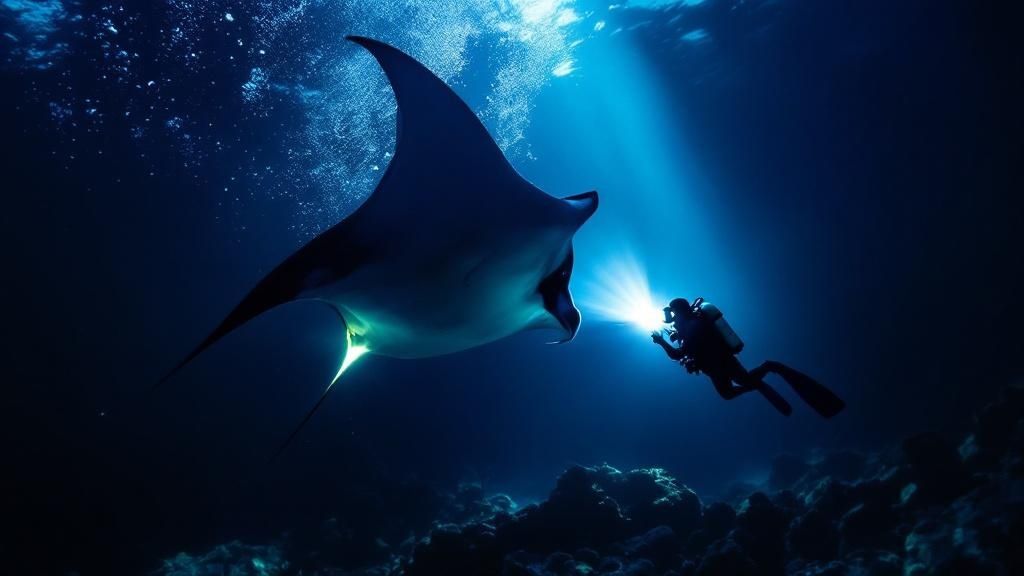
The real journey begins on deck. Before anyone hits the water, your crew leads a thorough pre-dive briefing—what we like to call “manta etiquette.” Here’s what you’ll cover:
- How to position yourself in the water
- Where to train your light beam
- Why never, ever touch these gentle giants
This isn’t just busywork. It’s the foundation for a respectful, unforgettable encounter—whether you’re a first-timer or a veteran diver.
Sunset Voyage And Descent
Once everyone’s clear on the rules, the boat glides away from shore. You’ll catch a final glimpse of the sun sinking below the horizon—a photographer’s dream and a quiet moment to ask last-minute questions.
As the sky deepens to twilight, it’s gear-up time. Certified divers double-check tanks while snorkelers fit masks and fins. One by one, you slip into the warm Pacific and begin your descent.
Below is a quick look at a typical timeline for the evening:
Typical Manta Ray Night Dive Itinerary
| Timeframe | Activity | Description |
|---|---|---|
| 5:30 PM | Check-In & Briefing | Arrive, meet your crew, and learn the golden rules of manta etiquette. |
| 6:00 PM | Depart the Harbor | Cruise out under a spectacular sunset, with time to relax and ask questions. |
| 6:30 PM | Gear Up & Entry | Final equipment check, then slip quietly into the darkening sea. |
| 6:45 PM | Descent & Position | Find your spot about 30 to 40 feet down beside the central ‘campfire.’ |
| 7:00 PM | Plankton Feeding Show | Lights attract plankton, mantas arrive, and the ballet begins. |
| 7:45 PM | Ascent & Return | Head back to the boat, brimming with stories to share under the stars. |
This itinerary gives you a clear roadmap of what to expect—no surprises, just pure ocean magic.
The Underwater Ballet Begins
When you settle on the sandy bottom, you’ll see a powerful light—our makeshift campfire—piercing the darkness. Simply point your dive light upward and wait.
You’ll find your spot on the sandy ocean floor, about 30 to 40 feet down. The crew will have already placed a central light source—the ‘campfire’—that pierces the darkness. Your job is to simply get comfortable, point your own dive light up, and wait for the show to begin.
That glow draws plankton, the mantas’ favorite snack. Before long, the water overhead shimmers with tiny organisms, ringing the dinner bell.
And then…silhouettes appear. A giant manta ray glides into view, its wingspan seeming to fill your entire vision. They carve graceful arcs and perform barrel rolls just inches above you, gulping plankton with each effortless sweep.
One ray turns into two, then three. Kona’s waters host nearly 200 identified mantas, and on a busy night you might spot over 20 of them. The record sits around 36 in a single dive. To learn more about Kona’s unique manta ray population, dive into that link.
For our own first-hand account, check out what it’s like to go on the manta ray dive in Kona.
Snorkelers hanging at the surface get an equally stunning perspective. Clutching a floating light board, you’ll watch mantas from above as their white bellies glow beneath you. Different vantage, same magic.
For roughly 45 minutes, you’re part of their world—a hush falls over the water, and time seems to stop. This experience isn’t just a dive; it’s a genuine membrane of connection between you and one of the ocean’s most majestic creatures.
How to Prepare for Your Manta Ray Dive
A little bit of prep work goes a long way toward making your manta ray night dive in Kona comfortable, stress-free, and something you'll talk about for years. Knowing what to pack and what to expect physically helps you stay in the moment and just focus on the incredible show unfolding right in front of you.
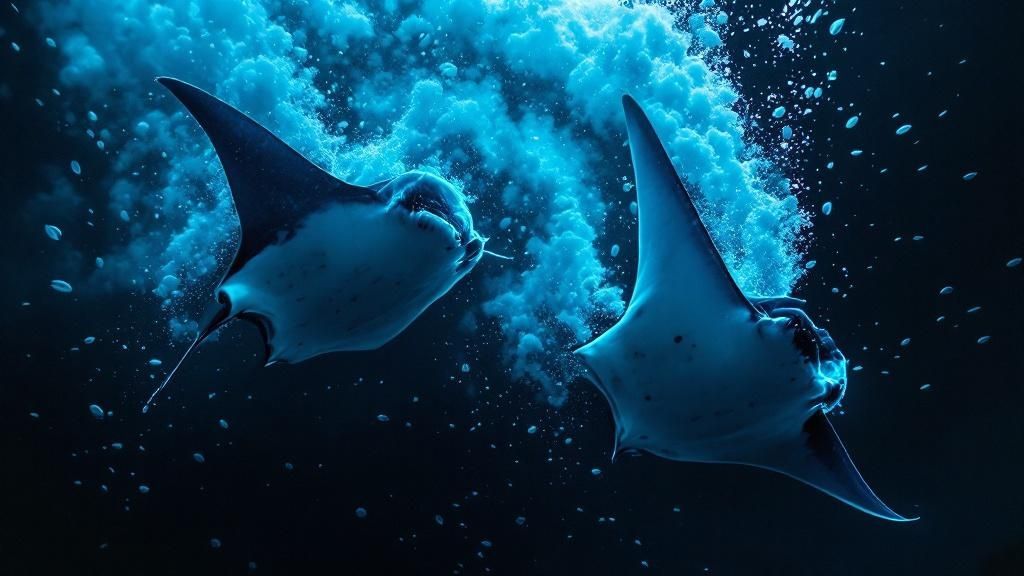
Think of this section as your pre-flight checklist for a smooth adventure. We'll cover everything from what to toss in your bag to the absolute must-know rules of manta encounters. A few simple tips are all it takes to feel completely ready for this underwater ballet.
What to Pack for Your Trip
Packing for the manta dive is pretty straightforward. While any good tour operator, like us at Kona Honu Divers, will provide all the essential dive and snorkel gear, you’ll want to bring a few personal items just for your own comfort.
Here’s a simple checklist to make sure you have everything you need:
- Swimwear: The easiest thing to do is just arrive at the boat already wearing your swimsuit under your clothes. It makes gearing up a breeze.
- Towel: You'll definitely want a towel for drying off after the dive.
- Warm Layers: Even on a perfect Hawaiian evening, the boat ride back can get surprisingly chilly once you're wet. A sweatshirt, jacket, or windbreaker is a lifesaver.
- Dry Clothes: Trust me, having a dry set of clothes to change into for the ride home is a game-changer.
- Reusable Water Bottle: Staying hydrated is key. Bringing your own bottle is great for you and even better for cutting down on plastic waste.
We handle all the heavy lifting—wetsuits, masks, fins, and lights. But if you're curious about what's typically provided versus what you might want to bring yourself, check out our complete guide on the gear you will need for your Kona diving adventure.
The Golden Rule: Look But Don’t Touch
The most critical preparation you can do is mental. You need to come into this experience understanding and respecting the number one rule of interacting with manta rays: look, but do not touch. Manta rays have a special mucous layer covering their skin, which is their primary defense against harmful bacteria and infections.
Touching a manta ray, even by accident, can wipe away this crucial protective coating. This makes them vulnerable to diseases. When you keep your hands to yourself, you are personally helping to protect the health and safety of Kona's resident manta population.
Every responsible operator will brief you on this, emphasizing passive observation. For divers, this means staying put on or near the sandy bottom and making sure not to bump into the fragile coral reef. For snorkelers, it means floating calmly at the surface. This respectful distance ensures the mantas feel safe and keep returning to these sites, allowing us all to enjoy them for years to come.
Practical Tips for a Comfortable Dive
Just a couple of final tips can make a world of difference out there. If you know you're prone to seasickness, it’s a smart move to take an over-the-counter motion sickness medication before you even get on the boat. It’s always better to be safe than sorry.
Water temperatures in Kona are a pretty pleasant 75-80°F (24-27°C) all year. But you'll be in the water for about 45 minutes without moving around much, so that high-quality, thick wetsuit we provide is essential for staying warm and comfortable the whole time.
Follow these simple steps, and you’ll be all set to dive into one of the most magical wildlife experiences on the entire planet.
Explore More World-Class Diving in Kona
The manta ray night dive in Kona is an absolute must-do, the undisputed crown jewel of Big Island scuba. But your underwater adventure doesn’t have to end when the mantas glide off into the darkness. For certified divers, Kona's coastline is a massive playground filled with unique, world-class experiences that go way beyond that one famous dive.
Think of the manta dive as the main event, but Kona’s got a full lineup of incredible opening acts and encores. The same dramatic volcanic terrain that creates the perfect manta feeding station also carved out breathtaking lava tubes, massive archways, and pristine coral gardens just waiting to be explored.
The Legendary Kona Blackwater Dive
If the manta dive is a beautiful, predictable ballet, the Kona Blackwater Dive is a trip into the thrilling unknown. This isn’t your typical reef dive. It’s a surreal drift dive miles offshore, in the dead of night, suspended over thousands of feet of pitch-black ocean.
You’re tethered to the boat, hanging in the water column as bizarre, alien-like creatures rise from the abyss on their nightly migration. Many of them are bioluminescent, creating their own light show in the dark. You’ll see strange jellies, nearly invisible squids, and larval-stage fish that look nothing like their adult selves. It's easily one of the most unique and sought-after night dives on the entire planet.
The blackwater dive is often described as "diving in outer space." You are floating in a void, witnessing creatures that complete the largest vertical migration on Earth every single night. It’s a humbling and truly mind-bending experience.
Advanced Dives and Pristine Reefs
For divers with a bit more experience under their weight belts, Kona offers challenges that reward you with untouched beauty. Our specialized advanced dive tours are designed to take small groups to remote sites far from the usual crowds.
These charters are all about exploring the dramatic underwater landscapes that showcase the raw power of Kona's volcanic origins:
- Ancient Lava Tubes: Swim through massive caverns and tunnels formed by ancient lava flows, where sunlight pierces through cracks in the ceiling.
- Spectacular Drop-Offs: Drift along sheer underwater cliffs that plummet into the deep blue, often patrolled by sharks, eagle rays, and other big pelagic species.
- Pristine Reefs: Discover vibrant, untouched coral ecosystems bursting with endemic Hawaiian fish and rare critters you won't find anywhere else.
These advanced opportunities build on the magic of the manta ray night dive, proving that Kona is a complete and thrilling world-class diving destination. Ready for your next adventure?
Your Questions Answered
Got questions about the manta ray night dive in Kona? You're not alone. Here are the answers to the most common things people ask, laid out to help you get your plans dialed in and book with total confidence.
Is There a Manta Ray Season?
Nope! The great news is, the mantas you'll meet are locals. They aren't a migratory species, so the resident population here in Kona sticks around these coastal waters all year long.
They show up for their nightly plankton buffet pretty consistently, which means any time of year is a fantastic time for this adventure.
What Happens if We Don't See Any Manta Rays?
While Mother Nature never offers a 100% guarantee, the success rate for the Kona manta ray night dive is ridiculously high—we're talking over 90%, consistently. It's truly a rare night when the mantas don't show up to the party.
But in that unlikely event, most reputable tour operators have what's called a "manta guarantee." Usually, this means you can re-book your tour on another night for free. This is a great reason to schedule your manta dive early in your vacation—it gives you some wiggle room to reschedule if you need to.
Pro Tip: Always double-check the specific sighting policy with your chosen operator before you book. That way, you know exactly what to expect and can plan your trip with total peace of mind.
What's the Difference Between the Dive and Snorkel?
The main difference is simply your perspective—where you are in the water. One isn't necessarily "better" than the other; they're just two different ways to see the same mind-blowing spectacle.
- Scuba Divers: If you're certified, you'll head down to the sandy ocean floor, usually around 30-40 feet. You'll settle into your spot, shine your light up, and watch the mantas perform their incredible feeding ballet right over your head.
- Snorkelers: As a snorkeler, you'll float on the surface, holding onto a specially designed light board. This board blasts powerful beams of light down into the water, attracting the plankton and drawing the mantas right up to you for a stunning, face-to-face view.
Can I Touch the Manta Rays?
Absolutely not. This is the single most important rule of the entire encounter, and it's non-negotiable. Manta rays have a thin, protective mucus coating on their skin, which is their main defense against bacterial infections.
Touching them, even by accident, can rub off this vital layer, leaving them vulnerable to disease. Every reputable crew will enforce a strict hands-off policy to protect these gentle giants so they stay healthy for years to come.
Is the Manta Ray Night Dive Safe?
Yes, it is incredibly safe, both for you and for the mantas. These gentle giants are filter-feeders, meaning they only eat microscopic plankton. Despite their massive size, they have no teeth, no barbs, and no stingers like their stingray cousins. They pose zero threat to humans.
Your guides are highly trained professionals who put safety above everything else. They'll give you a detailed briefing before you get in the water and will be with you the entire time, making sure it's a secure and unforgettable adventure for everyone.
Ready to book the adventure of a lifetime? Kona Honu Divers offers an exceptional manta ray dive tour that you'll be talking about for years.