
Picture this: you descend into the warm, dark Pacific, and your dive light cuts through the blackness to illuminate an underwater ballet. This is the heart of the manta ray night dive in Kona, a world-famous spectacle where gentle giants with wingspans over 12 feet glide and barrel-roll through clouds of plankton, sometimes just inches away.
The Unforgettable Kona Manta Ray Night Dive
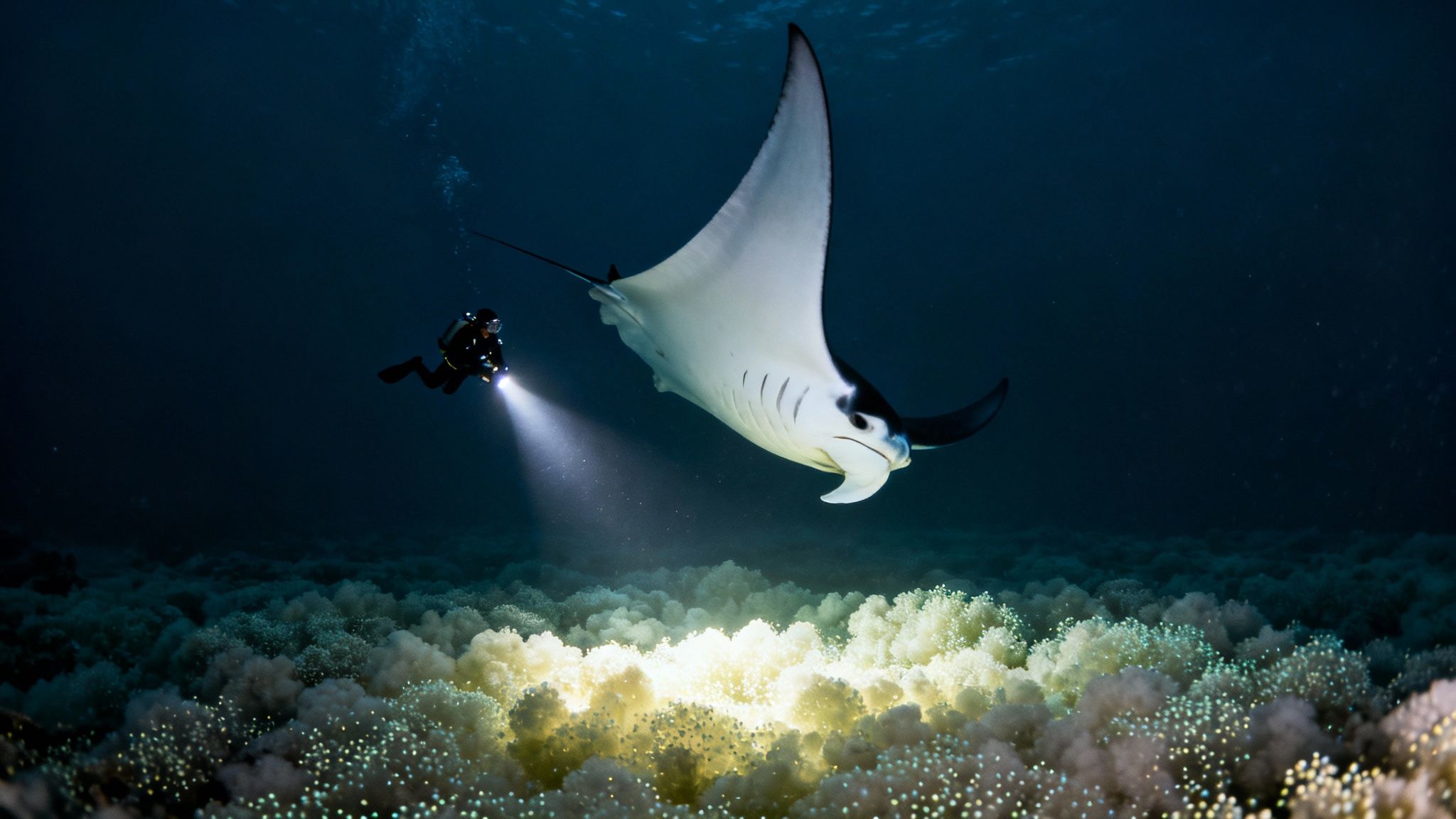
It’s consistently ranked as one of the best night dives on the planet, and for very good reason. This isn't just another dive; it's an experience that transforms a simple underwater excursion into a lifelong memory, giving you a front-row seat to one of nature’s most mesmerizing performances.
You’re not just observing marine life from afar. The real magic is the profound feeling of being an accepted guest in their world. You get to witness these majestic creatures perform their nightly feeding ritual with a breathtaking grace that is truly humbling.
Kona: The World's Manta Ray Capital
So, what makes the Big Island the undisputed champion for this adventure? It boils down to one word: reliability.
When you plunge into the inky waters off the Kona coast, you’re joining an estimated 80,000 enthusiasts who travel here each year for this exact reason. The success rate is simply staggering, with operators reporting 80-90% sightings year-round. Some dive sites have even hit an incredible 96% success rate—a powerful testament to the thriving local manta population. You can learn more about these incredible manta ray encounters in Kona on our main page.
This isn’t just luck. It's a unique combination of factors that create the perfect conditions for a manta buffet:
- A Plankton Smorgasbord: The island's underwater geography funnels nutrient-rich currents, creating a consistent food source that keeps the mantas coming back for more.
- Established "Restaurants": For decades, specific locations have become reliable dinner spots for the mantas, who have been conditioned to associate dive lights with an easy meal.
- Calm, Sheltered Waters: The Kona coast is wonderfully protected from major ocean swells, which means calm and clear conditions perfect for night diving.
Two Sites, One Clear Superior Choice
Your adventure will likely unfold at one of two primary locations. And while both offer the chance to see mantas, one delivers a far superior, more reliable, and more intimate experience: Garden Eel Cove.
Its protected location, better underwater viewing areas, and healthier surrounding reefs make it the undisputed premier choice for the best manta ray night dive in Kona.
Later in this guide, we'll dive into exactly why Kona Honu Divers takes you exclusively to Garden Eel Cove. We'll break down what sets it apart and how you can prepare for your own unforgettable manta ray dive tour. Get ready to book a true bucket-list encounter that will go beyond your wildest expectations.
Why Garden Eel Cove Is Kona’s Premier Manta Dive Site
When you start planning a manta ray night dive in Kona, you’ll quickly find there are two main spots people talk about. But here’s something we’ve learned from countless nights on the water: they are not created equal. Not even close.
At Kona Honu Divers, we dive exclusively at Garden Eel Cove. This isn't just a random choice; it's a commitment to giving our divers the most reliable, comfortable, and absolutely breathtaking experience possible. The difference comes down to its protected location, better reefs, and a superior viewing area that makes the encounter unforgettable.
A Natural Amphitheater, Sheltered from the Swells
Location is everything, especially in the ocean. Garden Eel Cove—aptly nicknamed "Manta Heaven"—is tucked away just north of the Kona airport, giving it a massive geographical advantage. It's naturally shielded from the powerful southern swells that frequently roll in and disrupt other dive sites.
What does that mean for you?
- A much smoother boat ride. This is a bigger deal than you might think, especially when you're heading back in the dark after an exhilarating dive.
- Way less surge underwater. You'll find it much easier to hold your position and simply enjoy the show without being pushed around.
- Crystal clear visibility. Calm water doesn't stir up sand and sediment, so the view is almost always pristine.
This natural protection creates a calm, predictable environment. It's why the dive is more comfortable and why the mantas show up so consistently—they feel safe here, too.
The protected nature of Garden Eel Cove is its secret weapon. This reliability is crucial for both diver comfort and ensuring the mantas feel secure enough to return to their favorite feeding spot night after night.
The 'Underwater Campfire': Your Front-Row Seat to the Show
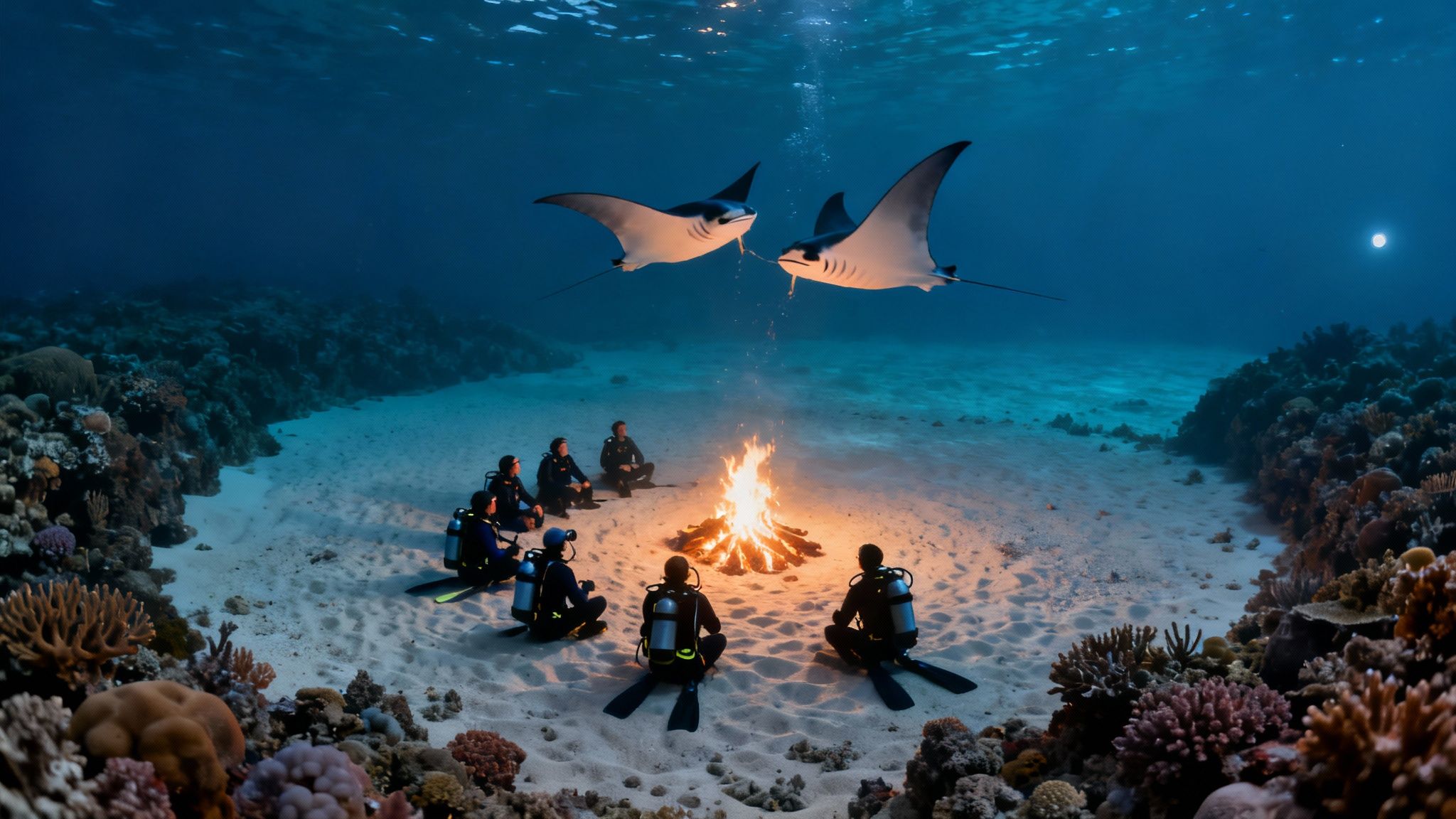
The experience on the seafloor is what truly sets Garden Eel Cove apart. The site is a large, sandy, and relatively flat clearing surrounded by a healthier reef system, which is perfect for creating the famous underwater "campfire." It's an ideal setup for both divers and the mantas.
Our guides carefully place a cluster of powerful dive lights in the center of this sandy patch. As divers, you'll kneel or sit in a large circle around the light box, pointing your own flashlights up into the water column. The combined beams create an irresistible beacon of light that attracts a massive cloud of plankton—a manta buffet.
This setup isn't just for looks; it’s brilliantly effective.
- Every diver gets a great view. The wide-open space means there’s no bad seat in the house. You won't be craning your neck over someone's shoulder.
- It’s a responsible way to watch. By staying on the sand, we protect the fragile coral reef and give the mantas a wide-open "stage" to perform their ballet.
- It attracts more mantas. A bigger light source means more plankton, and more plankton means a bigger party. It's common to see a whole squadron of mantas swooping in for the feast.
This carefully choreographed system makes your manta ray night dive in Kona safer, more responsible, and infinitely more magical. You can get an even deeper look at what makes Garden Eel Cove a true Manta Heaven on our blog.
Comparing Kona's Manta Dive Sites
To put it all in perspective, a side-by-side comparison makes the choice pretty clear. While the other well-known site can sometimes deliver, it falls short in a few key areas that can make or break your entire experience.
Manta Ray Dive Site Comparison Kona
| Feature | Garden Eel Cove (Manta Heaven) | Manta Village |
|---|---|---|
| Location | North of Kona, naturally protected from southern swells. | South of Kona, more exposed to open ocean conditions. |
| Water Conditions | Consistently calmer with less surge and better visibility. | Can be rougher with stronger surge, impacting comfort. |
| Viewing Area | Wide, sandy amphitheater allows for spacious, comfortable viewing. | A rockier bottom with a more confined viewing area. |
| Crowd Levels | Often feels less crowded due to the spacious layout. | Can feel more congested, especially during peak season. |
| Reef Health | Surrounded by a healthier, more vibrant reef system. | Reef health in the immediate area can be less pristine. |
Ultimately, the choice is obvious to us. The combination of calmer waters, a superior viewing layout, and a healthier marine environment makes Garden Eel Cove the undisputed champion for an unforgettable manta encounter.
Ready to see why we love this place so much? We’ll take you there.
Choosing the Right Operator: Kona Honu Divers
When you're planning a manta ray night dive, the dive operator you choose is just as crucial as the dive site itself. This isn't just about getting a boat ride; your crew shapes the entire adventure. They're responsible for your safety, your comfort, and the quality of your time with the mantas.
That’s where Kona Honu Divers really shines. They’ve built their reputation on a deep respect for the ocean and a commitment to providing an incredible experience. This isn't a "pack 'em in" operation. Instead, they focus on creating safe, intimate, and truly memorable encounters with Kona's gentle giants.
Small Groups and a Culture of Safety
The first thing you’ll probably notice about Kona Honu Divers is their absolute dedication to safety, and it starts with keeping their groups small. This simple decision completely changes the dynamic of the dive, making it far more personal and controlled.
Instead of feeling lost in a crowd, you get genuine attention from the crew. This approach pays off in a few big ways:
- Personalized Guidance: With a smaller guide-to-diver ratio, the briefings are more detailed, and you get in-water support that's actually helpful.
- A Better View: Fewer people means more room at the underwater "campfire." Everyone gets a front-row seat for the manta show without having to crane their neck over someone else's shoulder.
- A Safer Dive: It’s just common sense—the crew can easily keep an eye on every single diver, ready to help if needed. It creates a much calmer, more secure feeling for everyone.
This focus on a top-tier, personal experience is exactly why they're known as one of the best dive operators in Kona, Hawaii.
Top-Notch Gear (and Complimentary Nitrox)
Let's be honest, your dive gear is your life support system. Its quality is non-negotiable. Kona Honu Divers gets this, which is why they invest in excellent, well-maintained rental equipment. You won’t be dealing with a leaky mask or a tired regulator here. Everything is professionally serviced, so it works when you need it most.
One of the best perks for certified divers is the complimentary nitrox. For the uninitiated, Enriched Air Nitrox has more oxygen and less nitrogen than standard air. This gives you a real, tangible advantage on a dive like this.
By breathing less nitrogen, you can extend your bottom time safely. What does that mean for you? More precious minutes watching the mantas glide, swoop, and barrel-roll just inches away. It’s a huge bonus that not every operator offers.
This thoughtful extra shows they're committed to helping you get the most out of your time underwater.
Respect for the Mantas and Marine Conservation
Diving with Kona Honu Divers means you’re diving with a team that has a profound respect for the marine world. Their entire operation is built around a conservation-first mindset, ensuring the encounters are as sustainable as they are spectacular.
The crew makes one rule crystal clear to everyone: never, ever touch the mantas. Touching them can strip away their protective mucous coating, leaving them vulnerable to nasty infections. Everyone on board learns why this is so important, ensuring the encounter is completely passive and respectful.
Their choice to dive exclusively at Garden Eel Cove is also part of this commitment. The sandy bottom there allows divers to settle in without damaging the fragile coral reef, protecting the ecosystem for years to come. This dedication is backed by serious knowledge. Decades of research have documented over 10,000 individual manta sightings, which gives operators like Kona Honu Divers a deep understanding of how to interact with these animals responsibly.
See for yourself what other divers have to say about their experience.
When you’re ready to book an unforgettable and responsible manta ray night dive, choosing the right team makes all the difference.
Preparing for Your Manta Ray Night Dive Adventure
A little prep work can be the difference between a good dive and an absolutely unforgettable one. Think of this as your roadmap, covering everything from the moment you decide to book to the ride back to shore. Getting a few things sorted out beforehand means you’ll show up at the dock feeling relaxed, confident, and ready for what’s to come.
This isn’t just about gear. It’s about setting the right expectations and knowing the flow of the evening. We'll walk you through what you need so your manta ray night dive kona experience is as smooth and breathtaking as the mantas themselves.
Don't Wait—Book Your Dive Early
Let’s get the most important thing out of the way first: book your spot well in advance. The manta ray night dive is easily one of the most sought-after experiences on the Big Island, and for good reason. Prime spots with top-notch operators like Kona Honu Divers fill up fast, especially during the busy season.
Trying to book last minute often leads to disappointment. Securing your spot early not only guarantees you a place on the boat but also gives you a safety net. In the rare event the mantas don't show, most reputable companies offer a chance to go again on another night. It’s always best to schedule your dive toward the beginning of your trip for this very reason.
Your Essential Packing List
Packing is pretty straightforward, but a few items are non-negotiable for staying comfortable. The Hawaiian air might be warm, but after a night dive, the boat ride back can feel surprisingly chilly.
Here’s a quick checklist of what to toss in your bag:
- Swimsuit: The easiest thing is to just wear it under your clothes to the marina.
- A Towel: A quick-drying microfiber towel is perfect since it takes up less space.
- Warm, Dry Clothes: This is a big one. You'll be so glad you have a sweatshirt or a light jacket for the ride home. For maximum comfort, it's worth understanding moisture-wicking fabric, which can make a huge difference.
- Certification Card: If you’re a certified diver, don't forget it!
- Reusable Water Bottle: Staying hydrated is always a smart move.
Most operators, including us, provide snacks and drinks, so you can leave those at home. Just focus on your personal comfort items.
On the Boat: The Pre-Dive Experience
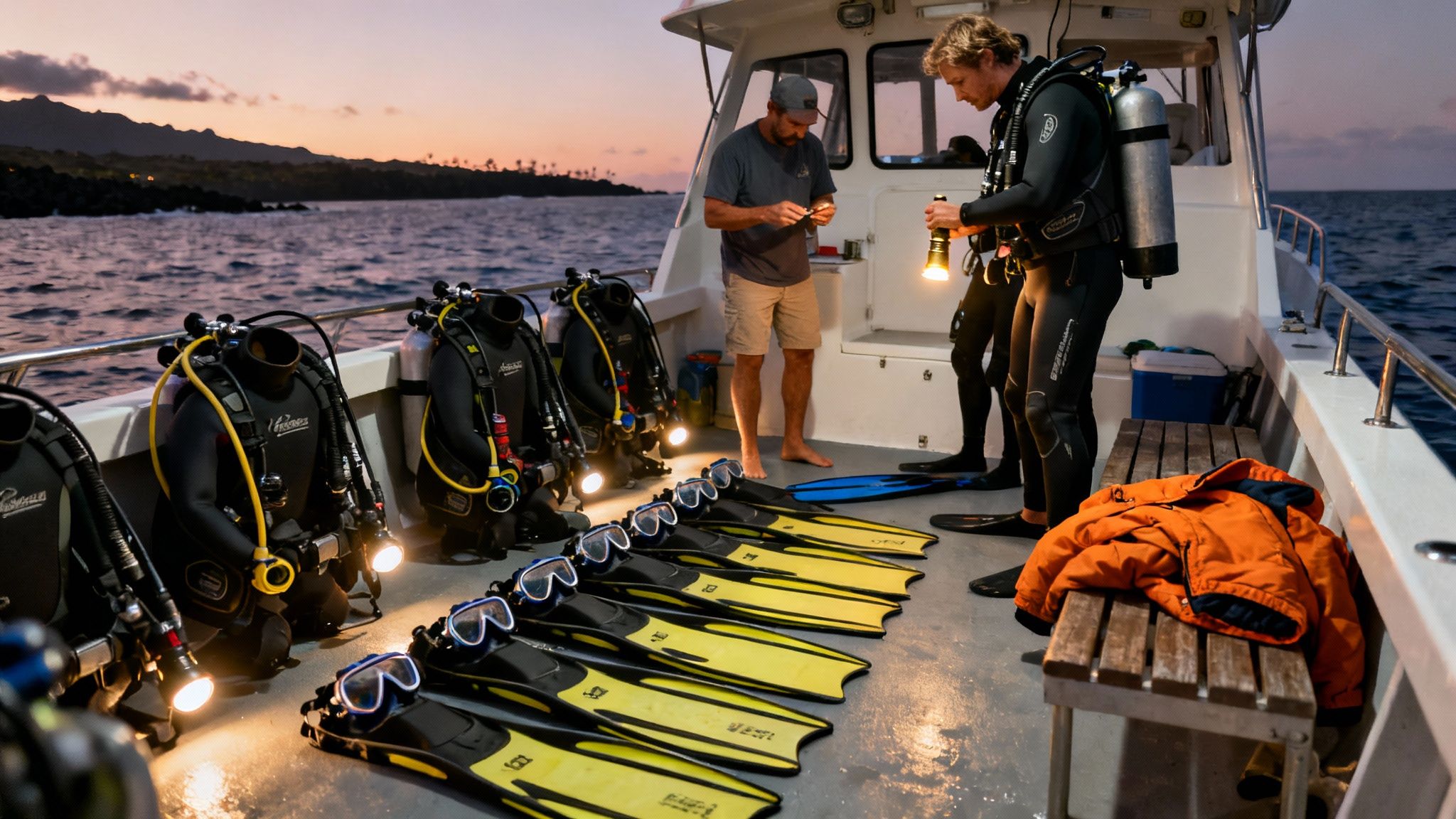
Once you’re on board, the crew takes the lead. They’ll give you a thorough briefing covering the dive plan, safety procedures, and some really cool facts about the mantas you’re about to see. This is your chance to ask any last-minute questions.
The boat ride out to Garden Eel Cove is an experience in itself, often treating you to a spectacular Kona sunset. The crew will help you get into your gear, run through safety checks, and make sure you’re feeling completely comfortable before you even hit the water. For a deeper look into the specifics, check out our guide on https://konahonudivers.com/scuba-diving-at-night/.
In-Water Etiquette: A Guide to Respectful Viewing
When it's time to get in, a few simple rules ensure a safe and respectful encounter for everyone—divers and mantas included. Adhering to these guidelines is what makes this a sustainable, ethical experience that we can enjoy for years to come.
The number one rule is absolute: Do not touch the manta rays. Their skin has a protective mucus layer that acts as a shield against infection. Any contact from our hands can strip this layer and cause them serious harm.
Your guide will stress the importance of passive observation. We let the mantas call the shots. By staying calm and holding your spot on the sandy bottom, you become part of the environment, allowing these gentle giants to glide effortlessly, sometimes just inches above you.
Good buoyancy control is also crucial. Since you’ll be positioned on the ocean floor, you need to be able to hold your spot without kicking up sand. Finally, keep your dive light pointed straight up. This attracts the plankton, creating the "campfire" that draws the mantas in for their nightly buffet. Following these simple rules guarantees a magical and responsible dive.
Exploring More Epic Kona Dives
The manta ray night dive is the star of the show here in Kona. It's an unforgettable, bucket-list experience that rightfully gets all the attention. But once the lights go out and the mantas glide away, the adventure is far from over. For those of us with a bit of an exploratory streak, the Kona coast is an absolute treasure trove of world-class dives.
After witnessing the manta ballet, you might start to wonder what other secrets these deep blue waters are hiding. That's where Kona Honu Divers comes in. Think of the manta dive as your gateway—your introduction to a much bigger, wilder world of scuba diving the Big Island that we love to share.
Plunging into the Abyss: The Kona Blackwater Dive
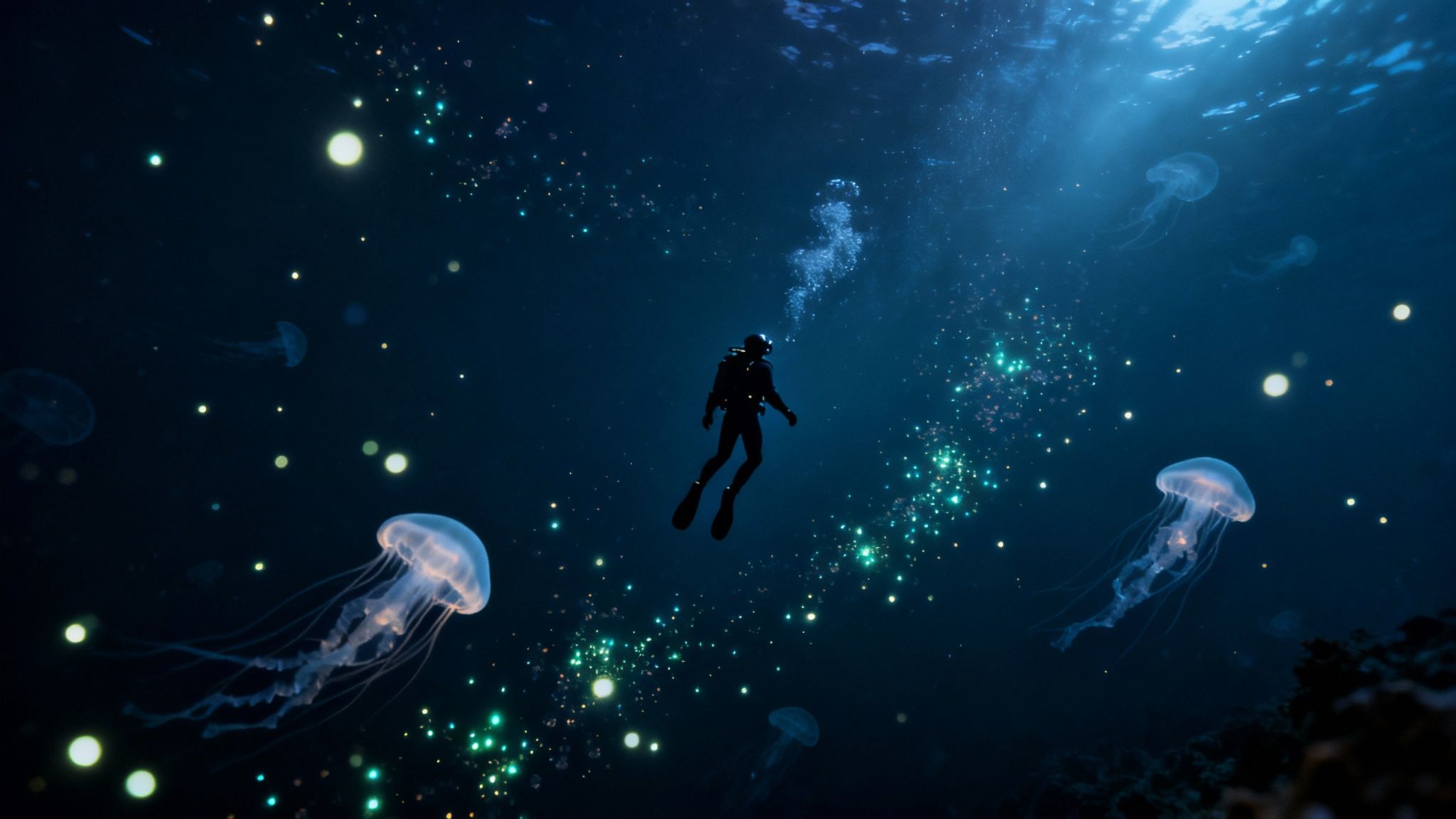
If the manta dive felt like visiting another planet, the Blackwater Dive is like floating through another dimension entirely. This is nothing like a reef dive. We head miles offshore, over thousands of feet of water, and drop into the deep blue abyss. Suspended in the inky blackness, you'll witness one of the planet's largest migrations as strange, beautiful, and utterly alien creatures rise from the depths.
This is your chance to see marine life that almost nobody ever lays eyes on. You’ll be tethered to the boat, floating in the open ocean as bioluminescent jellies and otherworldly larval critters drift past your torch beam. It’s a surreal, almost psychedelic experience that’s unlike any other night dive you will ever do.
The Blackwater Dive is an advanced, open-ocean experience that draws in photographers and seasoned divers looking for something truly unique. It’s a genuine glimpse into the mysterious deep sea, revealing a hidden ecosystem of alien-like life forms.
This is an adventure for divers who are comfortable in the dark and ready for something extraordinary. You can get all the details and see if this unique challenge is for you by exploring the Kona Blackwater Dive tour page.
For the Advanced Diver Seeking a Challenge
Are you an experienced diver itching to push your skills and see Kona's more rugged and remote sites? While the manta dive is wonderfully accessible, Kona’s volcanic coastline has also carved out a playground for advanced divers, complete with dramatic lava tubes, stunning archways, and deeper sites known for serious shark encounters.
These dives get you away from the more common spots and show you the wilder side of the Big Island’s underwater landscape. On any given day, you could be exploring a massive underwater cavern, navigating a lava arch teeming with life, or dropping down to a cleaning station hoping for a visit from Galapagos sharks or even scalloped hammerheads.
Kona Honu Divers runs specialized charters designed specifically for those with more dives under their weight belt. These trips are all about exploration and a bit of a challenge.
- Explore Remote Topography: Discover pristine lava formations that most divers never get to see.
- Encounter Larger Marine Life: Visit sites known for attracting bigger pelagic species.
- Refine Your Skills: Navigate more complex environments with our expert divemasters right there with you.
This is the perfect way to take your Kona dive trip to the next level. Find out more about these incredible opportunities on the premium advanced dive tour page.
From the must-do manta ray night dive to the deep abyss of a blackwater drift or the thrill of an advanced charter, there’s always another adventure waiting for you here. To see everything we offer and start planning your ultimate dive vacation, take a look at the complete list of Kona Honu Divers' diving tours.
Your Manta Ray Night Dive Questions Answered
Jumping into the ocean after sunset to swim with giant, shadowy creatures? It’s completely normal to have a few questions. Before you book your manta ray night dive in Kona, you probably want to know what you’re really getting into.
We get it. So, we’ve put together the most common questions we hear from divers and snorkelers. Our goal is to clear everything up so you can feel confident and ridiculously excited for what’s ahead.
Is the Manta Ray Night Dive Safe for Beginners?
This is easily the number one question we get, especially from new or less experienced divers. The answer is a huge, resounding yes. The entire experience is designed from the ground up to be safe and comfortable, making it one of the most accessible and thrilling night dives anywhere in the world.
A few things make this dive so friendly for beginners, especially at our go-to site, Garden Eel Cove:
- It’s a Shallow Dive: We’re in relatively shallow water, typically only 30-40 feet deep. You won’t be dealing with the extra complexities that come with deep diving.
- Conditions are Calm: As we’ve mentioned, Garden Eel Cove is naturally sheltered from big waves and strong currents. This makes for a calm, stable underwater environment.
- You Stay in One Spot: This isn't a dive where you're navigating a complex reef in the dark. You simply descend to a sandy patch on the ocean floor, get comfortable, and let the show come to you.
Our divemasters run a thorough briefing beforehand and are right there with you every step of the way. We make sure you feel secure from the moment you hit the water until you’re back on the boat.
I'm a Snorkeler, Not a Diver. Is It Still Worth It?
One hundred percent. The manta ray night snorkel is just as spectacular as the dive. It just offers a completely different, but equally mesmerizing, perspective. While divers are watching the show from below, snorkelers get a front-row, bird's-eye view of all the action.
You'll float on the surface, holding onto a custom-built light board. This board shines powerful lights into the water, attracting plankton and drawing the mantas right up to you. Watching these gentle giants glide and barrel-roll just inches beneath you is a feeling you’ll never forget. You really get to see their immense size and graceful movements from a vantage point divers miss out on.
Snorkeling is a fantastic option for families, non-certified friends, or anyone who just prefers to stay on the surface. The experience is safe, fully guided, and delivers an absolutely unforgettable encounter with Kona's famous manta rays.
Is There a "Best" Time of Year to See Mantas?
This is an easy one: any time is a great time! Unlike migratory animals like humpback whales, the manta rays on the Kona coast are year-round residents. They stick around for one simple reason—a consistent, reliable food source.
That means you can book your tour in January, July, or October and have an amazing chance of seeing them. Our sighting success rates stay incredibly high, often above 90%, all year long. The only "best" time to book is whenever fits your vacation schedule. The mantas will be here waiting.
Will I Get Cold on a Night Dive?
Kona’s water stays pretty warm year-round, usually somewhere between the mid-70s and low-80s Fahrenheit. But even in tropical water, your body loses heat over the course of a dive, and we want you to be comfortable. That’s why we provide high-quality wetsuits as part of your gear.
Most people find a 3mm or 5mm wetsuit is perfect for staying warm and enjoying the whole show. The one time you might feel a chill is during the boat ride back to the harbor after you’re out of the water. We always recommend bringing a warm jacket or sweatshirt to throw on for the ride home.
With the right gear, you'll be perfectly comfortable. We handle the wetsuit; you just bring the cozy sweater.
Ready to witness the underwater ballet for yourself? Kona Honu Divers offers the top-rated manta ray night dive experience in Kona, guided by an expert crew dedicated to your safety and the well-being of the mantas. Book your unforgettable manta ray dive tour today and prepare for a night you'll never forget.