
Picture this: you descend into the warm, inky black of the Pacific Ocean as the last bit of sunlight vanishes. You switch on your dive light, and its beam cuts through the darkness. Then, out of the deep blue, they glide into view—enormous manta rays, some with wingspans stretching 12 feet wide, swooping and barrel-rolling through the light like ethereal dancers. This isn't some rare, once-in-a-lifetime sighting; this is the legendary manta ray night dive in Kona, an experience that rightfully sits at the top of nearly every diver's bucket list.
Experience Kona’s World-Famous Manta Ballet
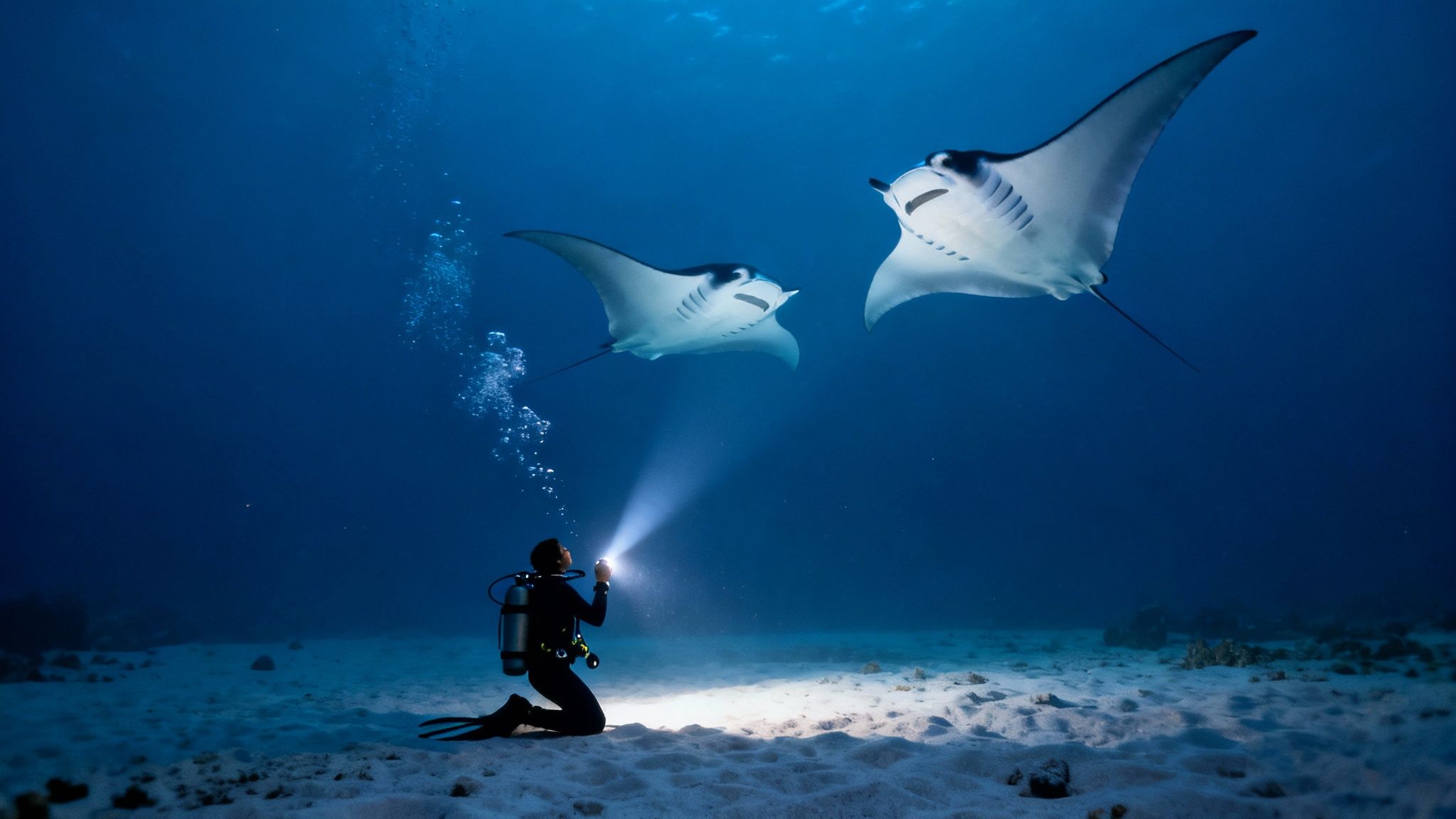
Time and time again, the Kona Manta Ray Night Dive is voted one of the best underwater encounters on the planet. It’s not just a dive; it’s a full-blown performance, and you get a front-row seat to one of nature’s most majestic spectacles.
In this guide, we'll cover everything you need to know to see this incredible natural wonder for yourself. We'll get into why the dive site location is so important and how picking the right operator, like us at Kona Honu Divers, can turn a good dive into an unforgettable one.
A Reliable Natural Spectacle
While seeing a manta ray is a matter of luck in many parts of the world, Kona is different. Our manta ray night dives have a staggering 80-90% success rate. Why? Because our local manta population doesn't migrate; they're year-round residents who love the consistent plankton buffet our coastline provides.
This unbelievable reliability is what brings divers here from all over the globe. The numbers are pretty telling. Back in 2013, one of our main sites, Manta Heaven, saw an average of 11 mantas per night. It’s no surprise that around 80,000 people come every year to see it. You can learn more about the history of the manta ray dive in Kona on our blog.
Why Is This Dive So Unique?
What really makes the Kona experience one-of-a-kind is how it all works. After sunset, we place powerful lights on the ocean floor. These lights attract massive clouds of plankton, which just so happens to be the manta rays' favorite meal.
Think of it as a brightly lit, underwater "campfire." This light draws in the plankton, and the plankton, in turn, draws in the mantas for an all-you-can-eat feast. Divers and snorkelers simply gather around this illuminated buffet and watch the show.
This carefully orchestrated (but completely natural) interaction is the secret sauce. You get to see these magnificent creatures swooping and feeding just inches away from you, all in a way that’s predictable, safe, and respectful to the animals. It's a surreal encounter that will leave you completely in awe.
Why Garden Eel Cove is Kona’s Premier Manta Dive Site
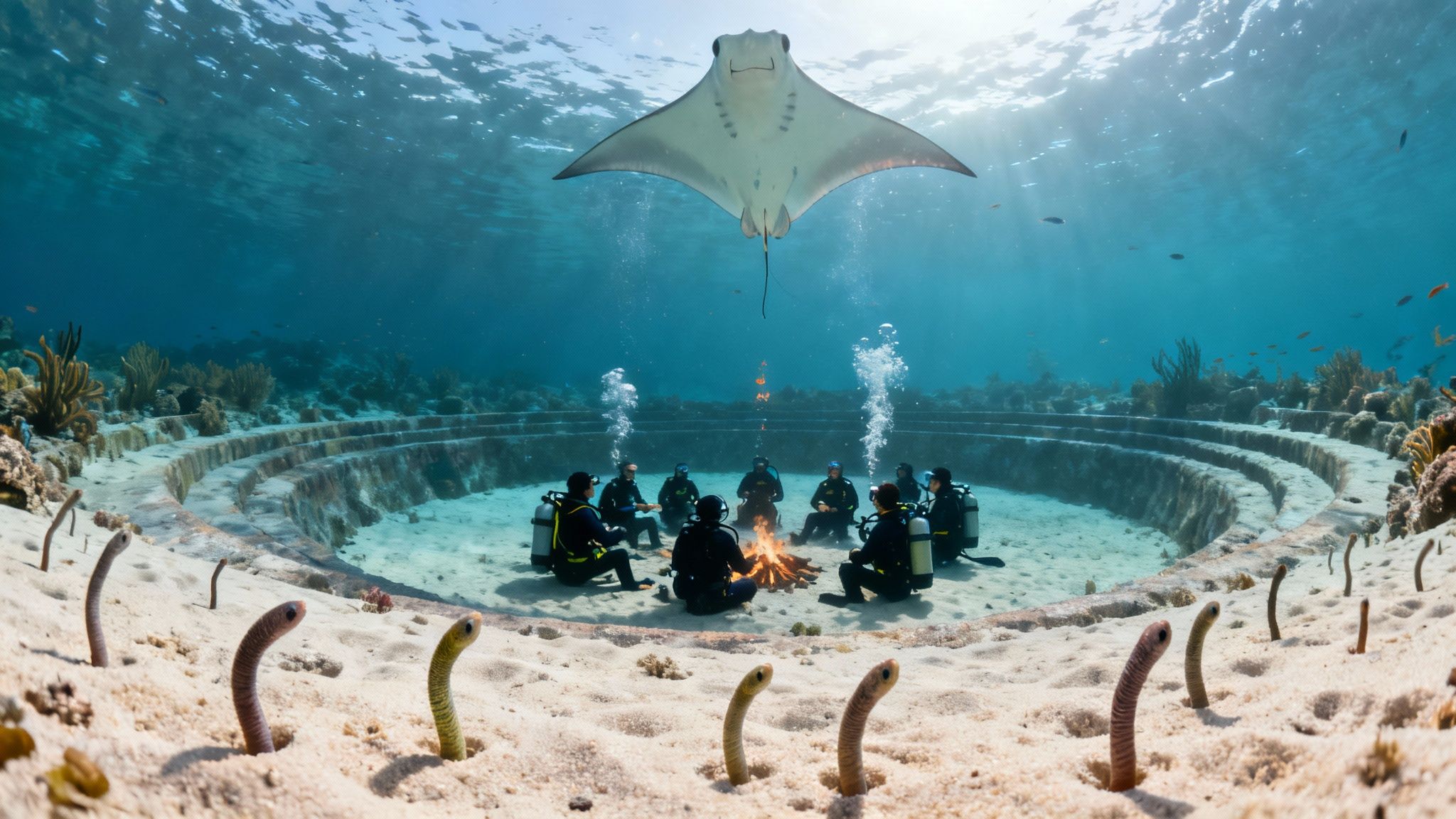
When you start looking into a manta ray night dive in Kona, you’ll quickly notice two names pop up: Manta Village and Garden Eel Cove. Both can offer great experiences, but for those seeking the absolute best, Garden Eel Cove is the superior choice. We locals even have a nickname for it: "Manta Heaven."
The real secret is in the geography. Manta Village, which is a bit further south, is more exposed to the whims of the open ocean. That means you can get stronger currents and surge, which can make for a bumpy ride and a more challenging dive.
Garden Eel Cove, however, is the superior choice because it's tucked away in a naturally protected bay. This shields the dive site from the elements, giving us calm, predictable conditions almost every single night. For you, the diver, that translates to a much more relaxed and steady experience where you can focus on the show, not on fighting the water.
The Underwater Amphitheater
What truly elevates Garden Eel Cove is its unique topography. Imagine a huge, sandy patch on the ocean floor, completely surrounded by beautiful, healthy coral reefs. It’s a natural amphitheater, creating a better viewing area that's absolutely perfect for the "underwater campfire" that makes this dive so famous.
This setup allows all the divers to settle down comfortably and safely in a semi-circle on the sand. You get a front-row seat to the action without anyone having to touch or damage the fragile coral. You simply become part of the environment, looking up as these magnificent creatures perform their silent, graceful feeding ballet right above you.
And the numbers don't lie. The data we've collected over the years shows Garden Eel Cove averages 11 mantas every night with an incredible 90% success rate. That’s a world of difference from other sites.
A More Vibrant Two-Tank Adventure
The perks of diving at Garden Eel Cove don't stop with the mantas. Most manta charters are two-tank trips, and the first dive happening around sunset at Garden Eel Cove offers a significant advantage. The reefs surrounding Manta Heaven are noticeably healthier and more full of life than what you’ll find elsewhere, making for a better twilight dive.
This means your first twilight dive is a world-class experience all on its own. You'll get to explore thriving coral gardens teeming with eels, discover hidden octopuses, and watch a kaleidoscope of reef fish as the whole ecosystem shifts from day mode to night mode. It’s the perfect opening act for the main event.
This powerful combination—protected waters, a better viewing area, and a superior reef system—is precisely why we at Kona Honu Divers almost exclusively use Garden Eel Cove. By choosing this location, you're not just booking a dive; you're setting yourself up for the best possible conditions for a safe, comfortable, and truly unforgettable adventure. If you want to dive deeper, you can learn more about what makes the Manta Heaven dive site so special in our detailed guide.
What to Expect on Your Manta Dive Adventure
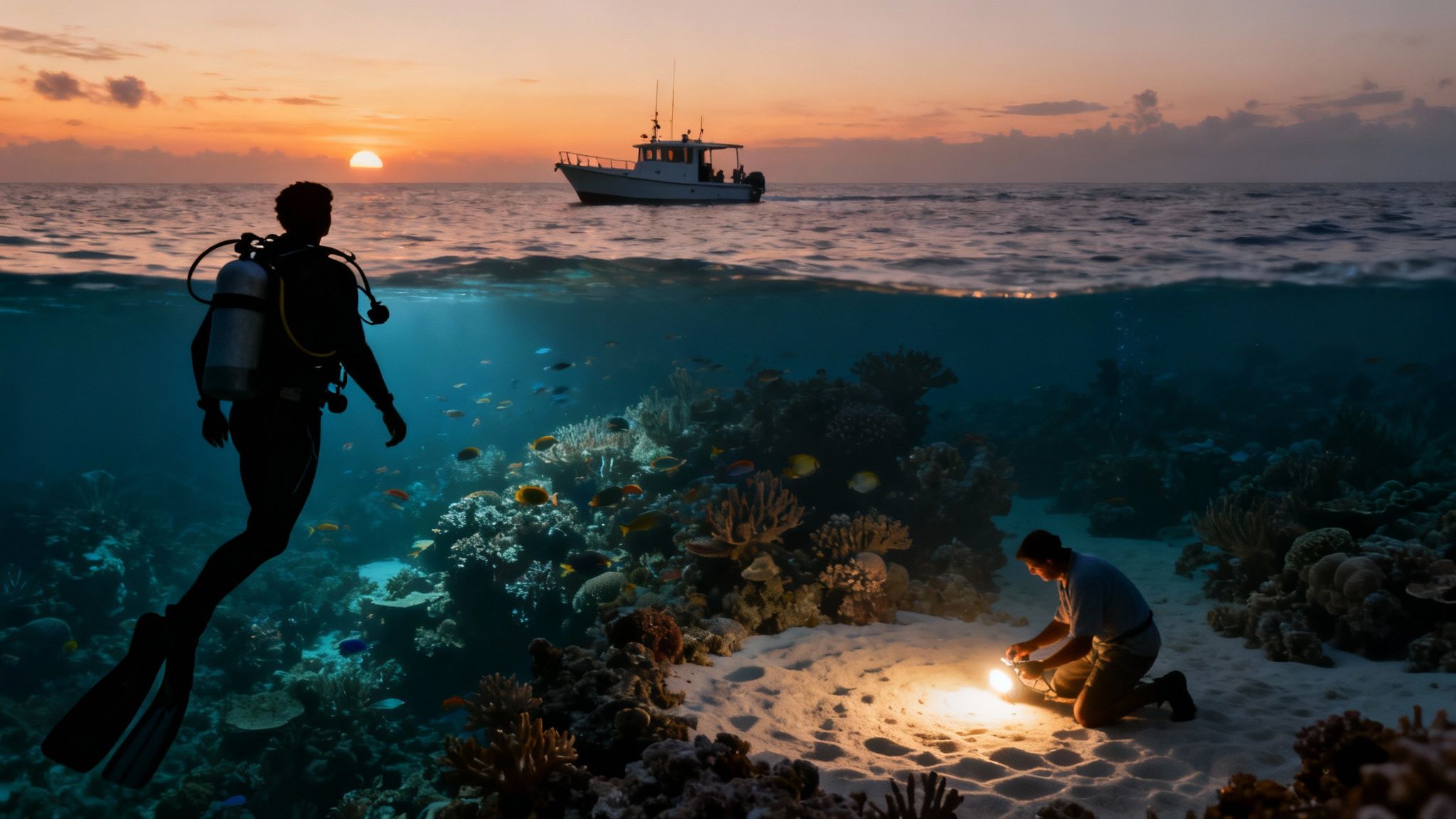
The world-famous Kona manta ray night dive isn't just one quick dip in the ocean—it's a full-blown adventure, guided by pros from the moment you step on the boat. Knowing the whole flow of the trip helps build the excitement and makes sure you feel totally prepared for one of the planet's greatest underwater shows. With us at Kona Honu Divers, every single step is designed for your safety, comfort, and sheer awe.
Your experience kicks off the second you arrive for check-in. Our crew will be there to welcome you, and these aren't just dive experts; they're genuinely passionate about Kona's marine world. This is the perfect time to ask any last-minute questions and get comfortable as we get ready to head out from the harbor.
The boat ride itself is part of the fun. As we cruise along the breathtaking Kona coast, the crew will give a thorough briefing. We go way beyond a quick overview, walking you through the entire plan. We'll cover safety, the specifics of our dive site, and exactly what makes the manta ray night dive in Kona a truly unique experience.
The Twilight Reef Dive
Our two-tank manta adventure always starts with a gorgeous "twilight dive." As the sun starts dipping toward the horizon, painting the sky and water in golden hues, we'll make our first descent onto the vibrant reef at Garden Eel Cove. This dive is your chance to see the ocean's magical shift from day to night.
You’ll spot daytime fish tucking into the coral for the night while nocturnal critters, like eels and octopuses, start to venture out. It's a beautiful, peaceful dive that really shows off the incredible biodiversity here. Plus, it’s a great way to get comfortable with your gear and the site before it gets completely dark.
The Main Event Staging
After you're back on the boat for a surface interval—complete with snacks and drinks—the real anticipation starts to build. As darkness falls, the crew gets everything ready for the main event. The key piece of the whole operation is what we call the "campfire"—a powerful set of lights we carefully place on the sandy ocean floor.
This light isn't just for show. It attracts massive clouds of plankton, which is the manta rays' favorite meal. By creating this concentrated buffet, we invite the mantas to dinner in a way that’s both incredibly reliable and totally respectful of the animals. Our crew’s experience means the setup is safe and efficient, creating the perfect stage for the underwater ballet you're about to see.
Your Front-Row Seat to the Ballet
With the campfire glowing below, you'll begin your second descent into the dark water. You and the other divers will settle on the sandy bottom, forming a semi-circle around the light like you're in an underwater amphitheater. From there, all you have to do is look up and wait for the show to begin.
It won't be long. Soon, the first giant shadow will glide into the light, quickly followed by another, and then another. The mantas swoop and perform graceful barrel-rolls just feet above your head, their huge mouths open to filter the plankton from the water. It’s a completely passive experience for you; you are simply an audience member at one of nature's most spectacular performances. It's what a professionally run, safety-first manta ray dive tour is all about.
Diving Safely and Responsibly with Manta Rays
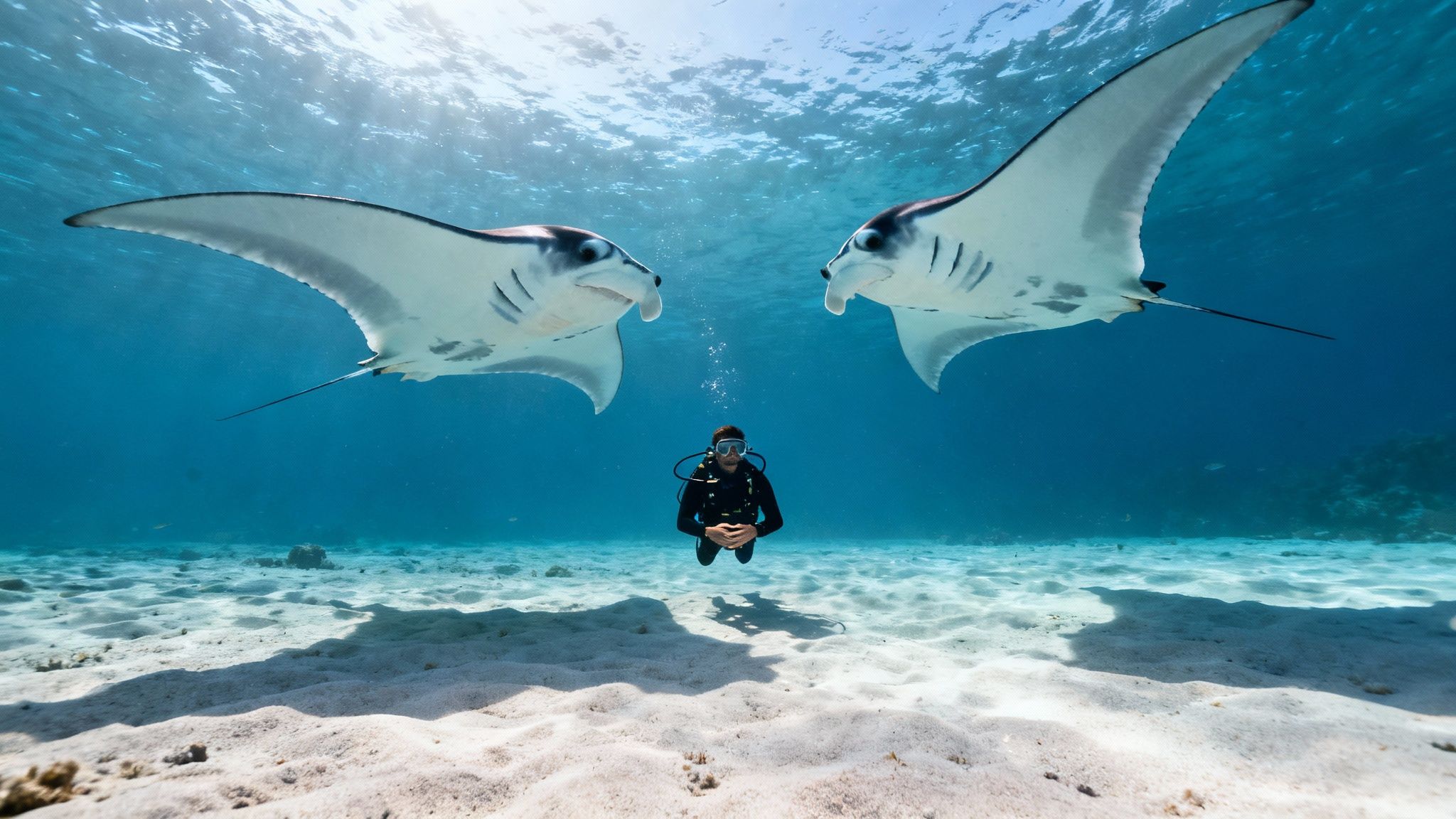
Watching the silent, underwater ballet of a manta ray night dive in Kona is an experience that stays with you forever. But it's a privilege, one that carries a shared responsibility to protect these incredible animals. The future of Kona’s resident manta ray population truly depends on every single one of us—divers and snorkelers alike—following mindful, eco-conscious guidelines.
At its heart, this experience is all about passive observation. We are visitors in their world.
Our number one job is to keep the mantas safe. Their skin is covered in a delicate, protective mucus layer, which is their primary shield against nasty bacteria in the water. If you touch a manta, even by accident, you can strip away that protective coating. This leaves them wide open to infection. That’s why the golden rule, the one we never break, is to look, but never, ever touch.
This hands-off approach applies to everything we do on the dive. We don't chase them, we don't block their path, and we certainly don't try to ride them. We simply become part of the underwater landscape, find our spot, and let them perform their mesmerizing feeding dance all around us.
The Rules of Engagement
To make sure the interaction is safe for the mantas and amazing for you, we have very clear "rules of engagement." Think of them as the official etiquette for visiting the manta's home. These guidelines were developed over years to protect the animals and their reef habitat while still allowing for a front-row seat to the action. We are serious about these protocols on every single trip.
Here at Kona Honu Divers, our commitment to the ocean runs deep. We're incredibly proud to be a PADI Green Star Award Dive Center, a recognition of our dedication to environmental best practices in everything we do. You can learn more about how to be a thoughtful guest in the underwater world in our guide on responsible diver etiquette.
To keep it simple, we've put the most critical rules into a quick guide. Following these ensures everyone, including the mantas, has a great night.
Manta Ray Dive Interaction Guidelines
Follow these essential guidelines for a safe and respectful manta ray encounter.
| Guideline | Do | Don't |
|---|---|---|
| Physical Contact | Stay at least 10 feet away to give them space. | Touch, chase, or attempt to ride the mantas. |
| Your Position | Stay low to the bottom or on the surface. | Float up into the water column where mantas feed. |
| Equipment | Keep your gear streamlined and close to your body. | Let your octopus, gauges, or camera dangle. |
| Lights | Point your dive light straight up toward the surface. | Shine your light directly into a manta's eyes or mouth. |
By sticking to these simple dos and don'ts, you help us protect this world-class dive for many years to come.
Tips for First-Time Night Divers
For a lot of people, the manta dive is their very first dip after sunset. The thought of it can be a little nerve-wracking, but trust us, you’re in the best hands. Night diving is a whole new adventure, and a few good habits will have you feeling totally at ease.
First, always stay close to your dive buddy. Communication is key. Second, get in the habit of checking your air gauge and dive computer a little more often than you might on a day dive. Your divemaster will walk you through all of this and much more during the pre-dive briefing, so you’ll feel completely ready to descend into the twilight with confidence.
The secret to a successful and responsible manta ray night dive is surprisingly simple: stay calm, hold your spot, and let the ocean's most graceful giants put on the show of a lifetime. Your respect and stillness are what make the magic possible.
How to Prepare for Your Manta Ray Night Dive
A little bit of prep work is what separates a good dive from a truly mind-blowing one. When you know what to pack and what to expect, you can stop worrying about your gear and just lose yourself in the magic of the manta ray night dive in Kona. A little planning makes a world of difference, especially when you're gearing up for one of the planet's most spectacular underwater encounters.
Thinking ahead means your focus will be on the manta rays' incredible underwater ballet, not on shivering or fiddling with a piece of equipment. Let's walk through everything you’ll want to bring for a perfect night.
Essential Dive and Personal Gear
Your dive gear is what keeps you safe and comfortable, so let's get it right. Kona's water is warm, but you'll be pretty still in the water for a while after the sun goes down, and that's when a chill can set in.
- Wetsuit: We strongly recommend a 3mm or 5mm full wetsuit. That bit of insulation is the key to staying comfortable while you float and watch the show. You'll be glad you have it.
- Dive Computer: This is a mandatory piece of safety gear for any dive, and it’s absolutely critical at night. It’s your lifeline for tracking depth, time, and safe ascent rates.
- Dive Lights: While our big "campfire" of lights in the water is what draws in the mantas, you’ll still need your own primary and backup lights for getting around and signaling your buddy.
- Towel and a Warm Jacket: The boat ride back to the harbor can feel surprisingly brisk after a dive. Having a dry towel and a wind-resistant jacket to throw on will feel like pure luxury.
- Reef-Safe Sunscreen: If you're on our earlier trip, the sun will still be up as we head out. Please make sure to use a mineral-based, reef-safe sunscreen. It protects your skin and our precious coral at the same time.
For a more detailed list, take a look at our complete guide on the gear you will need for your Kona diving adventure.
Tips for Underwater Photographers
Photographing manta rays at night is an incredible experience, but it definitely comes with its own set of challenges. The main goal is to capture those majestic, sweeping movements without getting a photo full of backscatter—those annoying white specks that appear when your flash lights up all the tiny particles in the water.
Your best bet is to shoot in manual mode to get full control. As a starting point, try a higher ISO (around 800-1600), a wide aperture (try f/8), and a shutter speed around 1/125s.
Here's the real pro tip: It's all about your strobe placement. Don't point your strobes straight ahead. Instead, pull them way out to the sides of your camera, and even slightly behind the lens. This creates a side-lighting effect that illuminates the manta without lighting up the column of water right in front of your camera, which is what causes all that nasty backscatter.
The Convenience of High-Quality Rentals
Let's be honest, lugging a full set of dive gear across the country is a pain. We get it. That’s why Kona Honu Divers offers a full selection of high-quality rental equipment that we keep in fantastic shape. From BCDs and regs to computers and wetsuits, we have you covered.
Our gear is serviced regularly and proactively, so you can dive with the confidence that you're using reliable, top-notch equipment. It's one less thing to pack and worry about. Just let us know what you need when you book your dive, and we’ll have it all set up and ready for you when you arrive.
Ready to Book Your Manta Adventure?
If you've been dreaming of seeing the Kona manta rays up close, now is the time to make it happen. This is your chance to join the ranks of divers who have experienced one of the most incredible marine encounters on the planet. The gentle giants are waiting.
For an adventure this special, who you dive with really matters. When you choose Kona Honu Divers, you're not just booking a dive; you're ensuring a top-tier experience. We take you to Garden Eel Cove, the premier manta site known for its calmer, more protected waters and consistently amazing sightings. Our crew lives and breathes this stuff—we're obsessed with your safety and protecting these amazing animals, making sure your dive is nothing short of world-class.
Don't Wait—Secure Your Spot for an Unforgettable Night
There's a reason the Kona manta ray dive is famous worldwide, and our boats fill up fast, especially during the busy seasons. Don't miss out on what could be the highlight of your entire trip to Hawaii. An evening with these majestic creatures is just a few clicks away.
This isn't just another dive. It's a front-row seat to one of nature's greatest shows. Trust us, you’ll be talking about the moment a giant manta glided inches over your head for the rest of your life.
Take the plunge and book the adventure that will define your trip to Hawaii. Reserve your spot on our acclaimed Manta Ray Dive Tour today and get ready for a night of pure underwater magic.
Frequently Asked Questions
We know you're excited, and you probably have a few questions bouncing around before you're ready to take the plunge. We get it! Here are the answers to the most common things people ask about the manta ray night dive in Kona, so you can finalize your plans with total confidence.
What Certification Level Do I Need to Scuba Dive?
For the scuba diving part of the adventure, you'll need at least an Open Water Diver certification. If you have some night dives under your belt, great! But it’s definitely not a requirement to join us.
Our professional divemasters are fantastic at guiding divers of all experience levels. They’ll give you an incredibly thorough pre-dive briefing that covers all the safety procedures and what to expect when diving at night. Our goal is to make sure everyone feels safe, comfortable, and ready for an amazing time. While the manta dive is an amazing experience, there are many other great diving tours in Kona to enjoy.
Can My Non-Diving Family Members Join the Trip?
Yes, absolutely! This is one of those rare experiences that the whole family can truly enjoy together, divers and non-divers alike. We love having snorkelers join on the very same boat.
We'll get your non-certified friends and family kitted out with all the gear they need and give them their own detailed briefing. They’ll float on the surface, holding onto a custom-built light board that attracts the plankton. From there, they get an unbelievable bird's-eye view of the mantas barrel-rolling and feeding just a few feet below. It's an incredible way to share the magic.
When Is the Best Time of Year to See Manta Rays in Kona?
This is the best part: any time is a great time! Kona is special because we have a resident population of manta rays that sticks around all year. They don't migrate because the food source along our coastline is consistent, which means they're always here.
This means there is no "best" season for the manta ray night dive in Kona. Our sighting success rate is consistently high—often above 90%—no matter the month. You can book your adventure for January or July and have the same fantastic odds of an unforgettable encounter.
What Happens If We Don't See Any Manta Rays?
While the Kona manta ray dive is one of the most reliable wildlife encounters in the world, these are still wild animals in their natural habitat. As with any ocean adventure, their presence can never be 100% guaranteed.
That said, we stand by our commitment to giving you an incredible experience. On the extremely rare occasion that the mantas decide not to show up, our "manta guarantee" kicks in. You can come back and join us on another manta ray dive tour for free, space permitting. It's a good reason to book your dive early in your vacation, just in case you need to cash in on a second trip!
Why Do You Dive at Garden Eel Cove?
We run most of our tours at Garden Eel Cove (lovingly nicknamed Manta Heaven) simply because it consistently delivers a better, safer, and more magical experience. The site is tucked inside a protected bay, which means calmer waters and less current—a huge plus for a night dive.
Even better, the dive site itself features a natural sandy amphitheater which makes for a better viewing area. This allows us to settle on the bottom and enjoy the show without impacting the beautiful, healthy coral reef nearby. It’s the perfect underwater stage for the manta ballet and the reason we believe it's the best spot for an unforgettable manta ray night dive in Kona.