
Picture this: you descend into the warm, inky black waters of the Pacific just off the Kona coast. As you settle on the ocean floor, a circle of powerful lights illuminates the scene, creating a glowing underwater stage. Tiny plankton begin to gather, forming a shimmering cloud.
Then, out of the darkness, a shadow emerges. It’s a graceful, giant shape gliding effortlessly into the light—a massive manta ray, its wingspan easily wider than you are tall. This is the heart-stopping magic of the manta ray night dive Kona is famous for. It's not just a dive; it's a true bucket-list adventure.
Experience Kona’s World Famous Manta Ray Night Dive
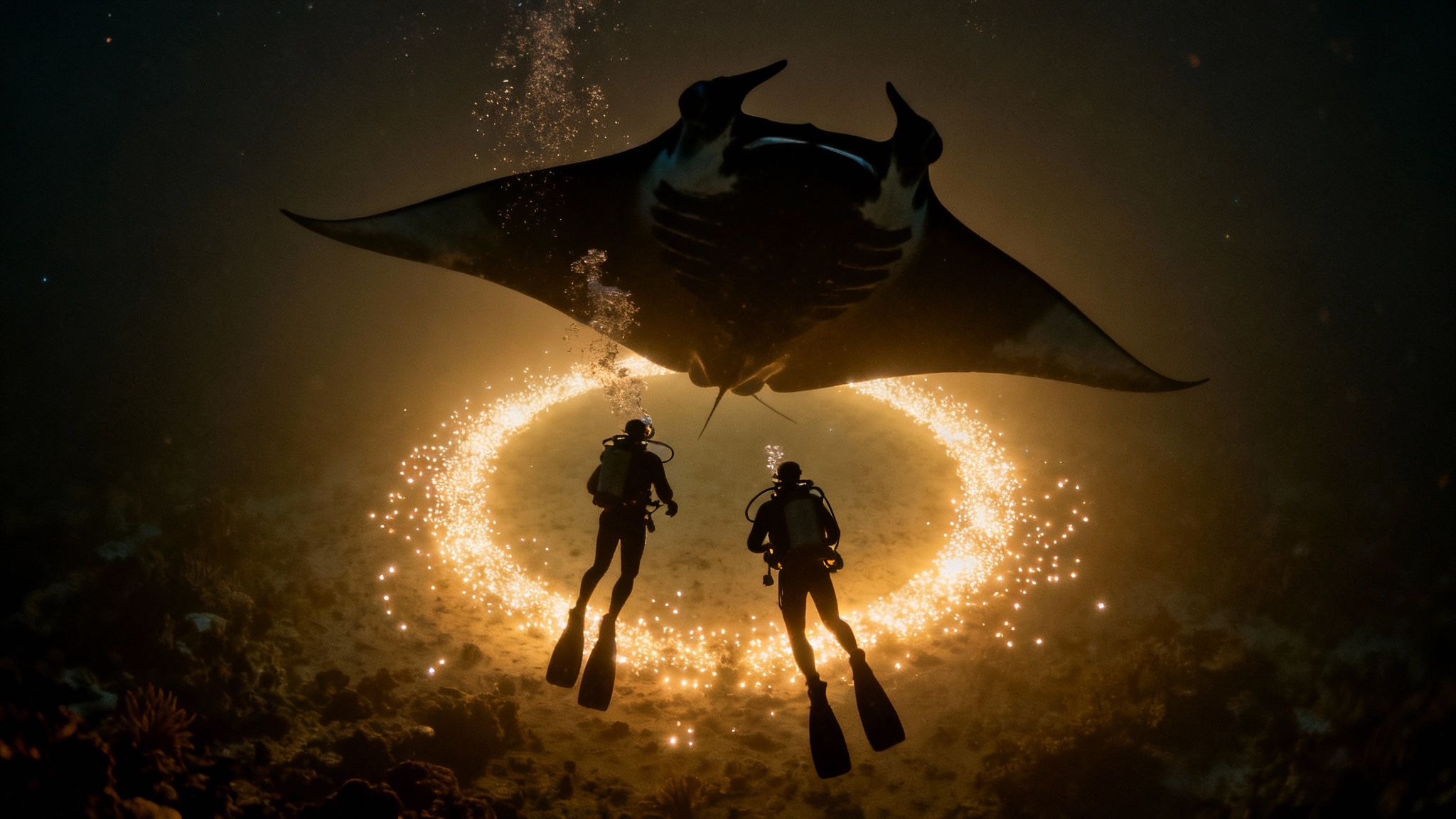
Let’s dive into what makes this one of nature's greatest shows and why Kona has earned its reputation as the most reliable place on the planet to see it. This guide is your complete roadmap, covering everything from manta behavior to picking the right trip for an encounter you'll be talking about for the rest of your life.
This experience is less like a typical dive and more like front-row seats to an underwater ballet. It's a carefully choreographed spectacle designed to bring these gentle giants in for an encounter that’s both surreal and incredibly moving. Over the years, local operators have perfected a method using powerful, submerged lights to attract huge clouds of plankton—the mantas' favorite meal.
What happens next is pure magic. These majestic creatures swoop in to feed, performing graceful barrel rolls as they scoop up the plankton, sometimes just inches from your face. Their immense size and silent, fluid movements are absolutely breathtaking. It’s an experience that forges a direct connection with one of the ocean's most magnificent animals.
Why This Encounter Is So Special
The Kona coast of the Big Island has something you just won't find anywhere else. Sure, you can spot manta rays in other parts of the world, but no other location comes close to the consistency and accessibility of the Kona night dive. Why? It all comes down to a resident population of mantas who have learned to associate the divers' lights with an all-you-can-eat plankton buffet.
This unique, learned behavior has made the Kona coastline a global hotspot for marine life lovers. The conditions are just about perfect, too. The primary dive sites, especially the world-class Garden Eel Cove, are naturally sheltered from the big ocean swells, which makes for a consistently calm and safe environment for everyone in the water—mantas included. The reefs here are also healthier, making the entire ecosystem more vibrant.
The real beauty of this experience is that it’s completely passive. You’re simply a silent guest on the ocean floor, becoming part of the scenery while the mantas perform their nightly feeding dance. It’s a profound way to connect with the marine world without disturbing the animals' natural behavior.
Of course, choosing the right operator is crucial for a safe, ethical, and unforgettable dive. With Kona Honu Divers, you're not just booking a tour; you're joining a team with unmatched local expertise and a genuine passion for marine conservation.
Why Kona Is the Manta Ray Capital of the World
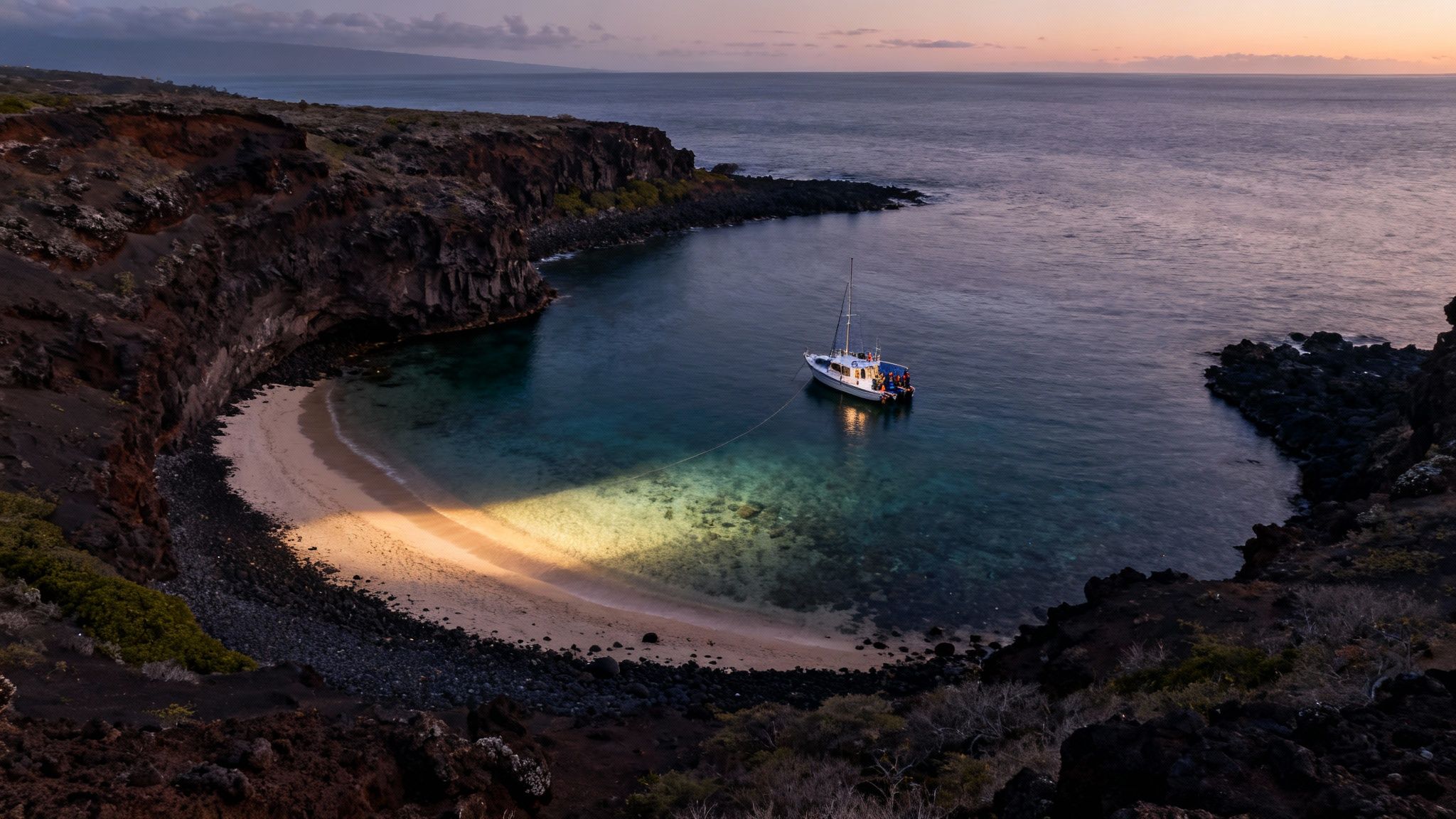
So, what makes Kona the undisputed global hotspot for manta ray encounters? It’s not just a lucky break. It's the result of a perfect storm of unique geography, a reliable food source, and a bit of human ingenuity that turned an accidental discovery into a world-class adventure.
The secret starts with the island itself. The Big Island's volcanic origins created a dramatic underwater landscape, with steep drop-offs and deep channels that sit surprisingly close to shore. These deep-water features act like a conveyor belt, funneling nutrient-rich water to the surface and creating a massive, consistent buffet of plankton—the manta rays' favorite meal.
This dependable "plankton soup" is why we have a large, resident population of manta rays that return to the same spots, night after night. Unlike other places where sightings are hit-or-miss, the manta ray night dive Kona delivers a reliable spectacle all year long.
How an Epic Dive Came to Be
The incredible dive we know today actually started as a happy accident. Back in the early 1990s, a hotel on the Kona coast started shining bright lights into the water. Divers soon noticed something amazing: manta rays were showing up to feast on the plankton drawn to the light.
That simple observation sparked a brilliant idea. A few pioneering dive operators realized they could recreate this phenomenon anywhere. By taking powerful lights out on their boats, they could create a mobile feeding station, essentially ringing the dinner bell for any mantas in the area. This innovative thinking is what put Kona on the map.
Since the first official manta dives around 1991, the experience has become one of Hawaii's signature attractions. It now draws tens of thousands of visitors every year, all hoping to witness the mesmerizing underwater ballet. The sighting odds here are remarkably high, blowing most other dive destinations out of the water. You can learn more about the history of the Kona manta dive on Love Big Island.
Why Garden Eel Cove Is the Premier Site
While Kona has a couple of well-known manta viewing sites, one stands out as the absolute best: Garden Eel Cove, which we lovingly call Manta Heaven. Both sites are great, but for a truly spectacular and up-close encounter, Garden Eel Cove consistently wins out for a few key reasons.
Its location near the Kona airport is a huge plus. The cove is naturally sheltered from the big ocean swells, which means calmer, more predictable conditions. This makes the whole experience safer and more comfortable for everyone in the water—including the mantas. The viewing area is a clean, sandy bottom that creates a perfect 'stage', and the surrounding reefs are healthier and more vibrant than other locations.
On top of that, Garden Eel Cove is only accessible by boat. This exclusivity is a game-changer. It prevents the light pollution and large crowds you get at sites accessible from shore, creating a more pristine and focused environment for the main event.
But the most compelling reason to choose Garden Eel Cove is the sheer number of manta rays. Data consistently shows that this site attracts significantly larger groups of mantas than its southern counterpart, Manta Village. More mantas mean more action, more graceful barrel rolls, and a more awe-inspiring show.
When we compare the two main sites, the choice becomes pretty clear.
Manta Dive Site Comparison: Garden Eel Cove vs. Manta Village
| Feature | Garden Eel Cove (Manta Heaven) | Manta Village |
|---|---|---|
| Accessibility | Boat access only | Accessible by boat or from shore |
| Water Conditions | Sheltered and consistently calm | More exposed to open ocean swells |
| Crowd Levels | Regulated, less crowded | Can be very crowded due to shore access |
| Manta Ray Numbers | Consistently higher numbers and activity | Good, but generally fewer mantas |
| Bottom Topography | Clean, sandy bottom for ideal viewing | Rocky bottom with more surge |
| Reef Health | Healthy, vibrant reef system | Less pristine reef conditions |
While any manta encounter is special, Garden Eel Cove simply offers a more reliable, comfortable, and breathtaking experience. It’s the difference between a good show and a legendary one.
For divers and snorkelers seeking the absolute best manta ray night dive Kona has to offer, a trip to Garden Eel Cove is the way to go. The combination of protected waters, a superior viewing area, healthier reefs, and a higher density of mantas makes it an experience you'll never forget.
Your Adventure with Kona Honu Divers
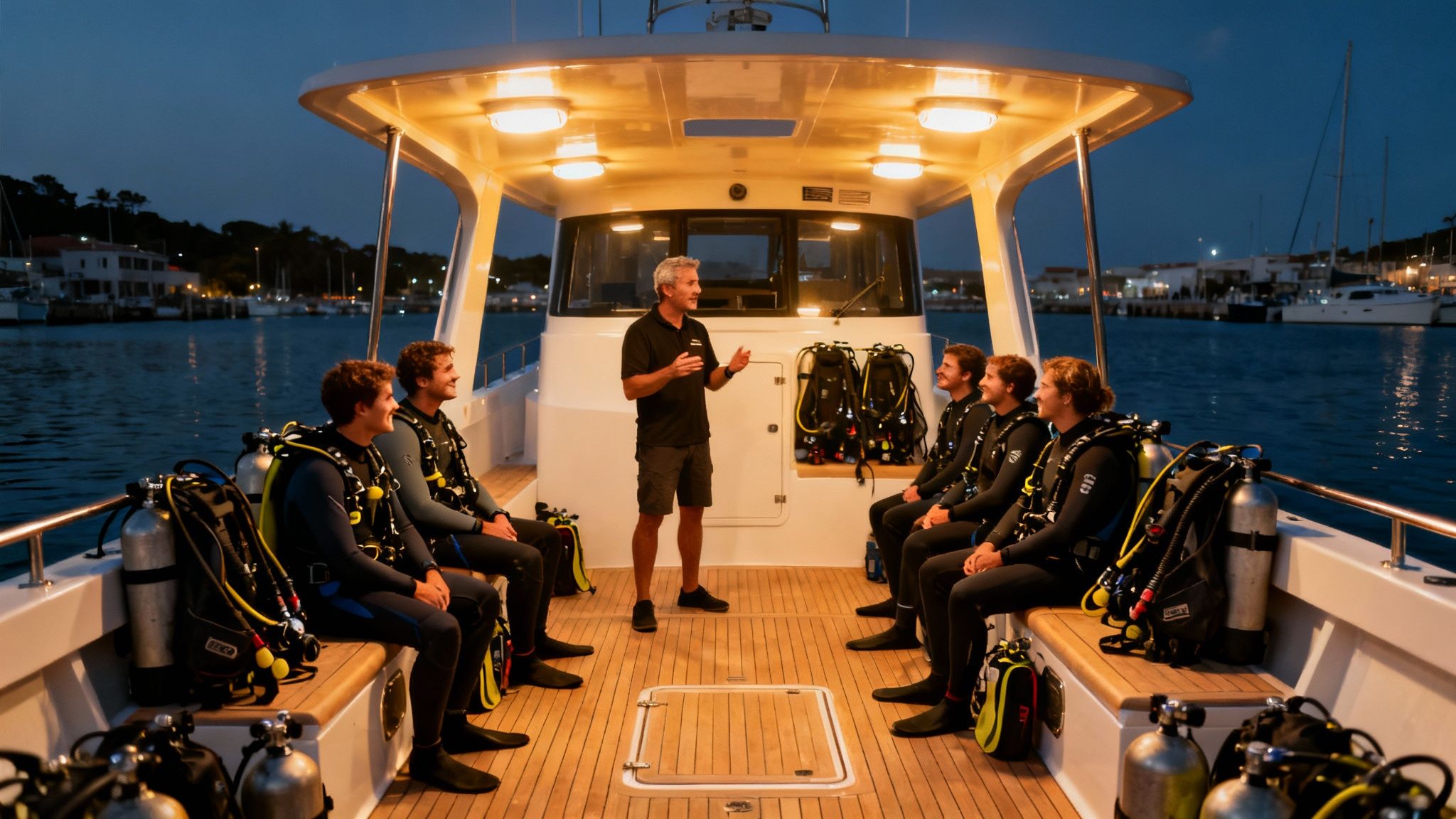
Let’s be honest, choosing the right dive operator is the single most important decision for your manta ray night dive in Kona. It’s the difference between a trip that’s just "good" and one that you'll be talking about for years. With Kona Honu Divers, your adventure starts the moment you book and continues with a warm, genuine welcome from the crew at Honokohau Harbor.
You'll feel the difference as soon as you step on board. For these folks, it’s not just a job—it's a deep-seated passion. The crew brings an incredible 200+ years of combined experience, and their professionalism and love for the ocean are immediately apparent. That expertise has a way of putting everyone at ease, whether you're a veteran diver or feeling those first-time jitters.
This commitment to a top-notch experience shines through in thousands of five-star reviews from divers who have had their minds blown on this trip.
The Pre-Dive Experience
Before the boat even pulls away from the dock, you'll get a fantastic briefing. This isn’t your typical, dry safety rundown. It's an engaging and educational introduction to the world you’re about to drop into. The guides cover everything from fascinating manta ray biology to the essential etiquette for a respectful and safe encounter.
They explain exactly why it’s so important to stay on the bottom and why you must never, ever touch the mantas. It’s all about letting them control the interaction. This focus on education ensures every diver understands their role in protecting these gentle giants while getting the absolute most out of the experience. It sets the tone for the whole trip: safety, respect, and pure awe.
The boat ride out to the dive site is an event in itself. Kona Honu Divers uses spacious, custom-built dive boats designed for comfort. Forget being crammed on a small boat; you’ll have plenty of room to gear up, relax, and soak in a stunning Kona sunset as you cruise toward Garden Eel Cove. The crew uses this time to build the excitement, sharing stories and pointing out other marine life along the way.
What Makes Kona Honu Divers Stand Out
The real secret sauce for Kona Honu Divers is their absolute commitment to a high-quality, personal experience. They deliberately keep their group sizes small, and trust me, that makes a world of difference once you're in the water.
With fewer divers, you get more one-on-one attention from the guides, more space to enjoy the show, and a much more intimate encounter with the manta rays. It transforms the dive from a crowded tourist attraction into a personal audience with ocean royalty.
This philosophy touches every part of their operation. Here’s what truly sets their trips apart:
- Expert Crew: The team’s knowledge is simply unmatched. They know these dive sites like the back of their hand, they understand the currents, and they even know many of the individual manta rays by name. Their calm, confident leadership in the water is priceless.
- Superior Vessel: Their custom dive boats provide a stable, comfortable ride. Little things like warm freshwater showers and ample gear space make the whole journey more enjoyable.
- Focus on the Best Site: By heading exclusively to Garden Eel Cove, they take you straight to the most reliable spot for manta sightings and the best viewing conditions. This seriously boosts your chances of seeing a spectacular show.
- Top-Tier Equipment: All their rental gear is meticulously maintained, so you can count on it to be reliable and comfortable. They even offer complimentary nitrox for certified divers.
To get a better sense of the incredible underwater worlds they visit, check out some of the other premier Big Island dive sites Kona Honu Divers will take you to. It's this mix of seasoned experience, great equipment, and a focus on small groups that makes the adventure safe, comfortable, and downright magical.
What to Expect During Your Underwater Encounter
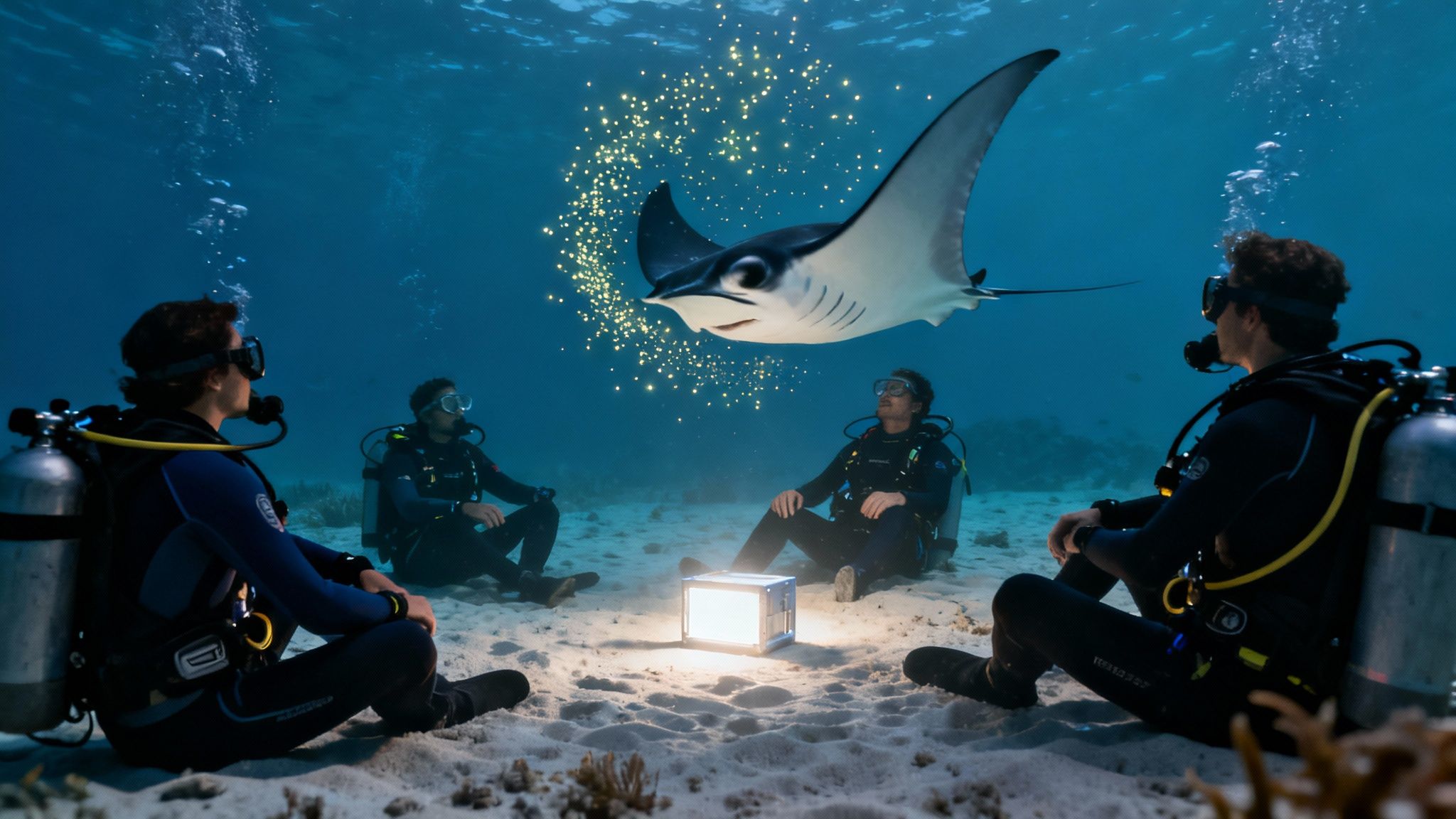
This is the moment. All the anticipation, the prep, the boat ride out—it all leads to this. As you take that back-roll into the warm, dark Pacific, the real magic of the manta ray night dive Kona begins. Everything about this experience is designed to be a safe, non-intrusive, and utterly mesmerizing show for both you and the mantas.
Your guide will lead the group down to a specific spot on the sandy ocean floor, usually at a nice, comfortable depth of around 25 to 40 feet. Once there, you’ll see the setup that makes this dive world-famous: the underwater "campfire." A powerful, custom-built light box sits at the center of the site, shooting a brilliant column of light straight up toward the surface.
The Underwater Stage Is Set
Once everyone is settled on the bottom, we arrange ourselves in a semi-circle around this central light. You'll point your own dive light up as well, adding to the bright arena we’re creating. This collective glow has a single, brilliant purpose: to attract clouds of microscopic plankton, the mantas' favorite meal.
It doesn’t take long. Soon, the plankton swarm the lights, creating a shimmering, almost magical cloud in the water. For the local manta rays, this dense buffet is an irresistible dinner bell. What happens next is a scene that will be burned into your memory forever.
Slowly and gracefully, enormous dark shapes begin to glide out of the blackness and into the light. One by one, the mantas arrive for their nightly feast. The feeling of seeing your first manta, with a wingspan that can stretch up to 16 feet, emerge from the dark is something you just can't describe in words.
A Ballet of Gentle Giants
What unfolds is an underwater ballet unlike anything else on Earth. The mantas swoop and soar through the beams of light, performing effortless barrel rolls as they filter the plankton-rich water through their massive mouths. They’ll glide inches above your head—so close you can see the unique spot patterns on their bellies.
This is where the expertise of great dive guides really comes into play. The team at Kona Honu Divers aren't just there for safety; they are passionate manta experts who know these animals. They recognize many of the individuals by name, identifying them by their markings, which are as unique as a fingerprint. They'll use their lights to point out regulars like "Big Bertha" or "Lefty," adding a personal connection to the whole experience.
The most surreal part is the silence. Despite their immense size, the mantas move with a quiet, weightless grace. The only sound is the rhythmic hiss of your regulator as these gentle giants dance all around you.
Your Role in the Encounter
To make this the best and safest experience for everyone—mantas included—we all have a part to play. Your main job is simply to be a respectful observer.
- Maintain Good Buoyancy: Staying neutral and settled on the sandy bottom is key. It keeps the water clear for the mantas to maneuver and ensures no one accidentally bumps into the delicate reef nearby.
- Practice Passive Interaction: This is the golden rule. You never, ever reach out to touch a manta ray. Touching them can damage the protective mucous layer on their skin, making them vulnerable to infection. Just let the mantas control the interaction; they’ll decide how close to get.
- Position Yourself for the Best View: By staying low and shining your light upward, you become part of the audience. This calm, predictable presence allows the mantas to feel comfortable and carry on with their natural feeding behavior, right in front of your eyes.
Imagine slipping into the warm, plankton-rich waters off Kailua-Kona at dusk. What sets Kona apart isn't just the sheer volume of thrill-seekers—it's the jaw-dropping 80-90% success rate for manta ray sightings, year-round, turning what could be a gamble into a near-guaranteed spectacle. Operators like Kona Honu Divers offer certified divers a front-row seat to these gentle giants somersaulting through illuminated waters for up to 60 minutes. Learn more about this incredible Kona dive experience.
How to Prepare for Your Manta Ray Dive
Alright, you know what the magic is all about. Now, let’s get you ready for your own manta ray night dive Kona adventure. A little preparation goes a long way in making sure your experience is not just incredible, but also comfortable and completely safe from start to finish. Here’s everything you need to know, from the required certifications to what to toss in your bag for the boat ride.
First things first: your dive certification. You’ll need to be certified as an Open Water Diver at a minimum. This isn't just a rule; it ensures you have the core skills—like solid buoyancy control—to be comfortable and safe on the ocean floor in the dark. While the dive site itself is pretty shallow, having that foundational training is absolutely essential for your safety and for protecting the delicate marine life around you.
Of course, planning for the dive is just one piece of the puzzle. If you're looking for tips on managing the bigger picture, resources on planning a family vacation on a budget can be a huge help.
What to Bring and What We Provide
Packing for the manta dive is refreshingly simple. The goal is to stay comfortable before you hop in the water and after you get out.
Here’s a short list of what we suggest you bring:
- Swimsuit: The easiest thing is to just wear it under your clothes to the harbor.
- Towel: A small, quick-dry towel is perfect for the boat.
- A Warm Jacket or Sweatshirt: Trust us on this one. Even in tropical Hawaii, the ride back to shore after a night dive can feel surprisingly chilly. You'll be glad you have it.
- Reusable Water Bottle: It's always a good idea to stay hydrated.
Don't worry about lugging any heavy scuba equipment with you. We’ve got that covered. Kona Honu Divers provides high-quality, meticulously maintained rental gear—BCDs, regulators, masks, fins, and wetsuits are all included. We handle the logistics of a manta ray night dive in Kona so you can stay focused on the amazing experience ahead. For anyone new to diving after sunset, our guides give an incredibly thorough briefing to make sure you feel totally confident and ready. You can dive deeper into what makes night diving special with our guide to scuba diving at night.
Capturing the Moment and Staying Comfortable
Trying to photograph these graceful giants in low light is a challenge, but the payoff is huge. Action cameras like GoPros are perfect for capturing the fluid motion of the mantas. For the best footage, switch your camera to a video setting and, if you have one, bring an external light source.
Nothing ruins a great boat trip faster than seasickness. If you know you're prone to motion sickness, it’s a good idea to take something before we even leave the harbor. Over-the-counter options work well, as do natural remedies like ginger.
The experience at Garden Eel Cove is truly world-class, with dive durations stretching a generous 60-80 minutes in comfortable 75°F waters. This gives underwater photographers ample time to capture every loop and roll of mantas averaging 12-foot wingspans.
This incredible encounter has been fine-tuned over decades by operators who know these waters inside and out. With over 60,000 collective dives and 200 years of combined staff experience, Kona Honu Divers knows how to maximize your time with these gentle giants.
Finally, the most important part of your preparation is simply getting into the right mindset: that of a responsible guest in their home. Remember to never, ever touch the manta rays and to hold your spot on the sandy bottom. By following these simple guidelines, you’re doing your part to protect this breathtaking natural wonder for many years to come.
Answering Your Manta Ray Dive Questions
Alright, let's tackle some of the most common questions people have before they book. Getting these answers sorted out is the best way to feel confident and ready for one of the most incredible nights of your life.
When Is the Best Time of Year for the Dive?
This is the best part—anytime is a great time! The Kona manta ray dive is a spectacular year-round event. We see them consistently, no matter the season.
Our local manta population doesn't migrate. They live here, feeding in these waters all year long. That means you can plan your trip for January or July and still have an extremely high chance of seeing an amazing show.
Is This Dive Safe for New Divers?
Absolutely. We take divers to protected, relatively shallow sites like Garden Eel Cove, where the bottom is typically between 25-40 feet. It’s a calm, controlled environment, which makes it perfect for a first night dive or for anyone who's recently been certified.
Our divemasters at Kona Honu Divers are pros who live and breathe safety. They’ll give you a detailed briefing before you even get in the water and will be right there with you the whole time. If you're looking to get certified before your trip, our PADI Open Water certification course is the perfect place to start.
This dive is a dream for new divers, but don't think it's just for beginners. Even the most seasoned pros are blown away. Getting that close to these massive, graceful animals is a true bucket-list moment for every diver.
What If We Don't See Any Manta Rays?
Look, nature is nature, and there's never a 100% guarantee. That said, the success rate for seeing mantas in Kona is famously high, often topping 90%. Operators who have been doing this for years (like us!) know the sites and the mantas' habits inside and out.
On the very rare night the mantas decide to be shy, any reputable company will have a "manta guarantee." It usually means you can come back and try again on another night, completely free of charge.
Can Snorkelers and Non-Divers Participate?
Yes! You don't have to be a diver to get in on this incredible experience. Snorkelers get an absolutely epic view from the surface.
You'll hold onto a specially designed light board that floats on the water, shining a bright beam down below. The light attracts the plankton, and the mantas come right up to the surface to feed, barrel-rolling just inches beneath you. It’s an amazing way for families and non-divers to witness the magic.