
Picture this: you're descending into the warm, dark Pacific waters just after sunset. Your dive light cuts a beam through the blue, and suddenly, a massive, gentle giant with a wingspan of up to 16 feet glides inches from your face. The manta ray night dive in Kona isn't just a dive—it’s an underwater ballet, one of the most reliable and jaw-dropping marine encounters you can find anywhere on Earth.
What Makes This Experience So Unforgettable
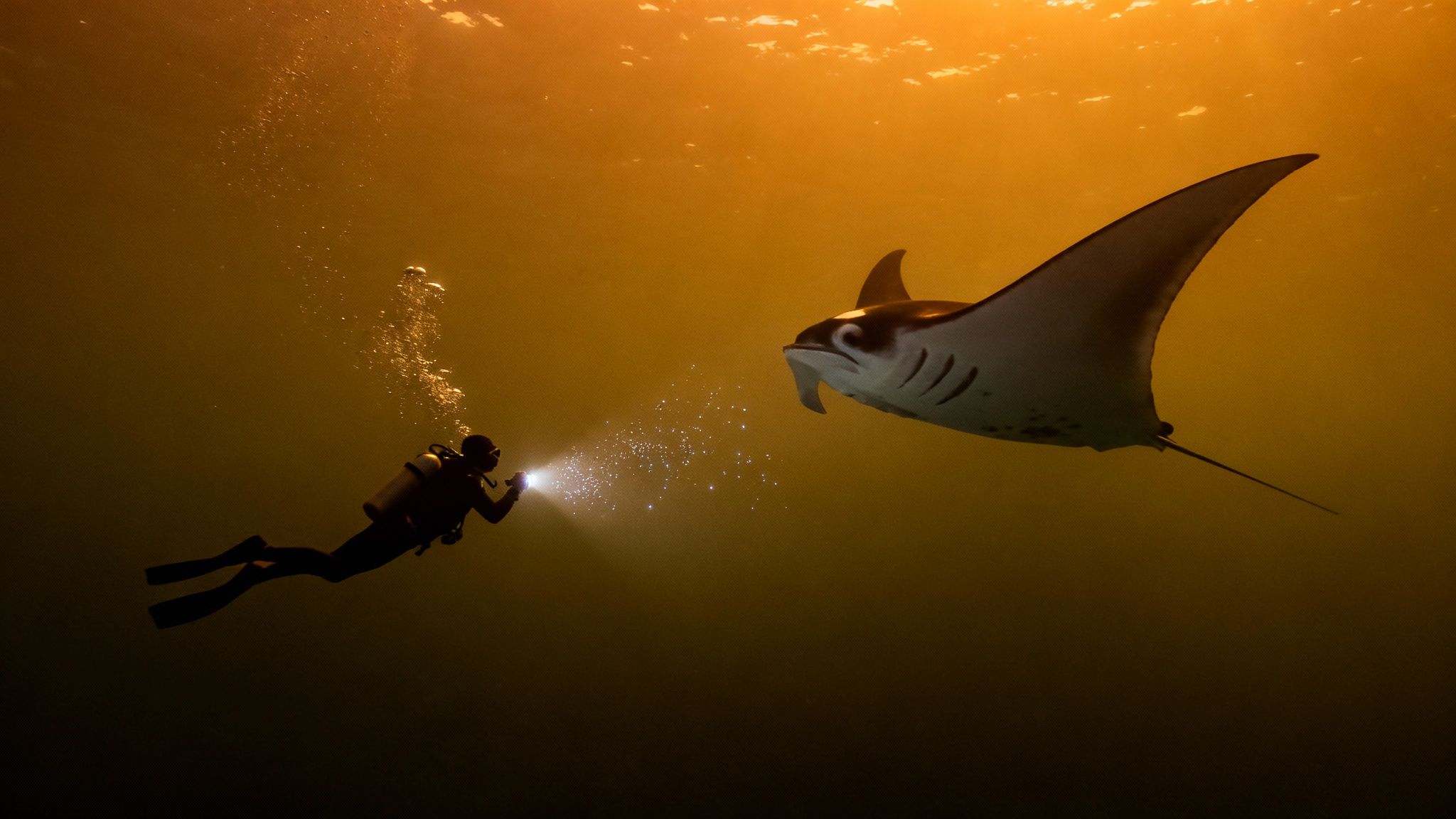
The secret behind this incredible spectacle is a bit of clever, man-made symbiosis. Dive operators set up powerful lights on the ocean floor, creating what we affectionately call the "underwater campfire." This bright light acts like a magnet for phytoplankton, the tiny organisms that form the very foundation of the ocean's food web.
For Kona's resident manta rays, this gathering of plankton is an all-you-can-eat buffet they can't pass up. They swoop, loop, and perform graceful barrel rolls through the illuminated water, their enormous mouths wide open to filter their feast. And you? You get a front-row seat to the entire show, often with these magnificent creatures gliding just over your head.
A Global Destination for Manta Lovers
This unique and incredibly dependable phenomenon has turned the Big Island into a mecca for ocean lovers. Every year, around 80,000 visitors make the trip to Kailua-Kona just for this experience. Why? Because it’s a sure thing. Sighting success rates are consistently between 80% and 90% all year long, which is why our manta ray dive tours are something you can book with total confidence. Explore more about Kona's world-famous manta encounters to see what makes it so special.
What makes Kona’s manta dives stand out is that they’re built around feeding stations. In many other places, you see mantas at cleaning stations. Here, you get to watch them actively feast, which results in a much more dynamic and acrobatic display.
This is far more than just spotting a manta ray from a distance; it's about being right there in their world. It’s an intimate, breathtaking encounter that people often describe as genuinely life-changing. Here at Kona Honu Divers, we make sure that experience is not only spectacular but also completely safe, creating a memory that will stick with you forever.
Why Garden Eel Cove Is the Premier Manta Dive Site
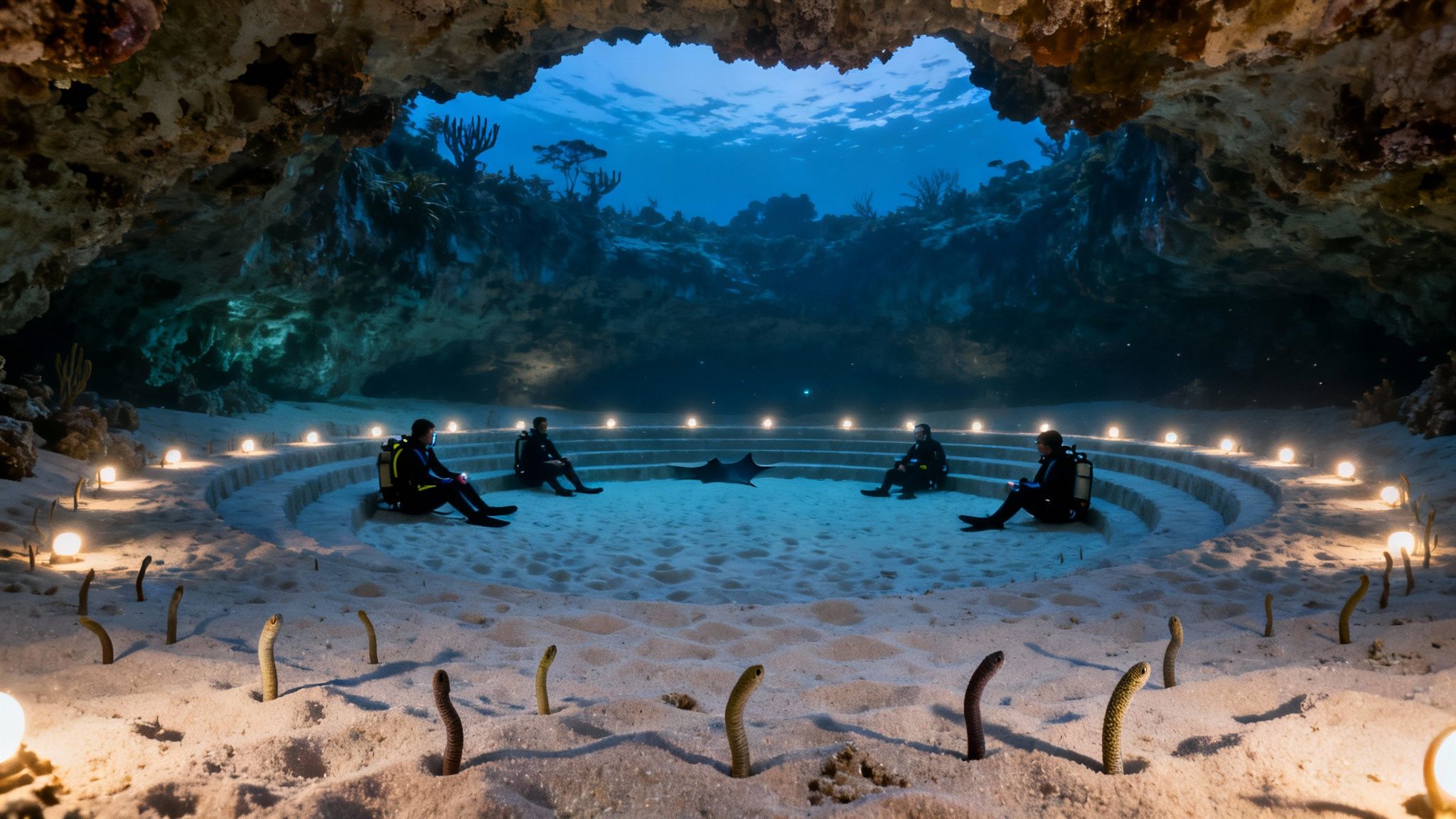
When you're planning a manta ray night dive in Kona, the location you choose makes all the difference. While you'll hear about a couple of different spots, Garden Eel Cove is the superior choice. Affectionately known as "Manta Heaven," it consistently provides a far more magical experience, earning its reputation as the absolute best place for this once-in-a-lifetime adventure.
A big part of its magic comes down to its protected location. Garden Eel Cove is tucked away, naturally shielded from the powerful open-ocean swells that often batter more exposed sites. This protection creates a calmer, safer, and more comfortable experience for everyone in the water. Conditions are more predictable, which means less time worrying about the waves and more time focusing on the incredible show.
The Underwater Amphitheater
What truly elevates Garden Eel Cove is its unique underwater layout and healthier reefs. The dive site is built around a natural sandy "amphitheater" that creates the perfect stage for the manta ballet. As divers, we settle onto the sandy bottom, arranging our powerful lights in a circle—the famous "campfire" that draws in the plankton and kicks off the feeding frenzy.
This setup is a game-changer for several reasons:
- Front-Row Seats for Everyone: The amphitheater layout provides a better viewing area, meaning nobody has a bad view. You can relax without having to crowd or jostle for a good spot.
- Built-in Reef Protection: By staying on the sand, we ensure there’s no accidental damage to the delicate coral gardens that surround the area.
- Incredible Manta Encounters: The wide-open space above the sand gives the mantas all the room they need to perform their incredible acrobatics, swooping and gliding just inches above your head.
This natural amphitheater is the secret sauce. It creates a structured and respectful environment that feels completely immersive, keeping the focus right where it belongs: on the mantas.
Kona has two main locations for manta ray night dives. While both can offer great experiences, Garden Eel Cove consistently provides a better viewing area, calmer conditions, and more vibrant reefs.
Comparing Kona Manta Ray Dive Sites
| Feature | Garden Eel Cove (Manta Heaven) | Manta Village (Keauhou Bay) |
|---|---|---|
| Location | North of Kona Airport | South of Kona, in Keauhou Bay |
| Protection | Superior. Naturally sheltered from ocean swells. | Fair. More exposed to south swells. |
| Viewing Area | Natural sandy amphitheater for unobstructed views. | Rocky bottom with some sandy patches. |
| Manta Sightings | Highly consistent; 95%+ success rate over the year. | Consistent, but can be more variable with conditions. |
| Crowds | Can get busy, but the layout handles it well. | Can feel more crowded due to the tighter space. |
| Reef Health | Excellent. Vibrant coral gardens nearby for twilight dives. | Healthy reef, but less extensive than Manta Heaven. |
Ultimately, the combination of a protected cove and a superior viewing area makes Garden Eel Cove the clear winner. You can read more about the unique magic of Manta Heaven and see for yourself why it's our go-to spot.
Picking an operator that knows and prioritizes this superior location is the most important decision you'll make. With calmer water, a better viewing area, and a healthier reef, Garden Eel Cove is truly the VIP lounge for the world's best manta ray night dive. It's exactly why we run our 2-tank manta ray dive tours exclusively at this incredible site.
Your Manta Ray Adventure, Step by Step
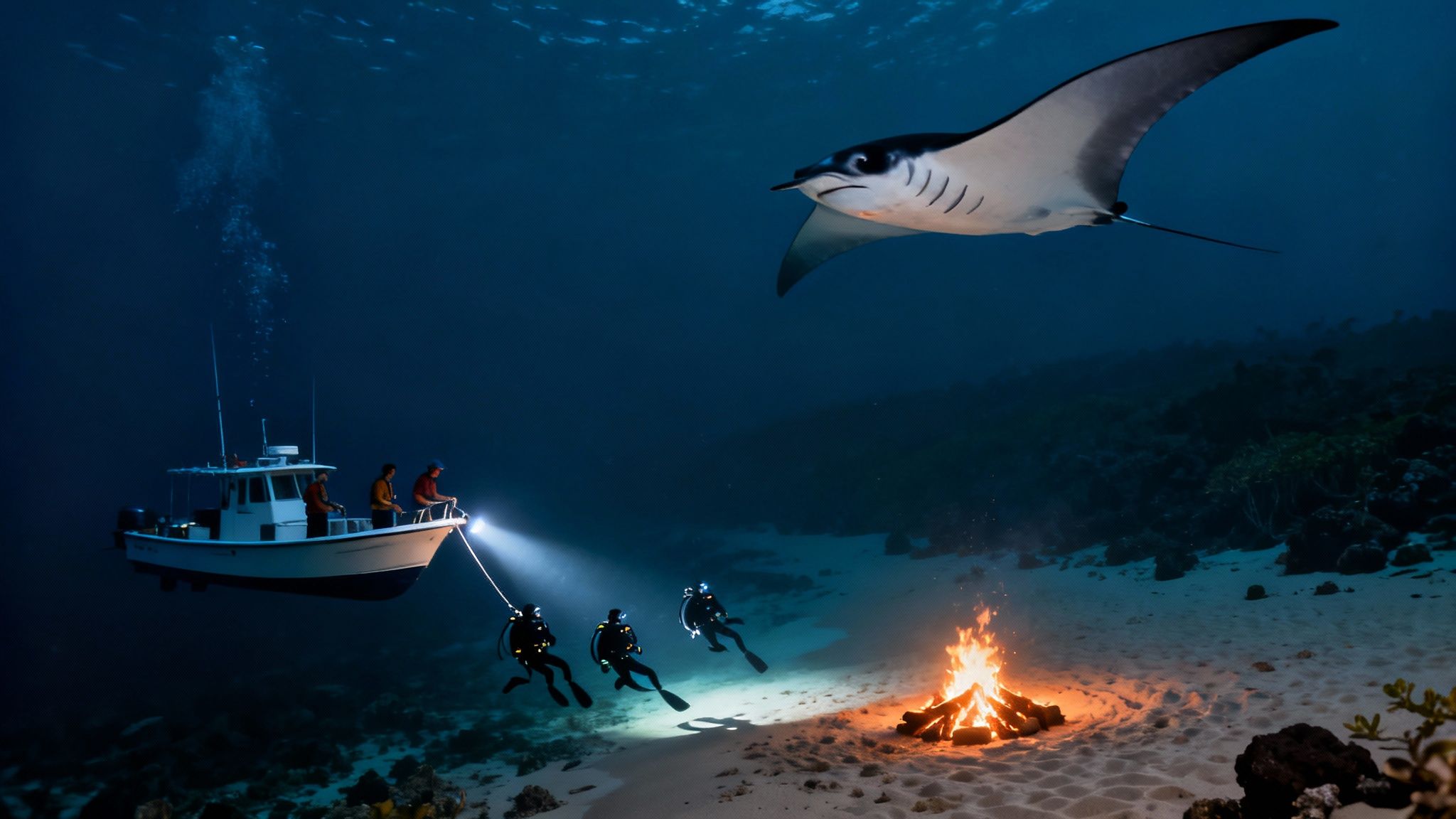
So, what’s it really like to go on a manta ray night dive in Kona? When you go with a top-notch crew like Kona Honu Divers, you’re not just signing up for a dive; you’re embarking on a full-blown adventure designed for comfort, safety, and pure wonder. It's a two-act play, taking you from the vibrant colors of sunset to the deep, dark mystery of the ocean at night.
Your evening starts with a laid-back check-in at the harbor. Our crew will get you sorted with quality gear and give a thorough but easygoing briefing. We'll cover all the essentials—safety, what to expect, and some cool facts about the mantas—so everyone feels ready and excited. Then it's time to cast off for a beautiful boat ride along the stunning Kona coast.
The First Dive Into Twilight
The first act of our underwater show is a spectacular twilight reef dive. You'll descend into the warm Pacific just as the sun is setting the sky on fire. This dive takes you through the gorgeous coral gardens of Garden Eel Cove while there's still plenty of natural light. It’s a chance to see reef fish settling in for the night and maybe even spot an octopus venturing out. It’s a totally different vibe from a dive in the bright midday sun.
This first dip is a brilliant way to kick things off. Here’s why:
- Get Your Fins Wet: It's the perfect opportunity to dial in your buoyancy and get comfortable with your gear in a calm, beautiful setting before the main event.
- Witness the Shift: You get to see the reef during that magical transition from day to night, watching how marine life changes as dusk falls.
After about 45 minutes, you’ll head back to the boat for your surface interval. We’ll have snacks and drinks ready while the sky goes dark and the crew prepares for the real showstopper.
The Main Event: The Manta Ballet
Now for the moment you came for. You'll descend again, but this time into a deep, inky blackness, making your way toward a bright glow on the ocean floor—our underwater "campfire." Your guide will lead the group to a spot on the sand where you'll settle in for the show.
The feeling is hard to describe. You and the other divers point your lights up, creating a massive beam that attracts clouds of plankton. And then… they arrive.
The first manta ray emerges from the darkness, a massive, graceful shadow swooping into the light. Soon, another joins, then another. They perform their famous barrel rolls right over your head, sometimes just inches away, scooping up their plankton dinner. It's a silent, mesmerizing, and utterly unforgettable ballet. And with our expert guides keeping a watchful eye, you can just relax and soak it all in.
After about 45 minutes of pure awe, you'll slowly ascend back to the boat, where hot chocolate and cookies are waiting for the ride home. Want a more detailed play-by-play? Check out our post on what it's like to go on a manta ray dive in Kona.
Getting Ready for Your Manta Ray Night Dive
A little bit of prep work can make all the difference between a good manta dive and an absolutely unforgettable one. When you know what to bring and what to expect, you can stop worrying about the little things and just soak in the incredible show happening right in front of you.
First things first, let's talk about certification. To join the dive, you'll need at least an Open Water Diver certification. Now, if you're a newer diver, don't let that worry you. This dive is surprisingly manageable, even if you don't have a ton of dives logged. We keep things pretty shallow, usually around 30-40 feet, and you’ll be settled on the sandy bottom for most of the action. Our experienced crew is there every step of the way, making sure even less experienced divers feel totally comfortable and safe. While this dive is great for all levels, more experienced divers looking for other challenging opportunities can check out our advanced dive tours.
What to Bring on the Boat
You don’t need to pack a giant gear bag for this trip. Just a few essentials will make your evening much more comfortable.
- Your C-Card: This is non-negotiable for all certified divers. We have to verify your certification before you can hit the water.
- A Towel: You'll be glad you have it when you climb back on board after your dive.
- A Warm Jacket or Sweatshirt: Hawaii might be warm, but the boat ride back to the harbor can feel surprisingly cool after being in the water at night. Trust me, you'll want that dry, warm layer.
Safety First: Passive Interaction is Everything
If there's one rule to remember, it's this: passive interaction. We are guests in the mantas' world, and our job is to be respectful observers. That means no touching, no chasing, and definitely no trying to ride a manta ray.
A manta's skin has a delicate mucus coating that acts as its immune system, protecting it from nasty bacteria. When humans touch them, that protective slime gets stripped away, leaving them open to infection. Keeping our hands to ourselves is vital for their health and the future of this amazing experience.
Before you even get in the water, your divemaster will walk you through everything you need to know about where to position yourself and how to behave. Just follow their lead, keep your buoyancy in check, and stick with your group. It’s the key to a safe, respectful dive for everyone—mantas included.
This whole experience is built around being prepared and safe, which lets you truly relax and enjoy the show. Each year, about 80,000 people get to witness these gentle giants with 12-foot wingspans barrel-rolling through the water on these 60-minute adventures. At Kona Honu Divers, we take it a step further with free nitrox for certified divers, small groups for a more personal vibe, and safety procedures we've honed over tens of thousands of dives. You can discover more about our premier manta ray experience and see what makes our tours stand out.
Tips for Capturing Stunning Underwater Photos
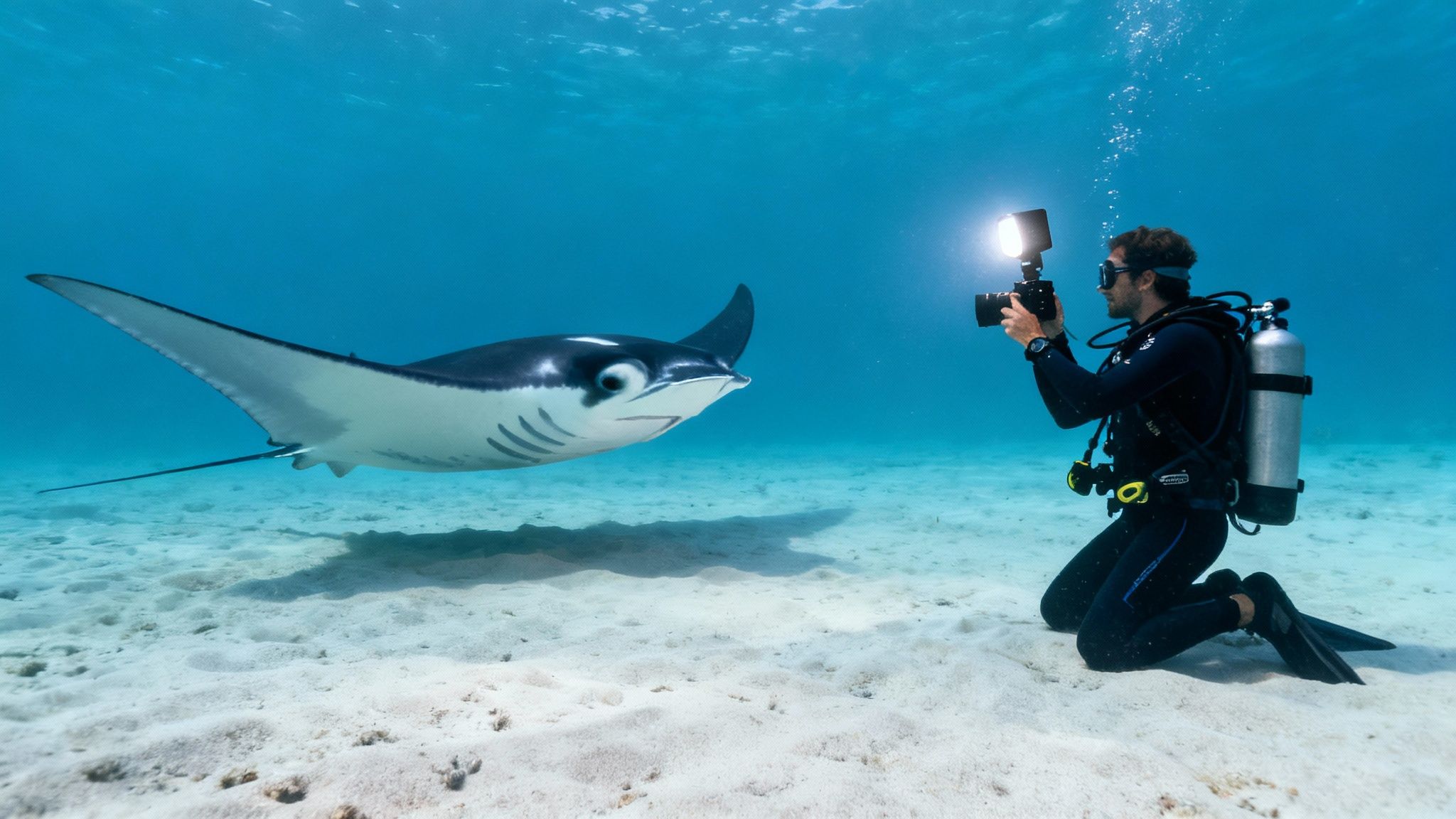
Bringing home incredible photos is the ultimate souvenir from your manta ray night dive in Kona. But let’s be honest, capturing the true magic of this experience can be a real challenge. The good news is that with a few insider tips, photographers of any level can get shots that live up to the memory.
If you're shooting with a GoPro or a similar action camera, a couple of simple adjustments make a huge difference. For the first twilight dive, pop on a red filter. You’ll be amazed at how it brings back the vibrant colors that water tends to wash out as you go deeper.
When the sun goes down for the main event, the name of the game is stability. Find a good, secure spot on the sand to plant yourself. This will help you avoid the shaky footage that can ruin an otherwise perfect video of a manta swooping just inches above you.
Advanced Camera and Lighting Techniques
For those of you with more serious rigs—I’m talking DSLRs or mirrorless cameras in housings with external strobes—you have a lot more creative power at your fingertips. Nailing your shots in this kind of low-light, high-action environment really comes down to mastering your camera settings and, most importantly, your lighting.
Here are some solid starting points for your camera. Think of these as a baseline, and don't be afraid to tweak them as you go:
- Shutter Speed: I'd start around 1/125s. It’s the sweet spot—fast enough to freeze the mantas’ graceful movements and still sync up properly with your strobes.
- Aperture: Set it to f/8. This gives you a nice, deep depth of field, which is a lifesaver for keeping these massive animals sharp from wingtip to wingtip.
- ISO: Keep this as low as you can. You’ll get much cleaner images by sticking between ISO 200 and 400, which helps keep that ugly digital grain out of your shots.
Now, let's talk about light. Your strobe positioning is everything. To avoid backscatter (those annoying white specks from light hitting particles in the water), you need to get your strobes out wide, away from your lens, and even slightly behind the camera handles. Point them forward to light up the manta's bright white belly as it glides overhead. For a deeper dive into creative photography, getting a handle on mastering camera shot angles can really elevate your storytelling.
Composition for Dramatic Shots
Finally, remember to think like an artist. Don't just point and shoot. Frame your shots thoughtfully. Including other divers in the background can add a powerful sense of scale, showing everyone back home just how enormous these gentle giants are.
Those bright beams from everyone's dive lights cutting through the darkness? Use them. They make for incredible leading lines that pull the viewer’s eye right to the star of the show. By putting solid technical skills and creative composition together, you'll walk away with photos that truly capture the awe of this unforgettable dive. A big part of that preparation is having the right equipment; take a look at the gear you will need for your Kona diving adventure to make sure you're all set.
Ready to Book Your Manta Ray Adventure?
If you're feeling that pull to witness Kona's world-famous underwater ballet for yourself, now’s the time to make it happen. The manta ray night dive is easily one of the most sought-after experiences on the Big Island, and spots fill up fast. We highly recommend booking ahead to make sure you don't miss out.
The operator you choose makes all the difference, and that's where we come in. At Kona Honu Divers, we've built our reputation on providing unforgettable and, most importantly, safe encounters. We have prime access to Garden Eel Cove (the best site!), keep our groups small for a more personal experience, and maintain a safety record we're incredibly proud of. It all adds up to giving you the best possible seat for the show.
But don't just take our word for it. Here’s what other divers have said about their nights with the mantas and our crew.
Ready to jump in? You can check our schedule for the 2-Tank Manta Ray Dive and reserve your spot online. It’s a simple process to lock in what will surely be a highlight of your trip. The mantas are waiting!
Frequently Asked Questions About the Manta Dive
Getting ready for an adventure like the manta ray night dive Kona always brings up a few questions. We get it! To help you feel completely prepared, here are the answers to some of the things we're asked most often.
When Is the Best Time of Year to See Mantas?
This is the best kind of question because the answer is so simple: any time you can make it here! Kona is blessed with a large, year-round population of manta rays that stick around. They don't migrate.
Every single night, they show up for the all-you-can-eat plankton buffet our lights create. That means the show is spectacular no matter the season. The success rate for sightings is consistently high all year, so just pick a date that works for you.
Do I Need to Be an Advanced Diver?
Nope, not at all. All you need is your Open Water Diver certification to join the fun.
The dive itself is pretty mellow. We typically set up in a shallow, sandy area about 30-40 feet deep, where you’ll settle in for the main event. It’s actually a fantastic experience for newer divers, especially since you'll have our expert Kona Honu Divers crew keeping a close eye on everything and making sure everyone is safe and comfortable.
Can My Non-Diver Friends and Family Join?
Absolutely! This is one of those rare adventures where everyone can get in on the action. We run a fantastic snorkel trip at the same time.
Snorkelers hold onto a custom-made, high-powered light board that floats on the surface, attracting plankton from above. They get an incredible bird's-eye view as the mantas swoop and feed right below them. It’s just as magical and ensures no one in your group has to miss out.
Is Seeing Mantas Guaranteed?
As with any wild animal encounter, we can't offer a 100% guarantee. But let me tell you, the manta ray night dive Kona has an unbelievably high success rate—we're talking well over 90% on most nights. It's what makes this the most reliable place on the planet for this experience.
For even more information, this Manta Ray FAQ is a great resource.
We definitely recommend booking your trip in advance. This is one of the Big Island’s premier activities and spots on our 2-tank manta dive tour fill up fast. Securing your spot early means you won't miss out on what will likely be the highlight of your trip.