
Imagine dropping into the warm, dark Pacific as the silhouettes of giant manta rays glide effortlessly through the beams of your dive light. This isn't a scene from a documentary; it’s the world-famous manta ray night dive in Kona, Hawaii—a true bucket-list experience that feels like an underwater ballet.
With sighting success rates consistently hitting 90% or higher, this is one of the most reliable and genuinely awe-inspiring wildlife encounters you can find anywhere on the planet.
What Makes The Kona Manta Ray Night Dive So Magical
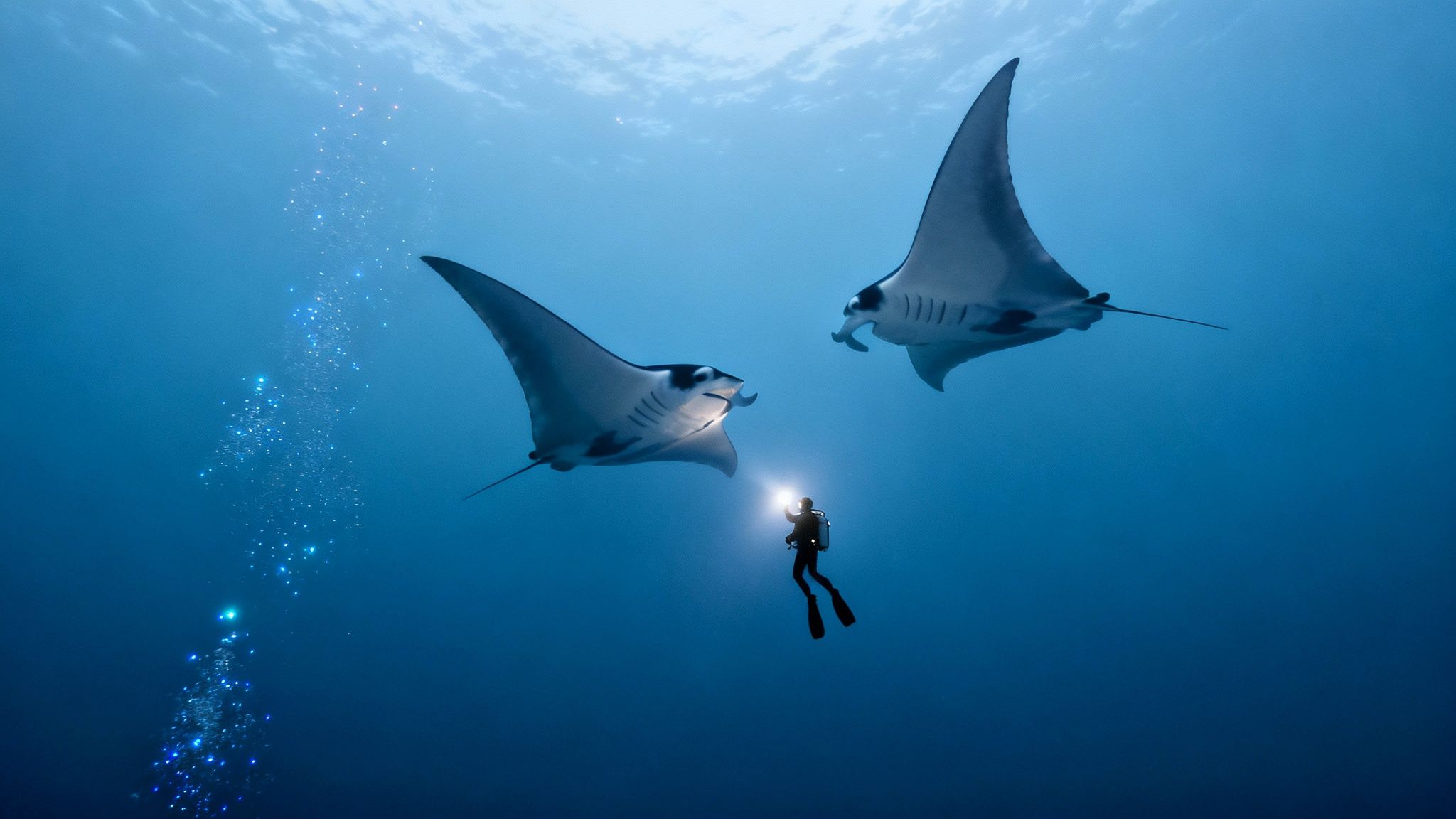
The Kona coast of the Big Island is more than just a stunning tropical paradise; it’s a globally unique sanctuary for manta rays. This incredible phenomenon is the result of a perfect mix of geography and biology. The island’s volcanic underwater slopes have formed deep canyons that funnel nutrient-rich currents, creating the ideal conditions for massive blooms of plankton—the manta ray's favorite meal.
This dependable, year-round buffet is precisely why Kona's manta population is resident, not migratory. They simply don't need to leave. Unlike other spots where you might be lucky to catch a fleeting glimpse of a manta at a cleaning station, the Kona experience is all about watching them feed in a spectacular, acrobatic show.
A Reliable and Awe-Inspiring Spectacle
The entire setup is brilliantly simple. After sunset, dive operators head to established sites and set up powerful lights that shine into the water. These lights act like a magnet, drawing in clouds of plankton, which, in turn, ring the dinner bell for the hungry mantas.
Divers settle on the sandy bottom, usually around 30-40 feet deep, and point their lights upward. Meanwhile, snorkelers float on the surface, holding onto custom-built light boards that shine down. This creates a mesmerizing column of light—a concentrated feast for the mantas.
The result is a front-row seat to an incredible underwater theater. You’ll watch these gentle giants, with wingspans stretching up to 18 feet, perform graceful barrel rolls and soar inches above your head, scooping up plankton with their cavernous mouths.
What truly sets the Kona manta ray night dive apart is the sheer consistency. While no wild animal encounter is ever a 100% guarantee, the success rates here are remarkably high, frequently topping 90% all year long.
This reliability transforms the dive from a hopeful gamble into an event you can count on. This guide will walk you through everything you need to know to see this magic for yourself. We'll cover everything from picking the right spot to prepping for the adventure of a lifetime.
For the full experience, we highly recommend the 2-Tank Manta Ray Dive & Snorkel trip. It’s the best of both worlds, giving you a beautiful dusk reef dive before the main event begins.
Why Garden Eel Cove is Kona’s Premier Manta Dive Location
When you're planning a manta ray night dive in Kona, the location you choose can mean the difference between a good dive and a truly life-changing experience. While Kona has a couple of world-class options, one spot consistently delivers the most magic: Garden Eel Cove, also known by its well-earned nickname, "Manta Heaven."
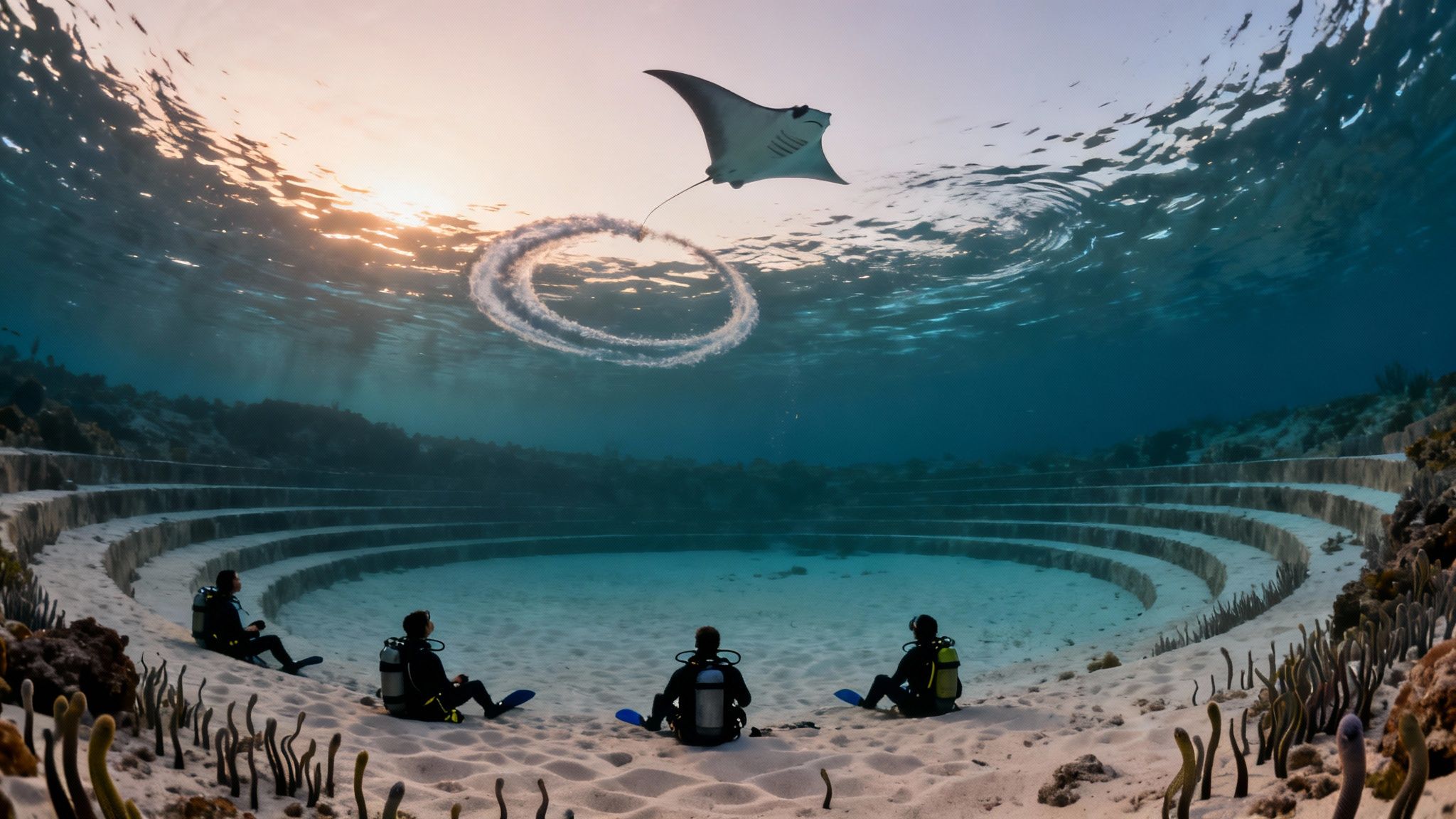
The secret to its success starts with geography. Tucked away in a protected bay, Garden Eel Cove is naturally shielded from the open ocean, which translates to calmer, more predictable conditions. On nights when the wind and swell pick up, this shelter makes for a much more comfortable and stable experience for everyone in the water.
The Underwater Amphitheater
What really sets this site apart is the unique layout of the seafloor. The sandy bottom slopes gently, creating what we divers call a natural "amphitheater." This allows everyone to settle in comfortably on the sand, creating an unobstructed, front-row view of the action without anyone needing to hover or risk damaging fragile corals. The viewing area is simply better, giving the mantas a wide-open water column to glide through safely, ensuring a respectful and non-invasive encounter for all.
You get to look straight up as these gentle giants perform their mesmerizing feeding ballet just inches above your head. This setup isn't just incredible for us; it gives the mantas a wide-open water column to glide through safely, ensuring a respectful and non-invasive encounter for all.
The "amphitheater" at Garden Eel Cove is a total game-changer. It concentrates the lights and the action, making you feel completely immersed in the spectacle. It's an experience you just don't get at other sites.
Comparing Kona's Premier Manta Ray Dive Sites
Kona has two main hubs for the manta ray night dive: 'Manta Village' near Keauhou Bay and 'Manta Heaven' at Garden Eel Cove. While both are fantastic, Garden Eel Cove's protected location and superior viewing area make it the superior choice. Here’s a quick breakdown to help you see why.
| Feature | Garden Eel Cove (Manta Heaven) | Manta Village |
|---|---|---|
| Location | North of Kailua-Kona, near the airport | South of Kailua-Kona, near Keauhou Bay |
| Typical Conditions | Protected bay, generally calm | More exposed, can be choppy |
| Bottom Topography | Superior sandy "amphitheater" for easy viewing | Rocky, less defined viewing areas |
| Average Manta Count | 11 mantas per night (often more) | High success rate, but often fewer mantas |
| Overall Experience | Immersive, cinematic, high manta numbers | Reliable sightings, but a bit more rugged |
While Manta Village recorded a slightly higher success rate of 96% back in 2013, Garden Eel Cove delivered a more spectacular show. It had a 90% success rate that same year but boasted an average of 11 mantas per night, with some nights seeing over 30 individuals at once! For sheer spectacle, Manta Heaven is tough to beat. You can dive deeper into these incredible manta statistics over on our blog.
Choosing an operator that knows the value of this premier location is key. At Kona Honu Divers, we consistently take our guests to Garden Eel Cove because we know its unique features provide the most breathtaking and reliable encounters.
More Than Just a Manta Dive
What truly elevates the trip to Garden Eel Cove is the quality of the two-tank experience. The site gets its name from the colonies of garden eels you can see poking their heads out of the sand during the day, and the preceding dusk dive is a highlight in its own right.
The reefs here are vibrant, healthy, and full of life—simply better than what you'll find at other locations. Before the sun fully sets and the mantas make their grand entrance, you get to explore a thriving coral ecosystem. You’ll spot a huge variety of reef fish, find moray eels, and watch as other nocturnal critters begin to emerge for the night.
This first dive is the perfect appetizer. It lets you get comfortable in the water and witness the fascinating transition from day to night on the reef, making the entire trip a much more complete and rewarding diving adventure. To learn even more about this incredible spot, check out our guide on what makes Manta Heaven so special.
Choosing Your Guide: Why Kona Honu Divers Excels
The dive operator you pick for your manta ray night dive in Kona is just as important as the dive site itself. A great crew can take an incredible experience and make it truly unforgettable, focusing on your safety, comfort, and the quality of the manta encounter. This is where Kona Honu Divers really shines.
With so many boats heading out each night, it can be tough to know who to trust. But when you look at the factors that truly matter—safety, group size, and guide expertise—Kona Honu Divers has built a solid reputation for delivering on all fronts.
Small Groups and a Personal Touch
One of the biggest things that sets Kona Honu Divers apart is their commitment to small groups. When you're floating in the dark, watching these massive, graceful creatures, the last thing you want is to be elbow-to-elbow with 50 other people.
Smaller groups simply mean a better, more intimate experience. There’s less chaos in the water, you get more direct attention from your guide, and everyone gets a front-row seat to the show. The guides have the time to actually talk with you, answer questions, and make sure you’re comfortable. It creates a calm, relaxed vibe where the focus stays right where it should be: on the mantas.
Keeping groups small isn't just a marketing line; it's a core philosophy. It ensures every single person gets an amazing view without feeling rushed or crowded out.
Guides Who Actually Know the Mantas
The guides at Kona Honu Divers are more than just tour leaders; they're passionate manta experts. Many of them can identify the regulars by their unique spot patterns, and they’ll even share their names and backstories. This adds a whole other layer to the dive, turning it from a simple viewing into a personal introduction.
This kind of expertise is priceless. They understand manta behavior, know where to position the group for the best views, and always follow strict, respectful guidelines to keep the animals safe. Their passion is contagious and will absolutely deepen your appreciation for these gentle giants.
A Serious Commitment to Safety and Comfort
At the end of the day, safety is everything. Kona Honu Divers runs a tight ship, with an unwavering focus on the highest safety standards. It all starts with their custom-built dive boats, which are designed for comfort and space—giving you a stable platform for gearing up and relaxing.
They also offer a huge perk for certified divers: complimentary nitrox. Diving on enriched air means you get more no-deco time at depth, which translates directly into more time in the water with the mantas. It’s a premium touch that shows they’re serious about providing the best dive possible. This dedication is a big reason they’re consistently ranked among the best dive shops in Kona.
But don't just take our word for it. The rave reviews from other divers speak for themselves.
Choosing Kona Honu Divers is about more than just booking a tour. It's an investment in a seamless, safe, and deeply personal adventure with guides who truly love what they do.
Your Manta Ray Night Dive From Start To Finish
So, you’ve booked your spot and the day is finally here. You're probably wondering what the world-famous manta ray night dive in Kona is really like. Knowing the play-by-play of the evening helps you relax and soak in every moment of this incredible adventure. It’s a well-oiled machine, fine-tuned for maximum safety and pure awe.
Your journey starts in the late afternoon at Honokohau Harbor. After finding your operator, you’ll meet the crew and the other divers and snorkelers. This is where you'll handle the essentials—signing waivers, getting a friendly rundown, and being fitted for any rental gear you need. Once everyone's all set, it's time to board the boat.
Setting The Stage: A Dusk Reef Dive
The truly great manta experiences, like the two-tank trip offered by Kona Honu Divers, aren't just about the mantas. The first dive is a beautiful tour of a nearby reef as the sun begins to dip below the horizon.
This isn't just a warm-up; it's a fantastic dive on its own. The reef completely transforms at dusk. You get to see the daytime fish darting for cover as nocturnal creatures like octopuses and moray eels start to creep out.
This first dip is smart for a few reasons:
- Get Comfortable: It’s the perfect chance to check your weighting and get comfortable with your gear in calm, clear water.
- Magic Hour: You see the reef in a completely different, almost magical, light.
- Build the Hype: As darkness slowly falls, the anticipation for the main event really starts to build.
After about 45 minutes, you’ll surface to a classic Kona sunset. The crew provides snacks and drinks during your surface interval while getting everything ready for act two.
The Main Event: The Underwater Campfire
Once night fully settles in, the real excitement begins. You’ll get a second briefing, this one laser-focused on manta etiquette and the specific plan for the night dive. Your guide will explain exactly where to go, how to position yourself, and the unbreakable rule of manta diving: look, but don't touch.
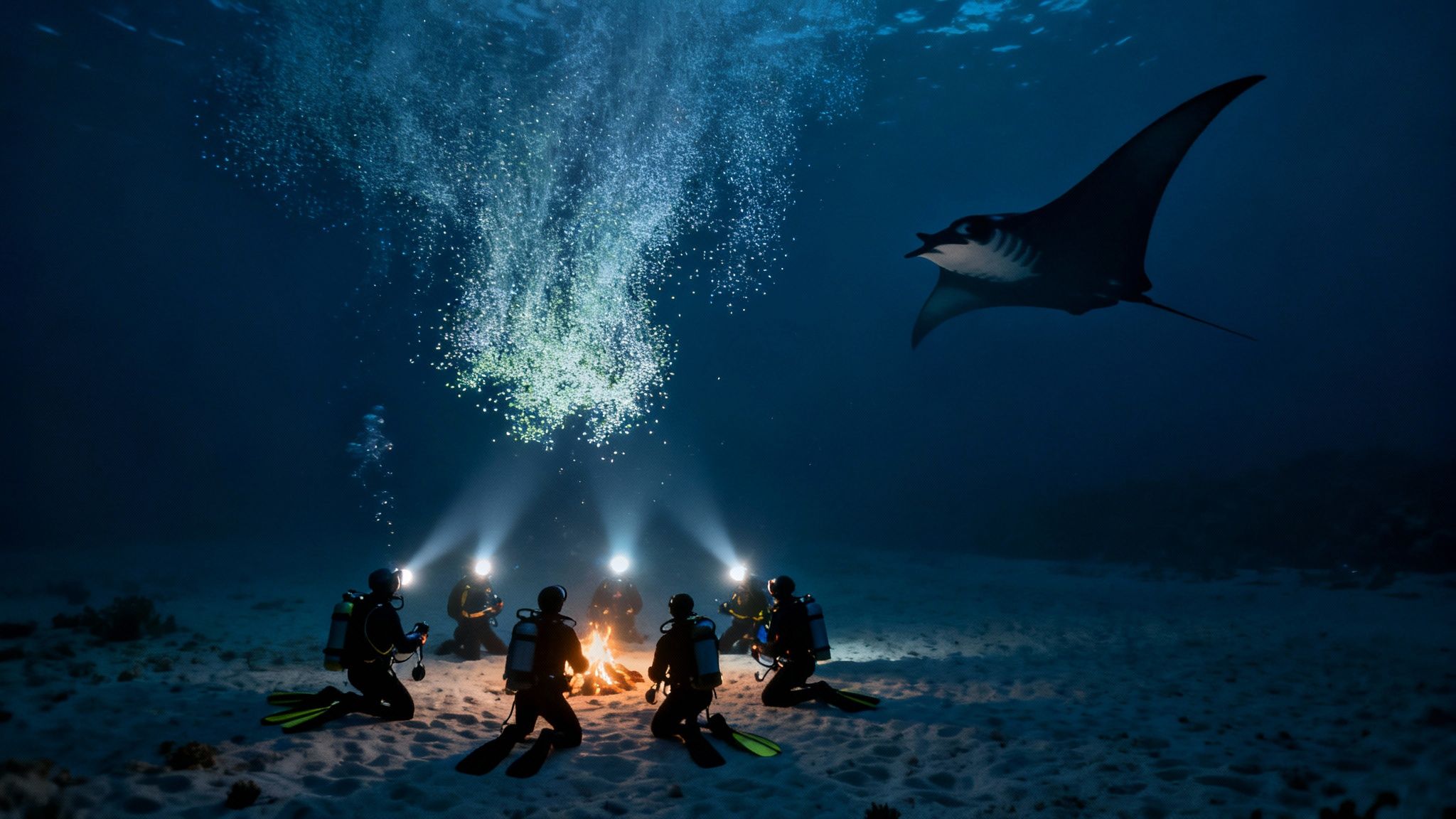
After gearing up and splashing into the dark water, you’ll follow your guide down to a sandy bottom, usually around 30-40 feet deep. Here, the group arranges itself in a semi-circle around a powerful, centralized light source that the locals call the "campfire." Everyone aims their personal dive lights straight up, creating a massive beam that acts like a beacon for plankton.
This is one of my favorite moments. You're settled on the ocean floor, your light cutting a path through the darkness, just waiting. There's a surreal, electric calm that washes over the group right before the show begins.
And then, it happens. A massive, elegant shadow glides into the light. Then another, and another. The manta rays swoop in for their nightly buffet, performing breathtaking barrel rolls as they soar inches above your head. All you have to do is lie back and watch the silent, mesmerizing ballet unfold. It’s a moment that truly lives up to the hype.
Imagine slipping into the warm, 75°F waters off Kona's coast at dusk, your dive light piercing the darkness as massive shadows glide into view—the majestic manta rays of Hawaii's Big Island. Each year, this manta ray night dive phenomenon draws a staggering 80,000 visitors from around the globe, making Kona the undisputed world leader in reliable manta encounters. Dive operators like Kona Honu Divers, with their world-famous night dives, contribute to this boom, offering signature excursions that boast sighting success rates between 80% and 90% year-round. These stats highlight why Kona's reefs, teeming with nutrient-rich plankton drawn by dive lights, create a natural feeding frenzy. Learn more about the world-famous Kona manta night dive.
After about 45 minutes of pure wonder, your guide will signal that it’s time to head up. The boat ride back to the harbor is always buzzing with energy as everyone excitedly shares their favorite moments from an unforgettable encounter.
Getting Ready: Your Gear, Camera, and Logistics Plan
A little bit of prep work goes a long way toward making your manta ray night dive in Kona truly unforgettable. When you know what to bring, what to expect from your gear, and how to get to the harbor on time, you can relax and just soak in the incredible experience. Let's walk through everything you need for a smooth and stress-free adventure.
What to Pack for Your Manta Adventure
You don’t need to bring a massive bag, but a few well-chosen items will make your trip much more comfortable. Being prepared means you can focus on the fun, not on what you forgot back at the hotel. For those who like to keep things organized, a guide to the best packing cubes for smarter packing can be a game-changer for dive travel.
Here’s a quick list of what you'll want to have on hand:
- Proof of Certification: Don't forget your C-card! Most operators accept digital versions on your phone, but have it ready to show the crew when you check in.
- Something Warm for Later: Even in tropical Hawaii, the boat ride back after sunset can get surprisingly brisk once you're out of the water. A hoodie or a windbreaker is a lifesaver.
- The Little Comforts: Think reef-safe sunscreen for the boat ride out, a reusable water bottle to stay hydrated, and any motion sickness medicine if you're prone to it.
- Swimsuit & Towel: The easiest approach is to wear your swimsuit under your clothes to the harbor. And you'll definitely want a dry towel waiting for you after the dive.
High-Quality Gear You Can Count On
One of the best parts about diving with a top-tier operator like Kona Honu Divers is that you don't have to worry about sketchy rental gear. You won’t be messing with old, free-flowing regulators or leaky BCDs. They provide well-maintained, high-performance equipment, from computers and wetsuits to powerful dive lights. You can get a better sense of what they offer by checking out this rundown of the gear you will need for your Kona diving adventure.
This commitment to quality means you can pack light and dive with total confidence in your equipment. For certified divers, the complimentary nitrox is a massive bonus—it safely extends your bottom time, giving you those precious extra minutes with the mantas.
Tips for Capturing the Magic Underwater
Let's be honest: shooting the manta dive is tough, but getting "the shot" is incredibly rewarding. The darkness, the swirling plankton, and the constant movement of the rays demand a different strategy than your typical reef photography.
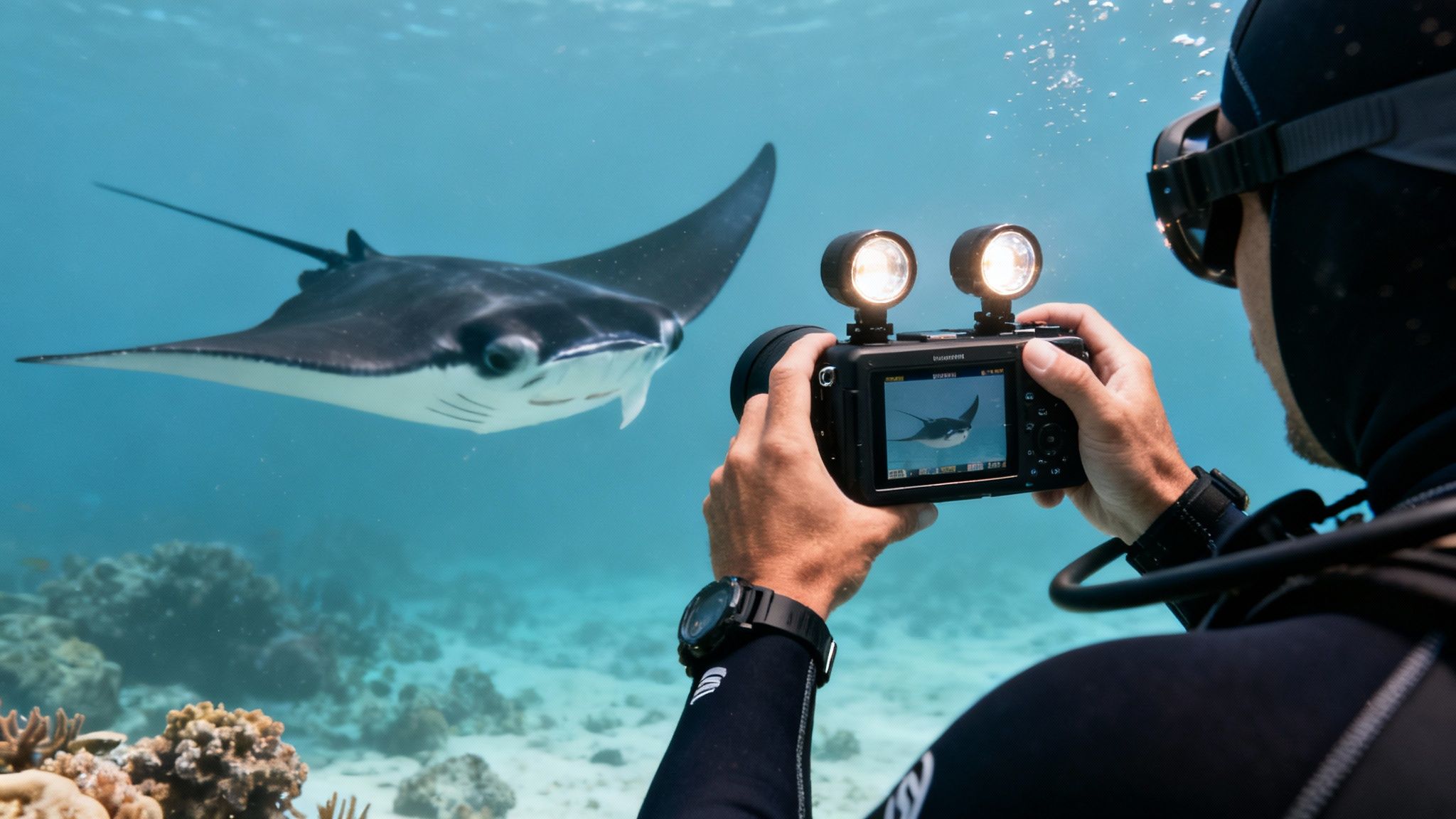
The secret to great manta photos is all about mastering the light. You're trying to illuminate the manta's bright white underside without completely blowing it out, all while dodging the inevitable "backscatter blizzard" from the plankton.
Start by bumping your camera's ISO up—ISO 800-1600 is usually a good range—to make it more sensitive in the dark. Open your aperture to let more light in; f/8 is a solid starting point. Your biggest choice is your lighting. Video lights are great because what you see is what you get, but strobes are the key to freezing motion and, when positioned wide and away from the lens, are your best weapon against backscatter.
Pro tip for composition: get low and shoot up. This angle showcases the manta's sheer size against the blackness of the night ocean, creating a far more powerful and dramatic image.
Navigating to the Harbor
Your adventure kicks off at the Honokohau Small Boat Harbor, which is the launch point for most of Kona's dive charters. It’s conveniently located just a few miles south of the Kona International Airport. While the harbor itself is easy to find, locating your specific boat slip can take a moment, so it's smart to build in a little extra time.
Parking is usually easy to find, but the lot is big. It's a good idea to make a mental note of where you left your car. Arriving with time to spare means you can find your boat, get checked in, and start your incredible evening without any last-minute stress.
Answering Your Questions About the Manta Ray Night Dive
It’s only natural to have a few questions before you commit to a big adventure like the manta ray night dive. We get it. Feeling prepared is key to having an amazing time, so we’ve gathered some of the most common questions we hear from divers and snorkelers alike.
Is The Manta Ray Night Dive Safe For Beginners?
Absolutely. In fact, this is one of the most beginner-friendly night dives you can do. The whole operation is designed with safety as the number one priority.
You'll be in a relatively shallow and controlled spot, usually around 30-40 feet deep. Unlike a typical dive where you're navigating a reef, this experience is stationary. You and your group will settle on a sandy patch, which takes the stress out of managing buoyancy and swimming around in the dark.
Plus, expert guides from operators like Kona Honu Divers are right there in the water with you, keeping a close watch from start to finish. If you’re not a certified diver, the snorkeling option is just as incredible and completely safe, giving you a stunning bird's-eye view of the show.
What If We Don’t See Any Manta Rays?
This is probably the most common worry we hear, and it’s a fair question. While Kona is famous for having some of the most reliable manta sightings on the planet, these are still wild animals. Nothing in nature is ever 100% guaranteed.
That said, the success rate here is incredibly high—often better than 90% throughout the year. Any good operator will be upfront about this and usually has a fair policy in place for those very rare nights when the mantas decide to be shy. Even on the off chance they don't appear, you're still experiencing the magic of a Hawaiian reef at night, which is an adventure all on its own.
The Kona manta dive isn't just a tourist attraction; it's a living laboratory. Over a decade of research, with teams diving six or seven nights a week, has resulted in over 10,000 sightings. This incredible effort has helped identify more than 300 individual mantas and revealed a local population of over 450 rays. You can learn more about the science behind the Kona manta dive.
Can Snorkelers And Divers Go On The Same Boat?
Yes, they can, and that’s a huge part of what makes the manta ray night dive in Kona so special! The best tour operators are set up to host mixed groups of snorkelers and divers on the same boat, which is perfect for families or friends with different skill levels.
It works beautifully. While the divers are on the ocean floor looking up, the snorkelers are at the surface, holding onto a custom-built light board. This board shines powerful beams into the water, attracting the plankton and bringing the mantas right up to the surface. The view from above is just as spectacular.
What Should I Do To Avoid Motion Sickness?
Nobody wants seasickness to ruin a once-in-a-lifetime experience. If you know you're prone to it, being proactive is the way to go.
Here are a few tips that really work:
- Medicate Early: Grab an over-the-counter motion sickness remedy and—this is the important part—take it before you get on the boat, as the instructions direct.
- Find Your Spot: Stake out a place on the boat where you can get fresh air and keep your eyes on the steady horizon. Try to avoid sitting in an enclosed cabin.
- Hydrate Well: Drink plenty of water during the day leading up to your trip.
- Eat Smart: A heavy, greasy meal right before you head out is a bad idea. Keep it light.
The boat ride is typically short, but following these steps will help you feel your best and ready for the main event.
Ready to see the underwater ballet for yourself? At Kona Honu Divers, we're dedicated to running the safest, most personal, and truly unforgettable manta ray night dive. Book your spot on our world-famous 2-Tank Manta Ray Dive & Snorkel trip and get ready for an incredible night.