
Picture this: you're floating in the warm, dark Pacific waters just off the Kona coast. Below you, a set of powerful lights illuminates a patch of the ocean floor, creating an otherworldly glow that attracts a blizzard of plankton. Then, out of the inky blackness, they appear. Giant, graceful shadows emerge, gliding and swooping through the light beams in a silent, hypnotic ballet.
This is the legendary Kona manta ray night dive, an experience that scuba divers and ocean lovers consistently rank as one of the best on the planet.
What Makes The Kona Manta Ray Dive So Magical
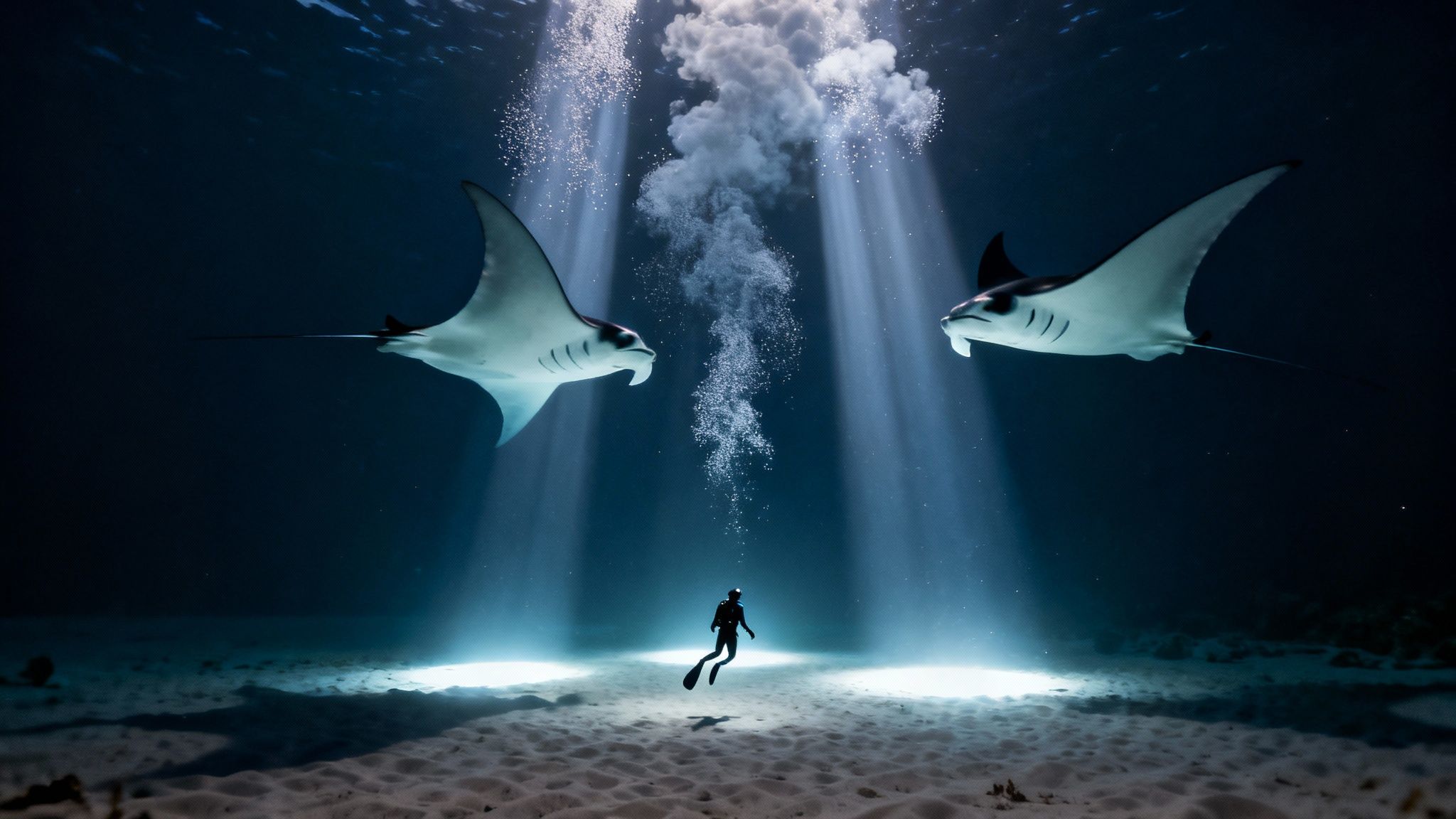
The Kona manta experience is more than just a dive; it's a genuine connection with one of the ocean's most majestic animals. In most parts of the world, seeing a manta ray is a rare, lucky break. Here in Kona, it's a uniquely reliable and breathtaking spectacle—a nightly performance that has become a global phenomenon.
So, what's the secret behind this underwater magic? It's a perfect storm of geology, biology, and a bit of clever thinking. The Big Island's volcanic underwater terrain has created deep channels and sheltered bays that naturally concentrate plankton, the manta rays' favorite meal. This dependable, all-you-can-eat buffet brings these gentle giants back to the same spots, night after night.
A Reliable Underwater Theater
This incredible consistency has made the Kona coast the world's undisputed capital for manta ray encounters. The experience draws in about 80,000 participants annually, and for good reason. Local dive operators have perfected the show by creating an underwater "campfire." We place powerful, eco-friendly lights on the ocean floor, which attracts dense clouds of plankton. Divers and snorkelers gather around this glowing stage, getting front-row seats to the main event. You can discover more insights about what makes the Kona dive so unique.
As the mantas arrive to feast, they put on an elegant show, soaring and barrel-rolling right over your head with their huge mouths open. Their movements are fluid, intelligent, and completely mesmerizing.
It’s impossible to describe the feeling of watching a massive fish the shape of a stealth bomber coming into vision. It’s akin to watching your child ride a bike for the first time or finding a winning lottery ticket.
More Than Just a Dive
The real magic is in the sheer proximity and grace of these animals. With wingspans that can stretch over 12 feet, their presence is awe-inspiring, yet they are completely gentle. Mantas have no teeth, barbs, or stingers, making the interaction perfectly safe for everyone. You're simply witnessing a natural feeding behavior that is as humbling as it is beautiful.
At Kona Honu Divers, we've fine-tuned this trip into an unforgettable adventure. When you join one of our manta ray dive tours, you're not just booking a dive; you're getting a ticket to one of nature’s greatest shows on Earth.
Why Garden Eel Cove Is The Premier Manta Dive Location
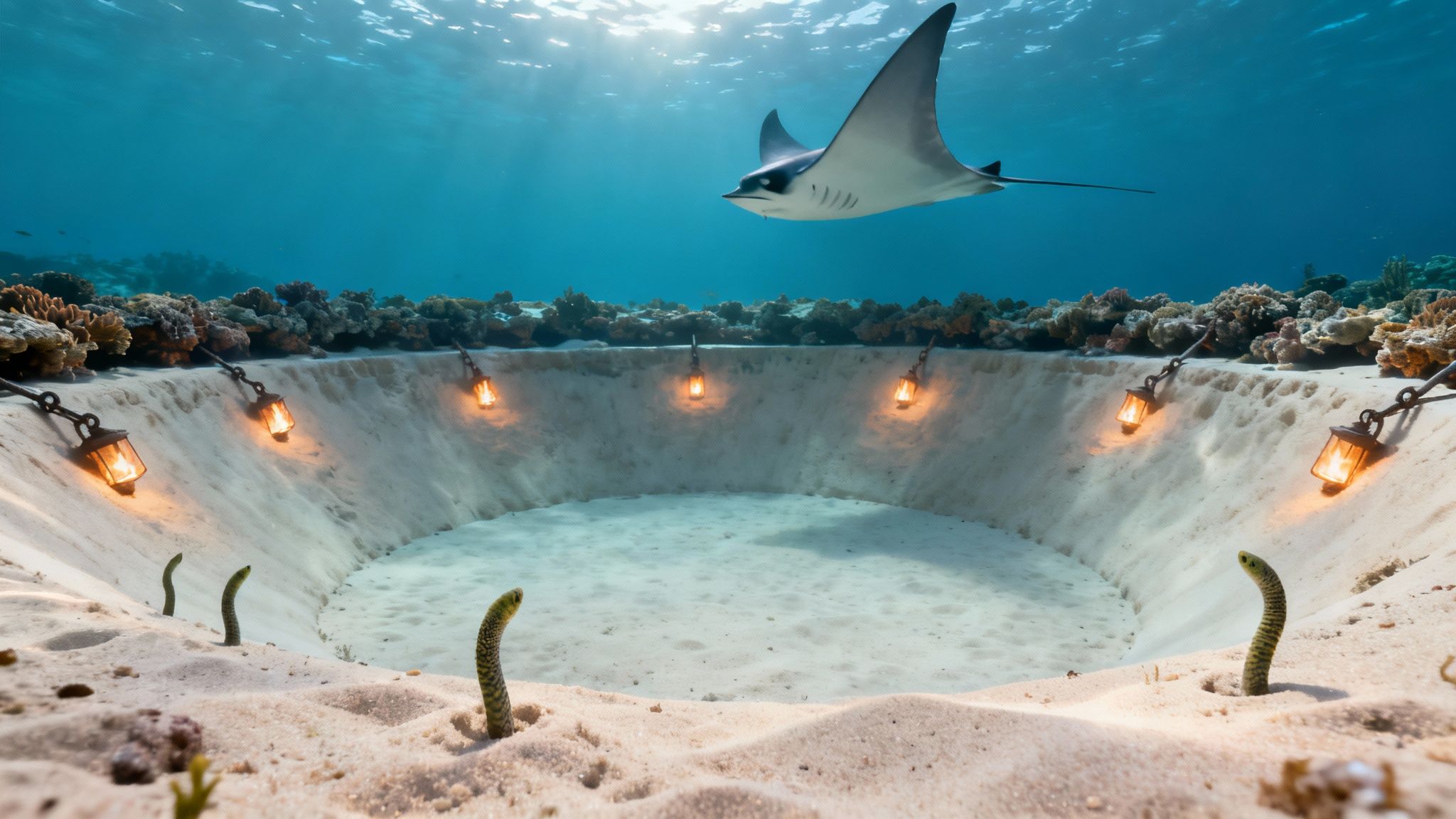
While you can find manta rays at a few spots along the Kona coast, not all dive sites are created equal. For the safest, most comfortable, and absolutely jaw-dropping manta ray night dive in Kona, one location is the superior choice: Garden Eel Cove. This is precisely why we at Kona Honu Divers run our tours here, and only here.
Choosing the right location is as crucial as choosing the right dive company. Garden Eel Cove is a naturally protected bay, shielded from the open ocean swells that can make other, more exposed sites challenging and uncomfortable. This protection translates to a calmer, safer boat ride and a more enjoyable in-water experience. For divers, less surge means it's far easier to hold your position on the seafloor and simply relax into the show.
The Superior Viewing Area
What truly sets Garden Eel Cove apart as the premier location is its underwater layout—it's practically built for this experience. The site features a large, clean sandy patch at a perfect depth of about 35 feet, which serves as a natural amphitheater. This setup creates an ideal and protected viewing area.
We have our divers kneel comfortably in the sand, forming a circle around the lights without ever touching or damaging the surrounding coral reef. From this position, you get a perfect, cinema-style view looking straight up as the mantas swoop, glide, and barrel-roll directly over your head. It’s an incredibly intimate and superior perspective that is difficult to achieve at other locations.
The protected location and clear, sandy viewing area at Garden Eel Cove create an unparalleled underwater theater. It ensures every participant gets a front-row seat to one of nature's most magnificent performances.
A Better Reef for a Two-for-One Dive
The benefits don't stop with the mantas. Our manta ray dive tour is a two-tank trip, and we use the first dive to explore the reef as the sun sets. The reef at Garden Eel Cove is healthier and more vibrant than at other manta sites, making that first twilight dive a spectacular adventure in its own right. You'll see an abundance of tropical fish, moray eels, and other critters as the ecosystem shifts from day to night. To get an even better feel for the area, you can learn more about Manta Heaven, aka Garden Eel Cove.
By sticking exclusively to this superior spot, we give our guests the absolute best chance at a magical, comfortable, and unforgettable encounter. When you book a tour to Garden Eel Cove, you're investing in a safer, more visually stunning experience that you'll be talking about for years to come.
At Kona Honu Divers, we’re all about providing the ultimate manta ray experience, and our reviews show that commitment.
Your Manta Ray Night Dive Experience From Start To Finish
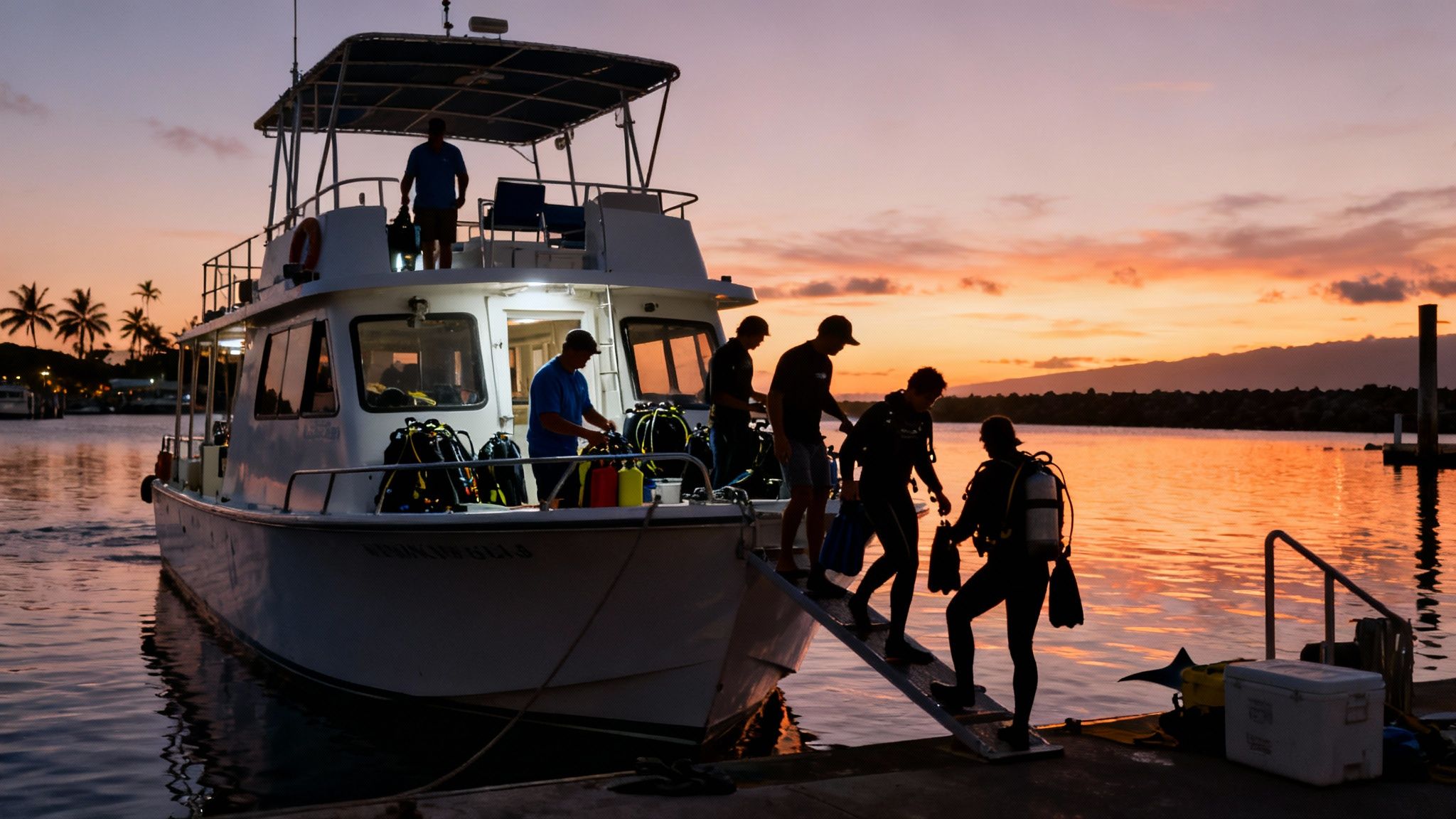
When you know what to expect, you can truly relax and just soak in every amazing moment of the adventure. We’ve designed our Kona Honu Divers experience to be seamless, safe, and completely unforgettable, from the moment you step out of your car to the time we're back at the dock sharing stories.
So, let's walk through what the whole evening looks like.
Your adventure starts at Honokohau Harbor, where our friendly, professional crew will be waiting to welcome you aboard. After a quick and painless check-in, we'll get you situated on one of our spacious, custom-built dive boats. It’s a great chance to meet the other divers and feel the buzz of anticipation in the air.
Setting Sail for a Twilight Dive
Once everyone’s settled, our experienced dive guides will run through a full briefing. They cover it all—boat safety, the dive plan, and what to expect underwater. We make sure everyone, especially first-time night divers, feels completely comfortable and ready to go.
Then, we cast off the lines and head north to our prime spot, Garden Eel Cove. The boat ride itself is part of the magic. You get these incredible views of the Kona coastline as the sun starts to set, lighting up the sky in fiery oranges and pinks.
This isn't just a one-and-done trip; our manta tour is a two-tank dive. The first one happens during that beautiful twilight window. As you descend, you get to see the reef as it shifts from day to night. It’s a whole different world, where you might spot moray eels, octopuses, and schools of fish settling in for the evening.
The Main Event: Meeting the Mantas
After the first dive, we’ll have a surface interval as the last bit of light fades from the sky. While you relax, our crew gets everything ready for the main event. This is what it's all about.
We head back down, but this time, we're settling on the sandy bottom in what feels like an underwater amphitheater. Your guide will get you positioned comfortably in a semi-circle around our powerful, eco-friendly light structure—we call it the "campfire." This light is the dinner bell, attracting a massive cloud of plankton, the mantas' favorite meal.
Picture this: You’re kneeling on the soft sand, looking up into a column of light. As the plankton swarms, the first giant, graceful shadow appears from the darkness. Then another. And another.
It's a sight that will honestly take your breath away. These gentle giants swoop and barrel-roll just feet above you, their huge mouths wide open to filter the plankton. You'll be close enough to see the unique spot patterns on their bellies. This carefully orchestrated setup at Garden Eel Cove gives you the most spectacular and unobstructed view possible, making it the absolute best spot for a manta ray night dive in Kona.
After about 45 minutes of pure, jaw-dropping magic, we’ll give the signal and make a safe, controlled ascent back to the boat.
But the night isn't over yet. The ride back to the harbor is a celebration. We’ll warm you up with hot chocolate and snacks while you trade stories with your new friends about the incredible things you just saw. It’s that five-star, start-to-finish experience that our guests always remember.
How To Prepare For Your Manta Adventure
A little bit of prep work can make the difference between a good dive and a truly mind-blowing one. Getting ready for your manta ray night dive in Kona is easy, but taking a few minutes to get organized will make sure you’re comfortable, safe, and ready to enjoy every second of the show.
So, what do you actually need to do? First off, let's talk about certification. We get this question all the time, and the answer is simple: you just need your Open Water Diver certification. The dive site itself is pretty shallow—we’re usually at about 35 feet—so it’s a perfect adventure for divers of all experience levels.
What to Bring on the Boat
Packing for the trip is a breeze. We’ve got you covered with all the high-quality, well-maintained scuba gear you'll need, like tanks, weights, BCDs, regulators, and dive lights. You just need to bring a few personal items to make the trip more comfortable.
Here’s a quick checklist of what to toss in your bag:
- Swimsuit: The easiest thing is to just wear it under your clothes to the harbor.
- Towel: You’ll definitely want this for after the dive!
- Something Warm: A sweatshirt, a light jacket, anything to block the wind. Even in paradise, the boat ride back can get a little chilly after a night dive.
- Reusable Water Bottle: Always smart to stay hydrated.
- C-Card & Logbook: Don’t leave home without your proof of certification.
While our rental gear is excellent, we know that nothing beats the comfort of your own stuff. Feel free to bring your own mask, fins, or dive computer if you prefer. And if you're feeling a little nervous about your first night dive, don't worry. Our guides are pros at making everyone feel at ease. You can also check out our guide to scuba diving at night for some extra confidence-boosting tips.
Interacting with Mantas: The Rules of Engagement
The most critical part of your preparation is learning how to be a good guest in the mantas' world. Protecting Kona’s resident manta population is our absolute highest priority, and following a few simple rules ensures these amazing animals stay safe and healthy.
Think of it this way: We are visitors in their dining room. Our goal is to watch their natural feeding behavior without getting in the way.
The number one, non-negotiable rule is no touching. Ever. Manta rays have a special mucous coating on their skin that acts as a shield against infection. If you touch them, you can wipe that protective layer off, leaving them vulnerable to bacteria and disease.
Once we’re in the water, you’ll find a spot to settle on the sandy bottom. Your job is to stay put and maintain good buoyancy control. This creates a safe, predictable environment that allows the mantas to relax and swoop in close to the lights—sometimes just inches above your head! Let them come to you; never chase or swim after them.
Finally, we love when you take pictures, but be mindful of your gear. The powerful lights we provide are more than enough to light up the whole scene, so there's no need for a disruptive camera flash. By following these simple guidelines, you're doing your part to protect this incredible underwater ballet for generations to come.
Underwater Photography Tips For The Manta Dive
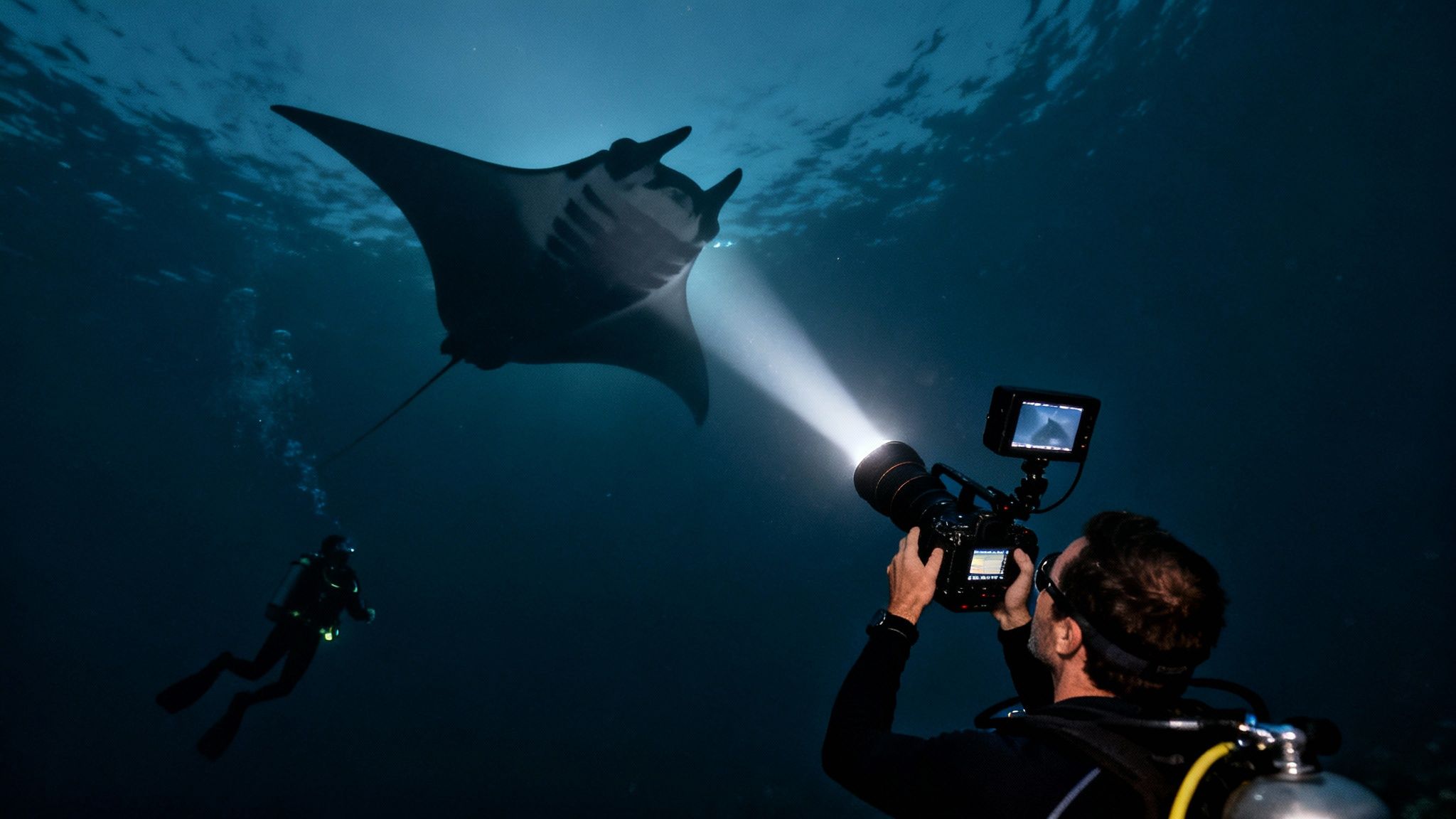
Trying to capture the ethereal beauty of the Kona manta ray night dive is an incredible experience in itself. It's also a serious challenge. Between the darkness and the constant, graceful motion of the mantas, you’ll need the right approach to get photos that do this magical encounter justice.
First things first, your smartphone or a basic point-and-shoot just won't cut it here. The darkness will give you nothing but blurry, grainy shots. To get those crisp, vibrant images, you need a camera with manual controls and, this is the most important part, a powerful external light.
Dialing In Your Camera Settings
The secret to a good night of underwater photography is getting your settings locked in before you even get in the water. You’re trying to find that perfect balance of letting in enough light without sacrificing sharpness.
Here are some solid starting points, but be ready to tweak them on the fly:
- Aperture: Open your lens up as wide as it will go. We’re talking the lowest f-number your lens has, like f/2.8 or f/4. This lets the maximum amount of light hit your camera's sensor.
- ISO: You'll need to bump this up. Start somewhere in the 800 to 1600 range. This makes the camera more sensitive to light, but watch out—pushing it too high will introduce a lot of "noise" or grain into your photos.
- Shutter Speed: I’d aim for about 1/125th of a second. This should be just fast enough to freeze the mantas' fluid movements and avoid motion blur.
Think of these settings as your baseline. Every dive is a little different, so you might need to make small adjustments depending on how bright the "campfire" lights are that night.
The Critical Role of External Lighting
If you take away one tip, let it be this: an external strobe or a beefy video light is non-negotiable. Your camera's built-in flash is your worst enemy on this dive. It will light up every tiny particle floating in the water between your lens and the manta, creating a blizzard-like effect we call backscatter. It ruins photos.
By positioning a strobe or video light off to the side of your camera, you light the manta from an angle. This simple change dramatically cuts down on backscatter and is the key to creating clean, professional-looking images.
For the manta dive, a good video light is often the best all-around tool. It gives you constant light, which is a huge help for your camera's autofocus in the dark, and it lets you shoot amazing video footage, too.
Composition and Positioning
With your gear all set, it's time to think about the shot itself. The most powerful and dramatic photos are usually taken from a low angle, shooting upwards. This frames the mantas against the dark, inky water, really emphasizing their incredible size and graceful silhouettes.
Don't forget to include other divers in some of your frames. A shot of a diver looking up in awe at a giant manta soaring overhead provides a fantastic sense of scale and tells a much richer story.
Remember your dive briefing: stay in your designated spot and let the mantas come to you. With a little patience and these techniques, you’ll be heading home with breathtaking images of one of the ocean's greatest shows.
Continue Your Kona Diving Adventure
The feeling you get on a manta ray night dive in Kona is hard to describe. It's magical, and it often lights a fire in divers, leaving them wondering, "What else is out there?" The good news is, that incredible experience is just the beginning. The Big Island's volcanic coast is packed with world-class dive sites, and your adventure doesn't have to stop with the mantas.
Once you're certified, we can show you a side of Hawaii's underwater world that most people never see. From the deep, mysterious open ocean to vibrant, sunlit coral gardens, there’s always something new to discover just below the surface.
Dive Into the Abyss on the Kona Blackwater Dive
If you thought the manta dive was a thrill, our Kona Blackwater Dive will absolutely blow you away. This is unlike any reef dive you’ve ever done. We head miles offshore into deep ocean water, tether up, and drop into the darkness. As you hang suspended in the black, you'll witness one of the largest migrations on the planet, as strange, bioluminescent creatures rise from the abyss to feed near the surface.
This isn’t just a dive; it's a surreal trip to another world. It’s an unforgettable encounter with organisms so bizarre and beautiful that few people on Earth ever get to see them.
Explore Kona’s Volcanic Underwater Landscapes
For certified divers hungry for a real challenge, our Premium Advanced Dive Tour is the perfect next step. We take small groups of experienced divers to some of Kona’s most remote and dramatic sites, exploring underwater structures you simply won't find anywhere else.
- Lava Tubes: We'll guide you through ancient volcanic tunnels that are now home to all kinds of unique marine life.
- Arches and Pinnacles: You'll get to navigate stunning underwater architecture carved out by ancient lava flows.
- Shark Nurseries: We can even visit protected habitats where you can observe juvenile sharks.
This tour is designed for divers who want to push their limits and be rewarded with some truly mind-blowing scenery. And of course, our classic two-tank morning dives are always a great option for exploring Kona’s brilliant coral reefs by day, which are teeming with colorful fish, sea turtles, and eels.
The diversity of diving in Kona is remarkable. One day you're with giant mantas, the next you're floating over a 6,000-foot abyss. It's an underwater playground that keeps you coming back for more.
Whether you're ready for another unforgettable night dive or want to spend your days exploring sunlit reefs, your journey is really just getting started. To get a better sense of how it all fits together, learn more about the specifics of the manta ray dive in Kona and see why it's the perfect launchpad for a larger Big Island diving adventure.
Frequently Asked Questions About The Manta Ray Night Dive
Got questions about the manta ray night dive in Kona? You're not alone. Here are the answers to the things we get asked most often, so you can feel confident and ready for this incredible experience.
Is The Manta Ray Dive Safe?
Absolutely, and that’s a promise. Manta rays are called "gentle giants" for a reason—they are completely harmless to humans. As filter feeders, they don’t have teeth, stingers, or barbs. They're only there for the all-you-can-eat plankton buffet attracted by our lights.
On top of that, your safety is our top priority at Kona Honu Divers. Our professional guides run a detailed safety briefing before we even leave the dock. They're in the water with you from start to finish, making sure everything runs smoothly. We’re proud of our safety record, and our guest reviews speak for themselves.
What If I'm Not A Certified Diver?
No problem at all! We believe this underwater spectacle is for everyone. That’s why we run a dedicated manta ray snorkel trip right alongside our dive boat.
You'll float on the surface, holding onto a custom-made light board that illuminates the water below. This light draws in the plankton, bringing the mantas right up to you for an amazing bird's-eye view of their graceful dance.
When Is The Best Time Of Year To See Mantas?
This is the best part about diving in Kona: our manta rays are here all year long. This isn't a seasonal migration. The local population shows up for dinner just about every single night, 365 days a year.
There's no such thing as a "manta season," so our success rate for seeing them is consistently high no matter when you visit. Anytime is a great time to book.
Why Is Garden Eel Cove The Best Dive Site?
We've dived all the manta sites, and we exclusively take our guests to Garden Eel Cove for a few very good reasons. First, its location is naturally protected from the big open-ocean swells, which means calmer and safer conditions for everyone.
More importantly, the site has a huge sandy bottom that we call the "campfire." It's like a natural amphitheater where divers can settle in comfortably without damaging any fragile coral. This gives you a front-row, cinema-style seat as the mantas swoop and feed right over your head. It just makes for a better, more intimate show.
Ready for the dive of a lifetime? Let's get you in the water to witness one of the ocean's greatest spectacles.