
It’s been called an underwater ballet, a surreal light show, and one of the most unforgettable dives on the planet. The world-famous manta ray night dive in Kona is all of that and more. Picture this: you're kneeling on the ocean floor as colossal, graceful creatures with wingspans up to 16 feet glide silently just inches above you. It's a truly otherworldly spectacle, and it’s what makes the Big Island a bucket-list destination for divers everywhere.
Experience The World Famous Kona Manta Ray Night Dive

There are very few experiences in the underwater world that can hold a candle to the magic of the Kona manta dive. It's not just about seeing a manta ray; it's an immersive performance where you have a front-row seat to one of nature's most majestic animals doing what they do best. The Kona coast provides the perfect stage for this incredible show. This is one of the most popular diving tours on the Big Island.
What makes this encounter so special is the clever—and beautiful—symbiotic relationship between the divers, the plankton, and the mantas. The whole concept is elegantly simple, but the result is absolutely profound.
The Manta Campfire
The heart of the entire experience is what we call the "manta campfire." After the sun dips below the horizon, our group descends to a designated sandy spot, usually around 30-40 feet deep. We all get settled in a circle and point our powerful dive lights straight up, creating a massive column of light that cuts through the darkness.
This beacon does something amazing: it attracts billions of tiny organisms called plankton, the manta rays' favorite meal. Within minutes, the water column above us transforms into a thick, swirling soup of life—an irresistible, all-you-can-eat buffet for any manta in the area. And that's when the guests of honor arrive.
Drawn in by the feast, the mantas swoop out of the darkness and into the light. They glide effortlessly through the beams, their giant mouths wide open to filter the plankton-rich water. You’ll watch them perform barrel rolls and graceful loops, often coming so close you feel like you could reach out and touch them (but remember, we never do, as it can harm their delicate protective skin).
This isn't just a quick fly-by. Divers often spend over 40 minutes completely mesmerized by this underwater ballet. It’s one of the most reliable and awe-inspiring marine encounters you can find anywhere in the world.
This unique, dependable interaction is exactly why the manta ray night dive in Kona brings in roughly 80,000 visitors every year, cementing its reputation as the world's top spot for manta encounters. With a jaw-dropping 80-90% sighting success rate all year long, it's one of the surest bets on the planet for meeting these gentle giants.
You can learn more about Kona's world-famous manta ray dive on konahonudivers.com to see what makes this trip so special.
Why Garden Eel Cove Is Kona’s Premier Manta Dive Site
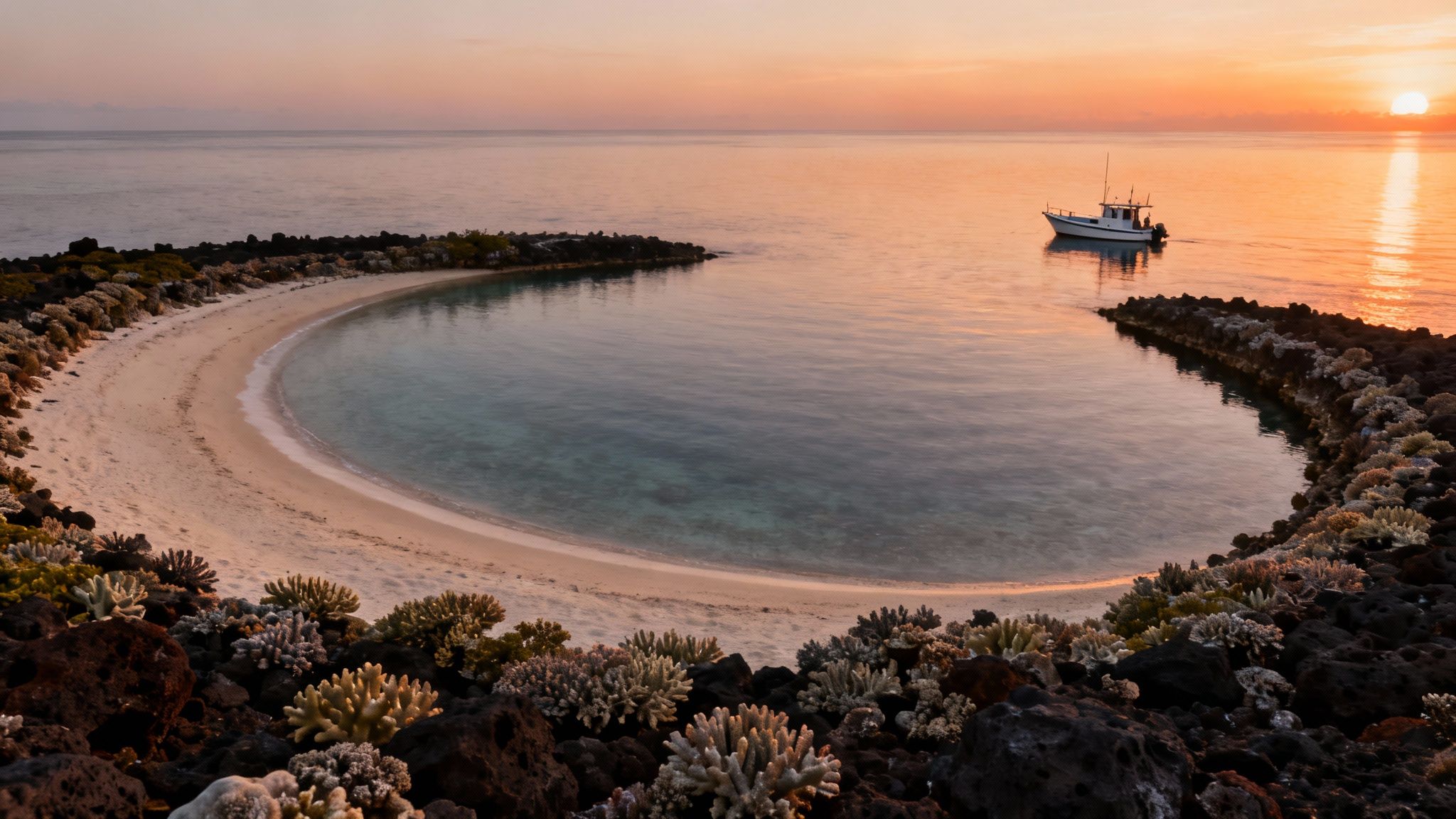
When you start planning a manta ray dive tour, you’ll quickly hear about two famous spots: Manta Village and Garden Eel Cove. Both can deliver incredible encounters, but they are far from the same. For a truly unforgettable, five-star experience, Garden Eel Cove is hands-down the superior choice. We’ve been running these dives for years, and the difference is clear.
Locally known as "Manta Heaven," Garden Eel Cove sits north of Kona, just offshore from the airport. Its unique geography is its biggest asset. The site is tucked into a naturally protected cove, which shields it from the powerful open-ocean swells that can make the more exposed Manta Village a rough and unpredictable ride.
This protection is a game-changer. It means calmer, more comfortable conditions for everyone, from the divers on the ocean floor to the crew on the boat. A smoother trip means you can relax and focus on the magic ahead.
The Perfect Underwater Amphitheater
Beyond the calm water, the real secret to Garden Eel Cove's magic is its underwater landscape. The dive site is a wide, sandy-bottomed basin that slopes gently downward, creating a perfect natural amphitheater. This layout is tailor-made for what we call the "manta campfire."
We have divers settle comfortably on the sand in a big semi-circle, with everyone facing the center. This simple arrangement guarantees that every single person gets a front-row, unobstructed seat for the show. At other sites, divers might have to jockey for position, but here, the natural stadium ensures you can just relax and be fully immersed in the experience.
At Garden Eel Cove, the focus is entirely on the majestic dance of the mantas. The wide, open viewing area allows the rays to swoop and barrel roll freely, often coming within inches of the spectators in a breathtaking display.
More Than Just a Night Dive
Another huge advantage of Garden Eel Cove is what surrounds the main event. The entire area is fringed with beautiful, vibrant coral reefs, making it a spectacular location for the first dive of a two-tank trip. You get to explore a thriving reef ecosystem at sunset, watching the whole food chain come to life before the mantas even show up.
This "two-for-one" experience seriously enhances the value and enjoyment of your evening. It's this combination of a protected location, a perfect viewing area, and stunning nearby reefs that cements Garden Eel Cove's reputation. It’s not just a dive site; it’s the premier destination for the ultimate manta ray night dive in Kona. To see more of what makes it special, check out our guide to Manta Heaven at Garden Eel Cove.
Garden Eel Cove vs Manta Village At A Glance
To put it all in perspective, here’s a quick comparison of the two main manta dive locations in Kona.
| Feature | Garden Eel Cove (Manta Heaven) | Manta Village (Keauhou Bay) |
|---|---|---|
| Location | North of Kona, near the airport | South of Kona, in Keauhou Bay |
| Conditions | Protected & Calm: Sheltered from most ocean swells, leading to more reliable and comfortable dives. | Exposed & Variable: Open to southerly swells, which can cause rough conditions and cancellations. |
| Sea Floor | Sandy Bottom: A wide, sloping sand patch creates a natural amphitheater for perfect viewing. | Rock & Coral Rubble: Can be more challenging for divers to find a stable, comfortable viewing spot. |
| Manta Sightings | Highly Consistent: The original and most reliable site, with mantas appearing over 95% of the time. | Good Consistency: Reliable, but can be less consistent than Garden Eel Cove, especially during rough seas. |
| Experience | Spacious & Immersive: The "campfire" setup gives everyone an equal, front-row view of the action. | Potentially Crowded: Can feel more condensed, sometimes requiring divers to stack up for a good view. |
| Best For | Divers seeking the most comfortable, reliable, and visually spectacular manta ray experience. | A decent alternative, but often considered the "backup" location when conditions are right. |
While both sites can offer a great night out, the evidence points clearly in one direction. For a consistently amazing, comfortable, and truly magical encounter, Garden Eel Cove is the place to be.
What To Expect On Your Night Dive Adventure

So, what’s it really like to do a manta ray night dive in Kona with us? Let me walk you through it. The whole adventure starts when you check in at our boat. You’ll be greeted by our crew, who will get you set up with top-notch rental gear and make sure everything fits just right. If you’re certified, we even offer complimentary nitrox to give you that extra bottom time with the mantas.
Our signature experience isn't just one dive—it's a two-tank trip that’s been refined over years to give you the best possible time. We kick things off with a gorgeous, laid-back dive on a vibrant Kona reef as the sun starts to dip towards the horizon. This first dive is all about getting comfortable, dialing in your buoyancy, and enjoying the reef as the day crew clocks out and the night shift comes alive. Think of it as the perfect appetizer before the main course.
The Main Event: The "Campfire Of Light"
After surfacing, we'll enjoy some snacks and one of those legendary Hawaiian sunsets while we get ready for what everyone came here for. Our divemasters, who know these mantas like old friends, will give you a detailed briefing. They'll cover everything you need to know about how we'll position ourselves to get incredible views while being completely respectful of the wildlife.
Then, we descend to a sandy patch on the ocean floor, our "campsite" for the evening. This is where the magic happens.
Here’s the breakdown of how we create the "campfire":
- Finding Your Spot: We’ll guide you to kneel or sit comfortably on the sand, arranging everyone in a semi-circle.
- Building the Beacon: On our signal, everyone points their powerful dive lights straight up towards the surface. Together, these beams create one massive column of light that acts like a dinner bell.
- The Buffet Opens: This intense light draws in billions of tiny plankton, the mantas’ favorite food, concentrating them into a floating feast.
- The Show Begins: It doesn’t take long. Majestic manta rays glide in from the darkness, attracted by the all-you-can-eat buffet. They’ll perform breathtaking barrel rolls and graceful swoops, sometimes just inches above your head.
This isn't just a dive; it's a carefully orchestrated underwater ballet. Our crew’s expertise is what transforms an amazing dive into a core memory, and it’s why our guests consistently say it's one of the most incredible wildlife encounters of their lives.
From the moment you step on the boat to the expert guidance in the water, every detail is designed for your safety and to maximize the sheer wonder of it all. If you want an even more in-depth look, check out our guide on what it's like to go on the manta ray dive in Kona.
Ready to see it for yourself?
Meet The Famous Manta Rays Of Kona
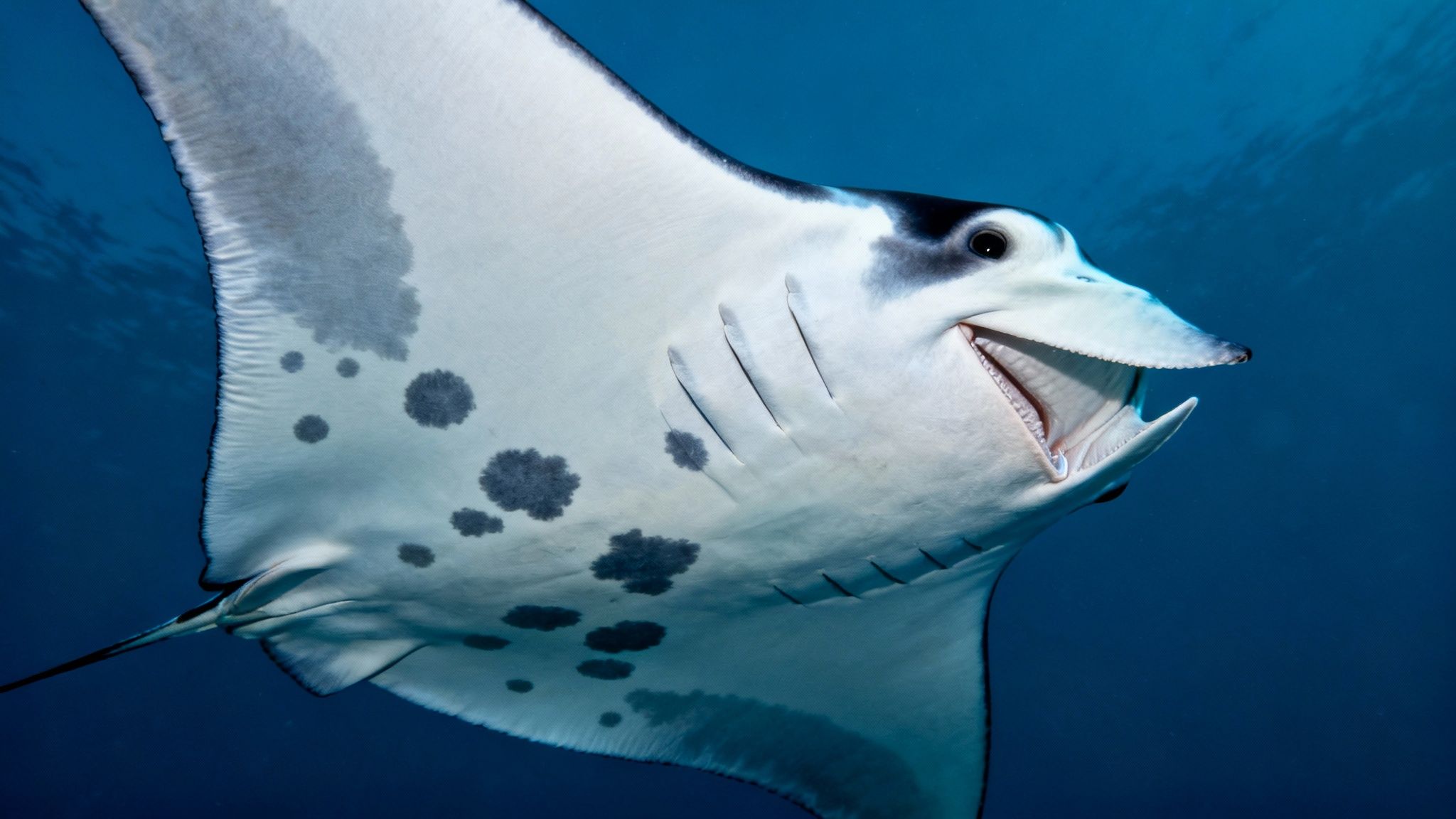
The mantas you meet on the Kona night dive aren’t just random visitors passing through. They're the local celebrities, part of a well-known and documented community of over 450 resident reef manta rays. Think of it less like a zoo and more like being invited to a neighborhood block party.
So, how do we know them so well? The secret is on their bellies. Each manta ray has a completely unique pattern of dark spots on its underside, just like a human fingerprint. This is how local researchers and seasoned divemasters tell them apart, giving them names, tracking their movements, and getting to know their individual quirks.
From Shadows to Superstars
After years of diving with these animals, we’ve gotten to know their distinct personalities. You might get to see "Big Bertha," a huge, confident female famous for her massive barrel rolls right under the lights. Or you could spot "Lefty," who is easy to recognize by a partial pectoral fin but moves through the water with incredible grace.
Other famous regulars include "Sugar Ray," "MelisSA," and "Uhane Nui." Knowing who you're looking at completely changes the experience. You’re not just watching a manta ray; you’re watching a specific, named individual with a life story. That personal connection is what makes the manta ray night dive in Kona an unforgettable encounter.
You're not just a tourist watching from the sidelines. When you dive responsibly, you become a respectful guest in their home and a part of the ongoing effort to understand and protect this incredible population.
This deep, personal knowledge comes from decades of dedicated observation. Experts estimate the resident population includes more than 450 reef manta rays (Mobula alfredi) along the Kona coast alone. Each year, over 120 unique individuals are photographed and cataloged.
Amazingly, the top 20 most frequently seen rays account for nearly 60% of all sightings. This is how anonymous shadows in the deep become familiar friends like 'Frodo' or 'Big Bertha,' some of whom boast wingspans over 12 feet and weigh more than 1,000 pounds. You can discover more insights about these amazing Kona locals and the research that helps keep them safe.
Essential Dive Tips For A Safe And Amazing Experience
To get the most out of your **manta ray night dive in Kona**, a little know-how goes a long way. When you’re comfortable and confident in the water, you can truly soak in the magic of this underwater ballet.
First things first, let's talk about certification. You don't need a specific night diving specialty to join us, but every diver must be at least Open Water certified. This just confirms you have the essential skills for diving in a group.
For this particular dive, however, the most important skill by far is buoyancy control. You'll spend a good amount of time stationary on the sandy bottom, so being able to hold your position without kicking up sand is crucial. Good buoyancy keeps the water clear for everyone.
Master Your Buoyancy And Positioning
Picture yourself with a front-row seat to the best show on Earth. That's your spot on the seafloor. The whole idea is to be a quiet, still observer, letting the mantas do their thing completely undisturbed.
Here are a few pro tips to help you be a great audience member:
- Stay Low and Still: Once you find a comfortable spot on the sand, settle in. A stable, predictable environment makes the mantas feel secure.
- Point Your Light Up: Your dive light is what attracts the plankton—the manta's dinner. Always keep it aimed up toward the surface. Together, our lights create a "campfire" that brings the mantas right to us.
- Mind Your Fins: Be aware of your fins at all times. Even a little accidental kick can stir up a cloud of sand and ruin the view. Tucking your feet beneath you can be a great way to stay put.
- Look, Don’t Touch: This is the golden rule of manta diving. They will get unbelievably close, sometimes just inches away! But touching them can harm the delicate, protective mucous coating on their skin. Let the mantas lead the dance.
Having the right equipment is also a huge part of a successful dive. For a full rundown of what you should pack for your trip, check out our guide on the gear you will need for your Kona diving adventure.
Some divers who plan on multiple dives or other strenuous adventures even look into advanced recovery strategies to stay in top shape. Ultimately, being prepared in and out of the water is what sets you up for success.
Follow these simple guidelines, and you'll be ready to relax and witness one of the most mesmerizing wildlife encounters on the planet.
Your Manta Ray Night Dive Questions Answered
It's completely normal to have a few questions before embarking on an adventure like the manta ray night dive in Kona. After all, it's not every day you get to see giant, graceful sea creatures up close after the sun goes down! We've heard just about every question there is from our divers, so we put together the answers to the most common ones right here.
Getting the details sorted out ahead of time means you can relax and just soak in the experience. Let's get you prepared for an unforgettable night.
What Is The Best Time Of Year To See Manta Rays In Kona?
This is probably the best part: there is no "best" time! One of the most incredible things about Kona's manta rays is that they live here year-round. They aren't just passing through on a migration route, which means any time is a great time to see them.
Thanks to the calm, protected waters along the Kona coast and the reliable plankton buffet our lights create, we have an 80-90% sighting success rate throughout the entire year. Seriously. The best time to book your dive is simply whenever you can get to the Big Island. The water is always pleasant, too, hovering in the mid-70s Fahrenheit during the winter and climbing into the low 80s in summer.
Do I Need To Be Scuba Certified?
If you want to join the scuba portion of the tour and watch from the ocean floor, you'll need at least an Open Water Diver certification from a recognized training agency. This just makes sure you have the basic skills to be safe and comfortable underwater.
But you absolutely don't have to be a diver to witness the magic! We run a manta ray night snorkel experience at the same time, and it's just as spectacular. Snorkelers hold onto a floating light board on the surface, which draws the plankton (and the mantas) right up to them. You get a breathtaking bird's-eye view of the whole ballet.
Is This Dive Safe For New Divers?
Yes, absolutely. In fact, this is a fantastic first night dive. The whole experience takes place in a very controlled and shallow environment, usually between 25-40 feet deep over a flat, sandy bottom. We've eliminated many of the variables you might worry about on other dives.
Our divemasters give a very detailed briefing before you even get in the water, walking you through every step and safety protocol. They're right there with you for the entire dive, making sure everyone is safe and having a great time. For new divers, the main thing to practice is your buoyancy, since you'll be staying still on the bottom for most of the show.
Are We Allowed To Touch The Manta Rays?
This is a hard and fast rule: No. Touching the manta rays is strictly prohibited, and it’s the single most important rule we have for protecting these amazing animals. Manta rays have a special mucus coating on their skin that works like our own immune system, protecting them from bad bacteria and infections.
When a person touches them, that delicate layer gets rubbed off, leaving them vulnerable to disease. Our philosophy is all about passive, respectful observation. Your guide will show you exactly how to position yourself for an incredible view while giving the mantas plenty of room. The mantas control the entire interaction, and they will often glide within inches of you on their own terms—it's a thrilling, and responsible, way to experience their world.
If you're hooked on unique night dives after meeting the mantas, you might want to try our Blackwater Night Dive to see the strange creatures that rise from the deep. And for seasoned divers looking for a new challenge during the day, our Premium Advanced 2-Tank Trip explores some of Kona's more remote and deeper dive sites.