
So, what exactly is a Kona manta ray night dive? It’s an otherworldly experience where you get to watch majestic manta rays feast on plankton after the sun goes down, all illuminated by powerful underwater lights. This incredible spectacle is consistently ranked as one of the best scuba diving Kona, Hawaii experiences on the entire planet—a front-row seat to a mesmerizing underwater ballet. And for this specific adventure, Kona, Hawaii, is hands-down the best and most reliable place in the world to do it.
An Unforgettable Encounter With Kona’s Gentle Giants
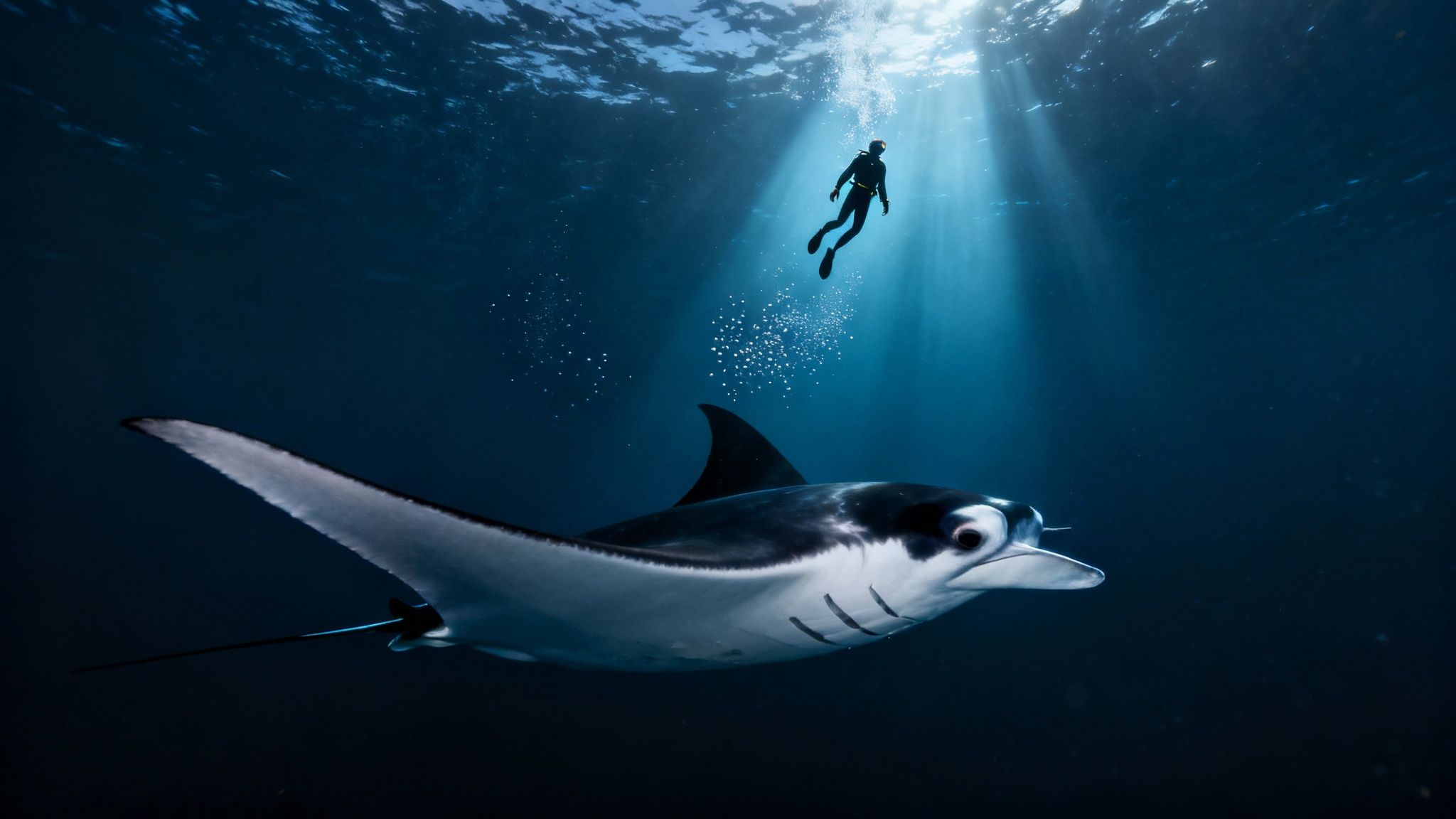
Picture this: you’re floating in the warm, dark waters of the Pacific Ocean as giant, graceful shadows begin to emerge from the deep. These are Kona’s famous manta rays, and they glide, swoop, and barrel-roll just inches away from you. Their movements are so fluid and choreographed it feels like you've stumbled into a real-life nature documentary. This isn't a dream; it's the world-famous manta ray night dive in Kona, a true bucket-list adventure for any ocean lover.
This magical encounter is what put the Big Island on the global diving map. The concept is beautifully simple: after sunset, dive operators submerge powerful lights that attract dense clouds of microscopic plankton, which just so happens to be a manta ray’s favorite meal. The mantas show up for the all-you-can-eat buffet, and we get to watch the incredible show.
What Makes This Dive So Unique?
The Kona manta experience is special because it works with the mantas' natural feeding behavior in a safe, established, and incredibly reliable way. In many other parts of the world, seeing a manta is a matter of luck—a seasonal treat or a deep dive to a remote cleaning station. Not here.
Kona’s local manta ray population is resident, meaning these animals stick around all year. This gives us a ridiculously high success rate for sightings, often over 90%. You’re almost guaranteed to see them.
This unique setup also means the adventure is open to just about everyone.
- Certified divers get to kneel on the sandy ocean floor and look up as these gentle giants soar right over their heads.
- Snorkelers can float comfortably at the surface, holding onto a custom light board while the mantas swim up from below to feed.
This accessibility is a huge part of what makes the manta ray night dive a must-do activity. It’s a chance to witness one of nature's most magnificent displays in a way that is both breathtakingly close and deeply respectful of the animals.
"Diving with mantas is one of the most satisfying things a person can do in the water. It’s impossible to describe the feeling of watching a massive fish the shape of a stealth bomber coming into vision."
Whether you're a seasoned diver with hundreds of log entries or a first-time snorkeler, getting ready for this night is the first step toward an experience you’ll never forget. The pure wonder of being in the water with these gentle giants is something that will stick with you long after you’ve dried off. Ready to see it for yourself?
Why Garden Eel Cove Is The Premier Manta Dive Site
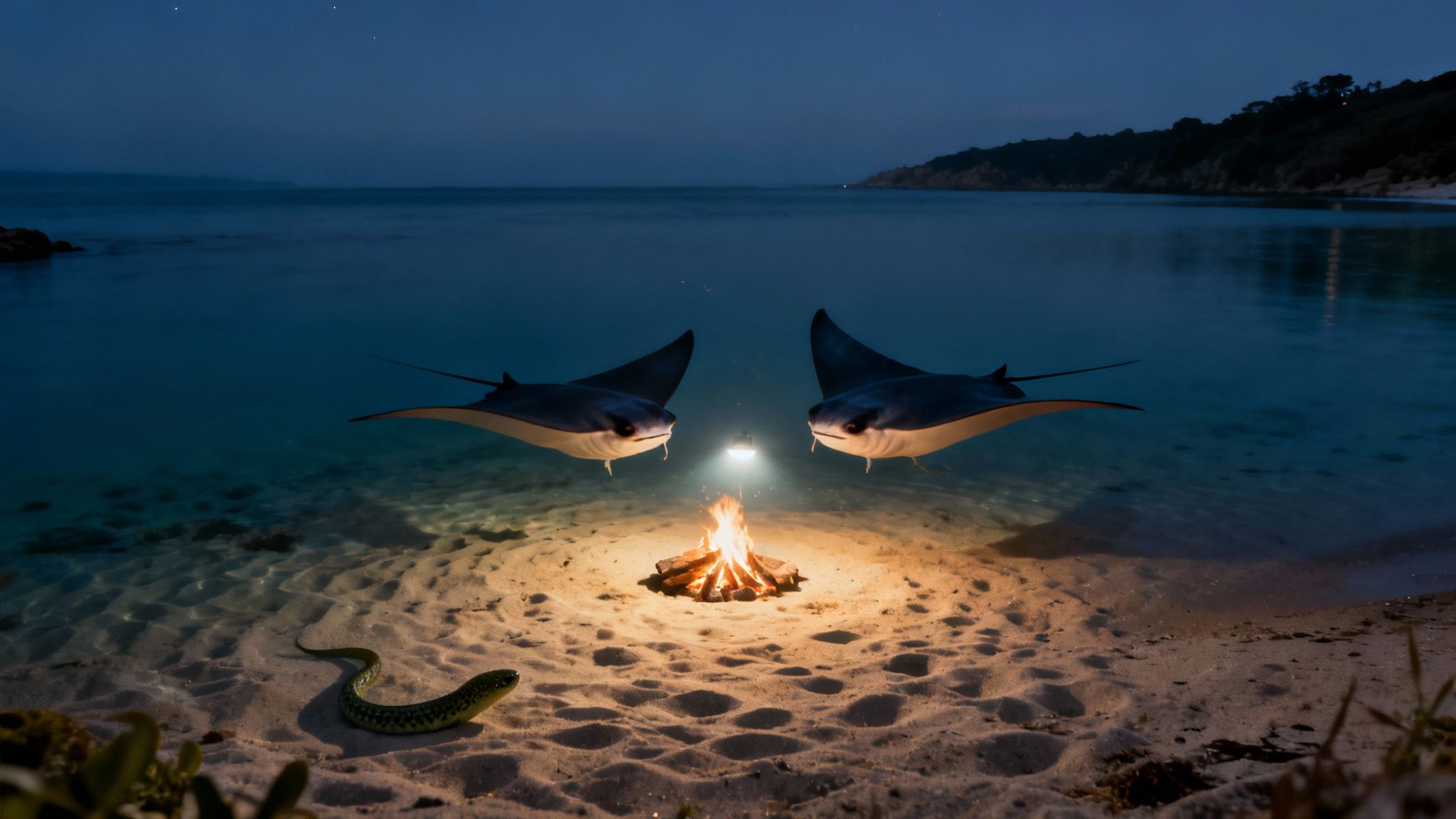
When you start looking into a manta ray night dive in Kona, you'll quickly notice two main sites: Manta Village at Keauhou Bay and Garden Eel Cove. While you can see mantas at both, the experience at Garden Eel Cove is consistently superior, offering a more reliable, comfortable, and breathtaking adventure.
For those seeking the best possible experience, Garden Eel Cove is the premier choice. It's the IMAX theater of manta dives, delivering a spectacular show in an ideal environment. Its unique geography, established viewing area, and healthier surrounding reefs make it the hands-down winner.
A Naturally Protected Location
The single biggest advantage Garden Eel Cove has is its location. Tucked away near the Kona International Airport, the cove is naturally shielded from the large, open-ocean swells that often batter other coastal dive sites like Manta Village. This protection is a game-changer.
Keauhou Bay, by comparison, is far more exposed. When the ocean gets choppy, trips there are more prone to cancellation, and the conditions can be challenging even if the tour goes out. Garden Eel Cove’s sheltered position almost always guarantees calm, safe waters. This means fewer cancellations and a more enjoyable, relaxing experience in the water, allowing you to fully immerse yourself in the magic without battling waves.
The "Campfire": A Perfect Underwater Arena with Better Reefs
The viewing setup at Garden Eel Cove is another reason it excels. Dive operators guide divers to a large, sandy patch known as "the campfire," where powerful lights are placed to attract plankton. This creates a focused feeding zone for the mantas. The benefits are huge:
- Front-Row Seats for Everyone: Divers kneel in a circle around the lights, creating a 360-degree viewing arena. The mantas swoop and barrel-roll directly overhead, providing an unparalleled, up-close spectacle.
- Environmental Protection: The sandy bottom provides a clear, stable area for divers, keeping everyone safely away from the fragile coral. The surrounding reefs at Garden Eel Cove are also healthier and more vibrant, adding to the overall beauty of the dive.
- Consistent Manta Action: The focused light creates a dense column of plankton that reliably attracts numerous mantas, leading to a more dynamic and predictable show.
The "campfire" at Garden Eel Cove was intentionally designed to create the best possible experience for divers while prioritizing the mantas' safety and natural behavior. It’s all about respectful, passive observation in a controlled setting.
Other locations often lack this ideal, sandy-bottom layout and protected setting. The "campfire" is a purpose-built theater for the greatest underwater ballet on Earth. You can learn more about what makes this spot so unique in our guide to Manta Ray Heaven at Garden Eel Cove.
When you combine the protected location, superior viewing setup, and healthier marine environment, it's clear why Garden Eel Cove is the undisputed champion for your manta ray night dive.
Your Manta Ray Night Dive Adventure Step By Step
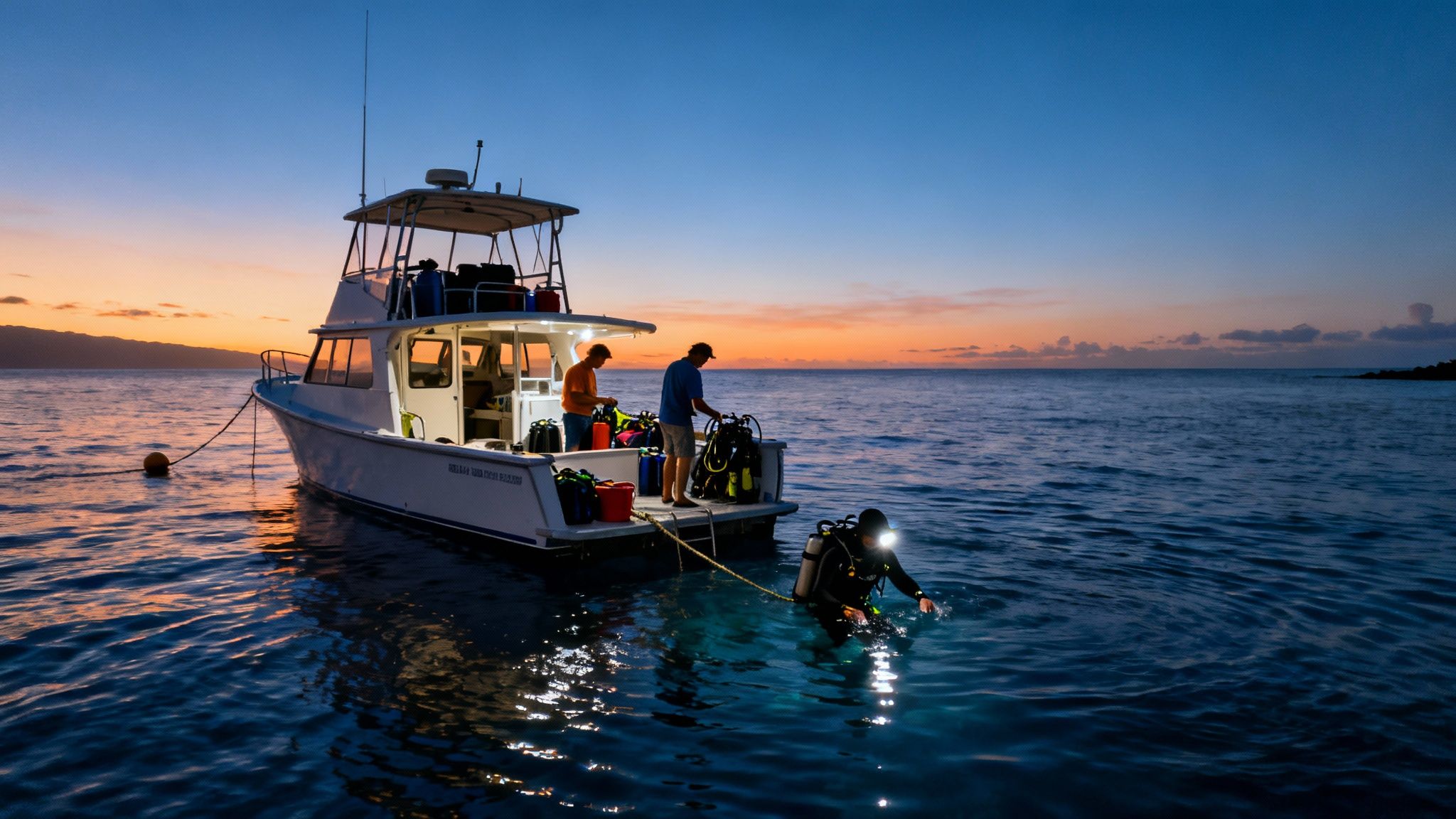
The thought of a manta ray night dive in Kona is exciting, but what does the experience actually feel like? Knowing what to expect from start to finish helps turn any pre-dive jitters into pure, unadulterated excitement.
Let's walk through the entire evening, from the moment you step foot in the harbor to the boat ride back under a canopy of stars. Think of this as your backstage pass to one of the most incredible shows on Earth.
Check-In and Meeting Your Crew
Your adventure kicks off in the late afternoon at the harbor. This is where you'll meet the crew from a top-tier operator like Kona Honu Divers and get checked in for your trip. The crew will welcome you aboard, show you around, and answer any last-minute questions you have.
Once you’ve found a spot on the boat, the team gets right to work fitting you for your gear. They’ll make sure your wetsuit, mask, and fins are just right, so you’re comfortable and ready for the water.
The boat ride out to the dive site is a spectacle in itself. As you cruise along the gorgeous Kona coastline, you get a front-row seat to a classic Hawaiian sunset. It’s a stunning prelude that sets a magical tone for the night ahead.
The All-Important Safety Briefing
On the way to the site, your divemasters will gather everyone for a comprehensive briefing. This isn't just a list of do's and don'ts; it's a fascinating introduction to the world you're about to enter.
You'll cover several key points:
- Safety Procedures: The crew will run through all the in-water protocols, how to communicate with hand signals, and what to do in any situation. Their goal is to make sure everyone feels completely safe and secure.
- Manta Ray 101: This is the fun part! You'll learn some incredible facts about Kona’s resident mantas—how to identify individuals by their unique spot patterns, their typical behaviors, and why they are so important to our local ecosystem.
- Manta Etiquette: Most importantly, you'll learn the golden rule of manta encounters: passive observation. The crew will explain why you must never touch, chase, or swim in a way that blocks a manta’s path.
This briefing is all about making you a confident, informed, and respectful guest in the mantas' underwater dining room.
Entering the Water and the Main Event
As the last glow of sunset fades from the sky, it's time to get in the water. The crew helps everyone get in safely and calmly, one by one. Divers make a slow, controlled descent to the sandy bottom, about 30-40 feet deep, and gather around a circle of powerful underwater lights often called the "campfire." Snorkelers stay on the surface, holding onto a custom-built float that also has lights pointing down into the depths.
And then, the show begins.
The bright lights cut through the darkness, illuminating clouds of plankton. Before long, the first graceful shadow emerges from the deep, followed by another, and then another. The mantas arrive for their nightly feast, performing a silent, otherworldly ballet. They glide, swoop, and do effortless barrel rolls right in front of you—sometimes passing just inches from your mask.
This incredible spectacle has become a massive draw, attracting roughly 80,000 people every year. The reason it's so famous is simple: it’s incredibly reliable. Most operators report a sighting success rate between 80% and 90%. This isn't just a marketing gimmick; it's a testament to a well-managed and truly consistent natural wonder. You can discover more insights about Kona's manta dive success rates on our website.
To give you a clearer picture, here’s a quick look at how the evening typically unfolds.
Manta Ray Night Dive Experience Timeline
| Phase | Activity | Typical Duration |
|---|---|---|
| 1. Arrival & Departure | Check in at the harbor, meet the crew, and enjoy the sunset boat ride. | 45-60 minutes |
| 2. Briefing & Prep | Listen to the safety and manta etiquette briefing while gearing up. | 20-30 minutes |
| 3. In-Water Experience | Descend/enter the water and watch the manta rays feed. | 40-45 minutes |
| 4. Post-Dive & Return | Get back on the boat for hot cocoa and snacks during the ride to shore. | 30-45 minutes |
This timeline helps set expectations for a smooth, enjoyable, and unforgettable night.
The Journey Home
After about 45 minutes of pure awe, the divemaster will signal that it’s time to head back up. The ascent is slow and controlled, giving you one last look at the mantas dancing in the lights below.
Back on board, the hospitality continues. The crew at Kona Honu Divers provides a warm freshwater shower to rinse off the salt, along with hot cocoa and snacks to warm you up. The boat ride back to the harbor is always buzzing with energy as everyone shares their favorite moments from their incredible manta ray night dive in Kona. It’s the perfect end to a perfect evening.
Choosing The Right Operator For Your Dive
Picking the right company for your manta ray night dive in Kona is probably the most important decision you'll make for this trip. Honestly, it’s the difference between a good night and a mind-blowing, unforgettable experience. The operator you go with directly impacts your safety, your comfort, and how much you actually enjoy the whole thing.
You aren't just booking a spot on a boat; you're placing your trust in a crew to keep you safe in the dark, open ocean. You need to look at their safety record, the quality of their boats, and how seriously they take ethical manta interactions. A truly great company lives and breathes all of these things.
This is where a shop like Kona Honu Divers really shines. They've built their entire reputation on professionalism, safety, and making sure every single person has a top-tier experience.
What Sets The Best Operators Apart
The best dive companies just do more. They don't use run-of-the-mill boats; they invest in custom vessels built with divers in mind—think spacious decks, easy ways to get in and out of the water, and even warm freshwater showers for after the dive. A passionate, experienced crew is also non-negotiable. They're not just there to keep you safe; they're there to share their knowledge and make you fall in love with these animals.
Kona Honu Divers hits all these marks. Their boats are hands-down some of the most comfortable in the harbor. And their commitment to the diver experience is clear in perks like providing complimentary nitrox for all certified divers. This small detail means you get more safe time on the bottom, which translates to more magical moments with the mantas.
But don't just take my word for it. Hearing from people who have actually done the dive says it all.
It can feel a bit overwhelming trying to choose, I get it. The best advice I can give is to focus on operators with a solid track record and a genuine respect for the ocean. If you want to see a full breakdown, our guide on the top 10 Kona diving companies ranked is a great resource to help you compare.
How To Secure Your Spot
The manta ray night dive is one of the most famous things to do on the Big Island, and for very good reason. That fame means trips fill up fast, especially during the busy season. To make sure you don't miss out, you absolutely have to book ahead.
Here’s a quick checklist to get you set:
- Do Your Homework: Use the tips above to research and pick a solid operator like Kona Honu Divers.
- Book Early: Try to lock in your spot at least a week or two out. If you're coming during a holiday, book even earlier.
- Check the Details: As soon as you get your confirmation, double-check the date, time, and where you need to meet.
- Get Ready: Pack a towel, something warm and dry to change into after, and any other personal must-haves.
A little planning ahead guarantees your seat for this bucket-list adventure. It lets you relax, knowing you've picked a crew that’s dedicated to giving you a world-class night.
Ready to see the underwater ballet for yourself? Booking your trip with a trusted operator is the first and most important step. The manta ray dive tours page has all the details you need to get going.
Don't wait to grab your front-row seat to one of nature's greatest shows.
How to Be a Good Manta Ray Dive Guest
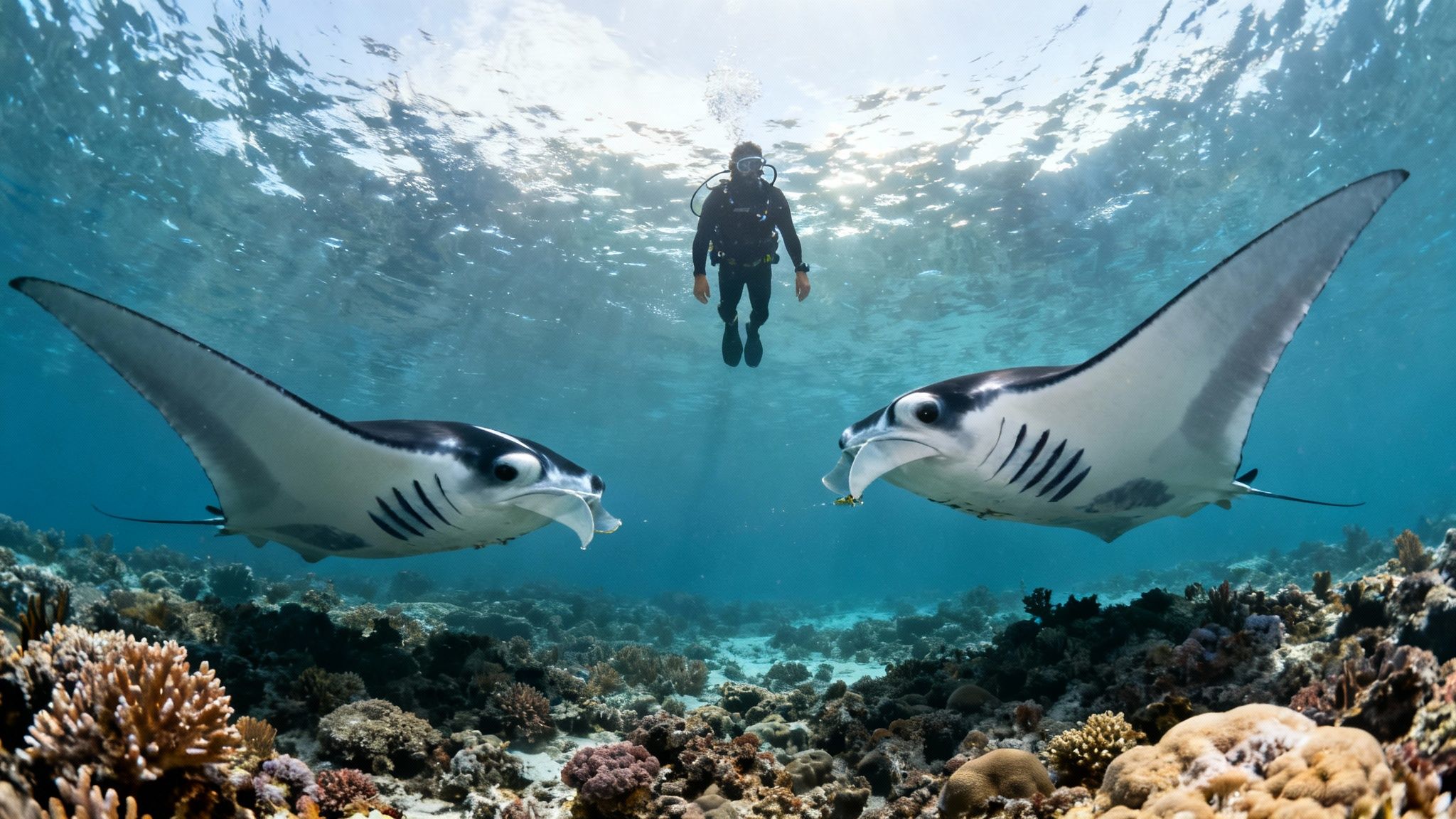
When you join the manta ray night dive in Kona, you're not just an observer; you're a guest in their home. These are wild animals, and our ability to have these incredible encounters depends entirely on treating them with respect and ensuring their well-being for generations to come.
The whole experience hinges on one simple idea: passive observation. You're there to watch the magic unfold, not to become part of the show. Think of yourself as having a front-row seat at the world's best ballet. This hands-off approach protects Kona's beloved manta population and, honestly, makes for a much better experience as you get to see them behave completely naturally.
The Golden Rule: Do Not Touch
This is the most important rule, and it's non-negotiable: you must never, ever touch a manta ray. Mantas have a special mucous coating on their skin, which is their first line of defense against nasty bacteria and infections. Touching them, even lightly, can strip away this protective layer and leave them vulnerable to disease.
This rule also extends to their movement. Never chase, ride, or block a manta's path. Just let them do their thing. When you stay calm and still, you’ll find they feel comfortable enough to glide inches above your head—a far more profound experience than any forced interaction.
Best Practices for Divers and Snorkelers
Your body position in the water is key to a safe and respectful encounter. Your divemaster will go over everything in the briefing, but here are the main things to keep in mind.
For Scuba Divers:
- Stay Low: Once you descend, find your spot on the sandy bottom and stay there. This keeps the water column wide open, giving the mantas plenty of room to swoop and glide above you.
- Nail Your Buoyancy: Good buoyancy control is a must. It keeps you from accidentally floating up into a manta's flight path and prevents you from kicking up sand or damaging the reef.
- Watch Your Bubbles: As a manta passes over you, try to time your breathing so you aren't exhaling directly into its belly. A sudden blast of bubbles can startle them.
For Snorkelers:
- Stay Flat: Keep your body horizontal on the surface while holding onto the light board. Kicking your fins or trying to freedive down can easily disrupt the mantas feeding below.
- Keep Your Limbs In: Keep your arms and legs from dangling down. This creates a smaller, less intimidating profile and helps avoid any accidental contact.
Following these simple guidelines makes you part of a conservation-minded community. It's how we ensure the mantas stay safe and the world-famous Kona encounter can continue for years to come.
Sticking to these rules is just part of being a good ocean steward. To learn more about responsible underwater practices, check out our full guide on considerate diver etiquette. Your mindful behavior directly helps protect Kona's manta ray population, guaranteeing this breathtaking natural wonder will be here to inspire awe for a long, long time.
Your Manta Ray Night Dive Questions, Answered
It’s only natural to have a lot of questions about the manta ray night dive in Kona—it’s not exactly your everyday excursion! To help you feel completely prepared for this once-in-a-lifetime experience, here are the answers to the questions we hear most often.
Do I Need to Be Scuba Certified to See the Manta Rays?
Not at all! While scuba divers get an incredible view from the ocean floor, snorkelers have an equally breathtaking experience. You'll hold onto a custom-built float board at the surface, which is lit up to attract the plankton the mantas feed on.
This setup brings the mantas right up to you, where they'll glide and barrel roll, sometimes just inches from your face. Every top-notch operator, including Kona Honu Divers, runs snorkel-specific trips right alongside the divers, so everyone gets in on the action. They'll provide all your gear, including a nice warm wetsuit.
What Is the Best Time of Year for the Manta Ray Night Dive in Kona?
Here's the great news: any time is a good time! The manta ray population here in Kona lives here year-round, so they don’t migrate. This makes for incredibly consistent sightings, whether you visit in July or December.
Of course, weather can always play a role, but choosing a company that operates at the more protected Garden Eel Cove site dramatically lowers the chance of a trip being canceled. The water is always comfortable, too, hovering around 75°F (24°C) in the winter and a balmy 80°F (27°C) in summer.
What Should I Bring on the Manta Ray Tour?
The tour company will have all the big stuff covered (your dive or snorkel gear), but a few personal items will make your trip much more comfortable. Here’s what I always recommend packing:
- A towel and a warm, dry change of clothes. Even on a warm evening, the boat ride back can feel chilly when you're wet.
- If you're prone to seasickness, take your preferred remedy before you board the boat. It works best as a preventative.
- An underwater camera! Trust me, you are going to want to relive this.
Most boats have a dry-storage area for your bags, and they almost always serve up hot cocoa and snacks after the dive to help you warm up.
What Is the Kona Black Water Night Dive?
If the manta dive ignites your passion for Kona's nightlife, then the Kona Black Water Night Dive is your next big adventure. This is a totally different beast, designed for more experienced divers. For those seeking a truly unique challenge, Kona also offers advanced dive tours that explore deeper reefs and more remote locations.
However, the Black Water dive is in a class of its own. Picture this: you're tethered to a boat a few miles offshore, suspended over thousands of feet of inky black water. As you drift, you'll witness the planet's largest nightly migration, as countless tiny, weird, and often glowing creatures rise from the abyss. It’s been described as floating through deep space, and it’s another unforgettable dive you can only do here. You can learn more about the Blackwater Dive tour here.