
Picture this: you descend into the warm, dark Pacific Ocean, your dive light cutting a path through the blackness and setting the stage for an underwater ballet. This is the manta ray night dive in Kona, a world-famous, bucket-list experience where giant, gentle rays glide and swoop just inches from your face. It's not a chance encounter; it's a nightly spectacle that has firmly put the Big Island on the map as the best place on earth for this magical dive.
Experience Kona’s Unforgettable Underwater Ballet

Dropping into the inky waters off Kailua-Kona after sunset is an adventure you’ll never forget. As you settle on the ocean floor, your light illuminates the scene, attracting clouds of plankton. Then, they appear. Massive manta rays, some with wingspans wider than a car, emerge from the darkness to perform effortless barrel rolls as they feed.
This isn't a rare stroke of luck—it's what makes the Kona manta ray night dive so legendary. The experience attracts roughly 80,000 people annually from all over the world, solidifying its reputation as the number one destination for these encounters.
What truly sets Kona apart is the incredible sighting success rate of 80-90% year-round. That kind of consistency is unheard of in most other manta hotspots, where seeing them can often be a gamble.
Why This Dive Is a Must-Do
The real magic here is the combination of near-guaranteed sightings and the sheer grace of the animals. While many wildlife encounters are hit-or-miss, Kona's resident manta population is reliably present, giving you a front-row seat to one of nature's most spectacular feeding displays.
Of course, choosing the right operator is crucial for turning a great dive into a life-changing one. A company like Kona Honu Divers, with its deep local knowledge and strong commitment to conservation, ensures your adventure is not only breathtaking but also safe and responsible. Their professional crew handles all the details so you can focus on the awe-inspiring experience.
If getting up close with manta rays sparks your sense of adventure, you might be curious about more unforgettable adventure vacation ideas, including scuba diving around the globe. The thrill of scuba diving the Big Island can open up a whole new world of underwater exploration.
Ready to see the underwater ballet for yourself? Booking your spot is the first step toward an experience that will stay with you forever.
Why Garden Eel Cove Is Kona’s Superior Manta Site
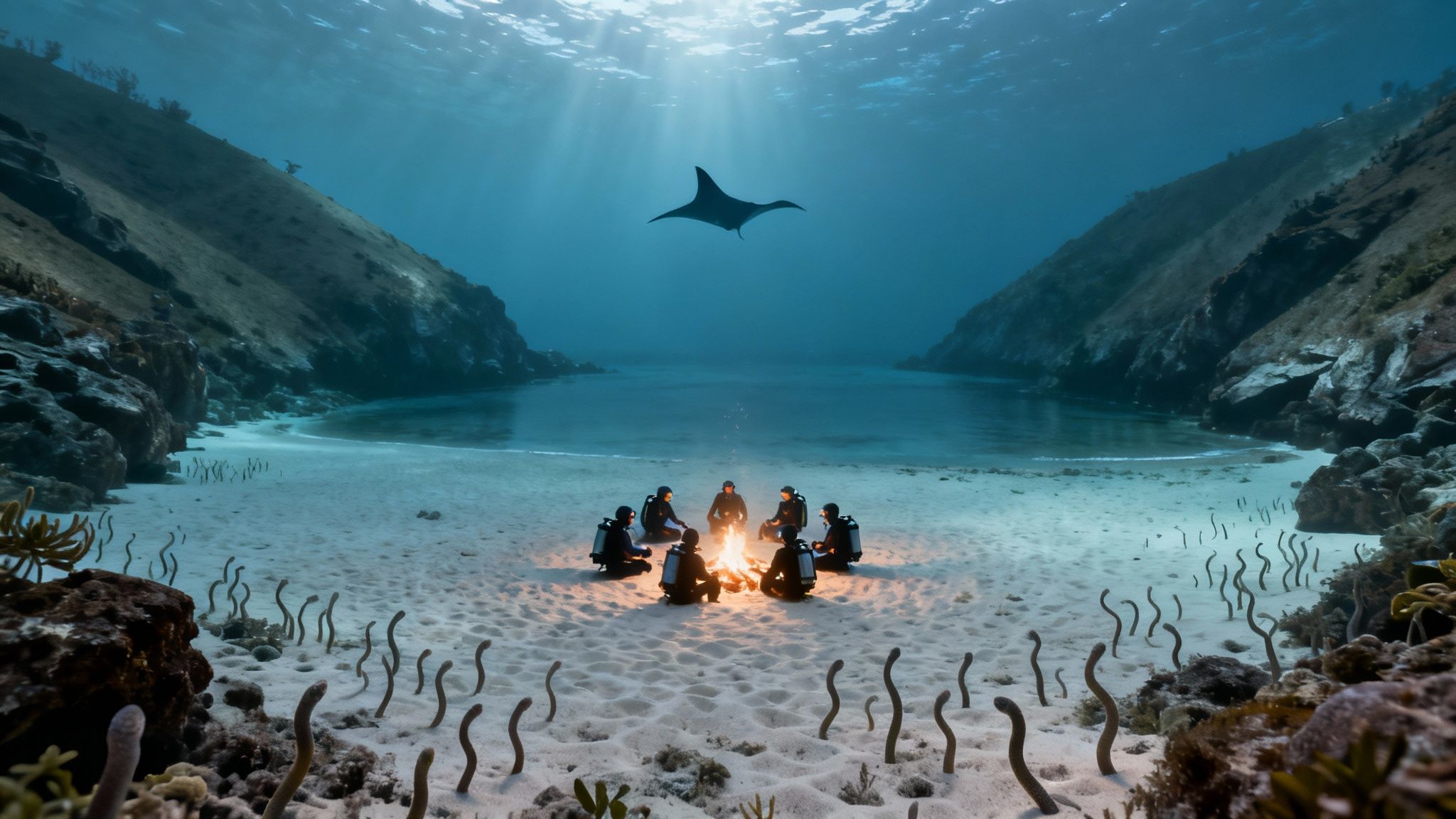
While there are a couple of manta sites in Kona, one location consistently delivers a superior experience: Garden Eel Cove. Known as "Manta Heaven," this isn't just another dive site—it's the gold standard for the world-famous manta ray night dive, and for very good reason.
First, its geography provides a significant natural advantage. Tucked away from the open ocean, Garden Eel Cove is a protected location that offers much calmer and clearer water conditions. This shelter from the elements creates a more comfortable and enjoyable experience for all divers, especially those who may be nervous about night diving or are prone to seasickness.
The real brilliance of the site, however, lies in its underwater topography. It features a large, sandy clearing that acts as a natural amphitheater. This is where divers gather to form the "underwater campfire," creating the perfect stage for the mantas' performance.
The Superior Underwater Viewing Experience
This campfire setup is what elevates the Garden Eel Cove dive from great to unforgettable. Divers settle in a semi-circle on the sandy bottom around a central light source and point their own dive lights toward the surface. This concentration of light attracts a massive cloud of plankton, which in turn brings the manta rays directly to the viewing area.
This unique arrangement offers several key benefits:
- Exceptional Viewing Area: The wide, sandy bottom ensures everyone gets an unobstructed, front-row seat to the action. You're not crowded onto a rocky ledge; you're comfortably positioned for the best possible view.
- Enhanced Safety: By remaining stationary on the seabed, divers can relax and focus entirely on the manta rays without needing to manage buoyancy or worry about drifting in the dark.
- Reliable Manta Encounters: The mantas are familiar with this location and routine. They arrive ready to feed, performing their graceful barrel rolls right above the divers' heads in a predictable and breathtaking display.
This controlled, theater-like setting is a world away from other sites that may have unpredictable conditions or less-than-ideal viewing areas. To get a better sense of the layout, you can learn more about what makes Manta Heaven at Garden Eel Cove so unique.
Better Reefs for a Complete Dive Trip
What truly seals the deal for Garden Eel Cove as the superior choice is its surrounding reef. Most manta trips are two-tank dives, and the initial twilight dive here is spectacular. The reefs are healthier and more vibrant than those at other manta locations, making for a much more engaging first dive. Watching the ecosystem transition from day to night as nocturnal creatures emerge is an adventure in itself.
Ultimately, experiencing the best site means going with a top-tier operator. At Kona Honu Divers, we prioritize this world-class location for our manta ray dive tours because we know it consistently delivers the best possible experience.
Your Manta Ray Night Dive Step-By-Step

Knowing the flow of your manta ray night dive in Kona can make a huge difference, turning an amazing trip into an absolutely seamless one. From the moment you step foot at the harbor to that final, peaceful boat ride back under the stars, every part of the evening is designed to build excitement for the grand finale. When you dive with an experienced crew like Kona Honu Divers, you’re not just going on a dive; you’re part of a well-oiled underwater performance.
The adventure kicks off with a warm and easy check-in right at Honokohau Harbor. Our crew will get you aboard, help you find a spot for your gear, and make sure all the necessary paperwork is handled. It's the perfect time to ask any last-minute questions and get to know the boat and your fellow divers.
Once we’re all settled, the captain and divemasters will run through a thorough briefing. This isn't just a quick "here's the plan" talk—it's a critical part of the experience. We cover everything from the boat's safety features and the dive profile to the most important part: the rules of manta etiquette. This ensures everyone understands how to interact respectfully with these gentle giants, keeping both the divers and the mantas safe.
The Two-Tank Twilight Experience
As we cruise out to the dive site, you'll get a stunning view of the Kona coast while the sun starts its slow dip toward the horizon. The classic Kona Honu Divers manta charter is a two-tank trip, which really lets you get the most out of your time in the water and see the reef in two different lights.
The first dive is a twilight dive. You'll hit the water just as the last rays of sun are piercing the surface, giving you a front-row seat to the reef's daily shift change. It’s a magical moment when the daytime critters head for bed and the nocturnal creatures start to stir. This dive is a fantastic chance to explore the beautiful coral gardens and unique lava tube formations that make Kona's underwater landscape so incredible. Think of it as the perfect warm-up act.
The Main Event: The Manta Ballet
After a surface interval complete with snacks and drinks to recharge, it’s time for the dive you’ve been waiting for. With darkness now complete, you’ll descend a second time, this time to a sandy "amphitheater" at a site like Garden Eel Cove. Here, your group will arrange themselves in a semi-circle around a set of powerful, upward-facing lights, which we call the "campfire."
You'll settle onto the sand, get comfortable, and aim your dive light straight up. All those beams of light attract a thick cloud of plankton—the mantas' favorite meal. And then, it happens. The huge rays emerge from the darkness, gliding in to perform graceful barrel rolls and somersaults just inches over your head as they feed. There's truly nothing that can prepare you for the awe-inspiring feeling of a 12-foot manta ray soaring right over you.
What to Expect on Your Dive
To give you an idea of what your evening with us will look like, here's a typical schedule for the manta ray night dive tour.
Your Manta Ray Night Dive Itinerary at a Glance
| Phase | Activity | What to Expect |
|---|---|---|
| Check-In | Arrival & Boarding | Meet the crew at Honokohau Harbor, sign waivers, and get your gear situated on the boat. |
| Departure | Briefing & Sunset Cruise | Enjoy the ride as the captain and divemasters brief you on safety, the dive plan, and manta etiquette. |
| Dive 1 | Twilight Reef Dive | Explore the reef as day turns to night, seeing the ecosystem change before your eyes. |
| Surface Interval | Snacks & Prep | Relax on the boat with some snacks and drinks while the crew prepares for the main event. |
| Dive 2 | The Manta Ray Dive | Descend to the "campfire" and watch the majestic mantas feed and dance in the lights for about 60 minutes. |
| Return | Post-Dive Celebration | Head back to the harbor, warming up with hot chocolate and sharing stories from the incredible dive. |
This whole experience is what brings tens of thousands of visitors here every year. The water is usually a comfortable 75°F, with dives around 30-50 feet and visibility that can easily top 100 feet. At Kona Honu Divers, we use custom boats and keep our groups small for a more personal and spectacular show. To learn more about what makes this spot so unique, check out this guide on why the Big Island is the top manta destination.
The boat ride back to the harbor is always buzzing with energy. The crew will pass around hot chocolate and snacks as everyone shares stories and compares photos. It’s the perfect, cozy end to a night you'll never forget. Ready to see it for yourself? You can book your unforgettable manta ray dive tour and grab a front-row seat.
How to Be a Good Guest in the Manta’s World
The Kona manta ray night dive is pure magic, but that magic depends on a delicate balance between us and the mantas. We're stepping into their world, essentially pulling up a chair in their underwater dining room. It’s an incredible privilege, and with it comes the responsibility to be polite, respectful guests.
Our whole philosophy boils down to one simple idea: passive observation. We're there to witness their incredible feeding ballet, not to interfere with it. When you dive with a conservation-minded company like ours, you’re doing more than just booking a tour; you're actively supporting a sustainable practice that keeps Kona’s manta population healthy for years to come.
This shared commitment is what keeps the experience so special. It's a true partnership between divers and these magnificent animals.
The Golden Rule of Manta Dives
If you take away only one thing, let it be this: do not touch the manta rays. Ever. It’s the most important rule, period.
Mantas have a special mucous coating on their skin, which is their primary defense against nasty bacteria and infections. When we touch them, even with the lightest graze, we can strip that protective layer off, leaving them vulnerable to disease. I know it's incredibly tempting when a 12-foot giant glides inches over your head, but resisting that urge is the single best thing you can do for them.
Manta rays are completely harmless to us—they have no teeth, stingers, or barbs. Our job is to be completely harmless to them. The best way to do that? Keep your hands to yourself and just soak in the amazing sight.
Manta Etiquette for Divers and Snorkelers
To make sure every dive is safe for the mantas and amazing for us, all the reputable operators in Kona follow a clear set of rules. These guidelines give the mantas the space they need to feed naturally while giving you a front-row seat to the action.
Here’s what we practice on every single Kona Honu Divers trip:
- Stay Put on the Bottom: As a diver, your place is on the sand. Find a spot, get comfortable, and stay there. This keeps the water column clear, creating a wide-open "fly zone" for the mantas to swoop and glide through as they feed.
- Lights Up!: Your dive light is the beacon for plankton. Shine it straight up towards the surface. This concentrates their food source into a column, drawing the mantas right in above you for that classic, jaw-dropping view.
- Don't Chase or Block: This should go without saying, but never swim after a manta or get in its way. Let them be the ones to initiate and control the encounter. The most incredible moments happen when you just relax and let them do their thing.
- Watch Your Bubbles: Try to be mindful of your breathing. A big cloud of bubbles right in a manta's face can be startling. If you see one approaching, a little exhale control can make their pass much smoother and more comfortable.
Following these simple guidelines helps ensure the mantas stay healthy and the dive remains one of the world's best. You can learn more about these principles in our guide to being a responsible and considerate diver. Ultimately, having solid buoyancy and being aware of your surroundings are what make you a great guest in their home.
Getting Ready for Your Manta Dive Adventure
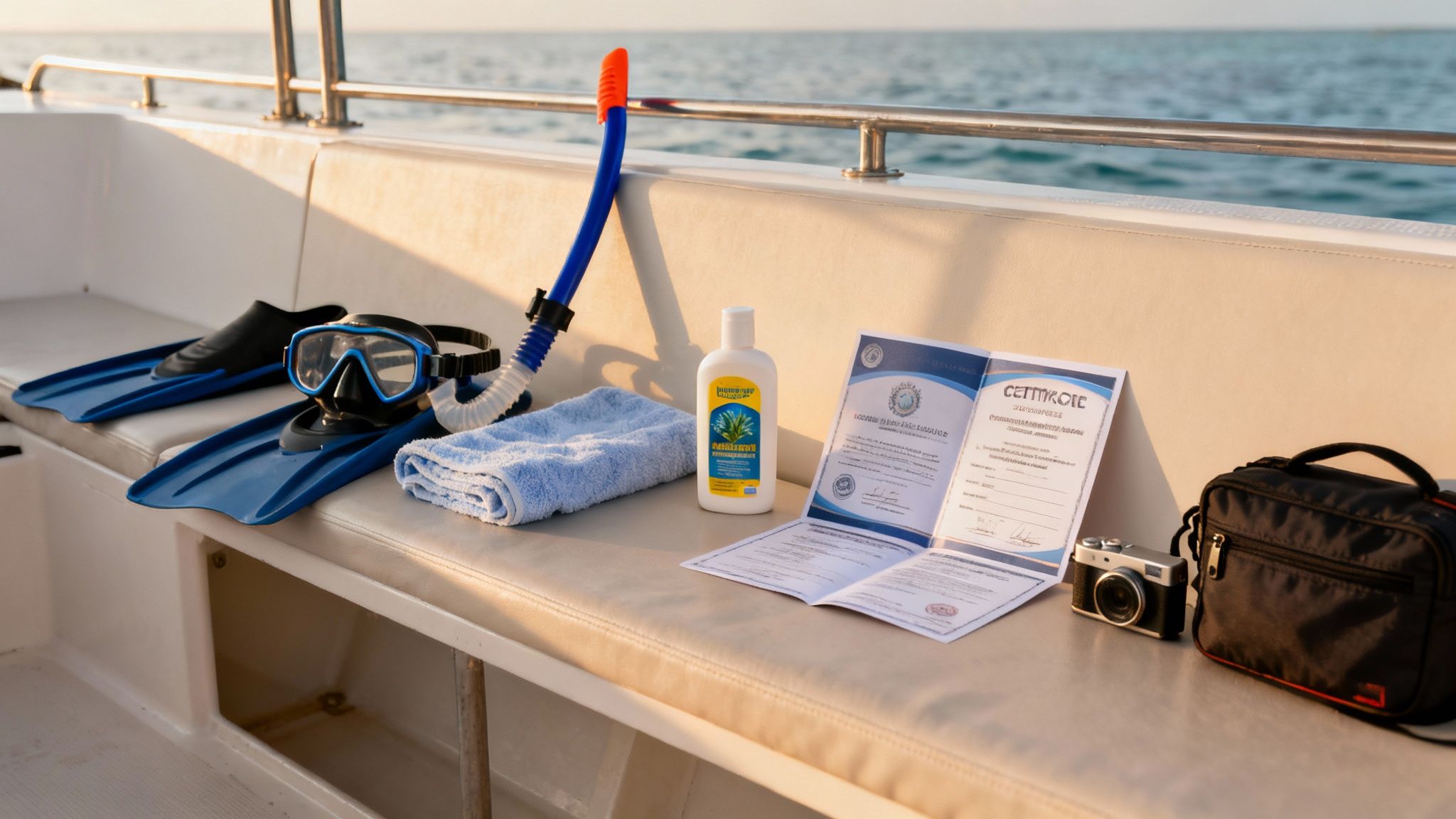
The magic of the manta ray night dive in Kona is calling your name, and a little bit of prep work will make the whole experience seamless and unforgettable. When you know what to pack and what to expect, you can relax and focus on the incredible underwater ballet about to unfold.
First things first, let's talk qualifications. To join the scuba dive, you’ll need at least an Open Water Diver certification. Make sure to bring your certification card along, as our crew will need to verify it before we cast off. This is simply to ensure everyone in the group has the foundational skills to dive safely and comfortably at night.
As for gear, you can pack light! Kona Honu Divers provides all the essential scuba equipment you'll need. We've got top-quality, well-maintained rental gear, tanks, and weights ready for you, so you can trust you'll be diving with reliable equipment.
What to Bring on the Boat
While we handle the heavy scuba gear, there are a few personal items you'll want to bring to make your trip as comfortable as possible. Think of it as your personal adventure kit for a perfect evening.
- Towel and a Change of Clothes: After an amazing dive, you’ll be glad you have something warm and dry to change into for the cozy boat ride back to the harbor.
- Reef-Safe Sunscreen: We head out while the sun is setting, so you'll still catch some beautiful Hawaiian rays. Using reef-safe sunscreen helps us protect our delicate coral ecosystems.
- Reusable Water Bottle: Staying hydrated is always a good idea, especially before and after a dive. Bringing your own bottle is a great way to stay green, too.
- Motion Sickness Remedy: If you know you're prone to seasickness, it’s best to take your preferred remedy before we leave the dock. The Kona coast is usually calm, but it never hurts to be prepared.
For a more detailed look at the equipment we use, check out our complete guide on the gear you will need for your Kona diving adventure.
Tips for Underwater Photographers
Capturing the graceful dance of a manta ray is a rewarding challenge. If you're bringing a camera, a few simple tips can help you get that perfect shot without disturbing the mantas or other divers.
The real secret to great manta photography is patience and positioning. Let the mantas come to you, use a wide-angle lens to capture their massive wingspan, and be mindful of your lighting to avoid startling these gentle giants.
Quick Photo Tips:
- Go Wide: A wide-angle lens is your best friend here. It lets you get close enough for your lights to illuminate the manta while still fitting its entire majestic form in the frame.
- Bring Your Own Lights: The boat's "campfire" of lights provides the main attraction, but your own video lights or strobes will make your subject truly pop. Just aim them slightly outward to avoid backscatter.
- Respect Their Space: This is the golden rule. Never chase a manta for a photo. The most stunning images come from just staying put and letting them perform their beautiful, natural acrobatics around you.
A little preparation ensures you’re not just a spectator but a fully-informed participant in one of nature's most remarkable events. This dive is more than just a thrill; it’s a living science experiment. Ongoing research has identified over 300 individual mantas and logged more than 10,000 sightings right here on the Kona Coast, all by tracking their unique belly spot patterns.
Why Choose Kona Honu Divers
Let's be honest, picking the right company for your manta ray night dive in Kona is the most critical choice you’ll make. This one decision determines whether you just see the mantas or have a genuinely incredible, safe, and memorable experience. Here at Kona Honu Divers, we’ve built our entire manta tour around making sure you get the latter.
It really comes down to our people. Our crew members are seasoned pros—not just guides, but true ocean lovers who are genuinely excited to share this with you. They're also laser-focused on your safety and making sure you have a fantastic time. We deliberately keep our groups small because, frankly, a crowded, chaotic dive site just ruins the magic. This way, you get a front-row view without feeling like you're in a crowd, allowing for a much more personal encounter with these gentle giants.
More Than Just a Dive
Our commitment to a top-shelf experience is reflected in our boats, too. You'll be on one of our custom-built dive boats, designed from the hull up for comfort and a smooth ride on the water. We pride ourselves on our impeccable safety record and we handle every single detail. All you have to do is show up, relax, and enjoy everything from the epic Kona sunset on the way out to the hot chocolate we serve on the ride back to the harbor. Our guests constantly tell us that it's our crew's attitude and the quality of the whole operation that truly sets the experience apart.
Continue Your Underwater Adventure
But your diving journey in Kona doesn't have to stop with the mantas. As a full-service dive shop, we're ready to show you all the other amazing things the Big Island has hiding beneath the waves.
If you're looking for something completely different and a little mind-bending, the famous Kona Blackwater Dive is an unforgettable trip into the deep, dark ocean.
For certified divers eager to see more of our incredible reefs by day, our advanced dive tours explore pristine, out-of-the-way sites that most boats don't visit. From dramatic lava tubes to flourishing coral gardens, we have a whole lineup of Kona diving tours to feed any diver's passion.
When you book with Kona Honu Divers, you're doing more than just reserving a spot on a boat. You’re choosing a world-class experience with a team that puts your safety, comfort, and connection to the ocean first. We'd love to show you why we're the top-rated choice for diving in Hawaii.
Frequently Asked Questions
It’s totally normal to have a few questions before you dive into an adventure like the manta ray night dive in Kona. We get it. That's why we've put together answers to the most common queries we hear from our guests. We want you to feel completely confident and excited, with any lingering uncertainties cleared up before you even book.
Think of this as your pre-dive briefing before you even step foot on the boat. Our goal is to make sure every single diver feels prepared, safe, and ready for what is truly a bucket-list experience.
Do I Need to Be Scuba Certified to See the Manta Rays?
For the classic scuba experience where you're down on the ocean floor watching the show from below, yes, you'll need at least an Open Water Diver certification. This just ensures everyone has the foundational skills to have a safe and comfortable night dive.
But here's the great news: you don't have to be a certified diver to see the magic! We also run a fantastic manta ray snorkel tour for non-divers. You'll float on the surface and watch the mantas glide and feed just a few feet beneath you. It’s an equally breathtaking way to see the underwater ballet.
Is the Manta Ray Night Dive Safe?
Absolutely. Safety is our number one priority on every single trip, no exceptions. Manta rays are called "gentle giants" for a very good reason—they have no teeth, no stingers, and no barbs. They are completely harmless to people. Their only interest is in the plankton, not in the divers watching them.
When you dive with Kona Honu Divers, you’re in the hands of seasoned professionals. We run thorough pre-dive safety briefings and stick to strict protocols and manta interaction guidelines. This keeps both our guests and the precious marine life safe and respected.
What Is the Best Time of Year to Do the Manta Dive?
This is one of the best parts about the manta ray night dive in Kona—it's a spectacular, year-round event! Unlike so many other wildlife encounters that are seasonal, Kona’s resident manta ray population doesn’t migrate.
They're here every month of the year, and our coastal conditions are typically calm no matter the season. This incredible consistency is why we can proudly say we have a sighting success rate of over 90%, regardless of when you plan your Hawaiian vacation.
The local manta ray population remains in Kona's waters all year, which means any time is a great time to book your dive. The high success rate for sightings is one of the key factors that makes this dive so world-famous.
What Happens if We Don't See Any Manta Rays?
While sightings are incredibly consistent, it’s always important to remember that these are wild animals in their natural home. Nature is beautifully unpredictable, and their appearance can never be guaranteed 100%.
That said, the odds are overwhelmingly in our favor. In the rare event of a no-show, reputable operators like Kona Honu Divers are confident in our ability to find mantas and often have policies to take care of our guests. It's always a good idea to ask about the specific "manta guarantee" policy when you book your tour.
Ready to take the plunge and witness this incredible spectacle for yourself?